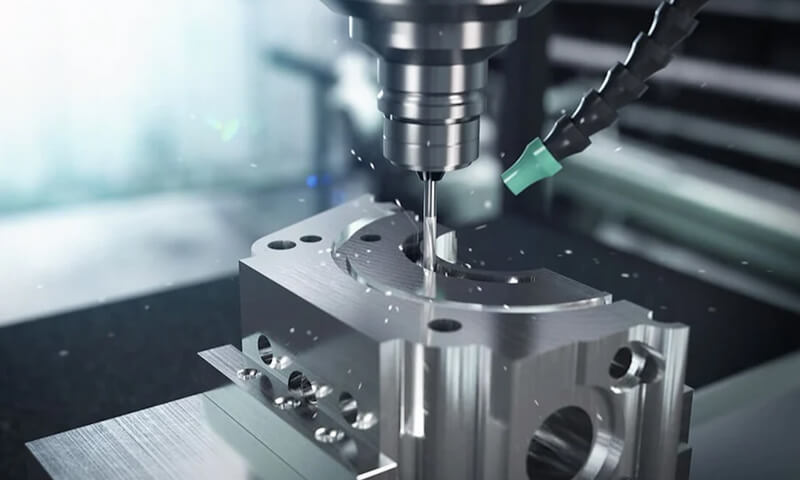
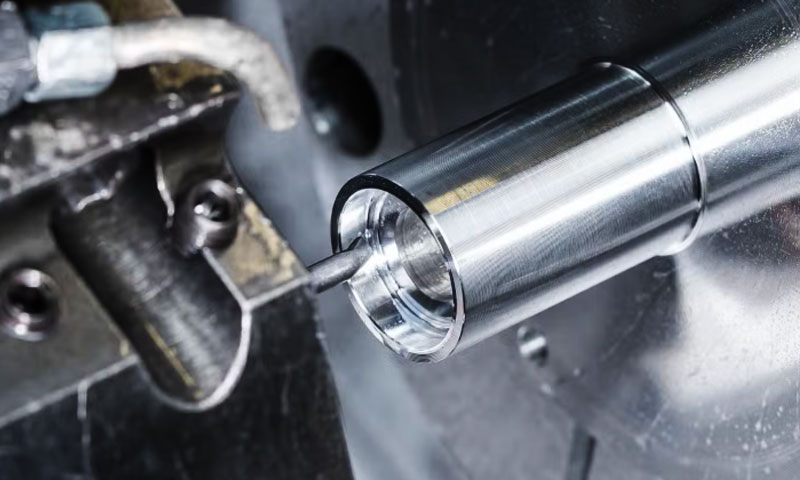
1. Introduzzjoni
Komponenti b'ħitan irqaq jidhru madwar l-ajruspazju, mediku, karozzi, elettronika u prodotti tal-konsumatur.
Il-massa baxxa tagħhom u l-valur funzjonali għoli wkoll iġibu riskju tal-manifattura: deformazzjoni parti, ċajter, żball ġeometriku inaċċettabbli, finitura tal-wiċċ fqira u rati għolja ta 'ruttam.
Il-produzzjoni b'suċċess tgħaqqad disinn għall-manifattura (DFM), twaħħil robust, għodda mibnija apposta u setup tal-magni, u strateġiji avvanzati tal-magni (E.g., roughing adattivi, irfinar ta 'fond ta' qatgħa radjali baxx u kejl fil-proċess).
Dan l-artikolu jispjega l-mekkaniżmi sottostanti, jipprovdi kontromiżuri ppruvati u jagħti lista ta 'kontroll azzjonabbli għall-implimentazzjoni tal-art tal-ħanut.
2. Xi tfisser "ħitan irqaq" - definizzjonijiet u metriċi ewlenin

"Ħitan irqaq" hija dipendenti mill-kuntest iżda l-metriċi prattiċi li ġejjin huma użati ħafna:
- Ħxuna tal-ħajt (t): irqiq assolut: tipikament t ≤ 3 mm għal metalli f'ħafna applikazzjonijiet; fi plastiks/komposti t jista 'jkun saħansitra inqas.
- Proporzjon tal-aspett (għoli jew tul tal-cantilever / ħxuna): partijiet b'ħitan irqaq normalment ikollhom għoli/ħxuna (H/t) > 10 U xi kultant > 20.
- Span/ħxuna (span mhux appoġġjat / t): tifrex twal mhux appoġġjati jamplifikaw id-deflessjoni.
- Indiċi tal-flessibbiltà: miżura kompost li tgħaqqad il-modulu tal-materjal, Ġeometrija, u l-kundizzjonijiet tat-tagħbija — użati fis-simulazzjonijiet.
Dawn in-numri huma linji gwida. Dejjem imħallef irqiq mill- ebusija effettiva fis-setup tal-magni maħsuba.
3. Sfidi ewlenin fil-Maċinazzjoni ta' Partijiet b'ħitan irqaq
L-isfidi ta' magni partijiet b'ħitan irqaq joħorġu mir-riġidità baxxa intrinsika tagħhom, li jamplifika l-impatt tal-forzi tat-tqattigħ, effetti termali, u interazzjonijiet għodda-mogħdija.
Hawn taħt hawn analiżi dettaljata tal-isfidi ewlenin u l-kawżi bażiċi tekniċi tagħhom:
Chatter u Vibrazzjoni (L-Għadu Primarju)
Chatter—vibrazzjoni awto-eċċitata bejn l-għodda u l-biċċa tax-xogħol—hija l-iktar kwistjoni mifruxa fil-magni tal-ħitan irqaq, ikkawżat mill-interazzjoni ta’ tliet fatturi:
- Ebusija Baxxa tal-biċċa tax-xogħol: Ħitan irqaq għandhom proporzjon għoli tal-aspett (għoli/ħxuna) u riġidità flexural baxxa (LE, fejn E = il-modulu ta’ Young, I = mument ta' inerzja).
Pereżempju, a 1 ħajt tal-aluminju ħxuna mm (E = 70 GPA) għandha ~ 1/16 l-ebusija ta 'a 2 ħajt ta’ mm-ħxuna (I ∝ t³, għal kull teorija tar-raġġ). - Chatter Riġenerattiv: Il-forzi tat-tqattigħ iħallu marki tal-wiċċ immewġin fuq il-biċċa tax-xogħol; Passi ta 'għodda sussegwenti jinteraġixxu ma' dawn il-mewġ, jiġġeneraw forzi perjodiċi li jsaħħu l-vibrazzjoni (frekwenza 100–5,000 Hz).
- Lakuni tar-Riġidità tal-Għodda u tal-Magni: Għodod flessibbli (E.g., imtieħen twal) or low-rigidity machine spindles exacerbate vibration, leading to poor surface finish (Ra > 1.6 μm) u xedd tal-għodda.
Industrial data shows that chatter causes up to 40% of scrapped thin-walled parts, particularly in high-speed machining (HSM) of aluminum and titanium.
Ineżattezzi Dimensjonali: Deflessjoni, Distorsjoni, u Stress Residwu
Thin-walled parts are highly susceptible to shape deviations due to:
- Cutting Force-Induced Deflection: Even moderate cutting forces (20–50 N for aluminum) cause elastic/plastic deflection.
For a cantilevered thin wall, Diflessjoni (d) follows beam theory: δ = FL³/(3LE), where F = cutting force, L = wall length.
A 50 N force on a 100 mm-long, 1 mm-thick aluminum wall causes ~0.2 mm deflection—exceeding typical tolerances. - Thermal Distortion: Cutting generates localized heat (up to 600°C for titanium), causing uneven expansion/contraction.
Thin walls have low thermal mass, so temperature gradients (ΔT > 50° C.) induce permanent distortion (E.g., Warping, bowing). - Rilaxx ta' Stress Residwu: Il-magni jneħħi l-materjal, tħarbat stress residwu minn proċessi preċedenti (E.g., ikkastjar, Forġa).
Pereżempju, ħitan irqaq tal-aluminju bil-makna ħafna drabi "jqumu lura" b'0.05–0.1 mm wara li l-ikklampjar jiġi rilaxxat, minħabba rilassament tal-istress residwu.
Degradazzjoni tal-Integrità tal-wiċċ
Materjali b'ħitan irqaq (speċjalment metalli duttili bħall-aluminju jew it-titanju) huma suxxettibbli għal difetti fil-wiċċ:
- Tiċrit u Smearing: Veloċitajiet baxxi tat-tqattigħ jew għodda matt jikkawżaw materjal li jiċċirkola plastikament minflok shearing, ħolqien ta 'rough, wiċċ imqatta '.
- Formazzjoni Burr: Truf irqaq m'għandhomx appoġġ strutturali, li jwassal għal burrs (0.1–0.5 mm) li huma diffiċli biex jitneħħew mingħajr ma ssir ħsara lill-parti.
- Aħdem twebbis: Forzi tal-qtugħ eċċessivi jinduċu deformazzjoni tal-plastik, tiżdied l-ebusija tal-wiċċ b'20-30% (E.g., ħitan irqaq tat-titanju) u tnaqqas il-ħajja tal-għeja.
Ilbes Eċċessiv tal-Għodda u Ħsara Prematur
Makkinar b'ħitan irqaq jaċċellera xedd ta 'għodda minħabba:
- Żieda fl-Ingaġġ tal-Għodda: Biex tiġi evitata d-deflessjoni, għodod ħafna drabi jkollhom żoni kbar ta 'kuntatt mal-biċċa tax-xogħol, żieda fl-ilbies tal-ġenb u xedd tal-crater.
- Tagħbija ta 'Impatt Indotta mill-Vibrazzjoni: Chatter jikkawża impatt ċikliku bejn l-għodda u l-biċċa tax-xogħol, li jwassal għal mikro-ksur fit-truf tal-għodda (speċjalment għal għodod tal-karbur fraġli).
- Tagħbija Termali: Dissipazzjoni fqira tas-sħana f'ħitan irqaq (massa termali baxxa) jittrasferixxi aktar sħana lill-għodda, it-trattib tal-materjali tal-għodda u t-tnaqqis tar-reżistenza għall-ilbies.
Sfidi Speċifiċi għall-Materjal
Materjali differenti joħolqu ostakli uniċi meta jiġu mmaxinjati ħitan irqaq:
| Grupp materjali | Sfida ewlenija tal-ħajt irqiq | Effett tipiku |
| Aluminju (6xxx/7xxx) | Ebusija baxxa ħafna, duttilità → smearing, Burrs | Tiċrita tat-tarf, ruttam għoli jekk mhux appoġġjat |
| Titanju (Ti-6al-4v) | Konduttività termali baxxa, temp ta 'qtugħ għoli | Distorsjoni termali, xedd rapidu tal-għodda |
| Azzar li ma jsaddadx | Ebusija tax-xogħol, forzi ta 'qtugħ għolja | Xifer mibni, finitura ħażina tal-wiċċ |
| Komposti (CFRP/GFRP) | Fiber pull-out, delaminazzjoni | Tixlif tat-tarf, telf ta' integrità strutturali |
| Plastik (PEEK/ABS) | Tg/trattib baxx, tidwib fuq għodda | Depożiti dewweb, kollass dimensjonali |
4. Soluzzjonijiet Komprensivi biex Jegħlbu Sfidi tal-Maċinazzjoni b'ħitan irqaq
L-indirizzar tal-isfidi tal-magni b'ħitan irqaq jeħtieġ approċċ integrat — li jgħaqqad l-ottimizzazzjoni tal-proċess, innovazzjoni tal-għodda, preċiżjoni tat-twaħħil, titjib tal-għodda tal-magni, u validazzjoni diġitali.

Hawn taħt hemm soluzzjonijiet teknikament validati:
Disinn għall-Manifattura (DFM)
Il-bidliet fid-disinn jiswew ftit li xejn meta mqabbla mal-ħin tal-magni u r-ruttam.
- Żid l-ebusija lokali bil-kustilji, flanġijiet, żibeġ. Kustilji rqaq ta 'għoli modest żid modulu ta' sezzjoni kbira b'penali ta 'massa baxxa.
Regola ġenerali: iż-żieda ta’ flanġ li żżid il-ħxuna lokali tal-ħajt bi 30–50% ħafna drabi tnaqqas id-deflessjoni bi >2×. - Naqqas il-medda mhux appoġġjata u daħħal pads tal-magni. Ħalli gżejjer tal-materjal tas-sagrifiċċju jew pads magni li jitneħħew wara l-magni finali.
- Speċifika tolleranzi realistiċi. Riżerva tolleranzi ta '±0.01 mm biss għal karatteristiċi kritiċi; jirrilassaw uċuħ mhux kritiċi.
- Pjan assemblaġġi maqsuma. Jekk ikunu meħtieġa cantilevers irqaq inevitabbli, tikkunsidra assemblaġġi b'ħafna biċċiet li jingħaqdu wara l-magni.
Ottimizzazzjoni tal-Proċess: Parametri tal-Qtugħ u Strateġiji ta' Toolpath
Il-parametri tal-proċess it-tajbin jimminimizzaw il-forzi tat-tqattigħ, vibrazzjoni, u l-ġenerazzjoni tas-sħana:
- Makkinar b'Veloċità Għolja (HSM): Jopera b'veloċitajiet tal-magħżel >10,000 Rpm (għall-aluminju) inaqqas il-forzi tat-tqattigħ bi 30-50% (skont it-teorija taċ-ċirku ta’ Merkantili, veloċitajiet ogħla tat-tqattigħ inaqqsu l-angolu ta 'shear u l-forza).
Pereżempju, magni 6061 aluminju ħitan irqaq fil 15,000 Rpm (vs. 5,000 Rpm) inaqqas id-deflessjoni minn 0.2 mm to 0.05 mm. - Tħin Trokojdali: A toolpath ċirkolari li jnaqqas l-ingaġġ radjali (ae) sa 10–20% tad-dijametru tal-għodda, it-tnaqqis tal-forzi tat-tqattigħ u l-vibrazzjoni.
It-tħin trochoidal huwa 2–3× aktar stabbli minn slotting konvenzjonali għal ħitan irqaq. - Magni adattivi: Dejta tas-sensuri f'ħin reali (vibrazzjoni, temperatura, forza) jaġġusta l-parametri tat-tqattigħ (rata ta 'għalf, veloċità taż-żarżur) dinamikament.
Sistemi adattivi mmexxija mill-AI (E.g., Siemens Sinumerik Integra) inaqqas iċ-chatter minn 70% u jtejbu l-eżattezza dimensjonali billi 40%. - Tlugħ Tħin: Inaqqas il-frizzjoni tal-biċċa tax-xogħol tal-għodda u l-ħxuna taċ-ċippa, jimminimizzaw il-ġenerazzjoni tas-sħana u t-tiċrit tal-wiċċ. It-tħin tat-tluq huwa preferut għall-ħitan irqaq tal-aluminju u tat-titanju.
Soluzzjonijiet Avvanzati ta' Għodda
Il-ġeometrija tal-għodda u l-ebusija tad-detentur jiddeterminaw kemm il-forza tat-tqattigħ tikkawża deflessjoni.
- Imminimizza l-isporġenza tal-għodda: żomm il-proporzjon tat-tul għad-dijametru ≤ 3:1; fejn possibbli użu 2:1 jew inqas.
- Uża cutters b'dijametru ta 'qalba għolja (web interna akbar) għall-ebusija.
- Għodod varjabbli-helix u varjabbli-pitch tgħin biex tiskonnettja l-modi ta' chatter.
- Rake pożittiv, qtugħ ta' helix għolja tnaqqas il-forzi tat-tqattigħ fil-ligi duttili.
- Kisi: AlTiN għat-titanju (reżistenza għat-temperatura għolja), TiAlN/TiCN għall-azzar, DLC għal xogħol polimeru/kompost biex titnaqqas l-adeżjoni.
Twaħħil u Klampjar ta 'preċiżjoni: Minimizzar Stress u Deflessjoni
It-twaħħil għandu jibbilanċja ż-żamma sikura tal-biċċa tax-xogħol bi stress minimu indott mill-ikklampjar:
- Ikklampjar bi Pressjoni Baxxa: Klampi idrawliċi jew pnewmatiċi b'sensors tal-pressjoni (0.5–2 MPa) qassam il-forza b'mod uniformi, tiġi evitata deformazzjoni lokalizzata.
Pereżempju, ikklampjar 7075 aluminju ħitan irqaq fil 1 MPa inaqqas ir-rebbiegħa lura minn 60% vs. 5 ikklampjar MPa. - Armar bil-vakwu: Chucks tal-vakwu poruż taċ-ċeramika jew tal-aluminju jqassmu l-forza tal-ikklampjar fuq il-wiċċ kollu tal-biċċa tax-xogħol, telimina t-tagħbija tal-punt.
It-twaħħil bil-vakwu huwa ideali għall-kbar, ħitan irqaq ċatti (E.g., Djar tal-batterija EV). - Twaħħil manjetiku: Chucks permanenti jew elettromanjetiċi għal materjali tal-ħadid (E.g., ħitan irqaq tal-azzar) jipprovdu żamma uniformi mingħajr klampi mekkaniċi.
- Armar Konformi: Il-klampi elastomeriċi jew ir-ragħwa jassorbu l-vibrazzjoni u jadattaw għall-ġeometrija tal-biċċa tax-xogħol, tnaqqis tal-istress fuq truf irqaq.
Titjib ta' Għodda tal-Magni u Tagħmir
Ir-riġidità u l-prestazzjoni tal-għodda tal-magni għandhom impatt dirett fuq l-istabbiltà tal-magni b'ħitan irqaq:
- Gwarniċi ta 'Magni ta' Riġidità Għolja: Il-bażijiet tal-ħadid fondut jew tal-konkrit polimeru jnaqqsu l-vibrazzjoni tal-magna (proporzjon tad-damping >0.05).
Pereżempju, magni tal-konkrit polimeru għandhom 2–3 × damping aħjar minn frejms tal-azzar. - Magħżel b'Veloċità Għolja: Magħżel b'ebusija dinamika għolja (≥100 N/μm) u runout baxx (<0.001 mm) jimminimizzaw il-vibrazzjoni tal-għodda.
Iż-żarżuri li jġorru l-arja huma ideali għal makkinar b'ħitan irqaq ultra-preċiżjoni (tolleranzi <0.005 mm). - 5-Ċentri tal-Maċinazzjoni tal-Assi: Ippermetti makkinar b'ħafna angoli f'setup wieħed, it-tnaqqis taċ-ċikli tal-ikklampjar u l-istress residwu.
5-magni tal-assi jippermettu wkoll għodod iqsar (it-titjib tar-riġidità) billi taċċessa ħitan irqaq mill-aħjar angoli. - Ottimizzazzjoni tal-likwidu li jkessaħ: Tkessiħ bi pressjoni għolja (30–100 bar) ineħħi ċ-ċipep u jxerred is-sħana, tnaqqis tad-distorsjoni termali.
Għal ħitan irqaq tat-titanju, likwidu li jkessaħ mill-għodda (dirett lejn iż-żona tat-tqattigħ) inaqqas it-temperatura tal-għodda billi 40%.
Materjal Preproċessar u Trattamenti ta' wara l-Maċinazzjoni
- Ħelsien mill-istress ta 'qabel il-magni: Ittemprar termali (E.g., 6061 aluminju f'345°C għal 2 sigħat) jew serħan mill-istress vibratorju inaqqas l-istress residwu, jimminimizzaw ir-rebbiegħa lura wara l-magni.
- Stabbilizzazzjoni ta' wara l-Makkinar: Ħami f'temperatura baxxa (100–150°C għal 1–2 sigħat) ittaffi l-istress indotti mill-magni u jistabbilizza d-dimensjonijiet.
- Deburring u Finishing Xifer: Deburring krijoġeniku (bl-użu ta 'gerbub tas-silġ niexef) jew deburring bil-lejżer tneħħi burrs minn truf irqaq mingħajr ma ssir ħsara lill-parti. Għal komposti, deburring li joborxu bil-ġett tal-ilma jipprevjeni t-tifrik tal-fibra.
Simulazzjoni Diġitali u Validazzjoni
Is-simulazzjoni tnaqqas il-prova u l-iżball u tbassar il-kwistjonijiet qabel il-magni:
- Analiżi ta' Elementi Finiti (Fea): Jissimula l-forzi tat-tqattigħ, Diflessjoni, u distorsjoni termali.
Pereżempju, ANSYS Workbench jista 'jbassar id-deflessjoni ta' ħajt irqiq tat-titanju waqt il-magni, li jippermettu aġġustamenti għall-mogħdijiet tal-għodda jew twaħħil. - Softwer ta' Simulazzjoni tal-Maċinazzjoni: Għodod bħal Vericut jew Mastercam jissimulaw mogħdijiet tal-għodda, jiskopru ħabtiet, u jottimizzaw il-parametri tat-tqattigħ.
Dawn l-għodod inaqqsu r-rati ta 'ruttam bi 30-50% għal partijiet kumplessi b'ħitan irqaq. - Tewmin diġitali: Repliki virtwali tal-proċess tal-magni jintegraw data f'ħin reali (vibrazzjoni tal-magħżel, forza tat-tqattigħ) biex ibassar u jipprevjeni difetti.
Tewmin diġitali qed jintużaw dejjem aktar fl-ajruspazju għal komponenti kritiċi b'ħitan irqaq (E.g., xfafar tal-magni).
Kontroll u spezzjoni tal-kwalità
Partijiet b'ħitan irqaq jeħtieġu mhux distruttivi, spezzjoni mingħajr kuntatt biex tevita li tinduċi deflessjoni:
- Skennjar bil-lejżer: 3D laser scanners (preċiżjoni ± 0.001 mm) kejjel id-devjazzjonijiet dimensjonali u l-finitura tal-wiċċ mingħajr ma tmiss il-parti.
- Koordinati Magni tal-Kejl (Cmm) bi Probi mingħajr Kuntatt: Sondi ottiċi jew tal-lejżer ikejlu ġeometriji kumplessi (E.g., ħitan irqaq mgħawweġ) mingħajr ma tapplika pressjoni.
- Ittestjar ultrasoniku (Ut): Jiskopri difetti taħt il-wiċċ (E.g., delaminazzjoni f'ħitan rqaq komposti) li jaffettwaw l-integrità strutturali.
5. Strateġiji tat-tqattigħ u tekniki CAM (roughing → irfinar)
L-istrateġija effettiva tat-tqattigħ hija l-qalba tal-manifattura.
Strateġija tat-tħaffir — neħħi l-metall filwaqt li timminimizza l-forza
- Adattivi / tħin trokojdali: iżomm ingaġġ radjali żgħir, fond axjali għoli u tagħbija kostanti taċ-ċippa; inaqqas il-forzi tal-qtugħ istantanji u s-sħana; ideali għal roughing b'ħitan irqaq.
- Żigżag roughing b'appoġġ: neħħi l-materjal fiż-żoni u żomm kemm jista 'jkun stokk ta' sostenn ħdejn ħitan irqaq.
Strateġija ta 'semi-finish u tlestija - forza baxxa, qatgħat prevedibbli
- Tispiċċa f'diversi passaġġi tad-dawl (fond radjali baxx, stepdown żgħir) biex tnaqqas id-deflessjoni u tħalli stokk żgħir għal pass finali tal-irfinar ultra-dawl.
- Pass finali finali għandha tuża l- għalf assjali minimu possibbli għal kull sinna u fond radjali minimu—spiss inqas minn 0.1 mm ingaġġ radjali għal ħitan sensittivi.
Tluq vs tħin konvenzjonali
- Tlugħ tat-tħin ġeneralment jipproduċi finitura tal-wiċċ aħjar u jiġbed ix-xogħol fil-cutter, iżda tista 'żżid it-tendenza li tiġbed il-ħajt fil-cutter jekk mhux imwaħħal sew—uża b'kunfidenza biss fuq setups stabbli. It-tħin konvenzjonali jista 'jkun aktar sigur għal attrezzaturi marġinali.
Strateġiji ta' dħul/ħruġ
- Evita plunges diretti f'ħitan irqaq; uża ramping, dħul helical, jew avviċina min-naħa appoġġjata.
Iċ-ċipep tal-ħruġ għandhom joħorġu 'l bogħod mill-ħajt: tippjana mogħdijiet tal-għodda biex tevita delaminazzjoni jew tiċrit.
Toolpath smoothing u lead-in/out
- Aċċelerazzjoni/deċelerazzjoni bla xkiel u lead-ins ramped inaqqsu t-tagħbijiet tal-impatt. Evita bidliet f'daqqa fid-direzzjoni tal-għalf.
Kontroll adattiv ta 'l-għalf/magħżel u l-evitar ta' chatter
- Uża Feeds adattivi CAM, jillimitaw it-tagħbijiet tal-ġbir istantanji, timplimenta varjazzjoni tal-veloċità tal-magħżel ta 'frekwenza għolja (SSV) jew veloċitajiet varjabbli tal-magħżel biex jiġu evitati frekwenzi ta’ chatter reżonanti.
6. Tkessiħ u Kontroll tat-Temperatura
Tkessiħ effettiv u kontroll tat-temperatura huma kritiċi fil-magni tal-partijiet b'ħitan irqaq minħabba li dawn il-komponenti għandhom massa termika baxxa u kapaċità limitata ta 'dissipazzjoni tas-sħana..
Żidiet fit-temperatura lokalizzati jistgħu jwasslu malajr għal espansjoni termali, distorsjoni, ridistribuzzjoni ta' stress residwu, u degradazzjoni tal-integrità tal-wiċċ.
Tkessiħ Intern bi Pressjoni Għolja (Tkessiħ permezz tal-Għodda)
Prinċipju
It-tkessiħ intern bi pressjoni għolja jagħti likwidu li jkessaħ direttament permezz tal-għodda sat-tarf tat-tqattigħ, tipikament fi pressjonijiet li jvarjaw minn 30 to 100 bar.
Dan il-metodu jimmira lejn iż-żona primarja tal-ġenerazzjoni tas-sħana fl-interface għodda-ċippa.
Vantaġġi Tekniċi
- Estrazzjoni effiċjenti tas-sħana: Impingement dirett fuq iż-żona tat-tqattigħ inaqqas it-temperaturi tal-għodda tal-ogħla livell sa 30–40%, partikolarment effettiv f'materjali ta 'konduttività termali baxxa bħat-titanju u l-istainless steel.
- Evakwazzjoni mtejba taċ-ċippa: Ġettijiet bi pressjoni għolja jkissru ċipep u jipprevjenu qtugħ mill-ġdid taċ-ċippa, li huwa sors ewlieni ta 'tisħin lokalizzat u ħsara fil-wiċċ f'ħitan irqaq.
- Stabbiltà dimensjonali mtejba: Billi tillimita l-gradjenti termali madwar il-ħxuna tal-ħajt, it-tkessiħ intern inaqqas it-tgħawwiġ u t-tgħawwiġ indotti termalment.
- Ħajja estiża tal-għodda: Temperaturi aktar baxxi tal-għodda jdewmu t-tqassim tal-kisi u jnaqqsu l-ilbies tal-ġenb u tal-crater.
Tkessiħ ta 'l-Arja b'Temperatura Baxxa u Lubrikazzjoni ta' Kwantità Minima (MQL)
Prinċipju
Tkessiħ bl-arja b'temperatura baxxa u MQL is-sistemi jużaw arja kkompressata jew ċpar arja-żejt (tipikament 5–50 ml/h) biex tipprovdi lubrikazzjoni b'xokk termali minimu.
F'xi sistemi, il-fluss ta 'l-arja huwa mkessaħ biex ittejjeb it-tneħħija tas-sħana mingħajr għargħar likwidu.
Vantaġġi Tekniċi
- Xokk termali mnaqqas: B'differenza mill-likwidu li jkessaħ l-għargħar, sistemi bbażati fuq l-arja jevitaw varjazzjonijiet f'daqqa fit-temperatura li jistgħu jikkawżaw mikro-distorsjoni f'ħitan irqaq.
- Forzi tat-tqattigħ aktar baxxi: MQL inaqqas il-frizzjoni fl-interface għodda-ċippa, tnaqqis fil-forzi tat-tqattigħ billi 10–20%, li jillimita direttament id-deflessjoni elastika.
- Ambjent tat-tqattigħ nadif: Partikolarment ta 'benefiċċju għal-ligi tal-aluminju u tal-manjeżju, fejn il-kontaminazzjoni jew it-tbajja tal-likwidu li jkessaħ għandhom jiġu evitati.
- Integrità tal-wiċċ imtejba: Adeżjoni mnaqqsa u formazzjoni tat-tarf mibnija jwasslu għal uċuħ aktar lixxi u inqas burrs.
Metodu ta 'Tkessiħ Ċirkonferenzjali f'Saffi
Prinċipju
Tkessiħ ċirkonferenzjali f'saffi japplika likwidu li jkessaħ f'kontroll, b'mod fi stadji madwar il-periferija tal-ħajt irqiq hekk kif il-materjal jitneħħa progressivament.
It-tkessiħ huwa sinkronizzat mas-sekwenzjar tal-mogħdija tal-għodda u l-evoluzzjoni tal-ħxuna tal-ħajt, aktar milli applikati b'mod uniformi.
Mekkaniżmi Ewlenin
- Ibbilanċjar termali saff b'saff: Kull saff tal-magni huwa segwit minn tkessiħ lokalizzat, jipprevjenu l-akkumulazzjoni tas-sħana fi kwalunkwe reġjun ċirkonferenzjali wieħed.
- Simetrija ċirkonferenzjali: Id-distribuzzjoni uniformi tat-temperatura madwar il-ħajt timminimizza l-espansjoni termali asimmetrika li twassal għal ovalizzazzjoni jew brim.
- Intensità dinamika tat-tkessiħ: Ir-rata u d-direzzjoni tal-fluss tal-likwidu li jkessaħ huma aġġustati hekk kif il-ħxuna tal-ħajt tonqos, iż-żamma ta' kundizzjonijiet termali stabbli matul il-proċess kollu.
Benefiċċji Tekniċi
- Tnaqqis sinifikanti fid-distorsjoni termali: Partikolarment effettiv għal qxur ċilindriċi rqaq, ċrieki, u housings.
- Kontroll imtejjeb tat-tond u l-flatness: L-uniformità tat-temperatura tnaqqas id-devjazzjoni tal-ġeometrija kkawżata minn espansjoni irregolari.
- Kompatibilità mal-magni adattivi: Jista 'jiġi integrat ma' sistemi mmexxija minn sensorju li jaġġustaw it-tkessiħ ibbażat fuq feedback tat-temperatura f'ħin reali.
7. Konklużjoni
Il-magni ta’ partijiet b’ħitan irqaq huwa sfida ta’ inġinerija kumplessa li titlob fehim olistiku tal-mekkanika, xjenza materjali, u l-inġinerija tal-proċess.
L-ostakli primarji—chatter, Diflessjoni, distorsjoni termali, u kwistjonijiet ta 'integrità tal-wiċċ—jirriżultaw mir-riġidità baxxa intrinsika ta' strutturi b'ħitan irqaq, li jamplifika l-impatt tal-forzi tat-tqattigħ u s-sħana.
Makkinar b'ħitan irqaq b'suċċess jeħtieġ approċċ integrat: l-ottimizzazzjoni tal-parametri tat-tqattigħ u l-mogħdijiet tal-għodda, bl-użu ta' għodda u twaħħil speċjalizzati, lieva ta' għodod tal-magni ta' riġidità għolja, u l-validazzjoni tal-proċessi bis-simulazzjoni.
Studji tal-każijiet tal-industrija juru li dawn is-soluzzjonijiet jistgħu jnaqqsu drastikament ir-rati tal-fdalijiet, ittejjeb l-eżattezza dimensjonali, u ttejjeb il-produttività.
Fil-qosor, makkinar b'ħitan irqaq mhux biss sfida teknika—hija faċilitatur kritiku ta' innovazzjonijiet ta' inġinerija tal-ġenerazzjoni li jmiss, u l-kontroll tal-kumplessitajiet tiegħu huwa essenzjali għall-kompetittività fl-industriji ta' teknoloġija għolja.
Referenzi
Xjenza u Teknoloġija tal-Maċinazzjoni. (2007). “INFLUWENZA TAT-TNEĦĦIJA TAL-MATERJAL FUQ L-IMĠIBA DINAMIKA TA’ STRUTTURE TA’ Ħitan irqaq FIT-TĦIN PERIFERALI”
Zhang, L., et al. (2022). “Ottimizzazzjoni tat-Tħin Trokoidali għal Partijiet tal-Aluminju b'ħitan irqaq: Approċċ Ibbażat fuq il-FEA.” Ġurnal ta 'Proċessi ta' Manifattura, 78, 456–468.