1. Introduzzjoni
ASTM A536 is the standard specification for ductile iron castings, użat ħafna fl-industriji bħall-karozzi, kostruzzjoni, idrawlika, u l-enerġija.
Known for its remarkable balance of strength, duttilità, u kosteffikaċja, ASTM A536 governs the mechanical properties of spheroidal graphite iron (also known as ductile iron or nodular iron), making it a crucial reference in engineering design and manufacturing.
2. What is ASTM A536 Material?
ASTM A536 defines the mechanical requirements—not the chemical composition—of ħadid duttili ikkastjar.
It ensures the material contains spheroidal graphite nodules, which differentiate it from gray iron by providing higher impact strength, titwil, u reżistenza għall-għeja.
This standard categorizes ductile iron into grades based on tensile strength, saħħa tar-rendiment, u titwil.
The ability to tailor matrix structures (ferritiku, perlitiku, or mixed) makes ASTM A536 castings versatile for both structural and mechanical applications.

3. Mechanical Properties and Grades
ASTM A536 categorizes ductile iron castings by their mechanical performance—specifically Qawwa tat-tensjoni, saħħa tar-rendiment, u titwil.
These properties result from the combination of spheroidal graphite structures and matrix phases within the iron.
Standard Grades of ASTM A536 Ħadid duttili
Each ASTM A536 grade is named using a three-part format: Tensile Strength-Yield Strength- Titwil (%).
Pereżempju, Grad 65-45-12 means a tensile strength of 65 ksi (448 MPA), a yield strength of 45 ksi (310 MPA), u 12% titwil.
| Grad | Qawwa tat-tensjoni (MPA) | Saħħa tar-rendiment (MPA) | Titwil (%) | Matriċi Tipika | Applikazzjonijiet |
| 60-40-18 | 414 | 276 | 18 | Fully Ferritic | Housings tal-pompa, pressure pipes, fluid flow components |
| 65-45-12 | 448 | 310 | 12 | Ferritic-Pearlitic | Gearboxes, machine frames, Komponenti tal-brejkijiet |
| 80-55-06 | 552 | 379 | 6 | Pearlitic-Ferritic | Crankshafts, flywheels, heavy-duty mounts |
| 100-70-03 | 690 | 483 | 3 | Mostly Pearlitic | High-load structural castings, armi ta' sospensjoni, idrawliku |
| 120-90-02 | 827 | 621 | 2 | Pearlitic / Imkeffa | Extreme service: Minjieri, impact-prone parts |
4. Microstructure and Metallurgy
The hallmark of ductile iron under ASTM A536 is the spheroidal graphite microstructure, achieved through the addition of magnesium or cerium during melting.
This round nodular structure, rather than flake graphite in gray iron, enhances mechanical performance:
- Spheroidal graphite minimizes stress concentration and crack initiation.
- Matrix control (ferrite vs. perlita) is achieved via alloying and heat treatment.
- Irfinar tal-qamħ improves fatigue resistance and strength uniformity.
In lower-strength grades like 60-40-18, a fully ferritic matrix yields high elongation and impact toughness.
In higher-strength grades like 100-70-03, a predominantly pearlitic matrix provides strength and wear resistance.
5. Common Casting Processes of ASTM A536 Ductile Iron
Ductile iron conforming to ASTM A536 is prized in engineering applications for its excellent balance of strength, duttilità, u l-makkinarju.
L-għażla ta proċess tal-ikkastjar directly impacts the prestazzjoni mekkanika, eżattezza dimensjonali, finitura tal-wiċċ, u kost-effiċjenza of the final part.
Sand Casting Ductile Iron
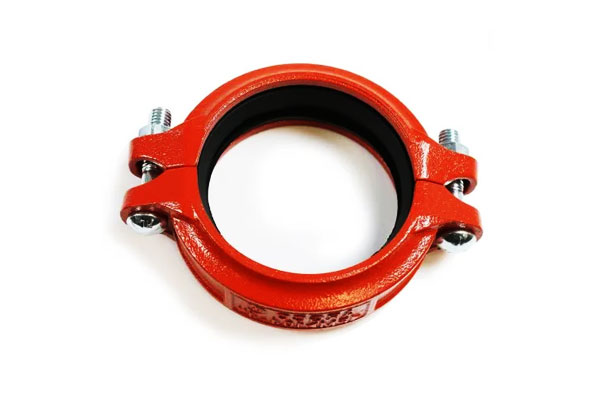
Ikkastjar tar-ramel is the most traditional and widely used method for producing ductile iron components, particularly those conforming to ASTM A536.
It involves forming a mold cavity from compacted sand, into which molten metal is poured.
The process is highly adaptable and economical for producing both simple and complex shapes in low to medium volumes.
Sand casting is especially advantageous for large and heavy parts that do not require ultra-fine surface finishes.
Due to its flexible mold design and low tooling costs, sand casting remains a preferred choice in industries such as construction, agrikoltura, and heavy equipment manufacturing.
| Karatteristika | Dettalji |
| Materjal tal-Moffa | Silica sand mixed with a binder (E.g., tafal, raża) |
| Applikazzjonijiet | Djar, parentesi, taljoli, korpi tal-pompa, gearboxes |
| Vantaġġi | Cost-effective for low volume, versatile shapes, large size capacity |
| Limitazzjonijiet | Moderate surface finish and dimensional tolerance (Ra ~6.3–12.5 µm) |
Shell Molding Casting Ductile Iron
Shell molding casting is a refined version of sand casting that uses a thermosetting resin-coated fine sand to form thin, hard shell molds.
These shells are created by heating a metal pattern, applying the coated sand, and then curing it to form a precise and rigid mold cavity.
This process significantly improves dimensional accuracy, finitura tal-wiċċ, and repeatability over traditional green sand methods.
Shell molding is ideal for medium-sized parts with moderate complexity and is commonly used in automotive and valve industries, where dimensional consistency and reduced post-processing are critical.
| Karatteristika | Dettalji |
| Materjal tal-Moffa | Pre-coated resin sand “shells” heated and cured to form rigid molds |
| Applikazzjonijiet | Small to medium-sized parts requiring precision—valve bodies, manifolds |
| Vantaġġi | Superior finish (Ra ~3.2–6.3 µm), ripetibbiltà għolja, magni mnaqqsa |
| Limitazzjonijiet | Higher tooling cost, less suitable for very large parts |
Ikkastjar tal-Investiment tal-Ħadid Duttili (Casting tax-Xama Mitlufa)
Ikkastjar ta 'investiment, also known as lost wax casting, is a precision casting method particularly suitable for kumpless, dettaljati, and thin-walled ductile iron components.
A wax model of the final part is created, coated in ceramic material to form a mold, and then the wax is melted away. The resulting ceramic shell is filled with molten metal.

This process delivers tolleranzi stretti, Finituri tal-wiċċ eċċellenti, and minimal material waste, making it highly suitable for small parts requiring intricate geometries, speċjalment fl-ajruspazju, mediku, and defense industries.
It allows engineers to combine multiple features into a single casting, reducing the need for assembly or secondary machining.
| Karatteristika | Dettalji |
| Mold Type | Ceramic shell formed around wax patterns |
| Applikazzjonijiet | Medical components, turbocharger impellers, automotive brackets |
| Vantaġġi | Preċiżjoni dimensjonali eċċellenti (± 0.1 mm), thin wall casting, minimal machining |
| Limitazzjonijiet | Higher production cost, less economical for large parts |
Ductile Iron Permanent Mold Casting (Gravità Die Casting)
Ikkastjar tal-moffa permanenti, also referred to as gravity die casting, użi durable metal molds—typically made of cast iron or steel—that can be reused many times.
Unlike sand or shell molds, these molds are not destroyed after each pour, making the process ideal for medium to high production volumes.
Molten ductile iron is poured into the mold purely by gravity, without pressure assistance.
The result is a part with superior dimensional consistency, porożità mnaqqsa, and a smoother finish than most sand-cast parts.
Though more limited in geometric complexity, permanent mold casting excels in producing symmetrical, moderately complex parts such as housings, parentesi, u fittings.
| Karatteristika | Dettalji |
| Materjal tal-Moffa | Steel or iron permanent molds |
| Applikazzjonijiet | Automotive and industrial parts with repetitive geometries |
| Vantaġġi | Consistent quality, porożità mnaqqsa, finitura tajba tal-wiċċ |
| Limitazzjonijiet | Higher mold cost, limited to simpler part geometries and lower melting point alloys (ductile iron requires thermal management) |
Centrifugal Casting Ductile Iron
Centrifugal casting is a specialized process used to manufacture cylindrical or ring-shaped ductile iron components by pouring molten metal into a rapidly spinning mold.
The centrifugal force distributes the molten metal outward, eliminating gas pockets and inclusions, and producing a dense, mikrostruttura fina.
This method is ideal for applications demanding excellent mechanical integrity and uniformity, such as pipes, bearing sleeves, ċilindri idrawliċi, and heavy-wear parts.
Centrifugal casting is especially beneficial in producing hollow or tubular components with superior wall thickness control and minimal defects.
| Karatteristika | Dettalji |
| Applikazzjonijiet | Pipe systems, hydraulic sleeves, liners |
| Vantaġġi | Excellent density and mechanical properties (due to directional solidification), inklużjonijiet baxxi |
| Limitazzjonijiet | Limited to tubular or cylindrical parts, high equipment cost |
Continuous Casting Ductile Iron (for Bar Stock Production)
Continuous casting is a semi-continuous process where molten ductile iron is solidified into a bar, billetta, or slab as it flows through a water-cooled mold.
This method is primarily used to produce raw material stock that is later machined into finished components.
Continuous casting of ASTM A536 iron ensures uniform structure, makkinabilità għolja, and consistent chemical composition across the entire length of the bar.
It is commonly used for producing high-quality round, kwadru, and rectangular bars used in gear blanks, hydraulic fittings, and general-purpose engineering components.
This process significantly reduces waste and enhances throughput in foundries.
| Karatteristika | Dettalji |
| Applikazzjonijiet | Raw stock for bushings, gerijiet, fittings |
| Vantaġġi | Uniform grain structure, Makkinabilità tajba, disponibbiltà materjali |
| Limitazzjonijiet | Requires subsequent machining, not net-shape capable |
Lost Foam Casting Ductile Iron
L-ikkastjar tar-ragħwa mitlufa is an advanced near-net-shape casting process that replaces traditional wax patterns (used in investment casting) ma ' polystyrene foam patterns, which are left in the mold and vaporized when molten ductile iron is poured in.
The vaporized foam is displaced by the incoming metal, resulting in complex and highly detailed castings without parting lines or cores.
This method is highly suitable for complex components like engine blocks, irjus taċ-ċilindri, and pump housings.
Lost foam casting offers excellent dimensional accuracy and reduced assembly needs, jagħmilha ideali għal consolidated component design in the automotive and industrial sectors.
| Karatteristika | Dettalji |
| Applikazzjonijiet | Blokki tal-magna, housings tat-trasmissjoni, complex enclosures |
| Vantaġġi | No parting lines, high dimensional complexity, reduced cores |
| Limitazzjonijiet | Specialized tooling, longer lead time, requires vacuum assistance for large parts |
6. Heat Treatment of ASTM A536 Ductile Iron
Trattament tas-sħana is a critical step in optimizing the microstructure and mechanical properties of ductile iron castings.
Although many grades of ASTM A536 are used in the as-cast condition, heat treatment allows engineers to fine-tune hardness, Qawwa tat-tensjoni, duttilità, u toughness to meet specific application demands.
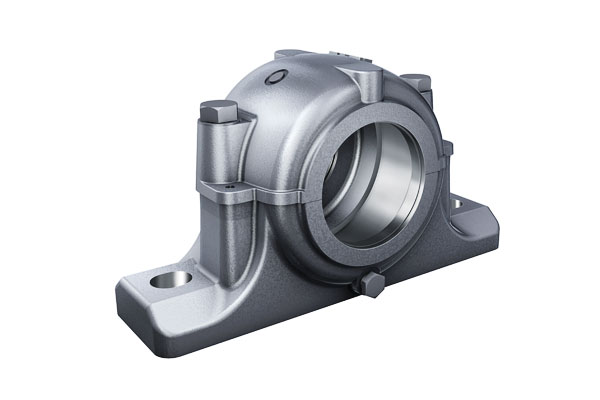
Ductile iron’s response to heat treatment depends primarily on its matrix composition (ferrite, perlita, or mixed) u l- desired mechanical outcome, such as higher wear resistance, makkinabilità mtejba, or increased impact resistance.
Proċessi Komuni ta' Trattament tas-Sħana
| Proċess | Skop | Typical Grades Treated | Effetti ewlenin |
| Ttremprar | Soften the material, ittejjeb id-duttilità | 60-40-18, 65-45-12 | Converts pearlite to ferrite; Ittejjeb il-makkinarju |
| Normalizzazzjoni | Irfina l-istruttura tal-qamħ, iżżid is-saħħa | 80-55-06, 100-70-03 | Promotes uniform pearlitic matrix; enhances hardness |
| Tkessiħ & Ittemprar | Maximize strength and toughness | 100-70-03, 120-90-02 | Produces tempered martensite; increases wear resistance |
| L-istress li jtaffi | Reduce internal casting stresses | All grades | Improves dimensional stability and reduces warping |
| Austempering | Produce austempered ductile iron (ADI) | Special ADI grades | Saħħa eċċezzjonali, Reżistenza għall-ilbies, and fatigue life |
Detailed Description of Key Treatments
Ttremprar
Għan: To produce a soft, ductile ferritic matrix.
Proċess: Heat to ~870–900°C, hold for several hours, then furnace-cool slowly.
Riżultat: Improves elongation (up to 18–20%) u reżistenza għall-impatt. Common for parts in fluid handling, pressure pipes, or low-stress components.
Normalizzazzjoni
Għan: To achieve a fine pearlitic matrix for higher strength and moderate ductility.
Proċess: Heat to ~870–950°C, hold briefly, then air cool.
Riżultat: Strength and hardness increase, with moderate toughness. Common in gears, heavy-duty housings, u armi ta' sospensjoni.
It-tifi u t-Ttemprar
Għan: To develop high strength and surface hardness for wear-prone applications.
Proċess: Quench in oil or water from ~870–950°C, then temper at ~400–600°C.
Riżultat: Qawwa għolja tat-tensjoni (sa 827 MPA), reżistenza tajba għall-ilbies, but reduced elongation. Ideali għall-għodda, Xaftijiet, and mining parts.
L-istress li jtaffi
Għan: To reduce internal stresses from machining or casting without changing mechanical properties.
Proċess: Heat to ~550–650°C, żomm, and air cool.
Riżultat: Reduces risk of distortion or cracking during service.
Austempering (for ADI – Austempered Ductile Iron)
Għan: To produce a bainitic microstructure for superior strength and fatigue life.
Proċess: Austenitize (~900°C), quench into a salt bath (~260–400°C), hold to transform to bainite, then air cool.
Riżultat: Achieves tensile strengths up to 1600 MPa with elongation of 1–3%. Used in high-performance applications like rail parts, drive components, and military armor.
7. Applications of ASTM A536 Ductile Iron
Automotive u Trasport
- Crankshafts
- Knuckles tal-istering
- Armi ta' sospensjoni u parentesi
- Brake calipers and drums
- Alloġġi differenzjali
Makkinarju u Tagħmir Industrijali
- Gearboxes u housings
- Bażi tal-għodda tal-magni
- Shafts and couplings
- Pump casings and impellers
- Housings li jġorru
Agriculture and Off-Highway Equipment
- Housings ta 'trasmissjoni
- Axle supports and hubs
- Komponenti tal-gearbox
- Tillage and plow parts
Municipal and Utility Infrastructure
- Water and sewer pipes
- Għatti tat-tappieri
- Valve bodies and flanges
- Fire hydrants

Żejt, Gass, and Petrochemical Industries
- Valve bodies and seats
- Fittings tal-pajpijiet u couplings
- Housings tal-pompa
- Flanged joints and elbows
Wind and Energy Sectors
- Turbine hubs and flanges
- Komponenti tal-gearbox
- Housings li jġorru
Railways and Heavy Transport
- Brake discs and wheels
- Couplers and yokes
- Bogie components
8. Advantages of ASTM A536 Ductile Iron
ASTM A536 ductile iron, also known as nodular cast iron or spheroidal graphite iron, offers a distinctive balance of strength, duttilità, ebusija, u castability.

Proporzjon Eċċellenti ta 'Qawwa għall-Piż
Ductile iron provides mechanical strength comparable to many steels but at a lower density and cost.
This makes it ideal for structural components requiring high load-bearing capacity without excessive mass.
Superior Ductility and Impact Resistance
The spheroidal (nodulari) graphite structure in ductile iron allows it to deform under stress without cracking, enabling it to absorb mechanical shocks and dynamic loads more effectively than gray iron.
Reżistenza Mtejba għall-Għeja
ASTM A536 ductile iron maintains its integrity under cyclic loading, making it highly suitable for components subject to vibration or rotational motion.
Castability Eċċellenti
One of ductile iron’s most defining traits is its ability to be cast into complex shapes with fine details while retaining dimensional stability. This reduces machining time and material waste.
Kosteffikaċja
Compared to many carbon steels or alloy steels, ductile iron offers a competitive advantage in terms of material cost, processing cost, and total lifecycle expenditure.
Good Corrosion Resistance
Although not as corrosion-resistant as stainless steel, ASTM A536 ductile iron—especially when alloyed or coated—performs well in moderately corrosive environments.
Trattamenti tal-wiċċ (E.g., galvanizzar, epoxy coating) improve resistance
Makkinabilità
Ductile iron can be machined efficiently due to the presence of graphite nodules, which act as lubricants during cutting. This reduces tool wear and increases productivity.
Thermal and Vibration Damping
Ductile iron exhibits excellent vibration and acoustic damping characteristics due to its graphite microstructure, outperforming steel in many dynamic applications.
Grade Versatility
ASTM A536 covers multiple grades (E.g., 60-40-18, 80-55-06, 100-70-03), each tailored for specific mechanical and performance needs—from high ductility to ultra-high strength.
9. Comparison with Other Standards
| Standard | Reġjun | Typical Equivalent Grades | Differenzi ewlenin |
| ASTM A536 | USA | 60-40-18, 65-45-12, eċċ. | Focus on mechanical properties only |
| ISO 1083 | Globali | GJS-400-15, GJS-500-7, GJS-700-2 | Slightly different strength classes |
| Fi 1563 | Ewropa | EN-GJS-400-15, EN-GJS-600-3, eċċ. | Similar to ISO, with more grade granularity |
| JIS G5502 | Ġappun | FCD450, FCD600, FCD700 | Metric units, similar strength levels |
| ASTM A395 | USA | 60-40-18 (pressure-rated) | Controlled chemistry and max Brinell hardness |
| ASTM A897 | USA | Austempered ductile iron (ADI) gradi | Higher strength and wear resistance |
10. ASTM A536 Ħadid duttili vs Other Materials
| Proprjetà | ASTM A536 Ħadid Duttili | Ħadid fondut griż (ASTM A48) | Azzar tal-karbonju (Aisi 1045) | Azzar li ma jissaddadx (Aisi 316) |
| Qawwa tat-tensjoni (MPA) | 414–700 | 150–300 | 570–740 | 515–620 |
| Saħħa tar-rendiment (MPA) | 275–500 | N / a (brittle failure) | 350–480 | 205–290 |
| Titwil (%) | 2–18 | <1 | 12–25 | 40–60 |
| Ebusija (Brinell) | 140–250 | 150–220 | 160–210 | 150–190 |
| Reżistenza għall-għeja | Tajjeb | Fqir | Tajjeb | Eċċellenti |
| Impatt ebusija | Eċċellenti | Fqir | Tajjeb | Tajjeb ħafna |
| Reżistenza għall-korrużjoni | Moderat | Baxx | Baxx | Eċċellenti |
| Makkinabilità | Tajjeb ħafna | Eċċellenti | Tajjeb | Moderat |
| Kastabbiltà | Eċċellenti | Eċċellenti | Fqir | Fqir |
| Konduttività termali (W / m · k) | ~35–50 | ~45–55 | ~45–50 | ~15 |
| Densità (g / cm³) | 7.1 | 7.0 | 7.85 | 8.0 |
| Spiża (Materjal & Ipproċessar) | Baxx | Baxx ħafna | Moderat | Għoli |
| Applikazzjonijiet tipiċi | Gerijiet, pajpijiet, housings tal-pompa | Għatti tat-tappieri, blokki tal-magna | Xaftijiet, boltijiet, partijiet strutturali | Valvoli, Fittings tal-baħar, food-grade parts |
| Weldabilità | Moderat (Saħħan minn qabel meħtieġ) | Fqir | Tajjeb | Tajjeb |
| Damping tal-Vibrazzjoni | Eċċellenti | Eċċellenti | Fqir | Fqir |
Intuwizzjonijiet Ewlenin:
- ASTM A536 Ħadid Duttili offers an excellent balance between strength, duttilità, spiża, and castability—making it ideal for structural and dynamic components.
- Ħadid fondut griż is cheaper but brittle and not suitable for dynamic or impact-loaded applications.
- Azzar tal-karbonju provides higher strength and weldability but is harder to cast and more expensive to machine.
- Azzar li ma jissaddadx (E.g., 316) excels in corrosion resistance and ductility but comes with significantly higher material and processing costs.
11. Konklużjoni
ASTM A536 is more than just a material standard—it’s a strategic specification for engineers who need reliable mechanical performance from cast components.
Its ductile nature, structural strength, and adaptable properties make it indispensable in modern manufacturing.
Whether you are designing load-bearing suspension arms or corrosion-resistant pump housings, ASTM A536 provides the flexibility and assurance required to meet technical, ekonomiku, and environmental demands.
Through thoughtful grade selection, trattament tas-sħana, u l-ipproċessar, manufacturers can achieve optimal performance in diverse industrial applications.
Dan: Precision Casting Solutions for ASTM A536 Ductile Iron
Dan is a trusted foundry partner specializing in ASTM A536 ductile iron ikkastjar, offering a comprehensive suite of advanced manufacturing services tailored to meet the demanding needs of modern industry.
With years of expertise in metallurgical engineering and foundry technology, Dan jagħti high-performance ductile iron components that combine mechanical strength, preċiżjoni dimensjonali, u affidabilità fit-tul.
Our Casting Capabilities for ASTM A536 Include:
- Ikkastjar tar-ramel: Ideal for medium-to-large components, ensuring robust mechanical integrity and cost-efficiency.
- Ikkastjar ta 'investiment (Xama' mitlufa): Perfect for intricate geometries requiring high dimensional accuracy and fine surface finishes.
- Molding tal-qoxra: A precision method suitable for complex ductile iron parts with tight tolerances and consistent repeatability.
- Tidwib ċentrifugali: Excellent for cylindrical parts such as pipe fittings, kmiem, and bushings requiring dense, defect-free microstructures.
- Ikkastjar permanenti tal-moffa: Delivers superior mechanical properties and consistent quality for high-volume production runs.
Minn automotive and hydraulics to municipal infrastructure and heavy machinery, Dan offers full-spectrum solutions—from pattern design and metallurgical consulting to machining and surface finishing.
We strictly adhere to ASTM A536 standards and can tailor mechanical properties (E.g., 60-40-18, 80-55-06, 100-70-03 gradi) based on customer specifications.
Għaliex Agħżel DEZE?
- ISO-certified quality systems
- Advanced foundry automation
- Rapid prototyping and short lead times
- Custom alloy and grade matching
- Full in-house testing and inspection (kimika, mekkaniku, Ndt)
Partner with DEZE to benefit from precise, high-integrity ductile iron castings that meet your performance and durability requirements—delivered on time and on spec.
FAQs
What is the difference between ductile iron and gray iron?
Ħadid duttili (ASTM A536) fih nodulari (sferoidali) grafita, giving it superior toughness, titwil, u reżistenza għall-għeja. B'kuntrast, ħadid griż has flake graphite, which makes it more brittle.
Ductile iron is suitable for parts subject to dynamic loads, whereas gray iron is often used where vibration damping is more critical.
Is ASTM A536 ductile iron weldable?
IVA, ductile iron can be iwweldjat, but it requires proper preheating and post-weld heat treatment to avoid cracking.
Welding is easier on lower-strength grades like 60-40-18 due to their higher ductility.
Is ASTM A536 Ductile Iron Rust-Prone?
IVA, ASTM A536 ductile iron can rust because it contains iron and lacks inherent corrosion resistance.
Madankollu, it can be protected with coatings like paint, epossidiku, or galvanizing for improved performance in corrosive environments.
Is ASTM A536 Ductile Iron Magnetic?
IVA, ASTM A536 ductile iron is magnetic. Like most ferrous alloys, its iron-rich composition gives it magnetic properties, making it responsive to magnetic fields.