1. Ievads
Mūsdienu straujajā ražošanas vidē, griešanas tehnoloģijām ir izšķiroša nozīme, lai precīzi un efektīvi veidotu materiālus.
Ar tehnoloģiju sasniegumiem, ražotājiem tagad ir pieejamas dažādas griešanas metodes, katrs atbilst dažādām vajadzībām un lietojumiem.
Starp populārākajām iespējām ir EDM (Elektriskās izlādes apstrāde), Lāzers, Ūdens strūkla, un plazmas griešana.
Katrai metodei ir unikālas īpašības, stiprās puses, un ierobežojumi, tāpēc ir svarīgi saprast, kura tehnika vislabāk atbilst jūsu konkrētajām projekta prasībām.
Šis emuārs vispusīgi salīdzina šīs četras griešanas tehnoloģijas, palīdzot pieņemt apzinātu lēmumu.
2. Kas ir CNC griešana?
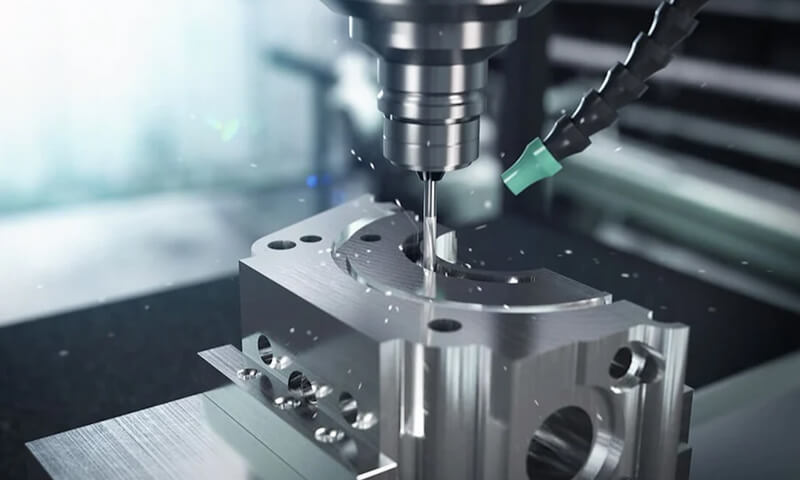
CNC (Datora skaitliskā vadība) griešana ir visprogresīvākā ražošanas tehnoloģija, kurā tiek izmantotas datorizētas iekārtas, lai veiktu precīzus griezumus, veidošana, un dažādu materiālu urbšana, ieskaitot metālus, plastmasa, malka, un kompozītmateriāli.
Šī tehnoloģija ir mainījusi materiālu apstrādi, piedāvā nepārspējamu precizitāti, efektivitāte, un atkārtojamība.
Kā darbojas CNC griešana?
CNC griešanas process sākas ar digitālā dizaina izveidi datorizētā dizainā (Kaze) programmatūra, kas ģenerē detalizētu vēlamā produkta modeli.
Pēc tam šis CAD fails tiek pārveidots mašīnlasāmās instrukcijās, vadīt CNC mašīnas kustības.
Izmantojot šos norādījumus, CNC mašīna precīzi manevrē griezējinstrumentus, lai izpildītu dizainu, achieving detailed and accurate cuts.
3. Pārskats par griešanas tehnoloģijām
Mūsdienu ražošanā, several cutting technologies are used to shape and cut materials into precise components.
Each technology has unique strengths and is suited for different types of materials, complexity of designs, un ražošanas prasības.
Below is an overview of four popular cutting technologies: EDM (Elektriskās izlādes apstrāde), Lāzera griešana, Ūdensjeta griešana, un Griešana plazmā.
EDM (Elektriskās izlādes apstrāde)
Definīcija:
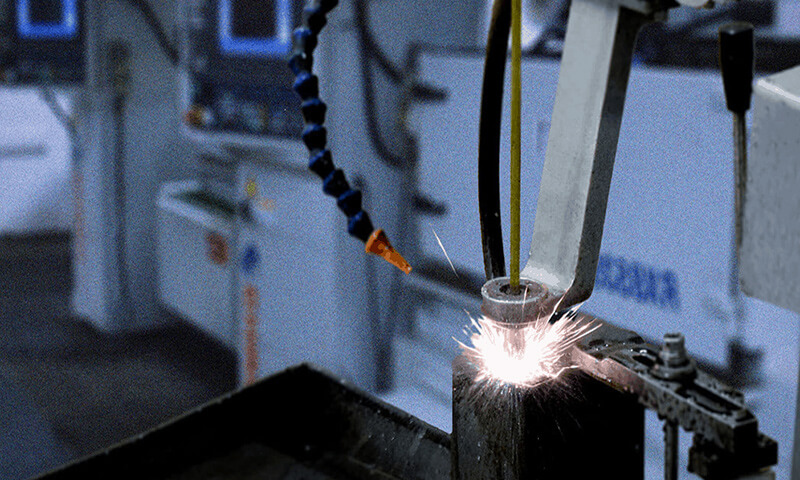
EDM uses electrical sparks to erode material from a workpiece. It’s a non-mechanical process, meaning no cutting tools physically touch the material.
Tā vietā, electrical discharges are used to melt and remove material from the workpiece surface.

Pieteikumi:
EDM is ideal for cutting hard metals and producing intricate designs, such as those used in toolmaking, mold manufacturing, un kosmosa komponenti.
Galvenās funkcijas:
- Īpaši augsta precizitāte, capable of producing fine details.
- Suitable for materials that are hard to machine with traditional methods.
- Slow cutting speed but highly accurate for small, sarežģītas daļas.
Lāzera griešana
Definīcija:
Laser cutting uses a focused beam of light to melt, sadedzināt, or vaporize material along the cutting path.
The laser is precisely controlled by a computer to achieve detailed cuts in various materials.

Pieteikumi:
Laser cutting is popular in industries like automotive, avi kosmosa, and signage for cutting thin to medium-thick metals, plastmasa, un koka.
Galvenās funkcijas:
- Offers high precision and clean cuts.
- Ideal for cutting intricate shapes and fine details.
- Works best with thinner materials but can handle thicker metals at slower speeds.
Ūdensjeta griešana
Definīcija:
Waterjet cutting uses a high-pressure jet of water, bieži sajauc ar abrazīviem, to cut through materials.
It’s a cold-cutting process, meaning no heat is involved, which eliminates heat-affected zones.

Pieteikumi:
Used in industries such as stone cutting, avi kosmosa, autobūves, un pārtikas pārstrāde.
Waterjet cutting is capable of cutting a wide variety of materials, from metals and ceramics to plastics and rubber.
Galvenās funkcijas:
- Versatile and can cut a wide range of materials without altering material properties.
- No heat distortion, making it ideal for heat-sensitive materials.
- Slower than laser cutting but can handle much thicker materials.
Griešana plazmā
Definīcija:
Plasma cutting uses an electrically ionized gas (plazma) to cut metals by heating them to a high temperature and blowing away the molten material.
This process is commonly used to cut metals with high melting points.

Pieteikumi:
Plasma cutting is widely used in the manufacturing of sheet metal, būvniecība, and shipbuilding for cutting thicker metals, piemēram, tērauds, alumīnijs, un nerūsējošais tērauds.
Galvenās funkcijas:
- Fast cutting speed, ideal for large-scale production.
- Primarily used for conductive metals.
- Can produce rougher edges compared to other cutting methods, but suitable for cutting thick materials.
4. EDM vs lāzers vs Waterjet vs plazma: Kura no tām ir labākā CNC griešanas metode
When choosing the proper CNC cutting technology for your project, understanding the pros and limitations of each method is essential.
Here’s a brief comparison of EDM, Lāzers, Ūdens strūkla, and Plasma cutting to help you determine which one is the best fit for your needs
EDM griešana pret lāzergriešanu: Detalizēts salīdzinājums
1. Materiāla savietojamība
-
- Stiprās puses: Ideal for conductive materials such as hardened steel, titāns, volframa karbīds, and other electrically conductive metals.
- Ierobežojumi: Limited to materials that can conduct electricity, ruling out non-conductive materials like ceramics or plastics.
- Lāzera griešana:
-
- Stiprās puses: Daudzpusīgs, capable of cutting a wide range of materials including metals (alumīnijs, nerūsējošais tērauds, vara), plastmasa, malka, keramika, kompozītmateriāli, and even some fabrics.
- Ierobežojumi: Less effective on highly reflective materials without proper adjustments to the laser settings.
2. Precizitāte un precizitāte
- EDM Cutting:
-
- Pielaide: Achieves extremely tight tolerances, often down to ±0.0005 inches.
- Detaļa: Lieliski piemērots smalku detaļu un sarežģītu ģeometriju izgatavošanai bez mehāniskas slodzes uz materiālu.
- Virsmas apdare: Izgatavo augstas kvalitātes virsmas apdari, samazinot nepieciešamību pēc sekundārajām operācijām.
- Lāzera griešana:
-
- Pielaide: Parasti sasniedz pielaides aptuveni ±0,005 collas, kas joprojām ir ļoti precīzs, bet ne tik stingrs kā EDM.
- Detaļa: Spēj veikt sarežģītus griezumus un nelielas funkcijas, lai gan tas ir mazāk piemērots īpaši smalkām detaļām salīdzinājumā ar EDM.
- Virsmas apdare: Nodrošina tīras malas ar minimālām šķembām, lai gan siltuma skartajām zonām var būt nepieciešama pēcapstrāde.
3. Griešanas ātrums
- EDM Cutting:
-
- Ātrums: Parasti lēnāk procesa rakstura dēļ, īpaši sarežģītiem dizainiem un cietiem materiāliem.
- Pieteikumi: Vispiemērotākais neliela apjoma ražošanas darbiem, kur precizitāte ir lielāka par ātrumu.
- Lāzera griešana:
-
- Ātrums: Ātrāks plāniem materiāliem un vienkāršākiem griezumiem. Lai arī, ātrums ievērojami samazinās ar biezākiem materiāliem.
- Pieteikumi: Piemērots gan maza, gan liela apjoma ražošanai, depending on material thickness and complexity.
4. Biezuma iespējas
- EDM Cutting:
-
- Diapazons: Can handle materials up to several inches thick, particularly effective for very hard or intricate parts.
- Pieteikumi: Ideal for aerospace components, veidnes, and dies that require extreme precision and strength.
- Lāzera griešana:
-
- Diapazons: Limited to approximately 1 inch for most metals, although some lasers can cut slightly thicker materials.
- Pieteikumi: Commonly used for sheet metal fabrication, automobiļu detaļas, un elektroniskās sastāvdaļas.
5. Karstuma ietekmētā zona (Zarns)
- EDM Cutting:
-
- Ietekme: No heat-affected zone, preserving material properties and integrity.
- Priekšrocības: Prevents thermal distortion and changes in material hardness, crucial for delicate or heat-sensitive applications.
- Lāzera griešana:
-
- Ietekme: Creates a heat-affected zone, which can alter material properties near the cut edge.
- Apsvērumi: May require post-processing to remove or mitigate HAZ effects, especially for critical applications.
6. Izmaksas un efektivitāte
- EDM Cutting:
-
- Sākotnējās izmaksas: Higher due to specialized equipment and setup time.
- Ekspluatācijas izmaksas: Lower operational costs once set up, especially for low-volume, high-precision work.
- Enerģijas patēriņš: Relatively low energy consumption compared to laser cutting.
- Lāzera griešana:
-
- Sākotnējās izmaksas: High initial investment for laser systems.
- Ekspluatācijas izmaksas: Higher operational costs are driven by energy consumption and maintenance.
- Enerģijas patēriņš: Significant energy consumption, particularly for high-power lasers.
7. Ietekme uz vidi
- EDM Cutting:
-
- Atkritumu apsaimniekošana: Minimāli atkritumi, but requires careful disposal of dielectric fluid used during the cutting process.
- Ilgtspējība: Low environmental impact overall.
- Lāzera griešana:
-
- Atkritumu apsaimniekošana: Generates fumes and dust, requiring ventilation and filtration systems.
- Ilgtspējība: Higher energy consumption contributes to a larger carbon footprint.
Secinājums: Izvēle starp EDM un lāzergriešanu
For Extreme Precision and Hard Materials: If your project demands extreme precision, especially when working with hard materials like hardened steel or titanium, EDM cutting is the superior choice.
It excels in producing fine details without causing thermal damage, making it ideal for aerospace, medicīniskās ierīces, and tooling applications.
For Versatility and High-Speed Production: When versatility and speed are priorities, and you’re dealing with a variety of materials including thinner metals, plastmasa, vai kompozītmateriāli,
laser cutting offers a compelling solution. Its ability to handle diverse materials and achieve high-speed production makes it suitable for industries like automotive, elektronika, un lokšņu metāla izgatavošana.
Lāzera griešana pret ūdens strūklu: Visaptverošs salīdzinājums
1. Materiāla savietojamība
- Lāzera griešana:
-
- Stiprās puses: Highly versatile, capable of cutting metals (alumīnijs, nerūsējošais tērauds, vara), plastmasa, malka, keramika, kompozītmateriāli, and even some fabrics.
- Ierobežojumi: Less effective on highly reflective materials like copper or aluminum without proper adjustments to the laser settings.
Not suitable for non-metallic materials that do not absorb laser energy efficiently.
- Ūdensjeta griešana:
-
- Stiprās puses: Cuts almost any material, ieskaitot metālus, akmens, stikls, kompozītmateriāli, gumijas, un plastmasa. Ideal for materials sensitive to heat.
- Ierobežojumi: Performance can be affected by extremely hard or abrasive materials, but still more versatile than laser cutting in terms of material types.
2. Precizitāte un precizitāte
- Lāzera griešana:
-
- Pielaide: Achieves high precision with tolerances around ±0.005 inches, making it suitable for detailed and intricate cuts.
- Virsmas apdare: Nodrošina tīras malas ar minimālām šķembām, lai gan siltuma skartajām zonām var būt nepieciešama pēcapstrāde.
- Detaļa: Excellent for small features and fine details but less suited for extremely complex geometries compared to waterjet.
- Ūdensjeta griešana:
-
- Pielaide: Provides moderate precision with tolerances around ±0.005 inches, comparable to laser cutting.
- Virsmas apdare: Produces a smooth edge with no heat-affected zones, eliminating thermal distortion.
- Detaļa: Capable of handling complex shapes and contours without losing accuracy, padarot to ideāli piemērotu sarežģītiem dizainiem.
3. Griešanas ātrums
- Lāzera griešana:
-
- Ātrums: Ātrāks plāniem materiāliem un vienkāršākiem griezumiem. Lai arī, ātrums ievērojami samazinās ar biezākiem materiāliem.
- Pieteikumi: Suitable for high-volume production of thin materials, such as sheet metal fabrication and electronics components.
- Ūdensjeta griešana:
-
- Ātrums: Generally slower than laser cutting, especially for complex cuts. Lai arī, maintains consistent speed across various material thicknesses.
- Pieteikumi: Best for low to medium-volume production where precision and material versatility are crucial.
4. Biezuma iespējas
- Lāzera griešana:
-
- Diapazons: Limited to approximately 1 inch for most metals, although some lasers can cut slightly thicker materials.
- Pieteikumi: Commonly used for sheet metal fabrication, automobiļu detaļas, un elektroniskās sastāvdaļas.
- Ūdensjeta griešana:
-
- Diapazons: Efficiently cuts materials up to 1 foot thick, making it suitable for very thick materials.
- Pieteikumi: Ideal for cutting thick metals, akmens, stikls, and other materials that laser cutting cannot handle effectively.
5. Karstuma ietekmētā zona (Zarns)
- Lāzera griešana:
-
- Ietekme: Creates a heat-affected zone, which can alter material properties near the cut edge.
- Apsvērumi: May require post-processing to remove or mitigate HAZ effects, especially for critical applications.
- Ūdensjeta griešana:
-
- Ietekme: No heat-affected zone, preserving material properties and integrity.
- Priekšrocības: Prevents thermal distortion and changes in material hardness, crucial for delicate or heat-sensitive applications.
6. Izmaksas un efektivitāte
- Lāzera griešana:
-
- Sākotnējās izmaksas: High initial investment for laser systems.
- Ekspluatācijas izmaksas: Higher operational costs are driven by energy consumption and maintenance.
- Enerģijas patēriņš: Significant energy consumption, particularly for high-power lasers.
- Ūdensjeta griešana:
-
- Sākotnējās izmaksas: Moderate initial costs for waterjet systems.
- Ekspluatācijas izmaksas: Higher operating costs due to water and abrasive consumption.
- Enerģijas patēriņš: Lower energy consumption compared to laser cutting.
7. Ietekme uz vidi
- Lāzera griešana:
-
- Atkritumu apsaimniekošana: Generates fumes and dust, requiring ventilation and filtration systems.
- Ilgtspējība: Higher energy consumption contributes to a larger carbon footprint.
- Ūdensjeta griešana:
-
- Atkritumu apsaimniekošana: Videi draudzīgs, recycles water, and minimizes waste. Abrasive materials need proper disposal.
- Ilgtspējība: Lower environmental impact overall, especially when using recyclable abrasives.
Secinājums: Izvēle starp griešanu ar lāzeru un ūdens strūklu
For Thin Materials and High-Speed Production: If your project involves cutting thin materials like sheet metal, plastmasa, vai kompozītmateriāli, and you require high-speed production,
laser cutting offers an efficient and precise solution. Its ability to handle diverse materials and achieve high-speed production makes it ideal for industries like automotive, elektronika, un lokšņu metāla izgatavošana.
Bieziem materiāliem un materiālu daudzpusībai: Strādājot ar bieziem materiāliem, piemēram, metāliem, akmens, stikls, vai kompozītmateriāliem, vai ja jāizvairās no karstuma skartajām zonām, ūdens strūklas griešana izceļas.
Tas izceļas ar biezu materiālu griešanu ar precizitāti un materiāla integritātes saglabāšanu, padarot to piemērotu izmantošanai būvniecībā, avi kosmosa, un izgatavošana pēc pasūtījuma.
Griešana ar ūdens strūklu pret plazmas griešanu: Detalizēts salīdzinājums
1. Materiāla savietojamība
- Ūdensjeta griešana:
-
- Stiprās puses: Cuts almost any material, ieskaitot metālus (tērauds, alumīnijs, titāns), akmens, stikls, gumijas, plastmasa, un kompozītmateriāli. Tas ir īpaši izdevīgi materiāliem, kas ir jutīgi pret karstumu.
- Ierobežojumi: Performance can be affected by extremely hard or abrasive materials, bet joprojām piedāvā plašu daudzpusību.
- Griešana plazmā:
-
- Stiprās puses: Galvenokārt efektīvs vadošiem materiāliem, īpaši metāli, piemēram, tērauds, alumīnijs, un vara. Ideāli piemērots bieziem metāliem.
- Ierobežojumi: Tikai elektriski vadošiem materiāliem, izslēdzot nevadošus risinājumus, piemēram, keramiku vai koku.
2. Precizitāte un precizitāte
- Ūdensjeta griešana:
-
- Pielaide: Nodrošina augstu precizitāti ar pielaidēm aptuveni ±0,005 collas.
- Virsmas apdare: Izveido gludas malas bez siltuma ietekmētām zonām, eliminating thermal distortion.
- Detaļa: Capable of handling complex shapes and contours without losing accuracy, padarot to ideāli piemērotu sarežģītiem dizainiem.
- Griešana plazmā:
-
- Pielaide: Mazāk precīzs, ar pielaidēm līdz ±0,020 collām.
- Virsmas apdare: Tas rada a rougher edge compared to waterjet, often requiring post-processing to achieve smoother finishes.
- Detaļa: Suitable for simpler cuts and less detailed work due to its lower precision.
3. Griešanas ātrums
- Ūdensjeta griešana:
-
- Ātrums: Generally slower than plasma cutting, especially for complex cuts. Lai arī, maintains consistent speed across various material thicknesses.
- Pieteikumi: Best for low to medium-volume production where precision and material versatility are crucial.
- Griešana plazmā:
-
- Ātrums: Extremely fast for thick metals, padarot to ideāli piemērotu liela apjoma ražošanai. Faster cutting speeds for thicker materials compared to waterjet.
- Pieteikumi: Suited for rapid cutting and large-scale projects, particularly in industries requiring quick turnaround times.
4. Biezuma iespējas
- Ūdensjeta griešana:
-
- Diapazons: Efficiently cuts materials up to 1 foot thick, making it suitable for very thick materials.
- Pieteikumi: Ideal for cutting thick metals, akmens, stikls, and other materials that plasma cutting cannot handle effectively.
- Griešana plazmā:
-
- Diapazons: Works well with materials up to 6 collas biezs, particularly effective for thick metals.
- Pieteikumi: Commonly used for cutting thick metal plates in industries like shipbuilding, būvniecība, and heavy machinery manufacturing.
5. Karstuma ietekmētā zona (Zarns)
- Ūdensjeta griešana:
-
- Ietekme: No heat-affected zone, preserving material properties and integrity.
- Priekšrocības: Prevents thermal distortion and changes in material hardness, crucial for delicate or heat-sensitive applications.
- Griešana plazmā:
-
- Ietekme: Generates a significant heat-affected zone, which can alter material properties near the cut edge.
- Apsvērumi: May require post-processing to remove or mitigate HAZ effects, especially for critical applications.
6. Izmaksas un efektivitāte
- Ūdensjeta griešana:
-
- Sākotnējās izmaksas: Moderate initial costs for waterjet systems.
- Ekspluatācijas izmaksas: Higher operating costs due to water and abrasive consumption.
- Enerģijas patēriņš: Lower energy consumption compared to plasma cutting.
- Griešana plazmā:
-
- Sākotnējās izmaksas: Lower initial costs and moderate operational expenses, making it cost-effective for large volumes.
- Ekspluatācijas izmaksas: Moderate operational costs, driven by consumables like electrodes and gases.
- Enerģijas patēriņš: Relatively higher energy consumption, particularly for high-power plasma systems.
7. Ietekme uz vidi
- Ūdensjeta griešana:
-
- Atkritumu apsaimniekošana: Videi draudzīgs, recycles water, and minimizes waste. Abrasive materials need proper disposal.
- Ilgtspējība: Lower environmental impact overall, especially when using recyclable abrasives.
- Griešana plazmā:
-
- Atkritumu apsaimniekošana: Generates fumes and requires ventilation systems to manage emissions.
- Ilgtspējība: Higher environmental impact due to energy consumption and potential emissions from cutting processes.
Secinājums: Izvēle starp ūdens strūklu un plazmas griešanu
For Precision and Material Versatility: If your project demands high precision and involves a wide range of materials, including those sensitive to heat, waterjet cutting is the superior choice.
It excels in producing fine details and maintaining material integrity, padarot to ideāli piemērotu lietojumiem aviācijā, custom fabrication, and artistic endeavors.
For Speed and Thick Metal Cutting: When working with thick metals and requiring rapid, efficient cutting, plasma cutting stands out.
Tā ātrums un efektivitāte, apstrādājot ar biezām metāla plāksnēm, padara to piemērotu tādām nozarēm kā kuģu būve, būvniecība, and heavy machinery manufacturing, kur liela apjoma ražošana ir būtiska.
EDM griešana pret plazmas griešanu: Detalizēts salīdzinājums
1. Materiāla savietojamība
- EDM Cutting:
-
- Stiprās puses: Ideal for conductive materials such as hardened steel, titāns, volframa karbīds, and other electrically conductive metals.
- Ierobežojumi: Limited to materials that can conduct electricity, ruling out non-conductive materials like ceramics or plastics.
- Griešana plazmā:
-
- Stiprās puses: Galvenokārt efektīvs vadošiem materiāliem, īpaši metāli, piemēram, tērauds, alumīnijs, un vara. Ideāli piemērots bieziem metāliem.
- Ierobežojumi: Tikai elektriski vadošiem materiāliem, līdzīgi kā EDM, bet vairāk piemērots biezākiem un mazāk sarežģītiem griezumiem.
2. Precizitāte un precizitāte
- EDM Cutting:
-
- Pielaide: Achieves extremely tight tolerances, often down to ±0.0005 inches.
- Virsmas apdare: Nodrošina augstas kvalitātes virsmas apdari bez mehāniskas slodzes uz materiālu, samazinot nepieciešamību pēc sekundārajām operācijām.
- Detaļa: Lieliski piemērots smalku detaļu un sarežģītu ģeometriju veidošanai, neradot termiskus bojājumus.
- Griešana plazmā:
-
- Pielaide: Mazāk precīzs, ar pielaidēm līdz ±0,020 collām.
- Virsmas apdare: Tas rada raupjāka mala salīdzinājumā ar EDM, often requiring post-processing to achieve smoother finishes.
- Detaļa: Suitable for simpler cuts and less detailed work due to its lower precision.
3. Griešanas ātrums
- EDM Cutting:
-
- Ātrums: Parasti lēnāk procesa rakstura dēļ, īpaši sarežģītiem dizainiem un cietiem materiāliem.
- Pieteikumi: Vispiemērotākais neliela apjoma ražošanas darbiem, kur precizitāte ir lielāka par ātrumu.
- Griešana plazmā:
-
- Ātrums: Extremely fast for thick metals, padarot to ideāli piemērotu liela apjoma ražošanai. Ātrāks griešanas ātrums biezākiem materiāliem, salīdzinot ar EDM.
- Pieteikumi: Suited for rapid cutting and large-scale projects, particularly in industries requiring quick turnaround times.
4. Biezuma iespējas
- EDM Cutting:
-
- Diapazons: Can handle materials up to several inches thick, particularly effective for very hard or intricate parts.
- Pieteikumi: Ideal for aerospace components, veidnes, and dies that require extreme precision and strength.
- Griešana plazmā:
-
- Diapazons: Works well with materials up to 6 collas biezs, particularly effective for thick metals.
- Pieteikumi: Commonly used for cutting thick metal plates in industries like shipbuilding, būvniecība, and heavy machinery manufacturing.
5. Karstuma ietekmētā zona (Zarns)
- EDM Cutting:
-
- Ietekme: No heat-affected zone, preserving material properties and integrity.
- Priekšrocības: Prevents thermal distortion and changes in material hardness, crucial for delicate or heat-sensitive applications.
- Griešana plazmā:
-
- Ietekme: Generates a significant heat-affected zone, which can alter material properties near the cut edge.
- Apsvērumi: May require post-processing to remove or mitigate HAZ effects, especially for critical applications.
6. Izmaksas un efektivitāte
- EDM Cutting:
-
- Sākotnējās izmaksas: Higher due to specialized equipment and setup time.
- Ekspluatācijas izmaksas: Lower operational costs once set up, especially for low-volume, high-precision work.
- Enerģijas patēriņš: Salīdzinoši zems enerģijas patēriņš salīdzinājumā ar plazmas griešanu.
- Griešana plazmā:
-
- Sākotnējās izmaksas: Lower initial costs and moderate operational expenses, making it cost-effective for large volumes.
- Ekspluatācijas izmaksas: Moderate operational costs, driven by consumables like electrodes and gases.
- Enerģijas patēriņš: Relatively higher energy consumption, particularly for high-power plasma systems.
7. Ietekme uz vidi
- EDM Cutting:
-
- Atkritumu apsaimniekošana: Minimāli atkritumi, but requires careful disposal of dielectric fluid used during the cutting process.
- Ilgtspējība: Low environmental impact overall.
- Griešana plazmā:
-
- Atkritumu apsaimniekošana: Generates fumes and requires ventilation systems to manage emissions.
- Ilgtspējība: Higher environmental impact due to energy consumption and potential emissions from cutting processes.
Secinājums: Izvēle starp EDM un plazmas griešanu
For Extreme Precision and Hard Materials: If your project demands extreme precision, especially when working with hard materials like hardened steel or titanium, EDM cutting is the superior choice.
Tas izceļas ar smalku detaļu izgatavošanu un materiāla integritātes saglabāšanu, neradot termiskus bojājumus, making it ideal for aerospace, medicīniskās ierīces, and tooling applications.
For Speed and Thick Metal Cutting: When working with thick metals and requiring rapid, efficient cutting, plasma cutting stands out.
Tā ātrums un efektivitāte, apstrādājot ar biezām metāla plāksnēm, padara to piemērotu tādām nozarēm kā kuģu būve, būvniecība, and heavy machinery manufacturing, kur liela apjoma ražošana ir būtiska.
5. Salīdzinošā tabula
| Iezīmēt | EDM Cutting | Lāzera griešana | Ūdensjeta griešana | Griešana plazmā |
|---|---|---|---|---|
| Materiāla savietojamība | Vadītspējīgi materiāli | Dažādi materiāli | Gandrīz jebkurš materiāls | Vadītspējīgi materiāli |
| Precizitāte | ±0,0005 collas | ±0,005 collas | ±0,005 collas | ±0,020 collas |
| Griešanas ātrums | Lēni | Ātri (mazs), Lēni (biezs) | Mērens | Ātri |
| Biezuma iespējas | Vairākas collas | ~1 colla | Līdz 1 pēda | Līdz 6 collas |
| Maksāt | Augstāks iniciālis, zemākas operācijas | Augsts sākuma sākums, augstas operācijas | Moderate initial, augstas operācijas | Lower initial, moderate ops |
| Ietekme uz vidi | Minimāli atkritumi, and fluid disposal | Significant energy consumption | Videi draudzīgs, minimal waste | Heat generation, ventilācija |
6. Secinājums
Choosing the right cutting technology depends on multiple factors such as material type, nepieciešamo precizitāti, ražošanas apjoms, un budžeta ierobežojumi.
Each method brings unique advantages to the table.
Whether you value the unparalleled precision of EDM, the versatility of Laser, the eco-friendliness of Waterjet, or the speed of Plasma, there is a cutting method suited to every manufacturing challenge.
Izprotot katras metodes stiprās puses un ierobežojumus, manufacturers can choose the optimal cutting technology to meet their production goals.
For expert guidance and customized solutions, consult with industry professionals——Šis.