Įvadas
Liejimas, kaip vienas iš anksčiausiai įvaldytų metalo karštojo apdirbimo procesų žmonėms, gali pasigirti maždaug istorija 6,000 metų.
Kinija įžengė į bronzos liejinių klestėjimo laikotarpį 1700 BC ir 1000 pr. Kr, liejimo meistriškumas pasiekia gana aukštą lygį.
Kaip pagrindinis šiuolaikinės gamybos procesas, liejimas leidžia suformuoti sudėtingos formos metalinius komponentus, kuriuos sunku pagaminti kalimo arba apdirbimo būdu, ir jis plačiai taikomas kosminėje erdvėje, Automobiliai, Mašinos, ir tiksliųjų instrumentų pramonė.
Liejimo būdų pasirinkimas tiesiogiai nulemia liejimo kokybę, gamybos efektyvumą, ir gamybos sąnaudas.
1. Žaliojo smėlio liejimas (Įprastas smėlio liejimas)
Pagrindinė apibrėžimas & Proceso principas
Žalia Smėlio liejimas yra tradiciškiausias ir plačiausiai naudojamas liejimo būdas visame pasaulyje.
Pagrindinė jo žaliava yra liejyklų smėlis (daugiausia silicio smėlio; Kai silicio dioksidas neatitinka aukštos temperatūros reikalavimų, naudojamas specialus smėlis, pvz., cirkonio smėlis ir korundo smėlis.) ir smėlio rišikliai (molis yra labiausiai paplitęs; sausas aliejus, vandenyje tirpus silikatas, fosfatas, o sintetinės dervos yra alternatyvios galimybės).
Išorinės smėlio formos skirstomos į tris tipus pagal rišiklius ir stiprumo formavimo mechanizmus: žalio molio smėlio pelėsis, sausas molio smėlio pelėsis, ir chemiškai sujungta smėlio forma.
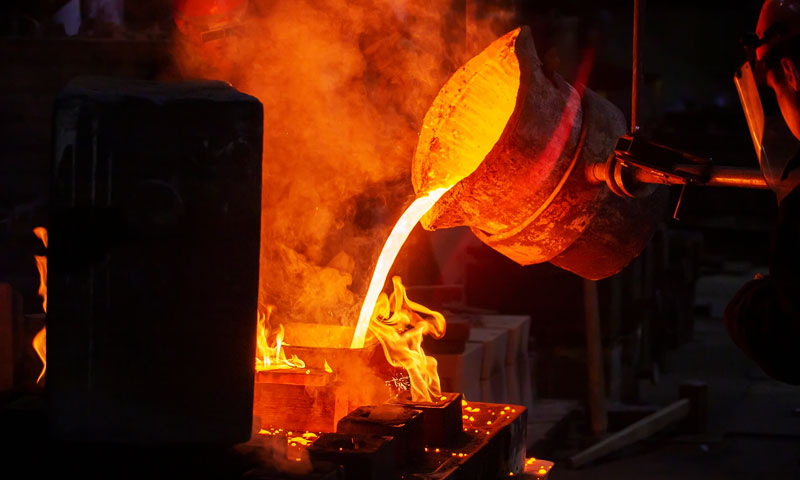
Išlydytas metalas pilamas į smėlio formą, kuris sukietėja suformuodamas liejinius, o pelėsiai yra pažeisti po vieno išpylimo ir negali būti naudojami pakartotinai.

Privalumai
- Ekonomiškai efektyvios žaliavos: Molis yra gausus išteklių ir žemos kainos; virš 90% panaudoto žalio molio smėlio galima perdirbti ir pakartotinai panaudoti po smėlio apdorojimo, sumažinti medžiagų atliekas.
- Didelis proceso lankstumas: Trumpas pelėsių gamybos ciklas ir didelis efektyvumas; mišrus liejimo smėlis turi ilgą tarnavimo laiką; jis pritaikomas prie mažų, didelis, paprastas, ir sudėtingi liejiniai, taip pat vienetiniai, maža partija, ir masinės gamybos scenarijus.
- Žemas įrangos slenkstis: Nereikalauja aukštos klasės specializuotos įrangos, tinka mažoms ir vidutinėms liejykloms.
Trūkumai & Apribojimai
- Mažas gamybos efektyvumas: Kiekvieną smėlio formą galima naudoti tik vieną kartą ir vėlesniems liejiniams ją reikia perdaryti, dėl to sumažėja nuolatinės gamybos efektyvumas.
- Prastas matmenų tikslumas: Smėlio formų standumas yra mažas, todėl liejimo matmenų tolerancijos klasės yra CT10–CT13, kurios negali atitikti didelio tikslumo reikalavimų.
- Didelė defektų rizika: Liejiniams būdingi tipiški defektai, tokie kaip smėlio plovimas, smėlio įtraukimas, dujų poringumas, ir susitraukimo poringumas dėl purios smėlio formų struktūros.
- Prasta paviršiaus kokybė: Liejimo paviršius yra gana grubus, norint pagerinti apdailą, reikia papildomo apdirbimo.
2. Investicijų liejimas (Pamirštosios vaško liejimas)
Pagrindinė apibrėžimas & Proceso principas
Investicijų liejimas, paprastai žinomas kaip prarasto vaško liejimas, pasižymi sudėtingu proceso srautu:
gaminti vaško raštus naudojant lydinčias medžiagas, padenkite kelis ugniai atsparių medžiagų sluoksnius ant rašto paviršiaus, kad susidarytumėte keraminį apvalkalą, ištirpinkite ir pašalinkite vaško raštą, kad gautumėte formą be atsiskiriančių paviršių, ir atlikti aukštos temperatūros skrudinimą prieš pilant išlydytą metalą.
Jis taikomas įvairiems lydiniams, įskaitant anglinį plieną, lydinio plienas, karščiui atsparus lydinys, Nerūdijantis plienas, vario lydinys, aliuminio lydinys, titano lydinys, ir kaliojo geležies, ypač medžiagoms, kurias sunku apdirbti kaliant ar pjaustant.

Privalumai
- Puikus matmenų tikslumas: Liejimo tolerancija laipsniai pasiekia CT4–CT6, daug aukštesnė už žalio smėlio liejimą (CT10–CT13) ir panašus į liejimą (CT5–CT7), sumažinant apdirbimą po liejimo.
- Didelis medžiagų panaudojimas: Žymiai sumažina suformuotų ir susiliejančių paviršių apdirbimo tūrį, taupo apdirbimo laiką ir pjovimo įrankių sąnaudas, viršijant medžiagų panaudojimo koeficientą 90%.
- Stiprus formos prisitaikymas: Gali išlieti itin sudėtingus komponentus, Plonos sienos dalys (minimalus sienelės storis 0,5 mm), ir mikro dydžio liejiniai (minimalus svoris 1g);
jis taip pat palaiko integruotą surinktų dalių liejimą, supaprastinti tolesnius surinkimo procesus. - Platus lydinio suderinamumas: Tinka beveik visoms metalinėms medžiagoms, įskaitant aukštos temperatūros lydinius, magnio lydiniai, titano lydiniai, ir taurieji metalai, kuriuos sunku apdoroti kitais metodais.
- Lankstus gamybos mastas: Prisitaiko prie masinės gamybos, mažų partijų gamyba, ir net vientisas pritaikymas, su dideliu mastelio keitimu.
Trūkumai & Apribojimai
- Sudėtingas proceso eiga: Jis turi sudėtingiausią procesą tarp visų liejimo būdų, apimantis vaško raštų kūrimą, apvalkalo danga, vaško šalinimas, skrudinimas, ir pilant, reikalaujanti griežtos proceso kontrolės.
- Ribotas liejimo dydis: Netinka dideliems liejiniams; didžiausias įprastinių liejinių svoris paprastai neviršija 50 kg, nes skrudinant ir pilant dideli lukštai linkę įtrūkti.
- Lėtas aušinimo greitis: Keramikinis apvalkalas turi mažą šilumos laidumą, vedantis į lėtą išlydyto metalo kietėjimą, dėl kurių kai kuriuose lydiniuose gali susidaryti stambiagrūdės struktūros.
- Didelė gamybos kaina: Vaško raštų kaina, ugniai atsparios medžiagos, o proceso kontrolė yra gana aukšta; tai ekonomiškai perspektyvu tik tada, kai derinama su mažesniu apdirbimu ir medžiagų taupymu.
3. Mirti liejimas
Pagrindinė apibrėžimas & Proceso principas
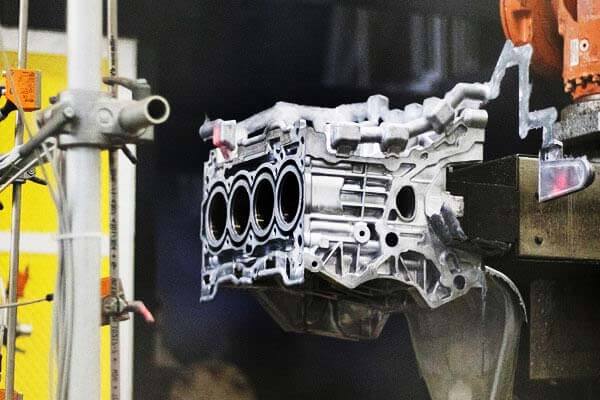
Mirti liejimas yra aukšto slėgio liejimo metodas, apimantis išlydyto metalo įpurškimą į tikslaus metalo formos ertmę dideliu greičiu (10-50m/s) esant aukštam slėgiui (20– 150 MPa), ir metalo kietėjimą veikiant slėgiui, kad susidarytų liejiniai.
Jame yra du pagrindiniai procesai: karštosios kameros liejimas (išlydytas metalas automatiškai patenka į slėgio kamerą) ir šaltosios kameros liejimas (išlydytas metalas rankiniu būdu arba automatiškai pilamas į slėgio kamerą).
Forma pagaminta iš didelio stiprumo plieno, užtikrinti pakartotinį naudojimą.
Privalumai
- Aukščiausia gaminio kokybė: Liejimo matmenų tikslumas siekia 6–7 laipsnius (lygus pažymys 4 preciziniams gaminiams) kurio paviršiaus šiurkštumas Ra 5–8μm;
dėl kietėjimo slėgiu stiprumas ir kietumas yra 25–30% didesni nei žaliojo smėlio liejinių, nors pailgėjimas sumažėja maždaug 70%. - Itin aukštas gamybos efektyvumas: Horizontali šaltos kameros liejimo mašina gali atlikti 600–700 ciklų per 8 valandos,
o maža karštosios kameros liejimo mašina gali pasiekti 3000–7000 ciklų, gerokai pranoksta kitus liejimo būdus. - Ilgas pelėsių tarnavimo laikas: Cinko lydinio liejimo formos gali tarnauti šimtus tūkstančių ar net milijonus kartų, sumažinti ilgalaikes gamybos sąnaudas.
- Lengvas automatizavimas: Procesas puikiai suderinamas su mechanizavimu ir automatizavimu, darbo sąnaudų mažinimas ir gamybos stabilumo gerinimas.
- Puiki ekonominė nauda: Liejiniams reikalingas minimalus apdirbimas arba jo nereikia apdirbti, gerinti metalo panaudojimą ir mažinti investicijas į apdirbimo įrangą;
Kombinuotas metalo ir nemetalinių medžiagų liejimas spaudoje taupo surinkimo laiką ir žaliavas.
Trūkumai & Apribojimai
- Didelė dujų poringumo defektų rizika: Didelės spartos užpildymas sukelia nestabilų išlydyto metalo srautą,
lengvai sulaiko dujas, kad susidarytų vidinis poringumas, dėl to liejiniai negali būti termiškai apdorojami (terminis apdorojimas sukelia dujų išsiplėtimą ir įtrūkimus). - Prastas prisitaikymas prie sudėtingų vidinių įgaubtų dalių: Sunku išardyti vidines įgaubtas sudėtingas struktūras, ribojančių liejamų formų dizainą.
- Trumpas liejimo laikas, skirtas aukštos lydymosi temperatūros lydiniams: Aukštos lydymosi temperatūros lydiniams, tokiems kaip vario lydiniai ir juodieji metalai, pelėsis yra linkęs į terminį nuovargį ir nusidėvėjimą, žymiai sumažina tarnavimo laiką.
- Netinka mažų partijų gamybai: Formos gamybos kaina yra didelė, o dėl didelio slėginio liejimo mašinų efektyvumo mažų partijų gamyba tampa ekonomiškai neperspektyvi.
4. Nuolatinis pelėsių liejimas (Liejimas kietomis formomis)
Pagrindinė apibrėžimas & Proceso principas
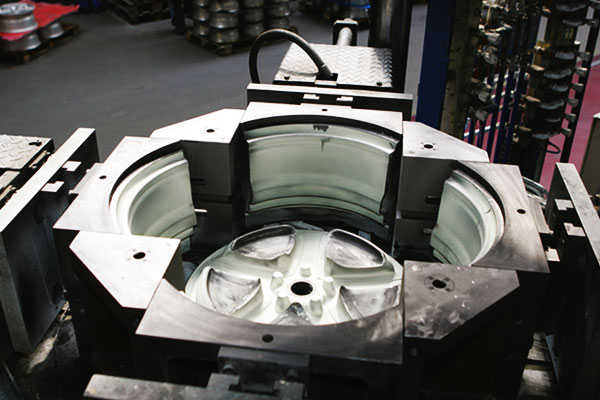
Nuolatinis liejimas į formą, dar vadinamas kietuoju liejimu, apima išlydyto metalo supylimą į metalinę formą, kad būtų suformuoti liejiniai.
Forma yra pagaminta iš ketaus arba plieno ir gali būti naudojama pakartotinai nuo šimtų iki tūkstančių kartų, iš čia ir pavadinimas „nuolatinis pelėsis“.
Vidinėje liejinių ertmėje gali būti naudojamos metalinės arba smėlio šerdys, o formų konstrukcijos skirstomos į horizontalią atskyrimą, vertikalus atsiskyrimas, ir kompozicinis atskyrimas, kad būtų galima prisitaikyti prie skirtingų liejimo formų:
Vertikalus atskyrimas palengvina vartavimą ir išmontavimą, horizontalus atskyrimas skirtas plonasienėms rato formos dalims, o sudėtinis atskyrimas skirtas sudėtingiems komponentams.
Privalumai
- Puikus pelėsių pakartotinis naudojimas: „Viena liejimo forma daugeliui liejinių“ pašalina poreikį kartoti formų gamybą, taupant liejimo medžiagas ir laiką, ir padidinti gamybos efektyvumą.
- Aukštas liejimo našumas: Metalinė forma turi didelę aušinimo galią, Tai lemia tankią liejimo struktūrą ir geresnes mechanines savybes, palyginti su smėlio liejiniais.
- Geras matmenų tikslumas ir paviršiaus kokybė: Liejimo tolerancijos laipsniai siekia IT12–IT14, paviršiaus šiurkštumas Ra ≤6,3μm, sumažinti darbo krūvį po apdorojimo.
- Pagerintos darbo sąlygos: Smėlio sunaudojama mažai arba visai nenaudojama, išvengti taršos dulkėmis ir optimizuoti darbuotojų darbo aplinką.
Trūkumai & Apribojimai
- Didelė pelėsių kaina ir ilgas gamybos ciklas: Metalinei formai reikalingos labai stiprios medžiagos ir tikslus apdorojimas,
su didelėmis išankstinėmis investicijomis ir ilgu pristatymo laiku, netinka vienetinei ir mažų partijų gamybai. - Riboti taikomi lydiniai ir liejinių dydžiai: Daugiausia tinka masinei spalvotųjų metalų lydinių liejinių gamybai (aliuminio stūmokliai, cilindrų blokai, cilindro galvutės, vario lydinio įvorės, kt.) automobiliams, orlaivis, ir vidaus degimo variklius;
geležies lydinių liejiniams, jis taikomas tik mažoms ir vidutinėms paprastos formos dalims. - Griežti proceso reikalavimai: Formą reikia iš anksto pašildyti ir kontroliuoti temperatūrą, kad būtų išvengta šalto užsidarymo ir pelėsių įtrūkimų; jis yra linkęs į terminį nuovargį po ilgalaikio naudojimo, turinčios įtakos liejimo kokybei.
5. Žemo slėgio liejimas
Pagrindinė apibrėžimas & Proceso principas
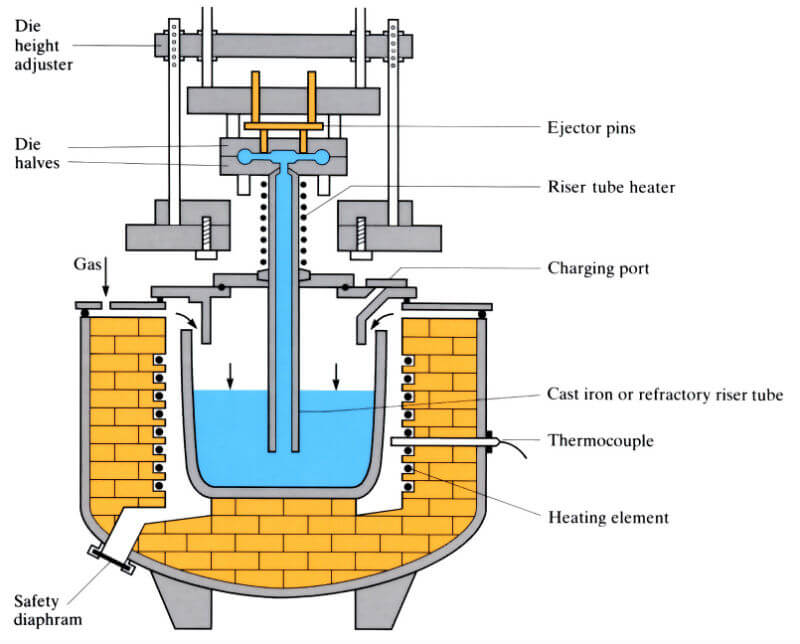
Žemo slėgio liejimas yra liejimo būdas, kuris užpildo formą ir sukietina išlydytą metalą esant žemam slėgiui (0.02-0,06 MPa).
Pagrindinis procesas apima: išlydyto metalo supylimas į izoliuotą tiglį, tiglio sandarinimas, jungiantis stovo vamzdį prie formos, sauso suspausto oro įvedimas į tiglį, kad išlydytas metalas būtų varomas aukštyn per stovo vamzdį, kad užpildytų formos ertmę,
kietinant metalą esant pastoviam slėgiui, atleidžiamas slėgis, kad išlydyto metalo likučiai tekėtų atgal į tiglį, ir galiausiai atidarykite formą, kad išimtumėte liejinį.
Privalumai
- Lankstus proceso valdymas: Reguliuojamas išlydyto metalo kilimo greitis ir kietėjimo slėgis, tinka įvairioms formoms (metalinės formos, smėlio formos) ir lydiniai, taip pat įvairių dydžių liejiniai.
- Stabilus užpildymas ir mažas defektų lygis: Užpildymas iš apačios į viršų užtikrina sklandų išlydyto metalo tekėjimą be purslų, išvengti dujų įstrigimo ir pelėsių sienelių bei šerdžių erozijos;
liejimo defektai, tokie kaip dujų poringumas ir šlako įtraukimas, žymiai sumažėja, pasibaigus kvalifikacijos rodikliui 95%. - Aukštos kokybės liejiniai: Slėgio kietėjimas realizuoja kryptingą kietėjimą iš išorės į vidų, dėl to susidaro tanki liejimo struktūra,
aiškūs kontūrai, Lygūs paviršiai, ir puikios mechaninės savybės, ypač tinka didelėms plonasienėms dalims. - Didelis medžiagų panaudojimas: Šėrimo stovo nereikia, medžiagų panaudojimo lygis siekia 90–98 %, sumažinti metalo atliekas.
- Draugišką darbo aplinką: Mažas darbo intensyvumas, paprasta įranga, ir lengvas mechanizacijos ir automatizavimo įgyvendinimas, atitinkantys šiuolaikinius gamybos reikalavimus.
Trūkumai & Apribojimai
- Trumpas stovo vamzdžio tarnavimo laikas: Stovėjimo vamzdis ilgą laiką tiesiogiai liečiasi su aukštos temperatūros išlydytu metalu, linkę į oksidaciją ir nusidėvėjimą, reikia reguliariai keisti.
- Išlydyto metalo taršos pavojus: Šilumos išsaugojimo metu, išlydytas metalas lengvai oksiduojasi ir susimaišo su šlaku, reikalaujanti griežtos šilumos išsaugojimo aplinkos kontrolės ir išlydyto metalo valymo.
- Ribota taikymo sritis: Daugiausia naudojamas aukštos kokybės aliuminio ir magnio lydinių liejiniams, pavyzdžiui, cilindrų blokai, cilindro galvutės, karteriai, ir greitųjų vidaus degimo variklių aliuminio stūmokliai; jis retai naudojamas geležies lydiniams dėl aukštų temperatūros reikalavimų.
6. Išcentrinis liejimas
Pagrindinė apibrėžimas & Proceso principas
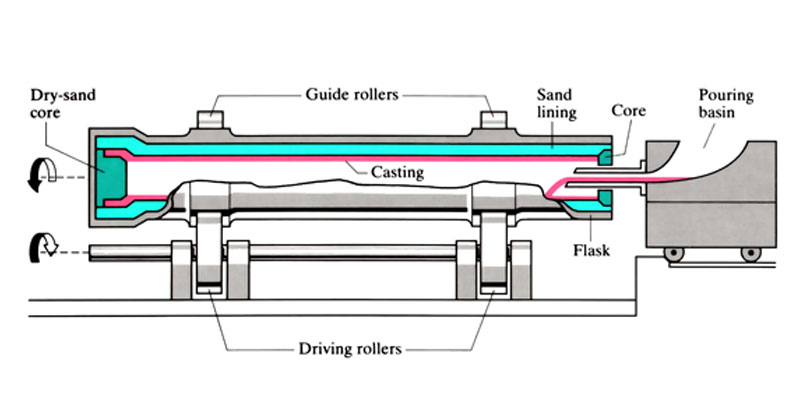
Išcentrinis liejimas apima išlydyto metalo supylimą į besisukančią formą, kur metalas užpildo formą ir sukietėja veikiant išcentrinei jėgai.
Pagal formos sukimosi ašies orientaciją, jis skirstomas į tris tipus: horizontalus išcentrinis liejimas (ašis horizontali arba <4° į horizontalią, tinka ilgoms cilindrinėms dalims),
vertikalus išcentrinis liejimas (ašis vertikali, tinka trumpoms cilindrinėms arba žiedinėms dalims), ir pasvirusios ašies išcentrinis liejimas (retai naudojamas dėl sudėtingo veikimo).
Išcentrinė jėga skatina kryptingą išlydyto metalo judėjimą, optimizuoti liejimo struktūrą.
Privalumai
- Supaprastinta pelėsių struktūra: Tuščiavidurėms besisukančioms dalims, jokios šerdies, vartų sistema, arba reikalingas stovas, supaprastinti formų dizainą ir sumažinti gamybos sąnaudas.
- Aukštos kokybės liejiniai: Išcentrinė jėga atskiria mažo tankio dujas ir šlakus nuo vidinio paviršiaus,
ir skatina kryptingą kietėjimą iš išorės į vidų, dėl to susidaro tanki liejimo struktūra, nedaug defektu, ir puikios mechaninės savybės. - Sutaupoma bimetalinių dalių kaina: Lengvai liejami bimetaliniai komponentai, tokie kaip įvorės ir guoliai (Pvz., plieninės rankovės su plonu vario pamušalu), sutaupyti brangių spalvotųjų metalų, tuo pačiu užtikrinant našumą.
- Stiprus užpildymo pajėgumas: Išcentrinė jėga padidina išlydyto metalo sklandumą, tinka plonasienėms dalims ir lydiniams, kurių sklandumas prastas, lieti.
- Sumažintas medžiagų atliekų kiekis: Pašalina užtvarų sistemas ir stovus, toliau gerinti medžiagų panaudojimą.
Trūkumai & Apribojimai
- Prasta vidinio paviršiaus kokybė: Vidinis laisvas liejinių paviršius yra grubus, su didelėmis matmenų paklaidomis ir prastu vienodumu, reikalaujantis tolesnio apdirbimo, kad atitiktų matmenų reikalavimus.
- Netinka tam tikriems lydiniams: Netaikoma lydiniams su stipria tankio segregacija (Pvz., švino bronza), nes išcentrinė jėga sustiprins segregaciją;
taip pat netinka aliuminio ir magnio lydiniams dėl mažo tankio ir prasto išcentrinio atskyrimo efekto. - Ribotos liejimo formos: Tinka tik besisukančioms simetriškoms dalims (Cilindrai, Žiedai, rankovėmis); negali išlieti sudėtingų netaisyklingų kontūrų dalių.
- Aukšti įrangos reikalavimai: Reikalingos specializuotos išcentrinės liejimo mašinos su stabiliu sukimosi greičio valdymu, didėjančios investicijos į įrangą.
7. Dažniausiai naudojamų liejimo būdų palyginimo lentelė
| Liejimo metodas | Privalumai | Apribojimai | Tipiškos programos |
| Smėlio liejimas | Mažos išlaidos, lankstus mažoms / didelėms dalims, paprastos ir sudėtingos formos, perdirbamas smėlis | Vienkartinės formos → mažas efektyvumas, mažesnis matmenų tikslumas, paviršiaus defektai | Variklio blokai, siurblių korpusai, didelių konstrukcijų dalių |
| Investicija (Prarastas vaškas) Liejimas | Aukštas tikslumas (CT4–6), Puikus paviršiaus apdaila, Sudėtingos formos, Plonos sienos, platus medžiagų suderinamumas | Didelė kaina, sudėtingas procesas, netinka labai didelėms dalims | Aviacijos ir kosmoso komponentai, Medicininiai implantai, tikslios automobilių dalys |
| Mirti liejimas | Aukštas matmenų tikslumas (CT6–7), Puikus paviršiaus apdaila, Plonos sienos dalys, didelis gamybos efektyvumas, patogus automatizuoti | Didelė įrankių kaina, tik žemo lydymosi lydiniams, poringumo rizika, netinka mažoms partijoms | Automobilių variklių dalys, korpusai, Vartojimo elektronika |
Nuolatinis pelėsis (Metalinė forma) Liejimas |
Daugkartinio naudojimo formos sumažina išlaidas, tanki mikrostruktūra, Didelė jėga, gera paviršiaus apdaila | Didelė pelėsių kaina, griežta proceso kontrolė, apsiriboja vidutinio sudėtingumo, daugiausia spalvotųjų metalų lydinių | Aliuminio stūmokliai, cilindro galvutės, automobilių korpusai |
| Žemo slėgio liejimas | Lygus užpildymas, minimalus poringumas, aukštos kokybės tanki struktūra, didelis metalo panaudojimas (90–98 proc.), tinka plonasienėms dalims | Ribotas stovo / vamzdžio tarnavimo laikas, oksidacijos rizika, daugiausia spalvotųjų metalų lydiniams | Aliuminio variklio blokai, cilindro galvutės, stūmokliai, magnio dalys |
| Išcentrinis liejimas | Tanki struktūra, kryptinis kietėjimas, pašalina šerdis, leidžia atlikti bimetalinius liejinius, sumažintas užtvaras | Vidinis laisvas paviršius grubus, matmenų tikslumas ribotas, netinka lydiniams, linkusiems į segregaciją, apsiriboja cilindrinėmis/sukimosi geometrijomis | Vamzdžiai, įvorės, guoliai, cilindrų įdėklai |
8. Išvada
Kiekvienas liejimo būdas turi unikalių pranašumų ir apribojimų, todėl jis tinka tam tikroms reikmėms.
Smėlio liejimas išlieka universaliausias ir ekonomiškiausias būdas dideliems, sudėtingi liejiniai, o investicinis liejimas suteikia išskirtinį tikslumą didelės vertės komponentams.
Smasinis liejimas puikiai tinka didelės apimties plonasienių dalių gamybai, ir nuolatinis liejimas į formas užtikrina pastovią vidutinės apimties spalvotųjų metalų gamybos kokybę.
Žemo slėgio liejimas idealiai tinka didelio vientisumo aliuminio ir magnio komponentams, o išcentrinis liejimas neprilygsta tuščiavidurėms simetriškoms dalims.
Tinkamo liejimo metodo pasirinkimas priklauso nuo veiksnių, įskaitant detalės geometriją, reikalingas matmenų tikslumas, paviršiaus apdaila, medžiagos tipas, gamybos apimtis, ir sąnaudas.
Šiuolaikinėje gamyboje šie metodai vis dažniau derinami, kad būtų išnaudoti papildomi jų pranašumai, skatinti naujoves sudėtingų komponentų gamyboje visoje aviacijos erdvėje, Automobiliai, ir pramonės sektoriuose.