1. Įvadas
Custom aluminum die casting is a precision manufacturing process where molten aluminum is injected into reusable steel molds under high pressure to form complex metal parts with exceptional accuracy and repeatability.
Widely used across industries including automotive, aviacijos ir kosmoso, Elektronika, ir vartojimo prekės, this technique plays a pivotal role in modern manufacturing.
Aluminum is particularly favored in die casting due to its excellent strength-to-weight ratio, inherent corrosion resistance, superior thermal conductivity, ir perdirbamumas.
The process not only enables mass production but also supports the global push toward lightweighting and sustainability.
This article offers a comprehensive and technical overview of aluminum die casting services,
apimantis procesą, Medžiagos, Privalumai, paraiškos, and more to support engineers, dizaineriai, and procurement professionals in making informed decisions.
2. Kas yra aliuminio liejimas?
Aliuminio liejimas is a metal forming process where molten aluminum alloy is forced into a steel die (or mold) at high speed and pressure.

The die consists of two hardened tool steel components—one fixed and one movable—that shape the molten metal into the desired form as it solidifies.
The result is a durable, high-precision component with fine surface detail and minimal post-processing requirements, making it ideal for high-volume production of parts with complex geometries.
3. Overview of the Aluminum Die Casting Process
Aluminum die casting is a high-precision manufacturing process that transforms molten aluminum into intricately shaped components by injecting the metal under high pressure into a reusable steel die.
This process is highly automated and designed for efficiency, pakartojamumas, and superior dimensional control. The process can be broken down into several key stages:

Mirti (Mold) Pasiruošimas
Before casting begins, the steel die—composed of two halves (stationary and movable)—is preheated to approximately 200–300°C (392–572°F) to avoid thermal shock and improve metal flow.
A die lubricant (typically a water-based solution containing graphite or silicone) is then sprayed onto the cavity surfaces.
This aids metal flow, prevents soldering (sticking of aluminum to the mold), and facilitates smooth part ejection.
Molten Metal Injection
Molten aluminum, heated to approximately 660–720°C (1220–1328°F), is transferred into the shot sleeve of a cold-chamber die casting machine.
A hydraulic or mechanical plunger then forces the molten metal into the closed die at pressures ranging from 1,500 į 30,000 psi (10–200 MPa).
The speed and pressure must be tightly controlled to ensure the mold is filled before solidification begins, especially for thin-walled or complex geometries.
Kietėjimas (Cooling and Freezing)
As the molten aluminum contacts the relatively cooler die walls, it rapidly solidifies.
Cooling times are influenced by part geometry, sienos storis, and alloy thermal conductivity.
Solidification typically occurs within 1 į 10 sekundės, allowing for extremely fast cycle times. Internal features and thick sections are often cooled using conformal cooling channels or chill inserts.
Mold Opening and Ejection
Once the casting has sufficiently solidified, Dievo atidaromas štampas, ir Išmetimo kaiščiai push the part out of the mold cavity.
Ejection must be uniform to prevent part deformation. The casting often includes excess material (spurizavimas, bėgikai, ir blyksniai), which is removed in the following step.
Trimming and Post-Cast Removal
The newly ejected casting is trimmed to remove flash, vartai, bėgikai, and overflows.
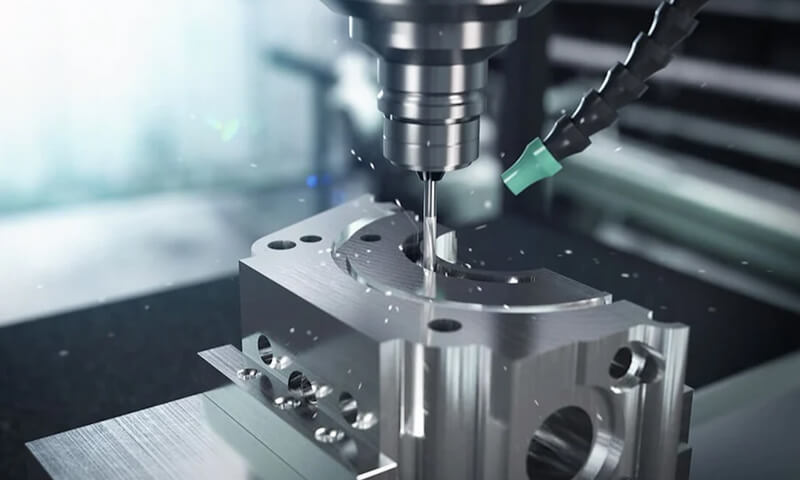
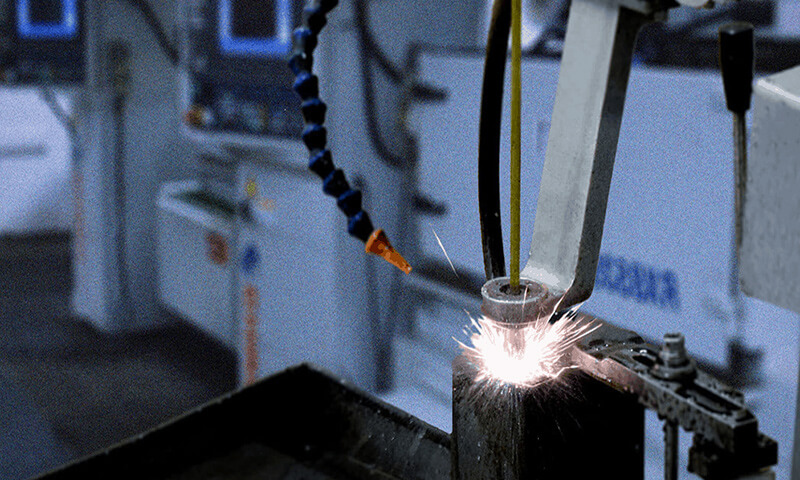
This is typically done using hydraulic trim presses, CNC apdirbimas, or robotic systems.
Didelės apimties gamyboje, this stage is automated to minimize labor costs and ensure consistent quality.
Process Cycle Time and Efficiency
A complete aluminum die casting cycle (including injection, kietėjimas, ejection, and mold preparation) paprastai svyruoja nuo 30 į 60 sekundės, priklausomai nuo dalies sudėtingumo ir dydžio.
This makes aluminum die casting ideal for Didelės apimties gamyba with excellent repeatability.
4. Aluminum Alloys Used in Die Casting
Aluminum die casting utilizes a variety of alloys specifically engineered to offer an optimal balance of strength, sklandumas, atsparumas korozijai, ir ekonominis efektyvumas.
Comparative Chart of Common Aluminum Die Casting Alloys
| Lydinys | Kompozicijos akcentai | Stiprybė (MPA) | Atsparumas korozijai | Notable Features | Bendros programos |
| A380 | Al-8.5Si-3.5Cu-0.6Fe | ~320 (UTS) | Gerai | Puikus nusiteikimas, subalansuotos savybės | Automobilių korpusai, Pavarų dėžės, Elektronika |
| A383 / ADC12 | Al-10Si-2Cu-1Fe | ~275 (UTS) | Labai gerai | Superior fluidity for complex/thin-walled parts | Buitinė elektronika, appliance enclosures |
| A360 | Al-9Si-0.6Mg-0.6Fe | ~330 (UTS) | Puiku | Didelis stiprumas ir lankstumas, good heat resistance | Aviacijos ir kosmoso, konstrukcines dalis |
| A413 | Al-12Si-1Cu-0.6Fe | ~ 300 (UTS) | Gerai | Puikus slėgio sandarumas | Hydraulic parts, skysčių tvarkymo sistemos |
| B390 | Al-17Si-4.5Cu-0.5Mg | ~ 400 (UTS) | Vidutinis | Superior wear resistance, mažas plastiškumas | Variklio blokai, Siurbliai, transmisijos dalys |
| AlSi9Cu3 | Al-9Si-3Cu | ~280 (UTS) | Labai gerai | Low porosity, geras suvirinamumas | European-standard auto components |
5. Advantages and Limitations of Aluminum Die Casting
Aliuminio štampo pranašumai
Lightweight with High Strength-to-Weight Ratio
Aluminum is approximately one-third the density of steel, yet its mechanical strength can meet many demanding structural applications.
This makes it ideal for industries such as automotive and aerospace, where weight reduction translates directly into energy efficiency and performance.
High Dimensional Accuracy and Tight Tolerances
Aluminum die casting offers excellent dimensional stability, often achieving tolerances of ±0.1 mm for complex geometries.
The ability to create intricate shapes with minimal post-processing makes it highly suitable for precision-engineered parts.
Puikus Atsparumas korozijai
Aluminum naturally forms a protective oxide layer that resists rust and environmental degradation.
Alloys like A360 and AlSi9Cu3 provide superior resistance in humid, Jūrų, or chemically exposed environments.
Superior Thermal and Electrical Conductivity
Aluminum alloys have high thermal conductivity (up to 150–180 W/m·K), which is ideal for heat dissipation applications such as LED housings, Variklio komponentai, ir šilumos kriauklės.
Excellent Surface Finish and Aesthetics
Die-cast aluminum parts often come with smooth surfaces and fine details straight out of the mold.
This minimizes the need for extensive finishing and enables a wide range of coatings (Pvz., anodavimas, miltelių danga, Tapyba).
Efficient Mass Production
The rapid cycle times (15–60 sekundžių už šūvį) and reusable molds allow for high-volume production runs with consistent quality and low per-unit cost once tooling is established.
Perdirbamumas ir tvarumas
Aliuminis yra 100% recyclable without losing its mechanical properties. Baigėsi 75% of all aluminum ever produced is still in use, making it one of the most sustainable industrial materials.

Limitations of Aluminum Die Casting
Didelės pradinės įrankių sąnaudos
The precision steel dies used in aluminum die casting are expensive to design and manufacture.
This makes the process more economical for high-volume production but cost-prohibitive for low-run projects.
Porosity and Internal Voids
Air entrapment during the injection phase can lead to porosity, which reduces mechanical strength and complicates processes like welding or pressure sealing.
Design features and vacuum assist can mitigate but not eliminate this issue.
Limited Thickness Variability
Die casting is best suited for parts with uniform wall thickness (typically 1.5–4.0 mm). Excessive variation can lead to shrinkage, deformacija, or incomplete filling during casting.
Less Suitable for High-Temperature Applications
Although aluminum performs well thermally, it loses significant mechanical strength at elevated temperatures (>300° C.), limiting its use in some engine or high-heat structural environments.
Complex Die Maintenance and Shorter Die Life with Certain Alloys
Some aluminum alloys (Pvz., B390 with high silicon content) are highly abrasive and reduce die life. This increases operational and maintenance costs.
Limited to Metals with Low Melting Points
Custom aluminum die casting is constrained to non-ferrous alloys with relatively low melting points (~660°C). It is not suitable for materials like stainless steel or titanium.
6. Design Considerations for Aluminum Die Casting
Designing for aluminum die casting requires a multidisciplinary approach that balances structural integrity, išliejamumas, ir pagaminamumą.
Engineers must take into account the fluid behavior of molten aluminum, solidification dynamics, die wear, and the economics of high-volume production.

Wall Thickness Optimization
- Recommended Range: 1.5 mm iki 4.0 mm
Maintaining a uniform wall thickness reduces differential cooling, which minimizes warping and internal stresses. - Plonos sienos: Alloys like A380 allow for thin-wall casting down to 1.0 mm in certain applications, helping reduce weight and material use.
- Thick Sections: Excess thickness (>6 mm) may lead to shrinkage porosity. These should be cored out or redesigned.
Grimzlės kampai
- Tikslas: Allow easy ejection from the die and reduce wear on tool surfaces.
- Typical Draft: 1°–3° per side for external walls; up to 5° for internal cavities.
- Texture Consideration: Heavily textured surfaces require larger draft angles to prevent sticking and surface tearing.
Fillet Radii and Corners
- Stress Reduction: Sharp corners act as stress concentrators and impede molten flow.
- Minimum Radius: ≥0.5 mm for internal fillets; ≥1.0 mm for external corners.
- Nauda: Smooth transitions improve material flow, reduce turbulence, and extend die life.
Gating and Venting System Design
- Vartai: Directs molten aluminum into the cavity efficiently and uniformly. Poor gating leads to cold shuts and turbulence.
- Vėdinimas: Crucial to remove air and gases during injection. Proper vent location prevents porosity and burn marks.
- Perpildymo šuliniai: Collect excess metal and impurities, preventing defects in the main part.
Ejection System Planning
- Ejector Pin Placement: Should be in thicker or reinforced areas to avoid surface marks or distortion.
- Balanced Ejection: Prevents warping and cracking by applying even ejection forces.
- Numušimai: Should be minimized or eliminated; Jei reikia, use side cores or slides to resolve them.
Avoiding Common Defects Through Design
- Porosity Prevention: Avoid thick sections, ensure proper venting, and design with smooth flow paths.
- Cold Shuts and Misruns: Maintain appropriate wall thickness and gate size to allow uninterrupted metal flow.
- Dietinis litavimas: Use optimal die temperatures and alloy selection to minimize adhesion to die walls.
Design for Machining and Assembly
- Apdirbimo pašalpos: Include extra material where post-casting CNC machining is expected (Pvz., ±0,3 mm).
- Fastening Features: Integrate bosses, Šonkauliai, and holes where needed for mechanical assembly. Ensure uniform wall support around these features.
- Tolerancijos: Die casting can achieve dimensional tolerances of ±0.1 mm, but tighter specs may require machining.
Surface Finish and Aesthetic Considerations
- As-Cast Finish: Suitable for non-cosmetic parts or where coating is planned.
- Surface Classes: Vary from 32 į 125 microinches (Ra); secondary finishing can achieve mirror-like results.
- Coating Compatibility: Design with anodizing, miltelių danga, or painting in mind, including masking and mounting areas.
Summary Tips for Designers
| Design Element | Rekomendacija | Nauda |
| Sienos storis | 1.5–4.0 mm, nuoseklus | Reduces warping and porosity |
| Grimzlės kampai | 1°–3° per side | Enables smooth ejection |
| Filė spinduliai | ≥0.5 mm internal, ≥1.0 mm external | Lowers stress concentration |
| Vėdinimas | Proper channels and overflow wells | Reduces porosity and trapped gases |
| Ejector Pins | Strategically placed in robust areas | Minimizes deformation during ejection |
| Paviršiaus apdaila | Allow for as-cast or coating-based aesthetics | Improves product appeal and corrosion resistance |
| Assembly Features | Design bosses, Šonkauliai, and fastening points | Streamlines downstream integration |
7. Post-Casting Services of Custom Aluminum Die Casting
Aluminum die casting is often just the beginning of a multi-step production journey.
To achieve the desired functional, matmenys, and aesthetic outcomes, a variety of post-casting services are applied.
Trimming and Deburring
- Tikslas: Remove excess material (Blykstė) formed at the parting lines, bėgikai, and vents during casting.
- Metodai:
-
- Mechaninis apipjaustymas using trim dies or hydraulic presses.
- Robotic deburring for precision and automation.
- Manual grinding for complex geometries.
- Poveikis: Improves appearance, dimensional conformity, ir saugumą.
CNC Machining for Tight Tolerances
- Need: Die casting provides near-net shapes, but high-precision features (Pvz., srieginės skylės, sandarinimo paviršiai) often require secondary machining.
- Procesai:
-
- Frezavimas, posūkis, gręžimas, Raming, bakstelėjimas.
- 5-axis machining for complex surfaces.
- Tolerancijos: CNC allows for ±0.01 mm or tighter, priklausomai nuo geometrijos.
- Medžiagos: Alloys like A380 and ADC12 machine well due to their silicon content.
Terminis apdorojimas (Neprivaloma)
Heat treatment can be used to improve the mechanical properties of aluminum die-cast parts. Two common heat-treatment processes for aluminum alloys are T5 and T6.
- T5 Heat Treatment: This involves solution heat treatment followed by artificial aging.
The part is heated to a specific temperature, held for a period of time, ir po to greitai atvėsinamas.
After that, it is aged at a lower temperature. T5 heat treatment can increase the strength and hardness of the part, making it suitable for applications where higher mechanical performance is required. - T6 Heat Treatment: T6 heat treatment is similar to T5 but includes a more extended solution heat-treatment process.
This results in even higher strength and hardness compared to T5.
Parts used in high-stress applications, such as automotive suspension components, often undergo T6 heat treatment to ensure they can withstand the mechanical loads.
Paviršiaus apdaila
Enhances both the appearance and functional performance of the part.
Miltelių danga
- Patvarus, uniforma, ir korozijai atspari apdaila.
- Offers a wide variety of colors and textures.
Anodavimas
- Electrochemical process that thickens the natural oxide layer.
- Improves corrosion resistance and allows for coloring.
- More common on lower-silicon aluminum grades like A356.
Elektropliacija
- Provides a metallic finish (chromo, Nikelis, cinkas).
- Requires pretreatment due to aluminum’s passive oxide layer.
Tapyba
- Suitable for parts requiring branding or environmental protection.
- Requires surface cleaning and sometimes primer application.
Šūvys sprogdinimas / Smėlio sprogimas
- Removes oxides and minor surface imperfections.
- Prepares surface for painting or powder coating.
Leak Testing (For Pressure-Tight Components)
- Applied to castings such as housings, Siurbliai, ir aptvarus.
- Metodai: air decay, slėgio kritimas, or helium leak detection.
- Ensures no internal porosity or defects compromise sealing.
Assembly and Sub-Component Integration
- Some service providers offer value-added assembly, combining the die-cast part with gaskets, tvirtinimo detalės, Elektronika, or inserts.
- Ensures downstream manufacturing efficiency and reduces total lead time.
Impregnation (Neprivaloma)
- Tikslas: Seal internal porosity that may lead to fluid or gas leakage.
- Procesas: Vacuum pressure cycles are used to fill internal voids with resin.
- Naudojamas: Hydraulic/pneumatic components or fluid-handling housings.
Patikra ir kokybės kontrolė (End-of-Line)
- Dimensional Checks: Using CMM (Koordinačių matavimo mašinos), apkabos, and gauges.
- Surface Evaluation: Vaizdinis patikrinimas, gloss measurement, roughness (Ra).
- Function Testing: Siūlai, fits, and tolerance verification.
8. Quality Assurance and Inspection
Common Casting Defects: Poringumas, Šaltas uždarymas, Susitraukimas
Poringumas:
As discussed earlier, porosity is one of the most common defects in custom aluminum die casting. It can occur due to gas entrapment during the injection or solidification process.
Porous parts may have reduced strength, poor pressure-tightness, and a lower fatigue life.
Internal porosity can be detected using non – non-destructive testing methods such as X-ray inspection, while surface porosity may be visible during visual inspection.
Šaltas uždarymas:
A cold shut is an incomplete joint in the part where the molten aluminum fails to fully merge.
This defect can be caused by low aluminum temperature, slow injection speed, improper gating design, or insufficient venting.
Cold shuts weaken the part and can lead to failure under load. They can often be identified through visual inspection or dye penetrant testing.
Susitraukimas:
Shrinkage occurs as the molten aluminum cools and contracts during the solidification process.
If not compensated for, it can result in sink marks on the surface or internal voids within the part.
Shrinkage can be minimized by proper gating and riser design, as well as by controlling the solidification rate.
Dimensional inspection and X-ray inspection can help detect shrinkage defects.
Patikrinimo metodai
- X-ray or CT Scanning: Detects internal voids.
- Dažų skvarbių bandymų: Reveals surface cracks.
- Ultragarsinis bandymas: Evaluates internal flaws in thick sections.
- Dimensional Checks: CMM (Koordinačių matavimo mašinos) for tight tolerances.
- SPC & Šešios sigmos: Ensures consistent production quality.
9. Applications of Custom Aluminum Die Casting
Aluminum die casting has become a cornerstone of precision component manufacturing across a wide range of industries.
Thanks to its high strength-to-weight ratio, matmenų tikslumas, and excellent thermal and corrosion resistance,
Custom aluminum die casting enables engineers to design complex parts that meet stringent performance and cost requirements.

Automobilių pramonė
The automotive sector is the largest consumer of aluminum die-cast parts.
Common Components:
- Transmisijos korpusai
- Variklio blokai
- Oil pans
- Valve covers
- Alternator and starter motor housings
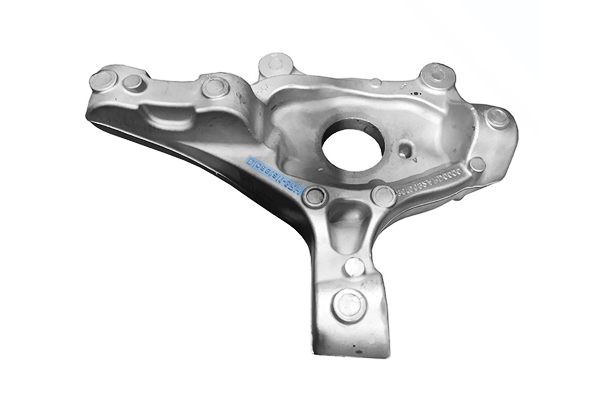
- Chassis brackets
- Control arms
- Steering column housings
- Electric vehicle battery enclosures
Buitinė elektronika
Kompaktiškas, heat-sensitive electronic devices benefit from aluminum’s excellent thermal conductivity and electromagnetic shielding.
Common Components:
- Laptop and smartphone enclosures
- Kameros rėmeliai
- Šilumos šalintuvai
- Jungčių korpusai
- Mounting brackets
Aviacijos ir kosmoso ir gynybos
Aviacijos erdvėje, reducing weight without compromising strength is critical. Aluminum die castings support this need.
Common Components:
- Actuator housings
- Struktūriniai laikikliai
- Radar and antenna frames
- Hydraulic and pneumatic housings
- Electronic enclosure casings
Pramoninė įranga
Aluminum die cast parts are widely used in machinery due to their durability and formability.
Common Components:
- Pneumatic and hydraulic pump housings
- Compressor components
- Motor casings
- Gearbox covers
- Manifolds
Lighting and Electrical Systems
LED lighting systems and power transmission equipment often utilize aluminum castings for thermal and structural performance.
Common Components:
- LED light housings and heat sinks
- Junction boxes
- Switchgear components
- Electric motor end shields
Medicinos prietaisai
Precision and hygiene are critical in the medical industry. Certain aluminum alloys meet both mechanical and biocompatibility needs.
Common Components:
- Vaizdo įrangos korpusai
- Pump components
- Laboratory automation parts
- Cooling components for diagnostics machines
Telekomunikacijos
Telecom infrastructure and devices often require lightweight, stiprus, and thermally stable components.
Common Components:
- Antenna enclosures
- Radio unit casings
- Base station brackets
- Signal amplifiers and filters
10. Cost and Efficiency Considerations
- Įrankių kaina: $10,000–$100,000+ depending on complexity
- Break-even Volume: Often viable for runs of >5,000 vienetų
- Medžiagos efektyvumas: 95% yield with high recyclability
- Gyvenimo ciklo kaina: Higher upfront investment offset by longer part life and minimal post-processing
- Tvarumas: Aliuminis yra 100% recyclable with ~5% of original energy needed for remelting
11. Palyginimas su kitais liejimo būdais
Custom aluminum die casting is one of several techniques used to produce complex metal components.
Each casting process has its advantages, apribojimai, and best-fit applications.
Below is a comprehensive comparison of aluminum die casting with Smėlio liejimas, Investicijų liejimas, ir gravitacijos liejimas, considering key performance and economic criteria.
Palyginimo lentelė: Aluminum Die Casting vs. Other Casting Methods
| Kriterijai | Aliuminio štampo liejimas | Smėlio liejimas | Investicijų liejimas | Gravitacijos liejimas (Nuolatinis pelėsis) |
| Paviršiaus apdaila | Puiku (Ra 1.6–3.2 µm), beveik tinklo forma | Prastas iki teisingas (Ra 6.3–25 µm), rough texture | Labai gerai (Ra 3.2–6.3 µm), lygus paviršius | Gerai (Ra 3.2–6.3 µm) |
| Matmenų tikslumas | Aukštas (±0,1–0,2 mm) | Vidutinis (±0,5–1,5 mm) | Aukštas (±0,1–0,3 mm) | Vidutinio sunkumo iki aukšto (±0,3–0,5 mm) |
| Sienos storis | Plonos sienos (net 1–2 mm) | Thicker sections (paprastai >6 mm) | Fine features & Sudėtingos geometrijos | Vidutinis (3–6 mm typical) |
| Įrankių kaina | Didelė pradinė kaina (steel dies) | Žemas (cheap sand molds, short lifespan) | Vidutinio sunkumo iki aukšto (wax patterns + keraminis apvalkalas) | Aukštas (reusable permanent molds) |
| Gamybos apimtis | Aukštos apimties, idealiai tinka masinei gamybai | Mažas ir vidutinis tūris | Mažas ir vidutinis tūris | Medium-volume production |
| Mechaninės savybės | Gerai (can be enhanced by design) | Varijuoja; can be strong with proper alloys | Puiku (due to slow solidification) | Better than sand, lower than investment |
Material Yield |
Aukštas (less material waste, recycled sprues) | Žemas ar vidutinio sunkumo | Žemas (high gating and shell losses) | Vidutinis |
| Gamybos greitis | Labai greitai (automatizuotas, ciklo laikai <1 min/part) | Lėtas (hours per mold) | Lėtas (multi-day cycles) | Faster than sand, slower than die casting |
| Post-Machining Needs | Minimalus, often as-cast parts are ready | Platus (for tolerances and surface finish) | Vidutinis | Some machining required |
| Lydinio pasirinkimas | Limited to high-fluidity aluminum alloys (Pvz., A380, ADC12) | Wide variety (geležies & spalvotieji metalai) | Almost any metal, including superalloys | Ribotas, mostly aluminum and magnesium alloys |
| Porosity Issues | Risk of porosity due to fast injection | Žemiau, especially with controlled cooling | Žemas (slow solidification allows gas to escape) | Vidutinis |
| Kaina už dalį (Didelė apimtis) | Low due to speed and automation | High per part at low volume | High due to process complexity | Vidutinis |
Summary of Pros and Cons by Process
Aliuminio štampo liejimas
- Geriausia: Didelės apimties gamyba, complex and lightweight parts (Pvz., Automobiliai, Elektronika).
- Stiprybės: Greitas, didelis matmenų tikslumas, Puikus paviršiaus apdaila.
- Apribojimai: Didelė įrankių kaina, limited to specific aluminum alloys, potential for porosity.
Smėlio liejimas
- Geriausia: Prototipai, large parts, ir mažos apimties gamyba (Pvz., pramoninės mašinos).
- Stiprybės: Maža įrankių kaina, large part capability, wide alloy options.
- Apribojimai: Poor finish, lower accuracy, lėtesnis procesas.
Investicijų liejimas
- Geriausia: Intricate designs and parts needing tight tolerances (Pvz., aviacijos ir kosmoso, Medicinos).
- Stiprybės: Superior detail and finish, excellent dimensional accuracy.
- Apribojimai: High cost, long lead time, not ideal for high volume.
Gravitacijos liejimas
- Geriausia: Medium-volume production of moderately complex parts.
- Stiprybės: Better mechanical properties than sand casting, daugkartinio naudojimo formų.
- Apribojimai: Slower than die casting, less suited for thin-walled or highly complex parts.
12. Išvada
Aluminum die casting is a powerful, efektyvus, and sustainable solution for producing high-quality metal components at scale.
With its excellent mechanical properties, matmenų tikslumas, and cost-effectiveness in volume production, it supports critical applications in industries ranging from automotive to aerospace.
Partnering with experienced custom aluminum die casting service providers ensures optimal design, gamybos efektyvumą, and product performance.
Technologijoms tobulėjant, innovations like vacuum casting, Automatizavimas, and alloy development will further expand the potential of this indispensable manufacturing method.
Individualizuotos DIE liejimo paslaugos
Tai siūlo aukštos kokybės paprotys štampuoto liejimo paslaugos pritaikyta jūsų tikslioms specifikacijoms atitikti.
Su ilgametė patirtis ir pažangi įranga, Mes specializuojamės tikslių metalinių komponentų gamyboje naudojant aliuminis, cinkas, ir magnis lydiniai.
Ką Siūlome:
- OEM & ODM mirti liejimo sprendimai
- Palaikymas Maža ir didelės apimties gamyba
- Individualizuotas pelėsių dizainas ir inžinerinė pagalba
- Griežtos matmenų nuokrypiai ir puiki paviršiaus apdaila
- Antrinės operacijos, įskaitant CNC apdirbimas, paviršiaus apdorojimas, ir susirinkimas