1. Įvadas
Manufacturing processes such as casting and machining have revolutionized modern industries, enabling the production of everything from intricate medical implants to robust automotive parts.
Choosing between these two methods requires a deep understanding of their capabilities, apribojimai, ir tinkamumas konkrečioms reikmėms.
Casting and machining represent two fundamental approaches to shaping materials, one using molds and molten metals, and the other relying on precision cutting tools.
Šiame straipsnyje, we will explore the strengths and weaknesses of these processes, offering insights to help you make the best choice for your manufacturing needs.
2. Kas yra Casting?
Liejimas is a manufacturing process where molten material, typically metal, is poured into a mold that contains a hollow cavity of the desired shape.
The material solidifies as it cools, taking on the shape of the mold. Kartą sukietėjęs, the casting is removed from the mold, and any finishing touches are applied to produce the final part.
Casting has been used for thousands of years and remains one of the most versatile methods for producing metal parts with complex geometries.
Types of Casting:
Smėlio liejimas:
- Proceso apžvalga: Sand casting uses sand as the mold material. The sand is packed around a pattern (typically made of wood, plastikas, arba metalo) that forms the cavity of the mold.
After removing the pattern, į ertmę pilamas išlydytas metalas. Once cooled, the sand mold is broken away to reveal the casting. - Paraiškos: Ideal for large parts and low-cost production, sand casting can produce parts ranging from a few ounces to hundreds of tons.
It’s commonly used in automotive engine blocks, pavaros, and industrial machinery components. - Privalumai: Low tooling costs, ability to handle large parts, and suitability for a wide range of materials.
- Trūkumai: Less precise tolerances compared to other casting methods, rough surface finish, and longer lead times for setup.
Investicijų liejimas (Pamirštosios vaško liejimas):
- Proceso apžvalga: Investment casting involves creating a wax pattern that is then coated with ceramic material.
After firing, the wax melts out, leaving a hollow ceramic mold into which molten metal is poured. Kartą sukietėjęs, the ceramic mold is broken away to reveal the casting. - Paraiškos: Known for its precision, investment casting is used for aerospace components, Turbinos ašmenys, papuošalai, ir medicininiai implantai.
- Privalumai: Aukštas matmenų tikslumas, Puikus paviršiaus apdaila, and the ability to create complex internal geometries.
- Trūkumai: Higher cost due to the labor-intensive process, slower production rates, and limited to relatively small parts.

Mirti liejimas:
- Proceso apžvalga: Die casting forces molten metal under high pressure into reusable steel molds called dies.
The rapid cooling and solidification allow for quick production cycles. - Paraiškos: Suitable for mass production of small, detailed parts such as zinc or aluminum housings, jungtys, and consumer electronics components.
- Privalumai: Fast production speeds, griežtos nuokrypiai, and good surface finishes.
- Trūkumai: Higher initial tooling costs, limited to lower melting point alloys, and less suitable for very large parts.

Nuolatinis pelėsių liejimas:
- Proceso apžvalga: Similar to die casting but uses gravity or low pressure to fill the mold. The molds are typically made of steel or iron and can be reused multiple times.
- Paraiškos: Permanent mold casting is often used for automotive parts like pistons, cilindro galvutės, ir ratai.
- Privalumai: Better dimensional accuracy than sand casting, improved mechanical properties due to faster cooling, and smoother surface finishes.
- Trūkumai: Higher tooling costs compared to sand casting, slower production rates than die casting, and limited to medium-sized parts.
3. What is Machining?
Apdirbimas is a subtractive manufacturing process where material is removed from a workpiece using cutting tools to achieve the desired geometry, dydis, ir baigti.
This process can be performed manually but is increasingly automated through the use of computer numerical control (CNC) sistemos, which enhance precision, pakartojamumas, ir efektyvumas.
Machining is widely used across industries for creating parts with tight tolerances and complex features that are critical for performance.
Types of Machining Processes:
CNC apdirbimas:
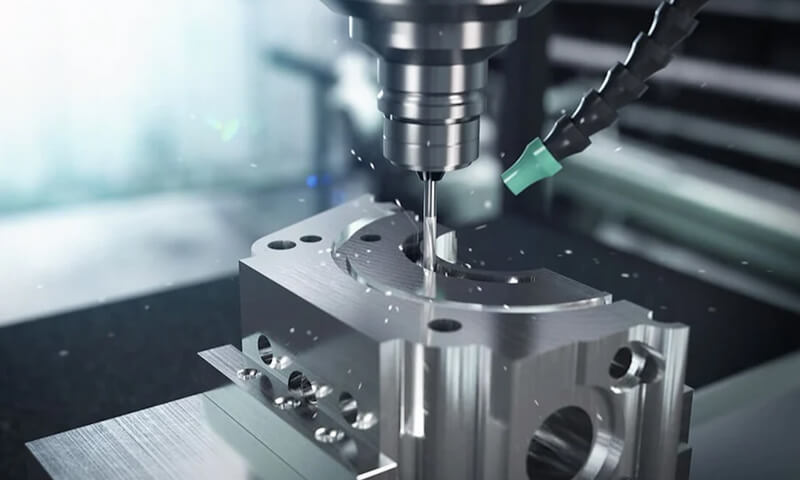
- Proceso apžvalga: CNC machining uses pre-programmed software to control machine tools, automating the machining process.
Common CNC machining operations include milling, posūkis, gręžimas, nuobodus, ir bakstelėjimas.
-
- Frezavimas: Removes material by rotating a multi-point cutter against a stationary workpiece. Ideal for creating flat surfaces, laiko tarpsniai, and holes.
- Posūkis: Involves rotating the workpiece while a single-point tool cuts away material, paprastai naudojamas cilindrinėms dalims.
- Gręžimas: Creates holes in the workpiece using a drill bit that rotates and advances into the material.

- Paraiškos: CNC machining is extensively used in aerospace, Automobiliai, Medicinos prietaisai, and consumer electronics for producing parts requiring high precision and consistency.
- Privalumai: Didelis tikslumas, puikus pakartojamumas, faster production times, ir sumažintos darbo sąnaudos.
- Trūkumai: Higher initial setup costs due to programming and tooling, and less suitable for very large parts compared to casting.
Rankinis apdirbimas:
- Proceso apžvalga: Performed by skilled operators who manually control machine tools such as lathes, malūnai, ir grąžtai.
Manual machining requires significant operator expertise and is slower than CNC machining. - Paraiškos: Often used for small batch production, prototipų kūrimas, and repair work where quick adjustments and customization are necessary.
- Privalumai: Greater flexibility for on-the-fly changes, lower cost for one-off parts, and suitability for smaller shops or specialized applications.
- Trūkumai: Lower production speed, Didesnės darbo išlaidos, and less consistent results compared to CNC machining.
Elektros išmetimo apdirbimas (EDM):
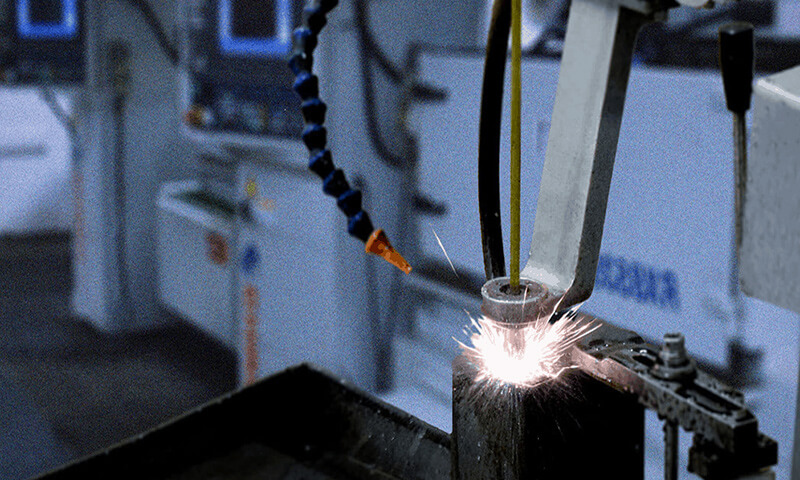
- Proceso apžvalga: EDM uses electrical discharges (kibirkštys) to erode material from a workpiece.
It’s particularly useful for hard materials and complex geometries that are difficult to machine conventionally. - Paraiškos: Commonly used in mold and die-making, aviacijos ir kosmoso komponentai, and intricate medical devices.
- Privalumai: Can machine extremely hard materials, achieves fine details, and produces minimal heat-affected zones.
- Trūkumai: Slower process, limited to conductive materials, and higher operational costs.

Šlifavimas:
- Proceso apžvalga: Grinding involves removing material using an abrasive wheel that rotates at high speeds. It’s used for finishing and achieving very tight tolerances.
- Paraiškos: Widely used in the automotive, aviacijos ir kosmoso, and tooling industries for producing smooth, accurate surfaces.
- Privalumai: Puiki paviršiaus apdaila, capable of achieving very tight tolerances, and suitable for hard materials.
- Trūkumai: Generates heat that can alter material properties if not managed properly, and it can be a slower process compared to other methods.
Pražiopsojimas:
- Proceso apžvalga: Broaching uses a toothed tool called a broach to remove material in a single stroke.
The broach moves linearly relative to the workpiece, cutting progressively deeper with each tooth. - Paraiškos: Used for producing keyways, splines, and other internal or external forms in mass production.
- Privalumai: Fast and efficient for specific shapes, high productivity for repetitive tasks.
- Trūkumai: Apribota tam tikromis formomis, requires dedicated equipment, and can have high tooling costs.
4. Key Differences Between Casting vs. Apdirbimas
| Savybė | Liejimas | Apdirbimas |
|---|---|---|
| Medžiagų atliekos | Minimal waste due to near-net-shape parts | Significant scrap generated from material removal |
| Tikslumas ir tolerancijos | Requires secondary processes for tighter tolerances | Offers superior precision and tight tolerances |
| Kaina | Higher initial tooling costs | Costs depend on material removal and complexity |
| Gamybos greitis | Faster for high-volume production | Excels in prototyping and low-volume runs |
| Dizaino sudėtingumas | Can achieve complex internal geometries | Apribota prieiga prie įrankių |
| Medžiagos parinktys | Wide range of metals and alloys | Visų pirma metalai, some plastics |
5. Advantages of Casting
Casting offers a multitude of benefits that make it an attractive manufacturing process for a wide range of industries, from automotive and aerospace to heavy machinery and consumer goods.
Below are some key advantages of casting:
Cost-Effectiveness for Large-Scale Production
- Economical at High Volumes: Casting is especially cost-effective for producing large quantities of parts.
The initial setup costs, such as mold creation, can be amortized over the production volume, leading to lower per-unit costs.
Pavyzdžiui, die casting can reduce unit costs by up to 30% when producing over 10,000 vienetų.
Ability to Create Intricate Shapes
- Sudėtingos geometrijos: One of the standout features of casting is its ability to produce complex shapes and internal geometries that would be difficult or impossible to achieve with other manufacturing methods.
Investicijų liejimas, ypač, excels at creating parts with fine details and thin walls, making it ideal for intricate components like turbine blades.
Wide Range of Material Options
- Universalios medžiagos: Casting supports a broad spectrum of metals and alloys, įskaitant aliuminį, bronza, ketaus, plienas, ir superlydai.
This flexibility allows manufacturers to choose materials based on specific application requirements.
Pavyzdžiui, aluminum die casting not only reduces weight by up to 50% compared to steel but also offers good corrosion resistance and mechanical properties.
Suitable for Large Parts
- Handling Heavy Components: Casting is unparalleled in its ability to produce large parts, which is crucial for industries like construction and transportation.
Smėlio liejimas, pavyzdžiui, can handle parts weighing up to 100,000 svarai, making it perfect for heavy machinery components and automotive engine blocks.
Near-Net Shape Capabilities
- Sumažintas medžiagų atliekų kiekis: Casting processes often produce parts close to their final dimensions (beveik tinklo forma), significantly reducing the need for secondary machining operations.
This minimizes material waste and lowers overall production costs. Nuolatinis liejimas į formą, pavyzdžiui, can achieve surface finishes as smooth as 60 micro inches, reducing or eliminating post-processing steps.
Dizaino lankstumas
- Customization and Prototyping: While casting is renowned for high-volume production, it also offers design flexibility.
Rapid prototyping techniques, such as 3D-printed sand molds, allow for quick iterations and adjustments during the development phase.
This makes casting suitable not only for mass production but also for custom and limited-run projects.
Patobulintos mechaninės savybės
- Tailored Performance: Depending on the casting method and material used, parts can exhibit enhanced mechanical properties.
Pavyzdžiui, permanent mold casting’s faster cooling rate can result in finer grain structures, improving strength and hardness.
Be to, certain casting processes can incorporate heat treatment or alloying elements to further tailor the part’s performance characteristics.
6. Advantages of Machining
Machining is a versatile and precise manufacturing process that offers numerous advantages,
making it indispensable in industries ranging from aerospace and automotive to medical devices and consumer electronics.
Below are some key benefits of machining:
Didelis tikslumas ir tikslumas
- Unmatched Tolerances: One of the most significant advantages of machining is its ability to achieve extremely tight tolerances.
CNC (Skaitmeninis kompiuterio valdymas) machines can produce parts with tolerances as tight as ±0.0005 inches (0.0127 mm), ensuring that components meet exact specifications. - Consistency and Repeatability: Automated CNC machining ensures that each part produced is identical to the last, providing high levels of consistency and repeatability.
This is crucial for applications where part-to-part uniformity is essential.
Superior Surface Finishes
- Smooth Surfaces: Machining can produce exceptionally smooth surface finishes without the need for additional treatments.
Pavyzdžiui, CNC machining can achieve surface finishes as smooth as 8 micro inches, which is ideal for applications requiring minimal friction or high aesthetic standards. - Sumažintas tolesnis apdorojimas: The precision of machining often means that less post-processing, such as grinding or polishing, yra būtinas, saving time and reducing costs.
Versatility in Prototyping and Custom Designs
- Rapid Iterations: Machining allows for quick adjustments and modifications during the development phase, facilitating rapid prototyping.
This flexibility is particularly beneficial for creating custom parts or testing new designs before committing to mass production. - Tinkinimas: The ability to modify digital models and CNC programming quickly makes machining an excellent choice for producing unique or small-batch items tailored to specific needs.
Medžiagos lankstumas
- Platus medžiagų asortimentas: Machining is compatible with a broad range of materials, įskaitant metalus, tokius kaip plienas, aliuminis, titanas, ir įvairūs lydiniai, as well as plastics and composites.
This versatility allows manufacturers to choose the best material for their application requirements. - Hard Material Capability: Certain machining processes, such as Electrical Discharge Machining (EDM),
can handle extremely hard materials that are difficult to shape using other methods, plečiant galimų pritaikymų spektrą.
Dizaino sudėtingumas
- Sudėtingos geometrijos: While casting excels at creating complex internal geometries, machining can produce intricate external features and detailed surfaces.
Modern CNC machines equipped with multi-axis capabilities can handle complex three-dimensional shapes with ease. - Tool Access: Although machining may be limited by tool access compared to casting,
advancements in tooling technology have significantly expanded the types of features that can be machined.
Cost Efficiency for Small and Medium Batches
- Lower Setup Costs for Smaller Runs: Skirtingai nuo liejimo, which often requires expensive molds for large-scale production, machining can be more cost-effective for smaller batch sizes.
CNC programming and tool changes are relatively quick and affordable, making machining suitable for low-volume production and prototyping. - Agile Manufacturing: The ability to make quick design changes and adapt to evolving project requirements enhances agility, allowing manufacturers to respond swiftly to market demands.
Sutrumpintas pristatymo laikas
- Faster Production Cycles: Automated machining operations can significantly reduce lead times, especially for small and medium batches.
CNC machines can operate continuously, optimizing production efficiency and meeting tight deadlines.
7. Applications of Casting vs. Apdirbimas
| Paraiškos | Liejimas | Apdirbimas |
|---|---|---|
| Automobiliai | Variklio blokai, pavaros, pakabos dalys. | Prototipai, tiksliosios pavaros, Pasirinktiniai komponentai. |
| Aviacijos ir kosmoso | Konstrukcinės dalys, Turbinos ašmenys. | Skliaustai, korpusai, and high-tolerance parts. |
| Pramoninė įranga | Vožtuvai, Siurbliai, and large machinery components. | Tikslieji įrankiai, dygliai, ir armatūra. |
| Medicinos prietaisai | Surgical implants and housings. | High-precision instruments and components. |
8. Factors to Consider When Choosing Between Casting vs. Apdirbimas
When deciding between casting and machining, įveikia keli veiksniai:
- Design Complexity and Tolerance Requirements: Complex internal structures favor casting, while tight tolerances lean towards machining.
Pavyzdžiui, aerospace parts may require machining for precise fit and function. - Production Volume and Lead Time: Casting excels in large batches, whereas machining suits smaller runs and rapid prototyping.
A company producing 50,000 parts might choose die casting for efficiency. - Material Type and Properties: Both processes support different materials based on application demands.
Steel parts might benefit from casting for strength, while aluminum parts might be machined for weight savings. - Cost Constraints and Budget: Evaluate initial setup costs versus per-unit costs for your volume.
Pavyzdžiui, permanent mold casting has higher upfront costs but lower per-part costs. - Poveikis aplinkai: Consider material waste and energy consumption in line with sustainability goals.
Machining generates more scrap but can offer better material utilization through optimized toolpaths.
9. Combining Casting vs. Apdirbimas
Daugeliu atvejų, combining both methods yields the best results. Pavyzdžiui:
- Variklio blokai: Cast to form the basic structure, then machined to add precise holes and threads.
This approach leverages the strengths of both processes for optimal performance. - Medicininiai implantai: Cast to create the general shape, followed by machining for critical surfaces and features.
Combining techniques ensures both efficiency and precision.
10. Išvada
Choosing between casting and machining depends on the specific requirements of your project.
Casting offers cost-effective solutions for large-scale production and complex geometries, while machining provides unmatched precision and flexibility for smaller batches and custom designs.
Suprasdami kiekvieno metodo privalumus ir trūkumus, you can select the most appropriate process—or even combine them—to achieve optimal results for your manufacturing needs.
If you have any casting and machining needs, Prašau nedvejodami Susisiekite su mumis.