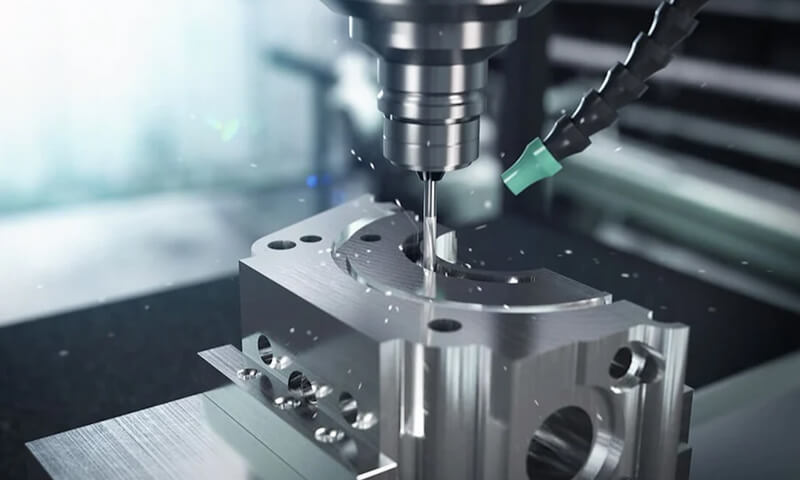
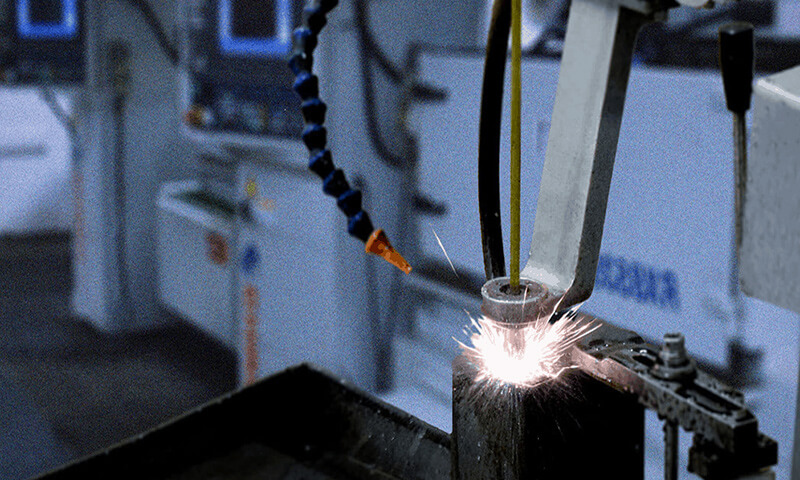
Smėlio liejimas yra didelių apkrovų komponentų gamybos pagrindas, derinant mažas įrankių sąnaudas su beveik neribota geometrine laisve.
Tarp lietinių lydinių, Anglies plienas (su anglimi apačioje 0.30 wt%) išsiskiria tvirtumu, stiprybė, ir dalių suvirinamumas – nuo mažų siurblių korpusų iki kelių tonų pavarų dėžių.
Šioje išsamioje apžvalgoje, Mes tyrinėjame anglinio plieno smėlio liejimą nuo metalurgijos šaknų per proceso etapus, projektavimo praktika, ir kokybės kontrolę.
2. Kas yra anglies plieno smėlio liejimas?
Į anglinio plieno smėlio liejimas, liejyklos pila išlydytą anglinį plieną – apibrėžia 0.05-0,30 masės% anglies– į formas, suformuotas iš nesurišto arba surišto smėlio.
Skirtingai nuo aukštesnio legiruoto plieno, anglinio plieno siūlo a subtilus balansas iš stiprybė, Tvirtumas, Aparatas, ir suvirinamumas, visa tai už mažesnę kainą už kilogramą.
Be to, smėlio liejimo įrankių biudžetai prasideda nuo mažų USD 500 paprastiems modeliams, leidžianti ekonomiškai gaminti prototipus ir vienkartines dalis, taip pat partijos siekia dešimtis tūkstančių vienetų.

3. Metalurginiai pamatai
Tvirtas anglinio plieno metalurgijos supratimas yra kiekvieno sėkmingo smėlio liejimo pagrindas.
Ypač, sąveika Anglies kiekis, silicio lygiai, ir nepilnametis legiravimo elementai diktuoja sklandumą, susitraukimo elgesys,
ir liejimo mikrostruktūra, kurių kiekvienas turi įtakos mechaninėms savybėms ir defektų polinkiui.
Anglies & Plieno klasifikacija
Angliniai plienai skirstomi į tris dideles kategorijas pagal jų anglies masės procentą:
- Mažai anglies dioksido išskiriantis plienas (≤ 0.15 % C): Didžiausias tempiamasis stiprumas (UTS) iš 350–450 MPa o pailgėjimai viršija 20 %, todėl jie yra labai lankstūs ir suvirinami.
- Vidutinio anglies plieno (0.15–0.30 % C): Pasiūlymas UTS iš 450– 550 MPa su pailgėjimais iš 10–15 %, subalansuoja jėgą ir tvirtumą.
- Aukštos anglies plienai (> 0.30 % C): Parodykite UTS aukščiau 600 MPA, tačiau jų trapumas riboja platų naudojimą liejant smėlį.
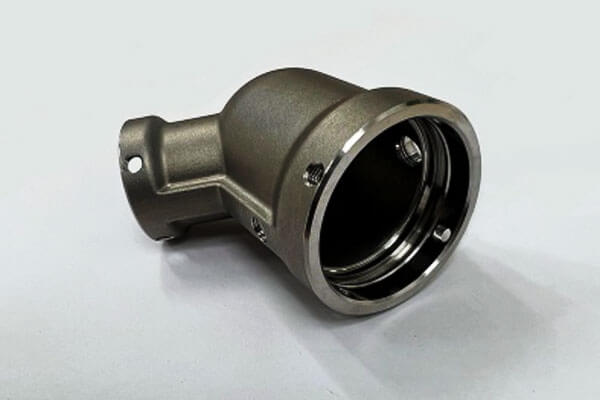
Įprastos liejimo klasės apima ASTM A216 WCB (0.24–0,27 % C, UTS ~ 415 MPA), ASTM A27 (0.23–0,29 % C, UTS ~ 345 MPA), ir DIN GS-42 (0.38–0,45 % C, UTS ~ 520 MPA).
Šios klasės iliustruoja, kaip subtilūs anglies kiekio pokyčiai lemia skirtingus stiprumo ir plastiškumo profilius.
Silicio vaidmuo sklandumui & Susitraukimas
Silicis, paprastai būna 1.8–2.2 %, atlieka dvigubą funkciją:
- Sklandumo didinimas: Kiekvienas 0.5 % Si padidėjimas gali pagerinti išlydyto plieno sklandumą iki 12 %, užtikrina pilnesnį formų užpildymą ir smulkesnį detalių atkūrimą.
- Susitraukimo kontrolė: Silicis skatina grafitizaciją kietėjimo metu, apytiksliai sumažinant tūrinį susitraukimo poringumą 15 % palyginti su mažo Si lydiniais.
Todėl, liejyklos dažnai taiko silicio lygį netoli viršutinio diapazono, kad sumažintų vidines tuštumas ir pagerintų paviršiaus apdailą.
Specializuotų savybių legiravimo priedai
Be anglies ir silicio, Manganas, Chromas, ir molibdenas pritaikyti našumą reiklioms aplinkoms:
- Manganas (0.6–1,0 %): Veikia kaip deoksidatorius, patobulina grūdelių dydį, ir padidina tempimo stiprumą iki 20 % labai nepakenkiant tvirtumui.
- Chromas (≤ 0.5 %): Padidina kietumą ir atsparumą dilimui, ypač vertingas komponentams, veikiamiems abrazyvinės terpės.
- Molibdenas (≤ 0.3 %): Padidina atsparumą aukštai temperatūrai ir atsparumą šliaužimui, todėl jis yra būtinas tokiose dalyse kaip išmetimo kolektoriai ir garų gaudyklės korpusai.
As-Cast mikrostruktūra
Kai išlydytas plienas vėsta smėlio formoje, jis sukietėja į a feritas – perlitas matrica:
- Feritas (minkštas, plastiškas) pirmiausia susidaro žemesnėje nei skysčio temperatūroje, suteikdamas tvirtumo pagrindą.
- Perlitas (lamelinis cementitas-feritas) atsiranda žemesnėje temperatūroje, suteikiant kietumą ir atsparumą dilimui.
Tipiški smėlio liejimo aušinimo greičiai (1–5 °C/s) derlius a ferito frakcija 40–60 %, su perlitu, kurį sudaro balansas.
Storesnėse dalyse, lėtesnis aušinimas gali padidinti perlito kiekį, padidinti kietumą iki 15 Hb bet sumažina pailgėjimą 2–3 %.
4. Smėlio liejimo proceso apžvalga
Smėlio liejimas paverčia išlydytą anglinį plieną į sudėtingas formas, naudojant išnaudojamas smėlio formas.
Žemiau, mes išsamiai aprašome kiekvieną pagrindinį žingsnį – modelį ir pagrindų kūrimą, pelėsių konstrukcija, išpylimas ir kietėjimas, ir iškratykite valydami – kartu pabrėždami duomenimis pagrįstą geriausią praktiką.
Raštas ir šerdies gamyba
Pirmiausia ir svarbiausia, modelio tikslumas lemia liejimo toleranciją. Paprastai liejyklos naudoja:
Raštinės medžiagos:
- CNC apdirbtas aliuminis laikosi ±0,02 mm matmenų tikslumas.
- Medžio raštai (mažiems garsams) pasiekti ± 0,2 mm.
- 3D-spausdinta derva modeliai pašalina sudėtingų formų pristatymo laiką.
Pagrindinė gamyba:
- Žaliojo smėlio šerdys kombinuoti 85-90 % silicio smėlis, 5–7 % bentonito molis, ir 2–3 % vanduo, tada sutankinkite esant 4–6 barų oro slėgiui.
- Nekepimo dervos šerdys naudoti fenolio arba furano rišiklius, siūlo pagrindines stipriąsias puses 4– 6 MPa su pralaidumu aukščiau 300 Dujų m³/m²·min.
Dėl tikslaus modelio ir šerdies gaminimo, liejyklos sumažina matmenų pokyčius ir vidinius defektus.
Formos konstrukcija
Formos sudėtis:
- 90 % silicio smėlis, 5–7 % molis, ir 2–3 % vanduo žalio smėlio pelėsiams.
- Chemiškai sujungti smėliai (Pvz., furano derva) sumažinti drėgmę iki < 0.5 %, griežtinant tolerancijas CT9–CT12.
Sutankinimas & Kietumas:
- Taikinys matricos kietumas iš 60–70 ha (Krantas A) užtikrina pelėsių vientisumą ir nuoseklų susitraukimą.
- Tinkamas pralaidumas (≥ 300 Dujų m³/m²·min) apsaugo nuo dujų įstrigimo ir poringumo.
Formos surinkimas:
- Inžinieriai įdeda branduolius į koją ir tempia, naudojant lapelius arba pagrindinius spaudinius, kad išlaikytų išlygiavimą viduje ±0,5 mm.
- Jie dengia atsiskyrimo paltus (paprastai 0,1–0,3 mm storio) palengvinti rašto atsipalaidavimą ir pagerinti paviršiaus apdailą.
Kontroliuojant smėlio savybes ir tankinimą, smėlio liejimo formos nuosekliai susitinka ISO CT11–CT14 pajėgumus.
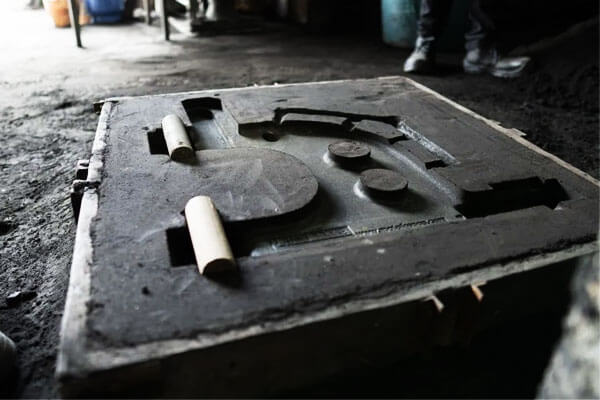
Pilimas ir kietėjimas
Su paruoštomis formomis, liejyklos tęsiasi:
Lydymosi paruošimas:
- Indukcinės krosnys kaitina anglinį plieną iki 1450–1550 °C, palaikykite 5–10 minučių, kad chemija suvienodėtų.
- Liejyklų inžinieriai pašalina šlakus ir pritaiko anglį bei silicį pagal tikslinę sudėtį (± 0.02 % C, ± 0.05 % Ir).
Vartai & Riser dizainas:
- Gerai subalansuotas vartų zona (vartai: bėgikų santykis ~ 1:3) užtikrina laminarinį srautą.
- Rizikai dydis at 10 % liejimo tūrio padavimo susitraukimo, paprastai yra sunkiausioje dalyje, kad būtų skatinamas kryptingas kietėjimas.
Aušinimo greitis:
- Plonos dalys atvėsina 5–10 °C/s, skatina ferito susidarymą ir smulkesnių grūdelių dydį (~ 15 µm).
- Storos sienos vėsina 1–3 °C/s; šaltkrėtis (Pvz., variniai įdėklai) paspartinti vietinį kietėjimą iki 50 %, mažinant susitraukimo poringumą.
Tikslią lydymosi valdymą derinant su optimizuotu sklendimu, liejyklos pasiekia garsą, matmenų nuoseklūs liejiniai.
Iškratymas, Valymas, ir Fettling
Pagaliau, liejiniai atsiranda iš formos:
Iškratymas:
- Automatinės vibracinės sistemos atskiria smėlį nuo metalo per 5–10 minučių vienai partijai.
Desanding & Šūvys sprogdinimas:
- Aukšto slėgio oro arba ratų pūtimo sistemos pašalina smėlio likučius, pasiekti pagrindinę apdailą Ra 6–12 µm.
Grūdinimo operacijos:
- Darbininkai šlifuoja arba apdirba vartų ir stovų stuburus, apdailos blykstė, ir sumaišyti perėjimus, paprastai pašalinama 1– 3 mm atsargų, kad atitiktų galutinius matmenų nuokrypius.
Išankstinė apžiūra:
- Liejiniai yra vizualiai tikrinami ir matuojami vietoje (± 0.5 mm apie svarbias savybes) prieš pereinant prie pilno patikrinimo.
Sistemingai iškratant ir valant, liejyklos ruošia anglinio plieno liejinius, kad būtų užtikrinta griežta kokybė ir galimas apdorojimas po liejimo.
5. Smėlio liejimo dizainas
Efektyvus liejinių dizainas:
- Grimzlės kampai (1–3 °): Užkirsti kelią modelio pažeidimui; griežtesni kampai padidina įrankių nusidėvėjimą.
- Apdirbimo atsargos (1– 3 mm): Užtikrina galutines savybes CT11–CT12 be perdirbimo.
- Susitraukimo pašalpa (1.0–1,3 mm/100 mm): Kompensuoja kietėjimo susitraukimą.
- Vienodas sienos storis (±10 mm): Išvengia karštų taškų ir vidinių įtempių.
- Filė & Spindulys (> 1 mm): Sumažinkite įtempių koncentraciją ir supaprastinkite metalo srautą.
- Užtvarų / stovų išdėstymas: Sulygiuokite stovus su storomis dalimis, kad padidintumėte kryptinis kietėjimas, sumažinant susitraukimo poringumą 30 %.
6. Proceso galimybės & Matmenų valdymas
Matmenų kontrolė ir pasikartojančių leistinų nuokrypių pasiekimas liejant anglies plieno smėlį išlieka ir iššūkiu, ir liejyklos meistriškumo etalonu..
Tolerancijos laipsniai liejant smėlį
Matmenų tolerancija reiškia leistinas liejamo komponento fizinių matmenų kitimo ribas.
Liejant smėlį, leistinos nuokrypos dažniausiai klasifikuojamos pagal ISO 8062-3 standartinis, kuri apibrėžia Liejimo tolerancijos laipsniai (KT) nuo CT1 (tiksliausias) į CT16 (mažiausiai tikslūs).
Anglinio plieno smėlio liejiniams, pasiekiami tolerancijos laipsniai paprastai patenka į:
| Liejimo procesas | ISO tolerancijos laipsnis | Linijinių matmenų tolerancijos diapazonas (mm) |
|---|---|---|
| Žalias smėlis | CT13 – CT14 | ±2,0 – ±3,5 mm (už 100 mm matmuo) |
| Kepkite smėlį | CT11 – CT13 | ±1,0 – ±2,5 mm |
| Apvalkalo pelėsis | CT8 – CT10 | ±0,6 – ±1,5 mm |
Pagrindiniai veiksniai, turintys įtakos matmenų tikslumui
1. Smėlio charakteristikos
- Grūdų smulkumas: Smulkesni grūdeliai pagerina detalių atkūrimą ir paviršiaus apdailą, tačiau sumažina pralaidumą ir gali turėti įtakos pelėsių vientisumui.
- Drėgmė & Binder turinys: Netinkamas smėlio mišinio santykis sukelia pelėsių iškraipymus arba su dujomis susijusius defektus, dėl kurių atsiranda matmenų neatitikimų.
2. Pelėsių sutankinimas
- Vienodas tankinimas užtikrina vienodus ertmės matmenis. Netinkamas taranavimas arba vibracija gali sukelti vietinį sienos griūtį arba pasikeitimą.
3. Šablono tikslumas
- Rašto dėvėjimas, terminis iškraipymas, arba rankinis raižymas gali sukelti klaidų. CNC frezuoti arba 3D spausdinti raštai pagerina atkuriamumą.
4. Terminis susitraukimas
- Anglies plienas paprastai susitraukia iki 1.0% į 2.5% kietėjimo ir aušinimo metu, priklausomai nuo sudėties ir geometrijos.
- Sudėtingoms geometrijoms gali prireikti diferencijuotų susitraukimo dydžių.
5. Skyriaus storis
- Plonasienės vietos greičiau atvėsta ir tolygiau susitraukia.
- Storosios dalys gali susitraukti vidurio linija, karštos vietos, arba deformuojasi, jei netinkamai pakilo arba atvėsina.
Patobulinto matmenų valdymo metodai
Norėdami padidinti liejimo tikslumą ir sumažinti po apdirbimo reikalavimus, šiuolaikinės liejyklos taiko kelias strategijas:
- Standžiųjų formavimo sistemų naudojimas: Chemiškai sujungtos smėlio formos pasižymi geresniu matmenų stabilumu nei tradicinis žalias smėlis.
- Formos išankstinis pašildymas: Formų kaitinimas prieš pilant sumažina temperatūrų skirtumus ir deformaciją.
- Atšalimo vieta: Strategiškai išdėstyti metaliniai šaldikliai pagreitina aušinimą karštose vietose, kad sumažintų netolygų susitraukimą.
- Modeliavimo programinė įranga: Kietėjimo modeliavimas ir terminis modeliavimas padeda numatyti ir kompensuoti dizaino susitraukimą ir iškraipymą.
Paviršiaus apdailos lūkesčiai
Smėlio anglies plieno paviršiaus šiurkštumas paprastai matuojamas Ra (mikronų):
| Liejimo procesas | Tipiškas paviršiaus šiurkštumas (Ra) |
|---|---|
| Žalias smėlis | 12 - 25 µm |
| Kepkite smėlį | 6 - 12 µm |
| Korpuso formavimas | 3 - 6 µm |
7. Kokybės užtikrinimas & Testavimas
Mechaninis bandymas
Liejyklos patvirtina mechanines savybes pagal:
- ASTM E8: Tempimo stipris ir pailgėjimas.
- ASTM E23: Charpy V formos atsparumas smūgiams.
- Rokvelo kietumas (HRC 20–30): Matuoja paviršiaus kietumą.
Nedestruktyvus vertinimas
Mes naudojame:
- Radiografija: Aptinka vidinį poringumą ≥ 2 mm.
- Ultragarsinis bandymas: Nustato tūrinius trūkumus ≥ 1 mm.
- Magnetinių dalelių patikrinimas: Atskleidžia paviršiaus įtrūkimus ≥ 0.5 mm.
Statistinis proceso valdymas
Stebėdamas Cp ir Cpk, liejyklos užtikrina Cpk ≥ 1.33 kritiniams matmenims.
Pirmas gaminio patikrinimas (FAI) patvirtina, kad pirminiai liejiniai atitinka DCTG reikalavimus prieš pradedant visą gamybą.
8. Gydymas po liejimo
Nors pradinis liejimo procesas apibrėžia anglinio plieno komponentų formą ir bendrąsias savybes,
Apdorojimas po liejimo atlieka lemiamą vaidmenį gerinant mechanines savybes, matmenų tikslumas, Paviršiaus kokybė, ir ilgalaikis patvarumas.
Šios antrinės operacijos nėra tik tobulinimas – tai esminiai žingsniai, paverčiantys neapdorotus liejinius į aukštos kokybės pramoninius komponentus, galinčius atlaikyti atšiaurias eksploatavimo sąlygas..
Šilumos procedūros
Anglies plieno liejiniai dažnai atliekami įvairiais būdais Šilumos procedūros pritaikyti jų mikrostruktūrą ir pagerinti mechanines savybes.
Gydymo pasirinkimas priklauso nuo taikymo reikalavimų, norimo kietumo, ausmingumas, ir vidinio streso būsena.
Normalizavimas
- Procesas: Šildymas iki ~870–950 °C, po to aušinimas oru.
- Tikslas: Patobulina grūdų struktūrą, pašalina vidinį įtampą, ir pagerina apdirbamumą.
- Efektas: Skatina vienodą ferito-perlito matricą, pagerintą stiprumą ir kietumą.
Gesinimas ir grūdinimas
- Procesas: Greitas aušinimas (paprastai aliejuje arba vandenyje) nuo austenitizacijos temperatūros (~840–900 °C), po to kaitinama iki ~500–650 °C.
- Tikslas: Padidina kietumą ir atsparumą tempimui, tuo pačiu kontroliuojant trapumą.
- Tipiškas taikymas: Dėvėjimui atsparūs komponentai ir konstrukcinės dalys, veikiamos smūgių.
Atkaitinimas
- Procesas: Lėtas aušinimas nuo ~800–850 °C.
- Tikslas: Suminkština medžiagą, kad būtų lengviau apdirbti, ir pagerina matmenų stabilumą.
- Efektas: Sukuria stambią feritinę struktūrą, kurios kietumas ir stiprumas yra mažesnis.
Stresas palengvina
- Temperatūros diapazonas: 540–650 °C.
- Tikslas: Sumažina liekamuosius įtempius, atsirandančius dėl netolygaus kietėjimo ar apdirbimo, nepakeičiant mikrostruktūros.
Duomenų taškas: ASTM A216 WCB liejiniai, įprasta mažai anglies išskiriančio plieno rūšis, paprastai po normalizavimo ir grūdinimo pasiekia 485–655 MPa tempimo stipris.
Paviršiaus tobulinimo metodai
Paviršiaus kokybė yra labai svarbi aplinkoje, kuri yra nusidėvėjusi, korozija, arba trintis. Paviršiaus apdorojimas po liejimo ne tik pagerina estetiką, bet ir žymiai pailgina komponentų tarnavimo laiką.
Šratinimas ir šratavimas
- Tikslas: Pašalina smėlio likučius, skalė, ir oksidai; pagerina nuovargio tarnavimo laiką, sukeldama gniuždomąjį paviršiaus įtempį.
- Paviršiaus šiurkštumas: Sumažintas iki 6–12 µm Ra, priklausomai nuo medijos ir intensyvumo.
Dangos ir Dengimas
- Cinko danga (Galvanizavimas): Padidina atsparumą korozijai, ypač skirtas naudoti lauke arba jūroje.
- Fosfato ir juodojo oksido dangos: Užtikrinkite sutepimą ir minimalią apsaugą nuo rūdžių.
- Chromuotas arba nikeliavimas: Naudojamas specializuotose srityse, siekiant padidinti paviršiaus kietumą arba cheminį atsparumą.
Tapyba ir Miltelių danga
- Įprasta nekritiniams paviršiams, užtikrina atsparumą korozijai ir vizualinį patrauklumą.
- Paprastai naudojamas po apdirbimo, kad būtų išsaugoti matmenų nuokrypiai.
Anglies plieno CNC apdirbimas
Dėl liejimo odos, mikrostruktūros nevienalytiškumas, ir galimi liekamieji įtempiai, Lieto anglinio plieno reikia kruopščiai atrinkti CNC apdirbimas strategijos, kaip išlaikyti toleranciją ir išvengti įrankių nusidėvėjimo.

Apdirbimo aspektai:
- Įrankiai: Karbido arba dengtų įrankių naudojimas siekiant pagerinti atsparumą dilimui.
- Tiekimas ir greitis: Mažesnis pjovimo greitis (60–120 m/I) ir saikingai šerti, kad sumažintų plepėjimą ir šilumos susidarymą.
- Aušinimo skysčio naudojimas: Emulsuoti pjovimo skysčiai rekomenduojami termoreguliacijai ir drožlių pašalinimui.
- Pašalpa: Paprastai ant liejinių paviršių paliekama 1–3 mm apdirbimo medžiagos galutiniam apdirbimui.
9. Pagrindiniai pramoniniai pritaikymai
Aliejus & Dujų pramonė
- Vožtuvo kūnai
- Siurblių korpusai
- Flanšai ir jungiamosios detalės
Sunkiosios technikos gamyba
- Pavarų dėžės korpusai
- Stebėkite nuorodas ir neveiklius
- Atsvarai
Infrastruktūros plėtra
- Šulinių dangčiai ir rėmai
- Geležinkelio komponentai
- Vandens ir nuotekų sistemos dalys
Automobiliai ir transportas
- Variklio komponentai
- Važiuoklės ir pakabos dalys
- Sunkvežimių ir priekabų dalys
Energijos generavimas
- Turbinų korpusai
- Slėginiai indai
- Šilumokaičio komponentai
Jūrų ir laivų statyba
- Propelerio velenai ir guoliai
- Denio mašinų komponentai
- Korpuso jungiamosios detalės
Atsinaujinanti energija
- Vėjo turbinų stebulės ir rėmai
- Hidroelektrinių turbinų komponentai
- Saulės energijos montavimo konstrukcijos
10. Įprastos anglinio plieno liejimo rūšys (Pasaulinė apžvalga)
| Standartinis korpusas | Standartinis numeris | Pažymys | Įprastas naudojimo atvejis | Pastabos |
|---|---|---|---|---|
| ASTM (JAV) | ASTM A216 | WCA, WCB, WCC | Vožtuvo kūnai, siurblių korpusai | Plačiai naudojamas slėgio turintiems liejiniams |
| ASTM A27 | 60-30, 65-35, 70-36, 80-50 | Bendrosios inžinerinės programos | Bendrosios paskirties plieno liejiniams | |
| ASTM A148 | 80-50, 90-60, 105-85 | Didelio stiprumo mechaninės dalys | Dažnai naudojamas pavarose, stebulės, ir struktūrinis panaudojimas | |
| ASTM A352 | LCA, LCB, LCC | Žemos temperatūros paslauga (kriogeninis) | Tinka žemos temperatūros slėgio sistemoms | |
| Į (Europa) | Į 10213 | GP240GH, GP280GH | Slėginiai indai ir jungiamosios detalės | Karščiui atsparaus plieno liejimo klasės |
| Į 10293 | GS-38, GS-45, GS-52 | Mechaninė inžinerija | Bendrosios paskirties liejamasis plienas | |
| Nuo (Vokietija) | Nuo 1681 | GS-C25, GS-C35 | Statybinės ir mašinų dalys | Naudojamas DIN standarto liejiniuose |
| GB (Kinija) | GB/T 11352 | ZG270-500, ZG310-570 | Mašinos ir pramoniniai komponentai | Didelis stiprumas ir tvirtumas |
| GB/T 5676 | ZG16Mn, ZG35 | Struktūrinis naudojimas, hidraulinės sistemos | Geras suvirinamumas ir apdirbamumas | |
| JIS (Japonija) | JIS G5502 | SC410, SC450, SC480, SC520 | Automobiliai, mechanikos inžinerija | Anglies ir legiruotojo plieno liejimo rūšys |
| BS (JK) | BS 3100 | A1, A2, A4 | Tiltai, geležinkelis, Jūrų paraiškos | Standartizuotos mechaninio plieno liejimo rūšys |
| GOST (Rusija) | GOST 977-88 | 20L, 25L, 35L, 45L | Bendrieji liejimo komponentai | Naudojamas NVS šalyse pramoninėms dalims |
| YRA (Indija) | YRA 1030 | 230-450 W, 280-520 W | Inžineriniai liejiniai | Bendrosios paskirties anglinio plieno standartas |
11. TaiSmėlio liejimo galimybės
Kaip patikimas pavadinimas tikslaus metalo liejimo srityje, DEZE liejykla atneša dešimtmečių patirtį ir inovacijas anglinio plieno smėlio liejimo pramonei.
Pažangių įrenginių derinimas, tvirta inžinerinė praktika, ir griežtas kokybės užtikrinimas,
Tai įsitvirtino kaip strateginis partneris reikliems klientams visame pasaulyje & dujos, transportavimas, energija, ir sunkiosios technikos sektoriuose.
Liejyklos infrastruktūra & Technologija
Tai eksploatuoja visiškai integruotas smėlio liejimo linijas, skirtas vidutinio ir didelio masto liejiniai pradedant nuo 2 kg iki daugiau 5,000 kg. Mūsų patogumai yra:
- Automatizuotos liejimo linijos dėl didelio pakartojamumo ir nuoseklaus matmenų tikslumo
- Lanksčių formų tipai: Žalias smėlis, furanas be kepimo, ir derva surištos sistemos
- 3D atspausdinti modeliai ir CNC apdirbti įrankiai greitam prototipų kūrimui ir sudėtingoms geometrijoms
- Lydymosi pajėgumas vietoje su elektros lanku ir indukcinėmis krosnelėmis, palaikančiomis tiek anglinį, tiek mažai legiruotą plieną
Siūlomos anglies plieno rūšys
Gaminame platų anglinio plieno rūšių asortimentą, pritaikyti tiek konstrukcinėms, tiek dėvėjimosi sąlygoms, įskaitant:
- ASTM A216 WCB – Slėgį išlaikantys komponentai, bendrosios paskirties anglinis plienas
- ASTM A27 klasė 60-30 / 70-36 – Bendras pramoninis naudojimas, nuo mažo iki vidutinio stiprumo
- ASTM A148 105-85 – Didelio stiprumo liejinys, užtikrinantis atsparumą dilimui ir nuovargiui
- Individualūs pažymiai su legiravimo elementais (Kr, MO, Mn, Į) kad atitiktų kliento specifikacijas
Visos lydalo kompozicijos yra patikrintos naudojant spektrometrinė analizė ir kontroliuojama laikantis griežtų leistinų nuokrypių nuoseklumui užtikrinti.
Matmenų tikslumas & Proceso valdymas
Tai meta į tolerancijos klases tarp CT10–CT13, su pasiekiama paviršiaus apdaila Ra 6–12 µm, priklausomai nuo formavimo proceso ir dalies sudėtingumo.
Didinamas matmenų tikslumas:
- Kontroliuojamas pelėsių tankinimas ir drėgmės reguliavimas
- Proceso modeliavimas naudojant MAGMAsoft® ir ProCAST už vartus, stovas, ir kietėjimo optimizavimas
- Proceso stebėjimas ir Statistinis proceso valdymas (SPC) siekiant sumažinti liejimo skirtumus
Svarbiems komponentams, KT skenavimas ir CMM patikrinimas patvirtinti geometrinį atitikimą ir vidinį vientisumą.
Paslaugos po liejimo
Pristatyti paruoštus surinkti komponentus, Tai siūlo platų apdailos ir papildomo apdorojimo paslaugų rinkinį:
- Terminis apdorojimas namuose: normalizuojantis, atkaitinimas, gesinimas, ir grūdinimas
- Apdirbimas iki griežtų leistinų nuokrypių su CNC tekinimo, frezavimas, ir gręžimas
- Paviršiaus apsauga: šūvių sprogdinimas, Tapyba, cinkavimas, ir pagal užsakymą pagamintos dangos
- Neardomieji bandymai (Ndt): ultragarsinis, radiografinis, ir magnetinės dalelių patikrinimas
12. Išvada
Anglies plieno liejimas su smėliu suteikia neprilygstamą vertę sunkiam darbui, didelės apimties komponentai.
Integruojant patikimą metalurgijos praktiką, tvirtas proceso valdymas, dizainas pagal liejimą, ir griežtas kokybės užtikrinimas, gamintojai konkurencingomis kainomis gali gaminti patvarias dalis, atitinkančias griežtus funkcinius reikalavimus.
Tai yra puikus pasirinkimas jūsų gamybos poreikiams, jei jums reikia aukštos kokybės anglinio plieno smėlio liejimo paslaugos.