
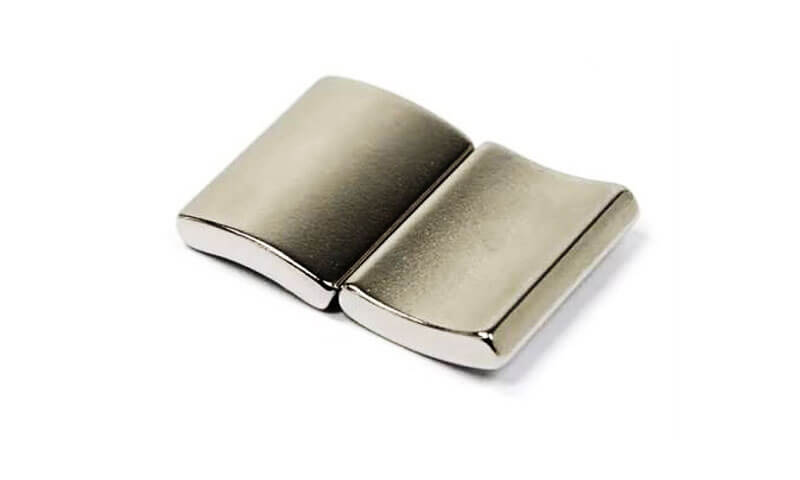
Nickel is one of the world’s most important engineering metals, valued for its exceptional corrosion resistance, héich Temperatur Leeschtung, excellent alloying characteristics, and unique magnetic properties.
It plays a critical role in industries ranging from aerospace and electronics to chemical processing, erneierbar Energien, medizinesch Geräter, and precision manufacturing.
Whether used in stainless steel, Superalalloys, rechargeable batteries, or electromagnetic components, nickel contributes properties that few other metals can simultaneously provide.
Among these properties, Magnetismus often raises questions. Many people know that iron is magnetic, while copper and aluminum are not.
Nickel occupies an interesting position because it is one of only three elemental metals that are naturally ferromagnetic at room temperature, together with iron (Fe) a Kobalt (COO).
Wéi och ëmmer, the magnetic behavior of nickel is more complex than a simple yes or no.
Factors such as alloy composition, Zäitperei, Kristallstruktur, kal schaffen, and heat treatment can significantly alter its magnetic performance.
1. Is Nickel Magnetic?
What Is Nickel?
Nickel (chemical symbol An, atomarer Zuel 28) is a silvery-white transition metal belonging to Group 10 vum periodeschen Dësch.
It possesses an excellent combination of corrosion resistance, Zougankheet, DUTTILITÉIT, elektresch Kämpfung, an thermesch Stabilitéit, making it one of the most widely used alloying elements in modern industry.
| Prowalange | Wäert |
| Chemical Symbol | An |
| Atomnummer | 28 |
| Kristallstruktur | Face-zentréiert Kubik (FCC) |
| Atomescht Gewiicht | 58.69 g/mol |
| Dicht | 8.90 g / cm³ |
| Schmëlzpunkt | 1455° C (2651° F) |
| Kachpunkt | 2913° C (5275° F) |
| Thermesch Verwaltungsgeschäfter | 90.9 W / m · k |
| Elektresch Kämpfung | Ongeféier 4 22% IACS |
| Elektresch Resistivitéit | 6.99 × 10⁻⁸ Ω·m |
| Koeffizient vun thermesche Expansioun | 13.4 × 10⁻⁶ / k |
| Spezifesch Hëtztkapazitéit | 444 J / kg · k |
Short Answer: Yes—Nickel Is Naturally Ferromagnetic
The simple answer is Jo.
Pure nickel is naturally ferromagnetic bei Raumtemperatur. This means it can:
- Be strongly attracted by permanent magnets.
- Become magnetized under an external magnetic field.
- Retain a portion of its magnetization after the external field is removed.
- Form magnetic domains that align to produce a permanent magnetic field.
Nickel belongs to an exclusive group of elemental metals that exhibit spontaneous ferromagnetism under normal conditions.
| Elements | Naturally Ferromagnetic at Room Temperature | Curie Temperatur |
| Eisen (Fe) | Jo | 770° C |
| Kaltreluerfënhal (COO) | Jo | 1,115° C |
| Nickel (An) | Jo | 358° C |
Above its Curie temperature, nickel no longer behaves as a ferromagnetic material and instead becomes paramagnetesch, responding only weakly to external magnetic fields.
Why Nickel Is Magnetic
The magnetism of nickel arises from its electronic structure—specifically, the arrangement of electrons in its 3d orbital. Nickel has the electron configuration [Ar] 3d⁸ 4s².
This means there are two unpaired electrons in the 3d subshell. These unpaired electrons create a net magnetic moment.
When the magnetic moments of adjacent atoms align in the same direction, the material becomes ferromagnetic.
This alignment is driven by a quantum mechanical phenomenon called the exchange interaction, which favours parallel alignment of electron spins in certain metals.
In nickel, the exchange interaction is strong enough to maintain parallel spin alignment up to 358°C (the Curie temperature).
2. Understanding Magnetism in Metals
What Is Magnetism?
Magnetism is a physical phenomenon arising from the motion and spin of electrons within atoms.
Every electron generates a tiny magnetic field, but whether a material exhibits noticeable magnetism depends on how these atomic magnetic moments interact collectively.
In most metals, individual magnetic moments either pair with opposite spins or remain randomly oriented, resulting in little or no observable magnetism.
In ferromagnetic materials such as nickel, Wéi och ëmmer, neighboring atomic moments interact strongly enough to align spontaneously over large regions, producing a measurable magnetic field.
Major Types of Magnetic Materials
| Tipps | Defininitioun | Magnetic Behaviour | Beispiller |
| Ferromagnetesch | Staark Attraktioun; retains magnetisation; magnetic moments align parallel. | High susceptibility; hysteresis; magnetic domains. | Eisen, Nickel, kobolt, an hir Legierungen. |
| Ferrimagnetic | Staark Attraktioun; magnetic moments align antiparallel but unequally. | Similar to ferromagnetic but weaker. | Magnetite (Fe₃oo₄), ferrites. |
| Antiferromagnetesch | Very weak attraction; magnetic moments align antiparallel. | Susceptibility increases with temperature. | Chrogium, manganese oxides. |
Paramagnetesch |
Very weak attraction; no retention; moments align with external field. | Susceptibility decreases with temperature (Curie law). | Aluminium, Platin, Titanium. |
| Diamagnetesch | Ganz schwaach Ofstoung; no permanent moments; induced moments oppose field. | Susceptibility is negative. | Kupfer, Loaz Steed, bismuth, d'Waassermonn. |
3. Why Nickel Is Ferromagnetic
Nickel’s ferromagnetism is rooted in the principles of quantum mechanics rather than classical electromagnetism.
Unlike ordinary metals, nickel possesses an electronic structure that allows millions of atomic magnetic moments to cooperate and align over large regions, creating a strong macroscopic magnetic field.
This phenomenon results from the combined effects of electron spin, exchange interactions, Kristallstruktur, and magnetic domain formation.

Atomic Structure of Nickel
Nickel atoms contain 28 electrons arranged around a nucleus of 28 protons.
While the inner electrons are tightly bound and contribute little to magnetic behavior, the outer 3d electrons play a decisive role.
Nickel crystallizes in a face-zentréiert Kubik (FCC) lattice at room temperature.
This highly ordered atomic arrangement places neighboring nickel atoms close enough for their electron wave functions to overlap, enabling strong magnetic interactions throughout the crystal.
Electron Configuration
The ground-state electron configuration of nickel is:
[Ar] 3d⁸ 4s²
The partially filled 3d orbital contains unpaired electrons, each possessing an intrinsic magnetic moment due to electron spin.
If these moments remained randomly oriented, the material would exhibit only weak paramagnetism. Amplaz, nickel’s atomic structure allows neighboring spins to interact cooperatively.
Exchange Interaction
The key mechanism responsible for nickel’s ferromagnetism is the exchange interaction, a quantum mechanical effect arising from the overlap of neighboring electron wave functions.
This interaction favors parallel alignment of adjacent electron spins because it minimizes the total energy of the crystal. Als Resultat vun:
- Neighboring atomic magnetic moments align spontaneously.
- Large regions of uniformly magnetized atoms develop.
- Magnetization exists even without an external magnetic field.
Although the magnetic moment of an individual nickel atom is smaller than that of iron, the collective alignment of billions of atoms generates significant magnetic behavior.
Magnetic Domains
To reduce overall magnetic energy, nickel does not behave as one giant magnet.
Amplaz, it is divided into numerous microscopic magnetic domains, each containing millions of atoms with their magnetic moments aligned in the same direction.
In an unmagnetized piece of nickel:
- Domains point in different directions.
- Their magnetic fields largely cancel one another.
- The material exhibits little external magnetism.
When exposed to an external magnetic field:
- Favorably oriented domains expand.
- Domain walls move.
- Atomic spins rotate toward the applied field.
- Overall magnetization increases rapidly.
If the magnetic field is sufficiently strong, most domains become aligned, and the nickel approaches magnetic saturation.
Curie Temperatur
Nickel remains ferromagnetic only below its Curie Temperatur, ongeféier 4 358° C (631 K St).
Below this temperature:
- Exchange interactions dominate.
- Magnetic domains remain stable.
- Strong ferromagnetic behavior is maintained.
Above the Curie temperature:
- Thermal energy disrupts spin alignment.
- Magnetic domains collapse.
- Nickel transitions into a paramagnetesch Material, exhibiting only weak magnetism in an external field.
This temperature-dependent transition is a critical consideration in applications involving elevated operating temperatures, such as electric motors, Generatoren, Sensoren, and high-temperature industrial equipment.
4. Factors Affecting Nickel’s Magnetism
Although pure nickel is inherently ferromagnetic, its magnetic behavior is not constant under all service conditions.
The strength of magnetization, magnetesch Permeabilitéit, and magnetic stability can change significantly depending on temperature, Legierung Zesummesetzung, mechanical processing, Microstruktur, and the surrounding operating environment.
Zäitperei
Temperature is the most influential factor affecting the magnetism of nickel.
Wéi d'Temperatur eropgeet, thermal energy causes greater atomic vibration, gradually disrupting the alignment of magnetic domains responsible for ferromagnetism.
Below its Curie Temperatur (approximately 358°C / 676° F), nickel maintains spontaneous magnetization and exhibits strong ferromagnetic behavior.
As the temperature approaches the Curie point, magnetic permeability and saturation magnetization decrease rapidly.
Once the Curie temperature is exceeded, the magnetic domains collapse, and nickel undergoes a phase transition from a ferromagnetic material to a paramagnetic one.
In this state, it responds only weakly to an external magnetic field and no longer retains permanent magnetization.
Wichtegst, dës Transformatioun ass reversibel. If the material is cooled below the Curie temperature without undergoing significant microstructural changes or oxidation, its ferromagnetic properties are restored.
| Temperaturbereich | Magnéitescht Verhalen | Engineering Implikatioune |
| Below 300°C | Stable ferromagnetism | Suitable for most magnetic components |
| 300–358°C | Magnetism gradually weakens | Reduced magnetic efficiency |
| Above 358°C | Paramagnetesch | Not suitable for magnetic applications |
| After cooling below Curie point | Ferromagnetism recovers | Magnetic properties are generally restored |
Alloy Zesummesetzung
The addition of alloying elements has a profound effect on nickel’s magnetic characteristics because it alters the electronic structure and crystal lattice.
Elementer wéi z Eisen an an kobolt generally enhance ferromagnetic behavior by increasing magnetic exchange interactions, while alloying additions including Chrogium, moybdsum, Manganese, Kupfer, an Silizium tend to reduce magnetic permeability by stabilizing non-magnetic phases or disrupting magnetic domain alignment.
Do do wor et och net, nickel alloys exhibit a wide spectrum of magnetic behavior.
Nickel-iron alloys such as Permalloy are specifically engineered to achieve extremely high magnetic permeability for transformers, magnetesch Schirmung, and precision sensors.
Am Kontrast, high-performance corrosion-resistant alloys such as Nonnell d'Säit, Haseloching, and many grades of Tonet are designed primarily for mechanical and chemical performance, resulting in weak or nearly non-magnetic characteristics.
This explains why nickel content alone cannot be used to predict whether an alloy will be strongly magnetic.
Crystal Structure and Microstructure
The magnetic behavior of nickel is closely related to its face-centered cubic (FCC) crystal structure and the arrangement of magnetic domains within the material.
Grain Gréisst, grain orientation, Phase Verdeelung, Ausfäll, and crystal defects all influence the movement of magnetic domain walls.
Materials with uniform grains and low internal stress generally exhibit more stable and predictable magnetic performance, whereas heterogeneous microstructures can reduce magnetic permeability and increase magnetic hysteresis.
During manufacturing processes such as casting, verpassen, rullend, oder Hëtzt Behandlung, changes in grain morphology and residual stress modify the domain structure, leading to measurable variations in magnetic properties even when the chemical composition remains unchanged.
Cold Working and Residual Stress
Mechanical deformation introduced during cold rolling, Zeechnen, bafen, Stamping, or machining changes the internal stress distribution of nickel and affects the mobility of magnetic domains.
Cold work increases dislocation density and residual stress, creating obstacles that impede domain-wall motion.
Als Resultat vun, coercivity often increases while magnetic permeability decreases. In precision electromagnetic components, excessive cold deformation can reduce magnetic efficiency and increase hysteresis losses.
Aus dësem Grond, many high-performance magnetic nickel alloys undergo stress-relief annealing after fabrication to restore optimal magnetic characteristics and improve dimensional stability.
Hëtztbehandlung
Hëtzt Behandlung influences nickel’s magnetism by relieving residual stress, refining grain structure, and modifying phase distribution.
Proper annealing promotes grain growth and reduces internal lattice distortion, allowing magnetic domains to move more freely.
This generally increases magnetic permeability and decreases coercive force.
Konversely, inappropriate heat-treatment temperatures or cooling rates may introduce undesirable phases or residual stresses that adversely affect magnetic performance.
For nickel-iron soft magnetic alloys, precisely controlled annealing cycles are a critical manufacturing step, often determining the final magnetic properties more significantly than the alloy composition itself.
Applied Magnetic Field
Nickel does not exhibit a fixed magnetic intensity under all operating conditions. Its response depends on both the strength and history of the applied magnetic field.
When an external magnetic field is introduced, magnetic domains progressively rotate and align with the field direction, causing magnetization to increase until saturation is reached.
Beyond the saturation point, further increases in field strength produce little additional magnetization.
After the external field is removed, a portion of the magnetization remains as remanence, while the field required to eliminate this residual magnetization is known as the coercive force.
These characteristics are represented by the material’s hysteresis loop and are particularly important in the design of motors, actuators, magnetic sensors, and electromagnetic devices.
Betribssystemer Ëmfeld
The service environment can indirectly influence nickel’s long-term magnetic performance.
Although nickel possesses excellent corrosion resistance, prolonged exposure to elevated temperatures, zyklesch thermesch Luede, oxidizing atmospheres, mechanical vibration, or aggressive chemicals may gradually alter the surface condition and microstructure.
These changes can affect magnetic stability over extended service periods, especially in demanding industrial environments.
In applications such as aerospace systems, Marine Ausrüstung, chemesch Veraarbechtungsanlagen, and power-generation facilities, engineers evaluate both magnetic properties and environmental durability simultaneously to ensure reliable long-term performance.
Fabrice Prozess
Different manufacturing methods produce distinct microstructures and residual stress states, resulting in variations in magnetic behavior.
Cast nickel components generally contain larger grains and slower solidification structures, while forged products exhibit refined grains and improved mechanical properties.
Cold-finished materials possess higher residual stresses, whereas annealed products typically demonstrate greater magnetic permeability and lower coercivity.
Surface finishing processes such as Maach, Grinind, poléieren, and electroplating usually have little direct effect on bulk magnetism, but they can influence magnetic performance in high-precision instruments where extremely tight magnetic tolerances are required.
5. Are Nickel Alloys Magnetic?
One of the most common misconceptions is that every alloy containing nickel must be magnetic.
An der Realitéit, nickel content alone does not determine magnetic behavior.
Amplaz, magnetism depends primarily on:
- Kristallstruktur
- Legierung Zesummesetzung
- Phase distribution
- Hëtzt Behandlung
- Kal Aarbecht
- Service Temperatur
As alloying elements modify nickel’s atomic arrangement, they also alter the exchange interactions responsible for ferromagnetism.
Magnetic Behavior of Common Nickel Alloys
| Legowon | Nickel Inhalt | Microstruktur | Magnetic at Room Temperature | Typesch Uwendungen |
| Nickel 200 | ≥99.0% | FCC | Jo | Elektresch Komponenten, Chemeschen Ueffor |
| Nickel 201 | ≥99.0% (low carbon) | FCC | Jo | Liewensmëttelveraarbechtung, Elektronik |
| Tonet 400 | ~63–70% Ni | Nickel-Copper | Slightly magnetic to weakly magnetic | Marine engineering, Pumpzen, d'Ventil |
| Monel K-500 | ~63% Ni | Precipitation-hardened | Weakly magnetic | Offshore shafts, Befestigungen |
| Nonnell d'Säit 600 | ~72% Ni | Entsteet | Allgemeng net magnetesch (Annealed) | Hëtztaustauschter, Mourif gemittlech |
Nonnell d'Säit 625 |
~58% Ni | Entsteet | Wesentlech net magnetesch | Aerospace, Marine, Chemeschenverbriechen |
| Nonnell d'Säit 718 | ~52% Ni | Precipitation-hardened | Slightly magnetic after aging | Aircraft engines, turbines |
| Haselchointo c-276 | ~57% Ni | Entsteet | Net-Magnéitesch (Annealed) | Chemeschen Veraarbechtungsausrüstung |
| Legowon 20 | ~35% an | Entsteet | Net-Magnéitesch | Sulfuric acid service |
| Nimonic 80A | ~75% Ni | Nickel superalloy | E bësse magnetesch | Gasturbinen, Aerospace |
6. How to Test Whether Nickel Is Magnetic
Determining whether nickel or a nickel-containing alloy is magnetic is important in material identification, Qualitéitskontroll, alloy verification, and equipment maintenance.
While a simple magnet can provide a quick indication, engineering applications often require quantitative measurements of magnetic permeability, magnetesch Flux Dicht, or saturation magnetization.
| Testing Method | Genauegkeet | Quantitative | Non-Destructive | Typesch Uwendungen |
| Permanent magnet | Wéineg bannen | Nee | Jo | Quick field identification |
| Magnetic permeability meter | Héichheet | Jo | Jo | Industrial quality control |
| Gauss meter | Héichheet | Jo | Jo | Magnetic field measurement |
| Vibrating Sample Magnetometer (VSM) | Vill héich | Jo | Jo | Materials research, Legierung Entwécklung |
| SQUID magnetometer | Extremely High | Jo | Jo | Scientific research |
| Magnetic Force Microscopy (MFM) | Microscopic | Jo | Jo | Domain structure analysis |
7. Industrial Applications of Magnetic Nickel
Nickel’s unique combination of ferromagnetism, Korrosioun Resistenz, mechanesch Haltbarkeet, an thermesch Stabilitéit makes it indispensable in numerous industrial sectors.
Am Géigesaz zu Eisen, nickel maintains excellent corrosion resistance while still exhibiting useful magnetic behavior, making it ideal for harsh environments where conventional magnetic materials would rapidly deteriorate.
Electric Motors and Generators
Nickel is commonly used in electromagnetic components that require stable magnetic performance under repeated magnetization cycles.
Uwendungen enthalen:
- Motor pole components
- Rotor assemblies
- Magnetic shielding
- Generator components
- Electromagnetic actuators
Electromagnetic Relays and Solenoids
Nickel’s relatively high magnetic permeability enables efficient magnetic flux transmission.
Typesch Uwendungen enthalen:
- Relay armatures
- Solenoid cores
- Electromagnetic switches
- Contact systems
- Industrial control equipment
Magnetic Sensors
Many sensing technologies rely on nickel’s stable magnetic behavior.
Uwendungen enthalen:
- Hall-effect sensors
- Proximity sensors
- Position sensors
- Current transformers
- Speed measurement systems
Rechargeable Batteries
Nickel is a key material in numerous battery technologies.
Beispiller enthalen:
- Nickel-metal hydride (NiMH)
- Nickel-cadmium (NiCd)
- Nickel-rich lithium-ion cathodes
- Battery current collectors
Electronic Components
Electroplated nickel coatings serve both protective and functional purposes.
Gemeinsam Uwendungen enthalen:
- Printed circuit boards (PCB)
- Connectoren
- Semiconductor packages
- Shielding enclosures
- Precision contacts
Aerospace Industrie
Nickel-based alloys are extensively used in aircraft and spacecraft because they retain mechanical strength at elevated temperatures.
Typesch Komponente enthalen:
- Turbine engines
- Auspuffsystemer
- Befestigungen
- Sensoren
- High-temperature electromagnetic devices
Chemesch Veraarbechtung Equipement
Pure nickel combines magnetic properties with excellent corrosion resistance against alkaline chemicals.
Typical equipment includes:
- Pumpzen
- D'Ventil
- Hëtztaustauschter
- Drockbehälter
- Electrochemical reactors
Medizinesch Ausrüstung
Nickel-containing magnetic materials are found in numerous medical devices.
Beispiller enthalen:
- Diagnostic instruments
- MRI-compatible auxiliary components
- Surgical equipment
- Precision actuators
- Laboratory automation
Magnetic Shielding
Nickel-containing alloys are widely used for electromagnetic interference (EMI) Schutz.
Uwendungen enthalen:
- Elektronesch Wunnengen
- Communication equipment
- Aerospace electronics
- Industrial automation
- Precision instrumentation
8. Nickel vs Other Magnetic Metals
Wëlls och Eisen (Fe), kobolt (COO), an an Nickel (An) are the three naturally occurring ferromagnetic metals at room temperature, they differ significantly in magnetic performance, mechanesch Eegeschafte, Korrosioun Resistenz, temperature stability, an industriell Uwendungen.
| Prowalange | Nickel (An) | Eisen (Fe) | Kaltreluerfënhal (COO) | Ferritic STAINLESS Stol (430) | Martensitic Edelstol (410) |
| Kristallstruktur (Raumtemperatur) | FCC | BCC | Hcp | BCC | BCT |
| Magnéitescht Verhalen | Ferromagnetesch | Ferromagnetesch | Ferromagnetesch | Ferromagnetesch | Ferromagnetesch |
| Curie Temperatur | 358° C | 770° C | 1,115° C | ~700–750°C | ~700–760°C |
| Relative Magnetic Permeability | Héichwäerteg | Vill héich | Héichheet | Héichwäerteg | Mëttelméisseg |
| Saturation Magnetization | Mëttelméisseg | Vill héich | Héichheet | Mëttelméisseg | Mëttelméisseg |
| Korrosioun Resistenz | Explaz vun engem exzellenten | Aarm | Gutt | Gutt | Mëttelméisseg |
Wear Resistenz |
Gutt | Mëttelméisseg | Explaz vun engem exzellenten | Gutt | Explaz vun engem exzellenten (Hëtzt behandelt) |
| Héich -peraturefabilitéit Stabilitéit | Gutt | Mëttelméisseg | Explaz vun engem exzellenten | Gutt | Mëttelméisseg |
| Machinabilitéit | Gutt | Mëttelméisseg | Schwierscht | Gutt | Gutt |
| Relativ Material Käschte | Mëttelméisseg | Wéineg bannen | Vill héich | Mëttelméisseg | Mëttelméisseg |
| Typesch Uwendungen | Chemeschen Ausrüstung, Elektronik, elektroplating | Transformers, Motoren, strukturell Stol | Aerospace, permanent Magnete, turbine Komponente | Applikaren, Auspuffsystemer, magnetic housings | D'Ventil, Pumpzen, turbineblader |
9. Common Myths About Nickel Magnetism
| Myth | Fact |
| All nickel‑based alloys are magnetic. | Net wouer. Many nickel alloys (Z.B., Nonnell d'Säit, Tonet, Haseloching) are non‑magnetic or weakly magnetic due to dilution of the ferromagnetic structure by other elements. |
| Nickel loses magnetism forever when heated. | Falsch. Nickel’s magnetism returns when cooled below its Curie temperature (358° C), provided the material has not undergone a phase change. |
Nickel is the most magnetic metal. |
Falsch. Iron has a higher magnetic moment per atom and higher saturation magnetisation. Nickel is the third most magnetic elemental metal (after iron and cobalt). |
| Nickel is magnetic at all temperatures. | Falsch. Above 358°C, nickel becomes paramagnetic. Below 358°C, it is ferromagnetic. |
| The magnet test can distinguish nickel from other metals. | Partially false. The magnet test can indicate ferromagnetism, but it cannot distinguish between nickel, Eisen, a Kobalt. Further tests (Z.B., chemesch Analyse, Dicht) sinn néideg. |
10. Conclusioun
Nickel occupies a unique position among engineering metals because it combines natural ferromagnetism, aussergewéinlech Korrosiounsbeständegkeet, excellent Duktilitéit, and reliable high-temperature performance.
As one of the three elemental metals that exhibit ferromagnetism at room temperature, nickel plays a vital role in applications ranging from electromagnetic devices and sensors to chemical processing equipment and advanced aerospace systems.
Wéi och ëmmer, magnetic behavior in nickel is more nuanced than a simple magnetic or non-magnetic classification.
Pure nickel is distinctly ferromagnetic, but its magnetic strength is lower than that of iron. Des Do -wise, Legierung Zesummesetzung, Hëtztbehandlung, kal schaffen, Betribssystemer Temperatur, and microstructure all have a significant influence on magnetic performance.
For engineers and designers, selecting the appropriate nickel material requires balancing multiple factors, including magnetic permeability, mechanesch Stäerkt, Korrosioun Resistenz, Fabrikatioun, Service Temperatur, a Liewenszyklus Käschten.
In demanding industrial environments where corrosion resistance and dependable magnetic properties must coexist, nickel remains one of the most versatile and valuable engineering materials available.
Faqs
Is pure nickel magnetic at room temperature?
Jo. Pure nickel is ferromagnetic at room temperature (20° C) and remains so up to its Curie temperature of 358°C.
Are all nickel alloys magnetic?
Nee. The magnetic behaviour of nickel alloys depends on the alloying elements and their concentrations.
Many nickel alloys (Z.B., Nonnell d'Säit, Tonet, Haseloching) are non‑magnetic or weakly magnetic.
How does nickel’s magnetism compare to iron?
Nickel has a lower magnetic moment per atom (0.6 μ_B vs. 2.2 μ_B for iron) and lower saturation magnetisation (0.6 T vs. 2.15 T). Iron is more strongly magnetic than nickel.
Can nickel be made non‑magnetic?
Jo. Alloying nickel with sufficient non‑magnetic elements (Z.B., Kupfer, Chrogium, Titanium) can dilute the ferromagnetic lattice and produce non‑magnetic or weakly magnetic alloys.
What is the most magnetic nickel alloy?
Permalloy (80% An, 20% Fe) is one of the most magnetic nickel alloys, with relative permeability exceeding 100,000.

