I have reviewed a great many material selection packages for chloride-bearing equipment, and I have noticed a pattern.
When a corrosion problem appears, the first response is almost always to change the grade in the material column of the drawing: 316L becomes 904L, then 904L becomes 254 CONIUNCTI SUMUS, tunc " 254 SMO becomes 654 CONIUNCTI SUMUS. Each step looks like added insurance. Each step adds cost.
But in the field, I have seen equipment built from 654 SMO fail in a matter of months because the gasket crevice was never addressed, the weld consumable was selected by habit, or the interpass temperature was never written into the WPS.
This guide is organized around the six-step review I use on real projects: medium and temperature → corrosion mechanism → crevice geometry → base metal → welding consumables → manufacturing and standards.
The goal is to make the selection conclusion traceable in the drawing, the purchase specification, and the welding documents—not just in the material column.
1. What Are Super Austenitic Stainless Steels?
Super austenitic Stainless Steels are highly alloyed stainless steels developed to provide better corrosion resistance than conventional austenitic grades, particularly in chloride-rich and chemically aggressive environments.
Their austenitic microstructure is primarily stabilized by nickel and nitrogen. High chromium and molybdenum contents improve resistance to localized corrosion, while nitrogen further enhances pitting resistance and contributes to mechanical strength.
Secundum gradus, copper may also improve performance in certain reducing acid environments.
The term super austenitic generally refers to grades with substantially higher alloy contents than conventional 300-series stainless steels.
Many contain approximately 6% or more molybdenum, although 904L is commonly grouped with high-alloy austenitic stainless steels despite having a lower molybdenum content.
The Three Grades at a Glance
Comparison of 904L, 254 CONIUNCTI SUMUS, et 654 CONIUNCTI SUMUS
| Standard Grade | UNS Designation | In / W.Nr. | Typical Mo Content | Main Corrosion Applications |
| 904L | N08904 | 1.4539 | Proxime. 4.5% MO, with Cu addition | Sulfuric acid and dilute phosphoric acid |
| 254 CONIUNCTI SUMUS | S31254 | 1.4547 | Proxime. 6.0% MO, with N addition | High-chloride environments, PRAEGRESSUS, FGD scrubbers |
| 654 CONIUNCTI SUMUS | S32654 | 1.4652 | Proxime. 7.3% MO, with high N content | Extreme chloride environments, bleach plants, deep offshore applications |
2. Chemical Composition and Metallurgical Characteristics
The corrosion resistance of super austenitic stainless steels is determined by their alloy chemistry, microstructure, and metallurgical condition.
Understanding these factors helps engineers select materials based on more than just their trade names.
904L immaculatam ferro (US N08904 / In 1.4539)
904L is a high-alloy austenitic stainless steel containing elevated levels of nickel, chromium, et Molybdenum, together with a copper addition.
It was developed particularly for applications involving sulfuric acid and other aggressive chemical environments.
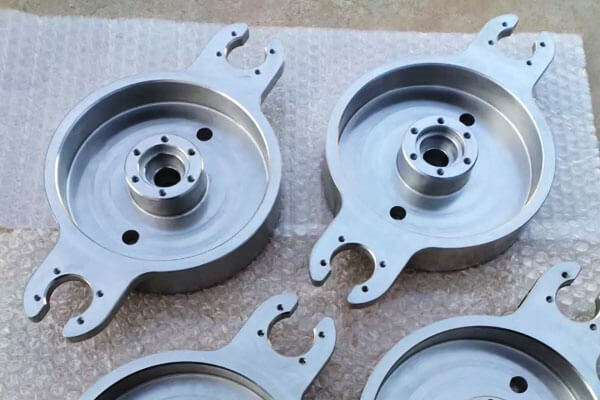
Its typical alloy design includes approximately:
- 19–23% chromium.
- 23–28% nickel.
- 4–5% molybdenum.
- 1–2% copper.
- Humilis ipsum content, generally limited to 0.02% maximum in common specifications.
The combination of nickel, Molybdenum, and copper gives 904L good resistance to general corrosion in selected reducing acid environments.
Its low carbon content also helps reduce the risk of sensitization and intergranular corrosion after welding, provided appropriate fabrication procedures are followed.
Key material characteristics:
- Good resistance to sulfuric acid under suitable concentration and temperature conditions.
- Improved resistance to chloride-induced pitting compared with conventional 316L.
- Good resistance to many phosphoric acid environments.
- Good weldability using suitable filler metals and procedures.
- Higher material and fabrication costs than standard austenitic stainless steels.
One important limitation is that 904L is not a universal seawater-resistant alloy.
Although its molybdenum content is higher than that of 316L, its localized corrosion resistance is generally insufficient for demanding seawater and chloride-rich crevice conditions.
Praesertim, seawater containing oxidizing species or deposits can create conditions in which 904L becomes susceptible to pitting and crevice corrosion.
254 SMO Stainless Steel (US S31254 / In 1.4547)
254 SMO is a high-molybdenum super austenitic stainless steel developed for highly aggressive chloride environments.
Its alloy design combines approximately 20% chromium, 18% nickel, 6% Molybdenum, and a nitrogen addition.
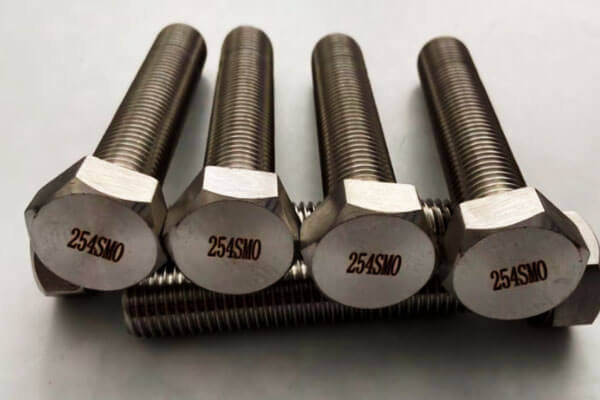
Typical composition ranges include:
- 19.5–20.5% chromium.
- 17.5–18.5% nickel.
- 6.0–6.5% molybdenum.
- Approximately 0.18–0.22% nitrogen.
- A small copper addition.
The high molybdenum and nitrogen contents substantially improve resistance to pitting and crevice corrosion.
Compared with 904L and 316L, 254 SMO is better suited to seawater systems, chloride-containing process fluids, and flue gas desulfurization (FGD) apparatu.
Key material characteristics:
- High resistance to chloride-induced pitting corrosion.
- Improved crevice corrosion resistance compared with conventional austenitic stainless steels.
- Good resistance to seawater under properly controlled conditions.
- Good resistance to many oxidizing and reducing industrial media.
- High strength relative to conventional austenitic grades.
- Greater sensitivity to fabrication conditions than ordinary stainless steels.
254 SMO is often selected for seawater piping, calor de, desalination armorum, processus systemata chemical, and FGD scrubbers.
tamen, its performance is highly dependent on component geometry.
A 254 SMO plate may resist pitting in an open seawater environment but experience crevice corrosion beneath a gasket, deposit, or poorly designed flange connection.
654 SMO Stainless Steel (UNS S32654 / In 1.4652)
654 SMO is an exceptionally highly alloyed austenitic stainless steel developed for extremely aggressive corrosion environments.
It contains higher chromium, Molybdenum, and nitrogen levels than 254 CONIUNCTI SUMUS, giving it outstanding resistance to localized corrosion.
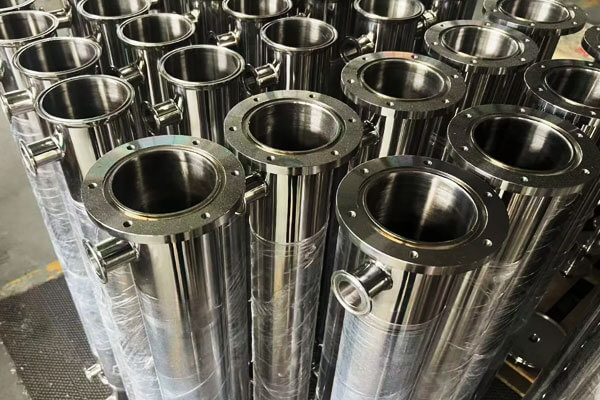
Its typical alloy composition includes approximately:
- 24% chromium.
- 22% nickel.
- 7.3% Molybdenum.
- 0.45% nitrogen.
- Proxime 3% manganese.
- A copper addition.
The high nitrogen content is particularly important. It strengthens the austenitic matrix and contributes significantly to localized corrosion resistance.
The combined chromium-molybdenum-nitrogen system gives 654 SMO a typical PREN value of at least 56.
Key material characteristics:
- Extremely high resistance to pitting corrosion.
- Outstanding resistance to crevice corrosion compared with most conventional stainless steels.
- Excellent potential for severe chloride and seawater applications.
- High strength resulting from nitrogen alloying.
- More demanding hot-working, cold-forming, and welding requirements.
- Higher material cost and more specialized fabrication requirements.
654 SMO is considered for applications involving highly aggressive chloride environments, including bleach plants, demanding seawater equipment, and deep offshore systems.
Tamen, even this grade is not immune to corrosion. Under severe crevice conditions, princeps temperaturis, strong oxidizing conditions, or inappropriate fabrication practices, localized corrosion may still occur.
Its selection should therefore be supported by relevant corrosion testing and engineering assessment.
3. Corrosio resistentia: Understand the Failure Mechanism Before Selecting the Grade
A common mistake in stainless steel selection is to treat corrosion resistance as a single property. Praxi, different corrosion mechanisms require different evaluation methods.
A material that performs well against uniform corrosion in sulfuric acid may still fail rapidly through pitting or crevice corrosion in seawater.
Uniform Corrosion: Why 904L Can Be Better Than 254 SMO in Some Acids
904L was developed primarily for aggressive chemical environments, particularly sulfuric acid service.
Its nickel, Molybdenum, and copper additions provide good resistance to uniform corrosion in selected sulfuric acid concentrations and temperatures.
It can also perform well in certain dilute phosphoric acid environments. This makes it a useful material for chemical processing equipment, acid storage systems, and related industrial applications.
Tamen, the presence of halide ions can change the corrosion behavior significantly.
Hydrochloric acid, Acidum hydrofluoric, chloride-contaminated sulfuric acid, and some wet-process phosphoric acid environments may be too aggressive for 904L.
In such conditions, 254 SMO or 654 SMO may become more suitable candidates, depending on the actual acid composition, temperamentum, and oxidizing potential.
Pitting corrosio: Understanding the Role of PREN
Pitting corrosion occurs when the passive film breaks down locally and the exposed metal cannot repassivate under the prevailing environmental conditions. Chloride ions are particularly effective at initiating this process.
A commonly used screening parameter is the Pitting Resistance Equivalent Number (Lignum):
PRE = %Cr + 3.3 × %Mo + 16 × %N
This formula estimates the contribution of chromium, Molybdenum, and nitrogen to localized corrosion resistance. Using representative compositions, approximate PREN values are:
| Gradus | Typical PREN Reference | General Interpretation |
| 904L | Proxime 36 | High localized corrosion resistance compared with conventional 316L |
| 254 CONIUNCTI SUMUS | Proxime 43 | Very high resistance to chloride-induced pitting |
| 654 CONIUNCTI SUMUS | ≥56 | Extremely high pitting resistance among austenitic stainless steels |
The values above are useful for preliminary comparison, but they should not be treated as guaranteed performance ratings.
The exact result depends on the chemical composition of the actual heat and the PREN calculation convention. Some specifications and technical references also use modified formulas.
Potius, PREN does not directly predict the temperature at which a particular component will begin to pit in service.
Use PREN to screen candidate materials, not to certify corrosion performance.
CPT: A More Direct Evaluation of Pitting Resistance
A more practical method for comparing pitting resistance is the measurement of the Critical Pitting Temperature (CPT).
CPT identifies the temperature at which stable pitting occurs under a specified test environment and procedure.
One commonly referenced method is ASTM G150, which uses an electrochemical test in a controlled chloride solution.
The test data cited in the supplied technical material were obtained in 1 M NaCl solution, continet circiter 35,000 mg/L chloride, using an Avesta Cell.
These conditions are important. A CPT value obtained in 1 M NaCl using ASTM G150 cannot be directly transferred to a different chloride concentration, pH, oxidizing potential, or test method.
Crevice Corrosion: Quare 654 SMO Needs More Than a High CPT
Crevice corrosion is often more difficult to control than open-surface pitting.
It develops in confined spaces where fluid exchange is restricted, such as beneath gaskets, deposita, washers, LABIUM facies, and overlapping plates.
Inside a crevice, oxygen depletion and changes in local chemistry can destabilize the passive film. Chloride ions may become concentrated, and the local pH can decrease.
Once the corrosion process becomes established, the crevice environment may remain aggressive even when the surrounding exposed surface appears unaffected.
This is particularly relevant to seawater heat exchangers, plate heat exchangers, obseratis hospites, and complex welded assemblies.
For very highly alloyed grades such as 654 CONIUNCTI SUMUS, conventional pitting tests may not be sufficient to distinguish performance under severe crevice conditions.
The supplied technical material therefore recommends evaluating Critical Crevice Corrosion Temperature (CCCT) using a crevice-specific procedure.
One referenced dataset uses 6% FeCl₃ solution under MTI-2 test conditions to assess the critical crevice corrosion temperature.
CPT and CCCT measure different corrosion behaviors. They should not be combined into a single ranking or compared without accounting for their different test solutions, specimen configurations, and procedures.
For equipment with gasketed joints, deposita, angustus hiatus, or complex internal geometry, crevice corrosion testing may be more relevant to the actual service risk than a high PREN value alone.
Accentus corrosio fregisset: Alloy Selection Must Include Stress and Environment
Stress corrosion cracking requires the simultaneous presence of a susceptible material, idoneum mordax amet, ac distrahentes accentus.
The stress may come from operating loads, residual welding stresses, frigus formatam, or assembly conditions.
Chloride-induced SCC is an important consideration for austenitic stainless steels, maxime in elevatis temperaturis.
High nickel and alloy additions can improve resistance in certain environments, but no super austenitic grade should be considered immune to every form of SCC.
When evaluating 904L, 254 CONIUNCTI SUMUS, vel 654 CONIUNCTI SUMUS, engineers should examine:
- Chloride concentration and chemical composition.
- Metallum temperatus, including local hot spots.
- Tensile and residual stress levels.
- Weld geometry and heat-affected zones.
- Cold-worked regions and forming history.
- Possibility of evaporation, concentratio, or deposits.
Where sour oil and gas service is involved, additional cracking mechanisms such as sulfide stress cracking must be evaluated under the applicable materials requirements.
Passing a sour-service qualification does not establish general resistance to pitting or crevice corrosion.
4. Seawater Applications: Temperamentum, Chlorination, and Crevice Geometry Matter
Seawater service is one of the most demanding applications for austenitic stainless steels. Tamen, selecting a material based only on the term seawater is not sufficient.
The corrosion behavior of seawater depends on its chemical treatment, biological activity, operating temperatus, and the geometry of the wetted components.
Natural Seawater vs. Chlorinated Seawater: Different Corrosion Conditions
One frequently overlooked factor in seawater material selection is whether the water is natural or chlorinated.
Natural seawater supports the formation of biofilms on stainless steel surfaces.
These biological films can alter local electrochemical conditions and raise the corrosion potential of the material, augendae verisimilitudo locales corrosio.
The severity varies with marine conditions, including water temperature, biological activity, and geographical location.
The technical handbook identifies particularly aggressive conditions in cold-water regions at approximately 25–30°C, while the corresponding temperature in tropical regions is slightly above 30°C.
These values should be understood as reference observations associated with regional biological activity, rather than universal temperature thresholds.
The actual corrosion risk depends on the specific marine environment and operating conditions.
Chlorination introduces an additional corrosion factor. Chlorine or hypochlorite is commonly added to seawater systems to control biological growth, but these oxidizing agents also increase the electrochemical potential of the water.
Sub his conditionibus, the passive film on stainless steel may become more vulnerable to localized breakdown.
As the temperature of chlorinated seawater increases, the risk of pitting and crevice corrosion generally rises.
Proinde, material selection criteria established for natural seawater should not automatically be applied to chlorinated seawater.
Crevice Geometry: Why Component Design Changes Corrosion Resistance
Even when seawater chemistry and temperature remain unchanged, component geometry can significantly affect corrosion performance.
Structure adds another layer of difficulty. The curved contact between gaskets and plates in a plate heat exchanger creates deeper and more effective crevices than a flanged connection, and is generally more severe.
This is why 254 SMO has a separate boundary line for plate heat exchangers.
Flanged joints should not automatically be treated as the more lenient case. Once the bolt preload changes, the actual crevice geometry can approach the severity of a plate heat exchanger.
Reference Temperature Limits for 254 SMO and 654 CONIUNCTI SUMUS
The handbook provides several useful reference values for selecting super austenitic stainless steels in chlorinated seawater.
Tamen, these figures are meaningful only when their original service conditions are retained.
| Seawater Application | Recommended Material or Solution | Reference Condition | Engineering Consideration |
| Crevice-free welded structure | 254 CONIUNCTI SUMUS | Chlorine content ≤1 ppm; approximately 45°C | Reference condition for a welded structure without crevices |
| Flanged connection | 654 SMO or Avesta P16 weld overlay | Above 30°C | Higher crevice corrosion resistance may be required at the sealing interface |
| Plate heat exchanger | 654 CONIUNCTI SUMUS | At least 60°C in the cited continuous testing | Test-specific result, not a universal design temperature |
| General seawater service | 904L | Non commendatae | Insufficient resistance for the seawater conditions covered by the handbook guidance |
Why 904L Is Not Recommended for Seawater Service
The handbook takes a clear position on 904L: 904L should not be used in seawater service.
This recommendation does not mean that 904L lacks corrosion resistance.
It is a high-alloy austenitic stainless steel containing approximately 4.5% molybdenum and copper, and it offers good resistance to uniform corrosion in selected sulfuric acid and dilute phosphoric acid environments.
Its limitation is its relatively lower resistance to the pitting and crevice corrosion conditions encountered in seawater, particularly when chloride concentration, temperamentum, and confined geometries create a more aggressive environment.
For seawater equipment, 254 SMO and 654 SMO are generally more appropriate candidates:
- 254 SMO is suitable for many high-chloride applications where its resistance to pitting and crevice corrosion meets the design requirements.
- 654 SMO provides a higher level of localized corrosion resistance and is a candidate for more severe chlorinated seawater conditions and demanding crevice geometries.
The final selection should still be supported by application-specific corrosion data.
Neither grade should be treated as immune to seawater corrosion under every combination of temperature, chlorination, et componentibus consilium.
5. Welding Super Austenitic Stainless Steels: The Weld Metal Must Match the Corrosion Duty
Selecting the correct base metal is only half of the material engineering task.
In welded equipment, the weld metal and heat-affected zone must also maintain adequate corrosion resistance.
This is particularly important for high-molybdenum austenitic stainless steels. per glutino, the material melts and resolidifies.
Alloying elements do not necessarily distribute uniformly during solidification, and the resulting weld metal can contain local variations in composition.
Molybdenum segregation is especially important. Regions depleted in molybdenum may have lower resistance to localized corrosion and can become preferential sites for pitting or crevice attack.
Proinde, a corrosion-resistant base metal does not guarantee a corrosion-resistant welded assembly.
Welding 904L: Matching Filler Metal
904L has a comparatively lower tendency toward severe alloy segregation than 254 SMO and 654 CONIUNCTI SUMUS. Matching or compositionally compatible filler metals are commonly used.
The supplied technical reference gives a typical deposited weld-metal composition of approximately:
- 4.5% Molybdenum.
- 1.5% aes.
The copper addition helps maintain the intended corrosion behavior in suitable acid environments. Filler selection should still follow the base-metal specification, applicable welding classification, and the actual process medium.
LIBELLUS 254 CONIUNCTI SUMUS: Use an Over-Alloyed Filler
Enim 254 CONIUNCTI SUMUS, the supplied technical material recommends Avesta P12 filler metal, with a typical deposited weld-metal molybdenum content of approximately 9%.
This is considerably higher than the molybdenum content of the base metal, which is around 6%.
The reason is to compensate for alloy segregation during weld solidification.
Using a filler metal with higher molybdenum content helps reduce the risk that local weld-metal regions will have insufficient resistance to pitting and crevice corrosion.
The filler-metal selection should be verified against the specific product form and classification. Pro exemplo, the supplied product references identify:
- P12 wire: typically associated with AWS A5.14 ERNiCrMo-3.
- P12-R covered electrode: typically associated with AWS A5.11 ENiCrMo-12.
These classifications should be checked against the current consumable manufacturer’s technical data before being placed in a purchase specification.
A product name alone is not a complete welding consumable specification.
LIBELLUS 654 CONIUNCTI SUMUS: Higher Alloy Compensation Is Required
654 SMO has an even higher alloy content and more demanding weld-metal requirements.
The supplied material recommends Avesta P16, with a typical deposited weld-metal molybdenum content of approximately 15%. The corresponding wire product is identified as an ERNiCrMo-13-type consumable.
This higher molybdenum level is intended to compensate for segregation and maintain localized corrosion resistance in the weld region.
A filler metal suitable for 254 SMO should not automatically be transferred to 654 CONIUNCTI SUMUS. The base-metal alloy design and the required weld-metal chemistry are different.
Post-Weld Cleaning and Surface Restoration
Weld discoloration, oxydatum scale, embedded carbon steel particles, and other surface contamination can compromise the corrosion resistance of stainless steel.
Even when the base metal and filler metal are correctly selected, an inadequately cleaned weld may become the first location to experience localized corrosion.
Manufacturing procedures should therefore specify appropriate post-weld cleaning, Picklens, and surface restoration methods.
These operations must be compatible with the alloy, pars geometriae, and applicable environmental and safety requirements.
Solution annealing can help reduce the effects of weld-metal segregation in certain simple components, particularly some pipe fittings. Tamen, it should not be treated as a universal remedy for complex equipment.
Large vessels, fictis ecclesiis, and components with complex geometries may not be suitable for full solution treatment.
A welding specification should identify the filler-metal classification, uber forma, deposited-metal requirements, initus, interpass temperatus, and post-weld surface condition.
Simply stating “use matching filler metal” is insufficient for highly alloyed materials.
6. Fabrication and Heat Treatment: Preserve the Alloy’s Corrosion Resistance
Super austenitic stainless steels can lose part of their corrosion-resistance advantage if forming, calor, or machining introduces unfavorable microstructures or surface conditions.
Hot Working and Intermetallic Phase Precipitation
The supplied technical material identifies a potential risk of intermetallic phase precipitation in 254 SMO and 654 SMO within the approximate temperature range of 600–1,000°C.
Depending on alloy chemistry and exposure time, undesirable phases may form and locally reduce chromium or molybdenum availability in the surrounding matrix.
This can impair corrosion resistance and, in quibusdam casibus, Mechanica proprietatibus.
To restore the required metallurgical condition after hot working, the supplied material recommends solution treatment at a temperature of at least 1,150°C, sequitur celeri exstingui.
The cooling rate is important. Slow cooling through a precipitation-sensitive temperature range can allow unwanted phases to form again, reducing the benefits of solution treatment.
The actual heat-treatment procedure must be established according to the applicable material specification, product thickness, pars geometriae, and qualified manufacturing process.
The 1,150°C value is a reference from the supplied technical material, not a substitute for a grade-specific heat-treatment specification.
Cold Forming and Work Hardening
254 SMO and 654 SMO contain relatively high nitrogen levels, which contribute to their strength and localized corrosion resistance. Tamen, nitrogen also contributes to significant work hardening during cold deformation.
Compared with conventional austenitic stainless steels, these grades may require:
- Higher forming forces.
- More robust tooling.
- Larger bending radii, depending on thickness and forming geometry.
- More careful control of springback.
- Intermediate annealing during complex or severe forming operations.
This is especially important for pressure vessels, calor exchanger components, formed pipe sections, and complex fabricated structures.
Cold forming can also introduce residual stresses and local surface damage.
For critical chloride service, the fabrication specification should address the final material condition and any necessary stress or surface treatment.
Machining and Surface Quality
High-alloy austenitic stainless steels are generally more demanding to machine than ordinary carbon steels.
Their work-hardening tendency, fortitudo, and toughness can increase cutting forces and accelerate tool wear.
Good machining practice includes:
- Using sharp, suitable cutting tools.
- Maintaining stable cutting conditions.
- Avoiding unnecessary tool rubbing and dwell.
- Applying adequate coolant where appropriate.
- Preventing embedded carbon steel contamination.
- Removing burrs and damaged surface layers from sealing and wetted surfaces.
For corrosion-critical components, surface finish is not merely an appearance requirement.
Rough surfaces, deep machining marks, and embedded contaminants can retain deposits and create local environments that promote crevice-like corrosion.
Machining allowances and final surface requirements should therefore be defined in the component drawing or manufacturing specification.
7. Typical Industrial Applications of 904L, 254 CONIUNCTI SUMUS, et 654 CONIUNCTI SUMUS
Although these three grades belong to the same broad material family, their different alloy designs make them suitable for different industrial environments.
904L Applications: Chemical Processing and Acid Handling
904L is particularly useful in chemical processing systems where resistance to selected reducing acids is more important than extreme chloride resistance.
Typicam applicationes includit:
- Sulfuric acid storage tanks and transfer equipment.
- Chemical processing vessels.
- Dilute phosphoric acid equipment.
- Heat exchangers in suitable chemical environments.
- Acid circulation pipelines and fittings.
- Pharmaceutical and specialty chemical equipment.
254 SMO Applications: Seawater and High-Chloride Equipment
254 SMO is commonly considered for equipment exposed to seawater, concentrata chlorides, and other environments where conventional stainless steels are susceptible to pitting and crevice corrosion.
Typicam applicationes includit:
- Aquae refrigerationem systemata.
- Desalination armorum.
- Plate and shell-and-tube heat exchangers.
- Gas flue desulfurization (FGD) scrubbers.
- Offshore piping and fluid-handling equipment.
- Chemical processing systems containing chlorides.
- Marine water treatment equipment.
654 SMO Applications: Extreme Chloride and Aggressive Process Environments
654 SMO is intended for particularly aggressive service conditions where conventional austenitic stainless steels and many high-alloy grades may not provide sufficient resistance.
Potential applications include:
- Pulp and paper bleaching equipment.
- Aggressive seawater heat exchangers.
- Deep offshore oil and gas equipment.
- Highly concentrated chloride process systems.
- Chemical processing equipment with severe crevice corrosion risks.
- Specialized water treatment and desalination components.
8. Conclusio
The end point of material selection is not a higher grade in the material column.
It is making the medium, the structure, the base metal, the weld, and the manufacturing condition land on the same corrosion rating.
- 904L (US N08904 / In 1.4539): A high-alloy austenitic stainless steel with good resistance to selected sulfuric acid and dilute phosphoric acid environments. It is not a general-purpose seawater grade.
- 254 CONIUNCTI SUMUS (US S31254 / In 1.4547): A super austenitic stainless steel with approximately 6% molybdenum and nitrogen additions, offering high resistance to chloride-induced pitting and crevice corrosion. It is widely considered for seawater and FGD applications.
- 654 CONIUNCTI SUMUS (UNS S32654 / In 1.4652): An exceptionally highly alloyed austenitic stainless steel with approximately 7.3% molybdenum and high nitrogen content.
It is intended for extreme chloride environments and demanding applications where lower-alloyed materials may be inadequate.
That is the discipline I would ask of any selection package. Not a better grade—a complete one.
FAQs
What is the difference between super austenitic and standard austenitic stainless steel?
Super austenitic stainless steels contain higher levels of alloying elements such as chromium, nickel, Molybdenum, and nitrogen than conventional grades such as 304 et 316L.
These additions improve resistance to pitting, Crevice Corrosion, and certain aggressive chemical environments.
Tamen, they also increase material costs and may make welding and fabrication more demanding.
Est 254 SMO better than 904L?
For demanding chloride and seawater environments, 254 SMO generally provides better resistance to pitting and crevice corrosion than 904L because of its higher molybdenum and nitrogen contents.
Tamen, 904L can be a better economic and technical choice in suitable sulfuric acid and dilute phosphoric acid environments.
The correct choice depends on the corrosion mechanism and process conditions rather than a simple overall ranking.
Est 654 SMO better than 254 CONIUNCTI SUMUS?
654 SMO generally offers higher resistance to localized corrosion because it contains more chromium, Molybdenum, et NITROGENIUM. Its typical PREN value is at least 56, compared with approximately 42–43 for 254 CONIUNCTI SUMUS.
It is therefore a candidate for more aggressive chloride environments. Tamen, its higher cost and more demanding fabrication requirements mean that it should be used where the service conditions justify the upgrade.
Can 254 SMO be used in seawater?
Sic. 254 SMO is widely considered for seawater systems because of its high molybdenum and nitrogen contents.
Tamen, suitability depends on seawater temperature, chlorination, influunt conditionibus, and crevice geometry.
Gasketed joints and stagnant areas may require a higher-resistance material such as 654 SMO or an appropriately designed corrosion-resistant overlay.