

Titik Leleh Kuningan: Jawaban Tepat untuk Pertanyaan yang Lebih Rumit
Kuningan adalah salah satu paduan logam yang paling banyak digunakan dalam bidang teknik, manufaktur, arsitektur, alat musik, pipa saluran air, dan aplikasi dekoratif.
Itu dihargai karena ketahanannya terhadap korosi, penampilan menarik, kemampuan mesin, dan biaya yang relatif rendah dibandingkan dengan banyak paduan berbahan dasar tembaga lainnya.
Namun ketika orang menanyakan “titik leleh kuningan,” mereka sering kali menanyakan pertanyaan yang tidak memiliki jawaban pasti.
Jawaban yang benar secara teknis adalah ini: kuningan tidak memiliki satu titik leleh tetap. Karena kuningan merupakan paduan, bukan logam murni, biasanya meleleh di atas a jangkauan bukan pada satu suhu yang tepat.
Untuk banyak kuningan umum, kisaran itu kira-kira 900°C hingga 940 °C (tentang 1650°F hingga 1725°F), meskipun komposisi tertentu mungkin berada di luar interval tersebut.
Memahami alasannya memerlukan melihat kuningan dari beberapa sudut: metalurgi, manufaktur, dan penggunaan praktis.
1. Kuningan Bukanlah Zat Murni
Logam murni seperti tembaga atau aluminium memiliki titik leleh tunggal dalam kondisi standar.
Kuningan berbeda. Ini pada dasarnya merupakan paduan dari tembaga dan seng, dan proporsi kedua elemen tersebut dapat sangat bervariasi tergantung pada tujuan penerapannya.
Variasi itu penting. Semakin banyak seng yang dikandung kuningan, semakin banyak perubahan perilaku termalnya.

Dalam sistem paduan, pencairan biasanya dijelaskan oleh dua suhu:
- Solidus: suhu di mana cairan pertama mulai terbentuk
- cairan: suhu di mana paduan menjadi cair sepenuhnya
Diantara kedua suhu tersebut, kuningan ada sebagai campuran fase padat dan cair. Itulah sebabnya berbicara tentang satu “titik leleh” adalah sebuah penyederhanaan.
Untuk tujuan praktis, banyak kuningan biasa mulai melunak dan meleleh sebagian 900° C., dan menjadi cair sepenuhnya di suatu tempat di sekitarnya 930°C hingga 940 °C. Namun angka pastinya bergantung pada tingkatan.
2. Rentang Peleburan Khas untuk Kuningan Biasa
Nilai-nilai di bawah ini ditampilkan sebagai padat–cair rentang, karena kuningan adalah paduan dan oleh karena itu meleleh pada interval suhu tertentu, bukan pada satu titik.
| Tipe Kuningan | Komposisi khas (kira -kira.) | Rentang leleh (° C.) | Rentang leleh (K) | Rentang leleh (° f) |
| Penyepuhan Kuningan (AS C21000 / EN CW500L) | Cu 94,0–96,0%, saldo Zn; Pb ≤0,05%, Fe ≤0,05% | 1049–1066 | 1322–1339 | 1920–1950 |
| Perunggu Komersial / 90-10 Kuningan (AS C22000 / EN CW501L) | Cu 89,0–91,0%, saldo Zn; Pb ≤0,05%, Fe ≤0,05% | 1021–1043 | 1294–1316 | 1870–1910 |
| Kuningan merah (UNS C23000 / EN CW502L) | Cu 84,0–86,0%, saldo Zn; Pb ≤0,05%, Fe ≤0,05% | 988–1027 | 1261–1300 | 1810–1880 |
| Kuningan Rendah (AS C24000 / EN CW503L) | Cu 78,5–81,5%, saldo Zn; Pb ≤0,05%, Fe ≤0,05% | 966–999 | 1239–1272 | 1770–1830 |
| Kuningan kartrid (C26000 AS / EN CW505L) | Cu 68,5–71,5%, saldo Zn; Pb ≤0,07%, Fe ≤0,05% | 916–954 | 1189–1228 | 1680–1750 |
| Kuningan kuning (UNS C26800 / EN CW506L) | Cu 64,0–68,5%, saldo Zn; Pb ≤0,09%, Fe ≤0,05% | 904–932 | 1178–1205 | 1660–1710 |
Kuningan kuning (AS C27000 / EN CW507L) |
Cu 63,0–68,5%, saldo Zn; Pb ≤0,09%, Fe ≤0,07% | 904–932 | 1178–1205 | 1660–1710 |
| Kuningan kuning (AS C27400 / EN CW508L) | Cu 61,0–64,0%, saldo Zn; Pb ≤0,09%, Fe ≤0,05% | 870–920 | 1143–1193 | 1598–1688 |
| Logam Muntz (UNS C28000 / EN CW509L) | Cu 59,0–63,0%, saldo Zn; Pb ≤0,09%, Fe ≤0,07% | 899–904 | 1172–1178 | 1650–1660 |
| Kuningan Pemotongan Bebas (C36000 AS / EN CW603N) | Cu 60,0–63,0%, Pb 2,5–3,0%, saldo Zn; Fe ≤0,35% | 888–899 | 1161–1172 | 1630–1650 |
| Angkatan Laut Kuningan (AS C44300 / EN CW706R) | Cu 70,0–73,0%, Layar 0,8–1,2% (produk berbentuk tabung mungkin memerlukan ≥0,9%), saldo Zn; | 899–938 | 1172–1211 | 1650–1720 |
| Kuningan Angkatan Laut (AS C46400 / EN CW712R) | Cu 59,0–62,0%, Layar 0,2–1,0%, saldo Zn; Pb ≤0,5%, Fe ≤0,10% | 888–899 | 1161–1172 | 1630–1650 |
3. Komposisi Adalah Penggerak Utama Rentang Peleburan
Di kuningan, komposisi merupakan faktor utama yang menentukan perilaku leleh karena kuningan bukanlah logam murni melainkan a paduan tembaga-seng.
Daripada meleleh pada satu suhu tetap, kebanyakan kuningan meleleh pada a interval padat-cair.
Kuningan yang kaya tembaga umumnya meleleh pada suhu yang lebih tinggi, sedangkan kuningan yang kaya seng meleleh lebih awal dan lebih tajam.
Misalnya, Kuningan kartrid UNS C26000 terdaftar dengan solidus 1680° f dan likuidus 1750° f, sedangkan kuningan potong bebas UNS C36000 lebih rendah, pada 1630°F hingga 1650 °F.
Perunggu komersial UNS C22000 masih lebih tinggi, pada 1870°F hingga 1910°F, menunjukkan bagaimana kandungan tembaga yang lebih tinggi menggeser rentang leleh ke atas.
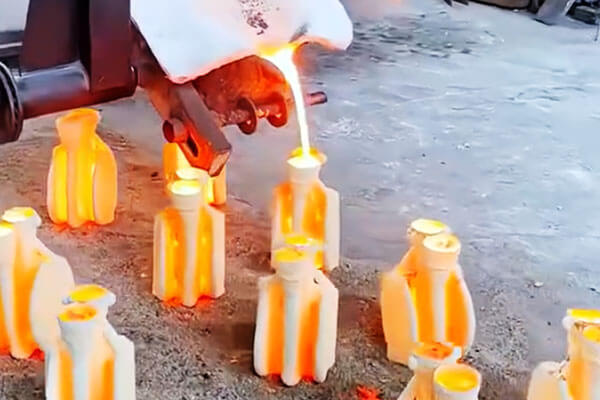
Alasannya adalah metalurgi: mengubah rasio Cu/Zn mengubah hubungan fasa dalam paduan, yang mengubah suhu saat cairan pertama muncul dan suhu saat paduan menjadi cair sepenuhnya.
Inilah sebabnya mengapa label luas yang sama “kuningan” mencakup paduan dengan perilaku termal yang berbeda secara material.
Secara praktis, seorang perakit tidak dapat berasumsi bahwa satu kuningan berperilaku seperti kuningan lainnya hanya karena keduanya terlihat berwarna kuning atau tembaga.
Tabel paduan resmi menunjukkan hal itu bahkan dalam kuningan biasa, interval leleh berbeda puluhan derajat Fahrenheit tergantung pada tujuan dan komposisi paduan.
Penambahan sedikit paduan juga penting. Timah, memimpin, arsenik, silikon, aluminium, dan mangan dapat mengubah ketahanan oksidasi, kemampuan mesin, perilaku korosi, dan respon termal; mereka juga dapat sedikit menggeser interval leleh.
Misalnya, Kuningan laksamana UNS C44300, yang mengandung timah dan sedikit arsenik untuk ketahanan terhadap korosi, terdaftar di 1650°F hingga 1720°F, sedangkan logam UNS C28000 Muntz terdaftar di 1650°F hingga 1660 °F.
Perbedaan-perbedaan ini tidak terjadi secara sembarangan; mereka mencerminkan efek gabungan dari komposisi dan struktur fase paduan.
Untuk teknik dan manufaktur, implikasinya sangat jelas: penunjukan paduan lebih penting daripada warna atau nama generik.
Jika Anda mengetahui sebutan UNS atau EN/CEN, Anda dapat memperkirakan rentang leleh dengan keyakinan yang jauh lebih besar dibandingkan jika Anda hanya mengetahui bahwa bagian tersebut adalah “kuningan”.
Itulah sebabnya identifikasi berbasis standar sangat penting dalam pengecoran, mematri, kerja panas, dan operasi daur ulang.
4. Mengapa Titik Leleh Penting dalam Praktek
Dalam aplikasi teknik, perilaku peleburan kuningan tidak diperlakukan sebagai suhu tunggal tetapi sebagai a jendela proses dibatasi oleh solidus Dan cairan.
Interval ini menentukan suhu pengoperasian yang aman dan efektif untuk proses produksi.
Mengoperasikan terlalu dekat dengan solidus berisiko menyebabkan peleburan tidak sempurna atau aliran material buruk, sedangkan kelebihan cairan secara berlebihan dapat menyebabkan panas berlebih, oksidasi, dan penyimpangan komposisi—terutama karena hilangnya seng.

Pengecoran
Saat kuningan dicor, logam harus dipanaskan di atas cairannya agar dapat mengalir dengan baik ke dalam cetakan.
Jika suhunya terlalu rendah, pengisian tidak lengkap, Dingin ditutup, atau penyelesaian permukaan yang buruk dapat terjadi.
Jika terlalu tinggi, seng dapat teroksidasi atau menguap, yang mengubah komposisi dan dapat menurunkan hasil pengecoran akhir.
Penempaan dan pengerjaan panas
Kuningan juga bisa dikerjakan dengan panas, tetapi harus diproses dalam rentang suhu di bawah kisaran leleh. Memanaskan kuningan terlalu agresif dapat membuatnya rapuh atau menyebabkan pelelehan lokal pada batas butir.
Hal ini sangat penting terutama untuk komponen yang harus mempertahankan keakuratan dimensi dan integritas struktural.
Mematri dan bergabung
Dalam bergabung dengan operasi, perilaku peleburan kuningan sangat penting karena logam dasar biasanya harus tetap padat sementara bahan pengisi atau sambungan mengalir.
Jika pemanasan berlebihan, bagian kuningan itu sendiri mungkin mulai meleleh atau kehilangan seng. Inilah salah satu alasan mengapa kontrol suhu sangat penting dalam praktik mematri yang andal.
Pemesinan dan pemotongan bebas kuningan
Beberapa nilai kuningan dipilih secara khusus untuk kemampuan mesin. Komposisi tersebut mungkin mengandung timbal atau bahan tambahan lainnya yang meningkatkan kinerja pemotongan, namun hal ini juga dapat sedikit mengubah respons termal.
Di lingkungan produksi, penunjukan paduan yang tepat selalu lebih penting daripada istilah umum “kuningan”.
5. Kesalahpahaman Umum Tentang Titik Leleh Kuningan
Kesalahpahaman 1: Kuningan mempunyai satu titik leleh yang pasti
Ini adalah kesalahpahaman yang paling umum. Kuningan meleleh dalam rentang tertentu karena merupakan paduan. Gagasan tentang suhu leleh tunggal hanyalah perkiraan.
Kesalahpahaman 2: Kuningan berperilaku seperti tembaga
Kuningan berbahan dasar tembaga, tapi itu bukan tembaga. Tembaga memiliki titik leleh yang jauh lebih tinggi.
Kuningan umumnya meleleh lebih awal karena seng menurunkan ambang termal paduannya.
Kesalahpahaman 3: Semua “logam kuning” adalah sama
Kuningan, perunggu, dan paduan tembaga lainnya sering kali membingungkan dalam percakapan biasa.
Perunggu biasanya berbahan dasar tembaga-timah, dan perilaku lelehnya berbeda dengan kuningan. Bahkan paduan yang serupa secara visual dapat memiliki sifat termal dan mekanik yang berbeda.
Kesalahpahaman 4: Memanaskan kuningan berarti “membuatnya menjadi merah panas”
Itu bukanlah ukuran suhu yang aman atau dapat diandalkan. Kuningan dapat teroksidasi, menghitamkan, atau kehilangan seng sebelum terjadi pencairan yang nyata.
Warna visual merupakan indikator keadaan termal yang tidak tepat, terutama di bidang manufaktur terkontrol.
6. Pertimbangan Keamanan Saat Memanaskan Kuningan
Setiap diskusi serius tentang peleburan kuningan harus mencakup keselamatan. Memanaskan kuningan hingga mendekati atau di atas rentang lelehnya bukanlah tindakan yang baik.

Bahaya asap seng
Pada suhu tinggi, seng dapat menguap dan teroksidasi, menghasilkan asap yang berbahaya jika dihirup.
Ini adalah masalah pekerjaan utama di pabrik pengecoran logam, bengkel, dan operasi daur ulang. Ventilasi yang memadai dan perlindungan pernapasan mungkin diperlukan, tergantung prosesnya.
Perubahan komposisi
Jika kuningan terlalu panas, seng dapat secara istimewa hilang dari paduannya. Hal ini mengubah komposisi material yang tersisa dan dapat mengurangi kinerja bagian akhir.
Bahaya kebakaran dan peralatan
Karena kuningan meleleh pada suhu yang relatif sedang dibandingkan dengan banyak logam lainnya, pemanasan yang tidak terkontrol dapat merusak cawan lebur, cetakan, dan alat.
Pemantauan suhu dan desain tungku yang tepat sangat penting.
7. Analisis komparatif: Kuningan vs.. Paduan Tembaga dan Logam Industri Lainnya
| Bahan | Komposisi khas (kira -kira.) | Rentang leleh (° C.) | Rentang leleh (K) | Rentang leleh (° f) | Karakteristik Teknik Utama |
| Kuningan (umum) | Cu–Zn (5–45% Zn) | 880–1020 | 1153–1293 | 1616–1868 | Kemampuan mesin yang baik, kekuatan sedang, interval leleh yang lebar, volatilitas seng pada suhu tinggi |
| Perunggu (umum) | Cu-Sn (5–12% Layar) | 900–1050 | 1173–1323 | 1652–1922 | Ketahanan korosi yang tinggi, sifat keausan yang baik, biasanya rentang pembekuannya lebih sempit daripada kuningan |
| Tembaga Murni | Cu ≥99,9% | 1085 (satu titik) | 1358 | 1985 | Konduktivitas termal/listrik yang sangat tinggi, tidak ada rentang leleh (logam murni) |
| Perunggu Aluminium | Cu–Al (5–12% Al) | 1020–1060 | 1293–1333 | 1868–1940 | Kekuatan tinggi, ketahanan korosi yang sangat baik, titik leleh yang lebih tinggi dibandingkan kebanyakan kuningan |
Perunggu Silikon |
Cu–Si (1-4% Ya) | 965–1025 | 1238–1298 | 1769–1877 | Fluiditas pengecoran yang baik, resistensi korosi, banyak digunakan dalam pengelasan logam pengisi |
| Tembaga-Nikel (Cupronickel) | Cu–Ni (10–30% Masuk) | 1170–1240 | 1443–1513 | 2138–2264 | Ketahanan korosi air laut yang sangat baik, rentang leleh yang tinggi, struktur mikro yang stabil |
| Aluminium (murni) | Al ≥99% | 660 (satu titik) | 933 | 1220 | Kepadatan rendah, suhu leleh yang rendah, Konduktivitas termal yang tinggi |
| Baja karbon | Fe–C (0.1–1,0%C) | 1425–1540 | 1698–1813 | 2597–2804 | Kekuatan tinggi, penggunaan industri yang luas, titik leleh yang jauh lebih tinggi dibandingkan paduan tembaga |
Baja tahan karat |
Paduan Fe–Cr–Ni | 1375–1530 | 1648–1803 | 2507–2786 | Tahan korosi, stabilitas suhu tinggi yang baik |
| Besi cor | Fe–C (2–4%C) | 1150–1200 | 1423–1473 | 2102–2192 | Kemampuan pengecoran yang luar biasa, titik leleh yang lebih rendah dibandingkan baja, perilaku rapuh |
| Seng (murni) | Zn ≥99% | 419.5 (satu titik) | 693 | 787 | Titik leleh yang sangat rendah, tekanan uap tinggi pada suhu tinggi |
| Memimpin (murni) | Pb ≥99% | 327.5 (satu titik) | 601 | 621 | Titik leleh yang sangat rendah, lembut, sering digunakan sebagai penambahan paduan |
8. Kesimpulan
Titik leleh kuningan bukanlah suatu angka yang pasti. Sebagai paduan tembaga dan seng, kuningan biasanya meleleh di atas a jangkauan, umumnya ada di sekitar 900°C hingga 940 °C
Dari sudut pandang ilmiah, ide utamanya sederhana: komposisi mengontrol perilaku peleburan
Jadi jawaban yang paling akurat bukan hanya “berapa titik leleh kuningan?” melainkan: kuningan mana yang kamu bicarakan?

