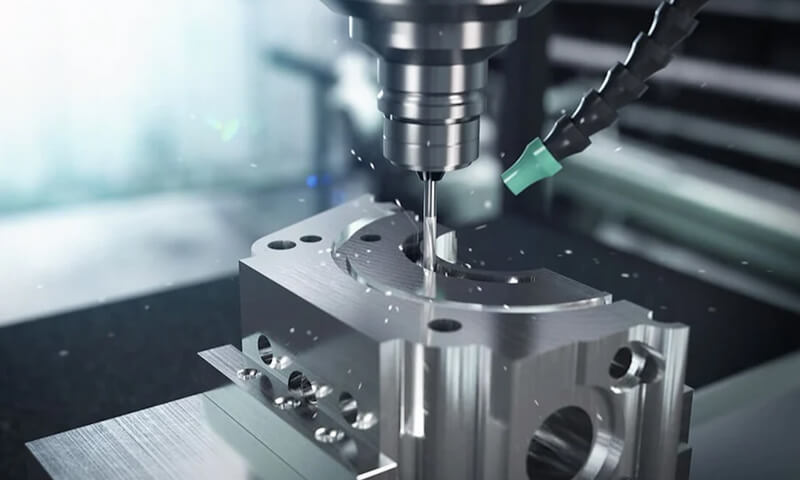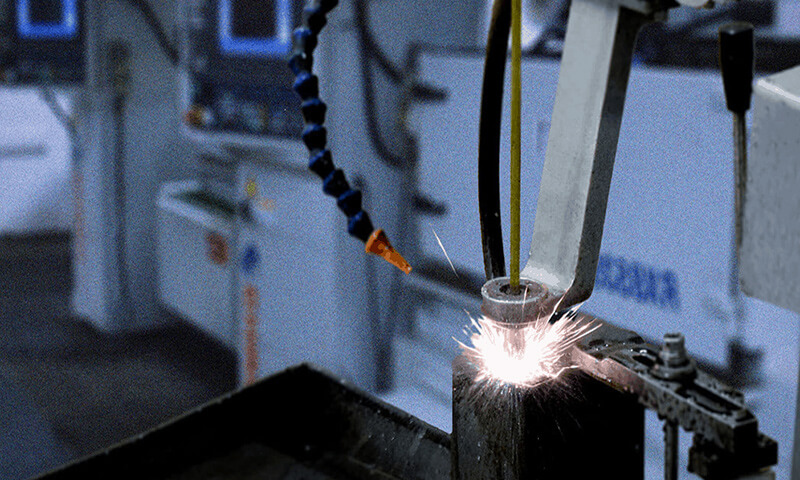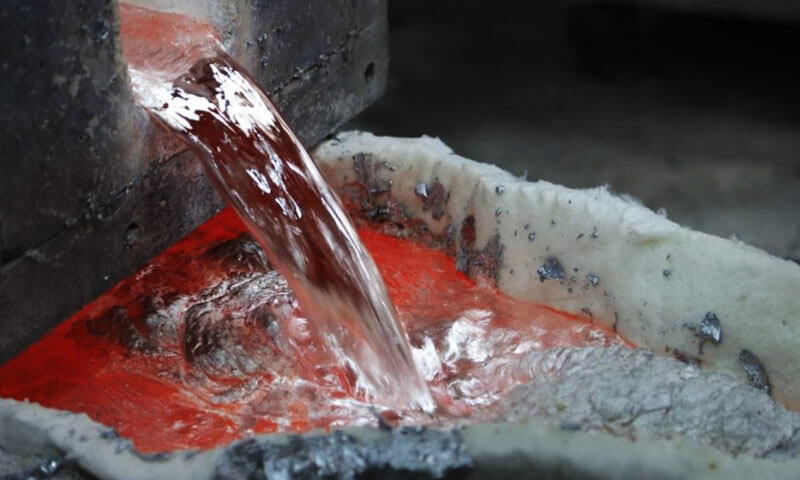
Aluminum, as a lightweight, corrosions-resistant, and highly malleable non-ferrous metal, plays an irreplaceable role in aerospace, hana ana i ka hana automoki, nā leka uila, A papa hana i nāʻoihana.
The melting point of aluminum—defined as the temperature at which aluminum transitions from a solid to a liquid state under standard atmospheric pressure—is a fundamental thermophysical property that governs its processing, Hoʻolālāʻiaʻo Alloy, and industrial application.
1. Physical properties of pure aluminum — key melting-point data
| Waiwai | Waiwai (A) | Waiwai (Imperial) | Nā moʻolelo |
| Malting Point (equilibrium, 1 atm) | 660.32 ° C (933.47 K) | 1220.58 ° F | Standard reference temperature for pure (99.999%) AL. |
| Thermodynamic temperature | 933.47 K | - | Absolute temperature equivalent. |
| Latent heat of fusion | 397 kJ·kg⁻¹ | ≈ 170.68 BTU·lb⁻¹ | Energy required to melt 1 kg (Oole 1 lb) at melting point. |
wela kūikawā (luhi, kokoke., near 25 ° C) |
897 J · kg⁻¹ · ke Kg | ≈ 0.2143 BTU·lb⁻¹·°F⁻¹ | Use temperature-dependent cp for precise heat calculations. |
| Huakai (luhi, ~20 °C) | 2,700 kg·m⁻³ | ≈ 168.6 lb·ft⁻³ | Liquid density is slightly lower and temperature dependent. |
| Boiling point (atmospheric) | ≈ 2,470 ° C | ≈ 4,478 ° F | Useful upper bound for high-temperature processing. |
2. Key Factors Influencing the Melting Point of Aluminum
Although pure aluminum melts at 660.32 ° C, many practical factors alter the effective melting/solidification behaviour:
Alloy chemistry — solidus and liquidus
Aluminum alloys do ʻaʻole have a single melting point. They have a wai (temperature above which fully liquid) a a Nā Sodia Solidus (temperature below which fully solid).
ʻO ka heleʻana o nā mea'ē aʻe (A, Mg, Cu, Zn, Lia, etc.) shifts these boundaries and often produces a melting range (mushy zone) with important casting consequences.
- Eutectics: some alloy systems have eutectic compositions that melt at temperatures Ma lalo that of pure Al (Hoʻoloholo: Al–Si eutectic at ≈ 577 ° C for ~12.6 wt% Si).
- Practical effect: alloys with a wide freezing range are more prone to hot tearing, shrinkage porosity and segregation.
Impurities and tramp elements
Trace contamination (E.g., Pb, Bi, Cu from mixed scrap) can create low-melting phases or brittle intermetallics, cause local melting anomalies and change solidification paths; this is critical in recycling operations.
Ka paipai
Melting temperature is pressure-dependent (Clapeyron relation); industrially this effect is negligible since melting is performed at atmospheric pressure.
Grain refiners and inoculants
Chemical grain refiners do not change the melting point per se, but they influence nucleation behaviour during solidification (undercooling, number of nuclei), thus altering the practical solidification pathway and microstructure.
Surface phenomena and oxide films
Aluminum forms a stable alumina film (Al₂o₃) Ke Kuhi. While the oxide does not change bulk melt temperature, it affects heat transfer at the surface, dross behaviour and the thermal arrest behaviour detected by contact/pyrometric methods.
3. Melting ranges of common aluminum alloys
Below are two concise, professional tables showing typical melting (paʻa paʻa → wai) RESESSE for common huhū (Kākau) Apana Apana Aluminum a casting aluminum alloys.
Mea nui: these figures are indicative typical ranges used for process planning and material selection.
Common Wrought / Forging Aluminum Alloys — Typical Melting Range
| Kolepa a Alloy | Hoʻohemo melū (° C) | Hoʻohemo melū (° F) | Hoʻohemo melū (K) | Technical Notes |
| 1050 / 1100 (Commercially pure Al) | ~660.3 – 660.3 | ~1220.6 – 1220.6 | ~933.5 – 933.5 | Near single-point melting due to very high purity. |
| 2024 (Al–Cu) | ~500 – 638 | ~932 – 1180 | ~773 – 911 | Laulā hau nui; sensitive to incipient melting. |
| 2014 (Al–Cu) | ~500 – 638 | ~932 – 1180 | ~773 – 911 | E like me 2024; higher Cu content affects hot workability. |
| 5083 (Al–Mg) | ~570 – 640 | ~1058 – 1184 | ~843 – 913 | Elevated melting range due to Mg; Ke kū'ē neiʻo Corrosion Corrossion. |
| 5454 (Al–Mg) | ~595 – 645 | ~1103 – 1193 | ~868 – 918 | Often used in pressure vessels and tanks. |
6061 (Al–Mg–Si) |
~555 – 650 | ~1031 – 1202 | ~828 – 923 | Widely used structural alloy; melting range critical for heat treatment. |
| 6082 (Al–Mg–Si) | ~555 – 650 | ~1031 – 1202 | ~828 – 923 | Higher strength version of 6xxx series. |
| 7075 (Al–Zn–Mg–Cu) | ~477 – 635 | ~891 – 1175 | ~750 – 908 | Very wide melting range; prone to localized melting. |
| 3003 (Al–Mn) | ~640 – 660 | ~1184 – 1220 | ~913 – 933 | Melting behavior close to pure aluminum. |
Common Casting Aluminum Alloys — Typical Melting Range
| Kolepa a Alloy | Hoʻohemo melū (° C) | Hoʻohemo melū (° F) | Hoʻohemo melū (K) | Technical Notes |
| Al–Si eutectic (~12.6% Si) | ~577 – 577 | ~1070.6 – 1070.6 | ~850.1 – 850.1 | Eutectic composition with a sharp melting point. |
| A356 / AlSi7Mg | ~558 – 613 | ~1036 – 1135 | ~831 – 886 | Excellent castability and heat-treatable. |
| A357 (modified A356) | ~555 – 605 | ~1031 – 1121 | ~828 – 878 | Improved strength and fatigue resistance. |
| A380 (Al–Si–Cu) | ~515 – 585 | ~959 – 1085 | ~788 – 858 | Standard die-casting alloy with low liquidus temperature. |
319 (Al–Si–Cu) |
~525 – 605 | ~977 – 1121 | ~798 – 878 | Good balance of castability and mechanical strength. |
| Adoc12 (JIS die casting alloy) | ~500 – 580 | ~932 – 1076 | ~773 – 853 | Widely used die-casting alloy; impurity control is critical. |
| Ali nisri9pu3(Lia) | ~510 – 600 | ~950 – 1112 | ~783 – 873 | Versatile casting alloy for complex geometries. |
| A413 (high-silicon alloy) | ~560 – 620 | ~1040 – 1148 | ~833 – 893 | Suitable for high-temperature and pressure-tight castings. |
3. Precise Measurement Methods of Aluminum’s Melting Point
Accurate measurement of aluminum’s melting point is critical for material characterization and process optimization.

Komo nāʻano maʻamau:
ʻO ka carnametyʻokoʻaʻokoʻa (Dsc)
DSC is the most widely used method for measuring melting points of metals due to its high precision and sensitivity.
The principle involves heating a small aluminum sample (5–10 mg) and a reference material (hui pu, E.g., Nā Alluna) at a constant rate (5–10℃/min) while monitoring the heat flow difference between them.
The melting point is determined as the onset temperature of the endothermic peak (corresponding to the fusion process).
DSC can measure melting points with an accuracy of ±0.1℃, making it suitable for high-purity aluminum and alloy analysis.
Visual Observation Method (Capillary Tube Method)
This traditional method involves sealing a small amount of aluminum powder in a capillary tube, which is heated alongside a thermometer in a heating bath (E.g., silicone oil).
The melting point is recorded when the aluminum powder completely melts into a liquid. While simple and low-cost, this method has lower accuracy (±1–2℃) and is primarily used for qualitative analysis or low-precision applications.
Laser Flash Melting Method
For high-pressure and high-temperature melting point measurements, the laser flash method is employed.
A pulsed laser rapidly heats the surface of an aluminum sample, and the melting process is monitored by optical sensors (E.g., pyrometers, interferometers).
This method can measure melting points under extreme pressures (a i 10 GPA) with high temporal resolution, providing data for aerospace and nuclear applications.
Electrical Resistance Method
Aluminum’s electrical resistance changes significantly during melting (liquid aluminum has higher resistance than solid aluminum due to disrupted electron conduction).
By measuring the resistance of an aluminum wire as it is heated, the melting point is identified as the temperature where the resistance exhibits a sudden increase.
This method is suitable for in-situ monitoring during industrial processes (E.g., Welding, Kauhi).
4. Industrial Implications of Aluminum’s Melting Point
Aluminum’s moderate melting point is a key factor driving its widespread industrial application, as it balances processability and performance:
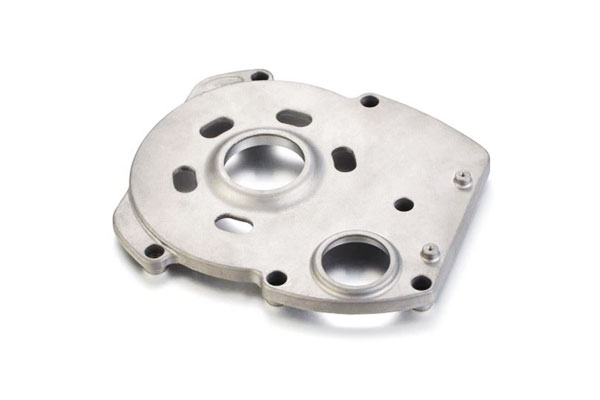
ʻO nā kaʻina hana
The melting point of aluminum (660℃) is significantly lower than that of ferrous metals, enabling energy-efficient casting:
- Make buring: Al-Si eutectic alloys (melting range 577–600℃) are widely used in die casting, as their low melting temperature reduces die wear and energy consumption, allowing high-volume production of complex components (E.g., nā'āpanaʻenehana automotive, nā leʻaleʻa uila).
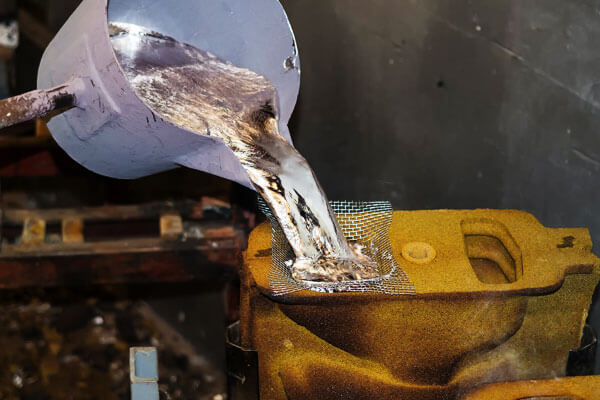
- Sand cread: Pure aluminum and low-alloy aluminum are cast in sand molds, with pouring temperatures typically 50–100℃ above the liquidus temperature (700–750℃) to ensure complete filling of the mold cavity.
Heat Treatment and Welding
- ʻO ka mālama wela: The melting point of aluminum limits the maximum temperature of heat treatment processes.
ʻo kahi laʻana, solution heat treatment of 6xxx series alloys is conducted at 530–570℃—well below the solidus temperature (580℃)—to avoid partial melting ('Ekākā) o ka alloy. - Welding: Aluminum welding requires heat sources that can rapidly reach the melting point while minimizing thermal distortion.
Common methods include TIG welding (arc temperature ~6000℃) and MIG welding, with welding temperatures controlled at 660–700℃ to ensure fusion of the base metal without excessive grain growth.
Nā noi noi kiʻekiʻe
Aluminum’s melting point imposes limitations on its high-temperature use: pure aluminum retains only 50% of its room-temperature strength at 200℃ and softens significantly above 300℃.
To expand its high-temperature applicability, nā mea'ē aʻe (E.g., nickel, 'lelo'Slelo) are added to form high-melting intermetallic compounds, extending the service temperature of aluminum alloys to 300–400℃ (E.g., 2618 alloy for aerospace engine components).
Recycling of Aluminum
The moderate melting point of aluminum makes it highly recyclable.
Recycled aluminum requires only 5% o ka ikehu e pono ai e hana i ka alumini mua, as melting scrap aluminum (at 660–700℃) consumes far less energy than extracting aluminum from bauxite.
This energy efficiency, driven by aluminum’s melting characteristics, makes it one of the most recycled metals globally.
6. Comparative Analysis with Other Metals and Alloys
| Mea meta / Alloy | Malting Point (° C) | Malting Point (° F) | Malting Point (K) | Key Notes |
| Aluminum (AL, Maluhia) | 660.3 | 1220.6 | 933.5 | Haʻahaʻa haʻahaʻa haʻahaʻa; excellent for lightweight casting and forming. |
| Liulaala (Cu, Maluhia) | 1085 | 1985 | 1358 | Ke alakaʻiʻana i ka thermal; requires higher processing temperatures than Al. |
| 'Eron (Lia, Maluhia) | 1538 | 2800 | 1811 | Significantly higher melting point; widely used in steelmaking. |
| Kukui Kekuhi (ʻAihue kīwī, ~0.2%C) | 1425-1540 | 2600-2800 | 1698–1813 | Melting range depends on composition; higher than aluminum alloys. |
| Titanium (No, Maluhia) | 1668 | 3034 | 1941 | ʻO ka pae kiʻekiʻe-kiʻekiʻe-kiʻekiʻe; refractory behavior. |
Magnesum (Mg, Maluhia) |
650 | 1202 | 923 | Slightly lower than Al; highly reactive and lightweight. |
| Zinc (Zn, Maluhia) | 419.5 | 787 | 692.7 | Haʻahaʻa haʻahaʻa haʻahaʻa; used for die-casting and galvanizing. |
| Nickel (I, Maluhia) | 1455 | 2651 | 1728 | Ke kū'ē neiʻo Corrosion Corrossion; high melting point alloys for aerospace. |
| Keihei (Cu-zn, 60/40) | 900–940 | 1652–1724 | 1173–1213 | Alloyed melting range lower than pure Cu; suitable for casting. |
| Bronze (Cu–Sn, 88/12) | 950-1050 | 1742–1922 | 1223–1323 | Slightly lower than copper; improved castability and corrosion resistance. |
6. Misconceptions and Common Pitfalls
Confusing Melting Point with Softening Temperature
The softening temperature of aluminum (≈300℃) is often mistaken for its melting point.
Softening refers to the reduction in yield strength due to grain boundary sliding and dislocation movement, while melting involves a phase transition.
This confusion can lead to improper heat treatment, resulting in reduced mechanical properties.
Ignoring Melting Range in Alloys
Pure aluminum has a sharp melting point, but aluminum alloys exhibit a melting range (liquidus to solidus).
Failing to account for this range during casting can cause defects such as shrinkage porosity (if poured too close to the solidus temperature) or hot cracking (if cooled too rapidly across the melting range).
Overlooking Impurity Effects
Even trace impurities (E.g., 0.1% 'Eron) can lower aluminum’s melting point and increase its melting range.
In high-precision applications (E.g., Na'Āpanaʻo Aerospace), strict control of impurity content is essential to ensure consistent melting behavior and final product quality.
7. Hopena
The melting point of aluminum (660.32℃ for pure aluminum) is a fundamental property rooted in its atomic structure and metallic bonding, serving as a cornerstone for its processing and application.
Multiple factors—including purity, nā mea'ē aʻe, Ke kaomi o waho, and thermal history—modify its melting behavior, enabling the design of aluminum alloys tailored to diverse industrial needs.
From low-temperature die casting of Al-Si alloys to high-strength 7xxx series alloys for aerospace, the melting point of aluminum dictates process parameters, performance limits, and recycling efficiency.
As industries pursue lightweighting and energy efficiency, aluminum’s unique balance of moderate melting point, haʻahaʻa haʻahaʻa, and recyclability will continue to solidify its position as a key material in the global manufacturing landscape.
FaqS
Is aluminum’s melting point temperature the same for 6061 Oole 7075?
ʻAʻole. 6061 a 7075 are alloys with solidus/liquidus ranges that differ from pure Al. Their melting behaviour must be referenced to alloy-specific data or measured by thermal analysis.
How much superheat should I use for die casting vs. Sand cread?
Die and high-pressure processes often require moderate superheat (20-50 ° C) because of rapid filling; sand and thicker-section castings may require higher effective superheat (40-100 ° C) to ensure complete filling. Optimize for the alloy and mold.
Why is hydrogen porosity worse in aluminum?
Hydrogen solubility in liquid aluminum is much higher than in solid. During solidification hydrogen is rejected and forms gas pores unless removed beforehand by degassing.
Does pressure change aluminum’s melting point in practice?
The melting point shifts with pressure, but for standard atmospheric foundry practice the effect is negligible.