1. Hōʻikeʻike
OEM investment casting, kaulana nō hoʻi e like me ka paleʻana-wax, is a cornerstone of modern precision manufacturing.
This process enables Original Equipment Manufacturers (OEMs) to produce intricate metal components with exceptional dimensional accuracy and surface finish.
Kahiki, investment casting dates back over 5,000 mau makahiki, with early applications in creating jewelry and art.
I kēia mau lā, it serves critical roles in industries such as aerospace, aitompetitive, olakino, a me ka ikehu.
The strategic importance of investment casting for OEMs lies in its ability to produce complex geometries that are challenging or impossible to achieve through other manufacturing methods.
This capability allows for the consolidation of multiple parts into single components, reducing assembly time and potential points of failure.
Nui loa, the process supports a wide range of metals and alloys, offering OEMs flexibility in material selection to meet specific performance requirements.
2. What Is OEM Investment Casting?
An Original Equipment Manufacturer designs and assembles finished products, often sourcing specialized components from outside suppliers.
In investment casting, OEMs provide detailed CAD models, material specifications, and performance requirements to foundries.
The foundries then translate those designs into wax patterns, Nā Kelepona CHELD, a, ultimately, precision metal parts.
This partnership lets OEMs focus on system integration and market strategy while leveraging foundries’ metallurgical expertise and production capacity.

3. Technical Foundations of OEM Investment Casting
Investment casting relies on a tightly controlled sequence of steps, optimized materials choices, and cutting‑edge equipment.
By understanding each element, OEMs can harness this process to achieve the precision and performance their applications demand.
Step‑by‑Step Process Overview
1. Wax kumu hoʻohālike
Mua, technicians inject molten wax into precision steel dies. Each cycle produces patterns that reproduce part geometry within ±0.05 mm.
I ka hoʻomaʻamaʻa, a single mold run can yield dozens of identical wax replicas in under ten minutes, supporting batch sizes from 50 i 1,000 units per tree.
2. Kāhea (Treeing) & ʻO ka haleʻo CEMIMIC
A hiki, workers affix individual wax patterns onto a central sprue, forming a “tree.”

Then, automated dip‑dry lines coat the assembly in ceramic slurry and fine refractory sand across six to eight layers.
Ma ka hopena, the shell reaches 3–5 mm thickness, providing the strength to withstand molten metal pressures.
3. Hoomoana & E ninini ana i nā meatal
Mahope iho, the coated assembly enters an autoclave or furnace at 200–300 °C to remove wax. I ke kumu, foundries preheat the ceramic shell to around 600 ° C.
Immediately after, they pour molten alloy—ranging from 700 ° C (aluminum) a i 1,600 ° C (nā mea kanu nckel)—directly into the hot mold.
The rapid pour rate (typically 5–10 m/s) minimizes turbulence and helps prevent gas entrapment.
4. Shell lawe & ʻO ka hoʻomaʻemaʻe
I ka manawa o nā meaʻala maʻalahi (often within 30–60 minutes, depending on part mass), crews blast the shell away using high‑pressure water or mechanical vibration.
Ma ka awelika, they recover 95% of cast parts intact, with the remaining 5% requiring minor rework or scrap due to surface blemishes.
5. ʻO ka mālama wela & Ke hoʻopauʻana
Hope loa, castings undergo heat treatments—such as solution annealing, Hoʻonui nui, or stress‑relief—to achieve the desired microstructures.
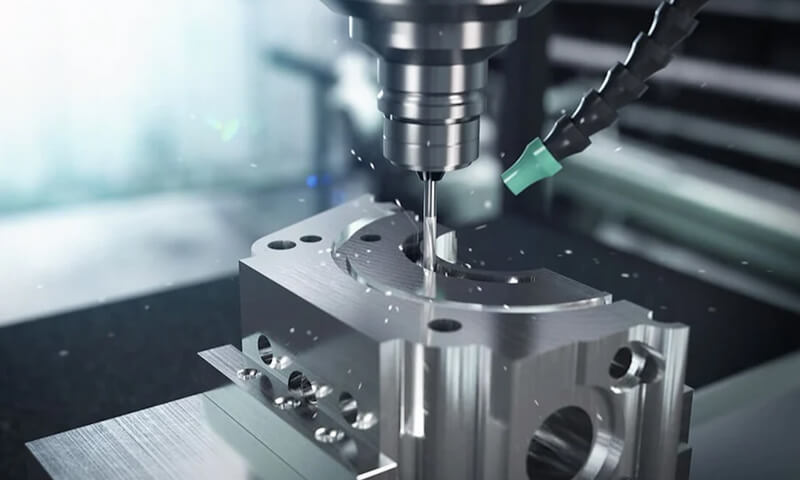
Mahope iho, craftsmen perform grinding, Cnc iching, or polishing to meet tight tolerances (as low as ±0.02 mm) and surface finishes (Ra 0.8–1.6 µm).

Nā Pono Hana & Ke hoʻohālikelike nei nāʻenehana
In addition to core process stages, investment casting benefits from ongoing technological advances:
- Automated Shell‑Building Lines equipped with robotics reduce cycle time by up to 40% and cut labor costs by 25%.
- 3D‑Printed Patterns fabricated in wax or polymer materials eliminate hard tooling for prototypes and small runs, slashing lead times from eight weeks down to two.
- Advanced Ceramic‑Matrix Binders enhance shell toughness and thermal stability, reducing shell‑crack defects by approximately 15%.
- Real‑Time Monitoring Systems employ IoT sensors to track slurry viscosity, shell moisture, and furnace temperatures, enabling predictive adjustments that improve first‑pass yield rates above 90%.
4. What Are the Advantages of the Investment Casting Process?
Investment casting delivers several compelling benefits:

- ʻO ka geometry paʻakikī: It captures internal channels, nā pāʻili (<1 mm), and intricate undercuts without assembly.
- Nā mea paʻa paʻa: It routinely achieves ±0.1 mm dimensional accuracy, reducing need for secondary machining.
- Mea kūponoʻole: It attains over 90% material utilization, whereas subtractive methods may waste up to 60%.
- Kahiki Pāʻani Waiwai: It produces as‑cast surfaces with Ra 1.5–3.2 µm, minimizing finishing costs.
- Kumukūʻai-kūpono: For medium‑volume runs (1,000–50,000 parts/year), tooling amortization drives per‑part costs down by 20–30% compared to CNC machining.
- Hoʻolālā Hoʻolālā: It lets designers consolidate multiple components into single castings, reducing assembly time and potential leak points.
5. Industries Where We Provide Customized Services
OEM investment casting serves a wide array of sectors:

- Pump & Valve Parts
We cast impellers, urowing, and valve bodies in stainless steel and superalloys to withstand corrosive fluids and high pressures. - Compressor Parts
We produce blades, nā Kūpono, and diffusers for air and gas compressors, using Inconel and titanium alloys for durability and light weight. - Train & Railway Parts
We supply brake components, coupler parts, and structural brackets in wear-resistant steels to meet stringent safety standards. - Cylinder & Gear Box
We deliver cylinder heads, Nā poloka mīkini, and gearbox housings in high‑strength aluminum and steel alloys, balancing weight and performance. - Mining & Engineering Machinery Casting Parts
We manufacture heavy‑duty pump shafts, crusher jaws, and excavator components from high‑chrome steels for abrasion resistance. - Auto & Nā Māhele kā Aerospace
We craft turbocharger wheels, suspension links, Nā'āpana o Turbine, and fuel nozzles using advanced superalloys to meet rigorous industry specifications.
6. The Materials We Can Supply
As an experienced OEM investment casting supplier, we provide a broad spectrum of high-performance materials tailored to meet the mechanical, thermal, and corrosion resistance requirements of various industries.
Below is an overview of the materials we can supply, categorized by alloy type and application focus:
Nā mea kanu lāʻau
Ideal for components requiring corrosion resistance, ikaika, a me ka nui.
- 304 / 304L – Excellent corrosion resistance; widely used in food processing, Nā lako hana, a me nā wahi hoʻonohonoho.
- 316 / 316L – Enhanced resistance to chlorides and chemicals; suitable for marine, roy, and pump components.
- 410 -ʻO ka paʻakikī a me ke komoʻana; used in turbine blades, Nā lako hana, a me nā mīkiniʻoihana.
- 17-4Ph – Precipitation-hardening stainless steel with high strength and moderate corrosion resistance; Hoʻohanaʻia ma Aerospace, petrochemimical, and mechanical applications.

Carbon and Alloy Steels
Used for heavy-duty parts that require toughness and fatigue resistance.
- Wcb (Kālā Capren Carbon) – General-purpose alloy for structural and industrial applications.
- 1020, 1045, 4130, 4140 – Carbon and alloy steels for gearboxes, Nā papahele, Nā Koho Pūnaewele, and railway parts.
- 8620 – Case-hardened steel used for gears and components requiring a hard surface and tough core.
Nā mea hana hāmeʻa
Engineered for wear resistance and dimensional stability at high temperatures.
- ʻO Steel Steel H13 – Commonly used for dies, Nā MOLD, and aerospace tooling; excellent thermal fatigue resistance.
- D2 – High wear resistance; suitable for cutting tools and dies.
- M2 – High-speed steel used in cutting and drilling applications.
ʻO Nickel-e pili ana i nā alloys
Optimized for extreme heat and corrosion resistance in aerospace, mana pā'āʻu, a me ke kālepaʻana.
- Actoel 625 / 718 – Excellent high-temperature strength and corrosion resistance; used in turbine blades, Nā'ōnaehana exhaust, a me nā mea kālepa wela.
- Hailani C – Exceptional resistance to strong acids and chemicals; used in chemical reactors and marine systems.
- Molol 400 – Nickel-copper alloy known for seawater and acid resistance; suitable for marine hardware and pumps.
Nā alloys
Best for wear, Hawe, and corrosion resistance in severe environments.
- Lealea 6 – Outstanding wear and corrosion resistance; ideal for valve seats, ʻokiʻana i nā hana hana, a me nā'āpana kiʻekiʻe-kiʻekiʻe.
- Cocrmo – Biocompatible alloy used in medical implants, Nā Kūlana Denon, a me nā mea kani.
Apana Apana Aluminum
Lightweight with good corrosion resistance, used in transportation, AerERPPACE, a me nāʻoihana ikaika.
- A356 – High strength-to-weight ratio and good casting properties; used in housings, hanakai, a me nā'āpana hoʻonohonoho.
- AlSi10Mg – Common in automotive and aerospace components due to its high thermal conductivity and castability.
Nā Alloys Annays Alloys
Known for high strength, haʻahaʻa haʻahaʻa, a me biocomokatiboli.
- Ti-6al-4v (Kumu 5) – Excellent fatigue strength, Ke kū'ē neiʻo Corrosionion, and bio-compatibility; Hoʻohanaʻia ma Aerospace, Marine, a me nā mea maʻi olakino.
- Kumu 2 Titanium – Pure titanium with excellent formability and corrosion resistance; often used in chemical processing and marine environments.
Copper-Based Alloys
Used for applications demanding excellent electrical conductivity, Ke kū'ē neiʻo Corrosionion, and anti-microbial properties.
- Keihei (CuZn) – Used in decorative components, Nā Vilves, and plumbing parts.
- Bronze (CuSn) – Excellent wear resistance and strength; used in bearings, Bussings, and gear components.
- Copping-nickel (CuNi 90/10, 70/30) – Superior seawater resistance; commonly used in shipbuilding and desalination plants.
7. OEM‑Supplier DEZE
To maximize value, OEM–supplier ʻO kēia collaboration focuses on:
- Contract Models & IP Protection
We implement fixed‑price, cost‑plus, or milestone‑based agreements. Nui loa, we enforce NDAs and secure data‑exchange platforms to protect proprietary designs. - Supply‑Chain Logistics & Lead‑Time Management
We maintain strategic raw‑material inventories and deploy Kanban systems to support just‑in‑time delivery. Ma ka hopena, we hit delivery targets 98% of the time. - Risk Sharing & Joint‑Development Partnerships
We co‑invest in tooling, share performance metrics, and jointly optimize processes. NOEHUI, we reduce scrap rates by 12% and accelerate time‑to‑market by 25%.
8. Comparison with Alternative Manufacturing Methods
OEM Investment casting offers distinct advantages over other metal-forming methods, especially when complex geometries, nā mea paʻa paʻa, and superior surface finishes are required.
Akā naʻe,, understanding how it compares to alternatives like Kākau, make buring, a Cnc iching helps OEMs make more informed decisions based on application, Volume, a me ke kālā.
Manufacturing Process Comparison Table
| Kūlike | Kāhaka kūʻai kūʻai | Kākau | Make buring | Cnc iching |
|---|---|---|---|---|
| Geometry paʻakikī | Excellent – intricate, Nā hiʻohiʻona o loko | Limited – simple, solid shapes | Moderate – complex but limited to parting line | Limited – constrained by tool access |
| Paulapua | Maikaʻi loa (Ra ≈ 3.2 }m) | Rough – requires machining | Excellent – minimal finishing needed | Excellent – smooth, pumona nui |
| Nā Kūlana Kūʻai | Low – near-net shape | Moderate – requires trimming | Hoʻohaʻahaʻa | High – subtractive process |
| Nā Pīkuhi Propertinies | Good – improves with heat treatment | Excellent – forged grain flow | Moderate – porosity possible | Varies – depends on stock material |
| Aiko | ±0.1 mm standard | Āpū (±0.05 mm possible with machining) | Āpū (±,05 mm) | Very Tight (±0.005 mm possible) |
Mea kūʻai |
Loli | High | Kiʻekiʻe loa | Nookahi (except fixtures) |
| Ka Hoʻohuiʻana | Haʻahaʻa haʻahaʻa | Ke kiʻekiʻe kiʻekiʻe | Kiʻekiʻe loa | Haʻahaʻa haʻahaʻa |
| Nā Koho Kōkua | Wide – steels, hualaola, No, I, CO | Mostly ferrous and high-strength alloys | Limited – aluminum, zinc, Magnesum | Wide – depending on bar/plate availability |
| Ka manawa o waena o ka hoʻomaka a i ka wā pau | Kūpono (2–6 weeks typical) | Lā (due to tooling and forging setup) | Short for high volume | Short for small batches |
| Maikai no | Complex OEM parts, tight specs | High-load parts like shafts, Kauluhi | Mass-produced non-ferrous components | Hopoi, precision low-volume components |
Nā Kūleʻa Kil
- Kāhaka kūʻai kūʻai excels when OEMs require ʻO ka geometry paʻakikī, moderate volume, a Loaʻa ka waiwai, making it a go-to solution for aerospace, aitompetitive, olakino, a me nā'āpana ikaika.
- Kākau makemakeʻia no ikaika-ikaika components with simpler shapes.
- Make buring he kūpono no ka nui production of non-ferrous parts with excellent surface finish.
- Cnc iching provides unmatched 'Clelo pololei, no ka Hopoi Oole E holo ana ka haʻahaʻa haʻahaʻa, though at higher material and time costs.
9. Hopena
OEM investment casting stands out as a versatile, cost‑effective solution for producing high‑precision parts across diverse industries.
By harnessing lost‑wax techniques, mea kūʻai holomua, a me nā meaʻenehana e kū'ē nei, OEMs and foundries can collaborate to achieve superior component performance, reduced assembly complexity, and accelerated innovation.
E nānā ana, continued investment in automation, digital integration, and sustainability will further strengthen this vital manufacturing process.
ʻO kēia ʻO ke koho kūpono kūpono no kāu hana hana e pono ai inā makemakeʻoe i ka maikaʻi kiʻekiʻe OEM Kāhaka kūʻai kūʻai Nā lawelawe.
FaqS
Q: What is OEM investment casting?
A: OEM (Original Equipment Manufacturer) investment casting is a manufacturing process where a specialized foundry produces precision metal parts for another company that designs and sells the final product.
The casting process uses wax patterns, Nā Kelepona CHELD, and molten metal to create complex, ʻO nā'āpana kiʻekiʻe.
Q: How do I get a quote for OEM investment casting services?
A: To request a quote, simply provide your technical drawings (CAD/STEP files), material specifications, a estimated quantity.
Our engineering team will review your requirements and respond with a detailed quote and lead time estimate.
Q: Can I provide my own CAD drawings or 3D models?
A: ʻOiaʻiʻo. OEM manufacturers typically accept various file formats such as STEP, IGES, STL, DWG, or SolidWorks files for custom part development.
Q: Do you offer DFM (Hoʻolālā no ka mea hana hana) Kākoʻo?
A: Many investment casting companies provide DFM assistance to optimize your design for cost efficiency, incrutural integrity, a me ka mea hana.
Q: What factors affect lead time?
A: Factors include part complexity, material availability, order quantity, current workload of the foundry, and shipping logistics.
Q: Can you ship internationally?
A: ʻAe, many OEM investment casting suppliers offer international shipping and can assist with customs documentation, kōkele, and logistics coordination.
Q: Are there minimum order quantities (MOQs)?
A: MOQs vary by supplier and part size. Some foundries accept low-volume orders, especially for prototypes or small-batch production.