1. Panimula
A spring check valve (also known as spring loaded check valve) is a unidirectional, self-actuating valve that prevents reverse flow in piping systems.
Designed for precision and reliability, it uses a spring mechanism to maintain closure until the pressure from the upstream side overcomes a preset threshold—known as the cracking pressure.
In fluid control systems where backflow could damage equipment, contaminate products, or disrupt operations, spring check valves are essential.
Industries ranging from langis & gas sa mga parmasyutiko rely on them to maintain system integrity and efficiency.
2. What Is a Spring Check Valve?
A spring check valve is a compact, self-acting non-return valve (NRV) that uses a spring-loaded mechanism to permit fluid flow in one direction and prevent backflow.
Hindi tulad ng swing check valves, which depend on gravity and orientation, o lift check valves, which rely on flow-induced lift, the operation of a spring loaded check valve is dictated by the balance between upstream pressure at ang mga mechanical resistance of a preloaded spring.
Because of this intrinsic design, spring check valves function reliably regardless of position (pahalang na, patayo na, or angled), making them ideal for space-constrained, multidirectional flow systems and applications requiring fast shut-off and vibration resistance.

Basic Structure and Components
| Component | Function |
| Valve Body | Encases internal elements and connects to piping; may be threaded, flanged, or socketed. |
| Closing Element | A disc, poppet, piston, or ball, depending on valve type, that blocks reverse flow. |
| Spring | Usually made from stainless steel or Inconel, it biases the closure element against the seat. |
| Upuan | Precision-machined surface (metal or elastomer) that ensures a leak-tight seal. |
| Bonnet/Cap | Optional closure for servicing internal components, more common in industrial or repairable designs. |
How Spring Check Valve Works
- Opening: When upstream pressure exceeds the spring force (plus downstream pressure), the closing element is pushed away from the seat, creating a flow path. The spring compresses proportionally to flow rate.
- Closing: When upstream pressure drops or reverse flow begins, the spring expands, forcing the closing element back against the seat.
This seal prevents backflow, with closure speed determined by spring stiffness.
This fast-acting mechanism enables spring check valves to respond in milliseconds, minimizing the risk of pressure surge or water hammer—especially in systems with high-frequency cycling or reciprocating equipment.
Flow Direction and Backflow Prevention
Spring check valves are strictly unidirectional. Arrows on the valve body mark flow direction to ensure correct installation.
Ang spring-loaded seal ensures that even minimal backpressure (as little as 0.1 bar in low-cracking models) activates closure, paggawa nito ng mainam para sa:
- Pulsating systems (hal., reciprocating compressors, diaphragm pumps)
- Gravity-neutral installations (hal., vertical piping)
- Systems where gravity or inertia cannot be relied upon
Their precise, non-slamming closure ensures operational integrity, fluid cleanliness, and pump protection across a range of fluid types—from gases and steam to corrosive liquids and water.
3. Materials of Construction
The performance, tibay ng katawan, and compatibility of a spring check valve heavily depend on its material of construction.
Material selection must consider factors such as fluid type, operating pressure and temperature, chemical compatibility, at pagkakalantad sa kapaligiran (hal., kaagnasan, pagguho ng lupa, or thermal cycling).

Common Materials and Their Applications
| Materyal | Typical Components | Mga Pangunahing Katangian | Application Environment |
| Hindi kinakalawang na asero (CF8, CF8M) | Valve body, disc, spring, seat | Napakahusay na paglaban sa kaagnasan, mataas na lakas, suitable for clean and corrosive fluids | Pagproseso ng pagkain, mga parmasyutiko, paggamot ng tubig, mga halaman ng kemikal |
| tanso | Valve body, disc | Epektibo ang gastos, magandang machinability, moderate corrosion resistance | Potable water, HVAC, hangin, and non-corrosive gases |
| PVC / CPVC | Valve body | Magaan ang timbang, hindi lumalaban sa kaagnasan, di-metal; temperature limited (~60–90°C) | Water and wastewater, chemical dosing, low-pressure fluid systems |
| Carbon Steel | Valve body | Mataas na lakas, matipid, less corrosion resistant without coating | Industrial gases, mga langis, and steam under controlled corrosion environments |
| tanso | Valve body, disc | Good corrosion resistance in marine/brine environments | tubig dagat, cooling circuits, at mga aplikasyon ng marine |
| Inconel / Bilisan mo na | Spring, seat, disc | Superior corrosion and heat resistance; ideal for aggressive chemicals or high temperatures | Aerospace, nukleyar, and extreme chemical environments |
| PTFE / Teflon® | Seat lining, seal surfaces | Chemically inert, non-stick, wide pH range | Pagproseso ng kemikal, aggressive acids, at mga solvent |
4. Types of Spring Check Valve
Spring check valves are engineered in several configurations to meet the diverse demands of fluid control systems.
While they all serve the fundamental function of preventing reverse flow, their internal mechanisms and structural designs vary significantly, influencing performance characteristics such as response time, flow rate, mounting orientation, and maintenance accessibility.
Axial (In-line) Spring Check Valve
Axial spring loaded check valves feature a centrally aligned spring and disc (or poppet) that moves directly along the flow axis.
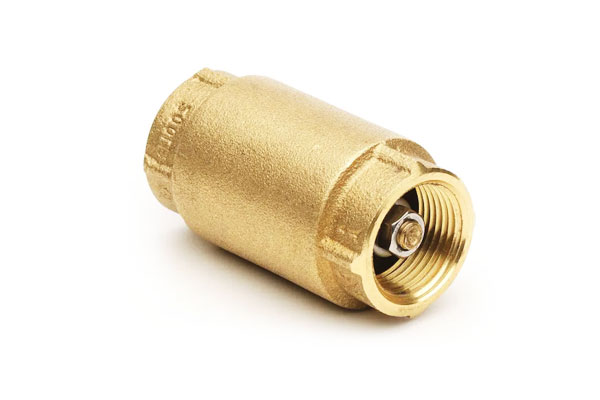
When forward pressure exceeds the spring force, the disc lifts to allow flow. Upon pressure drop or flow reversal, the spring rapidly reseats the disc, ensuring quick shutoff with minimal pressure loss and virtually no water hammer.
Gumamit ng mga Kaso: High-frequency flow systems, mga halaman sa pagproseso ng kemikal, aerospace fuel systems, and clean gas lines where space and performance consistency are critical.
Ball-Type Spring Check Valve
In this design, a spherical ball is pressed against a conical or spherical seat by a spring. When the upstream pressure rises above the spring force, the ball is lifted from the seat, allowing flow.
This type is simple, matipid sa gastos, and particularly well-suited for systems that require vertical mounting or handle fluids with minor contaminants.
Gumamit ng mga Kaso: Potable water systems, irrigation lines, light slurry applications, and basic fluid control systems where low pressure drop and ease of installation are valued.
Piston-Type Spring Check Valve
This valve uses a guided piston as the closing element, providing greater alignment and sealing precision.
The piston moves linearly against the spring, offering superior tight shutoff performance and minimizing the risk of leakage.
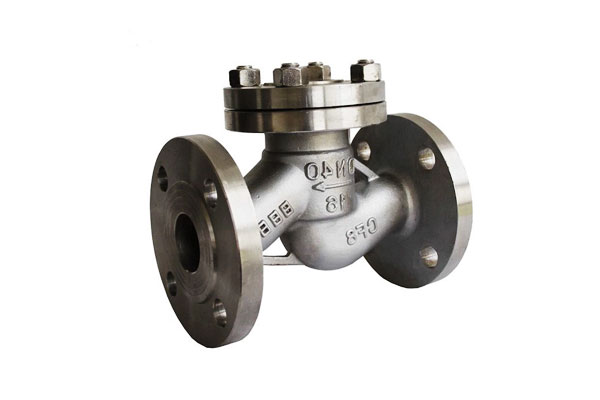
Its controlled motion makes it ideal for systems that require reliable backflow prevention under variable flow conditions.
Gumamit ng mga Kaso: Mga haydroliko na sistema, fuel injection lines, pressurized gas systems, and industrial automation circuits.
Lift-Type Spring Check Valve
Lift-type valves operate using a vertically moving disc that lifts off a seat when sufficient upstream pressure is applied.
The spring assists in returning the disc to its seated position when forward flow ceases. These valves require a vertical or upward flow orientation and are better suited to applications with steady flow rates.
Gumamit ng mga Kaso: Boiler feedwater systems, steam condensate return lines, and high-pressure vertical piping arrangements.
Email Address * / Cartridge-Type Spring Check Valve
Designed for modularity and compact integration, cartridge-style or threaded spring check valves are often used in OEM applications where space is at a premium.
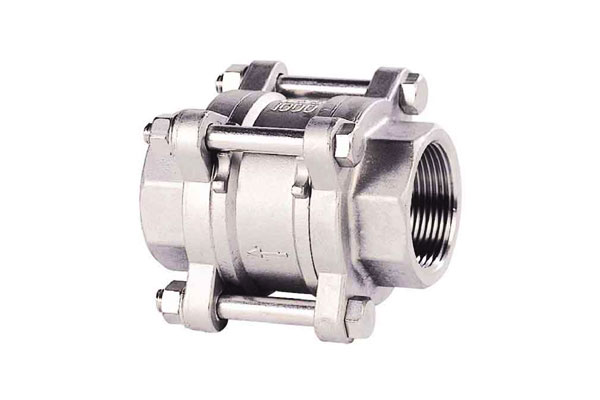
These valves are easy to install, replace, and service, making them ideal for embedded systems and manifold-based assemblies.
Gumamit ng mga Kaso: Instrumentation panels, machine tool coolant systems, mga kagamitang medikal, and pneumatic circuits in confined spaces.
Wafer-Type Spring Check Valve
Wafer-style valves feature a slim, disc-style body that fits between two flanges, offering significant space savings.
They often incorporate dual spring-loaded plates that pivot open with forward flow and snap shut under backflow.
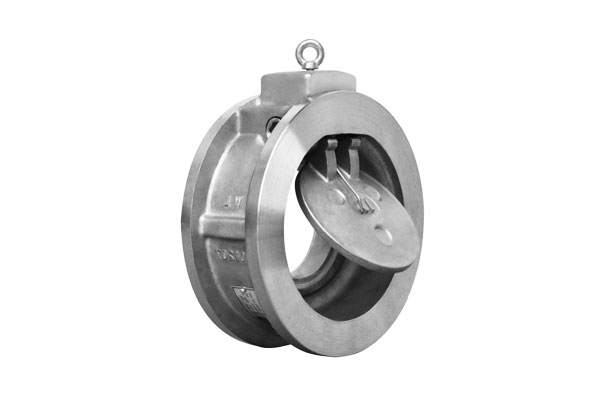
Their fast-acting, non-slam closure reduces pressure spikes and mechanical shock to piping systems.
Gumamit ng mga Kaso: Mga sistema ng HVAC, water pumping stations, fire suppression loops, and space-constrained industrial environments.
Sanitary (Kalinisan ng katawan) Spring Check Valve
These valves are specifically engineered for applications requiring high purity and cleanability.
Made from polished stainless steel and compliant with sanitary standards (such as 3-A or EHEDG), they have smooth, crevice-free interiors to prevent microbial growth.
The spring mechanism is fully enclosed to avoid fluid contamination.
Gumamit ng mga Kaso: Pharmaceutical manufacturing, food and beverage processing, biotechnology labs, and CIP/SIP-compatible systems.
5. Performance Characteristics of Spring Check Valve
Spring check valves are valued not only for their compact design and non-return function but also for their precise and predictable performance.
| Performance Parameter | Definition and Description | Tipikal na saklaw / Mga Tala |
| Cracking Pressure | The minimum upstream pressure required to compress the spring and begin opening the valve. | 1–7 psi (0.07–0.48 bar), customizable |
| Closing Response Time | Time taken for the valve to fully close after flow stops or reverses. | 0.1–0.5 seconds, depends on spring stiffness and fluid viscosity |
| Flow Coefficient (CV) | The flow capacity of the valve at a 1 psi pressure drop. | Small valves: 1–5; Katamtaman: 6–20; Malaki ang: 25–100+ |
| Pressure Drop | Pressure loss caused by internal valve friction, affecting system efficiency. | Karaniwan <5–10% of system pressure |
| Sealing Performance | Ability to prevent backflow; sealing materials impact tightness and durability. | Elastomer seats provide bubble-tight seal; metal seats more durable but may leak slightly at low pressure |
| Saklaw ng Temperatura | The operating temperature range the valve can withstand. | –20°C to 400°C, depending on material |
| Max Pressure Rating | Maximum pressure the valve can safely handle, based on body material and design. | Hanggang sa 6000 psi (414 bar) for industrial-grade stainless steel valves |
| Fluid Compatibility | Suitability for different fluid viscosities, particulates, and corrosiveness, affecting valve life. | High viscosity increases pressure drop; particulates may cause blockage; corrosive media require special materials |
6. Applications of Spring Loaded Check Valve
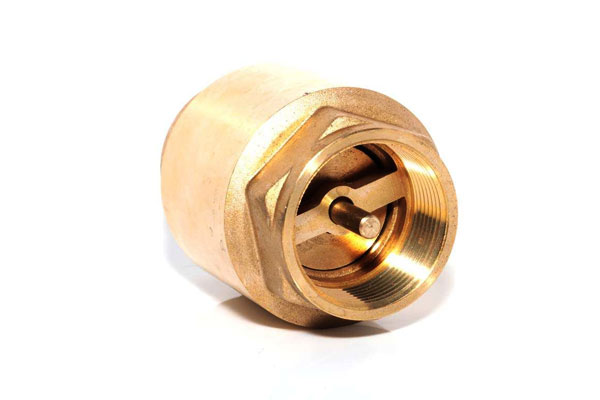
Spring loaded check valves play a critical role in many industries due to their reliable one-way flow control, compact size, and quick response.
Langis & Industriya ng Gas
- Gumamit ng mga Kaso: Mga tool sa downhole, mga tubo, mga compressor, and pump discharge lines.
- Why Spring Check Valves?
Their robust design handles high pressures (hanggang sa 6000 psi) and harsh environments including corrosive fluids and temperature extremes.
Fast closing minimizes fluid hammer, protecting expensive equipment. - Mga Materyal: Often constructed from stainless steel or corrosion-resistant alloys to withstand sour gas and other aggressive chemicals.
Pagproseso ng Kemikal
- Gumamit ng mga Kaso: Mga reaktor ng kemikal, transfer lines, and safety shutdown systems.
- Why Spring Check Valves?
They prevent reverse flow of hazardous or reactive chemicals, protecting personnel and equipment.
Their fast response and tight sealing reduce contamination risk and process inefficiency. - Mga Materyal: Commonly fabricated from corrosion-resistant alloys (Bilisan mo na, Monel) or lined with PTFE to resist aggressive chemicals.
Water Treatment and Distribution
- Gumamit ng mga Kaso: Pump stations, filtration systems, and irrigation networks.
- Why Spring Check Valves?
Their reliable backflow prevention ensures water quality by avoiding contamination. Low cracking pressure options allow operation in low-pressure zones. - Mga Materyal: tanso, hindi kinakalawang na asero, and various plastics (PVC, CPVC) are used depending on water quality and pressure.
Mga Sistema ng HVAC
- Gumamit ng mga Kaso: Chilled water systems, Mga linya ng singaw, and condensate return.
- Why Spring Check Valves?
They help maintain system pressure balance, prevent backflow, and reduce water hammer, improving system longevity and energy efficiency. - Mga Materyal: Usually stainless steel or brass to resist corrosion from condensate and treatment chemicals.
Pharmaceutical and Food Processing
- Gumamit ng mga Kaso: Sterile fluid lines, ingredient dosing systems, and CIP (Malinis sa Lugar) mga kagamitan.
- Why Spring loaded Check Valves?
Their compact, sanitary design and ability to maintain hygienic conditions prevent cross-contamination and ensure process integrity. - Mga Materyal: High-grade stainless steel (304, 316L) with smooth finishes and FDA-approved seals.
Pagbuo ng Kapangyarihan
- Gumamit ng mga Kaso: Boiler feedwater systems, cooling water circuits, and turbine auxiliary lines.
- Why Spring loaded Check Valves?
Their quick closing action protects turbines and boilers from reverse flow and water hammer, enhancing operational safety. - Mga Materyal: Stainless steel and special alloys suited for high temperature and pressure environments.
7. Mga Pakinabang at Limitasyon
Spring check valves are widely used in various industries due to their unique operational characteristics and design benefits.
Gayunpaman, like any mechanical device, they also come with certain limitations.

Advantages of Spring Check Valve
Reliable One-Way Flow Control
- The spring mechanism ensures the valve closes automatically to prevent backflow, protecting equipment and maintaining system integrity.
- Effective even at low or fluctuating pressures due to adjustable cracking pressures.
Compact and Versatile Design
- Smaller footprint compared to swing or lift check valves.
- Suitable for installation in any orientation (pahalang na, patayo na, or inclined) because operation does not depend on gravity.
Fast Response Time
- Rapid closure minimizes reverse flow and prevents water hammer, reducing stress on piping and system components.
Wide Range of Materials
- Available in stainless steel, tanso, mga plastik na, and specialized alloys to suit diverse media, temperatura, and pressure conditions.
Mababang Mga Kinakailangan sa Pagpapanatili
- Few moving parts and simple mechanism reduce wear and the need for frequent service.
Good Sealing Performance
- Elastomer or metal seats provide tight shutoff, minimizing leakage.
Limitations of Spring Check Valve
Sensitivity to Debris
- Small internal clearances and spring components are prone to jamming or wear if solids or particulates are present in the fluid.
-
- Requires effective filtration upstream in dirty or particulate-laden systems.
Pressure Drop
- Spring force and valve design contribute to a higher pressure drop compared to swing check valves, which may reduce system efficiency in some applications.
Mga Limitasyon sa Laki
- Generally more effective and economical in small to medium pipe sizes (hanggang sa 6 pulgada).
- For larger diameters, swing or wafer check valves might be preferred.
Spring Fatigue and Corrosion
- Springs may degrade over time due to cyclic loading and corrosive environments, necessitating periodic inspection or replacement.
Gastos
- Typically more expensive than a simple non-spring-loaded check valve, especially when made from high-grade alloys or for high-pressure ratings.
8. Installation and Maintenance of Spring Check Valve

Installation Best Practices
- Oryentasyon: Arrow on the body must align with flow direction; vertical installation (flow upward) is allowed.
- Upstream/Downstream Space: Maintain 5× pipe diameter upstream and 3× downstream of the valve to minimize turbulence.
- Flange Torque: Follow ASME B16.34 guidelines (hal., 100 ft-lbs for 2-inch Class 150 mga flanges) to avoid distortion.
Maintenance Cycles
- Industrial Systems: Inspect quarterly; replace seats/springs annually (or after 10,000 Mga Cycle).
- Mga Kritikal na Aplikasyon (Mga parmasyutiko): Sterilize monthly; replace seals every 6 Mga buwan.
Pag-troubleshoot
- Chattering: Caused by flow rates below the valve’s minimum (hal., a 2-inch valve with <20 gpm). Solusyon: Downsize to a 1-inch valve with lower cracking pressure.
- Leakage: Check for seat damage or debris; replace PTFE seats if worn (typical lifespan: 1–2 years in abrasive fluids).
- Sticking: Spring corrosion (common in seawater). Use 316L springs with passivation treatment.
9. Mga Pamantayan at Sertipikasyon
- ASME B16.34: Governs pressure-temperature ratings (hal., Klase 150: 285 psi at 400°F; Klase 2500: 4,520 psi at 100°F).
- API 6D: For oil & gas pipeline valves, requiring fire-safe design (API 607) and fugitive emission control (ISO 15848).
- ISO 13709: European standard for pipeline valves, aligned with ASME for global compatibility.
- 3-A Sanitary Standards: For food/pharma valves, mandating surface finishes and material purity.
10. Comparison of Spring Check Valve with Other Valves
Spring check valves are just one of several non-return valve types used in fluid systems.
To choose the optimal valve, it’s important to understand how spring check valve compare with other commonly used check valve types in terms of operation, pagganap, pagpapanatili, at angkop na aplikasyon.
| Mga Criteria | Spring Check Valve | Swing Check Valve | Lift Check Valve | Ball Check Valve |
| Mekanismo | Spring-loaded disc/poppet that seals against seat under spring force | Hinged disc swings open/closed based on flow and gravity | Disc lifts vertically off seat by flow; gravity and/or spring returns it | Free-floating ball seals against seat when flow reverses |
| Installation Orientation | Any (pahalang na, patayo na, inclined) | Horizontal or upward vertical only | Horizontal only (vertical lift only) | Typically vertical; some designs allow other orientations |
| Response Time | Mabilis na (0.1–0.5 s) due to spring action | Mabagal; disc must swing back into seat | Katamtaman; depends on flow cessation and gravity | Katamtaman; ball must move back to seat |
| Pressure Drop | Katamtaman (spring tension contributes) | Mababa ang; minimal flow restriction | Mas Mataas; tortuous flow path around disc | Mababa hanggang katamtaman; depends on ball and seat design |
Backflow Prevention |
Napakahusay; tight seal even at low differential pressures | Adequate; small reverse flow may occur before disc closes | Mabuti na lang; relies on gravity (and spring if present) | Variable na; may leak under low pressure if ball not tightly seated |
| Debris Sensitivity | Sensitive; small clearances can clog | Less sensitive; larger clearances | Katamtaman; particles can impact disc seating | Mabuti na lang; ball can roll debris aside to some extent |
| Mga Karaniwang Aplikasyon | High-cycle, multi-orientation systems; pulsating flows; compact installations | Large diameter lines; low-pressure water or clean fluid systems | High-pressure steam, pump discharge, and condensate return lines | Wastewater, slurry, viscous media, and systems tolerant of slower response |
| Pagpapanatili | Low moving mass; spring fatigue over time requires inspection | Simpleng disenyo; hinge wear and seat erosion over time | More wear at seat/disc interface; spring (if present) requires checking | Low complexity; ball and seat wear over time |
11. Pangwakas na Salita
Spring check valve offers an effective, compact na compact, and responsive solution for unidirectional fluid control across demanding environments.
Kasama ang mataas na repeatability, mababa ang maintenance, at customizable performance, they continue to be a cornerstone in industries prioritizing safety and system integrity.
Their proven design and adaptability make them an excellent choice in any system where backflow prevention and pressure responsiveness are mission-critical.
DEZE: High-Precision Valve Casting Solutions for Demanding Applications
DEZE is a specialized provider of precision valve casting services, delivering high-performance components for industries that require reliability, pressure integrity, at katumpakan ng sukat.
From raw castings to fully machined valve bodies and assemblies, DEZE offers end-to-end solutions engineered to meet stringent global standards.
Our Valve Casting Expertise Includes:
Pamumuhunan sa Paghahagis for Valve Bodies & I-trim
Utilizing lost wax casting technology to produce complex internal geometries and tight-tolerance valve components with exceptional surface finishes.
buhangin paghahagis & Paghahagis ng Shell Mold
Ideal for medium to large valve bodies, mga flanges, and bonnets—offering a cost-effective solution for rugged industrial applications, pati na ang langis & gas and power generation.
Precision Machining for Valve Fit & Seal Integrity
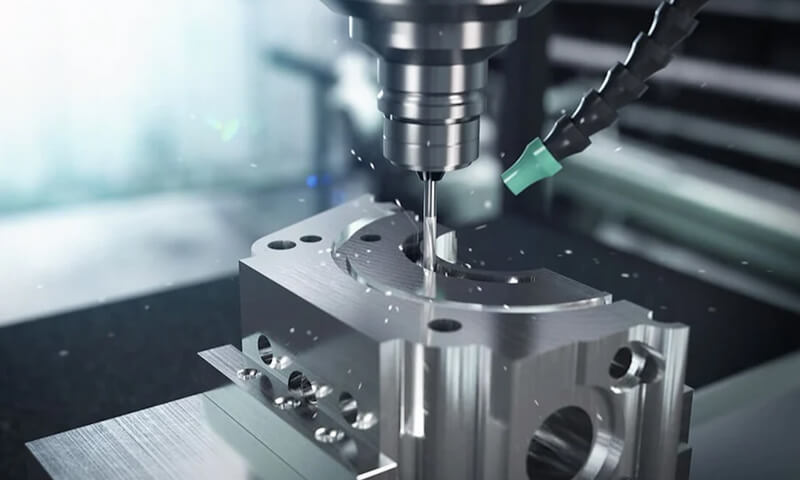
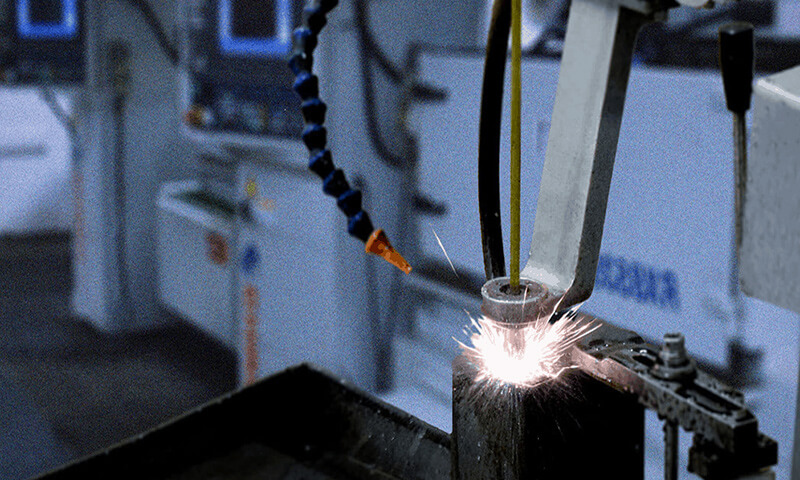
CNC machining of seats, mga thread, and sealing faces ensures every cast part meets dimensional and sealing performance requirements.
Material Range for Critical Applications
From stainless steels (CF8/CF8M/CF3/CF3M), tanso, ductile na bakal, to duplex and high-alloy materials, DEZE supplies valve castings built to perform in corrosive, mataas na presyon, o mataas na temperatura na kapaligiran.
Whether you require custom butterfly valves, spring check valves, Mga balbula ng globo, mga balbula ng gate, or high-volume production of industrial valve castings, DEZE is your trusted partner for precision, tibay ng katawan, and quality assurance.
Mga FAQ
What is cracking pressure, and how is it determined?
Cracking pressure is the minimum upstream pressure needed to open the valve, set by spring stiffness.
It is specified during manufacturing (0.5–15 psi) and tailored to system requirements (hal., 1 psi for delicate RO membranes, 10 psi for hydraulic systems).
Can a spring loaded check valve be installed vertically?
Oo nga. Unlike swing check valves, spring check valves operate reliably in vertical lines (flow upward or downward) because spring force, not gravity, drives closure.
How to reduce pressure drop in a spring check valve?
Choose a ball-type design (higher Cv than disc types) or upsizing (hal., a 3-inch valve for 150 gpm flow reduces ΔP from 5 psi to 2 psi vs. a 2-inch valve).
What causes chattering, and how to fix it?
Chattering occurs when flow fluctuates below the valve’s minimum operating rate, causing rapid opening/closing.
Fixes include downsizing the valve, reducing spring stiffness, or installing a flow stabilizer upstream.
Are spring check valves suitable for food-grade applications?
Oo nga. 316L stainless steel valves with electropolished surfaces (Ra <0.8 M) and EPDM/Viton seals meet FDA and 3-A standards, preventing bacterial buildup in food/pharma lines.