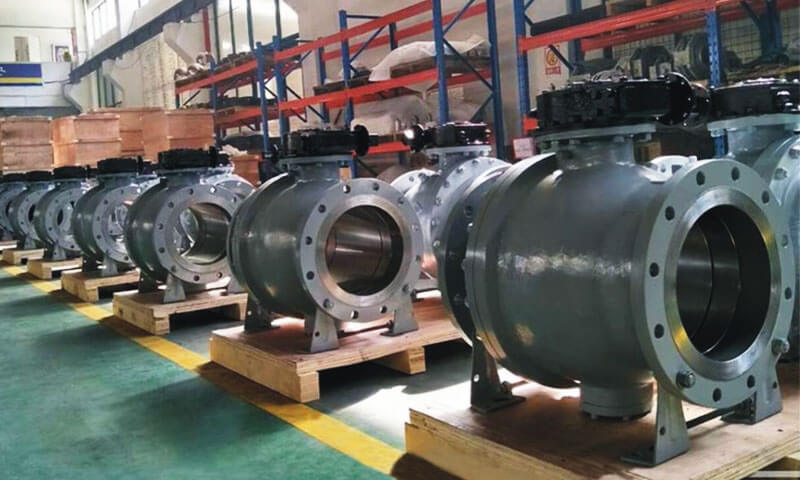
Lift check valve is a critical component in fluid handling systems, designed to prevent reverse flow and protect equipment from damage caused by backpressure.
Unlike swing check valves, which rely on a hinged disc, lift check valves use a piston or disc that “lifts” off its seat to allow forward flow and seals tightly under reverse pressure.
This design offers unique advantages in high-pressure, high-velocity applications, making them indispensable in industries ranging from oil and gas to pharmaceuticals.
1. What Is a Lift Check Valve?
A lift check valve is a type of non-return valve that controls fluid flow in one direction only.
Its core components include a valve body, a disc (or piston) that fits snugly against a seat, and a guiding mechanism (such as a stem or cage) that ensures the disc moves vertically.
When fluid flows forward, pressure pushes the disc upward, creating an opening for flow. When flow stops or reverses, the disc falls back onto the seat—assisted by gravity or spring force—forming a tight seal to block reverse flow.
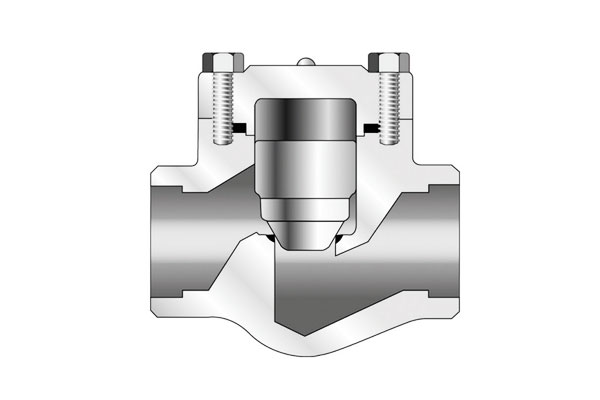
The defining feature of lift check valves is their linear motion, which minimizes turbulence and pressure drop compared to swing check valves.
This design makes them suitable for systems with high flow velocities (hanggang sa 30 m / s) and pressures (Lumampas 10,000 psi), where precise flow control is critical.
2. Prinsipyo ng Operasyon
Lift check valves operate on the principle of pressure differential, with motion governed by fluid dynamics and mechanical forces:
- Pressure-Differential Lift: Forward flow creates pressure upstream of the disc, overcoming closing forces (gravity, spring tension) to lift the disc off its seat.
The disc rises to a maximum height (typically 10–20% of the pipe diameter), allowing flow with minimal restriction. - Spring-Assisted Variants: In vertical installations or low-pressure systems, a spring biases the disc against the seat, ensuring closure even when gravity is insufficient.
Spring force is calibrated to achieve a specific “cracking pressure” (0.5–5 psi), the minimum upstream pressure required to open the valve. - Pilot-Operated Variants: For large-diameter valves (>12 pulgada) or systems with fluctuating pressures, pilot mechanisms use upstream pressure to assist disc lift, reducing cracking pressure variability by 40% compared to spring-loaded designs.
3. Types of Lift Check Valves
Lift check valves are classified based on installation orientation, internal guiding mechanism, closure assistance, material construction, and application-specific adaptations.
While the core operating principle—axial movement of a disc or plug—remains the same, design variations optimize performance for different service conditions.
Vertical Lift Check Valves
- Disenyo:
Features a vertical flow path with a disc or plug guided in a cylindrical body bore. The seat is positioned horizontally, and gravity assists in closure.
The guide stem ensures precise axial motion, minimizing seat wear. Flow enters from below, lifting the disc directly upward.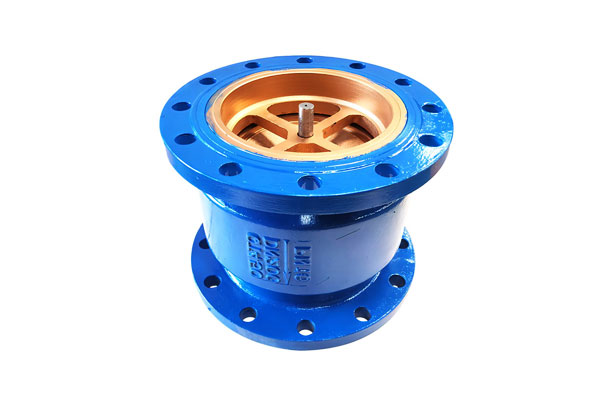
Vertical Lift Spring Check Valve - Installation: Requires upward (patayo na) flow for reliable operation.
- Mga kalamangan:
-
- Simple lang, gravity-assisted closure.
- Minimal moving parts reduce maintenance needs.
- Mga Limitasyon: Orientation-specific; not suitable for horizontal piping unless modified.
- Typical Uses: Pump discharge lines, vertical risers, Mga Sistema ng Paglamig ng Tubig.
Horizontal Lift Check Valves
- Disenyo:
Configured for horizontal piping runs, with an inclined seat and a guided disc that moves at an angle (typically 45°) to the horizontal axis.
This design uses a spring or gravity component to return the disc to its seat. Internal flow passages are contoured to reduce turbulence and pressure drop.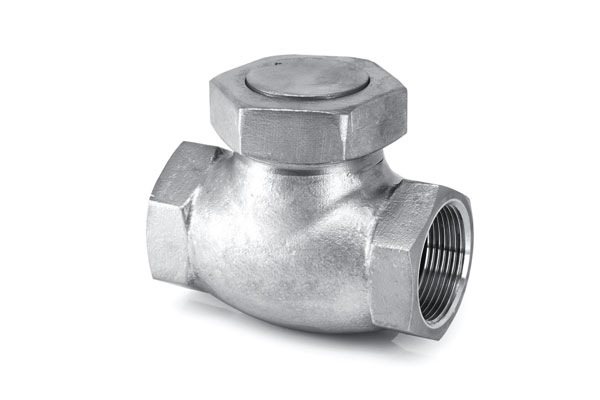
Horizontal Lift Check Valve Stainless Steel Parts - Closure Assistance: Often fitted with a spring to overcome the lack of gravity assistance.
- Mga kalamangan:
-
- Flexible installation in horizontal pipelines.
- Can be used in vertical downflow service with adequate spring preload.
- Typical Uses: Industrial process piping, langis & gas transmission, gas compressor outlets.
Piston-Type Lift Check Valves
- Disenyo:
Uses a piston-shaped closure member moving inside a precision-machined guide sleeve or cylinder.
The close tolerance between piston and sleeve dampens motion, reducing chatter and vibration. Flow passes through ports around the piston when lifted.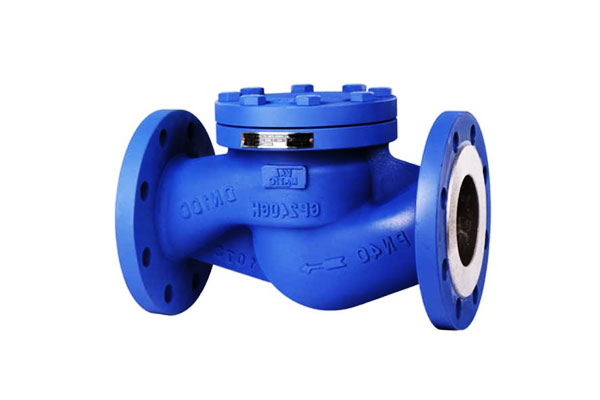
Piston-Type Lift Check Valve Parts - Mga kalamangan:
-
- Reduced disc flutter in fluctuating flow conditions.
- Improved sealing in high-pressure applications due to guided alignment.
- Mga Limitasyon: Slightly higher pressure drop due to reduced flow area around the piston.
- Typical Uses: High-pressure steam systems, mga planta ng kuryente, petrochemical lines.
Spring-Assisted Lift Check Valves
- Disenyo:
Incorporates a calibrated spring positioned behind the disc or piston to push it toward the seat.
The spring preload determines the cracking pressure and ensures positive closure regardless of installation orientation.
Designs often use non-corroding spring alloys such as Inconel X-750 for harsh environments. - Mga kalamangan:
-
- Reliable closure in any orientation.
- Reduces water hammer by closing before reverse flow accelerates.
- Typical Uses: Pump protection in variable-speed drives, mga halaman sa pagproseso ng kemikal, mga platform sa malayo sa pampang.
Silent (No-Slam) Lift Check Valves
- Disenyo:
Combines a lightweight disc with a strong, short-travel spring to achieve closure in milliseconds. The axial, streamlined flow path minimizes turbulence. Disc travel is limited to reduce kinetic energy and prevent slamming into the seating. - Pagganap: Eliminates the slamming noise common with swing checks in high-velocity systems.
- Mga kalamangan:
-
- Quiet operation.
- Excellent surge control in high-rise building water systems and long pipelines.
- Typical Uses: HVAC chilled water loops, potable water mains, fire suppression systems.
Forged Steel Lift Check Valves
- Disenyo:
Manufactured from forged steel billets, these valves feature a compact, high-strength body suitable for high-pressure, mataas na temperatura, and critical services.
Common end connections include socket weld, may sinulid na ba (NPT), and butt weld. Internal components often have hardfacing for wear resistance.
Forged construction improves grain structure and fatigue life compared to cast bodies. - Mga kalamangan:
-
- Pambihirang ratio ng lakas sa timbang.
- Better resistance to thermal shock and cyclic pressure loading.
- Compact form factor for space-limited installations.
- Typical Uses: Power generation (boiler feed lines), refinery high-pressure loops, superheated steam lines, petrochemical high-integrity systems.
Application-Specific Variants
- Subsea Lift Check Valves:
-
- Mga Tampok: ROV-operable overrides, metal-to-metal seats, hyperbaric tested.
- Ratings: Hanggang sa 15,000 psi, water depth to 4,500 m.
- Piggable Lift Check Valves:
-
- Mga Tampok: Full-bore design, smooth internal contour to allow pig passage.
- Corrosion-Resistant Variants:
-
- Mga Materyal: Super duplex stainless, Inconel® for sour service or chloride-laden environments.
Common Size & Rating Ranges:
| Uri ng | Size Range | Klase ng Presyon | Temp Range (°C) |
| Vertical Lift Check | 2″–24″ | ANSI 150–2500 | –29 to +593 |
| Horizontal Lift Check | 2″–20″ | ANSI 150–2500 | –29 to +593 |
| Piston-Type Lift Check | 1″–12″ | ANSI 600–2500 | –29 to +650 |
| Silent Lift Check | 2″–12″ | ANSI 150–600 | –29 to +250 |
| Forged Steel Lift Check | ½″–4″ | ANSI 800–2500 | –46 to +593 |
| Subsea Lift Check | 2″–20″ | API 3000–15000 psi | –100 to +190 |
4. Typical Components, Mga Materyal, Mga patong, and Construction
The choice of mga materyales, ibabaw ng paggamot, and construction techniques directly impacts a lift check valve’s performance, buhay ng paglilingkod, and compliance with industry standards.
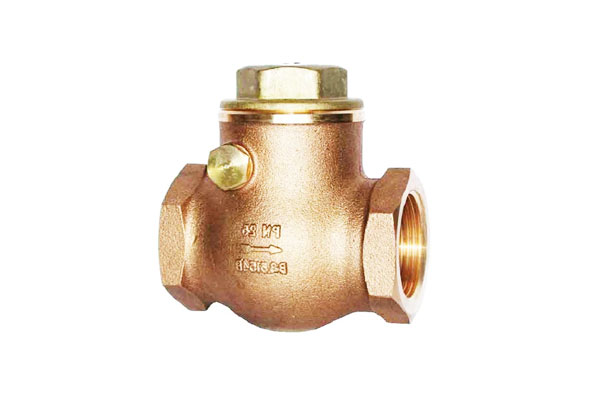
Body Materials
The body is the primary pressure-containing component, and its metallurgy must satisfy strength, paglaban sa kaagnasan, and toughness requirements.
| Materyal | Standard Specification | Lakas ng loob & Temp Range | Service Notes |
| Carbon Steel | ASTM A216 WCB / ASTM A105 | –29 to +425 °C | Matipid sa kabuhayan, for non-corrosive fluids; needs coating in seawater. |
| Low Alloy Steel | ASTM A217 WC9, C12A | –29 to +593 °C | Mas mataas na lakas & paglaban sa creep; used in high-temp steam. |
| Austenitic Hindi kinakalawang na asero | ASTM A351 CF8M, ASTM A182 F316 | –196 to +425 °C | Good general corrosion resistance; not suitable for chloride SCC above 60 °C unless controlled. |
| Duplex / Super Duplex Stainless | ASTM A890 Grade 5A/6A | –46 to +300 °C | Mataas na lakas + chloride pitting resistance; ideal for seawater. |
| Mga haluang metal ng Nickel (Inconel® 625, 825) | ASTM B564 N06625/N08825 | –196 to +593 °C | Outstanding resistance to acids, sour gas, and seawater at high temperatures. |
Trim Materials (Disc, Upuan, halamang singaw sa paa, Guide)
I-trim refers to all wetted internal parts other than the body/bonnet. Materials are selected for Paglaban sa Pagsusuot, paglaban sa kaagnasan, and compatibility with process media.
- Hardfaced Stainless Steel (13Cr + Stellite®) — Excellent wear and galling resistance.
- 17-4 PH Hindi kinakalawang na Asero — High strength, magandang paglaban sa kaagnasan; often used for discs.
- Inconel® 718 / 625 — Exceptional sour service performance; mataas na paglaban sa pagkapagod.
- Tungsten Carbide-Coated Components — Extreme abrasion resistance for slurry service.
Seat Materials
- Metal Seats — Stellite® 6, tungsten karbid; suited for high-temperature, high-velocity, or erosive service.
- Soft Seats — PTFE, reinforced PTFE, PEEK; provide bubble-tight shutoff (API Class VI), but temperature-limited to approx. –50 °C to +250 °C.
- Elastomer Seats — NBR, EPDM, Viton®; good for water and mild chemicals, but limited temperature range and chemical compatibility.
Mga Bukal (Opsyonal na)
Springs are critical in spring-assisted lift check valves.
- Mga Materyal: Inconel X-750, 17-7 PH hindi kinakalawang na asero, Hastelloy C-276.
- Key Requirements: High fatigue strength, paglaban sa kaagnasan, stable modulus over temperature.
Mga patong & Mga Paggamot sa Ibabaw
Coatings extend service life by reducing corrosion, pagguho ng lupa, at galling.
| Patong na patong / Paggamot | Application Method | Mga Benepisyo | Service Example |
| HVOF Tungsten Carbide | High Velocity Oxy-Fuel Spray | Sobrang tigas (~70 HRC), pagguho ng lupa paglaban | Slurry pipelines |
| Stellite® Weld Overlay | GTAW / PTA Welding | Wear & corrosion resistance at high temp | Steam lines |
| Xylan® PTFE Coating | Spray & bake | Mababang alitan, paglaban sa kemikal | Seawater service |
| Electroless Nickel Plating | Immersion | Uniform corrosion protection, makinis na ibabaw | Sour gas service |
| Epoxy / Fusion Bonded Epoxy (FBE) | Patong ng pulbos | External corrosion protection | Buried pipelines |
Material Selection Considerations
- Corrosive Media: Prefer duplex, Super Duplex, or nickel alloys; consider HVOF or weld overlay.
- High Temperature (>400 °C): Use low alloy steels or Cr-Mo steels with Stellite seating.
- Erosive Service: Specify hardfacing (tungsten carbide or Stellite) for disc and seat.
- Low-Temperature Service (<–46 °C): Ensure impact-tested materials per ASME B31.3 and ASTM A352 for carbon steels.
- Sour Service (H₂S): Comply with NACE MR0175 / ISO 15156 for material hardness and composition.
5. Performance Characteristics of Lift Check Valves
- Pressure Drop: Typically 1–3 psi per inch of valve size at nominal flow, 50% lower than swing check valves. A 2-inch valve has a pressure drop of 2 psi sa 50 gpm.
- Response Time: Spring-loaded valves close in <0.1 mga segundo, limiting reverse flow volume and water hammer.
- Leakage: Metal-seated valves: <0.1% of nominal flow; soft-seated: <0.001% (ANSI Class VI).
- Tibay ng buhay: 100,000+ cycles in clean service; 10,000+ cycles in abrasive environments (with Stellite trim).
Typical Performance Characteristics
| Parameter | Standard Gravity Lift Check | Spring-Assisted Lift Check | Silent (No-Slam) Lift Check |
| Pressure Drop (ΔP) | 1–3 psi | 1–3 psi | 1.5–4 psi |
| Response Time | 0.2–0.6 s | 0.05–0.3 s | 0.05–0.15 s |
| Leakage Class (Metal Seat) | API 598 V | API 598 V–VI | API 598 V–VI |
| Leakage Class (Soft Seat) | API 598 VI | API 598 VI | API 598 VI |
| Max Temp (Metal Seat) | 425-650 ° C | 425-650 ° C | 425 °C |
| Min Temp (Cryogenic) | –196 °C | –196 °C | –196 °C |
6. Mga Pakinabang at Limitasyon
Mga kalamangan of Lift Check Valve
- Tight Shutoff: Superior to swing check valves, with leakage rates 10–100× lower, critical for preventing product loss or contamination.
- High-Pressure Performance: Operates reliably at up to 25,000 psi, exceeding the capabilities of most other check valve types.
- Low Pressure Drop: Streamlined design reduces energy consumption by 5–10% in high-flow systems compared to swing check valves.
- Resistance to Wear: Piston and cage designs minimize contact between moving parts, extending service life in abrasive fluids.
Mga Limitasyon of Lift Check Valve
- Mas Mataas na Gastos: 20–50% more expensive than swing check valves due to precision machining requirements.
- Sensitivity to Installation: Must be mounted horizontally (for gravity-driven designs) or with proper spring selection (vertical lines) to avoid premature wear.
- Limited Size Range: Typically available up to 12 pulgada ang diameter; larger sizes (>12 pulgada) are costly and less common.
7. Applications of Lift Check Valves
Lift check valves are employed across multiple industries wherever unidirectional flow protection ay kailangan.
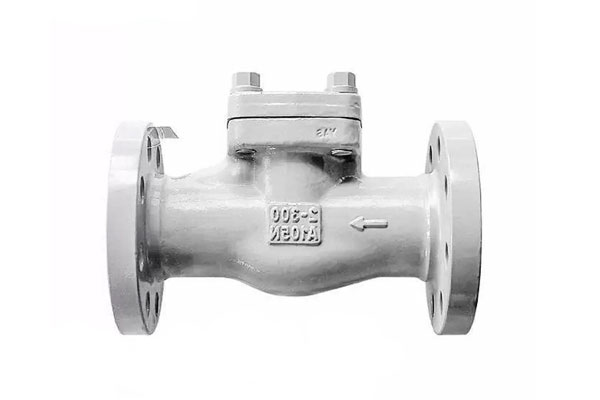
Their suitability stems from positive sealing, guided closure, at kakayahang umangkop to various pressures, mga temperatura, and media conditions.
| Paglalapat | Media | Typical Pressure Class | Materyal / I-trim |
| Pump Discharge | Tubig, langis, mga kemikal | ANSI 150–600 | CS, SS316 + spring assist |
| Steam Service | Superheated steam | ANSI 900–2500 | Forged steel + Stellite seat |
| Gas Compression | Natural gas, hydrogen | ANSI 600–1500 | SS316 / Inconel trim |
| Slurry Transport | Tailings, ash slurry | ANSI 150–600 | Duplex + tungsten karbid |
| Subsea Service | tubig dagat, gas, langis | API 3000–15000 psi | Super duplex / Inconel |
| Cryogenic | LNG lng, LOX, LIN | ANSI 150–600 | SS316L + extended bonnet |
| Piggable Pipeline | Crude, gas | ANSI 300–900 | CS/SS full-bore |
| Chemical Process | Mga Asido, mga klorido | ANSI 150–600 | haluang metal 20 / Bilisan mo na |
8. Common Failure Modes & Pag-troubleshoot
Even with proper selection and installation, lift check valves can experience operational or mechanical failures due to process conditions, material limitations, or maintenance issues.
Understanding these failure modes enables faster diagnosis, minimal downtime, and extended service life.
| Symptom | Likely causes | Recommended corrective action |
| Valve noisy or noisy closing | High closing velocity; water hammer; loose guide | Install damping spring or pilot, check upstream transient control, secure guides |
| Valve leaking (seat) | Seat wear, debris, hard particle erosion, seat distortion | Inspect & lap/replace seat, add strainer, change seat material |
| Valve stuck open | Foreign object jam, disc guide wear | Remove obstruction, repair guide, replace disc |
| Valve stuck closed | Disc jammed on seat, kaagnasan, spring seizure | Disassemble, malinis na, replace corroded parts |
| Spring failure / pagkapagod | Overcycle, corrosive environment | Replace spring, choose higher fatigue alloy, protect spring with coating |
| Erosion/cavitation damage | High velocities, flashing | Reduce ΔP across valve, fit anti-cavitation trim |
9. Pagsubok, Sertipikasyon & Mga Pamantayan
Testing and certification of lift check valves ensure that they meet design specifications, safety requirements, at pagsunod sa regulasyon before installation in service.

- API 598 — Valve inspection/testing.
- ASME B16.34 — Pressure–temperature ratings.
- ISO 5208 — Pressure test of metallic valves.
- API 6D / 6DSS — Pipeline and subsea valve requirements.
- PED 2014/68/EU — Pressure equipment compliance.
10. Comparison with Other Non-Return Valves
Lift check valves are one of several non-return (Suriin) balbula mga disenyo, each with advantages and limitations depending on flow characteristics, installation constraints, at mga kinakailangan sa pagpapanatili.
Table — Comparative Overview of Common Check Valve Types
| Tampok / Parameter | Lift Check Valve | Swing Check Valve | Tilting Disc Check Valve | Dual Plate (Wafer) Check Valve | Ball Check Valve |
| Closure Mechanism | Guided disc/piston lifts vertically off seat | Disc swings on hinge pin | Disc tilts on central pivot | Two spring-loaded plates | Ball moves off seat under flow |
| Flow Path | Straight-through (axial) | 90° turn around hinge | Straight-through, low turbulence | Straight-through, compact na compact | Straight-through or angled |
| Response Time | Mabilis na (esp. spring-assisted) | Katamtaman, can slam on reversal | Faster than swing, less slam | Very fast (springs assist) | Slow to moderate |
| Pressure Drop (ΔP) | Katamtaman (due to guide and seat restriction) | Low at high flows | Mababa hanggang katamtaman | Mababa ang | Katamtaman |
| Orientation Flexibility | Horizontal or vertical (flow-up); spring type any orientation | Best horizontal | Horizontal or vertical | Any orientation | Any orientation |
| Water Hammer Control | Good with spring assist | Poor without damping | Better than swing | Napakaganda | Katamtaman |
Size Range |
½″–24″ | 2″–72″ | 2″–72″ | 2″–60″ | ½″–12″ |
| Rating ng Presyon | ANSI 150–2500, API 3000–15000 psi | ANSI 150–2500 | ANSI 150–1500 | ANSI 150–2500 | ANSI 150–600 |
| Temperature Capability | –196 °C to +650 °C | –29 °C to +650 °C | –29 °C to +650 °C | –46 °C to +425 °C | –46 °C to +250 °C |
| Leakage Tightness | Mataas na (API V–VI possible) | Katamtaman (metal-to-metal Class IV–V) | Mataas na (Class V–VI) | Katamtaman hanggang sa mataas | Katamtaman |
| Pagpapanatili | Easy bonnet access; trim replaceable | Easy; hinge pin wear common | Katamtaman; larger pivot mechanism | Limitado; compact design restricts access | Very low; simple internals |
| Pinakamahusay Para sa | High-pressure, critical sealing, vertical flow | Large diameter, low pressure drop needs | Large bore, low-slam service | Compact, fast closure, low slam | Mababang pagpapanatili, dirty fluids |
Key Observations:
- Lift Check Valves excel in mataas na presyon, high-seal-integrity applications and services with variable flow where spring assistance is beneficial.
- Swing Check Valves are economical for large-diameter, low-pressure-drop services but prone to water hammer.
- Tilting Disc designs offer a balance between flow efficiency and reduced slam, often used in mga planta ng kuryente.
- Dual Plate valves are lightweight and suitable for space-limited pipeline retrofits.
- Ball Check Valves are simple and maintenance-light, good for slurry or viscous fluids but with less precise sealing.
11. Advanced topics & future trends
- Surface engineering & hardfacing — improved alloys and thermal spray coatings extend seat life.
- Paggawa ng additive — potential for complex internal flows and customized trim geometries.
- CFD & FEA — used to refine flow paths, reduce erosion hotspots and predict dynamic behavior.
- Smart sensors — position, vibration and leak detection integrated for predictive maintenance.
12. Pangwakas na Salita
Lift check balbula is engineered for precision, delivering unrivaled performance in critical systems where reverse flow poses risks.
Their vertical motion design, materyal na maraming nalalaman, and tight shutoff make them essential in oil and gas, pagbuo ng kapangyarihan, at mga industriya ng parmasyutiko.
While higher initial costs than swing check valves, their durability and efficiency provide long-term value.
As materials and smart technologies advance, lift check valves will continue to evolve, meeting the demands of increasingly extreme and automated fluid handling systems.
DEZE: High-Precision Valve Casting Solutions for Demanding Applications
DEZE is a specialized provider of precision valve casting services, delivering high-performance components for industries that require reliability, pressure integrity, at katumpakan ng sukat.
From raw castings to fully machined valve bodies and assemblies, DEZE offers end-to-end solutions engineered to meet stringent global standards.
Our Valve Casting Expertise Includes:
Pamumuhunan sa Paghahagis for Valve Bodies & I-trim
Utilizing lost wax casting technology to produce complex internal geometries and tight-tolerance valve components with exceptional surface finishes.
buhangin paghahagis & Paghahagis ng Shell Mold
Ideal for medium to large valve bodies, mga flanges, and bonnets—offering a cost-effective solution for rugged industrial applications, pati na ang langis & gas and power generation.
Precision Machining for Valve Fit & Seal Integrity
CNC machining of seats, mga thread, and sealing faces ensures every cast part meets dimensional and sealing performance requirements.
Material Range for Critical Applications
From stainless steels (CF8/CF8M/CF3/CF3M), tanso, ductile na bakal, to duplex and high-alloy materials, DEZE supplies valve castings built to perform in corrosive, mataas na presyon, o mataas na temperatura na kapaligiran.
Whether you require custom butterfly valves, Suriin ang mga balbula, Mga balbula ng globo, mga balbula ng gate, or high-volume production of industrial valve castings, DEZE is your trusted partner for precision, tibay ng katawan, and quality assurance.
Mga FAQ
What is the difference between a lift check valve and a swing check valve?
Lift check valves use vertical disc motion for tight shutoff and low pressure drop, ideal for high-pressure systems.
Swing check valves have a hinged disc, offering higher flow capacity but poorer shutoff and increased water hammer risk.
Can lift check valves be used in vertical pipelines?
Oo nga, but spring-loaded designs are required to ensure the disc closes properly against gravity. Gravity-driven lift check valves must be mounted horizontally.
What is the maximum temperature a lift check valve can handle?
Forged steel valves with Inconel trim withstand temperatures up to 650°C, suitable for high-pressure steam service.
How often should lift check valves be maintained?
In clean service (hal., tubig), annual inspections are sufficient. In abrasive or corrosive service, inspect every 3–6 months.
What is “cracking pressure” and why is it important?
Cracking pressure is the minimum forward pressure needed to open the valve. It ensures the valve only opens when intended, preventing premature wear from low-flow pulsations. Typical values range from 0.5 sa 5 psi.