
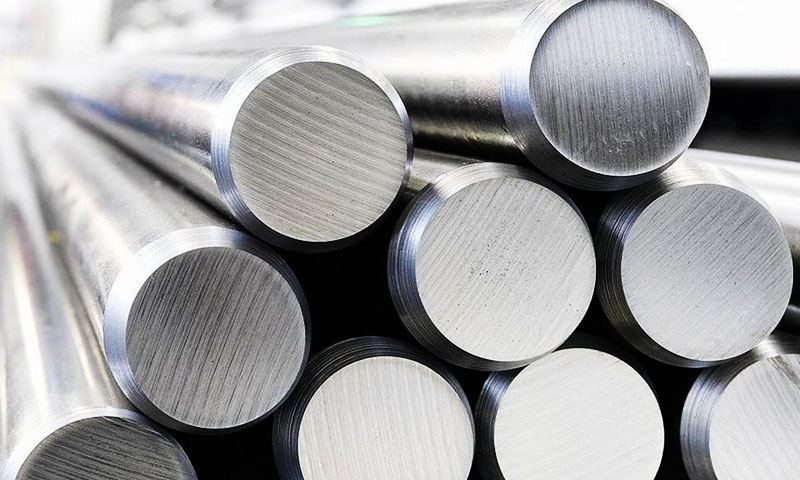
1. Executive summary
“18-8 stainless steel” is the common name for a family of austenitic stainless steels characterized by roughly 18% kromo at 8% nikel (hence “18-8”).
The best-known member is Uri ng 304 (UNS S30400 / EN 1.4301). 18-8 alloys are the workhorses of stainless technology because they combine broad corrosion resistance, napakahusay na formability, mataas na tigas, and simple fabrication.
They are not, gayunpaman, the best choice for aggressive chloride environments or high-temperature creep applications — in those cases alloys with added molybdenum, stabilized or duplex microstructures, or nickel-base alloys are preferred.
2. What “18-8” means — definition and scope
“18-8” is an informal, historical descriptor that designates hindi kinakalawang na asero kasama ang humigit-kumulang 18 wt.% chromium at 8 wt.% nickel—the classic austenitic stainless composition introduced in the early 20th century.
It typically refers to the 300-series austenitic Pamilya: principally Uri ng 304 and its variants (304L, 304H), plus related stabilized grades (hal., 321, 347) that share the 18–20% Cr / 8–10% Ni base but add titanium or niobium to control carbide precipitation.
Key points:
- “18-8” is a practical shorthand — specify exact grade (hal., 304, 304L, 321) in procurement.
- The austenitic microstructure is stabilized by Ni; Cr provides passivity and oxidation resistance.

3. Typical grades and standards
Common commercially used 18-8 variants include:
- Uri ng 304 (UNS S30400 / EN 1.4301) — standard 18-8 stainless; general purpose.
- Uri ng 304L (S30403 / 1.4306) — low-carbon variant (≤0.03% C) to reduce sensitization during welding.
- Type 304H (S30409 / 1.4307) — higher carbon (≈0.04–0.10%) for improved strength at elevated temperatures.
- Uri ng 321 (S32100 / 1.4541) — Ti-stabilized for better resistance to intergranular corrosion after exposure in 450–850 °C range.
- Uri ng 347 (S34700 / 1.4550) — Nb-stabilized equivalent to 321.
Standards covering these grades include ASTM A240 / A240M (Plato, Sheet), ASTM A276 (mga bar), ASME/ASME II, and EN/ISO equivalents. Always reference the precise standard and UNS/EN number in specifications.
4. Kemikal na komposisyon ng 18-8 hindi kinakalawang na asero
| Elemento | Tipikal na saklaw (typical 304 Pamilya) | Primary role |
| Chromium (Cr) | ~17.5 – 19.5 wt.% | Forms passive Cr₂O₃ film — main corrosion resistance contributor |
| Nikel (Ni) | ~8.0 – 10.5 wt.% | Austenite stabilizer; improves toughness, ductility and fabrication |
| Carbon (C) | ≤ 0.08 wt.% (304); ≤0.03 wt.% (304L) | Increases strength but high C causes carbide precipitation (sensitization) |
| Mga mangganeso (Mn) | ≤ 2.0 wt.% typical | Aids deoxidation and some austenite stabilization |
Silicon (Si Si) |
≤ ~1.0 wt.% | Deoxidizer; minor effect on high-T behavior |
| Posporus (P), Sulfur (S) | Mababa ang (trace) | Kept minimal to preserve toughness and corrosion resistance |
| Titanium (Ti) / Niobiyum (Nb) | Additions in 321 / 347 | Carbon-stabilizers; tie up C to avoid Cr carbide precipitation |
| Molibdenum (Mo) | karaniwan ay 0 in classic 18-8 (present in 316) | Improves pitting resistance — absent in plain 18-8, so pitting resistance is limited |
5. Mechanical properties of 18-8 hindi kinakalawang na asero
The table below gives representative mechanical properties for typical 18-8 austenitic hindi kinakalawang na asero (hal., Uri ng 304 Pamilya) in the solution-annealed / annealed na kalagayan.
| Pag-aari | Representative value (annealed na nga ba 18-8 / Uri ng 304 Pamilya) | Practical notes & cold-work effects |
| 0.2% offset yield strength (Rp0.2) | ~205 MPa (≈ 30 ksi) typical; saklaw ~190 – 260 MPa | Annealed na ang mga 304 typically ~205 MPa. Malamig na pagtatrabaho (pagulong gulong, pagguhit) raises yield progressively (can exceed 400–800 MPa for heavy deformation). |
| Lakas ng paghatak (Rm, Mga UTS) | ~515 – 720 MPa (typical ~520–620 MPa) | UTS increases with cold work; heavily cold-worked material can approach or exceed 900 MPa in extreme cases. |
| Pagpapahaba sa pahinga (A, %) | ~40 – 60 % (on standard test specimen) | High ductility in annealed condition. Elongation falls as cold work and hardness increase (may drop below 20% for heavily worked material). |
Ang katigasan ng ulo (Rockwell / Brinell) |
~70 – 95 HRB (mga approx. ~120 – 220 HB) | Typical annealed HRB ~70–95. Cold work raises hardness substantially (work-hardened sheet can exceed HRB 100 / HB 250+). |
| Modulus of elasticity, E | ≈ 193 – 200 GPa | Gamitin ang ≈ 193 GPa for structural/stiffness calculations; E is essentially insensitive to cold work compared with strength. |
| Modulus ng paggupit, G | ≈ 75 – 80 GPa | Gamitin ang ~77 GPa for torsion calculations. |
| Poisson’s ratio, ν | ≈ 0.28 – 0.30 | Gamitin ang 0.29 as a convenient design value. |
Pagkapagod (S–N) — typical endurance |
Highly dependent on surface finish, mean stress and defects; rough guidance: endurance limit ≈ 0.3–0.5 × Rm for smooth, polished specimens | In real components fatigue life is governed by welds, surface condition and residual stress. Use component testing or supplier S–N curves for design. |
| Charpy impact (CVN) | Good toughness—typical room-temperature CVN >> 20–30 J for most annealed product forms | Austenitic 18-8 retains toughness at low temperatures; specify CVN values if fracture-critical or low-temperature service is required. |
6. Pisikal & Mga Katangian ng Thermal
- Densidad ng katawan: ≈ 7.9 g·cm⁻³.
- Modulus of elasticity (E): ≈ 193–200 GPa.
- Thermal kondaktibiti: relatively low for a metal, ≈ 14–16 W·m⁻¹·K⁻¹ ha 100 °C (falls with temperature).
- Coefficient of thermal expansion: ≈ 16–17×10⁻⁶ K⁻¹ (20-100 ° C) — higher than carbon steel, important for thermal joint design.
- Melting range: solidus ~ 1375-1400 ° C, liquidus ~ 1400–1450 °C (composition dependent).
- Magnetic behavior: essentially di magnetic in annealed condition; cold work or formation of martensite imparts mild ferromagnetism.
Temperature service limits: continuous use up to ~400–800 °C is possible depending on alloy and environment; beware of sensitization zone (~425–850 °C) and carburization/oxidation at high temperatures.
For sustained high-T strength consider 304H, 309, 310 or other high-temperature alloys.
7. Corrosion behaviour — strengths and limitations
Mga Lakas
- Good general corrosion resistance in oxidizing atmospheres and many chemicals (acids/bases) at ambient temperatures.
The passive Cr₂O₃ film grants broad utility in food, architectural and many process environments. - Good hygiene and cleanability, which is why 18-8 is widely used in food, beverage and medical equipment.
Mga Limitasyon
- Pitting and crevice corrosion in chlorides: without Mo, 18-8 is susceptible to localized attack in chloride-bearing media (tubig dagat, mga brines) especially at elevated temperatures or in crevices.
If chlorides are present, Uri ng 316 (with Mo) or duplex alloys are often chosen. - Stress corrosion cracking (SCC): austenitic 18-8 steels are susceptible to chloride-induced SCC under tensile stress and elevated temperature; avoid combination of tensile stress + mga klorido + temperatura.
- Intergranular na kaagnasan (sensitization): occurs after exposure to 425–850 °C unless low-C (304L) or stabilized grades (321/347) are used.
- Galvanic kaagnasan: when coupled to more noble alloys, 18-8 can act as an anode in certain electrolytes — design to avoid dissimilar metal contact or provide insulation.
Practical selection rule: For general service where chlorides or heavy reducing conditions occur, evaluate 316 (Mo), super-austenitics, duplex o mga haluang metal na nikelado.
8. Paggawa ng gawa: pagbuo ng, machining, welding and joining

Pagbuo ng
- Excellent formability in annealed condition due to high ductility. Use proper tooling to account for springback (higher than mild steel) and the strong work-hardening behavior.
- Deep drawing & spinning are common for cookware and thin-wall vessels.
Machining
- Notoriously “gummy” compared with carbon steel; austenitic stainless steels work-harden in the cut, which increases tool wear. Best practice:
-
- Use rigid tooling, positive rake carbide tools.
- Employ moderate cutting speeds, high feed for roughing, and abundant coolant to avoid built-up edge and heat.
- Use sharp edges and chip breakers.
Welding & pagsali sa
- Napakahusay na weldability by common methods (GTAW, GMAW, SMAW, FCAW). Key points:
-
- Use low-carbon (304L) for welded assemblies where post-weld sensitization is a concern.
- Use appropriate filler metals (hal., 308L/308 stainless filler for 304 base metal) to match chemistry and avoid hot cracking.
- Control heat input & interpass temperature; excessive heat widens the sensitized zone.
- Post-weld solution anneal (1050-1100 ° C) followed by rapid quench can restore corrosion resistance where practical; often not feasible for assembled structures.
Bilang kahalili, use low-C or stabilized grades to avoid the need for PWHT. - Beware of solidification cracking in some weld configurations — follow qualified WPS and prequalified procedures.
Other joining
- Brazing, soldering, malagkit na bonding are used with appropriate fluxes and surface preps. Adhesive bonding frequently requires surface activation (apoy, plasma, chemical etch).
9. Lunas sa init & thermal processing
- Not hardenable by quench & pag-uugali (austenitic 18-8 does not form martensite through heat treatment like carbon steels).
- Solution anneal: typical at 1010–1120 °C followed by rapid quench (tubig) to dissolve carbides and restore corrosion resistance and ductility. Used after welding/heavy cold work when feasible.
- Stress relief anneal: limited benefit; if performed, avoid temperatures in the sensitization range unless followed by solution anneal.
- Pagtanda: prolonged exposure to 475 °C (475 °C embrittlement) in some iron-nickel-chromium alloys can embrittle the material — not typical for 304, but be cautious in long-time exposures.
10. Surface finishing, passivation and cleaning
- Mechanical finishes: 2B, BA, No.1, No.4 (nagsipilyo) atbp. Select finish for application: polished for sanitary, matte for architectural.
- Pag-aatsara & passivation na lang: chemical pickling removes heat tint and embedded iron; passivation na lang (nitric or citric acid treatments) restores and strengthens the passive film—critical after welding or fabrication.
Citric acid passivation is increasingly preferred for safety and environmental reasons. - Electropolishing: reduces surface roughness and improves corrosion resistance (useful in pharmaceutical/food industries).
- Paglilinis: avoid chlorinated cleaners; prefer mild alkaline cleaners or detergents followed by potable water rinse. For critical sanitary use, validate cleaning regimen.
11. Typical Applications of 18-8 hindi kinakalawang na asero

- Food service and processing equipment: sinks, mga conveyor, tanks — hygienic, easily cleaned.
- Architectural surfaces and trim: matibay na matibay, corrosion-resistant finishes.
- Household goods: cutlery, Mga kagamitan sa pagluluto, mga panel ng appliance.
- Chemical process equipment (mild services): piping, valves for non-chloride environments.
- Mga fastener, mga bukal (when cold-worked), instrumentation: using work-hardening for mechanical function.
- Medical devices and implants (select grades, controlled manufacturing): because of biocompatibility and sterilizability (but not all 18-8 variants are medical-grade).
12. Comparison to Related Alloys
| Pag-aari / Aspekto | 18-8 Hindi kinakalawang na asero (Uri ng 304 Pamilya) | Uri ng 316 (18-10 + Mo) | Stabilized 18-8 (321 / 347) | Duplex 2205 |
| Composition highlights | ~18% Cr, ~8–10% Ni | ~17–18% Cr, ~10–14% Ni, 2–3% Mo | 18–20% Cr, ~8–10% Ni + Ti (321) o Nb (347) | ~22% Cr, ~5–6% Ni, ~3% Mo, N |
| Alloy family | Austenitic hindi kinakalawang na asero | Austenitic hindi kinakalawang na asero | Austenitic hindi kinakalawang na asero (stabilized) | Duplex hindi kinakalawang na asero (austenite + ferrite) |
| Pitting resistance (relative) | Katamtaman | Improved vs 304 (Mo-enhanced) | Katulad ng 304 | Mataas na (significantly better than 304/316) |
| Resistance to chloride SCC | Limited in hot chloride environments | Better than 304, but SCC still possible | Katulad ng 304 (stabilization affects welds, not SCC) | Napakahusay — strong resistance to chloride SCC |
| Tipikal 0.2% magbunga ng lakas (annealed na nga ba) | ~190–260 MPa | ~185–260 MPa | ~190–260 MPa | ~400–500 MPa |
Typical tensile strength (annealed na nga ba) |
~515–720 MPa | ~515–700 MPa | ~515–700 MPa | ~620–880 MPa |
| Ductility / pagpapahaba | Napakahusay (≈40–60%) | Napakahusay (katulad ng 304) | Napakahusay | Moderate–good (lower than austenitic grades) |
| Low-temperature toughness | Napakahusay, retains toughness to cryogenic range | Napakahusay | Napakahusay | Mabuti na lang, but inferior to fully austenitic steels |
| High-temperature stability | Katamtaman; 304H preferred for elevated temperature | Katamtaman; 316H available | Excellent resistance to sensitization | Limited for long-term creep service |
| Weldability | Napakahusay; low risk with 304L | Napakahusay; 316L commonly used | Very good for welded assemblies | Good but requires controlled procedures |
Formability |
Excellent deep-drawing and cold-forming | Napakaganda | Napakaganda | Fair; higher strength causes springback |
| Magnetic behavior | Hindi magnetic (annealed na nga ba) | Hindi magnetic (annealed na nga ba) | Hindi magnetic (annealed na nga ba) | Partially magnetic |
| Typical applications | Food equipment, arkitektura, presyon vessels, piping | Hardware ng dagat, pagproseso ng kemikal, mga heat exchanger | Mga sasakyang panghimpapawid, mga sistema ng tambutso, welded pressure parts | Malayo sa pampang, desalination, langis & gas, mga halaman ng kemikal |
| Relative material cost | Low–moderate | Moderate–high | Katamtaman | Mataas na |
13. Pangwakas na Salita
18-8 hindi kinakalawang na asero represents one of the most balanced and widely adopted material systems in modern engineering.
By combining approximately 18% chromium at 8% nikel, it achieves a stable austenitic microstructure that delivers an exceptional blend of corrosion resistance, mechanical reliability, pagiging formable, at weldability.
These characteristics explain its long-standing dominance across food processing, Kagamitan sa Kemikal, architectural structures, presyon vessels, and general industrial applications.
Mga FAQ
What does “18-8” mean in stainless steel?
“18-8” refers to the nominal chemical composition of approximately 18% chromium at 8% nikel.
This composition stabilizes an austenitic structure, providing corrosion resistance, ductility, and non-magnetic behavior in the annealed condition.
Ay 18-8 stainless steel the same as Type 304?
Uri ng 304 is the most common standardized grade within the 18-8 Pamilya.
While “18-8” is a general industry term, Uri ng 304 (and its variants such as 304L and 304H) represents a precisely defined specification under international standards.
Ay 18-8 stainless steel magnetic?
In the solution-annealed condition, 18-8 stainless steel is essentially non-magnetic. Gayunpaman, cold working can induce partial martensitic transformation, resulting in slight magnetic response.
What are the main advantages of 18-8 stainless steel over duplex stainless steels?
18-8 stainless steel offers superior formability, easier welding, better low-temperature toughness, and lower material and fabrication costs.
Duplex stainless steels provide higher strength and improved chloride resistance but are more demanding to process.

