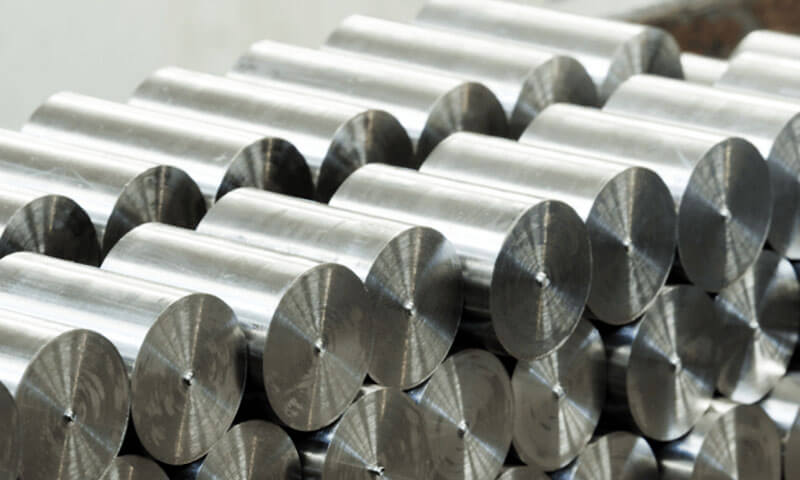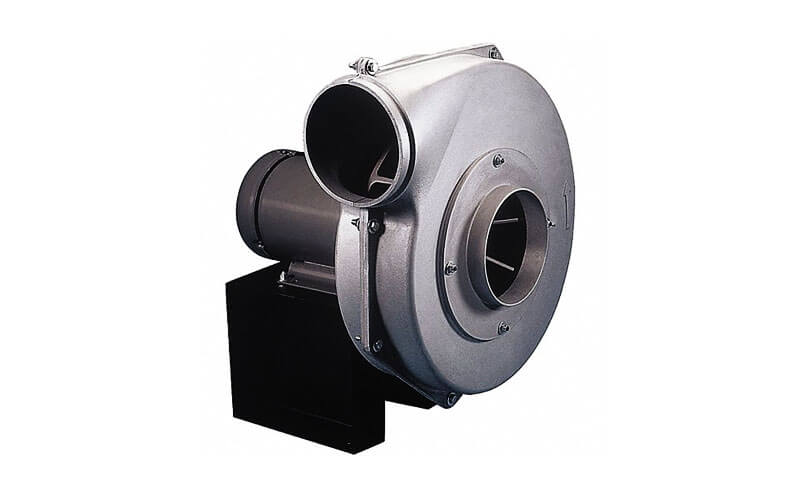
Для прамысловых паветранадзімалак, цэнтрабежныя вентылятары, HVAC абсталяванне, сістэмы вентыляцыі, абсталяванне для апрацоўкі паветра, і спецыялізаванае абсталяванне для перамяшчэння вадкасці,
the housing often incorporates complex features such as a volute, inlet transition, discharge outlet, мантажныя бобы, сядзенні падшыпнікаў, inspection ports, рэбра, and integrated connection interfaces.
Producing these features economically while maintaining dimensional consistency can be challenging with conventional fabrication methods.
Cast aluminum blower housings provide an effective solution when manufacturers need a combination of lightweight construction, Каразія супраціву, цеплавыя характарыстыкі, калянасць канструкцыі, and complex near-net-shape geometry.
Aluminum casting allows the housing to be formed around its functional requirements rather than assembled from numerous separately fabricated plates.
1. What Is a Cast Aluminum Blower Housing?
А cast aluminum blower housing is a blower enclosure manufactured by pouring molten aluminum alloy into a prepared mold and allowing it to solidify into the required housing geometry.
Пасля ліцця, the component normally undergoes processes such as fettling, тэрмічная апрацоўка, Апрацоўка з ЧПУ, праверка на герметычнасць, мерная інспекцыя, and surface finishing before becoming a finished blower housing.
The primary function of the housing is to surround and guide the impeller while establishing a controlled passage for the moving medium.

In a centrifugal blower, Напрыклад, air enters near the impeller center, is accelerated radially outward by the rotating blades, and then enters the housing’s volute or discharge passage.
The housing geometry has a direct influence on pressure development, flow distribution, турбулентнасць, і энергаэфектыўнасць.
The housing therefore acts as both a structural component and an aerodynamic flow passage.
Typical Construction of a Cast Aluminum Blower Housing
| Рыса | Typical Design Function |
| Спіральная камера | Collects and guides air from the impeller toward the discharge |
| Inlet opening | Controls the entry of air and minimizes flow disturbance |
| Выхад разгрузкі | Connects the blower to ducts or downstream equipment |
| Mounting flange | Provides a rigid interface for installation |
| Мантажныя босы | Accommodate bolts, шрубы, арыентыроўка, датчыкі, or accessories |
| Умацавальныя рэбры | Improve stiffness while controlling material usage |
| Machined interfaces | Provide accurate assembly and sealing surfaces |
| Drain or inspection features | Facilitate maintenance, ачыстка, or fluid management |
2. Why Aluminum Is Ideal for Blower Housings
Lightweight Construction
Алюміній has a density of 2.7 G/CM³, approximately one-third that of steel (7.85 G/CM³).
This weight reduction is significant in applications where the blower housing is part of a mobile or suspended system.
A cast aluminum housing can be 60-70% lighter than an equivalent fabricated steel housing.
This translates to easier handling, reduced installation costs, lower transportation expenses, and reduced structural support requirements.
Design Freedom and Complex Geometry
Aluminum is one of the most castable metals. Complex internal flow passages, curved scroll shapes, Тонкія сцены, and integrated mounting features can be cast directly, eliminating the need for fabrication, вінжаванне, і зборка.
This design freedom allows engineers to optimise the aerodynamic performance of the housing while reducing the number of components and assembly operations.
Каразія супраціву
Aluminum naturally forms a stable, self-healing aluminum oxide (Al₂o₃) film that protects against atmospheric corrosion, вільгаць, і шмат хімічных рэчываў.
У адрозненне ад сталі, aluminum does not rust and does not require painting or galvanising for corrosion protection in most environments.
For particularly aggressive environments, the corrosion resistance can be further enhanced through anodizing or powder coating.
Высокая цеплаправоднасць
Aluminum has a thermal conductivity of approximately 200-210 ж/(м·К), significantly higher than steel (45-60 ж/(м·К)).
This property is critical for blower housings because it allows efficient heat dissipation from the blower motor and the compressed air stream.
By reducing operating temperatures, aluminum housings can extend the service life of bearings, пячаткі, і іншыя кампаненты.
Перапрацоўка і ўстойлівасць
Алюміній ёсць 100% перапрацоўваецца без страты уласцівасцяў. The energy required to recycle aluminum is only about 5% of that required to produce primary aluminum. This makes aluminum an environmentally sustainable choice for blower housings.
3. Types of Cast Aluminum Blower Housings
Cast aluminum blower housings can be classified in several ways, including blower configuration, housing geometry, канструкцыя адліўкі, і патрабаванні да заяўкі.
Centrifugal Blower Housings
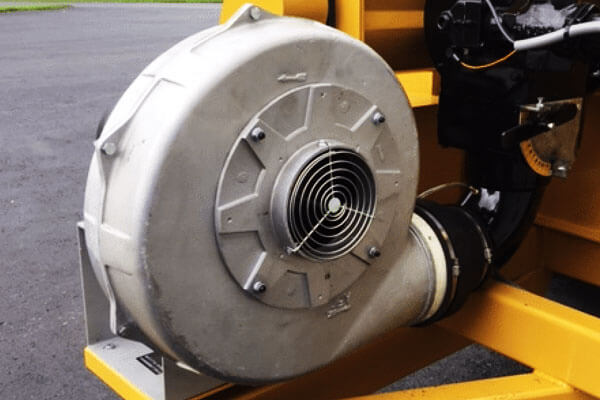
Centrifugal blower housings are among the most common applications for cast aluminum.
Their characteristic geometry typically includes a circular or scroll-shaped flow chamber surrounding the impeller.
As the impeller rotates, air enters axially and is discharged radially. The housing collects this flow and converts part of the velocity into static pressure while directing the air toward the outlet.
A well-designed centrifugal housing must maintain appropriate clearance around the impeller and provide a smooth internal flow path.
Local discontinuities, abrupt cross-sectional changes, or excessive surface irregularities can increase turbulence and pressure losses.
Volute Blower Housings
A volute housing uses an expanding spiral passage around the impeller. The cross-sectional area generally increases progressively around the volute to accommodate the increasing quantity of collected air.
This geometry is particularly well suited to casting because the curved three-dimensional shape can be produced as an integrated component rather than fabricated from multiple bent and welded sections.
Volute geometry is highly application-specific. The required profile depends on impeller diameter, blade configuration, rotational speed, хуткасць патоку, pressure ratio, and operating point.
Backward-Curved and Forward-Curved Blower Housings
Different impeller configurations can require different housing geometries.
Backward-curved impellers are commonly associated with efficient operation and relatively stable pressure characteristics, прамежак часу forward-curved impellers can provide high airflow within compact packages.
The housing must be designed to complement the selected impeller rather than treated as an independent component.
Compact Integrated Blower Housings
For compact equipment, the blower housing may integrate several functions into one casting.
Мантажныя ножкі, motor interfaces, cable or sensor provisions, арматурныя рэбры, and duct connections can be incorporated directly into the casting.
This approach can reduce assembly complexity and create a more compact overall product.
Custom Industrial Blower Housings
Industrial applications often require housings designed around specific operating conditions rather than standardized dimensions.
A custom housing may incorporate unusual mounting patterns, specialized discharge orientations, oversized inspection openings, reinforced sections, or interfaces for sensors and control equipment.
4. Aluminum Alloys for Blower Housing Casting
For cast blower housings, Al-Si casting alloys are particularly attractive because silicon improves fluidity and casting performance while helping manufacturers reproduce curved passages, рэбра, начальнікі, and relatively thin wall sections.
| Алюмініевы сплаў | Advantages for Blower Housings | Typical Considerations |
| A356 / A356.0 | Добрая ліцейнасць, Механічная сіла, Каразія супраціву, і апрацоўваемасць; suitable for structural blower housings | Heat treatment can be applied when higher strength and dimensional stability are required |
| A357 / A357.0 | Higher strength and fatigue performance than many general-purpose casting alloys; suitable for heavily loaded housings | Requires tighter casting and heat-treatment process control and generally has a higher material cost |
| 319 / 319.0 | Добрая ліцейнасць, апрацоўка, моц, і мерную стабільнасць; suitable for complex industrial housings | Copper content provides useful strength but can reduce corrosion resistance compared with some Al-Si-Mg alloys |
380 / 380.0 |
Выдатная цякучасць, Добрая апрацоўка, good dimensional stability, and economical production; widely used for complex castings | Well suited to high-volume production, but its mechanical and corrosion performance may be lower than specialized heat-treatable alloys |
| ADC12 | Excellent die-castability, цякучасць, dimensional accuracy, Якасць паверхні, і апрацоўваемасць; highly suitable for thin-wall and complex blower housings | Primarily used for die casting; heat-treatment capability and mechanical performance are more limited than A356/A357 |
| Alsi10mg | Good balance of castability, моц, Каразія супраціву, апрацоўка, and dimensional performance | Suitable where mechanical performance and structural integrity are more important than minimum casting cost |
5. Casting Processes for Aluminum Blower Housings
The casting process has a major influence on the dimensional accuracy, Якасць паверхні, Структурная цэласнасць, геаметрычная свабода, кошт інструмента, and production economics of a cast aluminum blower housing.
Пясчанае ліццё
Пясчанае ліццё is one of the most versatile methods for manufacturing aluminum blower housings, particularly when the housing is relatively large, геаметрычна складаны, or produced in low to medium quantities.
A sand mold is produced around a pattern representing the external geometry of the housing.
Cores can be introduced where necessary to create internal cavities, air passages, mounting recesses, and other features that cannot be formed directly by the mold cavity.
Molten aluminum is then poured into the mold, allowed to solidify, and removed after cooling.
The primary advantage of sand casting is гнуткасць канструкцыі. Tooling costs are relatively low, pattern modifications are comparatively straightforward, and the process accommodates a broad range of aluminum alloys and housing sizes.
This makes it particularly suitable for customized industrial blower housings, прататыпы, replacement parts, and products with relatively low annual demand.
The principal trade-off is that the casting generally requires more post-processing than permanent-mold or die-cast components.
The mold’s granular surface also produces a comparatively rough as-cast finish, while dimensional variation is influenced by pattern accuracy, Падрыхтоўка цвілі, ўсаджвацца, і паводзіны зацвярдзення.
Тыповыя прыкладанні ўключаюць:
- Large industrial blower housings
- Low-volume and customized housings
- Prototype and development components
- Housings with complex internal passages
- Heavy-duty equipment requiring flexible casting design
Пастаянная цвіль
Пастаяннае ліццё ў форму, also known as gravity die casting, uses a reusable metal mold, commonly manufactured from steel or cast iron.
Molten aluminum enters the cavity primarily under gravity, and the mold is opened after solidification to remove the casting.

Compared with sand casting, the rigid metal mold provides better control of the external geometry and generally produces a smoother surface and more consistent dimensions.
The reusable tooling also enables shorter cycle times and improved repeatability for medium-volume production.
Permanent mold casting is particularly effective when the blower housing has a relatively stable design and its geometry can be released from the metal mold without excessive undercuts or complex core requirements.
Its main limitation is the higher initial tooling investment and reduced flexibility for major design changes.
Такім чынам, it is generally more attractive when production volume is sufficient to distribute tooling costs across a larger number of parts.
Тыповыя прыкладанні ўключаюць:
- Medium-volume blower housings
- Repeated OEM production
- Housings requiring improved surface quality
- Moderately complex aluminum housings
- Components requiring better dimensional consistency than sand casting
Памерці кастынг
Ліццё пад высокім ціскам (HPDC) forces molten aluminum into a precision steel die at high velocity and pressure.
Rapid filling and solidification enable the production of complex, thin-walled components with high repeatability and excellent surface quality.
For compact blower housings, die casting can integrate multiple features—including мантажныя бобы, рэбра, фланцы, screw bosses, and connection features—into a single component.
This reduces the number of secondary operations and can significantly improve production efficiency at high volumes.
Die casting is especially well suited to alloys such as ADC12 and other die-casting aluminum alloys that provide good fluidity and mold-filling performance.
Аднак, the process requires substantial tooling investment. Gas porosity can also become a concern because air may be entrapped during high-speed filling.
This is particularly important when the housing requires pressure tightness or extensive machining.
Process design, vacuum assistance, overflow systems, gating optimization, and appropriate machining allowances may therefore be necessary.
Тыповыя прыкладанні ўключаюць:
- High-volume blower housings
- Compact and lightweight housings
- Thin-wall designs
- HVAC and electronics cooling equipment
- Automotive and industrial air-moving components
Ліццё пад нізкім ціскам
Low-pressure casting (LPDC) fills a metal mold by applying controlled pressure to the molten aluminum rather than relying exclusively on gravity.
The relatively gentle and controlled filling pattern can improve metal-flow stability and reduce turbulence compared with conventional high-pressure filling.
This process is particularly attractive when the housing requires a combination of Складаная геаметрыя, Структурная цэласнасць, кансістэнцыя памераў, and reduced porosity.
Low-pressure casting can also be advantageous for components requiring pressure tightness because the controlled filling and solidification conditions can help reduce certain internal defects when the process is properly engineered.
Compared with HPDC, аднак, LPDC generally has lower production rates and requires specialized equipment and tooling.
It therefore occupies an intermediate position between conventional gravity casting and high-pressure die casting in terms of production economics and casting performance.
Тыповыя прыкладанні ўключаюць:
- High-integrity blower housings
- Pressure-sensitive air-handling components
- Аўтамабільныя і транспартныя кампаненты
- Complex structural housings
- Сярэдні- да масавай вытворчасці
Інвестыцыйнае ліццё
Інвестыцыйнае ліццё, or lost-wax casting, uses expendable wax patterns and ceramic shells to reproduce highly complex geometries.
Пасля воск здымаюць, molten aluminum is introduced into the ceramic mold.
The major advantage is its ability to reproduce intricate geometry, дробныя дэталі, тонкія зрэзы, and complex transitions with relatively little parting-line limitation.
This can be valuable for specialized blower housings where conventional mold construction would require numerous cores or separate components.
Investment casting can also reduce the amount of material that must be removed during subsequent machining because the casting can approach the final geometry more closely.
Its disadvantages are primarily economic. Выраб выкрайкі, ceramic shell preparation, выгаранне, and casting operations are more labor-intensive and generally more expensive than conventional sand or die casting.
It is therefore most appropriate when geometric complexity or dimensional requirements justify the additional cost.
Тыповыя прыкладанні ўключаюць:
- Small to medium precision blower housings
- Highly complex flow geometries
- Specialized industrial equipment
- Prototype and low-volume components
- Housings requiring near-net-shape production
6. From Casting to Finished Blower Housing
Producing a high-quality cast aluminum blower housing is not simply a matter of pouring molten aluminum into a mold.
The final component is the result of a controlled manufacturing chain that integrates engineering design, casting process selection, інструмента, melting and pouring, тэрмічная апрацоўка, апрацоўванне, фініш, і інспекцыя.
Дызайн і інжынірынг
The manufacturing process begins with a review of the blower housing’s 3D CAD model, Тэхнічныя чарцяжы, Умовы працы, і функцыянальныя патрабаванні.
Engineers evaluate the housing’s internal flow passage, Таўшчыня сцяны, mounting structure, flange interfaces, арматурныя рэбры, начальнікі, and other critical features.
The design is then optimized for Design for Manufacturability (DFM).
Appropriate draft angles, uniform wall sections, філе, прыпускі на апрацоўку, and transitions between thick and thin areas help reduce casting defects and simplify downstream machining.
For complex housings, casting simulation can be used to evaluate molten-metal filling, solidification, ўсаджвацца, цеплавыя градыенты, and potential porosity before tooling is manufactured.
Simulation software such as ProCAST or equivalent systems can help engineers optimize the gating and feeding system and identify high-risk regions in advance.
Tooling and Pattern Production
Once the casting design has been finalized, tooling is manufactured according to the selected casting process.
На працягу пясчанае ліццё, patterns and core boxes are produced to define the external and internal geometry.
Cores may be required for enclosed flow passages or cavities that cannot be formed directly by the mold.
На працягу permanent mold and die casting, precision metal dies are manufactured, generally from suitable tool steels.
The die incorporates the cavity geometry, parting surfaces, литниковая сістэма, ejector features, and other elements required for repeatable production.
На працягу Інвестыцыйнае ліццё, wax injection tooling is produced to create disposable wax patterns with the required geometry.
Tooling accuracy is important because dimensional errors introduced at this stage can be transferred directly to every subsequent casting.
Mold Preparation and Casting Production
The actual casting process varies according to the selected technology, but the objective remains the same: fill the mold completely while minimizing turbulence, захоп газу, адукацыя аксіду, ўсаджвацца, and other casting defects.
In sand casting, the mold is assembled with the required cores and gating system before molten aluminum is introduced. In permanent mold casting, the reusable mold is cleaned and preheated before pouring.
For high-pressure die casting, the metal is injected rapidly into the die under controlled pressure, while low-pressure casting uses controlled gas pressure to introduce the aluminum into the mold.
Падчас вытворчасці, important parameters such as metal temperature, тэмпература формы, паводзіны напаўнення, ціск, час цыкла, and cooling conditions must remain within the established process window.
Consistent process control is essential for maintaining casting quality from one production batch to another.
Fettling and Casting Cleaning
Пасля застывання, the blower housing is removed from the mold and undergoes fettling and cleaning.
Вароты, бегуны, стаякі, and excess metal are removed using sawing, рэзка, драба, or other appropriate methods. Flash and parting-line material are also removed where necessary.
The casting surface may then be cleaned using shot blasting, кувырканне, or other mechanical cleaning methods.
Internal passages require particular attention because residual sand, core material, аксід, or loose particles can interfere with blower assembly or contaminate the operating airflow.
На дадзеным этапе, the casting is visually inspected for obvious defects such as cracks, misruns, cold shuts, excessive porosity, уключэнні, і няроўнасці паверхні.
Тэрмічная апрацоўка
Heat treatment depends on the selected aluminum alloy and the required mechanical properties.
For heat-treatable alloys such as A356 and A357, a controlled heat-treatment cycle can substantially improve strength, цяжкасць, fatigue performance, і мерную стабільнасць.
A typical T6-type treatment consists of solution treatment, хуткае астуджэнне, and artificial aging. During solution treatment, alloying elements are brought into solid solution.
Quenching retains the desired supersaturated structure, while artificial aging promotes controlled precipitation that increases mechanical strength.
Апрацоўка з ЧПУ
After casting and, дзе патрабуецца, тэрмічная апрацоўка, critical surfaces are machined to their final dimensions.
CNC milling is commonly used to produce accurate мантажныя грані, flange surfaces, and reference planes. Drilling creates precision mounting and fastening holes, while tapping produces threaded interfaces.
Boring can be used for bearing-related bores and other cylindrical features requiring controlled diameter and alignment. Reaming may be applied where tighter hole tolerances are required.
The machining strategy should be based on the established datum structure of the housing.
This ensures that critical features maintain the correct positional relationship rather than simply achieving their individual dimensional tolerances.
For complex blower housings, multi-axis CNC machining can reduce the number of setups and improve the positional accuracy of interconnected features.
Surface Treatment and Final Finishing
Пасля механічнай апрацоўкі, the housing may receive a protective or decorative surface treatment depending on its operating environment.
Агульныя варыянты ўключаюць парашковае пакрыццё, карціна, Анадыраванне, and chemical conversion coating.
Before coating, the surface must be properly cleaned and prepared to ensure adequate adhesion and consistent coverage.
Where sealing or precision assembly surfaces are involved, masking may be required to prevent coating buildup from changing critical dimensions.
Final Inspection and Release
The final stage verifies that the finished blower housing conforms to the engineering specification.
Inspection may include:
- Dimensional measurement using CMMs or precision gauges
- Bore diameter and positional inspection
- Flatness and perpendicularity checks
- Surface roughness measurement
- Visual examination
- Material and heat-treatment verification
- Casting defect inspection where required
- Coating thickness and adhesion testing
Для важных кампанентаў, X-ray or other non-destructive testing methods may be incorporated to evaluate internal casting integrity.
The finished housing is released only after its casting quality, mechanical condition, dimensional accuracy, апрацоўка паверхні, and functional interfaces have been verified.
7. CNC Machining and Precision Features
Апрацоўка з ЧПУ is essential for achieving the tight tolerances and precise features required for blower housing performance.
Critical Machined Features
Bearing bores require precise diameters and roundness to ensure proper bearing fit and alignment. The blower wheel must run true to avoid vibration and noise. Звычайна, bearing bores are machined to tolerances of ±0.01-0.02 mm.
Mounting surfaces such as motor mounting faces, foot mounting surfaces, and flange faces require flatness and parallelism to ensure proper assembly and alignment. Typical flatness requirements are 0.05-0.1 мм.
Dowel pin holes are used for accurate location during assembly. These holes are typically reamed to tolerances of ±0.01-0.02 mm.
Адтуліны з разьбой are required for fasteners. Tapping ensures accurate thread form and position.
Герметызацыя паверхняў such as O-ring grooves and gasket surfaces require a smooth surface finish (Ra ≤1,6 мкм) to ensure leak-tight seals.
Machining Sequence
The typical machining sequence for a blower housing begins with rough machining to remove the majority of the material.
This is followed by finish machining of critical features to achieve the required tolerances and surface finish. На заканчэнне, tapping and threading operations are performed to complete the housing.
8. Surface Finishing and Corrosion Protection
Апрацоўка паверхні Параметры
Як-адліты surfaces are left as-cast from the foundry. This is the lowest-cost option and is suitable for hidden applications, прамысловых асяроддзях, and non-corrosive applications.
Стрэл выбух cleans the surface and prepares it for subsequent finishing. Shot blasting with steel or ceramic media removes sand residue and oxide scale, improves surface cleanliness, and creates a uniform matte finish.
Anodizing creates a hard, corrosion-resistant oxide layer. Sulfuric acid anodizing (Тып II) вырабляе а 5-25 µm coating with a hardness of 250-400 Hv, offering good corrosion resistance and aesthetic finish.
Hard anodizing (Тып III) вырабляе а 25-75 µm coating with a hardness of 600-800 Hv, забяспечваючы выдатную ўстойлівасць да карозіі, насіць супраціў, і цвёрдасць.
Парашковае пакрыццё provides a thick, моцны, and decorative organic coating.
Electrostatic spray application is followed by oven curing, producing a 60-120 µm coating with excellent corrosion resistance. Powder coating is suitable for outdoor, з'едлівы, and washdown applications.
Painting provides a relatively low-cost coating. Spray application is followed by drying or curing, producing a 20-50 µm coating. Painting is suitable for indoor, low-cost applications.
Electrophoretic coating provides a thin, uniform organic coating. Immersion in a paint bath with DC current produces a 10-25 µm coating with excellent corrosion resistance and high gloss.
9. Applications of Custom Cast Aluminum Blower Housings
Custom cast aluminum blower housings are widely used in equipment requiring lightweight construction, complex airflow geometry, калянасць канструкцыі, і ўстойлівасць да карозіі.
HVAC and Ventilation Systems
Typical applications include centrifugal fans, air-handling units, commercial ventilation equipment, industrial exhaust systems, and specialized air-moving systems.
Industrial Blowers and Process Equipment
Custom blower housings are used in dust collection systems, drying equipment, pneumatic conveying systems, packaging machinery, and other industrial process equipment requiring continuous airflow.
Automotive and Electric Vehicle Systems
Typical applications include HVAC blowers, battery cooling systems, electric motor cooling units, power electronics cooling, and auxiliary air-management equipment.
Energy and Power Equipment
Cast aluminum blower housings are used in generator cooling systems, energy storage equipment, fuel-cell systems, electrical cabinets, and other thermal-management applications.
Electronics and Thermal Management
Typical applications include power electronics cooling, communication equipment, industrial control systems, equipment enclosures, and compact thermal-management assemblies.
Медыцынскае і лабараторнае абсталяванне
Applications include ventilation equipment, laboratory air systems, filtration units, vacuum equipment, and other specialized devices requiring compact and reliable airflow management.
Agricultural and Construction Machinery
Cast aluminum blower housings can be used in engine air systems, cab ventilation, equipment cooling, dust-control systems, and auxiliary airflow equipment operating under demanding environmental conditions.
Marine and Specialized Equipment
Typical applications include marine ventilation, machinery cooling, onboard air-handling systems, and custom-engineered blower equipment designed for corrosive or space-constrained environments.
10. Літы алюміній супраць. Fabricated Steel Blower Housings
| Крытэрый | Літы алюміній | Fabricated Steel |
| Вага | Святло (2.7 G/CM³) | Цяжкая (7.85 G/CM³) |
| Ўстойлівасць да карозіі | Выдатны (self-protecting) | Бедны (requires painting/coating) |
| Гнуткасць дызайну | Вельмі высокі (складаныя формы) | Умераны (fabrication limitations) |
| Assembly requirements | Мінімальны (інтэгральныя асаблівасці) | Высокі (вінжаванне, fastening) |
| Аздабленне паверхні | Добры (як; can be improved) | Умераны (requires finishing) |
| Aerodynamic performance | Выдатны (smooth internal surfaces) | Добры (welds and seams) |
| Каштаваць (нізкая гучнасць) | Высокі (інструмента) | Нізкі (фабрыкацыя) |
| Каштаваць (medium volume) | Умераны | Высокі (labour) |
| Каштаваць (высокая гучнасць) | Нізкі (ліццё) | Вельмі высокі (labour) |
| Час выканання (інструмента) | 6-12 тыдзень | 1-2 тыдзень |
| Зварачнасць | Добры (з клопатам) | Выдатны |
| Перапрацоўка | 100% | 100% |
| Тыповыя прыкладанні | Высокапрадукцыйны, demanding, medium-high volume | Нізкі аб'ём, простыя формы, адчувальны да выдаткаў |
11. Custom Cast Aluminum Blower Housing from DEZE Foundry
Ліцейны завод DEZE provides custom manufacturing solutions for aluminum blower housings designed around specific application requirements.
Rather than limiting production to standardized geometries, the manufacturing approach can combine casting process selection, DFM optimization, дакладная апрацоўка, апрацоўка паверхні, and quality inspection to produce application-specific components.
| Capability Category | Падрабязная інфармацыя |
| Materials | A356-T6, A380, ADC12, A413, 319; custom alloys available upon request |
| Працэсы ліцця | Пясчанае ліццё, пастаянная цвіль, памерці кастынг, ліццё пад нізкім ціскам, Інвестыцыйнае ліццё |
| Part Weight | 0.1 кг да 100 кг |
| Maximum Dimensions | Да 1,000 дыяметр мм; custom sizes available |
| Допускі на памеры | CT5–CT7 per ISO 8062 (±0.1–0.3 mm typical) |
| Забяспечанасць якасцю | ISO 9001:2015 сертыфікаваны; 100% мерная інспекцыя; Смм; surface profilometer; Выпрабаванне ціску; Ndt (Рэнтгенаў прамень, фарбавальнік пенетрант) |
| Час вядзення | Інструмента: 6– 12 тыдняў; First articles: 8–14 weeks; Repeat orders: 2– 4 тыдні |
| Мінімальная колькасць замовы | No fixed MOQ; prototypes and low-volume production available |
12. Conclusion
А cast aluminum blower housing is more than a protective enclosure around a fan or impeller.
It is a functional engineering component that influences airflow, structural stability, вага, цеплааддача, паводзіны вібрацыі, герметызацыя, and overall equipment reliability.
Aluminum casting is particularly valuable because it combines relatively low density with good corrosion resistance, цеплаправоднасць, and the ability to produce complex three-dimensional geometries.
By selecting the appropriate alloy and casting method, manufacturers can create housings ranging from lightweight HVAC components to structurally demanding industrial assemblies.
For custom applications, the most effective approach is to evaluate the complete requirement—from airflow and operating loads to casting process, допускі на апрацоўку, аздабленне паверхні, агляд, і аб'ём вытворчасці.
This ensures that the final housing is not only castable, but also fit for its intended service environment.
FAQ
What is a cast aluminum blower housing?
A cast aluminum blower housing is a housing produced by pouring or injecting molten aluminum alloy into a mold to form the enclosure around a blower or impeller.
The casting can integrate airflow passages, мантажныя бобы, рэбра, фланцы, and other functional features into a single component.
How can aluminum blower housings be protected against corrosion?
Depending on the service environment, protection can include powder coating, liquid painting, conversion coating, anodizing where suitable, or other engineered surface treatments.
Proper cleaning and pretreatment are essential for long-term coating adhesion and corrosion resistance.
Can complex internal airflow passages be cast directly?
Так. Casting can produce complex internal and external geometries that would be difficult to fabricate from sheet metal.
Depending on the design and casting process, cores or specialized tooling may be used to form enclosed passages and complex cavities.
Are cast aluminum blower housings corrosion resistant?
Aluminum naturally forms a protective oxide layer that provides useful atmospheric corrosion resistance.
For more demanding environments, additional protection can be provided through powder coating, Анадыраванне, карціна, or chemical conversion coatings.