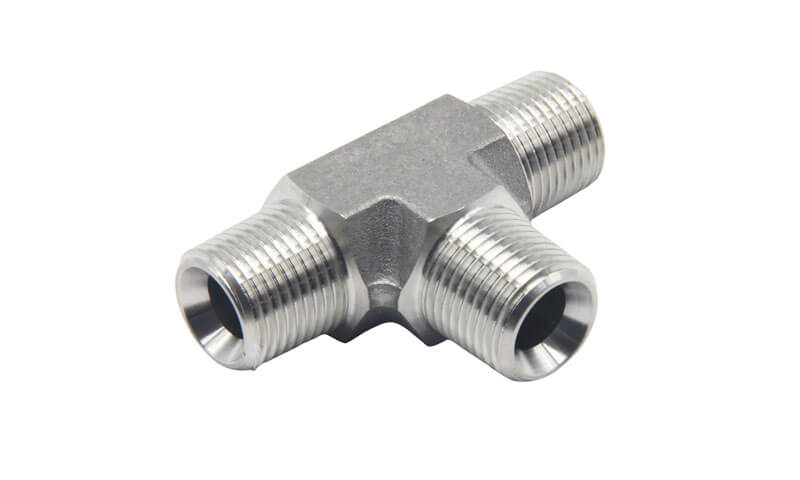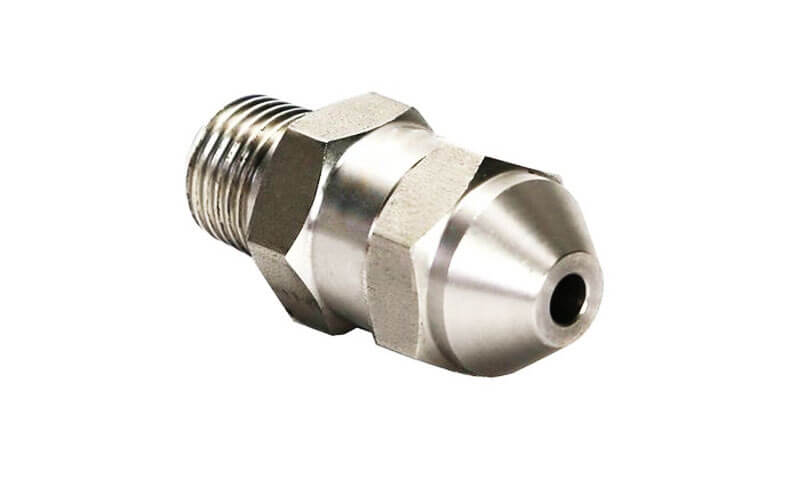
Spuitspuitpunte is kritieke vloeistofbeheerkomponente wat wyd in industriële stelsels gebruik word om vloeistofverspreiding te reguleer, atomisering, verkoeling, skoonmaak, smeer, laag, en chemiese verwerking.
Although a nozzle may appear to be a simple component, sy interne geometrie, opening akkuraatheid, oppervlakafwerking, and material selection directly influence spray efficiency, energieverbruik, prosesstabiliteit, en toerusting betroubaarheid.
CNC-bewerking bied ongeëwenaarde presisie, materiaal buigsaamheid, en ontwerpvryheid vir pasgemaakte spuitpunte.
Anders as giet of giet, which require expensive tooling and are limited to certain geometries, CNC machining can produce complex internal flow channels, stywe toleransie openinge, and intricate spray patterns with exceptional accuracy and repeatability.
This article provides a comprehensive guide to custom spray nozzles manufactured through CNC machining.
Ons sal die tipes spuitpunte ondersoek, the advantages of CNC machining over alternative manufacturing methods, die stap-vir-stap vervaardigingsproses, materiaal seleksie, prestasie faktore, kwaliteit standaarde, industriële toepassings, and a comparative analysis with investment casting.
1. Wat is spuitpunte?
Definition and Working Principle of Spray Nozzles
N spuitkop is a precision fluid-control device designed to convert liquid pressure into a controlled spray pattern.
By forcing liquid through a specially designed opening or internal flow passage, die mondstuk beheer hoe die vloeistof uitkom, die bepaling van kritiese eienskappe soos:
- Vloeitempo
- Spuithoek
- Druppelgrootte
- Spuitverspreiding
- Atomiseringsdoeltreffendheid
- Vloeistofsnelheid
The fundamental operating principle is based on the conversion of pressure energy into kinetic energy.
Wanneer vloeistof onder druk die spuitstuk binnedring, the internal geometry accelerates and redirects the fluid flow.
Afhangende van die spuitkopontwerp, the output can range from a concentrated jet stream to a fine mist containing extremely small droplets.
Byvoorbeeld:
- N hoëdruk skoonmaakspuitstuk fokus vloeibare energie in 'n smal, hoë snelheid stroom.
- N verkoeling mondstuk produces a controlled spray pattern to maximize heat transfer.
- An verstuiver mondstuk breek vloeistof in fyn druppels vir verbranding, laag, of bevogtigingsprosesse.
The performance of a spray nozzle depends not only on the external shape but also on the precision of internal features such as flow channels, wervelkamers, en opening afmetings.

Hoofprestasieparameters van spuitpunte
Different industrial processes require different spray characteristics. Dus, spray nozzle design is usually evaluated according to several key parameters.
| Prestasie parameter | Beskrywing | Ingenieurswese Belangrikheid |
| Vloeitempo | Die volume vloeistof wat per tydseenheid vrygestel word, gewoonlik gemeet in L/min of m³/h. | Bepaal materiaalverbruik, verkoeling kapasiteit, en prosesdoeltreffendheid. |
| Spuitpatroon | Die vorm en verspreiding van die vrygestelde vloeistof, soos keël, waaier, of stroompatrone. | Verseker eenvormige dekking en geoptimaliseerde prosesresultate. |
| Druppelgrootte | Die gemiddelde grootteverspreiding van vloeistofdruppels wat deur die mondstuk gegenereer word. | Beïnvloed verdampingstempo, laag kwaliteit, en hitte-oordragdoeltreffendheid. |
| Spuithoek | Die hoek wat deur die spuitkegel of waaierpatroon gevorm word. | Determines coverage area and installation arrangement. |
Drukgradering |
The maximum operating pressure the nozzle can withstand. | Verseker veilige werking onder veeleisende toestande. |
| Temperatuurweerstand | Vermoë om prestasie onder verhoogde temperature te handhaaf. | Noodsaaklik vir metallurgie, chemiese verwerking, en termiese stelsels. |
| Materiaalversoenbaarheid | Weerstand teen korrosie, erosie, en chemiese aanval. | Bepaal dienslewe in moeilike omgewings. |
2. Hoekom kies CNC-bewerking spuitpunte?
Unlike traditional manufacturing processes that rely on molds, skei, of massaproduksie gereedskap, CNC machining directly removes material from a metal or plastic workpiece through computer-controlled cutting operations.
Dit stel vervaardigers in staat om hoogs akkurate mondstukkomponente met pasgemaakte interne kanale te vervaardig, mikro-openings, en gespesialiseerde vloeistrukture.
Vir nywerhede soos lugvaart, chemiese verwerking, halfgeleier vervaardiging, motorbedekking, mediese toerusting, en presisie skoonmaakstelsels, spuitstukprestasie is hoogs afhanklik van dimensionele akkuraatheid en oppervlakkwaliteit.
Selfs klein afwykings in deursnee van die opening, interne deurgang meetkunde, of oppervlakruwheid kan spuithoek aansienlik beïnvloed, druppelgrootte verspreiding, vloeitempo, en atomiseringsdoeltreffendheid.
Key Advantages of CNC Machining for Spray Nozzles
| Voordeel | Verduideliking |
| Uitsonderlike akkuraatheid | Bereik toleransies van ±0.005 mm, krities vir spuitpatroon en vloeitempobeheer. |
| Uitstekende oppervlakafwerking | Ra 0,4–1,6 µm verseker laminêre vloei, verminderde turbulensie, en konsekwente atomisering. |
| Materiële veelsydigheid | Masjiene alle metale (vlekvrye staal, brons, aluminium, titaan, superlegerings) en ingenieursplastiek. |
| Ontwerp buigsaamheid | Vinnige ontwerp-iterasies; geen gereedskapbeperkings nie; komplekse interne geometrieë moontlik. |
Klein opening vermoë |
Produseer openinge so klein soos 0.1 mm met hoë akkuraatheid. |
| Lae volume kostedoeltreffendheid | Geen belegging in gereedskap nie; ekonomies vir klein tot medium groepe. |
| Vinnige prototipering | Ontwerp-om-te-deel in dae, vinnige produkontwikkeling moontlik maak. |
| Naspeurbaarheid | Full material and process documentation for critical applications. |
3. CNC-bewerkingsproses vir pasgemaakte spuitpunte
Die vervaardiging van pasgemaakte spuitpunte vereis 'n hoogs beheerde bewerkingsproses omdat spuitpuntprestasie direk deur dimensionele akkuraatheid beïnvloed word, interne meetkunde, oppervlakafwerking, en materiaal eienskappe.
Anders as algemene meganiese komponente, spray nozzles contain critical features such as precision orifices, interne vloei kanale, drade, en seëloppervlakke, where even small deviations can affect spray angle, vloei konsekwentheid, atomisering kwaliteit, en bedryfsdoeltreffendheid.
A professional CNC machining process integrates engineering design, presisiebewerking, oppervlakbehandeling, prestasietoetsing, en kwaliteit-inspeksie om te verseker dat elke spuitstuk aan die vereiste toepassingspesifikasies voldoen.

Complete Manufacturing Workflow of CNC Machined Spray Nozzles
Die CNC -bewerking proses begin tipies met kliëntvereiste-analise en gaan voort deur ontwerpoptimalisering, presisiebewerking, afwerking, en funksionele toetsing.
| Verhoog | Prosesstap | Doel | Sleutelbeheerfaktore |
| Ingenieursontwerp | Kliënt spesifikasie analise | Definieer spuitpuntvereistes, vloeitempo ingesluit, drukgradering, spuitpatroon, Bedryfstemperatuur, chemiese omgewing, Materiële seleksie, en tipe verbinding. | Akkurate vereiste insameling en tegniese kommunikasie. |
| CAD-modellering | Ontwikkel 'n 3D-spuitkopmodel gebaseer op toepassingsvereistes en optimaliseer die struktuur vir vervaardiging. | Ontwerp vir vervaardigbaarheid (DFM), vloei pad optimalisering, bewerking toeganklikheid. | |
| CAM-programmering | Genereer CNC-bewerkingsprogramme en optimaliseer snypaaie. | Gereedskapbaan akkuraatheid, bewerking doeltreffendheid, oppervlak kwaliteit. | |
Materiaal Voorbereiding |
Grondstofkeuse en voorbereiding | Kies geskikte materiale in die vorm van stawe, stokke, plate, of knuppels volgens prestasievereistes. | Materiaal graad verifikasie, Dimensionele akkuraatheid, materiaal sertifikate. |
| Presisie bewerking | CNC draai | Vervaardig silindriese kenmerke soos spuitpuntliggame, eksterne diameters, drade, en konsentriese openinge. | Deursnee akkuraatheid, konsentrisiteit, oppervlak ruwheid. |
| CNC Milling | Produseer nie-silindriese kenmerke, monteeroppervlaktes, groewe, gleuwe, en komplekse eksterne geometrieë. | Posisie akkuraatheid, dimensionele toleransie, oppervlakafwerking. | |
| Presisie boor en mikro-bewerking | Skep klein spuitgate en gespesialiseerde interne gange. | Gat deursnee, rondheid, belyning, en vloei konsekwentheid. | |
| Ruim en afwerking bewerking | Verbeter die akkuraatheid en oppervlakkwaliteit van kritieke gate en vloeigange. | Geometrie van die opening, gladheid, Dimensionele stabiliteit. | |
Na-verwerking |
Ontbraam en skoonmaak | Verwyder bewerkingsbrame en kontaminante wat vloeistofvloei kan beïnvloed. | Rand kwaliteit, netheid, voorkoming van blokkasie. |
| Oppervlakbehandeling | Dien polering toe, passivering, elektropolering, plee, of coating volgens toepassingsvereistes. | Korrosieweerstand, oppervlak ruwheid, verskyning. | |
| Toets en inspeksie | Dimensionele inspeksie | Verifieer kritieke afmetings met behulp van presisie-meettoerusting. | CMM inspeksie, optiese meting, meter inspeksie. |
| Vloei- en spuittoetsing | Bevestig werklike spuitpuntwerkverrigting onder bedryfstoestande. | Vloeitempo, spuitpatroon, drukval, atomisering prestasie. | |
| Finale verwerking | Verpakking en aflewering | Beskerm presisie-gemasjineerde spuitpunte tydens vervoer. | Skadevoorkoming en naspeurbaarheid. |
Hoof CNC-bewerkingsoperasies vir spuitspuitpunte
Gepasmaakte spuitpunte vereis gewoonlik veelvuldige bewerkingsoperasies omdat hul strukture rotasie-eienskappe kombineer, presisie gate, en komplekse vloeikanale.
| Bewerking | Toerusting | Tipiese vermoë | Algemene toepassings |
| CNC draai | CNC draaibank, multi-as draai sentrum | Deursnee bereik ongeveer 0,5–200 mm; dimensionele toleransie tot ±0.005 mm, afhangende van ontwerpvereistes. | Spuitstuk liggaam bewerking, silindriese oppervlaktes, drade, flense, verseël areas, en konsentriese openinge. |
| CNC Milling | 3-spil, 4-spil, of 5-as bewerkingsentrums | Hoë posisionele akkuraatheid met komplekse kontoerbewerkingsvermoë. | Sypoorte, monteer kenmerke, gleuwe, onreëlmatige vorms, en multi-rigting vloei kanale. |
Mikro-boor |
Presisie boor masjiene, laser boor, of EDM-toerusting | Mikrogate ongeveer 0,05–1,0 mm, afhangend van materiaal en proses; hoë aspekverhouding bewerking moontlik. | Fyn spuitgate, verkoelingskanale, atomiserende openinge, en presisie vloeistofuitlate. |
| Room | Presisie ruim gereedskap | Verbeter gatrondheid en dimensionele akkuraatheid. | Finale grootte van kritieke spuitopenings wat stabiele vloeiprestasie vereis. |
| Draadbewerking | CNC-ryggereedskap, krane, draadmeulens | Geskik vir metrieke, Npt, BSP, en pasgemaakte draadstandaarde. | Pypverbindings, monteer koppelvlakke, en vervangbare spuitpuntsamestellings. |
Kritiese faktore wat CNC-bewerkingskwaliteit beïnvloed
Alhoewel CNC-bewerking uitstekende akkuraatheid bied, spuitspuitvervaardiging bied verskeie tegniese uitdagings as gevolg van klein afmetings, streng vloeivereistes, en moeilik bewerkbare materiale.
| Tegniese uitdaging | Potensiële impak op spuitstukprestasie | Beheermaatreëls |
| Gereedskap defleksie | Veroorsaak afwyking in deursnee van die opening, swak konsentrisiteit, en onstabiele spuitpatrone. | Gebruik rigiede gereedskapstelsels, verminder gereedskapoorhang, en optimaliseer snyparameters. |
| Werk verharding van vlekvrye staal | Verhoog sny moeilikheid, versnel gereedskapslytasie, en verminder die kwaliteit van die oppervlak. | Gebruik skerp karbiedgereedskap, toepaslike snyspoed, en effektiewe verkoelingstelsels. |
| Chip beheer | Skyfies kan klein gaatjies of interne kanale binnedring, vloeistofvloei beïnvloed en blokkasie veroorsaak. | Pas spaanderbrekers toe, geoptimaliseerde gereedskappaaie, en hoëdruk verkoelingstelsels. |
Termiese vervorming |
Hitte wat tydens bewerking gegenereer word, kan dimensionele akkuraatheid beïnvloed, veral vir dunwandige komponente. | Beheer bewerkingstemperatuur, stabiliseer masjien toestande, en optimaliseer koelmiddelvloei. |
| Braamvorming | Brame binne of rondom spuitopeninge kan vloeistofvloei versteur en spuiteienskappe verander. | Pas presiese ontbraming toe, ultrasoniese skoonmaak, of elektropoleerprosesse. |
| Oppervlakbesoedeling | Oorblywende deeltjies of bewerkingsvloeistowwe kan netheid in presisietoepassings beïnvloed. | Implementeer skoonmaakprosedures en beheerde verpakking. |
Precision Control in Internal Flow Channel Machining
Die interne struktuur van 'n spuitkop speel 'n deurslaggewende rol in vloeistofgedrag.
Byvoorbeeld, wervelspuitpunte maak staat op presies gemasjineerde interne kamers om rotasievloei te genereer, terwyl atomiseringsspuitpunte noukeurig beheerde openingsgeometrie vereis om konsekwente druppelgroottes te produseer.
Tydens CNC-bewerking, vervaardigers moet verskeie kritieke parameters beheer:
- Die deursnee en geometrie van die opening: Bepaal vloeitempo en spuitverspreiding.
- Konsentrisiteit tussen inlaat en uitlaat: Verseker eenvormige vloeistofafvoer.
- Interne oppervlak grofheid: Verminder turbulensie en drukverlies.
- Kanaal afmetings: Beheer snelheid, meng doeltreffendheid, en atomiseringsprestasie.
Vir hoëprestasie toepassings, bykomende prosesse soos presisie slyp, elektropolering, of vloeikalibrasie kan toegepas word om spuitpuntbetroubaarheid verder te verbeter.
4. Materiaal wat gebruik word vir CNC-gemasjineerde spuitpunte
Materiaalkeuse is een van die mees kritieke besluite in die vervaardiging van pasgemaakte spuitpunte omdat spuitpunte dikwels onder veeleisende toestande werk., insluitend hoë druk, hoë temperatuur, skuur media, en korrosiewe chemikalieë.
Die gekose materiaal moet 'n gepaste balans van korrosieweerstand bied, meganiese krag, dra weerstand, termiese stabiliteit, en bewerkbaarheid.
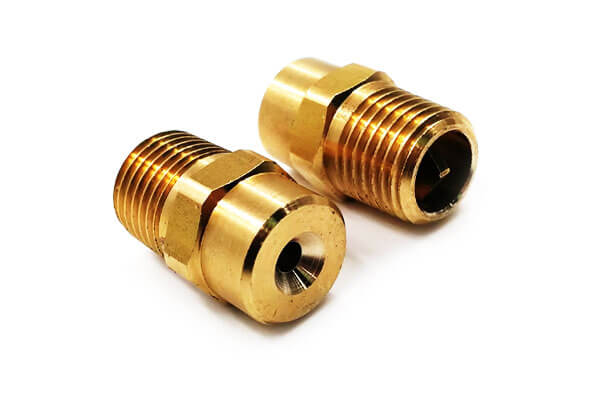
CNC-bewerking bied uitstekende materiaal buigsaamheid, wat vervaardigers toelaat om spuitpunte van 'n wye reeks metale en ingenieursplastiek te vervaardig.
Die finale materiaalkeuse hang hoofsaaklik af van die werksomgewing, vloeistof eienskappe, Bedryfstemperatuur, druk vereistes, en verwagte dienslewe.
Common Metal Materials for CNC Machined Spray Nozzles
| Materiaal | Sleuteleienskappe | Tipiese toepassings |
| Vlekvrye staal (304/316/316L) | Uitstekende korrosieweerstand, Goeie meganiese krag, higiëniese oppervlak eienskappe, en verenigbaarheid met baie chemikalieë. 316L bied verbeterde weerstand teen chloried en suur omgewings. | Chemiese bespuiting, voedselverwerking, farmaseutiese toerusting, waterbehandeling, skoonmaak stelsels. |
| Brons | Uitstekende bewegbaarheid, goeie slytasieweerstand, stabiele dimensionele akkuraatheid, en relatief lae koste. | Algemene industriële bespuiting, verkoelingstelsels, smeer spuitpunte, landbou-toepassings. |
| Aluminiumlegerings (6061, 7075, ens.) | Liggewig, Goeie bewerkbaarheid, hoë sterkte-tot-gewig verhouding, en geskik vir anodisering van oppervlakbeskerming. | Lugvaartkomponente, liggewig spuittoerusting, draagbare stelsels. |
| Koperlegerings / Brons | Uitstekende termiese geleidingsvermoë, korrosieweerstand, en weerstand teen sekere chemiese omgewings. | Koelspuitpunte, hitte-oordragstelsels, gespesialiseerde industriële toerusting. |
Titaan legerings (TI-6Al-4V) |
Uitstekende sterkte-tot-gewig verhouding, Uitstekende korrosieweerstand, en hoë-temperatuur vermoë. | Lugvaart spuitstelsels, mariene omgewings, chemiese verwerkingstoerusting. |
| Nikkel-gebaseerde legerings (Inklok, Hastelloy) | Uitsonderlike weerstand teen oksidasie, hoë temperature, en aggressiewe chemikalieë. | Oond bespuiting, Chemiese reaktore, uiterste temperatuur toepassings. |
| Gereedskapstaal / Geharde staal | Hoë hardheid, Uitstekende slytasie weerstand, en geskik vir skuurvloeistofomgewings. | Skuur spuitpunte, hoë-slytasie industriële spuitstelsels. |
Ingenieursplastiek vir spesiale toepassings
Alhoewel metaalmateriale industriële spuitpuntvervaardiging oorheers, CNC-bewerking laat ook die vervaardiging van plastiekspuitpunte toe vir toepassings wat chemiese weerstand vereis, elektriese isolasie, of liggewig strukture.
| Materiaal | Kenmerke | Aansoeke |
| Ptfe (Teflon) | Uitstekende chemiese weerstand, lae wrywing, en 'n wye temperatuurreeks. | Hoogs korrosiewe chemiese spuitstelsels. |
| Pek | Hoë krag, uitstekende temperatuurweerstand, en chemiese stabiliteit. | Halfgeleier toerusting, lugvaartstelsels, presisie chemiese toepassings. |
| Pom (Asetaal) | Goeie dimensionele stabiliteit, lae wrywing, en maklike bewerking. | Laedruk vloeistofstelsels en algemene industriële toepassings. |
| Nylon | Liggewig, impakbestand, en ekonomies. | Landbouspuittoerusting en verbruikerstoedienings. |
5. Types of Spray Nozzles Manufactured by CNC Machining
CNC-bewerking stel vervaardigers in staat om 'n wye verskeidenheid pasgemaakte spuitmiddels te vervaardig mondstuk ontwerpe.
Anders as standaard gevormde of massa-vervaardigde spuitpunte, CNC-gemasjineerde spuitpunte kan geoptimaliseer word vir spesifieke vloei-eienskappe, spuitpatrone, druk toestande, en installasievereistes.
Die belangrikste tipes spuitpunte sluit in:
| Tipe mondstuk | Bedryfsbeginsel | Hoofkenmerke | Tipiese toepassings |
| Plat waaier spuit spuitpunte | Vloeistof gaan deur 'n langwerpige opening uit om 'n waaiervormige spuitpatroon te skep. | Eenvormige dekking, beheerde spuitwydte, doeltreffende oppervlakbedekking. | Bedekkingstelsels, skoonmaak toerusting, landboubespuiting. |
| Volkegel spuitpunte | Interne wervelkamer produseer 'n sirkelvormige spuitpatroon met druppels versprei oor die hele keëlarea. | Hoë vloeivermoë en uitstekende bedekking. | Verkoelingstelsels, stof onderdrukking, chemiese bespuiting. |
| Holkegelspuitpunte | Genereer 'n ringvormige spuitpatroon met druppels wat naby die buitenste streek gekonsentreer is. | Uitstekende atomisering en fyn druppels. | Lugbevochtiging, gas verkoeling, besoedeling beheer. |
Atomiserende spuitpunte |
Gebruik druk, lug, of ultrasoniese energie om vloeistof in fyn druppels te breek. | Produseer baie klein druppelgroottes en presiese spuitbeheer. | Brandstofstelsels, industriële deklaag, verbrandingstoerusting. |
| Luglose spuitpunte | Hoëdrukvloeistofvloei skep atomisering sonder eksterne lug. | Hoë doeltreffendheid en verminderde oorbespuiting. | Skildery, beskermende bedekkings, oppervlakbehandeling. |
| Misspuitpunte | Produseer uiters fyn waterdruppels deur klein presisie openinge. | Lae waterverbruik en effektiewe verkoeling. | Kweekhuise, bevogtiging, verkoelingstelsels. |
Straal spuitpunte |
Produseer 'n gekonsentreerde hoëspoedvloeistofstroom. | Hoë impakkrag en rigtingbespuiting. | Reiniging, snyhulp, industriële wasgoed. |
| Swirl spuitpunte | Interne kanale genereer rotasievloeistofbeweging voor ontslag. | Verbeterde atomisering en eenvormige spuitverspreiding. | Verbrandingstelsels, verkoeling, chemiese prosesse. |
| Multi-gat spuitpunte | Veelvuldige presisie openinge verskaf verskeie spuitstrome. | Pasgemaakte vloeiverspreiding en dekking. | Halfgeleier skoonmaak, presisie vervaardiging. |
6. Sleutelfaktore wat spuitspuitprestasie beïnvloed
| Faktor | Impak op prestasie | Ontwerpoorweging |
| Grootte van die opening | Bepaal vloeitempo en druppelgrootte. | Presisie bewerking tot ±0.005 mm. |
| Die vorm van die opening | Beïnvloed spuitpatroon en atomisering. | Skerp of radius; pasgemaakte ontwerp. |
| Interne vloeipad | Beïnvloed turbulensie en drukval. | Gladde oppervlaktes; geoptimaliseerde meetkunde. |
| Oppervlakafwerking | Beïnvloed vloeiweerstand en atomisering. | Ra ≤0.8 µm vir kritieke oppervlaktes. |
| Druk | Bepaal vloeitempo en druppelgrootte. | Ontwerp vir spesifieke drukreeks. |
Vloeistof viskositeit |
Beïnvloed vloeitempo en atomisering. | Oorweeg vloeistof eienskappe in ontwerp. |
| Vloeistof temperatuur | Beïnvloed viskositeit en materiaalversoenbaarheid. | Kies toepaslike materiaal en ontwerp. |
| Materiaalversoenbaarheid | Beïnvloed korrosiebestandheid en lewensduur. | Kies toepaslike legering of laag. |
| Verbinding tipe | Beïnvloed installasie en verseëling. | Npt, BSP, geflens, of pasgemaak. |
7. CNC-bewerkingstoleransies en kwaliteitstandaarde vir spuitpunte
Omdat spuitpunte vloeistofgedrag direk beheer, vervaardigingspresisie is meer veeleisend as baie konvensionele meganiese komponente.
Streng dimensionele beheer verseker stabiele spuitpatrone, akkurate vloeitempo's, en konsekwente prestasie.
Tipiese CNC-bewerkingstoleransies
| Kenmerk | Tipiese presisievereiste |
| Eksterne afmetings | ±0.01 mm tot ±0.05 mm afhangende van komponentgrootte |
| Presisie opening deursnee | ±0.005 mm of hoër presisie vir kritieke toepassings |
| Gatposisie akkuraatheid | ±0,01 mm |
| Draad akkuraatheid | Volgens ISO, Npt, BSP, of pasgemaakte standaarde |
| Oppervlak ruwheid | Ra 0,4–1,6 μm vir presisievloeioppervlaktes |
| Konsentrisiteit | Tipies binne 0,005–0,01 mm |
Werklike toleransies hang af van die spuitstukgrootte, materiaal, bewerkingsproses, en aansoekvereistes.
Kwaliteit Inspeksie Metodes
Professionele CNC-spuitpuntvervaardigers pas verskeie inspeksiemetodes toe om produkbetroubaarheid te verseker.
| Inspeksie metode | Doel |
| Koördinaat meetmasjien (CMM) | Meet dimensionele akkuraatheid, posisie toleransie, en meetkundige kenmerke. |
| Optiese meting | Inspekteer mikrogate, kante, en komplekse klein kenmerke. |
| Oppervlakgrofheidstoetsing | Verifieer interne en eksterne oppervlakafwerking. |
| Draad inspeksie | Verseker akkurate verbinding en seëlwerkverrigting. |
| Druktoetsing | Bevestig strukturele integriteit en lekkasieweerstand. |
| Vloeitoetsing | Bekragtig werklike vloeitempo, spuithoek, en drukprestasie. |
8. Toepassings van pasgemaakte CNC-bewerking spuitspuitpunte
Pasgemaakte CNC-bewerkte spuitpunte word wyd gebruik in nywerhede waar presiese vloeistofbeheer, konsekwente spuitverspreiding, en langtermynbetroubaarheid is noodsaaklik.
In vergelyking met standaard kommersiële spuitpunte, pasgemaakte CNC-spuitpunte kan volgens spesifieke bedryfstoestande ontwerp word, insluitend druk, temperatuur, vloeistof eienskappe, installasie vereistes, en spuitprestasieteikens.

Industriële skoonmaak en oppervlakbehandeling
Industriële skoonmaakstelsels benodig spuitpunte wat in staat is om stabiele spuitbedekking en voldoende impakkrag te lewer.
CNC-gemasjineerde spuitpunte word algemeen gebruik in hoëdruk skoonmaaktoerusting, komponent wasstelsels, en oppervlakvoorbereidingsprosesse.
Tipiese toepassings sluit in:
- Skoonmaak van motoronderdele;
- Presisie komponent was;
- Voorbereiding van die metaaloppervlak;
- Industriële toerusting skoonmaak;
- Skoonmaak van halfgeleierwafels.
Chemiese verwerking en industriële vervaardiging
CNC gemasjineerde spuitpunte vervaardig van materiale soos 316 vlekvrye staal, titanium legerings, of Hastelloy bied uitstekende weerstand teen korrosie en chemiese aanval.
Algemene toepassings sluit in:
- Chemiese spuitstelsels;
- Reaktor verkoeling;
- Gas skrop toerusting;
- Neutralisasiestelsels;
- Verwerk vloeistofverspreiding.
Motor- en vervoerbedryf
In motorvervaardiging, spuitpunte is noodsaaklike komponente in coating, verkoeling, smeer, en skoonmaakprosesse.
Hoë-presisie CNC spuitpunte word gebruik in:
- Motorverfstelsels;
- Enjin verkoelingstelsels;
- Smeertoerusting;
- Voorruitwasserstelsels;
- Batteryverkoelingstelsels vir elektriese voertuie.
Lugvaart- en Verdedigingstoepassings
Lugvaartstelsels benodig uiters betroubare komponente wat onder streng werkverrigtingvereistes kan funksioneer.
CNC-bewerkte spuitpunte word gebruik in:
- Brandstofinspuitingstelsels;
- Enjin verkoelingstelsels;
- Hidrouliese spuitstelsels;
- Toerusting vir termiese bestuur.
Voedsel, Farmaseutiese, en Mediese Nywerhede
Nywerhede wat voedsel en mediese produkte behels, vereis streng higiënestandaarde en kontaminasiebeheer.
CNC-gemasjineerde vlekvrye staal spuitpunte het 'n wye reeks toepassings, insluit:
- Koswasstelsels;
- Spuit sterilisasie toerusting;
- Farmaseutiese deklaagstelsels;
- Skoonmaak-in-plek (CIP) sis sismer.
Halfgeleier- en elektronika-vervaardiging
Halfgeleiervervaardiging vereis uiters presiese vloeistofbeheer omdat kontaminasie en dimensionele variasie produkkwaliteit kan beïnvloed.
CNC-bewerkte mikro-spuitpunte word gebruik vir:
- Wafer skoonmaak;
- Chemiese reseptering;
- Presisie verkoeling;
- Ultra-skoon spuitstelsels.
Landbou en Omgewingstoepassings
Pasgemaakte spuitpunte speel ook 'n belangrike rol in landbou- en omgewingstelsels.
Aansoeke sluit in:
- Landbou plaagdoder bespuiting;
- Besproeiingstelsels;
- Stof onderdrukking;
- Lugbevochtiging;
- Koeltorings.
9. Prestasievergelyking: CNC gemasjineerde vs. Lost-Wax gietspuitpunte
Spuitspuitpunte kan deur verskeie metaalbewerkingsprosesse vervaardig word, waaronder CNC -bewerking en verlore-was gieting (Beleggingsgooi) is twee algemeen gebruikte oplossings vir industriële toepassings.
Albei prosesse is in staat om spuitpuntkomponente van hoë gehalte te produseer, maar hulle het verskillende voordele na gelang van ontwerpkompleksiteit, produksievolume, materiële vereistes, en prestasieverwagtinge.
| Prestasiefaktor | CNC-gemasjineerde spuitpunte | Lost-Wax Giet Spuitspuitpunte |
| Vervaardigingsbeginsel | Materiaal word presies uit metaalvoorraad verwyder deur te draai, maalwerk, boor, en afrondingsbewerkings | Gesmelte metaal word in 'n keramiekvorm gegooi wat uit 'n waspatroon vervaardig word |
| Dimensionele akkuraatheid | Uiters hoë akkuraatheid, tipies ±0.005 mm vir kritieke kenmerke | Oor die algemeen CT4-CT7 giet toleransie reeks afhangende van grootte en legering |
| Oppervlakafwerking | Uitstekende oppervlak kwaliteit; Ra 0,4–1,6 μm haalbaar na presisie bewerking en polering | Goeie as-cast afwerking; vereis tipies sekondêre bewerking vir die verseëling van oppervlaktes en presisiegate |
| Orifice presisie | Uitstekende vermoë vir klein en komplekse spuitopeninge, insluitend mikro-openings hieronder 0.5 mm | Geskik vir groter gange; mikrogate vereis gewoonlik nabewerking |
| Interne vloeikanaal akkuraatheid | Uitstekende beheer van interne meetkunde deur boor, ruim, EDM, en multi-as bewerking | Komplekse interne gedeeltes moontlik, maar dimensionele beheer is meer uitdagend |
Ontwerp buigsaamheid |
Hoë buigsaamheid; vinnige wysiging sonder gereedskapveranderings | Vereis waspatroon- en vormwysigings vir ontwerpveranderings |
| Komplekse meetkunde vermoë | Beste vir presiese kenmerke, Dun mure, en gemasjineerde interne strukture | Uitstekend vir byna-net-vorm komplekse eksterne geometrieë |
| Materiële opsies | Geskik vir vlekvrye staal, brons, aluminium, titaan, Nikkellegerings, en ingenieursplastiek | Breë legeringsversoenbaarheid, veral vlekvrye staal, hittebestande legerings, en korrosiebestande materiale |
| Produksie volume geskiktheid | Ideaal vir prototipes, pasgemaakte onderdele, en lae-tot-medium bondelproduksie | Meer ekonomies vir medium-tot-hoë volume produksie |
| Lei tyd | Kort ontwikkelingsiklus; onderdele kan dikwels vinnig vervaardig word na goedkeuring | Langer aanvanklike voorbereiding as gevolg van gereedskap en vormproduksie |
Gereedskap belegging |
Geen toegewyde gereedskap benodig nie | Vereis wasgereedskap en keramiekvormvoorbereiding |
| Koste doeltreffendheid | Meer ekonomies vir klein hoeveelhede en hoogs pasgemaakte ontwerpe | Laer eenheidskoste vir grootvolume produksie |
| Dimensionele konsekwentheid tussen groepe | Uitstekend as gevolg van CNC-program herhaalbaarheid | Goed na proses stabilisering, maar beïnvloed deur beslissende veranderlikes |
| Na-verwerking vereistes | Gewoonlik minimaal behalwe oppervlakbehandeling of afwerking | Vereis dikwels bewerking van kritieke afmetings, drade, en verseël areas |
Hibriede vervaardiging: Die kombinasie van giet en CNC-bewerking
In baie veeleisende toepassings, die optimale oplossing is nie om te kies tussen giet en bewerking nie, maar om beide tegnologieë te kombineer.
'n Algemene hibriede proses sluit in:
- Beleggingsgooi om die byna-net-vorm mondstuk liggaam te produseer.
- CNC -bewerking om kritieke funksionele areas af te handel.
- Presisie boor of EDM om akkurate spuitopenings te produseer.
- Oppervlakbehandeling om weerstand teen korrosie of slytasie te verbeter.
Hierdie benadering kombineer die geometriese buigsaamheid en materiaaldoeltreffendheid van gietwerk met die akkuraatheid van CNC-bewerking.
Byvoorbeeld, 'n industriële spuitspuit van vlekvrye staal kan beleggingsgiet word om 'n komplekse buitenste behuising te skep, terwyl CNC-bewerking op die inlaatdrade toegepas word, verseëlde gesigte, en spuitopeninge waar dimensionele akkuraatheid werkverrigting direk beïnvloed.
10. Pasgemaakte spuitspuitoplossings van DEZE CNC Machining
DEZE CNC Machining spesialiseer in presies-gemasjineerde pasgemaakte spuitpunte vir veeleisende industriële toepassings.
Kontak ons na pasgemaakte spuitpunte!
| Vermoë | Besonderheid |
| Materiaal | Vlekvrye staal (304, 316, 316L, 17--4ph), brons, brons, aluminium, titaan, Hastelloy, Inklok, Pek, Ptfe. |
| Bewerking | CNC draai (enkel- en multi-spil); 3-, 4-, en 5-as CNC frees; mikro-boor (0.05 mm+). |
| Verdraagsaamheid | ±0,005 mm (kritieke kenmerke); ±0,01 mm (algemeen). |
| Oppervlakafwerking | Soos gemasjineer (Ra 0,4–1,6 µm); gepoleer; elektropoleer; geanodiseer; geplateer; bedek. |
| Kwaliteit | ISO 9001:2015 gesertifiseer; 100% inspeksie. |
| Lei tyd | Prototipes: 3-7 dae; Produksie: 1– 3 weke. |
| Pasmaak | Pasgemaakte opening grootte, spuitpatroon, tipe verbinding, materiaal, oppervlakafwerking. |
11. Konklusie
Pasgemaakte spuitpunte is 'n onvermydelike neiging namate industriële prosesse meer gespesialiseerd word en prestasievereistes strenger word.
CNC -bewerking, met sy kombinasie van mikronvlak-presisie, breë materiaalaanpasbaarheid en gereedskapvrye buigsame produksie, het homself gevestig as die optimale vervaardigingsoplossing vir lae-tot-medium volume pasgemaakte spuitpunte.
Professionele vervaardigers van CNC-bewerkingsspuitpunte doen meer as om net metaal te sny - hulle integreer vloeistofdinamika-ingenieurswese, materiaalwetenskap kundigheid en streng prestasievalidering om volledige toepassingspesifieke oplossings te lewer.
Aangesien industriële opgradering steeds verwagtinge vir doeltreffendheid en betroubaarheid van die spuitstelsel verhoog, CNC pasgemaakte spuitpunte sal standaard katalogusprodukte in 'n groeiende reeks nistoepassings verplaas, word 'n bemagtigende tegnologie vir gevorderde presisievloeistofstelsels.
Vrae
Kan CNC-bewerking mikro-spuitpunte produseer?
Ja. CNC presisie bewerking, mikro-boor, EDM, en gespesialiseerde afwerkingstegnologieë kan baie klein spuitopeninge produseer vir toepassings wat fyn atomisering of presiese vloeistofbeheer vereis.
Wat is die tipiese toleransie vir 'n CNC-gemasjineerde spuitkop?
±0.005 mm vir kritieke kenmerke soos openingsdeursnee en rondheid. Algemene toleransies is ±0,01–0,02 mm.
Watter materiaal is die beste vir hoëkorrosietoepassings?
Vlekvrye staal 316L, Hastelloy, of titanium word aanbeveel vir hoë-korrosie-omgewings. Vir uiterste suurweerstand, Allooi 20 of Hastelloy C-276 mag vereis word.
Hoe spesifiseer ek 'n pasgemaakte spuitkop?
Verskaf die vereiste vloeitempo, druk, spuitpatroon (vol keël, hol keël, plat waaier, ens.), druppelgrootte, vloeistof eienskappe, materiaal, tipe verbinding, en enige spesiale vereistes. 'n CAD-tekening of -skets is nuttig.
Wat is die tipiese aanlooptyd vir pasgemaakte CNC-gemasjineerde spuitpunte?
Prototipes: 3-7 dae; Produksie: 1– 3 weke, afhangende van kompleksiteit en hoeveelheid.
What surface finishes are available for CNC‑machined spray nozzles?
Soos gemasjineer (Ra 0,4–1,6 µm), gepoleer, elektropoleer, geanodiseer, geplateer (nikkel, chroom, silwer), en bedek (Ptfe, PVD).