
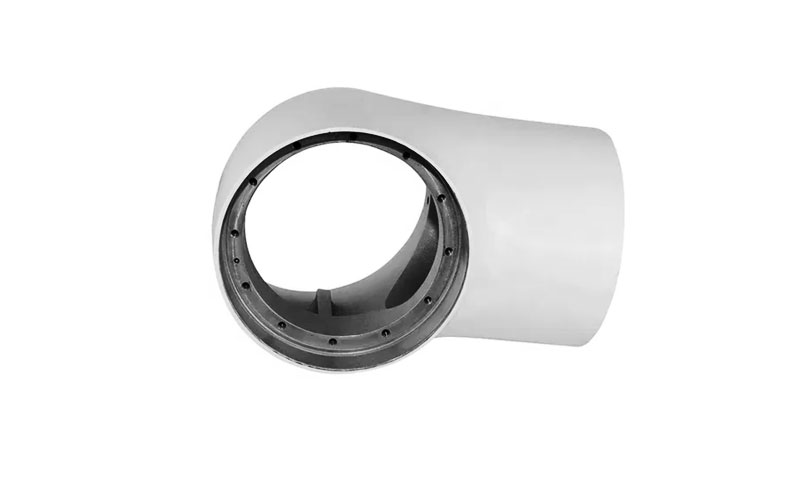
随着人形机器人从研究实验室转向工业, 商业的, 以及最终的家庭应用, 轻量化的需求, high-performance structural components is creating new opportunities for the die casting industry.
Magnesium and aluminum alloys are two important material options for these applications. Both offer good castability, relatively low density, and the potential to produce complex, integrated components.
然而, they do not perform identically, and neither material is suitable for every robotic subsystem.
A common mistake in material selection is to assume that all cast components in a humanoid robot share the same priorities: 重量低, 高刚度, 足够的力量, and low manufacturing cost.
实践, requirements vary significantly according to component location and function.
A thin-walled forearm housing has different design priorities from a load-bearing hip joint housing or a structural component near the robot’s base.
This guide examines the differences between magnesium and aluminum alloys for robotics castings, explains how requirements vary across humanoid robot subsystems, and discusses how die casting engineers can develop cost-effective manufacturing solutions for these emerging applications.
1. The Segmentation Principle: Different Parts, Different Requirements
The first step in any robot casting project is to segment the robot by function. The table below summarizes the broad pattern I have observed across projects.
| Robot Zone | Primary Requirement | Typical Wall Thickness | Process Preference |
| Forearm, wrist, end effector | Minimum mass, 高刚度 | Thin wall, 1.5–2.5 毫米 | HPDC, thin-wall capable |
| Upper arm, 肩膀 | 刚性, moderate mass | 2–3 mm with ribs | HPDC, 半固体 |
| Torso, hip | 刚性, load transmission | 3–5毫米 | HPDC, 半固体 |
| Base, lower body | 稳定, low center of gravity | 厚的部分, 5–10 毫米 | Semi-solid, 重力 |
| Joint housings | 穿, 散热 | 3–6毫米 | HPDC with inserts |
| Visible exterior panels | 美学, 结束 | 1.5–3毫米 | HPDC, polished/anodized |
2. Magnesium vs Aluminum Alloys: Fundamental Material Differences
Magnesium and aluminum are both attractive for lightweight die castings, but their physical and mechanical characteristics lead to different design opportunities.
Magnesium alloys offer a lower density, making them particularly attractive for moving components where reducing mass also reduces rotational inertia.
They also provide good vibration-damping characteristics and can be cast into relatively complex thin-walled geometries.
Aluminum alloys generally provide higher elastic modulus, better structural stiffness at the same geometry, and good thermal conductivity.
They also offer a broad range of established casting alloys, 表面处理, and machining solutions.
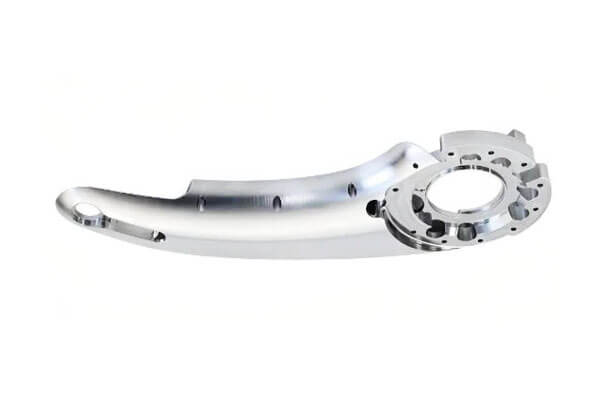
Key Property Comparison
The following table provides representative engineering ranges. Actual values depend on alloy grade, 铸造过程, component thickness, 热处理, and test conditions.
They should not replace the material certificate or component-level design data.
| 财产 | 镁合金 | 铝合金 | Relevance to robotics |
| 密度 | Approximately 1.74–1.85 g/cm³ | Approximately 2.65–2.80 g/cm³ | Magnesium can reduce component mass by roughly 30% compared with aluminum at equal volume. |
| 弹性模量 | 大约 45 GPA | Approximately 69–72 GPa | Aluminum provides greater stiffness at the same geometry. |
| Specific stiffness (E/ρ) | Approximately 24–26 GPa/(g/cm³) | Approximately 25–27 GPa/(g/cm³) | The stiffness advantage of aluminum is smaller when normalized by density. |
| 导热率 | Approximately 50–100 W/(m·k), 合金依赖性 | Approximately 90–220 W/(m·k), 合金依赖性 | Aluminum is generally more suitable for heat-spreading structures. |
| Vibration damping | 通常更高 | 通常较低 | Magnesium can help reduce vibration transmission in moving assemblies. |
| 腐蚀行为 | Requires careful alloy and surface protection | Generally more established corrosion-protection options | Surface treatment and environmental exposure must be considered. |
可铸性 |
非常适合薄壁, lightweight components with suitable process control | 非常适合复杂的情况, integrated components; 合金依赖性 | Both can support complex die-cast geometries. |
| 可加工性 | 通常很好, but chip and fire-safety controls are essential | 通常很好, with extensive industrial experience | Both support precision machining of bearing seats and interfaces. |
| 表面饰面 | Requires process-specific pretreatment and protection | Broad range of established finishing options | Important for exposed robot housings and exterior panels. |
一个重要的区别: Magnesium’s lower density does not automatically make a magnesium casting lighter in its final structural application.
Because magnesium has a lower elastic modulus, engineers may need thicker walls, deeper ribs, or additional reinforcement to achieve the required stiffness.
The final weight advantage must therefore be assessed after structural optimization, not from density alone.
3. 轻量级设计: Why Magnesium Is Attractive for Moving Robot Components
In humanoid robots, reducing the weight of moving components is particularly important because their mass directly affects actuator loads and energy consumption.
When a robot extends its arm, the farther the component is from the shoulder joint, the greater its contribution to rotational inertia.
因此, the forearm’s weight creates a much greater burden than its mass alone might suggest.
The shoulder and elbow actuators must support not only the arm’s own weight but also the additional forces generated during acceleration, deceleration, and payload handling.
Reducing the mass of the arm structure can therefore lower actuator requirements, improve movement efficiency, or increase the robot’s available payload capacity.
This is where magnesium alloys and thin-wall die castingbecome attractive. Magnesium’s low density helps reduce component mass, while high-pressure die casting (HPDC) can produce complex housings with thin walls, 集成肋骨, and mounting features.
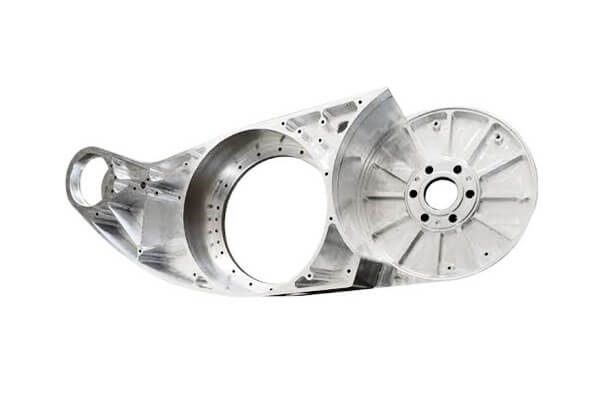
Practical Considerations for Thin-Wall HPDC
Thin-wall design must balance weight reduction with casting feasibility and structural performance:
- Filling limitations:Wall thickness below 1.5 mm can be difficult to fill reliably, particularly when the molten metal must travel a long distance through the die cavity.
- Structural stiffness:Reducing wall thickness also reduces stiffness. Reinforcing ribs and topology optimization are essential to control deformation.
- 快速冷却:Thin sections cool quickly, increasing the risk of cold shuts, 不完整的填充, and poor surface quality if process parameters are not properly controlled.
- Ejection and handling:Thin-wall castings are more susceptible to deformation during ejection and subsequent handling, requiring carefully designed ejector layouts and support fixtures.
For many robotic arm castings, a wall thickness of approximately 1.5–2.5 mmcan serve as an initial design reference, subject to alloy, 几何学, flow length, and die-casting capability.
A properly engineered rib pattern is equally important.
A flat thin wall may be lightweight but lack sufficient rigidity; a rib-reinforced thin wall can provide a much better balance between mass and structural stiffness.
4. The Base Is Different: Stability Over Lightweighting
Unlike moving components such as robotic arms, castings near the robot’s base prioritize stability over weight reduction.
Appropriate mass at the lower end of the structure helps lower the center of gravity, reduce the risk of tipping, and improve stability during walking, 转身, and other dynamic movements.
Excessive lightweighting in these areas may compromise the robot’s balance and vibration resistance.
最后, base components can use thicker walls and locally reinforced sections where structural loads require them.
Semi-solid rheocastingis a suitable option for such components, particularly when a single casting combines thick bosses, mounting areas, and thin connecting webs.
Key advantages of semi-solid rheocasting for robot base castings include:
- 较低的孔隙度:Its globular, non-dendritic microstructure and controlled metal flow can help reduce porosity compared with conventional HPDC.
- Better thickness adaptability:It accommodates transitions between thick and thin sections, supporting localized reinforcement without making the entire component unnecessarily heavy.
- Improved mechanical performance:Properly controlled processing can deliver favorable mechanical properties, including elongation and fatigue resistance.
- Reduced oxide entrapment:The less turbulent filling behavior helps limit oxide-film entrainment and improve casting integrity.
This combination of process characteristics is valuable for robot base structures, where designers often need thick load-bearing features alongside thinner sections to control overall mass and maintain structural stability.
5. Heat Dissipation Is a Structural Function
Humanoid robots contain numerous actuators, 电池, and AI processing units, all of which generate heat during operation.
High-load joints, particularly around the knees and hips, can experience substantial thermal loads.
Some robot designs incorporate heat pipes near the knee joints to provide targeted cooling for high-load actuators.
因此, a casting serves more than a structural purpose. Joint housings and supporting components may also function as part of the robot’s thermal management system.
Thermal conductivity therefore becomes an important material-selection criterion alongside strength, 刚性, 和伸长.
This requirement also creates new opportunities for casting alloy development.
Future alloys for robotics applications must balance mechanical performance, 导热率, and castability rather than focusing exclusively on strength and ductility.
Thermal Conductivity Comparison of Aluminum and Magnesium Alloys
| 合金 | 导热率 (w/m·k) | 关键特征 |
| A380 (铝硅铜) | ~96 | Common die-casting alloy |
| A360 (铝硅镁) | ~113 | Better corrosion resistance |
| A413 (al-si) | ~121 | 高热电导率, relatively lower strength |
| AM60 (毫克) | ~62 | Lower conductivity than aluminum alloys |
| AZ91 (毫克) | ~51 | Lower conductivity than aluminum alloys |
The comparison shows that these aluminum alloys generally offer higher thermal conductivity than the listed magnesium alloys.
This makes aluminum particularly suitable for joint housings and actuator enclosures that need to transfer heat away from motors and power electronics.
Magnesium remains attractive where reducing moving mass is the primary objective, but its lower thermal conductivity may require additional cooling measures in heat-intensive areas.
For components with demanding heat-dissipation requirements, aluminum is generally the more practical choice; magnesium is more suitable when weight reduction takes priority and the thermal design can accommodate its limitations.
6. Rigidity Matters More Than Ultimate Strength
One important distinction between humanoid robot castings and conventional automotive castings is the emphasis on structural rigidity rather than simply maximizing material strength.
Industry practitioners suggest that, for certain robotics components, once tensile strength reaches an application-specific minimum of approximately 200 MPA, further strength increases may offer less benefit than improving rigidity.
The actual strength requirement depends on the component’s loading conditions, 几何学, and safety factor.
Rigidity is largely determined by structural design. 加固肋骨, optimized load paths, generative design, and topology optimization can improve resistance to deformation without relying solely on higher-strength alloys.
A high-strength material in a poorly designed structure can still deflect excessively, while a moderate-strength alloy with an optimized geometry may provide sufficient stiffness and dimensional stability.
Die casting offers considerable design flexibility in this respect. Complex rib networks, variable wall thicknesses, and integrated mounting bosses can be incorporated into a single component, reducing the need for multiple parts and secondary assembly operations.
The key challenge is to ensure that the optimized geometry remains manufacturable and economically viable at the required production volume.
Key Design Considerations
- Design for casting from the outset:Avoid simply converting a machined component into a casting. 壁厚, 草稿角, 鱼片, and parting lines should be considered during initial design.
- Use ribs and gussets:Reinforce critical areas to improve stiffness while minimizing additional material.
- Apply topology optimization:Retain material along effective load paths and remove it from areas that contribute little to structural performance.
- Explore generative design:Develop alternative geometries that take advantage of die casting’s ability to produce complex integrated features.
- Validate with FEA:Evaluate deformation, 应力分布, and load-bearing performance through finite element analysis before finalizing the design and tooling.
For robotics projects, a capable die-casting supplier should contribute to material selection, casting-oriented design, and manufacturability assessment—not simply provide a quotation based on part weight.
7. Impact Resistance and Ductility: Designing for Unexpected Falls
For bipedal humanoid robots, structural rigidity alone is not enough. Unlike stationary equipment, these robots must maintain balance while walking, 转身, and handling objects, which means occasional falls and collisions are unavoidable design considerations.
A robot weighing 80–100 kgcan generate substantial impact loads when it strikes the ground, placing its cast components under loading conditions far beyond normal operation.
This makes elongation and impact toughnessessential material properties. A brittle casting may withstand routine operating loads but crack or fracture under sudden impact.
An elongation of only 0.5%is generally inadequate for components exposed to significant collision risks. The material must provide sufficient ductility to absorb impact energy and resist catastrophic failure.
Conventional die-casting alloys do not automatically meet these requirements.
AlSi9Cu3is widely used for aluminum die-cast components because of its good castability and strength, but its relatively limited elongation and toughness can restrict its use in impact-critical robot structures.
Alloy Considerations for Impact Resistance
| 合金 | Typical Elongation | 影响韧性 | Suitability for Robot Structures |
| alsi9cu3 | 1–3% | 缓和 | Limited for impact-critical components |
| A356-T6 | 5–10% | 好的 | Suitable where heat-treated properties are required |
| A360 | 3–5% | 好的 | Offers better ductility than conventional AlSi9Cu3 |
| AM60 (毫克) | 6–12% | 好的 | Good elongation, but lower stiffness |
| AZ91 (毫克) | 3–5% | 缓和 | Lower elongation than AM60 |
笔记: Elongation and impact performance vary with alloy composition, 铸造过程, 孔隙率, 热处理, 样本几何形状, and test conditions.
The values above are indicative comparisons, not guaranteed component properties.
For impact-critical applications, alloys with higher elongation and toughness are generally preferable.
热处理, such as T6 for suitable aluminum alloys, can improve mechanical performance.
然而, it also increases production cost and may cause distortion in thin-wall castings, making dimensional control an important consideration.
最终, humanoid robot castings require a carefully balanced combination of strength, 刚性, 延性, 冲击阻力, 和可铸性.
Material selection should reflect the component’s actual exposure to collision loads rather than relying solely on conventional die-casting specifications.
8. Magnesium Alloys for Robotics: 优点和局限性
镁合金 are particularly attractive when the main objective is to reduce the mass of moving structures.
Their density is substantially lower than that of aluminum, and their relatively high vibration-damping capacity can be useful in robotic mechanisms.
尽管如此, magnesium is not an automatic replacement for aluminum. Its lower elastic modulus, 腐蚀行为, surface-treatment requirements, and machining safety considerations must all be addressed.
Key Advantages of Magnesium Alloys
Lower density: Magnesium can reduce the mass of a component by approximately 30% compared with an aluminum casting of the same volume.
This can be valuable for forearms, wrists, 抓手, and other moving structures.
Good vibration damping: Magnesium alloys generally provide better vibration damping than aluminum alloys.
This can help reduce vibration transmission in certain moving assemblies, although the final result also depends on geometry, 关节, and system-level damping.
Thin-wall casting potential: Suitable magnesium die-casting alloys can produce complex, thin-walled components with integrated ribs, 老板, and mounting features.
良好的可加工性: Magnesium alloys can be machined efficiently. 然而, 加工参数, chip collection, coolant selection, and fire-prevention procedures require specific controls because fine magnesium chips and dust can ignite.
Limitations That Engineers Must Consider
较低的刚度: Magnesium’s elastic modulus is lower than aluminum’s. A magnesium component may need thicker walls or additional reinforcement to achieve the same deflection limit.
腐蚀保护: Magnesium alloys can be susceptible to galvanic corrosion when electrically coupled with dissimilar metals in the presence of an electrolyte.
紧固件, bearing interfaces, 涂料, and drainage design must be considered together.
表面饰面: Magnesium requires carefully controlled pretreatment and finishing. Not every coating system used for aluminum can be transferred directly to magnesium without process qualification.
Machining safety: Magnesium machining requires suitable chip management, housekeeping, fire-prevention measures, and equipment procedures.
Fine chips and dust present a greater fire hazard than ordinary bulk metal stock.
Material and process qualification: Alloy selection must consider the required casting process, component thickness, 机械性能, 腐蚀暴露, and applicable safety requirements.
When Magnesium Is Worth Considering
| Component or application | Potential benefit of magnesium | Main design concern |
| Forearm and wrist housings | Reduced moving mass and inertia | Stiffness and impact resistance |
| Lightweight actuator covers | Lower weight and vibration damping | Local mounting strength |
| Robotic grippers | Reduced end-effector mass | Repeated loading and wear at interfaces |
| Moving joint enclosures | Lower rotational inertia | Bearing-seat rigidity and fatigue |
| Lightweight electronic housings | Mass reduction and electromagnetic shielding potential | Thermal management and corrosion protection |
9. Aluminum Alloys for Robotics: 力量, 刚性, and Manufacturing Versatility
铝合金 remain highly practical for robotic castings because they combine moderate density with relatively high stiffness, 良好的导热率, and a mature manufacturing ecosystem.
They are suitable for a wide range of structural and functional components, including actuator housings, joint structures, motor enclosures, base components, 和电子外壳.
Key Advantages of Aluminum Alloys
Higher elastic modulus: Aluminum alloys have an elastic modulus of approximately 69–72 GPa, compared with roughly 45 GPa for common magnesium alloys.
This makes aluminum attractive where deformation control is critical.
良好的导热率: Many aluminum casting alloys provide effective heat transfer, which is valuable for motor, battery, and electronics housings.
Established die-casting technology: Aluminum high-pressure die casting is widely used for complex components and supports a broad range of production volumes, tooling configurations, and secondary operations.
Flexible surface finishing: Aluminum castings can undergo powder coating, 绘画, 转化涂层, anodizing where the alloy and casting quality permit, and other finishing processes.
Mature machining and joining options: Aluminum components can be CNC machined to achieve accurate bearing seats, 螺纹孔, 密封表面, and assembly interfaces.
Limitations of Aluminum Alloys
Aluminum is heavier than magnesium, which can increase the inertia of moving robotic components. This is particularly important for long arms and end-effectors.
Some high-pressure die-cast aluminum alloys also have limited elongation, especially when porosity, 氧化膜, or other casting defects are present.
Their suitability for impact-loaded structures must be verified through material testing and component validation.
Thermal conductivity also varies by alloy. An aluminum alloy selected for strength and castability may not provide the highest possible thermal conductivity.
Common Aluminum Alloy Options
The following are examples of aluminum alloys used in die-casting applications. Their suitability for robotics depends on the component’s mechanical, 热的, and manufacturing requirements.
| 合金 | General characteristics | Potential robotics applications |
| alsi9cu3 | 良好的铸造性, 力量, 和维稳定性; widely used in pressure die casting | 执行器外壳, 汽车外壳, structural enclosures |
| A380 | 流动性好, pressure tightness potential, and general-purpose die-casting performance | Complex housings, 电子外壳, mechanical structures |
| ADC12 | Good castability and production consistency in high-volume die casting | Compact housings, 封面, and integrated components |
| Alsi10mg | Good strength-to-weight potential; properties depend strongly on casting route and heat treatment | Structural components where mechanical performance is important |
| 铝硅12 | High silicon content and good castability, 特别是对于复杂的几何形状 | Thin-wall housings and intricate cast components |
10. Choosing the Right Casting Process: High-Pressure Die Casting vs Semi-Solid Casting
Material selection and casting-process selection should be developed together.
A suitable alloy can still produce an unsuitable component if the process cannot consistently achieve the required wall thickness, 机械性能, 维度的准确性, or internal quality.
高压铸造
高压铸造 (HPDC) is well suited to complex, thin-walled robotic housings and components requiring high production efficiency.
Its main advantages include:
- High production rates and repeatability.
- Complex geometry and integrated structural features.
- Good surface finish compared with many conventional casting processes.
- Thin-wall capability with suitable alloy and die design.
- Reduced machining and assembly through functional integration.
然而, high injection speeds can introduce gas entrapment and turbulence-related defects. These defects may limit the mechanical performance and heat-treatment options of some components.
For robotics castings, engineers should pay particular attention to vacuum control, gate and runner design, 排气, local solidification, and the location of critical machined surfaces.
Semi-Solid Die Casting: An Option for Components with Different Wall Thicknesses
Semi-solid casting processes, including rheocasting, use metal slurry containing a controlled solid fraction rather than fully liquid metal.
The material flows into the die under pressure while maintaining a semi-solid microstructure.
This process can be attractive for robotic components with both thin and thick sections, especially where improved filling behavior and reduced turbulence are required.
Potential advantages include:
- More controlled metal flow.
- Reduced turbulence and gas entrapment under suitable conditions.
- Improved potential for producing components with varying wall thicknesses.
- Opportunities to obtain better internal quality and mechanical consistency.
- Compatibility with complex geometries requiring both thin walls and locally reinforced sections.
For a robot arm housing, 例如, the main shell may be designed with relatively thin walls to reduce mass, while actuator mounting points and bearing supports require thicker sections.
Semi-solid casting may offer a useful process route for this combination.
然而, semi-solid casting is not automatically suitable for every component.
Slurry preparation, solid fraction, 温度控制, 填充物, and process repeatability require close control. Its economic advantage must also be evaluated against tooling, 设备, 周期, 和生产量.
11. 表面表面和外观
Unlike many automotive castings, which remain concealed within the vehicle structure, a significant number of humanoid robot castings are externally visible.
Their surface quality therefore affects not only corrosion protection but also the overall appearance and perceived quality of the finished robot.
Die-casting suppliers must pay particular attention to as-cast quality, 表面准备, and finishing consistency.
Visible defects such as flow marks, 冷关, 表面孔隙率, and uneven textures can make a component unacceptable even when it meets its mechanical requirements.
取决于设计, 射击, 阳极氧化, 粉末涂料, or polishing may be necessary to achieve the required appearance.
然而, the corrosion requirements for many indoor robots differ from those of automotive components exposed to road salt, 水分, and changing outdoor conditions.
Robots operating in factories, 仓库, and homes may place greater emphasis on appearance, surface cleanliness, and wear resistance than on extreme salt-spray performance.
The actual protection requirements should still reflect the robot’s operating environment.
Surface Finishing Options for Robot Castings
- As-cast surface: Requires consistent quality, with no unacceptable flow marks, 冷关, or visible porosity in appearance-critical areas.
- 射击: Creates a more uniform matte texture and removes surface contaminants and loose residues.
- 阳极氧化: Provides aluminum castings with a durable oxide layer and, depending on the alloy and process, a range of color options. Magnesium requires specialized surface-treatment processes.
- 粉末涂料: Offers a broad choice of colors, 均匀覆盖, and good surface durability.
- 抛光: Improves smoothness and visual quality for exposed components with premium appearance requirements.
Connection design also deserves attention. Unlike many automotive structures that use extensive adhesive bonding, humanoid robot assemblies commonly rely on bolts, 执行者, and mechanical interfaces.
Casting features such as flanges, 老板, and mating surfaces must therefore provide adequate bearing areas, 螺纹啮合, and dimensional accuracy to ensure reliable assembly.
最终, surface finishing and connection design should be considered during the casting design stage, rather than treated as secondary operations after production.
12. Why the Best Robotics Casting Solution Starts with the Subsystem
The development of humanoid robots is creating a new opportunity for die casting manufacturers, but it also changes how suppliers need to approach component development.
Traditional casting projects often begin with a drawing, an alloy specification, and a target price. Robotics projects require a broader engineering discussion.
The casting supplier needs to understand where the component is installed, what loads it carries, how it moves, how it connects to other components, and whether it must transfer heat or withstand accidental impacts.
例如, a forearm housing may prioritize low mass and reduced rotational inertia. A knee-joint housing may need greater stiffness, 疲劳性抗性, 和冲击耐受性.
A motor enclosure may require effective heat transfer, while a lower-body structural component may benefit more from rigidity and controlled mass distribution.
A capable die casting manufacturer should therefore provide more than a standard alloy and a production quotation.
The manufacturing solution should consider:
- Material selection based on the component’s actual operating conditions.
- Structural design optimization for stiffness, 力量, 和体重.
- Alloy and casting-process compatibility.
- 模具设计, 填充, 凝固, 和缺陷预防.
- CNC machining of precision interfaces.
- Surface finishing and corrosion protection.
- 尺寸, 机械的, and internal-quality inspection.
在 这, the development of custom cast components can be approached as an integrated process involving casting feasibility, material evaluation, 工具设计, CNC加工, 并完成.
The objective is to help customers turn complex robotic component designs into manufacturable parts with consistent quality.
13. 结论
Humanoid robot castings are not a single market with a single requirement. They are a collection of subsystems with different—sometimes opposite—needs.
The arm needs to be as light as possible; the base may benefit from added mass; the joint housing needs to dissipate heat; the visible panel needs to look good; the falling robot needs toughness, not just strength.
Aluminum and magnesium both have a place in this landscape, but neither is a universal solution. Aluminum offers better stiffness, 导热率, 和表面饰面.
Magnesium offers lower density and better damping, but at the cost of stiffness, 热性能, and processing complexity.
The design space for robot castings is wide open. Robots need lightweighting, high rigidity, 高韧性, 散热, 维度的准确性, and appearance quality—but not every part needs all of these at once.
The opportunity is to develop casting solutions tailored to each function. That is a far more interesting challenge than competing on price per kilogram.
常见问题解答
Is magnesium better than aluminum for humanoid robot castings?
Not in every application. Magnesium has a lower density and generally better vibration damping, making it attractive for moving components.
Aluminum offers higher stiffness at the same geometry and generally better thermal conductivity.
The choice depends on the component’s load, deformation limits, thermal requirements, 和制造约束.
Why is stiffness important for humanoid robot castings?
Stiffness controls how much a component deforms under load. Excessive deformation can affect bearing alignment, gear engagement, actuator positioning, and movement accuracy.
For precision robotic structures, controlling deflection can be as important as achieving sufficient tensile strength.
Why is aluminum commonly used for robot motor housings?
Aluminum combines relatively low density with higher stiffness than magnesium and generally good thermal conductivity.
These properties make it suitable for motor and actuator housings that must support mechanical loads while helping transfer heat away from internal components.
Is AlSi9Cu3 suitable for humanoid robot castings?
AlSi9Cu3 is a widely used aluminum high-pressure die-casting alloy with good castability and useful mechanical properties.
然而, its suitability depends on the component’s required stiffness, 伸长, impact performance, internal quality, 和操作条件.
It should not be treated as a universal solution for every robotic structure.

