1. 介绍
Centrifugal pumps represent the dominant category of fluid transportation equipment in industrial systems, accounting for the majority of pump installations worldwide.
As operating parameters continue to increase toward higher pressure, 温度, 和耐腐蚀性, pump casings are required to meet increasingly stringent mechanical and metallurgical standards.
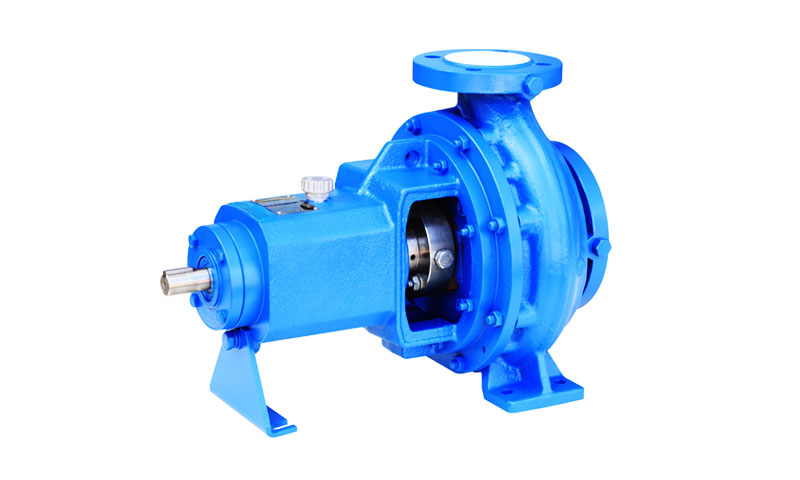
The pump casing is the core structural component responsible for pressure containment, flow channel formation, and mechanical support.
For large 不锈钢 泵外壳, the combination of massive dimensions, 复杂的内腔, and localized thick sections makes defect control particularly difficult.
Traditional empirical process design methods often struggle to reliably eliminate shrinkage-related defects and may result in excessive process margins or low yield.
With the advancement of casting simulation technologies, it has become possible to predict and control the evolution of filling and solidification behavior before production.
This study leverages numerical simulation as a core design tool and combines it with metallurgical principles and practical foundry experience to develop a robust casting process for a large stainless steel centrifugal pump casing.
2. Structural Characteristics and Material Behavior Analysis
Structural Complexity of the Pump Casing
The investigated pump casing is a large, hollow, rotationally symmetric component with multiple intersecting surfaces and complex internal flow passages.
The casing includes extended side sections, reinforced flanges, and symmetrically arranged lifting lugs.
Significant wall thickness variations exist between flow channel regions and structural reinforcement zones.
The intersections of side walls and end faces form typical thermal hot spots, which tend to solidify last and are highly susceptible to shrinkage defects if not properly fed.
Solidification Characteristics of Stainless Steel
The selected stainless steel grade is characterized by high alloy content and a wide solidification temperature range.
During cooling, the alloy remains in a semi-solid state for an extended period, resulting in limited feeding permeability and reduced liquid metal mobility in the late stages of solidification.
此外, stainless steel exhibits relatively high volumetric shrinkage compared with carbon steels.
These metallurgical characteristics demand a casting process that ensures stable filling, controlled temperature gradients, and effective feeding throughout the entire solidification sequence.
3. Mold System Selection and Pouring Scheme Optimization

Mold Material and Cooling Characteristics
树脂 sand molding technology was selected due to its suitability for large and complex castings.
Compared with metallic molds, resin sand molds provide better thermal insulation and a slower cooling rate, which helps reduce thermal stress and cracking tendencies in stainless steel castings.
The mold system also offers flexibility in core assembly and allows precise control of mold rigidity and permeability, which is essential for ensuring dimensional accuracy and gas evacuation.
Evaluation of Pouring Orientation
Multiple pouring orientations were evaluated from the perspectives of filling stability, feeding efficiency, and defect prevention.
Horizontal pouring configurations were found to create multiple isolated hot spots, particularly in upper sections that are difficult to feed effectively.
A vertical pouring orientation was ultimately selected, as it aligns with the principle of directional solidification.
在此配置中, the lower sections of the casting solidify first, while the upper hot spot regions remain connected to feeding sources, significantly improving feeding reliability and defect control.
4. Gating System Design and Filling Optimization
Design Principles
The gating system was designed with the objectives of rapid yet stable filling, minimal turbulence, and effective inclusion control.
Excessive metal velocity and abrupt flow direction changes were avoided to prevent slag entrainment and erosion of the mold surface.
Bottom Pouring Configuration
A bottom-fed, open-type gating system was adopted. Molten metal enters the mold cavity from the lower region and rises smoothly, allowing air and gases to be displaced upward and exhausted efficiently.
This filling mode significantly reduces flow turbulence and promotes uniform temperature distribution during filling, which is particularly beneficial for large stainless steel castings with long pouring times.
5. Feeding System Design and Thermal Control Strategy
Identification of Critical Hot Spots
Numerical simulation results clearly identified the final solidification regions at the intersections of side walls and end faces.
These areas were confirmed as the primary targets for feeding and thermal control.
Riser Configuration and Functionality
A combination of top risers and side blind risers was designed to address both global and local feeding requirements.
The top riser served as the main feeding source and also facilitated gas escape, while side risers improved feeding accessibility to lateral hot spots.
Riser geometry and placement were optimized to maintain sufficient feeding time and ensure that final solidification occurred within the risers rather than in the casting body.
Application of Chills
External chills were strategically placed near thick sections to locally accelerate solidification and establish favorable temperature gradients.
The coordinated use of chills and risers effectively promoted directional solidification and prevented isolated hot spots.
6. Numerical Simulation and Multi-Dimensional Analysis
Advanced casting simulation software was used to evaluate mold filling behavior, temperature evolution, solid fraction development, and defect susceptibility.
The simulation results demonstrated a stable filling process with a smooth metal front and no evidence of flow separation or stagnation.
During solidification, the casting exhibited a clear bottom-up solidification pattern.
Shrinkage porosity predictions showed that all potential shrinkage defects were confined to the risers and gating system, leaving the casting body free of internal defects.
Thermal stress and crack tendency analyses indicated that stress levels remained within acceptable limits, further validating the robustness of the process design.
7. Machinability and Post-Casting Performance
Casting quality directly affects subsequent machining efficiency and component performance.
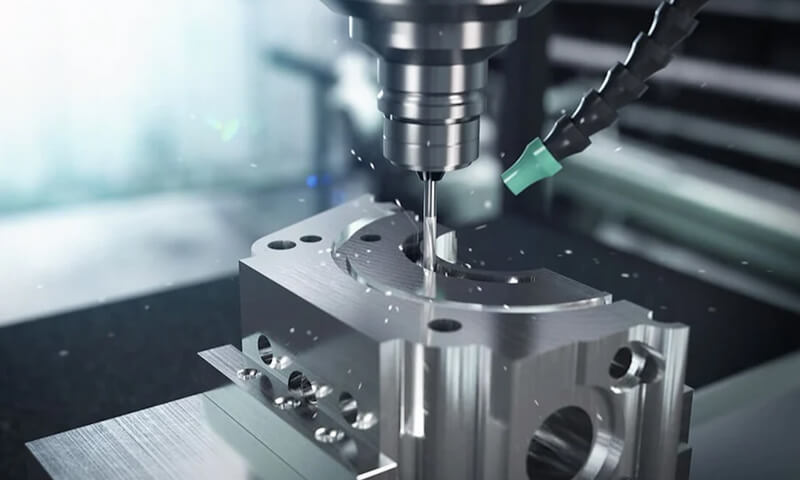
The absence of internal shrinkage defects and surface discontinuities reduces tool wear, 加工振动, and the risk of scrap during finishing operations.
而且, uniform solidification and controlled cooling contribute to more homogeneous microstructures and residual stress distributions, which improve dimensional stability during machining and service.
This is particularly relevant for pump casings requiring precise alignment of flanges and flow passages to maintain hydraulic efficiency.
8. Residual Stress Control and Service Reliability
Residual stress is a critical factor influencing the long-term reliability of large stainless steel pump casings.
Excessive thermal gradients during solidification can lead to high internal stresses, increasing the likelihood of distortion or cracking during heat treatment and service.
The combined use of resin sand molds, bottom pouring, and controlled cooling promotes gradual temperature evolution throughout the casting.
This approach effectively limits residual stress accumulation and reduces the need for aggressive post-casting stress relief treatments, thereby improving structural reliability over the component’s service life.
9. Trial Production and Validation
Based on the optimized process parameters, full-scale trial casting was conducted.
The produced pump casing exhibited well-defined contours, 光滑的表面, and no visible surface defects.
Subsequent non-destructive testing and machining inspections confirmed excellent internal soundness and dimensional stability.
The trial results closely matched simulation predictions, demonstrating the high reliability and practical applicability of the proposed casting process.
10. 结论
This study presents a comprehensive casting process design and optimization for a large stainless steel centrifugal pump casing.
The work integrates structural analysis, material solidification behavior, mold and pouring scheme selection, gating system configuration, and feeding optimization.
Advanced numerical simulation technology was employed to analyze mold filling, temperature evolution, 和固化特征, enabling targeted process refinement.
Trial production based on the optimized process demonstrated excellent surface integrity and internal soundness, confirming the effectiveness and reliability of the proposed approach.
The study provides a systematic and practical reference for the manufacturing of large, high-quality stainless steel pump casings.