
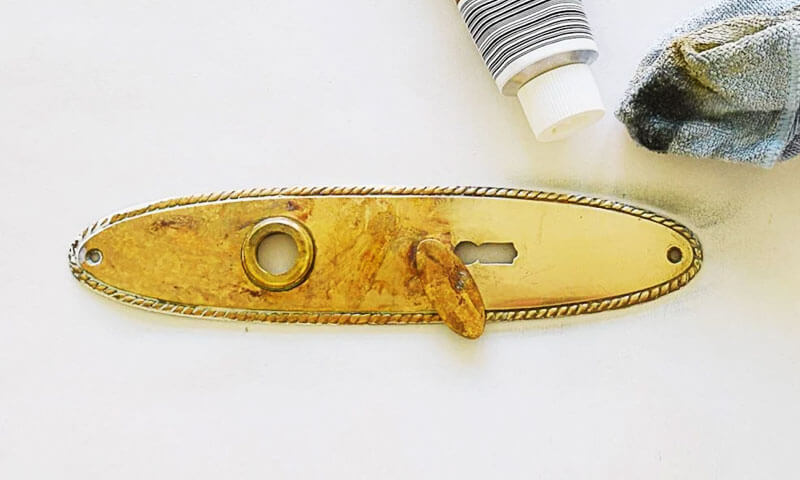
如何清洁黄铜零件

如何清洁黄铜零件?

内容 展示

介绍

Brass is one of the most useful and visually distinctive copper alloys in manufacturing, 建筑学, 硬件, 电气组件, 和装饰产品.

It is valued for its warm color, 可加工性, 耐腐蚀性, and attractive finish. But brass also has one inevitable characteristic: it changes with time.

Exposure to air, 水分, skin oils, 盐, industrial residues, and pollutants gradually causes tarnish, 变色, or surface contamination.

Effective brass cleaning is never a simple one-size-fits-all wiping or washing process.

It requires systematic judgment of brass alloy grade, 表面饰面, contamination category, component function and service environment, as well as strict control of cleaning chemicals, operating parameters and follow-up anti-corrosion treatment.

1. What is Brass and Why It Tarnishes

黄铜 is primarily an alloy of 铜和锌

Brass tarnishes because its surface reacts with oxygen, 水分, carbon dioxide, sulfur compounds, 盐, and other environmental contaminants.

The process does not usually destroy the part quickly, but it changes the surface appearance from bright gold to dull brown, dark amber, or greenish tones.

In some industrial settings, the problem is not tarnish alone but oxide buildup, grease accumulation, flux residue, 指纹, machining oil, or chemical contamination.

Cleaning Brass Parts

That means “cleaning brass” can mean several different things:

  • removing dirt and grease,
  • removing tarnish,
  • restoring shine,
  • preparing for coating or plating,
  • or preserving a controlled aged finish.

2. Identify the Brass Part Before Cleaning

Before using any cleaning method, identify the part as accurately as possible. Brass cleaning is simple only when the part is pure brass and uncoated.

Problems arise when the surface is lacquered, 镀, 绘, mechanically polished, or mixed with other materials.

Check whether the brass is:

  • solid brass or brass-plated
  • lacquered or bare
  • decorative or functional
  • 加工, 投掷, or stamped
  • 电气, 管道, or ornamental

This matters because aggressive acid cleaning can strip coatings, discolor surfaces, or attack solder joints and nearby metals.

A lacquered decorative handle, 例如, should not be treated the same way as an uncoated brass valve body or terminal.

3. Standard Method for Cleaning Brass

The most effective way to clean brass is to match the cleaning method to the level of contamination, the part’s surface condition, and the intended final finish.

Light surface dirt, moderate tarnish, and heavy oxidation should not be treated with the same approach.

A controlled, stepwise method reduces the risk of scratching, 变色, or unnecessary metal loss.

Clean Brass Parts
Clean Brass Parts

Mild Soap and Water

最好的: light dirt, 灰尘, 润滑脂, and fingerprints

For routine maintenance, the safest first step is warm water with a mild soap or neutral detergent.

This method removes everyday contamination without attacking the brass surface or altering its finish. It is especially suitable for:

  • newly handled parts,
  • lightly soiled decorative items,
  • lacquered brass,
  • and functional components that should not be exposed to harsh chemicals.

Use a soft cloth or a non-abrasive sponge, rinse thoroughly, and dry immediately to prevent water spots or renewed tarnish.

Lemon and Baking Soda Paste

最好的: moderate tarnish

A paste made from lemon juice and baking soda is a practical natural method for removing moderate tarnish.

The mild acidity of lemon helps break down oxidation, while baking soda provides a gentle polishing action.

This method is well suited to:

  • household brass fittings,
  • 装饰硬件,
  • and brass surfaces that have lost some brightness but are not heavily oxidized.

Apply the paste evenly, leave it in contact only briefly, then wipe gently and rinse completely.

This approach is effective, but it should still be used carefully on thin or precision surfaces to avoid unnecessary abrasion.

Vinegar, Salt, and Flour Paste

最好的: heavily tarnished items

For more severe tarnish, a vinegar–salt–flour paste is often more aggressive and therefore more effective.

Vinegar provides the acidic action, salt increases cleaning activity, and flour helps thicken the mixture so it stays in contact with the surface.

This method is appropriate when:

  • the brass has dark or stubborn oxidation,
  • the part has not been cleaned for a long time,
  • or a deeper restoration is needed before final polishing.

Because this mixture is stronger than soap-and-water or lemon-based cleaning, it should be used with more care.

Do not leave it on the brass longer than necessary, and always rinse and dry thoroughly afterward.

Commercial Brass Cleaners

最好的: quick results and strong tarnish

Commercial brass polishes are often the best choice for decorative or visible brass parts.

They are formulated to remove tarnish while minimizing surface damage. Many contain a combination of mild abrasives, 溶剂, and corrosion inhibitors.

Use polish when:

  • the brass has visible tarnish,
  • a brighter finish is desired,
  • the surface is polished or decorative,
  • and a repeatable, controlled result matters.

Commercial cleaners are usually more predictable than improvised mixtures, but they should still be tested on a small area first, especially if the part has a special coating, 精美的雕刻, or a sensitive finish.

机械抛光

Mechanical cleaning uses cloths, 抛光轮, non-woven pads, or polishing compounds.

It can restore brightness quickly, but it also carries the highest risk of removing metal, rounding edges, or changing tolerances.

Mechanical polishing is suitable when:

  • surface appearance is critical,
  • the part is thick enough to tolerate finishing,
  • and the operator understands the required finish level.

It is less suitable for thin, 精确, 螺纹, or dimensionally sensitive components.

Ketchup or Tomato Paste

最好的: quick, mild cleaning

Ketchup or tomato paste can also clean brass because of the natural acids in tomatoes, which help loosen surface tarnish.

This is a surprisingly effective household option for light-to-moderate cleaning when a specialized product is not available.

It can be used on:

  • small decorative brass pieces,
  • casual household brass items,
  • and parts where a gentle, readily available cleaner is preferred.

The effect is usually milder than that of stronger commercial cleaners, so it is best viewed as a convenient everyday option rather than a heavy-restoration method.

Yogurt

最好的: mild tarnish, experimental or low-intensity cleaning

Yogurt can also produce a mild cleaning effect because of its natural acidity. 实践, it may perform similarly to ketchup for light tarnish removal.

It is not a standard industrial cleaner, but it can be used as a low-aggression household option when the goal is only to soften surface dullness rather than aggressively restore a mirror finish.

4. Specialized Cleaning for Typical Functional Brass Components

Not all brass parts should be cleaned in the same way. The correct method depends on the part’s 功能, 几何学, 表面状况, compliance requirements, and tolerance sensitivity.

Clean Brass Silverware With Baking

Food-contact brass parts

例子: 水龙头, kitchen hardware, drinking-water valves

For food-contact or potable-water-related brass parts, the main priorities are 安全, residue control, 和合规性.

The cleaning process must avoid toxic residues, 积极的化学物质, and abrasive damage that could alter the surface condition or introduce contamination.

Recommended cleaning sequence

  • Dry wipe to remove loose dust and surface debris
  • Soak or wash with a neutral food-grade detergent
  • Rinse thoroughly with clean or purified water
  • Air-dry naturally in a clean environment

For slight oxidation, 一个 diluted citric acid solution may be used, but the part must be rinsed longer and more thoroughly than usual to ensure that no acid remains on the surface or in hidden cavities.

Strong industrial acids, harsh alkaline cleaners, and abrasive pads should be avoided completely.

Electrically conductive brass parts

例子: busbars, 终端, 连接器, 接触块

Electrical brass components require a very different standard.

Here the cleaning goal is not appearance but low contact resistance, oxide removal, and dry, contamination-free surfaces.

Any remaining oil, 盐, or moisture can increase resistance, generate heat, or accelerate electrochemical corrosion in service.

Recommended cleaning sequence

  • Alkaline degreasing to remove oils and processing residue
  • Mild citric-acid deoxidation to remove surface oxide film
  • Multi-stage rinse with deionized water
  • Dry with oil-free compressed air

For these parts, the surface must be left clean but not coated with wax or oily residue on contact areas, because even a thin film can interfere with conductivity and assembly performance.

In electrical service, dryness is not optional; it is a reliability requirement.

Brass musical instruments

例子: 小号, 长号, 号角, wind instruments

Brass musical instruments are especially sensitive because they often have ultra-thin walls, long internal passages, precise joints, and cosmetically important surfaces.

The cleaning process must therefore be gentle, 内部的, and residue-free.

Recommended cleaning sequence

  • 使用 dedicated mild brass cleaner designed for musical instruments
  • Clean the exterior with soft cloths only
  • Clean the interior tubes and passages with soft flexible brushes
  • Rinse carefully and dry all internal channels thoroughly

Strong acids, stiff brushes, and abrasive powders are inappropriate because they can scratch the finish, thin the wall locally, or damage soldered and fitted joints.

Internal drying is particularly important because trapped moisture can promote verdigris formation inside the tubing where it may not be visible until the damage has progressed.

Cast brass parts

例子: sand-cast brass, investment-cast brass, 泵主体, 复杂的配件

Cast brass typically has rougher surfaces, 内部空腔, dead corners, and residual casting debris 例如沙子, 耐火碎片, or flux residues.

These hidden contaminants often matter more than the visible surface.

Recommended cleaning sequence

  • High-pressure warm-water flushing
  • Medium-frequency ultrasonic cleaning where the geometry permits
  • Alkaline degreasing
  • Soft-brush cleaning of recesses and cavities
  • Full rinse and drying

对于铸件, the main challenge is to reach hidden zones.

Cleaning must therefore focus on blind holes, corner pockets, threaded interiors, and other recesses where contamination can remain trapped and later affect sealing, 集会, 或腐蚀性能.

Plated and painted brass surfaces

例子: decorative brass with electroplating, varnish, 画, or lacquer

Plated or coated brass must be treated as a surface system, not as bare brass. The coating is part of the product function, so aggressive cleaning can permanently damage the finish.

Recommended cleaning sequence

  • Dry wiping only for light dust
  • 如果需要, wipe with diluted neutral detergent and a soft cloth

酸, strong alkalis, abrasive powders, and hard brushes are not acceptable because they can cause:

  • coating peeling,
  • 变色,
  • loss of gloss,
  • or local failure of the protective layer.

In this category, the goal is preservation, not restoration.

5. Post-Cleaning Treatment and Long-Term Anti-Tarnish Protection

Cleaning brass is not the final step. If residue, 水分, or acid ions remain on the surface, tarnish can return quickly and the part may begin to discolor again almost immediately.

A proper post-cleaning workflow must therefore include rinsing, neutralization, 烘干, and protection.

Thorough rinsing and drying

After any chemical cleaning, the brass should be rinsed in stages.

Multi-stage rinsing

  1. Rinse first with ordinary clean water to remove the bulk of the cleaner.
  2. Follow with deionized water for the final rinse, especially on visible, 精确, or electrical parts.

The use of deionized water helps avoid mineral spotting from hard water and prevents residue that could interfere with appearance or function.

Drying methods

Drying should match the part type:

  • General parts: air dry in a clean, 干燥, ventilated space
  • Precision or electrical parts: blow dry with oil-free compressed air
  • Batch industrial parts: low-temperature hot-air drying, with the temperature kept at or below 60°C

High-temperature drying should be avoided. Excessive heat can accelerate oxidation and may darken the surface rather than protect it.

For brass, controlled low-temperature drying is much safer than aggressive heat.

Neutralization treatment

Mandatory for acid-cleaned brass parts

Any brass part cleaned with an acidic solution should be neutralized. This is especially important because residual acid can keep attacking the metal after the visible cleaning step is finished.

Recommended neutralization method

  • Immerse or wipe the part with 0.3%–0.5% sodium bicarbonate solution
  • 保留 1–2分钟
  • Rinse again with clean water
  • Dry completely

This step is not cosmetic. It helps prevent:

  • continued dezincification,
  • 点缀,
  • and renewed tarnish caused by acid residue.

Surface protection and anti-tarnish strategies

Protection should be selected according to the part’s service environment and intended storage life.

Temporary protection

For parts in short-term storage or awaiting assembly:

  • use a thin water-soluble anti-rust film,
  • or a light industrial anti-tarnish oil.

This is suitable for machining blanks, stored inventory, and non-contact components. 然而, the film should be removed before use on conductive or friction-sensitive surfaces.

Long-term passive protection

For longer service life, especially in outdoor or humid environments, stronger protective strategies are needed.

Chromium-free passivation

Modern chromium-free brass passivators can form a thin transparent protective film that reduces oxygen and moisture attack while maintaining appearance.

This is suitable for industrial parts where environmental compliance matters.

Protective wax

Decorative brass can be coated with a specialized brass wax after cleaning and drying.

The wax is then buffed with a microfiber cloth to create a water-resistant barrier and preserve brightness.

Transparent protective coating

For architectural brass or outdoor decorative components, a thin transparent acrylic coating can provide long-term protection while preserving the metallic appearance.

This is one of the best options when visual finish and weather resistance are both important.

6. Common Operational Mistakes, 危险, and Avoidance Strategies

Many brass-cleaning failures come not from the cleaner itself but from the wrong tool, wrong dwell time, or wrong post-treatment. The most common mistakes are predictable and avoidable.

错误 Main risk Better practice
Steel wool or wire brush 划痕, embedded steel, rust spots Soft nylon brush or microfiber cloth
Long soak in strong acid Dezincification and pitting Use mild, controlled cleaners
No rinse / no neutralization Continued corrosion and verdigris Mandatory rinse and neutralization
Harsh abrasive on plated brass Coating damage and finish loss Gentle chemical cleaning only
High-heat drying Oxidation and blackening Air dry or low-temp dry
Mixing acid and alkali 热, 烟, neutralization failure Keep cleaners separate

7. Post-Cleaning Defect Troubleshooting

Even when brass has been cleaned, surface issues can appear afterward if the process was not controlled properly. These issues usually point to one of a few common process problems.

Post-cleaning issue Likely cause Corrective action
Foggy surface / white spots Hard-water residue Final rinse with deionized water, then dry immediately
Fast green verdigris return Incomplete cleaning or residual ions Re-clean, strengthen neutralization, apply passivation
Surface darkening after acid Over-etching / 消毒 Gentle repolish, then protect
Local discoloration / spot corrosion Uneven cleaning or chloride residue Re-treat with citric acid, rinse fully, passivate

8. 结论

Brass cleaning is a systematic technical work that integrates metallurgical characteristics, chemical application, process control and anti-corrosion protection.

The core principle running through the whole process is mild priority, graded treatment, strict control of chemicals and time, and emphasis on post-protection.

Different from steel and aluminum cleaning, brass must always guard against dezincification corrosion caused by inappropriate chemical agents and prolonged soaking; its unique surface luster and decorative performance also require avoiding hard mechanical scratches.

With the continuous upgrading of environmental protection requirements and industrial precision manufacturing, modern brass cleaning technology is also developing toward low-toxicity, zero-residue, high-efficiency and intelligent directions.

Environment-friendly buffered cleaners, fully automatic ultrasonic cleaning lines and chromium-free passivation processes have gradually replaced traditional high-corrosion chemical formulas.

Mastering scientific brass cleaning technology can not only restore the appearance and functional performance of brass parts, but also effectively delay material corrosion and reduce replacement costs, creating greater value for industrial production and daily use.


常见问题解答

What is the safest way to clean brass?

Warm water, mild soap, and a soft cloth are the safest first step for most brass parts.

Can vinegar clean brass?

是的, diluted vinegar can help remove tarnish, but it should be used carefully, rinsed thoroughly, and dried immediately afterward.

Can I use toothpaste to clean brass?

It can work as a mild abrasive in some cases, but it is less controlled than a proper brass polish and may scratch softer finishes.

How do I know if brass is lacquered?

If the surface resists tarnish for a long time or shows a clear coated appearance, it may be lacquered. A small test on an inconspicuous area can help confirm it.

How do I keep brass from tarnishing again?

Keep it dry, handle it less with bare hands, and use a protective wax, 漆, or storage method appropriate to the part’s function.

滚动至顶部