
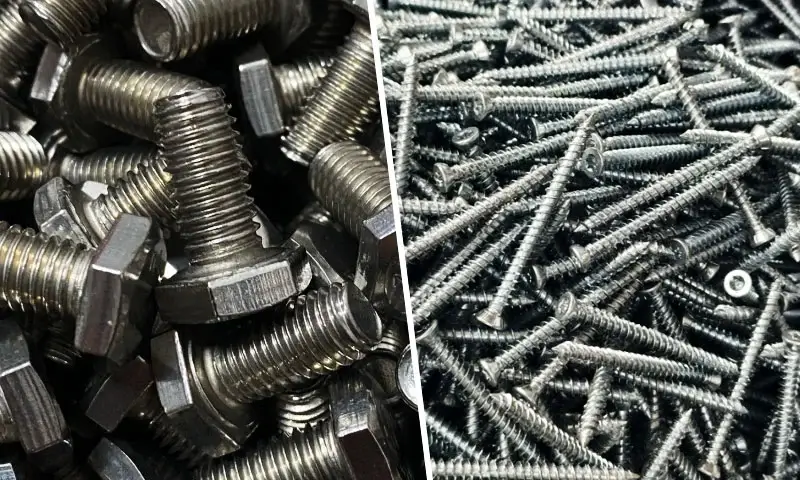
Bolts and screws are two of the most widely used mechanical fasteners in manufacturing, 建造, automotive engineering, 机械, 和日常产品.
Although they may look similar, they can differ in how they engage with mating components, how clamping force is generated, how they are installed, and which applications they are best suited for.
The terminology also varies among industries, regions, and technical standards.
最后, selecting a fastener based only on its commercial name can lead to incorrect assumptions about its strength, 安装要求, or suitability for a particular joint.
This guide explains the differences between bolts and screws from the perspectives of geometry, fastening mechanics, 材料, 制造业, 安装, 和应用.
1. Why the Confusion Exists
The terms boltand screware often used interchangeably in everyday language.
A threaded fastener with a hexagonal head may be sold as a bolt in one catalog and described as a screw in another.
The distinction becomes even less obvious when both fasteners have similar heads, thread forms, 材料, 和尺寸.
Three factors contribute to this confusion.
Common usage differs from engineering terminology. In everyday conversation, people may call almost any threaded fastener a screw.
在工程方面, 然而, the terms can describe different fastening arrangements and installation methods.
Standards do not always use the terms identically. Fastener standards specify dimensions, thread forms, 机械性能, 公差, and product requirements.
Depending on the applicable standard and product category, a fastener with a particular head and thread configuration may be designated a bolt or a screw.
Appearance alone is not decisive. Hex-head bolts, hex-head screws, socket-head cap screws, and machine screws can share similar external features.
The presence of a pointed tip is also not a universal criterion: many machine screws have flat or blunt ends, while some bolts have specialized end configurations.
For practical selection, it is more useful to examine how the fastener engages the joint, how the load is transferred, and how it is installedthan to rely exclusively on its name.
2. What Is a Bolt?
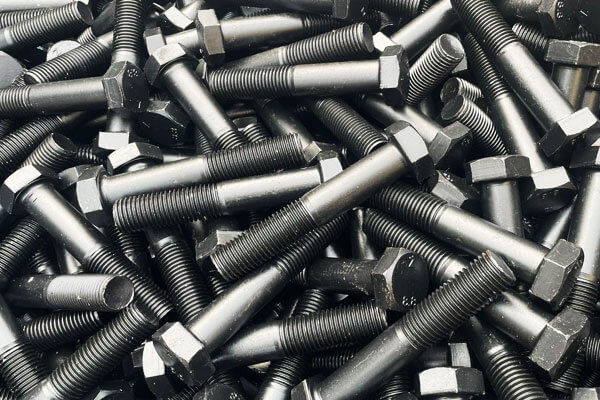
A boltis a threaded fastener commonly designed to pass through aligned holes in two or more components and be secured with a compatible nut.
Tightening the nut, or the bolt head where appropriate, creates tension in the fastener and clamps the components together.
A typical bolt has a head, a shank, and a threaded section. The shank may be partially or fully threaded, depending on the design and application.
Bolts are widely used in structural steelwork, 机械, 汽车总成, 压力设备, and other applications where a joint must withstand tensile loads, shear loads, 振动, or repeated service.
How Bolts Work
In a conventional bolted joint, tightening the fastener stretches the bolt slightly, generating preload, also called clamping force.
This preload presses the joined components together and helps prevent separation or relative movement.
The joint’s performance depends on more than bolt strength. It is influenced by the bolt diameter, thread pitch, 材料等级, tightening method, joint stiffness, 表面状况, and friction beneath the head and nut.
When properly designed, a bolted joint can be disassembled for maintenance without destroying the fastener or the joined components.
然而, repeated use, 腐蚀, thread damage, or excessive tightening can reduce reliability.
Common Types of Bolts
| Bolt Type | 描述 | 典型的应用 |
| Hex bolt | Hexagonal head, partially threaded shank, used with a hex nut | 结构钢, 机械, general assembly |
| Heavy hex bolt | Larger head and nut across flats than standard hex | Structural steel connections (A325, A490) |
| Carriage bolt | Round or dome head with a square neck under the head | Wood-to-wood, wood-to-metal; neck prevents rotation |
| Lag bolt | Hex or square head, coarse threads, pointed tip | Wood construction; technically a screw, but commonly called a bolt |
| Plow bolt | Countersunk flat head with a square neck | Plows, 农业设备; flush surface |
Stove bolt |
Slotted or Phillips round head, machine threads | Light-duty assembly; historically used on stoves |
| Eye bolt | Ring-shaped head | Lifting, tie-down, 索具 |
| Anchor bolt | Designed to embed in concrete | Structural connections to foundations |
| U-bolt | U-shaped with threaded ends | Pipe clamping, axle mounting |
| Flange bolt | Hex head with integrated flange (washer-like base) | 汽车, 机械; distributes load |
| Structural bolt | Heavy hex, 高强度, specified for structural steel | 桥梁, 建筑物, 塔 (ASTM A325, A490, F3125) |
3. What Is a Screw?
A screwis a threaded fastener designed to engage a mating thread or, in some applications, create its own thread in the material being fastened.
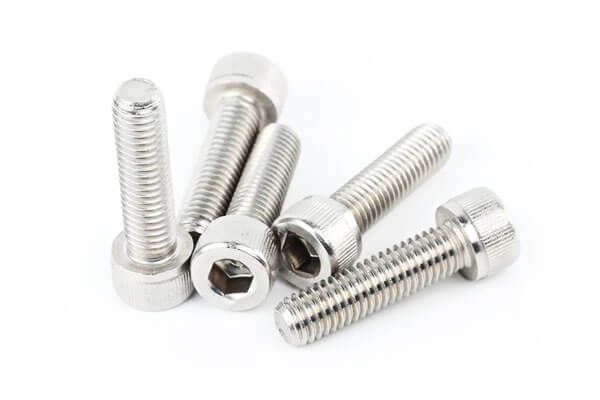
It commonly has a head with a drive feature, such as a slot, Phillips recess, Torx socket, hex socket, or external hexagon.
Unlike a conventional bolt-and-nut arrangement, many screws are installed directly into a tapped hole, a threaded insert, 木头, 塑料, or sheet metal.
Screws are used in products ranging from electronic enclosures and consumer appliances to industrial machinery, precision instruments, 家具, and building components.
How Screws Work
Screws transfer load through a combination of:
- 线程参与: The threads mate with the material or internal thread, resisting pull-out.
- Clamping force: Similar to bolts, screws create clamping force when tightened, though the mechanics differ because the screw engages the material directly.
- Head bearing: The screw head bears against the surface of the joined part, distributing load.
Screw performance depends on:
- Thread engagement length: 一般来说, engagement equal to the screw diameter provides adequate strength in steel; softer materials require more.
- Pilot hole size: Critical for self-tapping and thread-forming screws.
- 驱动类型: 菲利普斯, 开槽的, 梅花形, hex socket, 正方形, ETC.
- 材料兼容性: Screw material must be compatible with the joined material to avoid galvanic corrosion or stripping.
Common Types of Screws
| Screw Type | 描述 | 典型的应用 |
| Machine screw | Machine threads, various heads, used with a nut or in a tapped hole | 机械, 电子产品, 电器 |
| Cap screw | Socket head (hex socket), machine threads | 机械, 工具, 汽车 |
| Self-tapping screw | Forms or cuts its own thread in the material | 钣金, 塑料, 木头 |
| Self-drilling screw | Drill point; drills and taps in one operation | 钣金, metal framing |
| Wood screw | Coarse threads, tapered shank, pointed tip | 木工, 家具 |
Drywall screw |
Fine threads, bugle head, sharp point | Drywall installation |
| Sheet metal screw | Sharp point, fine or coarse threads | Sheet metal assembly |
| Set screw | Headless; used to secure a component on a shaft | Collars, 滑轮, 旋钮 |
| Thumb screw | Knurled or winged head for hand tightening | 调整, access panels |
| Shoulder screw | Cylindrical shoulder for pivot or sliding applications | Linkages, 铰链, 支点 |
| Eye screw | Ring-shaped head | Hanging, tie-down |
| Concrete screw | 硬化, high-low threads for concrete | Anchoring to concrete |
| Lag screw | Hex or square head, coarse threads, pointed | Heavy wood connections |
4. Mechanical and Geometric Differences
Bolts and screws can share similar thread forms and head designs, but they often differ in shank geometry, thread engagement, installation methods, and load transfer.
Geometric Differences
Bolts commonly feature a defined unthreaded shank and a partially threaded section, while many screws are fully threaded.
The actual geometry depends on the fastener type, nominal diameter, 长度, 及适用标准.
| 特征 | 螺栓 | 螺钉 |
| 小腿 | Often includes an unthreaded section to support alignment and transfer shear loads | May be fully or partially threaded, 取决于设计 |
| 线 长度 | Frequently partial-threaded in structural and general-purpose applications | Often fully threaded in smaller machine screws; varies by type |
| Head 设计 | Commonly hex, heavy hex, 法兰, or carriage heads | Includes socket, 菲利普斯, 梅花形, 开槽的, pan, and countersunk heads |
Drive method |
Typically tightened with a wrench or socket | Typically driven with a screwdriver, hex key, Torx bit, or socket |
| 线 形式 | Commonly metric coarse/fine or Unified threads, such as UNC and UNF | May use standard machine threads, self-tapping threads, or specialized wood-screw threads |
| 观点 设计 | Usually flat or chamfered | May be flat, pointed, or equipped with a drill point |
| 代表 标准 | ASME B18.2.1, ASME B18.2.3, ASTM F3125 | ASME B18.6.3, ISO 7045, ISO 4762 |
Nominal size ranges overlap substantially, so diameter alone cannot reliably distinguish a bolt from a screw.
The applicable product standard and intended joint configuration provide more useful criteria.
Thread Form and Engagement
Bolts and screws may use the same standardized thread forms, including metric coarse, metric fine, UNC, 和联合国. The key difference is often how the threads engage with the joint.
Bolts typically pass through clearance holes, with the threads engaging a nut or a tapped component.
The unthreaded shank, when present, can help locate the joint and carry transverse loads. Screws may engage pre-tapped holes, 螺纹插入物, or the material itself.
Self-tapping and wood screws use thread geometries designed to form or cut threads in specific substrates.
Coarse threads generally provide faster assembly and better tolerance of minor contamination or damage, while fine threads offer a smaller pitch and finer adjustment of axial position.
Neither is universally stronger or more resistant to vibration; performance depends on fastener dimensions, 物质强度, engagement length, 和联合设计.
Mechanical Behavior
The primary mechanical difference lies in the joint’s load path and the control of clamping force.
| 因素 | 螺栓 | 螺钉 |
| 加载 transfer | Commonly develop tension in the bolt and compression across the clamped joint | Transfer load through the screw and its engagement with a nut, tapped hole, insert, or substrate |
| Preload 控制 | Often established through a specified torque or tensioning method; friction strongly affects the result | Also depends on torque and friction, with greater variability possible when threads engage directly with softer materials |
| 典型的 失败 modes | Tensile fracture, 疲劳失效, thread stripping, or joint separation | Screw fracture, drive recess damage, head failure, or stripping of the engaged material |
疲劳性能 |
Can be predicted using established fastener and joint-design methods | Depends on fastener geometry, thread engagement, substrate properties, 和循环加载 |
| 振动 反抗 | May require locking nuts, 螺纹锁固剂, or other validated retention methods | May require similar retention measures, particularly where the substrate or threaded engagement can loosen or degrade |
5. Bolts vs Screws: Core Differences Explained
The practical differences between bolts and screws become clearer when their fastening arrangements, installation methods, and typical applications are compared directly.
| 比较因素 | 螺栓 | 螺钉 |
| Typical fastening arrangement | Commonly passes through clearance holes and is secured with a nut | Commonly engages a tapped hole, insert, or material directly |
| Mating component | Often a nut, though some bolts engage threaded holes | Often an internally threaded component or the substrate itself |
| Thread configuration | May be partially or fully threaded | May be fully or partially threaded, 取决于设计 |
| Installation tools | Wrench, socket, torque wrench, or specialized tooling | Screwdriver, hex key, socket, or powered driver |
| Clamping force | Commonly generated by tightening the bolt-and-nut assembly | Commonly generated by tightening the screw into its mating thread |
Disassembly |
Usually straightforward if the nut and threads remain accessible and undamaged | Depends on thread engagement, substrate condition, and screw design |
| Typical failure risks | Tensile fracture, 疲劳, thread stripping, loosening, or joint slip | Drive recess stripping, thread stripping, pull-out, 疲劳, or loosening |
| Common applications | Structural joints, 机械框架, 法兰, 汽车总成 | 外壳, electronic products, 家具, 机械, and sheet-metal assemblies |
| Design considerations | Bolt strength, nut compatibility, preload, grip length, and joint stiffness | 线程参与, 基材强度, drive design, installation torque, and pull-out resistance |
One important qualification is that these are typical practices, not absolute rules. A fastener called a bolt may be installed into a tapped hole, while a screw may be used with a nut.
The applicable standard, product design, and fastening arrangement determine the more precise classification.
Which Provides a Stronger Connection?
Neither bolts nor screws are inherently stronger in every application. Joint strength depends on the fastener’s dimensions, 材料等级, thread geometry, engagement length, installation preload, and the strength of the connected materials.
A properly designed high-strength bolt can provide substantial clamping force in a structural joint.
A properly sized socket-head screw can also provide high clamping force in a compact machine assembly.
无论哪种情况, the joint may fail before the fastener itself if the threads strip, the substrate deforms, or the connected parts cannot withstand the applied load.
6. Materials and Coatings for Bolts and Screws
The material and surface treatment of a bolt or screw determine its tensile strength, 耐腐蚀性, 磨损行为, and suitability for specific operating conditions.
Selection should consider mechanical loads, 环境暴露, 温度, and compatibility with the materials being joined.
Base Materials
The appropriate choice depends on the required strength, 耐腐蚀性, 重量, 及服务环境.
| 材料 | 典型成绩 |
| 低碳钢 | SAE Grade 2, ISO property class 4.6 |
| 中碳钢 | SAE Grade 5, ISO 8.8 |
| 合金钢 | SAE Grade 8, ISO 10.9, 12.9 |
| 不锈钢 304 | A2, 304 |
| 不锈钢 316 | A4, 316 |
| 马氏体不锈钢 | 410 |
| 沉淀硬化不锈钢 | 17-4 ph |
| 黄铜和青铜 | C360, C464, 硅青铜 |
| 钛 | 年级 2, 年级 5 (ti-6al-4V) |
| 铝合金 | 2024, 6061, 7075 |
| 镍合金 | 莫内尔, inconel |
涂料和表面处理
Coatings improve corrosion resistance, 减少摩擦, or provide specific surface properties.
| Coating or Treatment | 主要优点 | Common Applications and Considerations |
| 电镀 锌 | 经济, moderate corrosion protection | General-purpose fasteners; may require additional passivation or sealing |
| Hot-dip 镀锌 | 厚的, durable zinc coating | Outdoor structures and construction; coating thickness depends on the applicable specification and fastener size |
| Zinc-nickel | Enhanced corrosion protection | Automotive and demanding industrial applications |
| Zinc-flake 涂层 | Strong corrosion protection with low risk of hydrogen embrittlement during coating application | Automotive and high-strength fasteners |
| Cadmium 电镀 | Corrosion protection and useful lubricity | Restricted in many applications because of toxicity; used in certain legacy aerospace specifications |
Phosphate coating |
Provides a base for oil, 画, or other treatments | Industrial fasteners and components requiring controlled friction |
| 黑色的 氧化物 | Appearance and limited corrosion protection when oiled | Tooling and indoor applications |
| PTFE-based 涂层 | 低摩擦和耐化学性 | Applications requiring controlled friction or chemical compatibility |
| xylan 涂层 | Low friction and corrosion protection | Industrial and chemical-service fasteners |
| 银 电镀 | Electrical conductivity and anti-galling properties in suitable applications | Specialized electrical and aerospace assemblies |
| 防锈的 钢 钝化 | Removes free iron and promotes the protective passive surface | Stainless steel fasteners exposed to corrosive environments |
7. Installation and Tooling
- Access Requirements: Bolts require access to both sides of the joint (one side for the bolt head, the other for the nut).
Screws require access only from the installation side since they mate with internal housing threads. - Torque and Preload: Bolts are routinely tightened using calibrated torque wrenches, hydraulic tensioners, or turn-of-nut methods to achieve precise clamping preload.
Screws are typically driven using standard screwdrivers, Allen keys, or pneumatic torque drivers. - 可重复使用: Bolted joints can be disassembled and reassembled repeatedly without damaging the parent material.
Screwed joints in soft metals or plastics risk stripping the internal tapped threads over multiple maintenance cycles.
8. Manufacturing Processes of Bolts and Screws
Bolts and screws share many manufacturing processes. Their production routes depend on material, 方面, thread design, 所需强度, 宽容, 表面饰面, 和生产量.
Cold Heading and Hot Forging
Cold heading forms a fastener head by plastically deforming wire or rod at or near room temperature.
It is widely used for high-volume production because it offers good material utilization, 可重复性, 和生产效率.
Hot forging is used when larger dimensions or materials require elevated-temperature forming.
Depending on the design, forging can produce fastener heads and other features that would be difficult to form economically through cold heading.
Thread Rolling and Thread Cutting
Thread rolling forms threads by pressing the fastener blank between dies. It is commonly used for mass-produced bolts and screws and can produce consistent thread geometry without removing material from the thread profile.
Thread cutting removes material with a cutting tool to create the required thread. It is useful for certain specialized designs, 低体积生产, large fasteners, and applications where the geometry or material makes rolling less suitable.
The choice between rolling and cutting depends on material properties, thread specifications, required production rate, 和组件设计.
热处理
Heat treatment is used when the specified mechanical properties cannot be achieved through forming alone.
Depending on the steel grade and fastener property class, processes may include quenching and tempering or other controlled thermal treatments.
The purpose is to achieve the required combination of strength, 硬度, and toughness while controlling the risk of excessive brittleness, 失真, 和其他缺陷.
Not all fasteners require the same heat treatment. Requirements should follow the applicable material specification and mechanical-property standard.
Surface Finishing and Quality Inspection
Surface treatments may be applied to improve corrosion resistance, 减少摩擦, or meet appearance requirements.
Depending on the coating, additional controls may be needed to manage dimensional changes, hydrogen-embrittlement risk, or friction variability.
Quality inspection can include checks of:
- 直径, 长度, head dimensions, and thread geometry
- Mechanical properties and hardness
- Coating thickness and corrosion performance
- Surface defects and material traceability
- Dimensional conformity to the applicable product standard
Standards such as ISO 898-1 for the mechanical properties of specified carbon-steel and alloy-steel bolts, 螺钉, 和螺柱, 和ISO 3506 for corrosion-resistant stainless steel fasteners, provide relevant frameworks for many applications.
The exact standard depends on the fastener type and specification.
9. 申请: Where Bolts and Screws Are Used
The choice between bolts and screws depends on the assembly design, service loads, installation access, 维护要求, and receiving material.
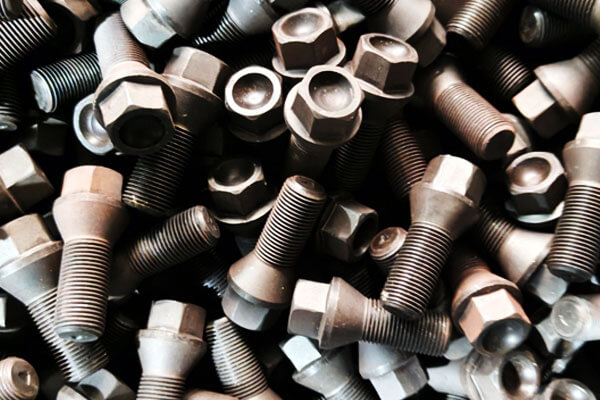
螺栓 are widely used in structural steel connections, bridge and building assemblies, 汽车底盘, 机械框架, 管道法兰, 和重型设备.
These applications often benefit from controlled clamping force, accessible nuts, and fasteners designed for defined tensile or shear loads.
螺钉 are common in electrical enclosures, 电子设备, 家具, 电器, sheet-metal products, machine covers, and precision equipment.
They are particularly convenient when the design includes tapped holes or when a fastener must be installed from one side.
Some applications use both. 例如, an industrial machine may use high-strength bolts to connect its structural frame, socket-head screws to secure precision components, and self-tapping screws for selected covers or panels.
The correct choice should be based on the requirements of the joint—not simply on which fastener is easier to install.
10. How to Choose Between Bolts and Screws
Selecting the right fastener requires evaluating the entire joint, including the connected materials, 装载条件, installation access, 和维护要求.
步 1: Determine the Joint Configuration
If the components have clearance holes and can accommodate a nut, a bolt-and-nut arrangement may be appropriate.
If the assembly includes tapped holes or threaded inserts, screws may provide a simpler solution.
For thin sheet metal, 塑料, or wood, specialized self-tapping or thread-forming screws may be more suitable than conventional bolts, provided the substrate can sustain the required loads.
步 2: Evaluate the Loads
Consider whether the joint will experience tensile loading, 剪力, 振动, 影响, or cyclic fatigue.
For critical structural or mechanical joints, calculate the required fastener size, 力量, and preload rather than selecting a fastener by diameter alone.
步 3: Check Material Compatibility
Select a fastener material that is compatible with both the connected components and the operating environment.
腐蚀, galvanic interaction, 温度, and chemical exposure can affect long-term reliability.
步 4: Consider Installation and Maintenance
Evaluate whether both sides of the joint are accessible, whether specialized tooling is required, and how frequently the assembly will need to be disassembled.
Fasteners should also be selected to minimize the risk of drive damage, thread stripping, and loosening.
步 5: Verify the Specification
Confirm the required diameter, thread pitch, 长度, head style, property class or grade, 涂层, 及适用标准.
For safety-critical applications, follow the engineering drawings, relevant standards, and approved assembly procedures.
11. Common Mistakes When Selecting Fasteners
Several common errors can compromise joint reliability, even when the selected bolt or screw appears suitable.
- Choosing by appearance alone: Similar-looking fasteners may have different thread specifications, 机械性能, or intended uses.
- Ignoring thread engagement: A screw installed in a weak or insufficiently threaded substrate may pull out before the fastener reaches its rated capacity.
- Using the wrong strength grade: A fastener that is too weak may fail under load, while an unnecessarily high-strength fastener may increase cost or introduce other design considerations.
- 过度拧紧: Excessive torque can stretch or fracture the fastener, damage threads, or deform the joined components.
- Ignoring corrosion and galling: The wrong material or surface treatment can cause seizure, accelerated corrosion, or difficult maintenance.
- Mixing incompatible specifications: Thread pitch, 直径, property class, and nut compatibility must be verified rather than assumed.
- Reusing damaged fasteners: Deformed threads, damaged drive recesses, 腐蚀, or prior overload may make reuse unsafe or unreliable.
- Neglecting the joint design: Fastener selection alone cannot compensate for inadequate edge distance, weak substrate material, insufficient bearing area, or poor load distribution.
The most reliable fastening solution considers the fastener, mating materials, 关节几何形状, installation method, and operating environment as one integrated system.
12. 结论
Bolts and screws perform similar fastening functions, but they are commonly used in different joint configurations.
Bolts typically pass through clearance holes and work with nuts, while screws often engage tapped holes, 插入物, or the material being fastened directly.
These distinctions influence installation, 锁模力, 维护, 和联合设计, although the terminology can vary by standard and application.
Neither type is universally stronger or more reliable. Performance depends on material, 方面, thread engagement, preload, 关节几何形状, 和服务条件.
Manufacturing processes—including cold heading, 锻造, thread rolling, 热处理, and surface finishing—also determine whether a fastener meets its specified requirements.
用于工程师, 制造商, and purchasing teams, the best approach is to select fasteners according to load requirements, 物质兼容性, installation access, 腐蚀暴露, 和适用的标准.
Understanding these factors leads to safer assemblies, more reliable performance, and lower maintenance costs.
常见问题解答
What is the main difference between a bolt and a screw?
A bolt typically passes through clearance holes and is secured with a nut, while a screw commonly engages a tapped hole, threaded insert, or the receiving material directly.
然而, terminology varies by product standard and application.
Are bolts stronger than screws?
未必. Strength depends on the material, 直径, thread geometry, mechanical-property grade, 和联合设计.
A high-strength screw can outperform a lower-grade bolt, while the strength of either joint may be limited by the mating material or thread engagement.
Can a bolt be used without a nut?
是的. Some bolts are designed to engage a tapped hole directly. Whether this arrangement is appropriate depends on the fastener specification, thread engagement, 加载中, 和申请要求.
Can a screw be used with a nut?
是的. Some screws, including certain machine screws, can be installed through clearance holes and secured with nuts. The product designation does not always determine the fastening arrangement.
What is the difference between a bolt and a machine screw?
A bolt is commonly associated with a joint secured by a nut, whereas a machine screw generally has machine threads designed to engage a tapped hole or a nut.
Both can have similar head styles and thread forms, so the applicable product standard is important.
What is the difference between a bolt and a stud?
A bolt typically has a head and a threaded shank, while a stud is generally a headless fastener with threads at one or both ends, or along much of its length.
Studs are often used where repeated assembly, 结盟, or flange connections are important.

