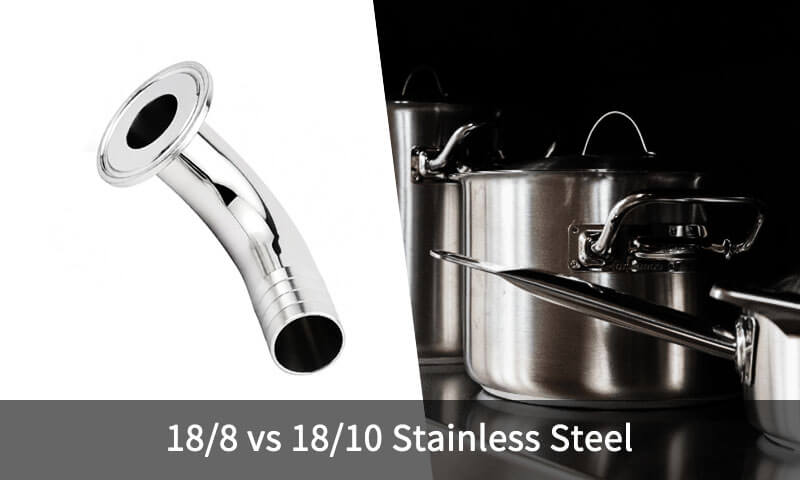
18/8 vs 18/10 不锈钢

18/8 vs 18/10 不锈钢: 关键差异 & 如何选择?

走进任何一家厨具店, and you will see labels proclaiming “18/8 Stainless Steel” or “18/10 Stainless Steel” on pots, 锅, 刀具, 和炊具.

These numbers are more than marketing jargon—they represent the chemical composition of the stainless steel and directly influence the performance, 耐用性, and corrosion resistance of the finished product.

本文提供了全面的, rigorous comparison of 18/8 和 18/10 不锈钢.

We will explore their definitions, chemical compositions, 性能特征, 申请, 成本含义, and how to choose between them.

1. 什么是 18/8 不锈钢?

18-8 不锈钢 is an austenitic stainless steel alloy containing approximately 18% 铬和 8% nickel by weight.

The name “18/8” represents the approximate alloy composition rather than an official international material designation.

在大多数情况下, 18/8 stainless steel corresponds closely to 304 不锈钢, one of the most widely used stainless steel grades worldwide.

The basic structure of 18/8 stainless steel consists primarily of iron, with chromium and nickel as the key alloying elements.

Chromium provides corrosion resistance by forming a thin, stable chromium oxide passive layer on the surface, while nickel stabilizes the austenitic microstructure and improves toughness, 延性, and resistance to chemical attack.

The combination of approximately 18% 铬和 8% nickel creates a balanced material with excellent overall performance, making it suitable for general-purpose applications where corrosion resistance, 力量, and affordability are equally important.

Key identifiers:

  • AISI Grade: 304
  • 我们: S30400
  • 在: 1.4301
  • 通用名: 18/8 不锈钢
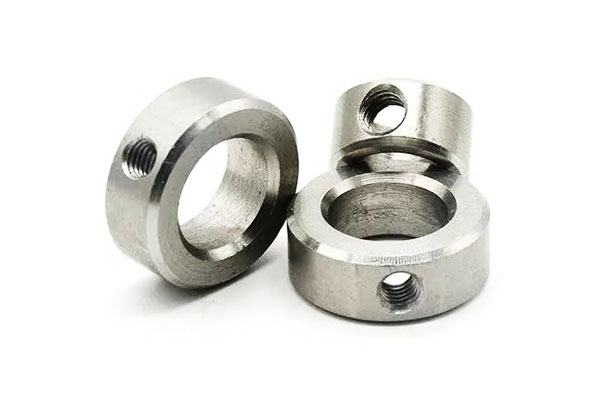
18-8 Stainless Steel Ring Nut

Features of 18/8 不锈钢

  • Excellent corrosion resistance under general conditions
    The chromium-rich passive layer provides reliable protection against atmospheric corrosion, 水分, food acids, and many household chemicals.
  • Austenitic microstructure with high toughness
    The stable face-centered cubic (FCC) structure allows 18/8 stainless steel to maintain good impact resistance and ductility even at low temperatures.
  • 优异的成型性和焊接性
    18/8 stainless steel can be easily processed through stamping, 弯曲, 深图, 焊接, 和加工, making it suitable for complex component manufacturing.
  • Non-porous and hygienic surface
    The dense metallic surface prevents bacterial accumulation and allows easy cleaning, making it ideal for food-contact and sanitary applications.
  • Good balance between strength and cost
    It provides high-performance stainless steel properties while maintaining a relatively economical price compared with higher-alloy grades.
  • Good oxidation resistance at elevated temperatures
    It can withstand moderately high temperatures while maintaining structural stability, although specialized high-temperature alloys are required for extreme conditions.

限制 18/8 不锈钢

  • Lower resistance to chloride environments compared with 316 不锈钢
    在海水中, 海洋大气, and chloride-containing chemicals, 18/8 stainless steel may experience localized corrosion such as pitting or crevice corrosion.
  • Slightly lower corrosion resistance than 18/10 不锈钢
    The reduced nickel content provides slightly less protection in aggressive chemical environments.
  • May require surface maintenance in harsh conditions
    Although corrosion-resistant, 污染, salt deposits, or chemical exposure can affect surface appearance over time.
  • Not suitable for highly corrosive applications
    化学处理, 海上设备, and pharmaceutical environments requiring extreme corrosion resistance may require higher-alloy stainless steels such as 316 或双相不锈钢.

申请 18/8 不锈钢

18/8 stainless steel is widely adopted because it provides reliable performance at a reasonable cost.

典型应用包括:

  • Kitchen and household products
    炊具, 水槽, utensils, 食品容器, 电器, and storage equipment.
  • Food and beverage equipment
    Processing machines, 坦克, 管道系统, and sanitary components.
  • 工业组件
    Machine frames, 紧固件, 括号, 热交换器, 阀, and general-purpose equipment.
  • Architectural applications
    扶手, decorative structures, 内部组件, and building hardware.
  • Automotive and transportation components
    排气组件, 修剪, 括号, and structural parts requiring corrosion resistance.
  • Precision manufacturing and casting applications
    Stainless steel precision castings, investment cast components, and complex industrial parts.

2. 什么是 18/10 不锈钢?

18-10 stainless steel is an austenitic stainless steel alloy containing approximately 18% 铬和 10% 镍.

Compared with 18/8 不锈钢, the main difference is the higher nickel content.

喜欢 18/8 不锈钢, 18/10 stainless steel is closely related to the 304 stainless steel family.

The additional nickel improves the stability of the austenitic structure and enhances several performance characteristics, 包括耐腐蚀性, 韧性, 表面质量, 和长期耐用性.

Because of its premium appearance and improved resistance characteristics, 18/10 stainless steel is frequently used in high-quality cookware, luxury tableware, 食品加工设备, and applications where both aesthetics and performance are important.

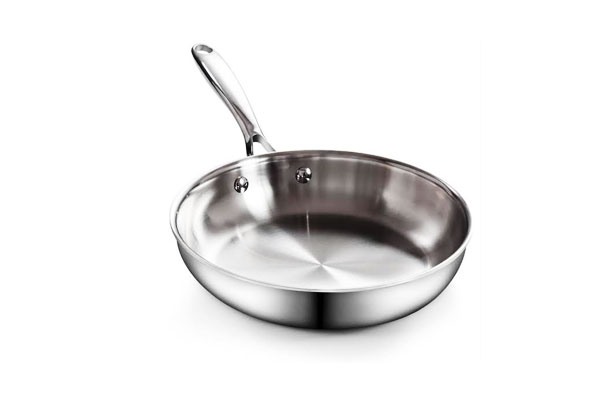
18-10 Stainless Steel Frying Pan

Features of 18/10 不锈钢

  • 增强的耐腐蚀性
    The higher nickel content improves resistance to oxidation, 染色, 和化学暴露, especially in humid or mildly aggressive environments.
  • Superior surface finish and appearance
    18/10 stainless steel produces a brighter, 更光滑, and more reflective surface after polishing, making it preferred for premium products.
  • Excellent toughness and structural stability
    The increased nickel content strengthens the austenitic phase, improving resistance to impact and mechanical stress.
  • Excellent resistance to repeated cleaning cycles
    It maintains surface integrity under frequent washing, 消毒, and exposure to detergents.
  • Outstanding hygiene performance
    密集, smooth surface minimizes contamination risks and supports strict sanitation requirements.
  • Excellent fabrication characteristics
    喜欢 18/8 不锈钢, it can be welded, 形成, 盖章, and machined efficiently.

限制 18/10 不锈钢

  • Higher material cost
    The increased nickel content significantly raises raw material costs compared with 18/8 不锈钢.
  • Performance improvement may be limited in ordinary environments
    For general household and industrial applications, the difference between 18/8 和 18/10 may not justify the additional cost.
  • Not suitable for extreme chloride environments
    Although more corrosion-resistant than 18/8, it still cannot replace specialized grades such as 316 stainless steel in marine or chemical applications.
  • Higher sensitivity to alloy cost fluctuations
    Since nickel prices vary significantly in global markets, 18/10 stainless steel costs may fluctuate more than lower-nickel alternatives.

申请 18/10 不锈钢

18/10 stainless steel is commonly selected for applications where performance, 外貌, and hygiene requirements are higher.

典型应用包括:

  • Premium cookware and tableware
    High-end pots, , 刀具, serving equipment, and kitchen products.
  • 食品加工设备
    Storage vessels, sanitary pipelines, processing machinery, and commercial kitchen systems.
  • Medical and pharmaceutical equipment
    Components requiring clean surfaces, 耐腐蚀性, and easy sterilization.
  • Architectural and decorative applications
    Luxury interior structures, 装饰板, 扶手, and premium finishes.
  • Precision stainless steel castings
    泵组件, 阀体, instrument parts, and complex industrial components requiring excellent surface quality.
  • Laboratory and cleanroom equipment
    Work surfaces, 住房, and equipment frames where contamination control is critical.

3. 化学组成: 18/8 和 18/10 不锈钢

The performance differences between 18/8 和 18/10 stainless steel originate primarily from their alloy composition, especially the difference in nickel content.

Both materials belong to the austenitic stainless steel family, characterized by a face-centered cubic (FCC) crystal structure that provides excellent corrosion resistance, 韧性, 和表现性.

Although the names “18/8” and “18/10” are widely used in commercial markets, they represent approximate alloy percentages rather than formal metallurgical classifications.

在大多数情况下, both materials are closely related to AISI 304 不锈钢, with the main distinction being the amount of nickel added to the alloy.

元素 18/8 不锈钢 18/10 不锈钢 功能作用
铬 (Cr) 大约 18% 大约 18% Forms a passive chromium oxide film that provides corrosion resistance
镍 (在) 大约 8% 大约 10% Stabilizes the austenitic structure and improves toughness, 耐腐蚀性, 和表面质量
碳 (c) Generally ≤0.08% Generally ≤0.08% Controls strength, 硬度, 和可焊性
铁 (铁) 平衡 平衡 Primary structural matrix
其他元素 Small amounts of Mn, 和, p, s Small amounts of Mn, 和, p, s Improve processing performance and alloy stability

The Role of Nickel: The Key Difference Between 18/8 和 18/10

Nickel is the primary factor distinguishing 18/8 从 18/10 不锈钢.

Although the difference is only about 2 percentage points, nickel has a significant influence on stainless steel properties.

The main functions of nickel include:

  • Stabilizing the austenitic crystal structure at room and low temperatures.
  • Improving ductility and toughness.
  • Enhancing resistance to chemical corrosion.
  • Improving surface brightness and polishability.
  • Increasing resistance to stress corrosion cracking under certain conditions.

在 18/10 不锈钢, the additional nickel content provides a more stable austenitic structure and slightly improves resistance to staining, 酸性环境, and repeated cleaning cycles.

然而, the difference should be understood correctly.

The additional nickel does not transform 18/10 stainless steel into a completely different material category. 反而, it provides incremental improvements that become valuable in premium applications where long-term appearance and durability are important.

4. 性能比较: 18/8 vs 18/10 不锈钢

虽然 18/8 和 18/10 stainless steel share many similarities, the difference in nickel content creates measurable differences in certain performance areas.

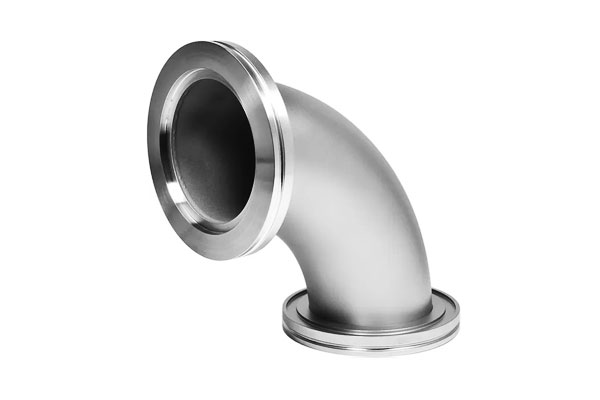
18-8 Stainless Steel Pipe Fitting

耐腐蚀性

Corrosion resistance is one of the most important factors when selecting stainless steel.

两个都 18/8 和 18/10 stainless steels provide excellent protection against atmospheric corrosion because both contain sufficient chromium to form a stable passive oxide film.

In ordinary environments, including indoor applications, freshwater exposure, food contact, and general industrial use, the corrosion resistance difference between the two materials is relatively small.

Both can maintain long service life without protective coatings.

然而, the higher nickel content of 18/10 stainless steel provides additional stability in more demanding conditions.

Nickel improves resistance against certain acidic substances, organic compounds, and repeated exposure to cleaning chemicals.

这使得 18/10 stainless steel particularly advantageous in applications such as premium cookware, 食品加工设备, and sanitary systems.

环境 18/8 不锈钢 18/10 不锈钢
Indoor atmosphere 出色的 出色的
Freshwater environment 出色的 出色的
Food contact applications 出色的 出色的
Acidic food exposure 非常好 Slightly better
Frequent detergent cleaning 非常好 更好的
Salt spray environment 中度到良好 好的
Marine or chloride-rich environments 有限的 有限的 (316 recommended)

Durability and Mechanical Performance

两个都 18/8 和 18/10 不锈钢 belong to the austenitic stainless steel family and typically correspond to AISI 304-type stainless steel compositions.

Their mechanical performance is primarily determined by their austenitic microstructure, cold working condition, 粒度, and manufacturing process rather than nickel content alone.

The following table provides typical mechanical property ranges for annealed 18/8 和 18/10 不锈钢.

机械性能 18/8 不锈钢 (Typical AISI 304) 18/10 不锈钢 (Premium 304-Type) 工程意义
抗拉强度 515–650 MPA 520–680 MPa Indicates resistance to pulling force and structural failure
产生强度 (0.2% 抵消) ≥205 MPa 210–250 兆帕 Represents load capacity before permanent deformation
休息时伸长 40–60% 45–60% Indicates excellent ductility and forming capability
减少面积 60–70% 60–75% Reflects resistance to fracture during deformation
布氏硬度 (HB) 123–201 HB 130–210 HB Indicates resistance to indentation and wear
罗克韦尔硬度
HRB 70–95 HRB 75–95 Suitable for general structural and fabricated components
弹性模量 193 GPA 193 GPA Defines stiffness under elastic loading
Impact toughness at room temperature >100 j (Charpy V-Notch, 典型的) >120 j (Charpy V-Notch, 典型的) Demonstrates excellent resistance to sudden impact
疲劳强度 (10⁷周期, 近似) 240–260 MPA 250–280 MPA Determines long-term durability under cyclic loading
密度 7.90–8.00 g/cm³ 7.90–8.00 g/cm³ Indicates similar weight characteristics

Heat Resistance and Thermal Performance

Austenitic stainless steels are widely used in elevated-temperature applications because they maintain mechanical stability better than many carbon steels.

两个都 18/8 和 18/10 stainless steels provide:

  • Good oxidation resistance.
  • Stable mechanical properties at moderately high temperatures.
  • Resistance to thermal cycling.
  • Low risk of brittle failure during temperature changes.

The higher nickel content of 18/10 stainless steel improves phase stability at elevated temperatures, allowing it to maintain its austenitic structure more reliably under thermal stress.

性能方面 18/8 不锈钢 18/10 不锈钢
抗氧化性 出色的 Slightly better
Thermal cycling resistance 非常好 出色的
High-temperature structural stability 好的 Slightly improved
Household cooking temperatures 出色的 出色的
Extreme high-temperature applications 有限的 有限的 (special alloys required)

For normal cookware, 食品设备, 和家庭应用, the heat resistance difference between the two grades is minimal.

然而, in industrial environments involving prolonged thermal exposure, 18/10 stainless steel may provide improved reliability.

Surface Appearance and Finish Quality

Surface appearance is one area where the difference between 18/8 和 18/10 stainless steel becomes more noticeable.

Nickel improves the ability of stainless steel to achieve a smooth, 明亮的, and reflective finish after polishing.

因此, 18/10 stainless steel is often selected for premium products where appearance is a key selling point.

18/10 stainless steel typically provides:

  • Higher surface brightness after polishing.
  • Better resistance to discoloration.
  • More refined metallic appearance.
  • Improved retention of decorative finishes.
Surface Characteristic 18/8 不锈钢 18/10 不锈钢
Natural metallic appearance 好的 出色的
Polishing performance 非常好 优越的
Gloss retention 好的 更好的
Resistance to surface staining 非常好 出色的
Premium decorative appearance 好的 Preferred

This is why many high-end cookware manufacturers, luxury tableware producers, and architectural designers prefer 18/10 stainless steel when visual quality is as important as mechanical performance.

5. 18/8 vs 18/10 Stainless Steel in Food and Kitchen Applications

Food and kitchen applications represent one of the largest consumer markets for stainless steel.

The combination of corrosion resistance, 卫生, 耐用性, and aesthetic appeal makes austenitic stainless steels the preferred material for cookware, 刀具, 水槽, 食品容器, and commercial kitchen equipment.

Food Safety and Hygiene Performance

From a food safety perspective, 两个都 18/8 和 18/10 stainless steels provide excellent performance.

Their surfaces are dense, non-porous, and resistant to bacterial accumulation, making them suitable for direct food contact.

The chromium oxide passive layer prevents metal ions from easily migrating into food, while the smooth stainless steel surface allows effective cleaning and sterilization.

This is why both grades are commonly used in food processing equipment and household cookware.

The difference between the two grades is mainly related to durability under repeated chemical exposure rather than basic food safety.

18/10 不锈钢, with its higher nickel content, provides slightly better resistance to:

  • Acidic foods such as tomatoes, citrus fruits, and vinegar-based sauces.
  • Repeated exposure to detergents and dishwasher cycles.
  • Surface staining caused by minerals and food residues.
  • Long-term polishing and cleaning operations.

For normal household cooking, the practical difference is often small.

然而, in professional kitchens where equipment is cleaned hundreds or thousands of times per year, the improved stability of 18/10 stainless steel becomes more valuable.

Cookware Performance: Heat Distribution, 耐用性, and Appearance

炊具 制造业, stainless steel is usually combined with aluminum or copper layers to improve thermal conductivity because stainless steel itself has relatively low thermal conductivity.

The stainless steel layer provides:

  • 耐腐蚀性.
  • 结构强度.
  • Food-contact safety.
  • Surface durability.

The difference between 18/8 和 18/10 cookware is mainly reflected in surface quality and long-term appearance.

Performance Factor 18/8 不锈钢炊具 18/10 不锈钢炊具
Food safety 出色的 出色的
Resistance to staining 非常好 出色的
Resistance to acidic foods 非常好 出色的
Dishwasher durability Good–excellent 出色的
Surface brightness 好的 优越的
Scratch resistance 好的 Slightly better
Premium appearance retention 好的 出色的
Material cost 降低 更高

High-end cookware manufacturers often select 18/10 stainless steel because consumers associate it with premium quality, 抛光外观, 和长期使用寿命.

Cutlery and Tableware Applications

Cutlery is one of the most recognizable applications where the difference between 18/8 和 18/10 stainless steel becomes noticeable.

For knives, 叉子, spoons, and serving utensils, appearance and corrosion resistance are critical because these products are frequently washed, exposed to salt, and handled daily.

18/10 stainless steel is often preferred for premium tableware because it offers:

  • A brighter and more reflective polished surface.
  • Better resistance to water spots and discoloration.
  • Improved resistance to long-term dishwasher exposure.
  • A more luxurious appearance.

18/8 stainless steel remains a practical choice for restaurants, institutional kitchens, and household products where cost efficiency is important.

Commercial Food Processing Equipment

In commercial food production environments, stainless steel must withstand continuous exposure to moisture, cleaning chemicals, 温度变化, 和机械应力.

两个都 18/8 和 18/10 stainless steel are widely used for:

  • 储罐.
  • Food preparation surfaces.
  • 输送机.
  • Mixing equipment.
  • Piping systems.
  • Commercial kitchen appliances.

然而, 18/10 stainless steel is often selected for premium sanitary equipment where appearance and corrosion resistance must remain stable over decades.

For more aggressive food-processing environments involving salt solutions, 氯化物, or harsh chemicals, neither 18/8 nor 18/10 may be sufficient. 在这种情况下, 316 stainless steel containing molybdenum is typically recommended.

6. 成本比较: 是 18/10 Worth the Extra Price?

The price difference between 18/8 和 18/10 stainless steel mainly comes from the additional nickel content.

Nickel is an expensive alloying element, and increasing nickel content from approximately 8% 到 10% can noticeably increase raw material costs.

然而, whether the higher cost of 18/10 stainless steel is justified depends strongly on the application.

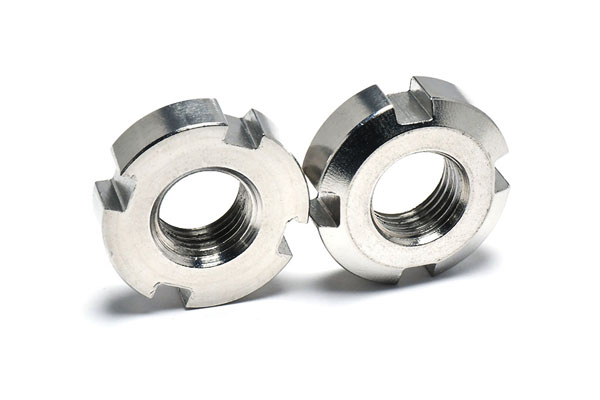
18-10 Stainless Steel Round Nut

Material Cost Difference

Typical market conditions show that 18/10 stainless steel products may cost approximately 5–20% more than comparable 18/8 产品, depending on product type, 制造过程, brand positioning, and nickel price fluctuations.

成本因素 18/8 不锈钢 18/10 不锈钢
Nickel content ~8% 〜10%
Raw material cost 降低 更高
制造成本 相似的 略高
Product positioning Standard to premium 优质的
Initial purchase price More economical 更昂贵

The difference is usually more noticeable in consumer products such as cookware and tableware than in industrial components where processing and machining costs dominate.

Lifecycle Cost Consideration

虽然 18/10 stainless steel has a higher initial price, its improved surface stability can reduce long-term replacement and maintenance costs.

例如:

  • Premium cookware may remain visually attractive for decades.
  • Commercial kitchen equipment may require fewer replacements.
  • Decorative stainless components maintain appearance longer.
  • High-cleanliness environments benefit from easier maintenance.

所以, the true economic value should be evaluated based on 总生命周期成本, not only purchase price.

A cheaper material that requires frequent replacement may ultimately cost more than a higher-quality stainless steel product with a longer service life.

7. How to Identify 18/8 和 18/10 不锈钢?

方法 如何执行 What It Reveals
Magnet test Place a magnet on the steel. 18/8 和 18/10 are essentially non‑magnetic in the annealed condition. Cold‑worked parts may be weakly magnetic.
Colour/Appearance 视觉检查. 18/10 (316) often has a brighter, more lustrous finish than 18/8 (304).
Chemical spot test Use a commercial stainless steel identification kit. Detects the presence of molybdenum (316) or higher nickel content.
Spark test Grind the steel and observe sparks. 304 和 316 produce similar sparks; difficult to distinguish.
XRF analysis
Use a portable X‑ray fluorescence analyser. Provides quantitative elemental analysis (Cr, 在, 莫).

Most reliable method: XRF analysis provides definitive identification of the alloy composition. For consumer products, check the manufacturer’s specifications or labelling.

8. 综合比较: How to Choose Between 18/8 和 18/10 不锈钢?

Selecting between 18/8 和 18/10 不锈钢 requires a comprehensive evaluation of alloy composition, corrosion environment, 机械要求, appearance expectations, 服务寿命, and total ownership cost.

The following table provides a professional comparison to help determine the most suitable material for different applications.

选择标准 18/8 不锈钢 18/10 不锈钢
Nickel content 大约 8% 在 大约 10% 在
Chromium content 大约 18% Cr 大约 18% Cr
Basic corrosion resistance Excellent for general environments Excellent with slightly improved resistance
Resistance to acidic foods and chemicals 非常好; suitable for normal food contact 优越的; better resistance to repeated chemical exposure
Salt and chloride resistance 适合温和环境; may be limited under prolonged exposure Slightly improved but not equivalent to 316 不锈钢
Surface brightness after polishing Good reflective finish Higher gloss and better mirror-polishing capability
Resistance to staining and discoloration
好的 出色的
机械强度 Tensile strength typically 515–650 MPa Tensile strength typically 520–680 MPa
Ductility and formability Excellent elongation (40–60%) 出色的, slightly improved forming stability
影响韧性 出色的, including low-temperature performance 出色的, with slightly enhanced toughness retention
Wear and scratch resistance 好的; improves through cold working Slightly better surface durability
耐热性 Excellent for normal cooking and industrial temperatures 出色的, with similar thermal stability
Food safety performance
出色的; widely approved for food contact 出色的; preferred for premium food applications
Dishwasher durability 好到好 出色的
制造成本 Lower due to reduced nickel content Higher due to additional nickel
生命周期成本 Excellent value in moderate environments Better long-term value in demanding applications
Appearance requirements Suitable for standard products Better for luxury and decorative products
典型的应用 Household cookware, 水槽, 食品容器, 一般工业组件 Premium cookware, 刀具, commercial kitchens, high-end equipment

9. 常见问题解答

是 18/10 stainless steel better than 18/8?

是的, 18/10 提供卓越的耐腐蚀性, better aesthetics, and enhanced durability compared to 18/8. 然而, 18/8 is more cost‑effective and sufficient for many applications.

The “better” choice depends on the application.

是 18/10 不锈钢磁性?

不. 18/10, 喜欢 18/8, is austenitic and essentially non‑magnetic in the annealed condition. Cold working can induce weak magnetism.

How can I tell if my cookware is 18/8 或者 18/10?

Check the manufacturer’s label, 包装, or product description. A magnet test can indicate stainless steel (non‑magnetic) but cannot distinguish between 18/8 和 18/10.

是 18/10 the same as 316 不锈钢?

不, this is a very common misconception. 316 stainless steel contains 2–3% molybdenum and higher nickel content, giving it dramatically better chloride pitting resistance.

18/10 is still a 304-grade material with no intentional molybdenum addition.

When should I pay extra for 18/10 不锈钢?

Specify 18/10 for deep-drawn components, premium cookware and tableware, food processing equipment and parts requiring severe cold forming.

For simple structural parts, architectural trim and general fabrication, 标准 18/8 304 is the more economical and fully appropriate choice.

10. 结论

The comparison between 18/8 和 18/10 不锈钢 demonstrates that both materials are high-performance stainless alloys with excellent corrosion resistance, 机械可靠性, and food-contact safety.

The fundamental difference lies in nickel content.

The additional nickel in 18/10 stainless steel improves the stability of the passive oxide layer, enhances surface appearance, and provides slightly better resistance to staining and long-term environmental exposure.

These advantages make it particularly suitable for premium cookware, commercial kitchens, 装饰应用, and products where appearance and durability are critical.

For general-purpose applications, 18-8 stainless steel provides outstanding value and performance.

For premium products and demanding environments where long-term appearance and enhanced corrosion resistance justify additional cost, 18-10 stainless steel is the preferred choice.

最终, selecting the correct stainless steel grade is not about choosing the most expensive material—it is about selecting the material that delivers the best combination of performance, 可靠性, and lifecycle value for the specific application.

滚动至顶部