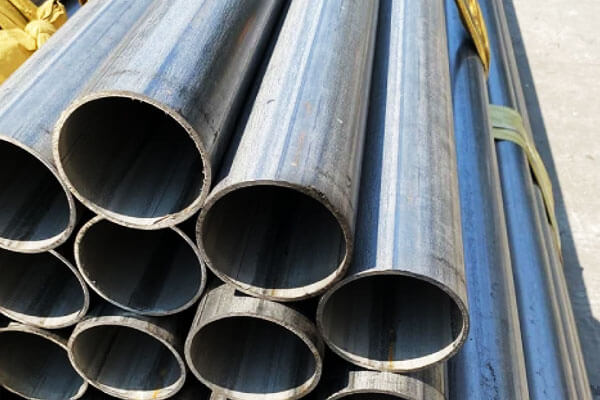
1.4006 不锈钢机械零件供应商

1.4006 不锈钢 | S41000 | X12Cr13 | AISI 410

1. 介绍

1.4006 是一个 马氏体不锈钢 that sits in the practical middle ground between ordinary carbon steel and more corrosion-resistant stainless grades.

It is commonly identified as X12Cr13, and many supplier references cross-link it with AISI 410UNS S41000, although some catalogs caution that related designations such as 410S or 410S21 are not always exact direct equivalents.

换句话说, it is a familiar grade with a clear industrial identity, but one that should still be checked against the specific standard and delivery condition being used.

是什么 1.4006 interesting is not maximum corrosion resistance, 但它的 balance of hardness, 力量, 可加工性, polishability, and moderate corrosion performance.

It is ferromagnetic, 可热处理, and capable of good mechanical properties after quenching and tempering, which is why it appears repeatedly in pumps, 阀, 轴, 配件, and general mechanical-engineering components.

2. 什么是 1.4006 不锈钢?

1.4006 是一个 马氏体不锈钢 年级, commonly associated with X12Cr13 in European designation systems.

It is a chromium-bearing 不锈钢 designed to provide a practical balance of 中等腐蚀性, 良好的机械强度, magnetic response, and heat-treatable hardenability.

In industrial terms, it is a functional engineering alloy rather than a premium corrosion alloy.

Unlike austenitic stainless steels such as 304 或者 316, 1.4006 does not achieve its usefulness primarily through corrosion resistance.

反而, its value comes from the way it can be hardened by heat treatment and used in components that need strength, 戴阻力, and stable performance in moderately corrosive service environments.

That makes it especially relevant in mechanical engineering, pump systems, 阀成分, 轴, 紧固件, and other parts where load-bearing performance is as important as environmental resistance.

1.4006 Stainless Steel Material

Metallurgical Identity

The defining feature of 1.4006 是它的 马氏体结构. This means the alloy can be transformed through thermal processing into a hard, strong condition.

退火状态, it is easier to machine and form; 淬火和回火后, it becomes significantly stronger and harder.

This metallurgical behavior is what distinguishes it from many other stainless steels:

  • 奥氏体不锈钢 are generally more corrosion-resistant and more ductile, but not easily hardened by heat treatment.
  • 铁素体不锈钢 offer good corrosion resistance in some environments, but lower hardenability.
  • 马氏体不锈钢, 包括 1.4006, are chosen when 力量和硬度 are central design requirements.

等效等级

1.4006 is recognized globally under various designations, ensuring interoperability across industries:

标准 Grade Designation
一个/你的 1.4006, X12Cr13
ASTM/AISI 410, UNS S41000
SUS410
GB 12CR13

关键特征

磁性行为

1.4006 是 磁的, which is a direct result of its martensitic structure.

This can be useful in applications where magnetic response is acceptable or even desirable, and it also clearly distinguishes the grade from austenitic stainless steels.

Heat-treatability

One of the main reasons engineers choose 1.4006 is that it can be hardened and tempered to achieve a tailored balance of strength and toughness.

This allows the final properties to be adapted to the part’s function.

中等腐蚀性

The grade contains chromium, which provides stainless behavior and a passive oxide layer.

然而, its corrosion resistance is moderate rather than outstanding, so it is best suited to mildly aggressive environments rather than severe chloride exposure.

Good machinability in the soft state

Before hardening, 1.4006 can be machined efficiently. That makes it attractive for precision components that are manufactured in a relatively soft condition and then heat treated to final properties.

Wear-oriented performance

Because it can be hardened, 1.4006 performs well in parts subject to abrasion, sliding contact, or repeated mechanical loading, especially where full corrosion-alloy performance is not required.

3. 化学成分 1.4006 不锈钢

The composition below reflects the commonly published EN/industry range for 1.4006 / X12Cr13.

Minor differences may appear across datasheets depending on product form and intended use, especially for sulfur content.

元素 Typical composition range (大量的 %) Metallurgical role
碳 (c) 0.08–0.15 Supports martensite formation, 硬度, and strength after heat treatment.
硅 (和) ≤ 1.00 Assists steelmaking and deoxidation; also influences strength and processing behavior.
锰 (Mn) ≤ 1.00 到 1.50 Supports processing and helps control hot workability.
磷 (p) ≤ 0.020 到 0.040 Kept low to preserve toughness and overall quality.
硫 (s)
≤ 0.015 到 0.020, with special allowances in some product types Influences machinability; lower sulfur is preferred for polishability and some service conditions.
铬 (Cr) 11.5–13.5 Primary stainless element; provides passivation and moderate corrosion resistance.
镍 (在) ≤ 0.5 到 0.75 Present only in small amounts; not enough to make the alloy austenitic.
铁 (铁) 平衡 碱金属.

Composition takeaway

1.4006 is intentionally a lean martensitic stainless steel: enough chromium for stainless behavior, enough carbon for hardenability, but not so much nickel that it becomes an austenitic grade.

That chemistry is what gives the alloy its characteristic balance of moderate corrosion resistance and heat-treatable strength.

4. 物理和机械特性 1.4006 不锈钢

The property values below are representative published figures. They depend strongly on the delivery condition, especially whether the material is annealed or quenched and tempered.

财产 退火 / 软状态 淬火和脾气暴躁 / QDT / QT 650 状况 笔记
产生强度 (RP0.2) ≥ 450 MPa in solution-annealed product data 552–655 MPA, 典型的 480 MPA; some product data list ≥ 450 MPa minimum Heat treatment materially raises strength.
抗拉强度 (RM) 650–850 MPa in solution-annealed product data ≥ 690 MPA, typical about 720 MPA Strength range varies with product form and diameter.
伸长 ≥ 15% ≥ 20% in one QDT reference Ductility depends on thermal condition and product size.
减少面积 ≥ 55% ≥ 45% Indicates meaningful ductility despite martensitic character.
硬度 up to about 220 HB in one annealed data sheet ≤ 22 HRC in QDT condition Hardness rises with hardening; exact values vary by condition.
影响韧性 - ≥ 27 J at −29°C Useful for components requiring some low-temperature toughness.
弹性模量
215 GPA 215 GPA Essentially unchanged by heat treatment in standard datasheets.
密度 7.70 千克/立方米 7.70 千克/立方米 Typical density for martensitic stainless steel.
比热 460 j/kg·k 460 j/kg·k Standard physical-property value at 20°C.
导热率 30 w/m·k 30 w/m·k Helpful for certain machining and heat-transfer behaviors.
电阻率 0.60 Ω·mm²/m 0.60 Ω·mm²/m Typical martensitic stainless-steel level.
Magnetizability 合适的 / 铁磁 合适的 / 铁磁 A defining characteristic of this grade.
Recommended service temperature up to about 400°C in one engineering datasheet avoid roughly 425–525°C because of 475 embrittlement risk Service temperature depends on the exact application and standard.

5. 热处理, 制造, and Welding

1.4006 是一个 heat-treatable martensitic stainless steel, and that single fact defines most of its processing behavior.

Its final properties are not fixed at purchase; they are developed by the thermal route chosen by the producer or fabricator.

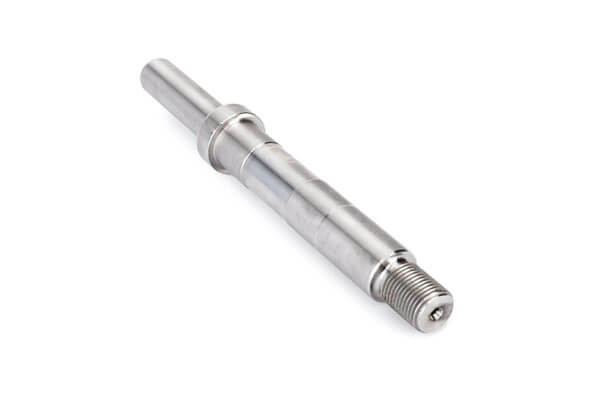
AISI 410 Stainless Steel Pump Shaft

热处理

A typical process chain for 1.4006 is straightforward in principle but sensitive in execution. The steel is first austenitized, then quenched, and finally tempered.

Datasheets commonly place annealing around 745–825°C, quenching around 950–1000°C, 和 tempering in the 680–780°C range, although the exact cycle depends on product form, 断面尺寸, and the required property balance.

The key point is that the alloy responds strongly to heat treatment, so the selected cycle directly determines hardness, 延性, and impact behavior.

A useful engineering interpretation is that 1.4006 is not a “fixed-property” stainless steel. 是一个 property-adjustable stainless steel.

That makes it suitable for components that need to be machined in a softer state and then converted into a harder, stronger final part.

In the quenched and tempered condition, published values show markedly higher yield and tensile strength than in the softer supply states, confirming that the thermal cycle is part of the design strategy, not just a finishing step.

铸件

铸件 1.4006 is possible, but it is not the usual headline route for this grade. The alloy is more commonly encountered as bar or forged product for machining into mechanical components.

When casting is used, the same martensitic stainless-steel logic still applies: chemical homogeneity, 凝固控制, and post-cast heat treatment are critical.

因为 1.4006 is intended to develop useful strength through martensitic transformation, cast products must be managed carefully to avoid coarse structure, 隔离, or property scatter.

That is why, in practice, cast martensitic stainless steels are usually reserved for component shapes where casting efficiency outweighs the advantages of wrought stock.

热工作

Hot working is a practical route for shaping 1.4006 before final machining or heat treatment.

Datasheets for comparable product forms indicate hot forming windows typically centered well above the annealing range and below the point where scale formation and property degradation become problematic.

In one martensitic 1.4006 product datasheet, the hot forming range is given as 1100°C至800°C, which is consistent with the need to maintain workable plasticity while staying inside a controlled thermal window.

From a manufacturing perspective, hot working is useful because it allows the grain structure to be refined and the part geometry to be established before hardening.

然而, it must be handled more carefully than austenitic stainless hot working because martensitic steels are more sensitive to thermal history and subsequent brittleness if the process is not matched with proper tempering.

冷工作

1.4006 can also be cold worked, but the alloy’s response is not identical to that of austenitic stainless steels.

Because it is martensitic and heat-treatable, cold working is often used less as the primary strengthening route and more as a shaping or finishing operation before final heat treatment.

Where cold deformation is introduced, it can raise strength and hardness, but it also increases forming forces and may reduce ductility if the process is pushed too far.

由于这个原因, cold working is best treated as a controlled shaping step rather than the main method of property development.

加工

加工 is one of the most practical strengths of 1.4006 不锈钢.

Several suppliers describe it as a grade suited to mechanical engineering parts precisely because it can be machined efficiently in the softer condition and then hardened later.

This is valuable in shafts, 阀零件, 配件, and other turned or milled components where tight tolerances matter.

A second advantage is that the alloy is often available in delivery states that support machining before final heat treatment.

In industrial terms, this means the manufacturing route can be organized for cost efficiency: rough machine first, finish heat treat second, and then perform only minimal finishing if needed.

The real benefit is not just machinability, 但 manufacturing sequence control.

焊接

Welding is possible, but martensitic stainless steels require more discipline than austenitic grades.

Supplier guidance for comparable 1.4006/X12Cr13 products notes that welding is feasible with standard methods, 但 preheating in the range of about 150–300°Cpost-weld annealing or tempering may be required to reduce cracking risk and restore a more stable property set.

换句话说, welding is not prohibited, but it is process-sensitive and must be planned as part of the material condition, not treated as an afterthought.

The welding challenge comes from the martensitic transformation.

If the heat-affected zone cools too quickly or if hydrogen and restraint are not controlled, brittle structures can form and cracking risk rises.

This is why many fabricators prefer to keep weldments simple, use proper filler selection, and apply post-weld heat treatment when the service demands it.

6. Corrosion Resistance and Service Limits

Corrosion resistance profile

耐腐蚀性 1.4006 is best described as 缓和.

It performs well in slightly aggressive, non-chloride environments such as soap, 洗涤剂, 有机酸, and water or steam service, but it is not intended for strong chloride exposure.

The steel has good corrosion resistance in water when polished and tempered, 但 not when chlorides are present.

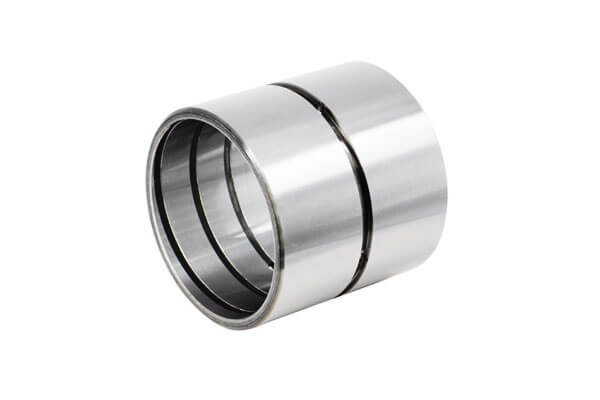
1.4006 Stainless Steel Bushings

Service-limit summary

Service aspect Practical limit / 指导 Engineering meaning
General corrosion environment Moderately corrosive, non-chloride media Good fit for water, 蒸汽, soap, and similar services.
表面状况 抛光 / 光滑的 / residue-free preferred Surface finish directly improves corrosion resistance.
接触氯化物 Not preferred Chloride environments can rapidly outgrow the alloy’s corrosion margin.
Elevated-temperature service Roughly 400–600°C depending on datasheet and atmosphere Suitable for moderate heat, not severe high-temperature service.

Surface condition matters

为了 1.4006, surface condition is not optional fine-tuning. A polished or honed surface improves corrosion behavior, which is especially important in equipment exposed to water, 蒸汽, or mildly aggressive media.

That is one reason the grade often appears in shafts, 阀成分, and pump parts where finish quality is part of the functional specification.

7. 典型应用 1.4006 不锈钢

1.4006 is used where 机械性能, 中等腐蚀性, 磁性, 和热处理性能 matter more than maximum corrosion protection.

It is especially common in parts that are machined first and hardened later.

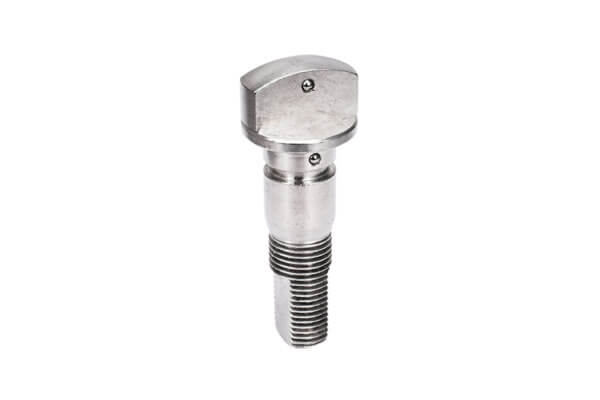
1.4006 Stainless Steel Ball Valve Stem

Mechanical engineering components

This is the core application area for 1.4006. It is frequently used for parts that must carry load, 抵抗磨损, and maintain dimensional reliability after heat treatment.

Datasheets describe it as mainly used in mechanical engineering.

Typical examples include:

  • 主轴
  • 车轴
  • 衬套
  • 机器零件
  • precision turned components

Pump and valve hardware

1.4006 广泛使用 pump industryhydraulic engineering because it combines machinability, 坚固性, and adequate corrosion resistance for moderately aggressive service.

Common components include:

  • impellers in non-severe media
  • 阀杆
  • 阀门 内部结构
  • 液压零件
  • fittings and couplings

水, 蒸汽, and mild process service

The grade is also used in structural parts exposed to water or steam and in equipment for 纸, textile, and food-industry environments where corrosion is moderate and cleanability matters.

示例包括:

  • steam-contact parts
  • water-service hardware
  • lightly corrosive process components
  • screens and sieves
  • industrial fixtures

Fasteners and small precision parts

因为 1.4006 can be heat treated and machined efficiently, it is suitable for 螺栓, 螺钉, 坚果, and small fitted components.

8. Comparison with Other Stainless Grades

方面 1.4006 1.4301 (304) 1.4404 (316l) 1.4021 (420)
Stainless family / 结构 马氏体, ferromagnetic steel with good mechanical properties. Austenitic stainless steel with excellent corrosion resistance in many environments. 奥氏体不锈钢; low carbon content gives good resistance to intergranular corrosion in the welded condition. 马氏体, ferromagnetic stainless steel; used in hardened condition for many construction and fastening elements.
磁性行为 磁的 / 铁磁. Essentially non-magnetic in the annealed condition, with some magnetic response possible after cold work. Austenitic and low magnetizability. 磁的 / 铁磁.
Heat treatability
可热处理; delivered as annealed, 淬火和脾气暴躁, or quenched and double tempered. Cannot be hardened by heat treatment; solution annealing is used instead. Not selected for hardening; typically used in solution-annealed condition with excellent weld performance. Hardenable; QT700 and QT800 conditions are specified.
耐腐蚀性 Good in non-chloride, moderately corrosive environments; PREN about 14; polished surface improves resistance. 在许多环境中出色, but chloride pitting/crevice corrosion can occur and stress corrosion cracking can occur above 60°C. Very good corrosion resistance; low carbon content helps preserve resistance in the welded condition. Corrosion resistance is lower than the common austenitic grades; useful in moderately aggressive media, but not the best choice for severe chloride exposure.
可焊性 / 制造
可焊接, but procedure discipline matters because martensitic steels are more sensitive to heat treatment and post-weld condition. Excellent fusion welding performance; readily work-hardens during cold working. Excellent welding behavior; low carbon helps retain corrosion resistance after welding. Weldability is good, but preheating and post-weld tempering are commonly recommended for best results.
典型使用温度 Up to about 400°C. Good oxidation resistance in intermittent service up to 870°C and continuous service to 925°C; continuous use at 425–860°C is not recommended if aqueous corrosion resistance is required. Suitable for use up to about 550°C. Suitable for use up to about 550–600°C depending on the datasheet and application context.
典型的应用
机械工业, hydraulic engineering, 泵, 阀, 配件, chemical and petrochemical industry, decorative features, household components. General-purpose equipment in many environments where formability and corrosion resistance are important. 泵, 阀, special bearings, 食物, 纸, 化学, 医疗的, and similar corrosion-sensitive equipment. 汽车, 石油, 石化, hydraulic equipment, 机械, 刀具, 刀片, decorative and kitchen applications.
最适合 Best when moderate corrosion resistance and higher mechanical strength are both needed. Best when excellent general corrosion resistance and easy fabrication matter most. Best when better corrosion resistance than 304 需要, especially in welded service. Best when hardness, 磁性行为, and moderate corrosion resistance are the priorities.

9. 结论

1.4006 stainless steel is a mature engineering material with a very specific role. It is not designed to be the most corrosion-resistant stainless steel, nor the easiest stainless steel to overlook in a catalog.

Its strength is that it works reliably in the applications for which it was intended: mechanically demanding parts, moderate environments, and production routes that benefit from heat treatment and machining flexibility.

Viewed properly, 1.4006 is not a compromise grade in the pejorative sense.

是一个 purpose-built martensitic stainless steel whose combination of magnetism, 坚固性, 可加工性, and moderate corrosion resistance makes it a practical solution for a wide range of industrial components.


常见问题解答

是 1.4006 不锈钢磁性?

是的. It is a martensitic stainless steel and is magnetic.

是 1.4006 stainless steel heat treatable?

是的. Its properties are strongly influenced by quenching and tempering.

是 1.4006 stainless steel corrosion resistant?

是的, but only moderately. It is suitable for mild to moderately aggressive environments, not severe chloride service.

What is the melting point of 1.4006 不锈钢?

The melting range of 1.4006 is 1480–1530°C, slightly higher than carbon steel, enabling use in moderately high-temperature applications (高达 600°C).

是 1.4006 比 304 不锈钢?

Not universally. 304 is better for corrosion resistance, 尽管 1.4006 is better when hardening, magnetic response, and mechanical wear performance are more important.

滚动至顶部