Вступ
CF3M and CF8M are two closely related cast austenitic stainless steels used extensively in pressure-containing components such as valves, фланці, фурнітура, деталі накачування, and chemical-process hardware.
Both belong to the ASTM A351 family, which covers austenitic and duplex steel castings for pressure-containing parts and leaves final grade selection to the purchaser based on service conditions, механічні вимоги, and corrosion performance.
That is a crucial point: this is not a mere naming exercise, but an engineering decision with direct consequences for reliability, технічне обслуговування, і вартість життєвого циклу.
At a high level, the two grades share the same metallurgical “platform” — chromium, нікель, and molybdenum — but differ in carbon content.
CF3M is the low-carbon version, while CF8M allows a higher carbon ceiling.
That one variable substantially changes sensitization behavior, weld-zone corrosion risk, and the amount of process control required to keep the part reliable in aggressive service.
1. Fundamental Definition and Standardization: Origins and Core Classification
ASTM A351 is the central specification for these grades in pressure-containing castings.
It explicitly covers castings for valves, фланці, фурнітура, та інші частини, що містять тиск, and it emphasizes that grade selection depends on the intended service environment and required performance.
На практиці, Cf3m і Cf8m are often specified under ASTM A351, with corresponding cast variants also appearing in ASTM A743 and A744 supply chains.

Nomenclature Decoding: What Do CF3M and CF8M Stand For?
The naming convention of these grades (per ASTM and Alloy Casting Institute, ACI) reveals their core characteristics, eliminating ambiguity in material identification:
- C: Indicates the alloy is designed for “Corrosion-resistant” applications, distinguishing it from structural or heat-resistant cast stainless steels.
- F: Denotes the alloy’s position on the iron-chromium-nickel (Fe-Cr-Ni) ternary phase diagram, signifying a standard austenitic composition with balanced chromium and nickel content.
- 3 проти. 8: Represents the maximum carbon content (in increments of 0.01% за вагою). “3” means a maximum carbon content of 0.03%, while “8” indicates a maximum carbon content of 0.08%.
This is the defining difference between CF3M and CF8M. - М: Signifies the presence of молібден (Mo) in the alloy, a critical element that enhances corrosion resistance—particularly against chloride-induced pitting and crevice corrosion.
На практиці, CF3M is the low-carbon molybdenum-bearing cast stainless steel, while CF8M is the standard-carbon molybdenum-bearing counterpart.
Standardization and Equivalent Grades
Both CF3M vs CF8M Stainless Steel are standardized under ASTM A351 (ASME SA351) and have corresponding international and domestic equivalents, ensuring global compatibility in industrial applications:
CF3M Stainless Steel:
- Номер UNS (Кадати): J92800; Номер UNS (Wrought Equivalent): S31603 (AISI 316L)
- International Equivalent: EN/DIN 1.4404 (GX2CrNiMo18-10-2)
- Chinese National Standard (GB) Еквівалент: 022Cr19Ni11Mo2 (316L cast version)
Нержавіюча сталь CF8M:
- Номер UNS (Кадати): J92900; Номер UNS (Wrought Equivalent): S31600 (Aisi 316)
- International Equivalent: EN/DIN 1.4408 (GX6CrNiMo18-10)
- Chinese National Standard (GB) Еквівалент: 06Cr19Ni11Mo2 (316 cast version)
Зокрема, CF3M is the low-carbon variant of CF8M, analogous to how 316L (ковані) relates to 316 (ковані).
This carbon content difference is the root cause of their divergent performance characteristics, particularly in corrosion resistance and weldability.
2. Хімічний склад: The Core Distinction and Its Implications
Although CF3M and CF8M belong to the same cast austenitic stainless steel family, their chemical similarity should not be mistaken for equivalence.
У практичному інженерному плані, they are separated by one dominant variable: вміст вуглецю.
Typical Chemical Composition Comparison
| Елемент | Cf3m | Cf8m | Main Function |
| Вуглець (C) | ≤ 0.03% | ≤ 0.08% | Controls sensitization and weld-zone corrosion risk |
| Хром (Cr) | 17.0–21,0% | 18.0–21,0% | Forms the passive oxide film |
| Нікель (У) | 9.0–13.0% | 9.0–12.0% | Stabilizes austenite and improves toughness |
| Молібден (Mo) | 2.0–3,0% | 2.0–3,0% | Enhances pitting and crevice corrosion resistance |
Марганець (Мн) |
≤ 1.50% | ≤ 1.50% | Supports castability and deoxidation |
| Кремнію (І) | ≤ 1.50% | ≤ 1.50% | Improves fluidity during casting |
| Фосфор (С) | ≤ 0.040% | ≤ 0.040% | Controlled impurity; excessive levels reduce ductility |
| Сірка (S) | ≤ 0.040% | ≤ 0.040% | Controlled impurity; excessive levels harm corrosion behavior |
The Critical Role of Carbon Content
Carbon is the true dividing line between these two grades.
З нержавіючої сталі, carbon has a strong tendency to combine with chromium at elevated temperatures and form chromium carbides along grain boundaries.
When that occurs, the adjacent metal loses chromium locally, which weakens the passive film and creates a vulnerable path for міжкристалічна корозія.
This is why CF3M is regarded as the more conservative choice for welded or thermally cycled components.

With carbon limited to 0.03% maximum, CF3M has far less driving force for carbide precipitation.
The result is a lower tendency toward sensitization, better retention of corrosion resistance in the heat-affected zone, and higher tolerance for fabrication that cannot always be followed by ideal post-weld heat treatment.
Cf8m, навпаки, allows up to 0.08% вуглець. That level is still perfectly acceptable in many industrial applications, but it increases sensitivity to thermal exposure.
If welding is extensive, or if the component is left in service after a thermal cycle without adequate solution annealing, the risk of chromium depletion at grain boundaries becomes more significant.
Іншими словами, CF8M is not “inferior”; it is simply less forgiving when fabrication discipline is weak or service conditions are aggressive.
Why this matters in practice
The carbon difference affects not only corrosion performance, but also the entire manufacturing strategy:
- Welding behavior: CF3M is generally safer for welded assemblies.
- Heat treatment dependence: CF8M relies more heavily on correct post-fabrication thermal control.
- Service reliability: CF3M offers a wider safety margin in corrosive environments where weld integrity matters.
- Lifecycle risk: CF3M reduces the probability of hidden corrosion initiation at grain boundaries.
The engineering conclusion is straightforward: when the part will be welded, repaired, or exposed to corrosive media after fabrication, carbon content becomes a decisive selection criterion rather than a minor specification detail.
If carbon is the main differentiator, molybdenum is the common strength of both grades.
CF3M and CF8M are both molybdenum-bearing stainless steels, and that element significantly improves resistance to корозія і Корозія щілини, особливо в середовищах, що містять хлориди.
Molybdenum does not merely “add corrosion resistance” in a general sense.
It improves the stability of the passive film and helps the alloy resist localized breakdown in aggressive service such as seawater, розсіл, chemical-process fluids, and chlorinated water systems.
This is one of the reasons both grades outperform non-molybdenum cast stainless steels in many corrosive applications.
3. Механічні властивості: CF3M vs CF8M Stainless Steel
From a specification standpoint, CF3M and CF8M are very close in room-temperature mechanical performance.
Mechanical selection is usually not driven by a dramatic difference in static strength; it is driven more by how each alloy behaves after casting, відпал розчину, зварювання, and thermal exposure.
Supplier datasheets also stress that these values are typical comparison figures and can vary with temperature, товщина перетину, форма продукту, та застосування.
Typical room-temperature mechanical requirements
| Механічна властивість | Cf3m | Cf8m | Зауваження |
| Сила на розрив | 485 MPa min | 485 MPa min | Essentially the same at the published minimum level. |
| Похідна сила | 205 MPa min | 205 MPa min | Comparable resistance to permanent deformation. |
| Подовження | 30% хв | 30% хв | Both grades retain good ductility. |
| Щільність | 7.75 kg/dm³ | 7.75 kg/dm³ | Practically identical. |
Key Mechanical Differences and Their Causes
The meaningful difference is not in the nominal minimums, але в how the two grades preserve those properties in real fabrication.
CF3M’s lower carbon content reduces the tendency to form chromium carbides during thermal cycles, which helps retain ductility and corrosion integrity in and around welds.
Cf8m, навпаки, is still a sound and widely used casting grade, but it is more dependent on careful heat treatment and welding practice to avoid sensitization-related degradation.
That is why CF3M is usually considered the more forgiving alloy in welded, repair-prone, or field-fabricated systems.
Another important point is temperature behavior.
Аустенітні нержавіючі сталі, including cast austenitic grades, generally remain tough and ductile at subzero temperatures;
Nickel Institute data explicitly notes that face-centered cubic austenitic stainless steels retain toughness to very low temperatures, and that low-temperature properties remain sensitive to composition and treatment.
For engineering purposes, this means neither CF3M nor CF8M becomes brittle in the way carbon steels often do, but CF3M is usually preferred where low-carbon chemistry and weld-zone stability are both important.
4. Корозійна стійкість: CF3M vs CF8M Stainless Steel

Міжгранулярна корозія (IGC) опір
This is where CF3M usually pulls ahead. The low carbon level materially reduces sensitization risk, so CF3M is often preferred for welded assemblies that will remain in corrosive service.
Nickel Institute guidance specifically highlights the need to prevent intergranular corrosion in cast CF3M and CF8M by proper annealing and quenching, with low-carbon selection being the more conservative route where welding is involved.
Стійкість до ямкової та щілинної корозії
Because both grades are Mo-bearing and chromium-rich, they both have solid resistance to pitting and crevice corrosion.
In many chloride environments, this means CF3M and CF8M can both be serviceable if the component geometry, якість зварювання, and fluid conditions are appropriate.
The difference appears when corrosion stress overlaps with weld sensitivity: CF3M keeps more margin.
Resistance to Specific Corrosive Environments
| Навколишнє середовище | Cf3m | Cf8m | Коментувати |
| Морська вода / chloride media | Very good to excellent | Very good to excellent | Both benefit from Mo; welded CF3M is the safer choice |
| Organic acids | Дуже добре | Добре до дуже добре | Low carbon helps CF3M after welding |
| Stagnant or slow seawater | Better margin | More caution needed | CF8M should not be used for slow-moving or stagnant seawater |
| Welded corrosive service | Сильний | Acceptable only with tighter control | CF3M is the more conservative selection |
Real-World Corrosion Performance Case Study
A petrochemical plant in the Gulf of Mexico used CF8M valves in a seawater cooling system.
після 18 months of service, the valves developed intergranular corrosion in the welded joints (without post-weld heat treatment), leading to leakage and unplanned downtime.
The plant replaced the CF8M valves with CF3M valves of the same design.
після 3 years of service, the CF3M valves showed no signs of corrosion, even in the welded areas, demonstrating CF3M’s superior IGC resistance in chloride-rich, welded applications.
5. Fabrication and Processing Characteristics
CF3M and CF8M are both cast austenitic stainless steels, so they share many processing features that matter in real manufacturing:
хороша ливарність, reasonable machinability for stainless castings, and the ability to be solution-annealed to restore corrosion performance after thermal exposure.
The practical difference is that CF3M is generally more forgiving during welding and post-cast fabrication, в той час CF8M is more dependent on controlled heat treatment to preserve corrosion resistance in service.

Каста
Both grades are widely used because they cast well into complex geometries such as valve bodies, насос кожухів, фланці, і фурнітура.
Published supplier data show essentially the same patternmaker’s shrinkage, приблизно 2.6%, which means their mold design and solidification behavior are broadly similar.
Both are also commonly supplied in the розчинно-прожарений хвороба, which is the proper starting point for corrosion-resistant service.
From a foundry perspective, this similarity is important: it means the choice between CF3M and CF8M is usually ні driven by casting difficulty alone.
Натомість, the decision is usually made after considering weldability, corrosion severity, and the extent of later thermal processing.
Іншими словами, both grades are castable, but they are not equally forgiving once fabrication and service conditions become more demanding.
Зварюваність
Weldability is where CF3M usually gains the upper hand.
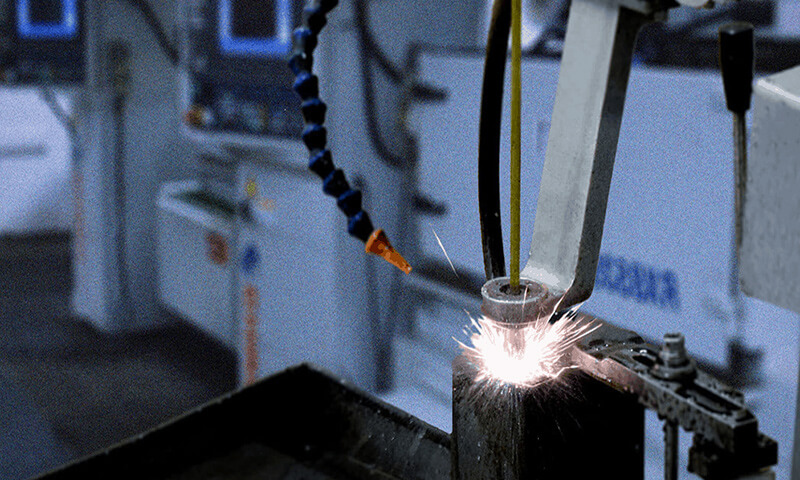
Because its carbon content is limited to 0.03% макс, it has a much lower tendency to form chromium carbides in the heat-affected zone during welding.
That reduces sensitization and lowers the risk of intergranular corrosion after fabrication.
Nickel Institute guidance specifically supports the use of low-carbon stainless steels in welded corrosion-resistant service because they are less vulnerable to post-weld chromium depletion.
CF8M is still weldable and widely used, but it is less tolerant of poor thermal control.
With a higher carbon ceiling of 0.08% макс, it is more likely to suffer sensitization if welding is extensive and no adequate post-weld thermal treatment is applied.
For that reason, CF8M is typically better suited to components that are either not heavily welded or can be reliably solution-annealed after fabrication.
Machinability and Finishing
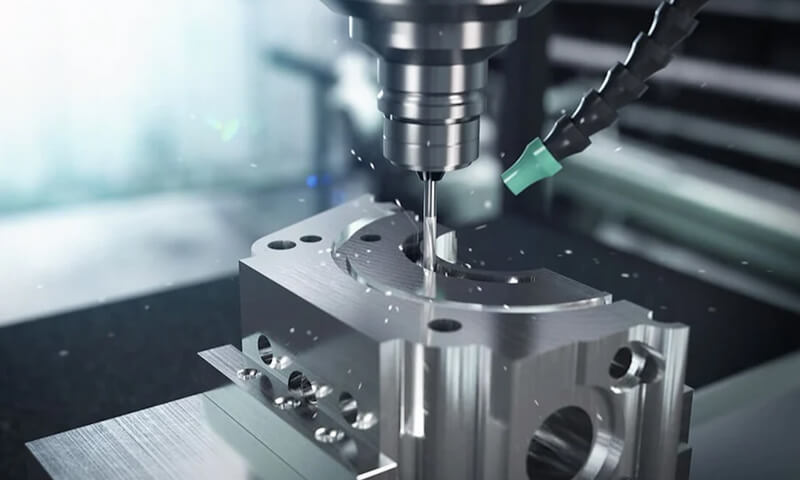
Both grades have the general machinability characteristics typical of cast austenitic stainless steels: they are workable, but they require sharper tools, controlled cutting parameters, and attention to work hardening.
Published supplier data indicate that CF3M and CF8M are both intended for precision cast components that may later be machined, полірований, or finished to service-specific surface requirements.
In finishing operations, CF3M often has a slight practical advantage because its lower carbon content and more conservative weld behavior can make it easier to maintain corrosion performance after final processing.
That matters in industries where surface quality is closely linked to hygiene or corrosion resistance, such as food processing, фармацевтичні препарати, and chemical service.
CF8M remains fully usable in these applications, but it is more dependent on upstream process control to ensure that finishing does not expose a sensitized region.
6. Промислові програми: CF3M vs CF8M Stainless Steel
Cf3m: Ідеальні програми
CF3M is commonly used in chemical and food processing, Теплообмінники, трубопровід, Судна тиску, pulp and paper equipment, pump and компоненти клапана, and nuclear flow-control parts.
Cf8m: Ідеальні програми
CF8M is a proven choice for насос, клапани, морська служба, Хімічна обробка, харчова обробка, and nuclear-related hardware.
It remains attractive where a classic cast 316-type solution is sufficient and where welding or post-weld treatment is controlled.
7. Cost Comparison and Lifecycle Considerations
CF8M is usually the more familiar and often the lower-risk procurement option when service conditions are moderate and fabrication is tightly controlled.
CF3M can cost more upfront in some supply chains because it requires stricter carbon control and is often chosen for more demanding service.
The more important question, однак, is lifecycle cost: if a component fails at a weld because of sensitization, the repair and downtime cost can dwarf the initial material premium.
That is the central economic argument. CF3M is frequently the better value where failure consequences are high; CF8M is often the economical solution where risk is lower and process discipline is already strong.
ASTM A351’s own wording supports that project-specific selection model.
8. Всебічне порівняння: CF3M vs CF8M Stainless Steel
| Категорія | Cf3m | Cf8m | Practical Meaning |
| ASTM family | Cast austenitic stainless steel, Mo-bearing low-carbon grade | Cast austenitic stainless steel, Mo-bearing standard-carbon grade | Both belong to the same corrosion-resistant cast stainless family under ASTM A351. |
| Вміст вуглецю | ≤ 0.03% | ≤ 0.08% | This is the key metallurgical difference and the main reason their service behavior diverges. |
| Хром | About 17–21% | About 18–21% | Both rely on chromium for passive-film formation and general corrosion resistance. |
Нікель |
About 9–13% | About 9–12% | Nickel stabilizes the austenitic structure and supports toughness and ductility. |
| Молібден | About 2–3% | About 2–3% | Both have good resistance to pitting and crevice corrosion because of Mo. |
| Сила на розрив | 485 MPa min | 485 MPa min | Published minimum static strength is broadly comparable. |
| Межа текучості | 205 MPa min | 205 MPa min | Load-bearing capability is similar at the standard minimum level. |
Подовження |
30% хв | 30% хв | Both grades retain good ductility for cast stainless steel. |
| Зварюваність | краще | Добрий, but more sensitive | CF3M is more forgiving in welded and repair-prone structures because lower carbon reduces sensitization risk. |
| Intergranular corrosion resistance | Сильніше | More dependent on heat treatment | CF3M has the advantage where welded areas remain in corrosive service. |
| Піттинг / crevice corrosion resistance | Дуже добре | Дуже добре | Both perform well in chloride-containing media because they are Mo-bearing. |
Каста |
Відмінний | Відмінний | Both cast well into complex shapes such as valve bodies and pump parts. |
| Обробка | Помірний | Помірний | Both are workable, but require stainless-steel machining practice and care against work hardening. |
| Best fit | Welded corrosive-service components | General corrosion-resistant castings with controlled fabrication | CF3M is the conservative choice; CF8M is often the economical standard choice. |
9. Висновок
CF3M and CF8M are both mature, highly useful cast stainless steels, but they are not interchangeable in demanding service.
Their chemistry is close, their static mechanical properties are broadly similar, and both benefit from chromium and molybdenum.
The real dividing line is carbon: CF3M’s low-carbon design gives it a stronger defense against sensitization and intergranular corrosion, especially in welded or repair-prone components.
CF8M remains a reliable and widely used 316-type casting grade, but it asks for more disciplined fabrication and thermal control.
For engineers and purchasers, the most defensible rule is simple: choose CF3M when weld integrity and corrosion margin dominate the risk profile; choose CF8M when the environment is moderate, the fabrication route is controlled, and lifecycle risk is acceptable.
That is the practical logic behind these two grades, and it is why both continue to occupy important but distinct roles in industrial equipment.
Поширені запитання
Is CF3M the same as CF8M with lower carbon?
Not exactly the same, but that is the most important distinction.
Both are Mo-bearing cast austenitic stainless steels, but CF3M has a lower carbon ceiling, which materially improves weld-zone corrosion resistance.
Do CF3M and CF8M have similar strength?
Так. Published supplier data show broadly similar minimum tensile and yield strengths, so selection is usually driven by corrosion and fabrication behavior rather than static strength alone.
Are both grades suitable for seawater service?
Both can be used in chloride-bearing environments because of their molybdenum content, but CF3M generally provides a safer margin in welded or more severe service.
Nickel Institute also cautions that CF8M should not be used for slow-moving or stagnant seawater.
Which grade is more economical over the full life cycle?
It depends on the failure risk. CF8M may be more economical upfront in controlled service, but CF3M can be more economical over the lifecycle when welding, corrosion severity, or repair cost makes failure expensive.