1. Вступ
Manufacturing processes such as casting and machining have revolutionized modern industries, enabling the production of everything from intricate medical implants to robust automotive parts.
Choosing between these two methods requires a deep understanding of their capabilities, обмеження, і придатність для конкретних застосувань.
Casting and machining represent two fundamental approaches to shaping materials, one using molds and molten metals, and the other relying on precision cutting tools.
У цій статті, we will explore the strengths and weaknesses of these processes, offering insights to help you make the best choice for your manufacturing needs.
2. Що таке кастинг?
Кастинг is a manufacturing process where molten material, typically metal, is poured into a mold that contains a hollow cavity of the desired shape.
The material solidifies as it cools, taking on the shape of the mold. Після затвердіння, the casting is removed from the mold, and any finishing touches are applied to produce the final part.
Casting has been used for thousands of years and remains one of the most versatile methods for producing metal parts with complex geometries.
Types of Casting:
Пісочний кастинг:
- Огляд процесу: Sand casting uses sand as the mold material. The sand is packed around a pattern (typically made of wood, пластиковий, або метал) that forms the cavity of the mold.
After removing the pattern, molten metal is poured into the cavity. Після охолодження, the sand mold is broken away to reveal the casting. - Заявки: Ideal for large parts and low-cost production, sand casting can produce parts ranging from a few ounces to hundreds of tons.
It’s commonly used in automotive engine blocks, шестерні, and industrial machinery components. - Переваги: Low tooling costs, ability to handle large parts, and suitability for a wide range of materials.
- Недоліки: Less precise tolerances compared to other casting methods, rough surface finish, and longer lead times for setup.
Інвестиційне кастинг (Кастинг загубленого воску):
- Огляд процесу: Investment casting involves creating a wax pattern that is then coated with ceramic material.
After firing, the wax melts out, leaving a hollow ceramic mold into which molten metal is poured. Після затвердіння, the ceramic mold is broken away to reveal the casting. - Заявки: Known for its precision, investment casting is used for aerospace components, Турбінні леза, ювелірні вироби, та медичні імплантати.
- Переваги: Висока точність розмірів, Відмінна обробка поверхні, and the ability to create complex internal geometries.
- Недоліки: Higher cost due to the labor-intensive process, slower production rates, and limited to relatively small parts.

Кастинг:
- Огляд процесу: Die casting forces molten metal under high pressure into reusable steel molds called dies.
The rapid cooling and solidification allow for quick production cycles. - Заявки: Suitable for mass production of small, detailed parts such as zinc or aluminum housings, з'єднувачі, and consumer electronics components.
- Переваги: Fast production speeds, Тісні допуски, and good surface finishes.
- Недоліки: Higher initial tooling costs, limited to lower melting point alloys, and less suitable for very large parts.

Постійне лиття цвілі:
- Огляд процесу: Similar to die casting but uses gravity or low pressure to fill the mold. The molds are typically made of steel or iron and can be reused multiple times.
- Заявки: Permanent mold casting is often used for automotive parts like pistons, головки циліндрів, і колеса.
- Переваги: Better dimensional accuracy than sand casting, improved mechanical properties due to faster cooling, and smoother surface finishes.
- Недоліки: Higher tooling costs compared to sand casting, slower production rates than die casting, and limited to medium-sized parts.
3. What is Machining?
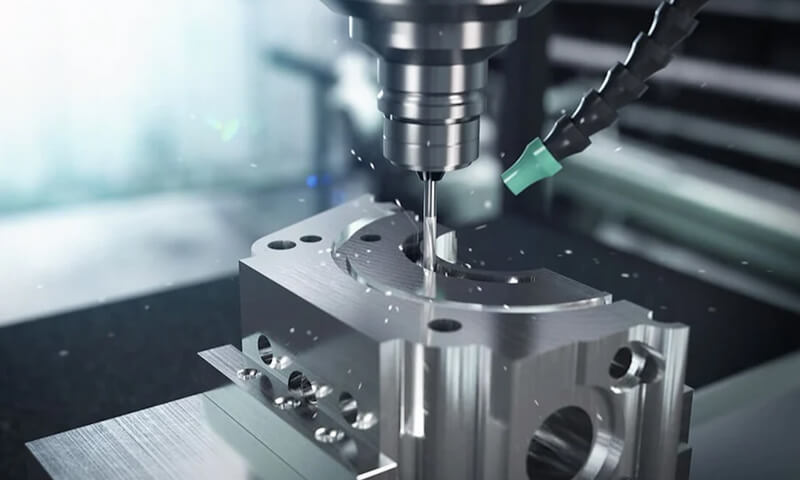
Обробка is a subtractive manufacturing process where material is removed from a workpiece using cutting tools to achieve the desired geometry, розмір, і закінчити.
This process can be performed manually but is increasingly automated through the use of computer numerical control (ЧПУ) системи, which enhance precision, повторюваність, і ефективність.
Machining is widely used across industries for creating parts with tight tolerances and complex features that are critical for performance.
Types of Machining Processes:
Обробка ЧПУ:
- Огляд процесу: CNC machining uses pre-programmed software to control machine tools, automating the machining process.
Common CNC machining operations include milling, обертання, свердління, нудний, і постукає.
-
- Фрезер: Removes material by rotating a multi-point cutter against a stationary workpiece. Ideal for creating flat surfaces, проріз, and holes.
- Обертання: Involves rotating the workpiece while a single-point tool cuts away material, зазвичай використовується для циліндричних деталей.
- Свердління: Creates holes in the workpiece using a drill bit that rotates and advances into the material.

- Заявки: CNC machining is extensively used in aerospace, автомобільний, Медичні пристрої, and consumer electronics for producing parts requiring high precision and consistency.
- Переваги: Висока точність, відмінна повторюваність, faster production times, і зниження витрат на оплату праці.
- Недоліки: Higher initial setup costs due to programming and tooling, and less suitable for very large parts compared to casting.
Ручна обробка:
- Огляд процесу: Performed by skilled operators who manually control machine tools such as lathes, млини, і свердла.
Manual machining requires significant operator expertise and is slower than CNC machining. - Заявки: Often used for small batch production, прототипування, and repair work where quick adjustments and customization are necessary.
- Переваги: Greater flexibility for on-the-fly changes, lower cost for one-off parts, and suitability for smaller shops or specialized applications.
- Недоліки: Lower production speed, вищі витрати на оплату праці, and less consistent results compared to CNC machining.
Електрична обробка розряду (EDM):
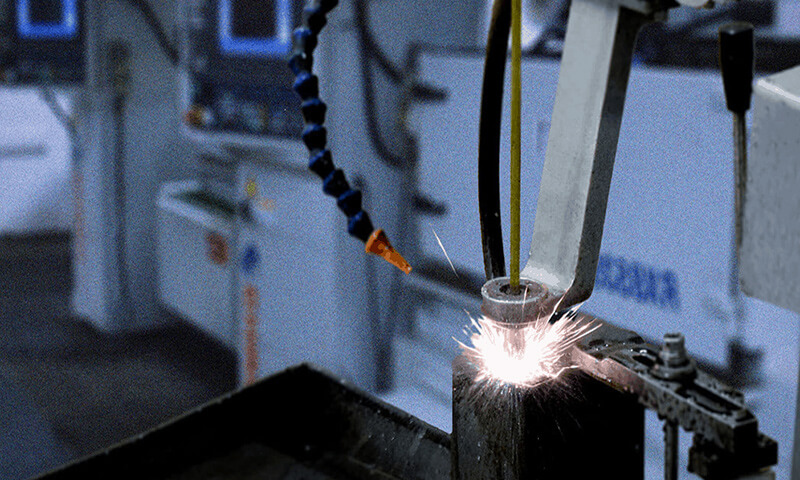
- Огляд процесу: EDM uses electrical discharges (іскри) to erode material from a workpiece.
It’s particularly useful for hard materials and complex geometries that are difficult to machine conventionally. - Заявки: Commonly used in mold and die-making, аерокосмічні компоненти, and intricate medical devices.
- Переваги: Can machine extremely hard materials, achieves fine details, and produces minimal heat-affected zones.
- Недоліки: Slower process, limited to conductive materials, and higher operational costs.

Шліфування:
- Огляд процесу: Grinding involves removing material using an abrasive wheel that rotates at high speeds. It’s used for finishing and achieving very tight tolerances.
- Заявки: Widely used in the automotive, аерокосмічний, and tooling industries for producing smooth, accurate surfaces.
- Переваги: Відмінна обробка поверхні, capable of achieving very tight tolerances, and suitable for hard materials.
- Недоліки: Generates heat that can alter material properties if not managed properly, and it can be a slower process compared to other methods.
Протяжка:
- Огляд процесу: Broaching uses a toothed tool called a broach to remove material in a single stroke.
The broach moves linearly relative to the workpiece, cutting progressively deeper with each tooth. - Заявки: Used for producing keyways, сплайни, and other internal or external forms in mass production.
- Переваги: Fast and efficient for specific shapes, high productivity for repetitive tasks.
- Недоліки: Обмежується певними формами, requires dedicated equipment, and can have high tooling costs.
4. Key Differences Between Casting vs. Обробка
| Означати | Кастинг | Обробка |
|---|---|---|
| Матеріальні відходи | Minimal waste due to near-net-shape parts | Significant scrap generated from material removal |
| Точність і допуски | Requires secondary processes for tighter tolerances | Offers superior precision and tight tolerances |
| Вартість | Higher initial tooling costs | Costs depend on material removal and complexity |
| Швидкість виробництва | Faster for high-volume production | Excels in prototyping and low-volume runs |
| Складність дизайну | Can achieve complex internal geometries | Limited by tool access |
| Варіанти матеріалів | Wide range of metals and alloys | В першу чергу метали, some plastics |
5. Advantages of Casting
Casting offers a multitude of benefits that make it an attractive manufacturing process for a wide range of industries, from automotive and aerospace to heavy machinery and consumer goods.
Below are some key advantages of casting:
Cost-Effectiveness for Large-Scale Production
- Economical at High Volumes: Casting is especially cost-effective for producing large quantities of parts.
The initial setup costs, such as mold creation, can be amortized over the production volume, leading to lower per-unit costs.
Наприклад, die casting can reduce unit costs by up to 30% when producing over 10,000 одиниць.
Ability to Create Intricate Shapes
- Складні геометрії: One of the standout features of casting is its ability to produce complex shapes and internal geometries that would be difficult or impossible to achieve with other manufacturing methods.
Інвестиційне кастинг, зокрема, excels at creating parts with fine details and thin walls, making it ideal for intricate components like turbine blades.
Wide Range of Material Options
- Універсальні матеріали: Casting supports a broad spectrum of metals and alloys, включаючи алюміній, бронза, чавун, сталь, і суперпролої.
This flexibility allows manufacturers to choose materials based on specific application requirements.
Наприклад, aluminum die casting not only reduces weight by up to 50% compared to steel but also offers good corrosion resistance and mechanical properties.
Suitable for Large Parts
- Handling Heavy Components: Casting is unparalleled in its ability to produce large parts, which is crucial for industries like construction and transportation.
Пісочний кастинг, наприклад, can handle parts weighing up to 100,000 фунтів, making it perfect for heavy machinery components and automotive engine blocks.
Near-Net Shape Capabilities
- Minimized Material Waste: Casting processes often produce parts close to their final dimensions (майже сітчаста форма), significantly reducing the need for secondary machining operations.
This minimizes material waste and lowers overall production costs. Лиття в постійну форму, наприклад, can achieve surface finishes as smooth as 60 micro inches, reducing or eliminating post-processing steps.
Гнучкість дизайну
- Customization and Prototyping: While casting is renowned for high-volume production, it also offers design flexibility.
Rapid prototyping techniques, such as 3D-printed sand molds, allow for quick iterations and adjustments during the development phase.
This makes casting suitable not only for mass production but also for custom and limited-run projects.
Покращені механічні властивості
- Tailored Performance: Depending on the casting method and material used, parts can exhibit enhanced mechanical properties.
Наприклад, permanent mold casting’s faster cooling rate can result in finer grain structures, improving strength and hardness.
Додатково, certain casting processes can incorporate heat treatment or alloying elements to further tailor the part’s performance characteristics.
6. Advantages of Machining
Machining is a versatile and precise manufacturing process that offers numerous advantages,
making it indispensable in industries ranging from aerospace and automotive to medical devices and consumer electronics.
Below are some key benefits of machining:
Висока точність і точність
- Unmatched Tolerances: One of the most significant advantages of machining is its ability to achieve extremely tight tolerances.
ЧПУ (Комп'ютерний числовий контроль) machines can produce parts with tolerances as tight as ±0.0005 inches (0.0127 мм), ensuring that components meet exact specifications. - Consistency and Repeatability: Automated CNC machining ensures that each part produced is identical to the last, providing high levels of consistency and repeatability.
This is crucial for applications where part-to-part uniformity is essential.
Superior Surface Finishes
- Smooth Surfaces: Machining can produce exceptionally smooth surface finishes without the need for additional treatments.
Наприклад, CNC machining can achieve surface finishes as smooth as 8 micro inches, which is ideal for applications requiring minimal friction or high aesthetic standards. - Зменшена постобробка: The precision of machining often means that less post-processing, such as grinding or polishing, є обов'язковим, saving time and reducing costs.
Versatility in Prototyping and Custom Designs
- Rapid Iterations: Machining allows for quick adjustments and modifications during the development phase, facilitating rapid prototyping.
This flexibility is particularly beneficial for creating custom parts or testing new designs before committing to mass production. - Налаштування: The ability to modify digital models and CNC programming quickly makes machining an excellent choice for producing unique or small-batch items tailored to specific needs.
Гнучкість матеріалу
- Широкий вибір матеріалів: Machining is compatible with a broad range of materials, включаючи такі метали, як сталь, алюміній, титан, і різні сплави, as well as plastics and composites.
This versatility allows manufacturers to choose the best material for their application requirements. - Hard Material Capability: Certain machining processes, such as Electrical Discharge Machining (EDM),
can handle extremely hard materials that are difficult to shape using other methods, розширення діапазону можливого застосування.
Складність дизайну
- Складні геометрії: While casting excels at creating complex internal geometries, machining can produce intricate external features and detailed surfaces.
Modern CNC machines equipped with multi-axis capabilities can handle complex three-dimensional shapes with ease. - Tool Access: Although machining may be limited by tool access compared to casting,
advancements in tooling technology have significantly expanded the types of features that can be machined.
Cost Efficiency for Small and Medium Batches
- Lower Setup Costs for Smaller Runs: На відміну від кастингу, which often requires expensive molds for large-scale production, machining can be more cost-effective for smaller batch sizes.
CNC programming and tool changes are relatively quick and affordable, making machining suitable for low-volume production and prototyping. - Agile Manufacturing: The ability to make quick design changes and adapt to evolving project requirements enhances agility, allowing manufacturers to respond swiftly to market demands.
Скорочений час виконання
- Faster Production Cycles: Automated machining operations can significantly reduce lead times, especially for small and medium batches.
CNC machines can operate continuously, optimizing production efficiency and meeting tight deadlines.
7. Applications of Casting vs. Обробка
| Заявки | Кастинг | Обробка |
|---|---|---|
| Автомобільний | Блоки двигуна, шестерні, деталі підвіски. | Прототипи, прецизійні шестерні, спеціальні компоненти. |
| Аерокосмічний | Структурні частини, Турбінні леза. | Дужки, корпус, and high-tolerance parts. |
| Промислове обладнання | Клапани, насос, and large machinery components. | Точні інструменти, джиги, і світильники. |
| Медичні пристрої | Surgical implants and housings. | High-precision instruments and components. |
8. Factors to Consider When Choosing Between Casting vs. Обробка
When deciding between casting and machining, діють кілька факторів:
- Design Complexity and Tolerance Requirements: Complex internal structures favor casting, while tight tolerances lean towards machining.
Наприклад, aerospace parts may require machining for precise fit and function. - Production Volume and Lead Time: Casting excels in large batches, whereas machining suits smaller runs and rapid prototyping.
A company producing 50,000 parts might choose die casting for efficiency. - Material Type and Properties: Both processes support different materials based on application demands.
Steel parts might benefit from casting for strength, while aluminum parts might be machined for weight savings. - Cost Constraints and Budget: Evaluate initial setup costs versus per-unit costs for your volume.
Наприклад, permanent mold casting has higher upfront costs but lower per-part costs. - Вплив на навколишнє середовище: Consider material waste and energy consumption in line with sustainability goals.
Machining generates more scrap but can offer better material utilization through optimized toolpaths.
9. Combining Casting vs. Обробка
У багатьох випадках, combining both methods yields the best results. Наприклад:
- Блоки двигуна: Cast to form the basic structure, then machined to add precise holes and threads.
This approach leverages the strengths of both processes for optimal performance. - Медичні імплантати: Cast to create the general shape, followed by machining for critical surfaces and features.
Combining techniques ensures both efficiency and precision.
10. Висновок
Choosing between casting and machining depends on the specific requirements of your project.
Casting offers cost-effective solutions for large-scale production and complex geometries, while machining provides unmatched precision and flexibility for smaller batches and custom designs.
Розуміючи сильні сторони та обмеження кожного методу, you can select the most appropriate process—or even combine them—to achieve optimal results for your manufacturing needs.
If you have any casting and machining needs, Будь ласка, не соромтеся Зв’яжіться з нами.