

1. Вступ
Aluminum bronze alloys—copper-based materials containing 5–12 wt.% aluminum—trace their origins to early 20th‑century naval engineering.
Metallurgists first recognized that adding aluminum to copper dramatically enhanced strength and corrosion resistance, особливо в морській воді.
Сьогодні, aluminum bronze casting enables the production of complex, high‑performance components that would be impossible or prohibitively expensive to machine from wrought bar stock.
У цій статті, we explore alloy chemistry, casting methods, мікроструктура, властивості, and real‑world applications.
До кінця, you’ll understand why aluminum bronze remains the material of choice for demanding marine, промисловий, and even aerospace environments.
2. Склад сплаву & металургія
Aluminum bronzes derive their exceptional properties from a carefully balanced blend of copper and strategic alloying elements.
На практиці, most commercial grades fall into three primary chemistries:
| Елемент | Cu–Al (Напр., C62100) | Cu–Al–Ni (Напр., C63000) | Cu–Al–Fe (Напр., C95400) | Первинна функція |
|---|---|---|---|---|
| Куточок | Балансувати | Балансувати | Балансувати | Provides ductile matrix and high thermal/electrical conductivity |
| Al | 9–11 wt.% | 9–11 wt.% | 9–11 wt.% | Solid‑solution hardening; forms κ‑intermetallics for strength & носити |
| У | - | ~ 5 wt.% | - | Уточнює структура зерна; enhances toughness and high‑temperature stability |
| Феод | - | ~ 2–4 wt.% | 4–6 wt.% | Improves cavitation & ерозійна стійкість; contributes to intermetallic formation |
Aluminum itself (5–12 wt.%) dissolves into the copper lattice, creating an α‑Cu matrix with yield strengths up to 400 MPa—50 % higher than pure copper.
Наступний, intermetallic κ phases (κ I, κ II, κ III) nucleate as the alloy cools below ~930 °C.
These hard, complex compounds boost wear resistance but require tight cooling‑rate control: cooling above 100 °C/min keeps κ precipitates below 1 мкм,
maximizing toughness (Charpy energy ~35 J), whereas slower cooling yields coarse plates that can embrittle the alloy.
3. Casting Processes
Aluminum bronze’s versatility stems in large part from its compatibility with multiple casting methods.
Each process delivers distinct advantages in terms of tolerances, поверхнева обробка, контроль пористості, and economic batch sizes.
Внизу, we analyze the five most common techniques and highlight best practices for melting, виливання, and mold design.
Інвестиційне кастинг (Lost-Wax)
- Огляд: Molds form by coating a sacrificial wax pattern with ceramic slurry. Після депарафінізації, the resulting ceramic shell captures intricate details down to 0.5 µm Ra.

- Допуски & Закінчити: Dimensional accuracy of ± 0.2 mm and superior surface finish (0.5–1.0 µm Ra).
- Розмір партії & Вартість: Ideal for small‑ to medium‑volume runs (10–1,000 pieces). Per‑part cost ranges from $100–$500, залежно від складності.
- Ключові міркування:
-
- Control shell thickness to balance strength (avoiding shell failure) with thermal shock resistance.
- Optimize dewax and burn‑out schedules to prevent shell cracking.
Пісочний кастинг
- Огляд: Sand molds—typically resin‑bonded silica—offer low tooling expense and accommodate parts up to several tons.
- Допуски & Закінчити: Achieves ± 1.0 mm accuracy and 3–6 µm Ra after standard cleaning.
- Розмір партії & Вартість: Best for large, low‑volume components (> 50 кг) with per‑part costs as low as $50.
- Ключові міркування:
-
- Use controlled moisture content (3–5 %) in green sand to minimize gas porosity.
- Employ mold and core vents or vacuum casting variants to reduce trapped gases.
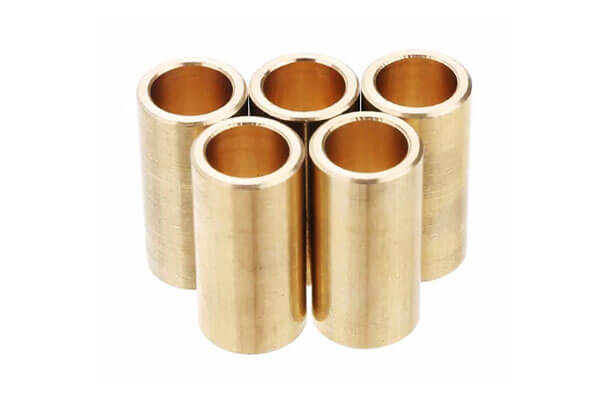
Відцентрове кастинг
- Огляд: Rotating molds generate centrifugal force, driving metal into thin sections and squeezing out inclusions.
- Допуски & Закінчити: Cylindrical parts reach ± 0.5 mm tolerance; surface finishes around 1.5 µm Ra.
- Типові програми: Підшипники, втулки, and sleeves that demand virtually pore‑free microstructures.
- Ключові міркування:
-
- Adjust rotational speeds (200–1,500 rpm) to control wall thickness and feed rates.
- Preheat molds to 250–350 °C to reduce thermal shock and cracking.
Вакуумне лиття
- Огляд: Drawing molten alloy into molds under vacuum eliminates dissolved gases and minimizes shrinkage porosity.
- Допуски & Закінчити: Порівняно з литтям у пісок (± 1 мм) but with markedly improved internal soundness.
- Розмір партії & Вартість: Suited for small‑ to medium‑volume critical components; tooling costs exceed standard sand molds by ~30 %.
- Ключові міркування:
-
- Maintain vacuum levels below 10⁻² Torr during pouring.
- Flux and degas meticulously—aluminum bronze’s affinity for oxygen can otherwise generate oxide entrainment.
Metal‑Mold (Загинути) Кастинг
- Огляд: Permanent steel or iron dies allow rapid cycling and excellent repeatability for mid‑ to high‑volume parts.
- Допуски & Закінчити: Achieves ± 0.3 mm dimensional accuracy and 1–2 µm Ra on first‑shot surfaces.
- Розмір партії & Вартість: Economical above volumes of 5,000 штук; die costs range from $20,000 до $100,000.
- Ключові міркування:
-
- Control mold temperatures (350–450 °C) to balance fluidity with solidification timing.
- Implement automatic shot‑blasting and shot‑peening to remove die release residues and improve fatigue life.
плавлення & Pouring Best Practices
Across all methods, послідовний контроль температури і melt quality prove crucial:
- Діапазон плавлення: Keep aluminum bronze between 1,100 ° C і 1,200 ° C to ensure full dissolution of alloying elements.
- De‑oxidation & Флюсування: Add proprietary fluxes (Напр., borax‑based) at melt temperature to scavenge oxides and sulfides.
- Degassing: Sparge with inert gases (argon or nitrogen) для 3–5 minutes to reduce hydrogen porosity.
- Температура: Pour within a narrow window of 1,100 ± 10 ° C to avoid thermal shock in molds and reduce dross formation.
4. Мікроструктура & Термічна обробка
As-cast aluminum bronze exhibits an α‑Cu matrix peppered with fine κ (kappa) інтерметалічні фази along grain boundaries.
If the mold cools rapidly (> 100 ° C/хв), grains remain small (< 100 мкм) and κ precipitates stay nanoscale; this yields peak strength (~650 MPa UTS) і міцність (~35 J Charpy).
Навпаки, slower cooling encourages coarse κ plates that boost hardness but reduce impact resistance.

Foundries and end-users apply heat treatments to refine properties:
- Homogenization (700 ° C, 4 h): Eliminates chemical segregation, stabilizing κ distribution.
- Відпал (500 ° C, 2 h): Softens the matrix (down to ~200 HB) for easier machining.
- Age Hardening (350 ° C, 8 h): Allows controlled growth of κ′ precipitates, increasing hardness up to ~300 HB without sacrificing ductility.
5. Механічні властивості
Aluminum bronze casting outperforms many alloys in both strength and wear resistance:
| Майно | C63000 (As‑Cast) | C95400 (Age‑Hardened) |
|---|---|---|
| Сила на розрив (UTS) | 550–650 MPa | 600–700 MPa |
| Похідна сила (0.2% зсув) | 350–450 MPa | 400–500 MPa |
| Подовження на перерві | 15–25 % | 10–18 % |
| Твердість (Брінелл, HB) | 180–240 | 220–300 |
| Межа витривалості втоми | ~280 MPa (10⁷ Цикли) | ~320 MPa (10⁷ Цикли) |
| Ударна в'язкість по Шарпі (V‑Notch) | ≥ 30 J | ~ 20 J |
Більше, aluminum bronze combines Опір зносу—through abrasion‑resistant κ phases—with висока міцність, which metal‑matrix composites and stainless steels struggle to match simultaneously.
6. Корозія & Стійкість до ерозії
In seawater at 25 ° C, aluminum bronze exhibits a corrosion rate below 0.01 мм/рік, rivalling that of 316 L нержавіюча сталь.
Його iron and nickel additions foster stable oxide films that repel chlorides and sulfides.
Додатково, the hard κ phases resist cavitation erosion: tests on pump impellers demonstrate mass losses under 0.5 mg/(cm²·h) even after 100 h of cavitating flow.
In acidic (pH 3) середовище, aluminum bronze corrodes at ~0.05 mm/year—far lower than typical carbon steels.
These alloys also resist slurry erosion thanks to their high hardness and work‑hardening capability, що робить їх ідеальними для solids‑handling applications in mining and dredging.
7. Advantages and Disadvantages of Aluminum Bronze Castings
Переваги
High Strength and Hardness
- Aluminum bronze castings exhibit exceptional mechanical properties, з tensile strengths ranging from 450–700 MPa
(Напр., ZCuAl10Fe3 achieves 540 MPa via centrifugal casting) і hardness values of 120–240 HB, depending on alloy composition and heat treatment.
Чудова стійкість до корозії
- Сплави як C63000 (9–11% Al) і QAl9-4 demonstrate superior resistance to seawater, розсіл, and acidic environments.
Наприклад, ZCuAl9Mn2 maintains a corrosion rate of 0.1–0.3 mm/year in seawater due to the formation of a stable Al₂O₃ oxide layer.
Superior Wear and Cavitation Resistance
- The presence of hard intermetallic phases (Напр., CuAl₂) and alloying elements like Mn and Fe enhances wear resistance.
CuAl8Fe3 і ZCuAl10Fe3 are widely used in high-wear components such as pump impellers and worm gears.
Додатково, CuAl11Ni5Fe4 shows 50% lower cavitation erosion than 316L stainless steel in high-velocity water jets.
Термічна стабільність
- Retain mechanical properties at moderate to high temperatures (up to 400–500°C), outperforming many conventional bronzes.
Non-Sparking and Non-Magnetic
- Підходить для explosive environments like offshore drilling rigs and grain handling facilities.
Недоліки
High Material and Production Costs
- Aluminum bronze is 2–4× more expensive per kg than carbon steel due to the cost of alloying elements like Al, У, and Fe.
Challenging Machining and Welding
- Висока твердість (Напр., ZCuAl9Fe4Ni4Mn2 в 180 HB after aging) and poor thermal conductivity accelerate tool wear.
Зварювання is particularly difficult due to aluminum oxidation, which forms a tenacious Al₂O₃ layer.
Specialized techniques like T247 high-manganese aluminum bronze weld rods and preheating are required to avoid defects like porosity and cracking.
Thermal Limitations
- While suitable for ambient to moderate temperatures (up to 250°C for ZCuAl10Fe3), prolonged exposure above 400° C leads to oxide scaling and strength degradation.
This limits its use in high-temperature environments compared to nickel-based alloys.
Processing Sensitivity
- Casting defects like усадочна пористість і aluminum segregation require strict process control. Наприклад, ZCuAl9Mn2 demands 1150–1250°C pouring temperatures and optimized mold preheating to minimize defects.
Вага:
- Щільність (~8.4 g/cm³) exceeds aluminum alloys, limiting use where lightweight dominates.
8. Applications of Aluminum Bronze Castings
Aluminum bronze castings serve a pivotal role wherever components must endure extreme environments, high loads, та агресивні ЗМІ. Зокрема:
Морське обладнання
- Propellers and Rudder Stocks: Aluminum bronze’s exceptional resistance to seawater corrosion and cavitation
makes it the material of choice for ship propellers and rudder stocks, where service lifetimes often exceed 10 років з мінімальним обслуговуванням. - Shaft Sleeves and Bearings: In seawater-lubricated bushings and stern tube bearings,
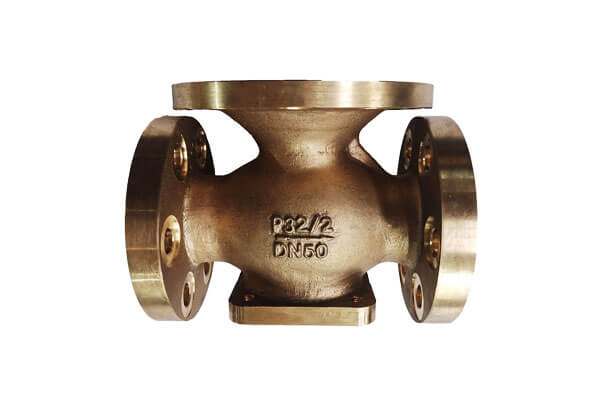
aluminum bronze’s low friction coefficient and self‑lubricating properties reduce wear rates by up to 50 % compared with traditional brass alloys. - Valve Bodies and Pump Housings: Offshore platforms rely on aluminum bronze valves and pump bodies to withstand chlorides and sulfides without pitting or stress‑corrosion cracking.
Промислова техніка
- Pump Impellers and Wear Rings: In chemical‑ and slurry‑handling pumps,
cast impellers in C95400 grade deliver both high strength (600–700 MPa UTS) and outstanding erosion resistance, extending overhaul intervals by 30 %. - Worm Gears and Gearboxes: Age‑hardened aluminum bronze gears exhibit surface hardness up to 300 HB and tolerate heavy shock loads,
making them prevalent in mining and cement‑processing equipment. - Wear Plates and Thrust Washers: Applications requiring repetitive sliding contact, such as hydraulic cylinders and conveyor rollers, benefit from aluminum bronze’s combination of hardness and toughness.
Emerging & Specialized Uses
- Aerospace Bearings: Advanced C63000 bearings, often combined with polymer liners or additive‑manufactured honeycomb structures, support turbine shafts at temperatures up to 400 ° C.
- Additive‑Casting Hybrids: Integrating 3D‑printed cores and conformal cooling channels into aluminum bronze castings
enables rapid prototyping of complex valve manifolds and heat‑exchanger components, reducing lead time by 40 %.
9. Common Aluminum Bronze Grades
Aluminum bronzes encompass a family of copper‑based alloys in which aluminum is the principal alloying element.
Нижче наведено деякі з найпоширеніших сортів, their nominal chemistries, distinguishing properties, and typical applications:
| Сорт (Нас) | Nominal Composition (WT%) | Ключові властивості | Типові програми |
|---|---|---|---|
| C63000 | Cu–10 Al–5 Ni–5 Fe | Excellent combination of strength, міцність, і носійне опір; good corrosion and cavitation resistance. | Крильчатки насосів, клапани, підшипники, Морське обладнання |
| C95400 | Cu–10 Al–5 Fe | Висока міцність і твердість (through age‑hardening); good elevated‑temperature performance. | Worm gears, high‑load bearings, steam‑engine components |
| C61400 | Cu–11 Al–4 Fe–4 Ni | Superior corrosion resistance in seawater; хороша втомна міцність. | Ship propellers, втулки валів, підводні з’єднувачі |
| C62100 | Cu–11 Al–2 Ni–2 Fe | Збалансована міцність і пластичність; good resistance to erosion and cavitation. | Компоненти гідравлічного насоса, wear rings, thrust washers |
| C63200 | Cu–9 Al–2 Ni–2 Fe | Higher ductility among aluminum bronzes; легше машина. | Тіла клапана, фурнітура, general marine castings |
| C95410 | Cu–10 Al–5 Fe–0.1 C | Similar to C95400 but with added carbon for hardness; improved bearing performance. | Bearing bushings, wear pads, sliding elements |
10. Висновок
Aluminum bronze casting delivers an exceptional combination of strength, міцність, and corrosion/erosion resistance that few other alloys can match.
By selecting the right chemistry, методом лиття, and heat treatment schedule, engineers achieve complex geometries with minimal post‑machining.
Дивлячись вперед, advances in vacuum and additive casting promise even better quality, зменшена пористість, і швидший поворот, ensuring aluminum bronze remains a cornerstone of high‑performance cast components.
Це є ідеальним вибором для ваших виробничих потреб, якщо вам потрібна якісна алюмінієва бронза виливки.
Поширені запитання
What is aluminum bronze?
Aluminum bronze refers to a group of copper-based alloys that contain aluminum as the primary alloying element, як правило, починаючи від 5% до 12%.
It may also include elements like iron, нікель, and manganese to enhance specific properties such as strength, Корозійна стійкість, і носійне опір.
Why choose aluminum bronze over other bronze alloys?
Aluminum bronze offers superior corrosion resistance—especially in seawater—along with excellent mechanical strength, Опір зносу, and fatigue performance.
These properties make it ideal for marine, аерокосмічний, Хімічна обробка, і застосування у важкій промисловості.
How corrosion-resistant is aluminum bronze casting?
Aluminum bronze exhibits exceptional resistance to corrosion in seawater, salt spray, промислові атмосфери, and many acids.
The formation of a stable aluminum oxide layer (Al₂O₃) protects the surface from further degradation.
Is aluminum bronze easy to machine?
Aluminum bronze is machinable, especially in the as-cast or annealed condition.
Однак, hardened grades (like those with nickel and iron) can be abrasive and require carbide tools and proper machining parameters to avoid tool wear.
Is aluminum bronze suitable for welding?
Aluminum bronze can be welded, but it requires special procedures. Gas-shielded arc welding methods (such as GTAW or MIG) with appropriate filler metals are commonly used.
Preheating and post-weld heat treatment may be necessary to prevent cracking and maintain mechanical properties.

