Увођење
Ливење, као један од најраније савладаних процеса вруће обраде метала за људе, има историју од приближно 6,000 година.
Кина је ушла у доба процвата бронзаног ливења између 1700 пне и 1000 БЦ, са ливењем који је достигао прилично напредан ниво.
Као основни процес у савременој производњи, ливење омогућава формирање металних компоненти сложеног облика које је тешко произвести ковањем или машинском обрадом, а има широку примену у ваздухопловству, аутомотиве, машинерија, и индустрије прецизних инструмената.
Избор метода ливења директно одређује квалитет ливења, ефикасност производње, и трошкови производње.
1. Греен песак ливење (Конвенционално ливење у песак)
Цоре Дефинитион & Принцип процеса
Зелена ливење песка је најтрадиционалнија и најраспрострањенија метода ливења на глобалном нивоу.
Његова основна сировина је ливнички песак (претежно силицијум песка; специјални песак као што су цирконски песак и корундни песак се усваја када силицијум песак не испуњава захтеве високе температуре) и везива за песак (глина је најчешћа; суво уље, силикат растворљив у води, фосфат, а синтетичке смоле су алтернативне опције).
Спољашњи пешчани калупи су класификовани у три типа на основу везива и механизама за формирање чврстоће: зелени глинени пешчани калуп, суви глинени пешчани калуп, и хемијски везани пешчани калуп.
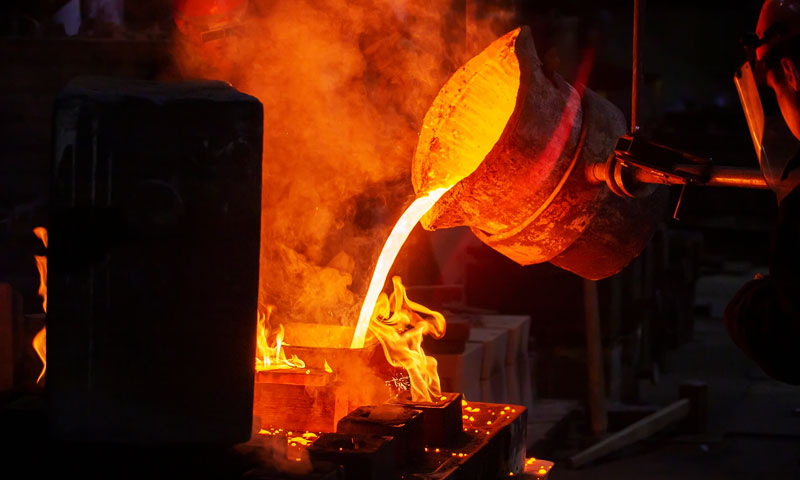
Растопљени метал се сипа у пешчани калуп, који се учвршћује и формира одливке, а калуп је оштећен након једног сипања и не може се поново користити.

Предности
- Исплативе сировине: Глина је богата ресурсима и ниска је цена; преко 90% коришћеног песка зелене глине може се рециклирати и поново користити након третмана песком, смањење материјалног отпада.
- Висока флексибилност процеса: Кратак циклус израде калупа и висока ефикасност; мешани песак за обликовање има дуг век трајања; прилагодљив је малим, велики, једноставан, и сложени одливци, као и једноделни, мала серија, и сценарије масовне производње.
- Низак праг опреме: Не захтева врхунску специјализовану опрему, погодан за мале и средње ливнице.
Недостатак & Ограничења
- Ниска ефикасност производње: Сваки пешчани калуп се може користити само једном и мора се поново обликовати за следеће ливење, што доводи до ниске ефикасности континуиране производње.
- Лоша тачност димензија: Крутост пешчаних калупа је ниска, што резултира степеном толеранције димензија ливења ЦТ10–ЦТ13, који не могу испунити захтеве високе прецизности.
- Висок ризик од квара: Одливци су склони типичним дефектима као што је прање песка, укључивање песка, порозност гаса, и порозност скупљања услед лабаве структуре пешчаних калупа.
- Слабији квалитет површине: Површина ливења је релативно храпава, захтева додатну машинску обраду ради побољшања завршне обраде.
2. Инвестициони ливење (Изгубљени ливење воска)
Цоре Дефинитион & Принцип процеса
Инвестициони ливење, опште познато као ливење изгубљеног воска, карактерише софистицирани ток процеса:
праве узорке од воска користећи топљиве материјале, премазати више слојева ватросталних материјала на површини узорка како би се формирала керамичка шкољка, истопите и уклоните узорак воска да бисте добили калуп без одвајајућих површина, и извршити печење на високој температури пре изливања растопљеног метала.
Применљив је на широк спектар легура, укључујући угљенични челик, легура челика, легура отпорна на топлоту, нехрђајући челик, легура бакра, легура алуминијума, легура титанијума, и дуктилно гвожђе, посебно за материјале који се тешко обрађују ковањем или резањем.

Предности
- Одлична прецизност димензија: Толеранција на бацање оцене достижу ЦТ4–ЦТ6, много више од ливења у зелени песак (ЦТ10 - ЦТ13) и упоредиви са ливењем под притиском (ЦТ5–ЦТ7), минимизирање обраде после ливења.
- Висока искоришћеност материјала: Значајно смањује запремину обраде формираних и спојних површина, уштеда времена обраде и потрошње резног алата, са стопом искоришћења материјала прекорачењем 90%.
- Снажна прилагодљивост облика: Може бацити изузетно сложене компоненте, делови танких зидова (минимална дебљина зида 0,5 мм), и одливци микро величине (минимална тежина 1г);
такође подржава интегрисано ливење склопљених делова, поједностављивање накнадних процеса монтаже. - Широка компатибилност легуре: Погодан за скоро све металне материјале, укључујући легуре високе температуре, легуре магнезијума, легуре титанијума, и племенитих метала који се тешко обрађују другим методама.
- Флексибилна производна скала: Прилагођава се масовној производњи, малосеријска производња, па чак и прилагођавање из једног дела, са јаком скалабилношћу.
Недостатак & Ограничења
- Сложен ток процеса: Има најсложенији процес међу свим методама ливења, укључујући прављење узорака од воска, премаз љуске, депаратирање, печење, и сипа, захтевају строгу контролу процеса.
- Ограничена величина ливења: Није погодно за велике одливе; максимална тежина конвенционалних ливених одливака је углавном унутар 50 кг, пошто су велике шкољке склоне пуцању приликом печења и сипања.
- Споро хлађење: Керамичка шкољка има ниску топлотну проводљивост, што доводи до спорог очвршћавања растопљеног метала, што може узроковати грубо зрнасте структуре у неким легурама.
- Високи трошкови производње: Трошкови воштаних узорака, ватростални материјали, а контрола процеса је релативно висока; економски је исплативо само када се комбинује са смањеном обрадом и уштедом материјала.
3. Ливење
Цоре Дефинитион & Принцип процеса
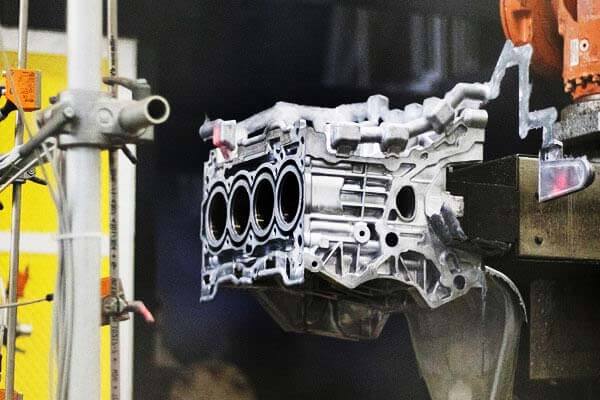
Ливење је метода ливења под високим притиском која укључује убризгавање растопљеног метала у прецизну металну шупљину калупа великом брзином (10–50м/с) под високим притиском (20–150МПа), и учвршћивање метала под притиском да би се формирали одливци.
Има два основна процеса: Хот-Цомпате Дие Цастинг (растопљени метал аутоматски тече у комору под притиском) и ливење под притиском у хладној комори (растопљени метал се ручно или аутоматски сипа у комору под притиском).
Калуп је направљен од челика високе чврстоће, обезбеђивање поновљене употребе.
Предности
- Врхунски квалитет производа: Тачност димензија ливења достиже оцену 6–7 (чак и оцена 4 за прецизне производе) са храпавости површине Ра 5–8μм;
чврстоћа и тврдоћа су 25–30% веће од одливака од зеленог песка због очвршћавања под притиском, иако се издужење смањује за око 70%. - Ултра висока ефикасност производње: Машина за ливење под притиском са хоризонталном хладном комором може да заврши 600–700 циклуса по 8 сати,
док мала машина за ливење под притиском у врућој комори може постићи 3.000-7.000 циклуса, далеко превазилазећи друге методе ливења. - Дуг животни век калупа: Калупи за ливење под притиском од легуре цинка могу трајати стотине хиљада или чак милионе пута, смањење дугорочних трошкова производње.
- Лака аутоматизација: Процес је веома компатибилан са механизацијом и аутоматизацијом, смањење трошкова рада и побољшање стабилности производње.
- Одличне економске користи: Одливци захтевају минималну или никакву машинску обраду, побољшање коришћења метала и смањење улагања у опрему за обраду;
комбиновано ливење метала и неметалних материјала под притиском штеди време монтаже и сировине.
Недостатак & Ограничења
- Висок ризик од кварова од порозности гаса: Пуњење велике брзине доводи до нестабилног протока растопљеног метала,
лако хвата гас да би се формирала унутрашња порозност, што онемогућава термичку обраду одливака (термичка обрада изазива експанзију гаса и пуцање). - Слаба прилагодљивост сложеним унутрашњим конкавним деловима: Тешко је уклонити унутрашње конкавне сложене структуре, ограничавање дизајна ливених облика.
- Кратак век калупа за легуре високе тачке топљења: За легуре високе тачке топљења као што су легуре бакра и црни метали, калуп је склон термичком замору и хабању, значајно смањујући век трајања.
- Није погодно за производњу малих серија: Цена производње калупа је висока, а висока ефикасност машина за ливење под притиском чини производњу малих серија економски неодрживом.
4. Стално калупљење (Тврдо ливење калупа)
Цоре Дефинитион & Принцип процеса
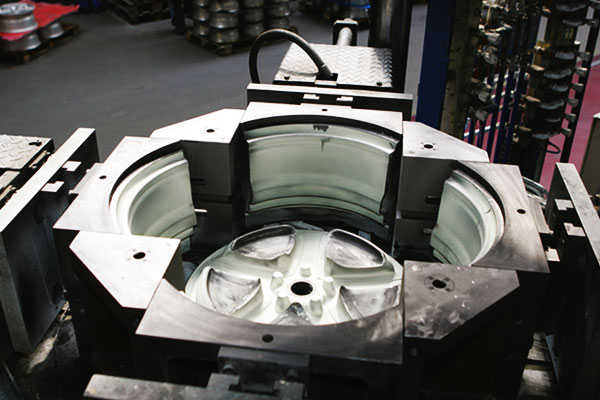
Трајно ливење калупа, такође се назива ливење од тврдог калупа, подразумева уливање растопљеног метала у метални калуп за формирање одливака.
Калуп је направљен од ливеног гвожђа или ливеног челика и може се поново користити стотине до хиљаде пута, отуда назив "трајни калуп".
Унутрашња шупљина одливака може користити метална језгра или језгра од песка, а конструкције калупа се деле на хоризонталне преграде, вертикални растанак, и композитни растанак за прилагођавање различитим облицима ливења:
вертикално раздвајање олакшава затварање и демонтажу, хоризонтални растанак је за делове у облику точкова са танким зидовима, а композитни растанак је за сложене компоненте.
Предности
- Одлична могућност поновне употребе калупа: „Један калуп за више ливења“ елиминише потребу за поновљеном прављењем калупа, уштеда материјала за обликовање и времена, и побољшање ефикасности производње.
- Високе перформансе ливења: Метални калуп има снажан капацитет хлађења, што доводи до густе структуре ливења и супериорних механичких својстава у поређењу са одливцима од песка.
- Добра тачност димензија и квалитет површине: Степени толеранције ливења достижу ИТ12–ИТ14, храпавост површине Ра ≤6,3μм, смањење радног оптерећења након обраде.
- Побољшани услови рада: Користи мало или нимало песка, избегавање загађења прашином и оптимизација радног окружења за раднике.
Недостатак & Ограничења
- Висока цена калупа и дуг производни циклус: The metal mold requires high-strength materials and precision processing,
with high upfront investment and long lead time, unsuitable for single-piece and small-batch production. - Limited applicable alloys and casting sizes: Mainly suitable for mass production of non-ferrous alloy castings (aluminum pistons, cylinder blocks, Главе цилиндра, copper alloy bushings, итд.) for automobiles, авиона, and internal combustion engines;
for ferrous alloy castings, it is only applicable to small and medium-sized parts with simple shapes. - Strict process requirements: The mold needs preheating and temperature control to avoid cold shuts and mold cracking; it is prone to thermal fatigue after long-term use, affecting casting quality.
5. Ливење под ниским притиском
Цоре Дефинитион & Принцип процеса
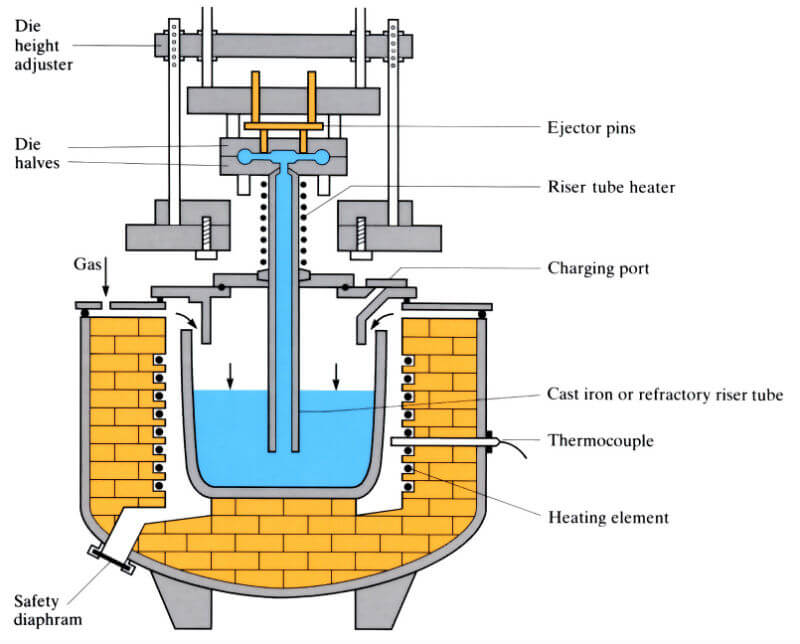
Low-pressure casting is a casting method that fills the mold and solidifies molten metal under low pressure (0.02–0.06MPa).
The core process includes: сипање растопљеног метала у изоловани лончић, заптивање лонца, повезивање успонске цеви са калупом, увођење сувог компримованог ваздуха у лончић да би се растопљени метал померио нагоре кроз цев за подизање да би се испунила шупљина калупа,
учвршћивање метала под сталним притиском, отпуштање притиска како би се преостали растопљени метал вратио назад у лончић, и коначно отварање калупа за вађење одливака.
Предности
- Флексибилна контрола процеса: Брзина раста растопљеног метала и притисак очвршћавања су подесиви, погодан за разне калупе (метални калупи, пешчане калупе) и легуре, као и одливци различитих величина.
- Стабилно пуњење и ниска стопа кварова: Пуњење одоздо према горе обезбеђује несметан проток растопљеног метала без прскања, избегавање заробљавања гаса и ерозије зидова и језгара калупа;
дефекти ливења као што су порозност гаса и укључивање шљаке су значајно смањени, са стопом квалификација преко 95%. - Висококвалитетни одливци: Очвршћавање под притиском остварује усмерено очвршћавање споља ка унутра, што резултира густом структуром ливења,
јасне контуре, глатке површине, и одличне механичке особине, посебно погодан за велике делове танких зидова. - Висока искоришћеност материјала: Није потребан успон за храњење, са стопом искоришћења материјала која достиже 90–98%, смањење металног отпада.
- Пријатељско радно окружење: Низак интензитет рада, једноставна опрема, и лака реализација механизације и аутоматизације, у складу са савременим захтевима производње.
Недостатак & Ограничења
- Кратак радни век успонске цеви: Цијев успона је у директном контакту са растопљеним металом на високој температури дуго времена, склон оксидацији и хабању, захтева редовну замену.
- Ризик од загађења растопљеним металом: Током очувања топлоте, растопљени метал се лако оксидира и меша са шљаком, захтевају строгу контролу окружења за очување топлоте и пречишћавање растопљеног метала.
- Ограничен обим примене: Углавном се користи за ливење висококвалитетних одливака од легура алуминијума и магнезијума, као што су блокови цилиндара, Главе цилиндра, кућишта радилице, и алуминијумски клипови мотора са унутрашњим сагоревањем велике брзине; ретко се користи за легуре гвожђа због захтева високих температура.
6. Центрифугално ливење
Цоре Дефинитион & Принцип процеса
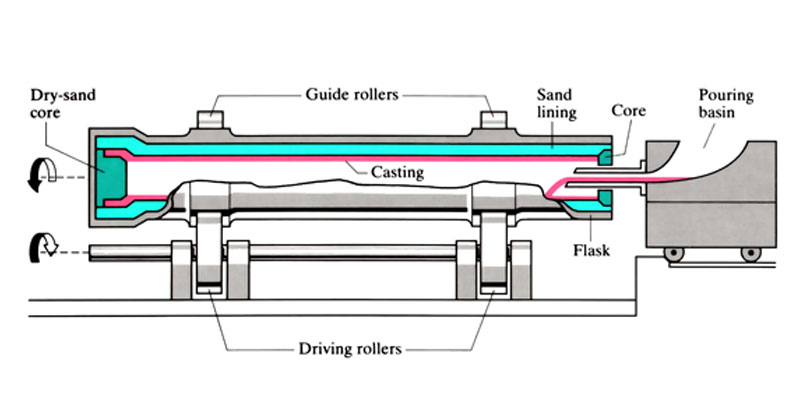
Центрифугално ливење подразумева изливање растопљеног метала у ротирајући калуп, где метал испуњава калуп и учвршћује се под центрифугалном силом.
Према оријентацији ротационе осе калупа, дели се на три врсте: хоризонтално центрифугално ливење (оса хоризонтална или <4° до хоризонталног, погодан за дугачке цилиндричне делове),
вертикално центрифугално ливење (оса вертикална, погодан за кратке цилиндричне или прстенасте делове), и центрифугално ливење са косом осовином (ретко се користи због сложеног рада).
Центрифугална сила покреће усмерено кретање растопљеног метала, оптимизација структуре ливења.
Предности
- Поједностављена структура калупа: За шупље ротирајуће делове, нема језгра, систем гајта, или је потребан успон, поједностављивање дизајна калупа и смањење трошкова производње.
- Висококвалитетни одливци: Центрифугална сила одваја гасове мале густине и шљаке на унутрашњу површину,
и промовише усмерено учвршћивање споља ка унутра, што резултира густом структуром ливења, неколико недостатака, и одличне механичке особине. - Уштеда за биметалне делове: Једноставне за ливење биметалне компоненте као што су чауре и лежајеви (Нпр., челични рукави са танком бакарном поставом), уштеда скупих обојених метала уз обезбеђивање перформанси.
- Снажан капацитет пуњења: Центрифугална сила повећава флуидност растопљеног метала, погодан за ливење танкозидних делова и легура са слабом течношћу.
- Смањен материјални отпад: Елиминише системе за затварање и подизаче, даље побољшање коришћења материјала.
Недостатак & Ограничења
- Лош квалитет унутрашње површине: Унутрашња слободна површина одливака је храпава, са великим димензионалним грешкама и слабом униформношћу, које захтевају накнадну машинску обраду да би се испунили захтеви у погледу димензија.
- Неприкладан за одређене легуре: Није применљиво на легуре са јаком сегрегацијом густине (Нпр., оловна бронза), пошто ће центрифугална сила погоршати сегрегацију;
такође није погодан за легуре алуминијума и магнезијума због њихове мале густине и лошег ефекта центрифугалног одвајања. - Ограничени облици ливења: Погодно само за ротирајуће симетричне делове (цилиндри, прстење, рукавима); не могу изливати делове сложеног облика са неправилним контурама.
- Високи захтеви за опремом: Захтева специјализоване машине за центрифугално ливење са стабилном контролом брзине ротације, повећање улагања у опрему.
7. Табела поређења најчешће коришћених метода ливења
| Метода ливења | Предности | Ограничења | Типичне апликације |
| Ливење песка | Ниска цена, флексибилан за мале/велике делове, једноставних и сложених облика, песак који се може рециклирати | Калупи за једнократну употребу → ниска ефикасност, нижа тачност димензија, површински недостаци | Блокови мотора, кућишта пумпе, великих структурних делова |
| Инвестиција (Изгубљени восак) Ливење | Висока прецизност (ЦТ4–6), Одлична површинска завршна обрада, сложени облици, танки зидови, широка компатибилност материјала | Висока цена, сложен процес, није погодан за веома велике делове | Аероспаце компоненте, Медицински имплантати, прецизни аутомобилски делови |
| Ливење | Висока димензионална тачност (ЦТ6–7), Одлична површинска завршна обрада, делови танких зидова, висока ефикасност производње, погодан за аутоматизацију | Висока цена алата, ограничено на легуре ниског топљења, ризик од порозности, није идеално за мале серије | Ауто делови мотора, кућишта, Потрошачка електроника |
Перманент Молд (Метални калуп) Ливење |
Калупи за вишекратну употребу смањују трошкове, густе микроструктуре, велика снага, добра завршна обрада површине | Висока цена калупа, строга контрола процеса, ограничено на средњу сложеност, углавном легура обојених гвожђа | Алуминијумски клипови, Главе цилиндра, аутомобилска кућишта |
| Ливење под ниским притиском | Глатко пуњење, минимална порозност, висококвалитетна густа структура, висока искоришћеност метала (90–98%), погодан за делове са танким зидовима | Ограничен век трајања успона/проводника, ризик од оксидације, углавном за легуре обојених гвожђа | Алуминијумски блокови мотора, Главе цилиндра, клипови, делови магнезијума |
| Центрифугално ливење | Густа структура, усмерено учвршћивање, елиминише језгра, омогућава биметалне ливење, смањена капија | Унутрашња слободна површина храпава, тачност димензија ограничена, неприкладан за легуре склоне сегрегацији, ограничено на цилиндричне/ротационе геометрије | цеви, чашица, лежајеви, облоге цилиндара |
8. Закључак
Свака метода ливења нуди јединствене предности и ограничења која га чине погодним за специфичне примене.
Ливење у песак остаје најсвестранији и најекономичнији метод за велике, сложени одливци, док ливење по инвестицији обезбеђује изузетну прецизност за компоненте високе вредности.
Ливење под притиском се истиче у производњи делова са танким зидовима велике количине, а трајно ливење у калупе даје доследан квалитет за производњу обојених метала средњег обима.
Ливење под ниским притиском је идеално за компоненте алуминијума и магнезијума високог интегритета, а центрифугално ливење је без премца за шупље симетричне делове.
Избор одговарајуће методе ливења зависи од фактора укључујући геометрију дела, потребна тачност димензија, површинска завршна обрада, врста материјала, обим производње, и разматрања трошкова.
Модерна производња све више комбинује ове технике како би искористила њихове комплементарне предности, покретање иновација у производњи сложених компоненти широм ваздухопловства, аутомотиве, и индустријским секторима.