
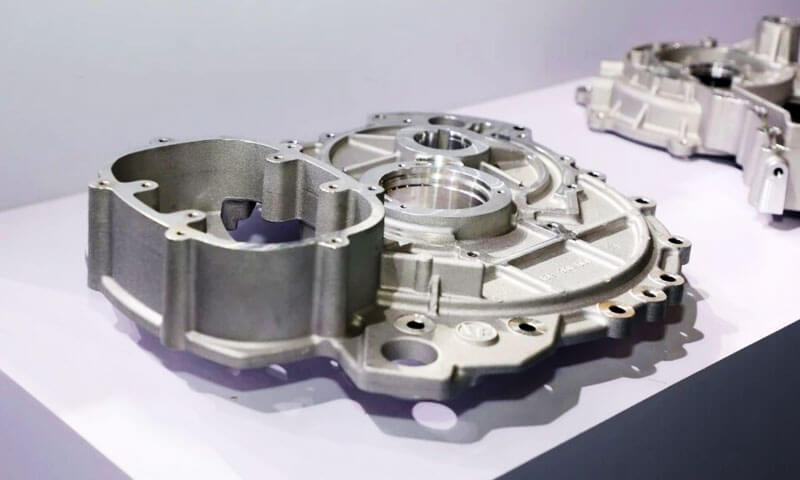
После више од 20 years in surface treatment — running Анодизиран линије, отклањање кварова на деловима, and arguing with design engineers who insist “it’s just aluminum, it should anodize like 6061” — I can tell you the question I hear most often is this: “Can you anodize die-cast aluminum?"
The short answer is yes. The honest answer is: not with your standard anodizing process, and not without understanding why die castings behave so differently from wrought extrusions.
I have seen too many shops try to run ADC12 die cast parts through a regular anodizing line, come out with splotchy, сива, uneven parts covered in smut, and declare that “die cast aluminum cannot be anodized.”
That is wrong. It can be anodized — but it requires a dedicated pre-treatment process, realistic expectations about surface quality, and a clear understanding of where the process limits are.
This guide is written from the anodizing line floor.
It explains exactly why ливени алуминијум resists standard anodizing, what silicon has to do with it, what pre-treatment changes are required, what problems remain even after desiliconization, and what alternative finishing processes to consider when anodizing is not the right choice.
1. The Straight Answer: Yes — But Not With Standard Process
Let me give you the conclusion first, before we dig into the chemistry:
- Die-cast aluminum can be anodized.
- Standard anodizing process produces very poor results on ADC12.
- A dedicated desiliconizing (de-smutting) pre-treatment step is mandatory.
- Even with perfect desiliconization, porosity and color absorption issues remain.
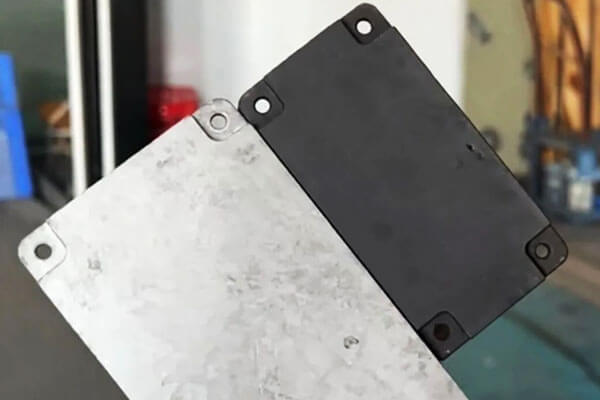
In our own shop, we ran a controlled test: two ADC12 die-cast parts, no special pre-treatment, run through our standard anodizing line. One was clear (natural) анодизовано, one was black.
The result was predictable: неуједначен, blotchy color, splotchy patches, and a layer of gray smut on the surface that wiped off onto your fingers.
This is not a defect in our line. It is the expected result when you anodize a high-silicon die-cast alloy the way you would anodize 6061 екструзије.
2. Why Is Die-Cast Aluminum Difficult to Anodize?
The difficulty comes primarily from three factors: high silicon content, casting porosity, and the limitations of conventional pretreatment.
High Silicon Content Interferes with Anodizing
Many die-casting alloys contain substantial amounts of silicon to improve fluidity, reduce solidification shrinkage, and support the production of thin-walled, сложене компоненте.
АДЦ12 is a representative Al-Si-Cu die-casting alloy.
Међутим, silicon behaves differently from aluminum during chemical pretreatment and anodizing.
In a conventional alkaline etching process, aluminum dissolves readily, while silicon-rich phases may remain at the surface.
Depending on the alloy composition and process conditions, these residues can form a gray or dark smut layer.
If the subsequent desmutting process is inadequate, residual silicon-rich material and other alloying-element residues can interfere with uniform oxide-film formation and appearance.
This explains the defects observed in the ADC12 trial:
- Mottled appearance: Different areas of the casting respond differently to pretreatment and anodizing.
- Uneven color: Variations in the surface microstructure and oxide layer produce inconsistent light absorption and dye uptake.
- Gray smut: Residual surface deposits remain after inadequate cleaning or desmutting.
- Poor black coloration: The oxide layer and surface condition may not support uniform dye absorption.
The key point is that the problem is not simply the presence of silicon in the bulk alloy. It is the interaction between alloy microstructure, припрема површине, and anodic film formation.
Casting Porosity Creates Additional Defects
Die-cast aluminum can contain gas porosity, шупљине скупљања, and other subsurface discontinuities.
Their distribution depends on die design, температура метала, injection parameters, одзрачивање, and solidification conditions.
These defects become particularly troublesome during anodizing because the pretreatment and coloring stages expose the casting to aqueous chemical solutions.
Porosity can contribute to:
- Localized discoloration and dark spots.
- Uneven dye absorption.
- Acid retention and subsequent staining.
- Surface pinholes and inconsistent appearance.
- Reduced corrosion protection where the coating is discontinuous or the underlying casting is defective.
Not all porosity is visible on the as-cast surface. Some defects become apparent only after machining, бакропис, or anodizing.
From a production standpoint, this means that surface finishing cannot compensate for fundamentally poor casting quality.
If a component requires a uniform black anodized finish, porosity control must begin during casting development rather than after the part reaches the finishing line.
3. Why Desmutting Does Not Solve Every Anodizing Problem
Removing silicon-rich surface residues is an important improvement, but three major challenges can remain.
| Дефект | Main Cause | Potential Control Measures |
| Gray smut or powdery residue | Inadequate removal of silicon-rich residues and other alloying-element deposits | Optimize alloy-specific desmutting and rinsing |
| Uneven or mottled color | Variations in alloy microstructure, формирање оксида, стање површине, или апсорпција боје | Improve pretreatment consistency and validate the coloring process |
| White spots or localized dye failure | Порозност, chemical retention, local surface defects, or inconsistent oxide formation | Improve casting quality, одводњавање, испирање, и контролу процеса |
| Pinholes and surface pits | Порозност гаса, дефекти скупљања, инклузије, or excessive etching | Improve casting parameters and control pretreatment severity |
| Inconsistent film thickness | Variations in geometry, електрични контакт, current distribution, or local alloy response | Optimize fixturing, електрични контакт, and anodizing parameters |
Porosity and Acid Retention
A casting with open pores may trap pretreatment or coloring solutions. If these chemicals are not adequately removed, they can continue to react locally and cause staining, беле мрље, или друге недостатке.
The solution is not simply to extend the desmutting time. Excessive chemical exposure can further attack the surface without eliminating the underlying porosity.
Where appearance requirements are strict, casting density, Површински интегритет, drainage design, and rinsing effectiveness must be assessed together.
Цолор Униформити
Black anodizing is often more demanding than a natural or lightly colored finish because even small variations in surface condition can become visually obvious.
The final appearance depends on the alloy, casting microstructure, предтретман, oxide-film characteristics, dye chemistry, and sealing process.
Two components made from the same nominal alloy may not produce identical results if their casting conditions or surface histories differ.
Из овог разлога, qualification trials should use production-representative castings rather than polished laboratory coupons alone.
Surface Appearance Versus Functional Performance
An anodized component can look acceptable while failing to meet its required film thickness or corrosion-resistance criteria.
И обрнуто, a visually imperfect coating may still meet certain functional requirements, depending on the specification.
The acceptance criteria should therefore distinguish between:
- Cosmetic requirements, including color, сјај, and visible defects.
- Функционални захтеви, including film thickness, отпорност на корозију, отпорност на хабање, и перформансе за бртвљење.
These requirements should be agreed upon before production begins.
4. The ADC12 Anodizing Reality Check
Let me be direct about what you can and cannot expect.
| Аспект | Ковани алуминијум (6061/6063) | Die-Cast ADC12 (Standard Process) | Die-Cast ADC12 (With Desiliconizing) |
| Film uniformity | Одличан | Poor — splotchy, discontinuous | Good — but not equal to wrought |
| Изглед површине | Clear metallic, гладак | Gray smutty, blotchy | Побољшано, but micro-porosity visible at close range |
| Color consistency | Excellent — batch-to-batch uniform | Very poor — uneven dye uptake | Moderate — dark colors still show variation |
| Smut / gray residue | Ниједан | Heavy — wipes off on hands | Minimal — removed by HF desmut |
| Заштита од корозије | Добри | Variable — film is discontinuous | Добри, but pores remain as weak points |
| Typical yield (good parts) | 95%+ | 30-50% | 70–85% |
What This Means in Practice
If you anodize ADC12 without desiliconizing, expect roughly half your parts to be cosmetic rejects.
With a proper desiliconizing step, yield improves dramatically — but you will never match the clean, flawless surface of a wrought 6063 екструзија.
Anyone who promises “extrusion-quality” anodizing on a die casting is either lying or using a low-silicon special alloy.
5. Alternative and Competing Finishing Processes
Because high-silicon die-cast aluminum is difficult to anodize consistently, alternative surface treatments should be considered when conventional anodizing cannot meet the required appearance, отпорност на корозију, or production cost.
| Површина Завршњак Процес | Appearance | Корозија Отпор | Носити Отпор | Релативан Трошак | Типичан Апликације |
| Conventional Анодизиран | Uniform decorative finish on suitable alloys; often inconsistent on high-silicon die castings | Good when the anodic film is properly formed and sealed | Добри, depending on film thickness and type | Средњи | Wrought aluminum components and compatible die castings requiring an anodic film |
| Анодизиран са Десмуттинг | Improved uniformity, although silicon-related discoloration may remain | Good if the pretreatment and anodic film are properly controlled | Добри, depending on coating specifications | Средње висок | Functional die-cast parts requiring anodizing with moderate cosmetic requirements |
| Micro-Arc Оксидација (МАО) | Ceramic-like surface; color and texture depend on the alloy and process | Добро до одлично, depending on coating structure and sealing | Excellent for suitable wear-resistant coatings | Високо | Components requiring high surface hardness, отпорност на хабање, и електричну изолацију |
Chemical Conversion Coating |
Танак, usually matte or slightly colored finish | Умерено до добро, depending on the conversion system | Ограничен | Низак | Components requiring basic corrosion protection or a pretreatment for painting |
| Electrostatic Powder Премаз | Uniform color with a wide range of gloss levels and textures | Good to excellent with suitable pretreatment and coating thickness | Добри, depending on powder formulation and curing | Ниски средњи | Кућишта, заграде, Аутомобилске компоненте, and industrial enclosures requiring durable decorative protection |
| Baking Paint (Baked-On Liquid Coating) | Smooth decorative finish with controlled color and gloss | Good when the coating is properly applied and cured | Умерено до добро, depending on paint chemistry and film thickness | Средњи | Кућишта од ливеног под притиском, потрошачки производи, Аутомобилски делови, and components requiring a refined surface appearance |
How to Choose the Right Process
- Choose anodizing with desiliconizing when the component requires an anodic oxide layer and its functional performance is more important than a perfectly uniform decorative finish.
- Choose micro-arc oxidation (МАО) when wear resistance and surface hardness are priorities.
Its suitability for high-silicon alloys and the required corrosion performance should be verified through testing. - Choose powder coating when consistent color and surface coverage matter more than maintaining the metallic appearance of anodized aluminum.
It can conceal minor surface variations, but it cannot reliably eliminate the effects of severe porosity or outgassing. - Choose chemical conversion coating or wet painting when a decorative anodic film is unnecessary and the primary requirements are corrosion protection, адхезија боје, or flexible color options.
The best process depends on the component’s service environment, appearance requirements, and performance specifications.
For ADC12 parts requiring a uniform black finish, powder coating may be more practical than conventional anodizing.
6. Choosing the Right Die-Cast Alloy for Anodizing
Not all die-cast aluminum alloys produce the same anodizing results. Садржај силицијума, impurity levels, микроструктура, and casting qualityall influence oxide-film formation and surface appearance.
The following table provides a preliminary comparison of commonly discussed aluminum alloys.
Composition ranges are indicative and should be verified against the applicable material standard and supplier certificate.
| Легура | Typical Silicon Content | Anodizing Difficulty | Кључна разматрања |
| АДЦ12 (А383) | 9.6–12,0% | Високо | Widely used for die casting; high silicon content can cause uneven anodizing and surface smut |
| ИЛ102 (AlSi12) | 10.5–13.5% | Високо | Anodizing results depend on impurity levels, спецификација легуре, и квалитет ливења |
AlSi9Mg (А360) |
Approximately 9.0–10.0% | Умерен до високо | Can offer improved anodizing potential under suitable composition and process conditions |
| А413 / AlSi12(б) | Approximately 11.0–13.0% | Високо | High silicon content supports casting fluidity but complicates uniform decorative anodizing |
| Ковани 6063 (reference) | Approximately 0.2–0.6% | Низак | Common benchmark for uniform decorative anodizing |
Бележити: Alloy designations and composition limits vary by standard and market.
ИЛ102, А360, and other nominally similar alloys should not be treated as interchangeable without checking their chemical composition and mechanical requirements.
Practical Recommendations
If anodizing is a mandatory design requirement and wrought aluminum is not an option, evaluate AlSi9Mg or a suitably specified low-impurity die-casting alloybefore committing to production.
These materials may offer better surface consistency under appropriate conditions, but they will not necessarily achieve the same appearance as anodized 6063.
For any candidate alloy, confirm the silicon and iron contents, квалитет ливења, потребна механичка својства, and compatibility with the proposed pretreatment process.
Trial anodizing should be performed on production-representative parts to verify color uniformity, квалитет филма, и перформансе корозије.
На крају, alloy selection and surface-treatment development must be considered together.
Choosing a potentially more anodizable alloy can improve the outcome, but no alloy designation alone guarantees a flawless anodized finish.
7. Закључак
Can you anodize die-cast aluminum? Да, but high-silicon alloys such as ADC12 require special consideration.
Conventional anodizing without alloy-specific pretreatment can produce mottled color, poor film uniformity, and gray smut.
A suitable desmutting process—sometimes using an HF-containing solution under controlled industrial conditions—can substantially improve the surface by removing silicon-rich residues.
Међутим, desmutting does not eliminate casting porosity, guarantee uniform dye absorption, or correct defects caused by inconsistent solidification and surface preparation.
These issues require coordinated control of alloy selection, квалитет ливења, предтретман, Анодизиран, и бојење.
Практично правило је једноставно: die-cast aluminum is not impossible to anodize, but it should not be anodized as if it were a conventional wrought aluminum alloy.
When a uniform decorative finish is essential, qualify the complete process using production-representative parts and compare anodizing with alternatives such as powder coating or micro-arc oxidation before committing to mass production.
Често постављана питања
Why does die-cast anodizing come out gray and splotchy?
High silicon content (9–12% in ADC12) leaves elemental silicon on the surface after etching.
This silicon smut disrupts the oxide film and creates the gray, неуједначен изглед. Desiliconizing removes this layer.
What is the best alternative to anodizing for die-cast aluminum?
Powder coating is the most popular alternative — it covers porosity, provides excellent color consistency, and offers good corrosion protection.
For wear resistance, микро-лучна оксидација (МАО) works well on high-silicon die castings.
Will desiliconizing make my die-cast parts look like 6063 анодизовано?
Не. Desiliconizing fixes the smut and discontinuity, but die-cast porosity still causes visible imperfections and dye spots.
The result is good for functional parts, but not equivalent to wrought aluminum anodize.
Do I need vacuum impregnation for anodized die-cast parts?
For cosmetic or sealed applications where acid bleed would cause staining, да.
Vacuum impregnation seals subsurface porosity before anodizing, preventing trapped acid from leaching out after finishing.

