1. Aféierung
An der haitegen schnelle Fabrikatiounslandschaft, Schneidtechnologien si pivotal bei der Form vu Materialien mat Präzisioun an Effizienz.
With technological advancements, manufacturers now have access to various cutting methods, each catering to different needs and applications.
Among the most popular options are EDM (Elektresch Auslaaf Machining), Laser, Waasserjet, and Plasma cutting.
Each method has unique features, Stäerkten, an Aschränkungen, making it essential to understand which technique best suits your specific project requirements.
This blog comprehensively compares these four cutting technologies, helping you make an informed decision.
2. What Is CNC Cutting?
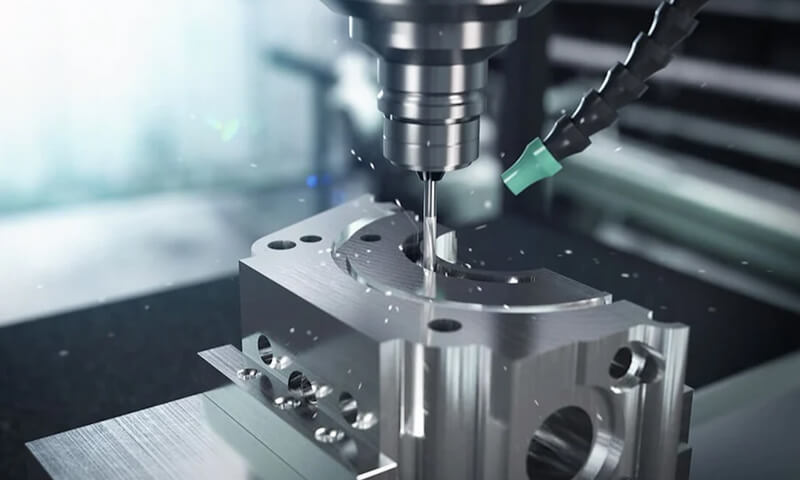
Cnc (Computer Numeresch Kontroll) cutting is a cutting-edge manufacturing technology that utilizes computer-guided machinery to perform precise cuts, Schalpperen, and drilling on various materials, abegraff Metaller, Plastik, Holz., a Kompositiouns.
This technology has revolutionized material processing, offering unparalleled accuracy, Effizienz, a widderhuelen.
How Does CNC Cutting Work?
The CNC cutting process begins with creating a digital design in computer-aided design (CAD) Software, which generates a detailed model of the desired product.
This CAD file is then converted into machine-readable instructions, directing the CNC machine’s movements.
Using these instructions, the CNC machine precisely maneuvers cutting tools to execute the design, achieving detailed and accurate cuts.
3. Overview of the Cutting Technologies
A modernen Fabrikatioun, several cutting technologies are used to shape and cut materials into precise components.
Each technology has unique strengths and is suited for different types of materials, complexity of designs, an Produktioun Ufuerderunge.
Below is an overview of four popular cutting technologies: EDM (Elektresch Auslaaf Machining), Laser opzedeelen, Waasserjet Ausschneiden, an an Plasma Ausschneiden.
EDM (Elektresch Auslaaf Machining)
Defininitioun:
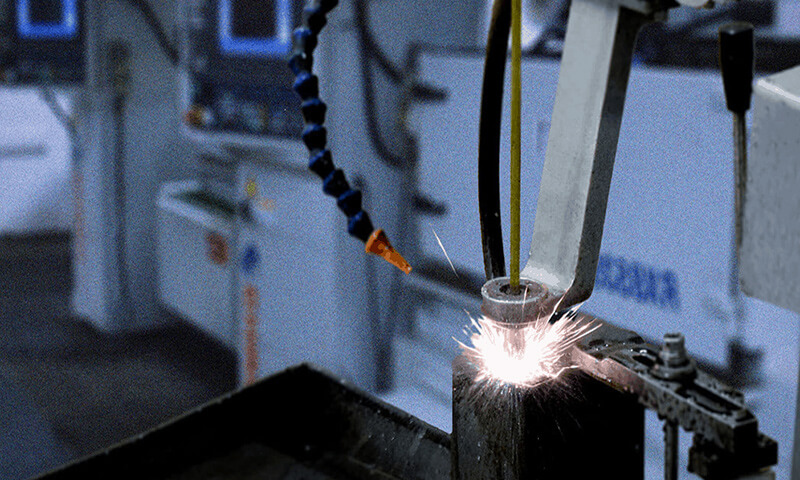
EDM uses electrical sparks to erode material from a workpiece. It’s a non-mechanical process, meaning no cutting tools physically touch the material.
Amplaz, electrical discharges are used to melt and remove material from the workpiece surface.

Uwendungen:
EDM is ideal for cutting hard metals and producing intricate designs, such as those used in toolmaking, mold manufacturing, an Loftfaart Komponente.
Schlëssel Funktiounen:
- Extrem héich Präzisioun, capable of producing fine details.
- Suitable for materials that are hard to machine with traditional methods.
- Slow cutting speed but highly accurate for small, Komplexe Deeler.
Laser opzedeelen
Defininitioun:
Laser cutting uses a focused beam of light to melt, verbrennen, or vaporize material along the cutting path.
The laser is precisely controlled by a computer to achieve detailed cuts in various materials.

Uwendungen:
Laser cutting is popular in industries like automotive, Aerospace, and signage for cutting thin to medium-thick metals, Plastik, an Holz.
Schlëssel Funktiounen:
- Offers high precision and clean cuts.
- Ideal for cutting intricate shapes and fine details.
- Works best with thinner materials but can handle thicker metals at slower speeds.
Waasserjet Ausschneiden
Defininitioun:
Waterjet cutting uses a high-pressure jet of water, dacks mat Schleifmëttel gemëscht, to cut through materials.
It’s a cold-cutting process, meaning no heat is involved, which eliminates heat-affected zones.

Uwendungen:
Used in industries such as stone cutting, Aerospace, Automotiv, a Liewensmëttelveraarbechtung.
Waterjet cutting is capable of cutting a wide variety of materials, from metals and ceramics to plastics and rubber.
Schlëssel Funktiounen:
- Versatile and can cut a wide range of materials without altering material properties.
- No heat distortion, making it ideal for heat-sensitive materials.
- Slower than laser cutting but can handle much thicker materials.
Plasma Ausschneiden
Defininitioun:
Plasma cutting uses an electrically ionized gas (Plasma) to cut metals by heating them to a high temperature and blowing away the molten material.
This process is commonly used to cut metals with high melting points.

Uwendungen:
Plasma cutting is widely used in the manufacturing of sheet metal, Baulibatiounen, and shipbuilding for cutting thicker metals, wéi Stol, Aluminium, an Edelstol.
Schlëssel Funktiounen:
- Fast cutting speed, ideal for large-scale production.
- Primarily used for conductive metals.
- Can produce rougher edges compared to other cutting methods, but suitable for cutting thick materials.
4. EDM vs Laser vs Waterjet vs Plasma: Which One is the Best CNC Cutting Method
When choosing the proper CNC cutting technology for your project, understanding the pros and limitations of each method is essential.
Here’s a brief comparison of EDM, Laser, Waasserjet, and Plasma cutting to help you determine which one is the best fit for your needs
EDM Cutting vs Laser Cutting: A Detailed Comparison
1. Materiell Kompatibilitéit
-
- Stäerheeten: Ideal for conductive materials such as hardened steel, Titanium, Wolframkarbid, and other electrically conductive metals.
- Ufrongnisseuren: Limited to materials that can conduct electricity, ruling out non-conductive materials like ceramics or plastics.
- Laser opzedeelen:
-
- Stäerheeten: Villsäiteg, capable of cutting a wide range of materials including metals (Aluminium, Edelstol, Kupfer), Plastik, Holz., ceramics, Komponites, and even some fabrics.
- Ufrongnisseuren: Less effective on highly reflective materials without proper adjustments to the laser settings.
2. Präzisioun a Genauegkeet
- EDM Cutting:
-
- Toleranzen: Achieves extremely tight tolerances, often down to ±0.0005 inches.
- Detailer: Excellent for producing fine details and complex geometries with no mechanical stress on the material.
- Uewerfläch fäerdeg: Produces a high-quality surface finish, reducing the need for secondary operations.
- Laser opzedeelen:
-
- Toleranzen: Typically achieves tolerances around ±0.005 inches, which is still highly precise but not as tight as EDM.
- Detailer: Capable of intricate cuts and small features, though less suited for extremely fine details compared to EDM.
- Uewerfläch fäerdeg: Delivers clean edges with minimal burrs, although heat-affected zones may require post-processing.
3. Schneidgeschwindegkeet
- EDM Cutting:
-
- Bescheed: Generally slower due to the nature of the process, especially for intricate designs and hard materials.
- Uwendungen: Best for low-volume production runs where precision outweighs speed.
- Laser opzedeelen:
-
- Bescheed: Faster for thin materials and simpler cuts. Wéi och ëmmer, speed decreases significantly with thicker materials.
- Uwendungen: Suitable for both low and high-volume production, depending on material thickness and complexity.
4. Thickness Capabilities
- EDM Cutting:
-
- Range: Can handle materials up to several inches thick, particularly effective for very hard or intricate parts.
- Uwendungen: Ideal fir Raumfaartkomponenten, Schimmel, a stierft déi extrem Präzisioun a Kraaft erfuerderen.
- Laser opzedeelen:
-
- Range: Limitéiert op ongeféier 1 Zoll fir déi meescht Metaller, obwuel e puer Laser liicht méi déck Materialien schneiden.
- Uwendungen: Allgemeng benotzt fir Blechveraarbechtung, Automotive Deeler, an elektronesch Komponenten.
5. Hëtzt betraff Zone (Seum)
- EDM Cutting:
-
- Impakt: Keng Hëtzt-betraff Zone, Material Eegeschaften an Integritéit erhaalen.
- Virdeeler: Verhënnert thermesch Verzerrung an Ännerungen an der Materialhärkeet, entscheedend fir delikat oder Hëtztempfindlech Uwendungen.
- Laser opzedeelen:
-
- Impakt: Erstellt eng Hëtzt-betraff Zone, wat d'Materialeigenschaften no bei der geschniddener Kante verännere kann.
- Considératiounen: Kann Postveraarbechtung erfuerderen fir HAZ Effekter ze läschen oder ze reduzéieren, besonnesch fir kritesch Uwendungen.
6. Käschten an Effizienz
- EDM Cutting:
-
- Éischt Käschten: Méi héich wéinst spezialiséierter Ausrüstung a Setupzäit.
- Operatiounskäschte: Niddereg Operatiounskäschte eemol opgestallt, besonnesch fir niddereg-Volumen, héich Präzisioun Aarbecht.
- Energie Konsum: Relativ niddereg Energieverbrauch am Verglach zu Laser opzedeelen.
- Laser opzedeelen:
-
- Éischt Käschten: Héich initial Investitioun fir Lasersystemer.
- Operatiounskäschte: Higher operational costs are driven by energy consumption and maintenance.
- Energie Konsum: Significant energy consumption, particularly for high-power lasers.
7. Ëmwelt Impakt
- EDM Cutting:
-
- Offall Management: Minimal Offall, but requires careful disposal of dielectric fluid used during the cutting process.
- Nohaltegkeet: Low environmental impact overall.
- Laser opzedeelen:
-
- Offall Management: Generates fumes and dust, requiring ventilation and filtration systems.
- Nohaltegkeet: Higher energy consumption contributes to a larger carbon footprint.
Conclusioun: Choosing Between EDM and Laser Cutting
For Extreme Precision and Hard Materials: If your project demands extreme precision, especially when working with hard materials like hardened steel or titanium, EDM cutting is the superior choice.
It excels in producing fine details without causing thermal damage, making it ideal for aerospace, medizinesch Geräter, and tooling applications.
For Versatility and High-Speed Production: When versatility and speed are priorities, and you’re dealing with a variety of materials including thinner metals, Plastik, oder Kompositioune,
laser cutting offers a compelling solution. Its ability to handle diverse materials and achieve high-speed production makes it suitable for industries like automotive, Elektronik, a Blechfabrikatioun.
Laser Cutting vs Waterjet Cutting: E passenden Verglach
1. Materiell Kompatibilitéit
- Laser opzedeelen:
-
- Stäerheeten: Highly versatile, capable of cutting metals (Aluminium, Edelstol, Kupfer), Plastik, Holz., ceramics, Komponites, and even some fabrics.
- Ufrongnisseuren: Less effective on highly reflective materials like copper or aluminum without proper adjustments to the laser settings.
Not suitable for non-metallic materials that do not absorb laser energy efficiently.
- Waasserjet Ausschneiden:
-
- Stäerheeten: Cuts almost any material, abegraff Metaller, Steen, Glas, Komponites, Gummel, a Plastik. Ideal for materials sensitive to heat.
- Ufrongnisseuren: Performance can be affected by extremely hard or abrasive materials, but still more versatile than laser cutting in terms of material types.
2. Präzisioun a Genauegkeet
- Laser opzedeelen:
-
- Toleranzen: Achieves high precision with tolerances around ±0.005 inches, making it suitable for detailed and intricate cuts.
- Uewerfläch fäerdeg: Delivers clean edges with minimal burrs, although heat-affected zones may require post-processing.
- Detailer: Excellent fir kleng Features a fein Detailer awer manner gëeegent fir extrem komplex Geometrien am Verglach zum Waasserjet.
- Waasserjet Ausschneiden:
-
- Toleranzen: Bitt moderéiert Präzisioun mat Toleranzen ëm ± 0,005 Zoll, vergläichbar mat Laserschneiden.
- Uewerfläch fäerdeg: Produzéiert e glat Rand ouni Hëtzt-betraff Zonen, thermesch Verzerrung eliminéiert.
- Detailer: Kapabel fir komplex Formen a Konturen ze handhaben ouni Genauegkeet ze verléieren, mécht et ideal fir komplizéiert Designen.
3. Schneidgeschwindegkeet
- Laser opzedeelen:
-
- Bescheed: Faster for thin materials and simpler cuts. Wéi och ëmmer, speed decreases significantly with thicker materials.
- Uwendungen: Gëeegent fir héich-Volumen Produktioun vun dënn Materialien, wéi Blechfabrikatioun an Elektronikkomponenten.
- Waasserjet Ausschneiden:
-
- Bescheed: Generell méi lues wéi Laser opzedeelen, besonnesch fir komplex Schnëtt. Wéi och ëmmer, hält konsequent Geschwindegkeet iwwer verschidde Materialdecken.
- Uwendungen: Bescht fir niddereg bis mëttel-Volumen Produktioun wou Präzisioun a Material Villsäitegkeet entscheedend sinn.
4. Thickness Capabilities
- Laser opzedeelen:
-
- Range: Limitéiert op ongeféier 1 Zoll fir déi meescht Metaller, obwuel e puer Laser liicht méi déck Materialien schneiden.
- Uwendungen: Allgemeng benotzt fir Blechveraarbechtung, Automotive Deeler, an elektronesch Komponenten.
- Waasserjet Ausschneiden:
-
- Range: Schneid effizient Material bis 1 Fouss déck, mécht et gëeegent fir ganz décke Materialien.
- Uwendungen: Ideal fir décke Metaller ze schneiden, Steen, Glas, and other materials that laser cutting cannot handle effectively.
5. Hëtzt betraff Zone (Seum)
- Laser opzedeelen:
-
- Impakt: Erstellt eng Hëtzt-betraff Zone, wat d'Materialeigenschaften no bei der geschniddener Kante verännere kann.
- Considératiounen: Kann Postveraarbechtung erfuerderen fir HAZ Effekter ze läschen oder ze reduzéieren, besonnesch fir kritesch Uwendungen.
- Waasserjet Ausschneiden:
-
- Impakt: Keng Hëtzt-betraff Zone, Material Eegeschaften an Integritéit erhaalen.
- Virdeeler: Verhënnert thermesch Verzerrung an Ännerungen an der Materialhärkeet, entscheedend fir delikat oder Hëtztempfindlech Uwendungen.
6. Käschten an Effizienz
- Laser opzedeelen:
-
- Éischt Käschten: Héich initial Investitioun fir Lasersystemer.
- Operatiounskäschte: Higher operational costs are driven by energy consumption and maintenance.
- Energie Konsum: Significant energy consumption, particularly for high-power lasers.
- Waasserjet Ausschneiden:
-
- Éischt Käschten: Moderate initial costs for waterjet systems.
- Operatiounskäschte: Higher operating costs due to water and abrasive consumption.
- Energie Konsum: Lower energy consumption compared to laser cutting.
7. Ëmwelt Impakt
- Laser opzedeelen:
-
- Offall Management: Generates fumes and dust, requiring ventilation and filtration systems.
- Nohaltegkeet: Higher energy consumption contributes to a larger carbon footprint.
- Waasserjet Ausschneiden:
-
- Offall Management: Ökur-frëndlech, recycles water, and minimizes waste. Abrasive materials need proper disposal.
- Nohaltegkeet: Lower environmental impact overall, especially when using recyclable abrasives.
Conclusioun: Choosing Between Laser and Waterjet Cutting
For Thin Materials and High-Speed Production: If your project involves cutting thin materials like sheet metal, Plastik, oder Kompositioune, and you require high-speed production,
laser cutting offers an efficient and precise solution. Its ability to handle diverse materials and achieve high-speed production makes it ideal for industries like automotive, Elektronik, a Blechfabrikatioun.
For Thick Materials and Material Versatility: When working with thick materials such as metals, Steen, Glas, or composite materials, or if you need to avoid heat-affected zones, waterjet cutting stands out.
It excels in cutting thick materials with precision and maintaining material integrity, making it suitable for applications in construction, Aerospace, an Mooss Fabrikatioun.
Waterjet Cutting vs Plasma Cutting: A Detailed Comparison
1. Materiell Kompatibilitéit
- Waasserjet Ausschneiden:
-
- Stäerheeten: Cuts almost any material, abegraff Metaller (Stum, Aluminium, Titanium), Steen, Glas, Gummel, Plastik, a Kompositiouns. It is especially beneficial for materials sensitive to heat.
- Ufrongnisseuren: Performance can be affected by extremely hard or abrasive materials, but still offers broad versatility.
- Plasma Ausschneiden:
-
- Stäerheeten: Primarily effective for conductive materials, particularly metals like steel, Aluminium, a Kupfer. Ideal for thick metals.
- Ufrongnisseuren: Limited to electrically conductive materials, ruling out non-conductive options like ceramics or wood.
2. Präzisioun a Genauegkeet
- Waasserjet Ausschneiden:
-
- Toleranzen: Provides high precision with tolerances around ±0.005 inches.
- Uewerfläch fäerdeg: Produces smooth edges with no heat-affected zones, thermesch Verzerrung eliminéiert.
- Detailer: Kapabel fir komplex Formen a Konturen ze handhaben ouni Genauegkeet ze verléieren, mécht et ideal fir komplizéiert Designen.
- Plasma Ausschneiden:
-
- Toleranzen: Manner präzis, with tolerances up to ±0.020 inches.
- Uewerfläch fäerdeg: This creates a rougher edge compared to waterjet, often requiring post-processing to achieve smoother finishes.
- Detailer: Suitable for simpler cuts and less detailed work due to its lower precision.
3. Schneidgeschwindegkeet
- Waasserjet Ausschneiden:
-
- Bescheed: Generally slower than plasma cutting, besonnesch fir komplex Schnëtt. Wéi och ëmmer, hält konsequent Geschwindegkeet iwwer verschidde Materialdecken.
- Uwendungen: Bescht fir niddereg bis mëttel-Volumen Produktioun wou Präzisioun a Material Villsäitegkeet entscheedend sinn.
- Plasma Ausschneiden:
-
- Bescheed: Extremely fast for thick metals, mécht et ideal fir héich-Volumen Produktioun. Faster cutting speeds for thicker materials compared to waterjet.
- Uwendungen: Suited for rapid cutting and large-scale projects, particularly in industries requiring quick turnaround times.
4. Thickness Capabilities
- Waasserjet Ausschneiden:
-
- Range: Schneid effizient Material bis 1 Fouss déck, mécht et gëeegent fir ganz décke Materialien.
- Uwendungen: Ideal fir décke Metaller ze schneiden, Steen, Glas, and other materials that plasma cutting cannot handle effectively.
- Plasma Ausschneiden:
-
- Range: Works well with materials up to 6 Zentimeter déck, particularly effective for thick metals.
- Uwendungen: Commonly used for cutting thick metal plates in industries like shipbuilding, Baulibatiounen, and heavy machinery manufacturing.
5. Hëtzt betraff Zone (Seum)
- Waasserjet Ausschneiden:
-
- Impakt: Keng Hëtzt-betraff Zone, Material Eegeschaften an Integritéit erhaalen.
- Virdeeler: Verhënnert thermesch Verzerrung an Ännerungen an der Materialhärkeet, entscheedend fir delikat oder Hëtztempfindlech Uwendungen.
- Plasma Ausschneiden:
-
- Impakt: Generates a significant heat-affected zone, wat d'Materialeigenschaften no bei der geschniddener Kante verännere kann.
- Considératiounen: Kann Postveraarbechtung erfuerderen fir HAZ Effekter ze läschen oder ze reduzéieren, besonnesch fir kritesch Uwendungen.
6. Käschten an Effizienz
- Waasserjet Ausschneiden:
-
- Éischt Käschten: Moderate initial costs for waterjet systems.
- Operatiounskäschte: Higher operating costs due to water and abrasive consumption.
- Energie Konsum: Lower energy consumption compared to plasma cutting.
- Plasma Ausschneiden:
-
- Éischt Käschten: Lower initial costs and moderate operational expenses, making it cost-effective for large volumes.
- Operatiounskäschte: Moderate operational costs, driven by consumables like electrodes and gases.
- Energie Konsum: Relativ méi héich Energieverbrauch, besonnesch fir High-Power Plasma Systemer.
7. Ëmwelt Impakt
- Waasserjet Ausschneiden:
-
- Offall Management: Ökur-frëndlech, recycles water, and minimizes waste. Abrasive materials need proper disposal.
- Nohaltegkeet: Lower environmental impact overall, especially when using recyclable abrasives.
- Plasma Ausschneiden:
-
- Offall Management: Generéiert Damp a erfuerdert Belëftungssystemer fir Emissiounen ze managen.
- Nohaltegkeet: Méi héich Ëmweltimpakt wéinst Energieverbrauch a potenziellen Emissiounen aus Schneidprozesser.
Conclusioun: Choosing Between Waterjet and Plasma Cutting
Fir Präzisioun a Material Villsäitegkeet: Wann Äre Projet héich Präzisioun verlaangt an eng breet Palette vu Materialien involvéiert, dorënner déi sensibel fir Hëtzt, Waasserjet Ausschneiden ass déi super Wiel.
Et excels fir fein Detailer ze produzéieren an d'Materialintegritéit z'erhalen, mécht et ideal fir Uwendungen an der Raumfaart, Mooss Fabrikatioun, an artistesch Efforten.
Fir Geschwindegkeet an décke Metal Ausschneiden: Wann Dir mat décke Metalle schafft a séier erfuerdert, effikass Ausschneiden, Plasma Ausschneiden steet eraus.
Seng Geschwindegkeet an Effizienz beim Ëmgank mat décke Metallplacke maachen et gëeegent fir Industrien wéi Schëffsbau, Baulibatiounen, and heavy machinery manufacturing, wou héich-Volumen Produktioun essentiel ass.
EDM Cutting vs Plasma Cutting: A Detailed Comparison
1. Materiell Kompatibilitéit
- EDM Cutting:
-
- Stäerheeten: Ideal for conductive materials such as hardened steel, Titanium, Wolframkarbid, and other electrically conductive metals.
- Ufrongnisseuren: Limited to materials that can conduct electricity, ruling out non-conductive materials like ceramics or plastics.
- Plasma Ausschneiden:
-
- Stäerheeten: Primarily effective for conductive materials, particularly metals like steel, Aluminium, a Kupfer. Ideal for thick metals.
- Ufrongnisseuren: Limited to electrically conductive materials, similar to EDM, but more suited for thicker and less intricate cuts.
2. Präzisioun a Genauegkeet
- EDM Cutting:
-
- Toleranzen: Achieves extremely tight tolerances, often down to ±0.0005 inches.
- Uewerfläch fäerdeg: Produces a high-quality surface finish with no mechanical stress on the material, reducing the need for secondary operations.
- Detailer: Excellent for producing fine details and complex geometries without causing thermal damage.
- Plasma Ausschneiden:
-
- Toleranzen: Manner präzis, with tolerances up to ±0.020 inches.
- Uewerfläch fäerdeg: This creates a rougher edge compared to EDM, often requiring post-processing to achieve smoother finishes.
- Detailer: Suitable for simpler cuts and less detailed work due to its lower precision.
3. Schneidgeschwindegkeet
- EDM Cutting:
-
- Bescheed: Generally slower due to the nature of the process, especially for intricate designs and hard materials.
- Uwendungen: Best for low-volume production runs where precision outweighs speed.
- Plasma Ausschneiden:
-
- Bescheed: Extremely fast for thick metals, mécht et ideal fir héich-Volumen Produktioun. Faster cutting speeds for thicker materials compared to EDM.
- Uwendungen: Suited for rapid cutting and large-scale projects, particularly in industries requiring quick turnaround times.
4. Thickness Capabilities
- EDM Cutting:
-
- Range: Can handle materials up to several inches thick, particularly effective for very hard or intricate parts.
- Uwendungen: Ideal fir Raumfaartkomponenten, Schimmel, a stierft déi extrem Präzisioun a Kraaft erfuerderen.
- Plasma Ausschneiden:
-
- Range: Works well with materials up to 6 Zentimeter déck, particularly effective for thick metals.
- Uwendungen: Commonly used for cutting thick metal plates in industries like shipbuilding, Baulibatiounen, and heavy machinery manufacturing.
5. Hëtzt betraff Zone (Seum)
- EDM Cutting:
-
- Impakt: Keng Hëtzt-betraff Zone, Material Eegeschaften an Integritéit erhaalen.
- Virdeeler: Verhënnert thermesch Verzerrung an Ännerungen an der Materialhärkeet, entscheedend fir delikat oder Hëtztempfindlech Uwendungen.
- Plasma Ausschneiden:
-
- Impakt: Generates a significant heat-affected zone, wat d'Materialeigenschaften no bei der geschniddener Kante verännere kann.
- Considératiounen: Kann Postveraarbechtung erfuerderen fir HAZ Effekter ze läschen oder ze reduzéieren, besonnesch fir kritesch Uwendungen.
6. Käschten an Effizienz
- EDM Cutting:
-
- Éischt Käschten: Méi héich wéinst spezialiséierter Ausrüstung a Setupzäit.
- Operatiounskäschte: Niddereg Operatiounskäschte eemol opgestallt, besonnesch fir niddereg-Volumen, héich Präzisioun Aarbecht.
- Energie Konsum: Relatively low energy consumption compared to plasma cutting.
- Plasma Ausschneiden:
-
- Éischt Käschten: Lower initial costs and moderate operational expenses, making it cost-effective for large volumes.
- Operatiounskäschte: Moderate operational costs, driven by consumables like electrodes and gases.
- Energie Konsum: Relativ méi héich Energieverbrauch, besonnesch fir High-Power Plasma Systemer.
7. Ëmwelt Impakt
- EDM Cutting:
-
- Offall Management: Minimal Offall, but requires careful disposal of dielectric fluid used during the cutting process.
- Nohaltegkeet: Low environmental impact overall.
- Plasma Ausschneiden:
-
- Offall Management: Generéiert Damp a erfuerdert Belëftungssystemer fir Emissiounen ze managen.
- Nohaltegkeet: Méi héich Ëmweltimpakt wéinst Energieverbrauch a potenziellen Emissiounen aus Schneidprozesser.
Conclusioun: Choosing Between EDM and Plasma Cutting
For Extreme Precision and Hard Materials: If your project demands extreme precision, especially when working with hard materials like hardened steel or titanium, EDM cutting is the superior choice.
It excels in producing fine details and maintaining material integrity without causing thermal damage, making it ideal for aerospace, medizinesch Geräter, and tooling applications.
Fir Geschwindegkeet an décke Metal Ausschneiden: Wann Dir mat décke Metalle schafft a séier erfuerdert, effikass Ausschneiden, Plasma Ausschneiden steet eraus.
Seng Geschwindegkeet an Effizienz beim Ëmgank mat décke Metallplacke maachen et gëeegent fir Industrien wéi Schëffsbau, Baulibatiounen, and heavy machinery manufacturing, wou héich-Volumen Produktioun essentiel ass.
5. A Comparative Table
| D'Feature | EDM Cutting | Laser opzedeelen | Waasserjet Ausschneiden | Plasma Ausschneiden |
|---|---|---|---|---|
| Materiell Kompatibilitéit | Conductive materials | Various materials | Almost any material | Conductive materials |
| Präzisioun | ± 0,0005 Zoll | ±0.005 inches | ±0.005 inches | ±0.020 inches |
| Schneidgeschwindegkeet | Liichte | Faach ewech (dënn), Liichte (déck) | Mëttelméisseg | Faach ewech |
| Thickness Capabilities | Several inches | ~1 inch | Wéi op 1 foot | Wéi op 6 Zeiteren |
| Käschte | Higher initial, lower ops | High initial, high ops | Moderate initial, high ops | Lower initial, moderate ops |
| Ëmwelt Impakt | Minimal Offall, and fluid disposal | Significant energy consumption | Ökur-frëndlech, minimal waste | Hëtzt Generatioun, Belëftung |
6. Conclusioun
Choosing the right cutting technology depends on multiple factors such as material type, néideg Präzisioun, Produktioun Volumen, an Budget Aschränkungen.
All Method bréngt eenzegaarteg Virdeeler op den Dësch.
Egal ob Dir déi onparalleléiert Präzisioun vun EDM schätzt, der Villsäitegkeet vun Laser, d'Ökofrëndlechkeet vum Waterjet, oder d'Vitesse vum Plasma, et gëtt eng Schneidmethod fir all Fabrikatiounserausfuerderung.
Andeems Dir d'Stäerkten an Aschränkungen vun all Methode versteet, Hiersteller kënnen déi optimal Schneidtechnologie wielen fir hir Produktiounsziler z'erreechen.
Fir Expert Orientatioun a personaliséiert Léisungen, konsultéiert mat Industriefachleit——Des.