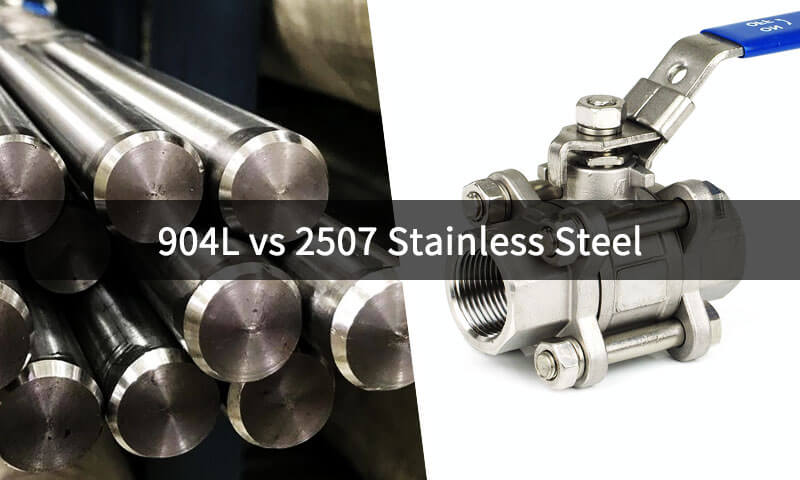
904L ass a super austenitesch Edelstol entwéckelt fir héich sauer Ëmfeld ze widderstoen, besonnesch Schwefelsäure a Phosphorsäure Uwendungen.
Seng héich Néckel, Chrogium, moybdsum, a Kupfergehalt gëtt aussergewéinlech Resistenz géint allgemeng Korrosioun, Paéierung, a Spaltkorrosioun wärend exzellent Formbarkeet a Schweessbarkeet behalen.
2507, op der anerer Säit, as A super duplex Edelstol dat kombinéiert ongeféier gläiche Verhältnisser vun Austenit a Ferrit.
Dës eenzegaarteg Dual-Phase Mikrostruktur liwwert bal zweemol d'mechanesch Stäerkt vu konventionell austeniteschen Edelstahl a bitt aussergewéinlech Resistenz géint chlorid-induzéiert Pitting, crevice Korrosioun, an Stress corrosion Rëss.
Als Resultat vun, 2507 ass d'Material vun der Wiel fir Offshore Plattformen ginn, Mierwaasser Desalinatiounsanlagen, subsea Pipelines, an aner haart chlorid-räich Ëmfeld.
Wiel tëscht 904L an 2507 ass net eng Saach vu "besser" oder "schlëmmer". Et ass eng strategesch Entscheedung déi d'Korrosiounsbeständegkeet géint d'mechanesch Kraaft muss weien, Schweessbarkeet géint Käschten, an Disponibilitéit géint Leeschtung.
1. Verstoen 904L an 2507 Edelstol
Obwuel souwuel 904L an 2507 sinn als héich performant klasséiert Edelstols, si gehéieren zu verschiddene metallurgesche Famillen a goufen entwéckelt fir verschidde Ingenieursfuerderungen ze léisen.
Verstinn hir Zesummesetzung, Microstruktur, an Designphilosophie ass d'Basis fir de passenden Material fir korrosiv oder héichstäerkt Uwendungen ze wielen.
Wat ass 904L Edelstol?
904L ass a niddereg-Kuelestoff, austenitescht Edelstahl aus héich Legierung speziell entwéckelt fir Uwendungen déi aussergewéinlech Korrosiounsbeständegkeet an aggressiven chemeschen Ëmfeld erfuerderen.
Am Verglach mat Standard austenitesche Qualitéiten wéi 304L an 316L, 904L enthält wesentlech méi héich Niveauen vun Nickel (An), Chrogium (Nt), moybdsum (Moien), an an Kupfer (CU-), gëtt et aussergewéinlech Resistenz géint Säuren ze reduzéieren, Chlorid-induzéiert Pitting, an Spaltkorrosioun.
Ursprénglech agefouert fir d'Handhabung vu Schwefelsäure a chemesche Veraarbechtungsanlagen, 904L ass elo wäit an Industrien benotzt, wou laangfristeg Haltbarkeet ënner héich korrosive Konditiounen essentiell ass,
dorënner chemesch Veraarbechtung, Ueleg a Gas, marine Engineering, pharmazeutesch Produktioun, Pulp a Pabeier, an Ofgas-Desulfuriséierungssystemer.

Austenitic STAINLESS Steel Klassifikatioun
904L gehéiert zu der super austenitesch Edelstol Famill. Seng voll austenitesch Mikrostruktur bitt verschidde Virdeeler:
- Exzellent Korrosiounsbeständegkeet iwwer eng breet Palette vu chemeschen Ëmfeld
- Superior Duktilitéit an Zähegkeet, Och bei Cryogeneschen Temperaturen
- Net-magnetesch Charakteristiken am annealed Zoustand
- Exzellent Formbarkeet a Schweißbarkeet
- Héich Resistenz géint intergranular Korrosioun wéinst sengem nidderegen Kuelestoffgehalt
Am Géigesaz zu Duplex Edelstahl, 904L vertrauen net op eng gemëscht ferritic-austenitic Struktur fir Stäerkt.
Amplaz, seng Leeschtung gëtt duerch héich Legierungsniveauen erreecht, déi souwuel d'Korrosiounsbeständegkeet wéi och d'metallurgesch Stabilitéit verbesseren.
Entwécklung Geschicht
904L Edelstol gouf ufanks an den 1960er Joren entwéckelt fir Korrosiounsfuerderunge bei der Schwefelsäureproduktioun an der Düngerfabrikatioun unzegoen, wou konventionell Edelstahl net genuch Resistenz ausgestallt huet.
D'Ingenieuren hunn eng Legierung gesicht déi fäeg ass strukturell Integritéit z'erhalen fir sauer Ëmfeld ze reduzéieren ouni d'Schweißbarkeet oder d'Fabrikatiounsleeschtung ofzeschafen.
Am Zäitoflaf, Fortschrëtter an der Metallurgie an der Fabrikatiounstechnologie hunn d'Benotzung vum 904L an den Offshore-Ingenieur erweidert, Hëtztaustauschter, Drock Schëffer, an héich-Rengheet Prozess Equipement.
Haut, et bleift ee vun de meescht unerkannten super austenitesche Edelstahle fir korrosiv industriell Uwendungen.
Schlëssel Charakteristiken
904L STAINLESS Stol bitt eng excellent Gläichgewiicht vun corrosion Resistenz, fabrication Leeschtung, an Zähegkeet. Seng definéierend Charakteristiken enthalen:
- Aussergewéinlech Resistenz géint Schwefel, phosphoresch, an organesch Saieren
- Héich Resistenz géint Pitting a Spaltkorrosioun a Chloridhaltege Ëmfeld
- Exzellent Schweessbarkeet ouni de Besoin fir Post-Wärmebehandlung a ville Applikatiounen
- Superior Zähegkeet souwuel bei Ëmfeld wéi och bei kryogenen Temperaturen
- Niddereg Empfindlechkeet fir Sensibiliséierung wéinst sengem nidderegen Kuelestoffgehalt
- Gutt Formbarkeet fir komplex fabrizéiert Komponenten
Dës Eegeschafte maachen 904L besonnesch gëeegent fir Drockbehälter, späichere Panzer, Piping Systemer, an Hëtzt exchangers ausgesat ze aggressiv chemesch Medien.
International Standards
904L STAINLESS Stol ass ënner Multiple international Spezifikatioune standardiséierte, assuréieren global Material Konsistenz an interchangeability.
| Ufank | Bezeechnung |
| Ons | N08904 |
| Astm | ASTM A240, ASTM A182, ASTM A312, ASTM A276 |
| An | An 1.4539 |
| Iwwuerten | X1nicrmoccoc25-20-5 |
| Iso | Iso 15510 |
| Hien | SUS 904L |
Wat ass 2507 Edelstol?
2507 as A super duplex Edelstol entwéckelt fir déi exzellent Korrosiounsbeständegkeet vum austenitesche Edelstol mat der héijer Kraaft vum ferritesche Edelstol ze kombinéieren.
Seng equilibréiert Mikrostruktur besteet aus ongeféier 50% austenit an 50% Ferrit
Duerch seng super Kraaft an Haltbarkeet, 2507 ass wäit an Offshore Ueleg a Gas Produktioun benotzt, subsea Equipement, Mierwaasser Desalinatioun, marine Engineering, Chemeschenverbriechen, an aner Uwendungen ausgesat ze héich korrosive Chlor Ëmfeld.

Super Duplex Edelstahl Klassifikatioun
2507 gehéiert zu der super duplex Edelstol Famill, déi sech duerch charakteriséiert:
- Dual-Phase Ferrit-Austenit Mikrostruktur
- Héich Chrom- a Molybdängehalt
- Stickstofflegierung fir verstäerkte Kraaft a Korrosiounsbeständegkeet
- Excellent Resistenz géint Stress corrosion Rëss
- Héich Ausbezuelkraaft - ongeféier zweemol déi vun konventionell austeniteschen Edelstahl
Déi equilibréiert Mikrostruktur erlaabt 2507 fir eng eenzegaarteg Kombinatioun vu mechanescher Leeschtung a Korrosiounsbeständegkeet ze liwweren, déi net nëmme mat voll austeniteschen Legierungen erreecht ka ginn.
Entwécklung Geschicht
Duplex Edelstol goufen ursprénglech entwéckelt fir d'Aschränkungen vun traditionellen austeniteschen Edelstahl a chloridräichen Ëmfeld ze iwwerwannen.
Als Offshore Ueleg Produktioun, Mierwaasser Desalinatioun, an Déift-Waasser Ingenieur während dem spéiden zwanzegsten Joerhonnert erweidert, Ingenieuren erfuerderen Materialien, déi fäeg sinn lokaliséiert Korrosioun ze widderstoen wärend héich mechanesch Kraaft behalen.
2507 Edelstol entstanen als Premium Super Duplex Grad mat verstäerkter Chrom, moybdsum, an Stickstoffgehalt, d'Resistenz géint Pitting wesentlech verbessert, crevice Korrosioun, an Stress corrosion Rëss.
Haut, et gëtt als ee vun den zouverlässegsten Edelstahl fir haart Marine an Offshore Service ugesinn.
Dual-Phase Mikrostruktur
D'definéierend Fonktioun vun 2507 ass seng suergfälteg kontrolléiert Dual-Phase Struktur, typesch besteet aus:
- Ongeféier 4 50% Ferrit
- Ongeféier 4 50% austenites
Dës equilibréiert Mikrostruktur bitt verschidden technesch Virdeeler:
- Héich Ausbezuele a Spannkraaft
- Exzellent Zähegkeet
- Superior Resistenz zu Chlorid Stress corrosion Rëss
- Verbesserte Middegkeet Leeschtung
- Verbesserte Resistenz géint lokaliséierter Korrosioun
- Besser Dimensiounsstabilitéit ënner mechanescher Belaaschtung
Wéi och ëmmer, d'Erhalen vun dësem mikrostrukturelle Gläichgewiicht erfuerdert strikt Kontroll während der Wärmebehandlung a Schweißen fir d'Bildung vu schiedlechen intermetallesche Phasen ze vermeiden.
Schlëssel Charakteristiken
2507 Edelstol ass unerkannt fir seng aussergewéinlech Kombinatioun vu mechanesche a korrosionsbeständeg Eegeschaften, ganz agemaach:
- Aussergewéinlech Resistenz géint Pitting a Spaltkorrosioun
- Excellent Chlorid Stress Korrosioun Rëss Resistenz
- Bal duebel d'Ausbezuelkraaft vun 904L
- Héich Middegkeet Kraaft fir zyklesch Luede Uwendungen
- Gutt Impakt Zähegkeet
- Exzellent Mierwaasser Korrosiounsbeständegkeet
- Reduzéiert Wanddicke Ufuerderunge wéinst méi héijer Kraaft
Dës Charakteristiken maachen 2507 Edelstol en idealt Material fir strukturell Komponenten déi ënner héijen Drock a schwéiere Korrosiounsbedéngungen operéieren.
International Standards
2507 STAINLESS Stol ass vun e puer global unerkannt Material Standarden Daach.
| Ufank | Bezeechnung |
| Ons | S32750 |
| Astm | ASTM A240, ASTM A182, ASTM A276, ASTM A789, ASTM A790 |
| An | An 1.4410 |
| Iwwuerten | X2CrNiMoN25-7-4 |
| Iso | Iso 15156 (UeleP & Gas Service) |
2. Chemesch Zesummesetzung Verglach: 904L vs 2507 Edelstol
Déi chemesch Zesummesetzung vum Edelstol bestëmmt grondsätzlech seng Mikrostruktur, Korrosioun Resistenz, mechanesch Eegeschafte, Schweessbarkeet, an Service Leeschtung.
904L hänkt op héich Néckel, moybdsum, a Kupfer Inhalter fir d'Resistenz géint d'Säuren ze reduzéieren an allgemeng Korrosioun ze verbesseren,
heiansdo 2507 erreecht super mechanesch Kraaft a Chlor Resistenz duerch eng virsiichteg equilibréiert Kombinatioun vun Chrogium, moybdsum, umtytsgen, an en Duplex (austenit-ferrit) Microstruktur.
| Elements (WT%) | 904L (US N08904) | 2507 (US S32750) | Primärfunktioun |
| Chrogium (Nt) | 19.0-23.0 | 24.0-26.0 | Verbessert d'Oxidatiounsresistenz, passivatioun, a pitting corrosion Resistenz |
| Nickel (An) | 23.0-28.0 | 6.0-8,0 | Stabiliséiert AUSTESITE, verbessert Zähegkeet a Korrosiounsbeständegkeet |
| Moybdsum (Moien) | 4.0-5.0 | 3.0-5.0 | Verbessert Pitting, crevice Korrosioun, an Seier Resistenz |
| Umtytsgen (N) | ≤0,10 | 0.24-0,32 | Erhéicht d'Kraaft an d'Pittresistenz, stabiliséiert Austenit |
| Kupfer (CU-) | 1.0-2.0 | ≤0,50 | Verbessert Resistenz géint Schwefel- a Phosphorsäuren |
Karkbelaéierung (C ') |
≤0,020 | ≤0,030 | Niddereg Kuelestoff miniméiert Carbid Nidderschlag an intergranular corrosion |
| Manganese (MN-) | ≤2.0 | ≤1.2 | Verbessert waarm Aarbechtbarkeet an Deoxidatioun |
| Silicon (An an) | ≤1.0 | ≤0,8 | Verbessert d'Oxidatiounsbeständegkeet an d'Gossfluiditéit |
| Phosphorrus (P) | ≤0,045 | ≤0,035 | Kontrolléiert fir Zähegkeet ze halen |
| Sulfur (S) | ≤0,035 | ≤0,020 | Niddereg Schwefel verbessert d'Schweißbarkeet a Korrosiounsbeständegkeet |
| Eisen (Fe) | Esch Bapport | Esch Bapport | Matrixmaterial |
3. Mechanesch Properties Verglach: 904L vs 2507 Edelstol
Déi mechanesch Eegeschafte vun 904L an 2507 reflektéieren hir fundamental verschidde Mikrostrukturen: austenitesch vs. duplex.
| Mechanesch Propriétéit | 904L (Annealed) | 2507 (Léisung annealed) | Ënnerscheed |
| Tensil Stäerkt (MPa MPa) | 520-680 | 700-850 | 2507 ass 20-30% méi staark. |
| Yield Kraaft (0.2%, MPa MPa) | 220 | 550 | 2507 ass 2,5 × méi staark. |
| Erlong (%) | ≥35 | ≥25 | 904L ass méi duktil. |
| Hannscht (HB) | 150-180 | 250-300 | 2507 ass wesentlech méi schwéier. |
Impakt Zähegkeet (Charapie, Jin) |
>100 (bei Raumtemperatur) | 70-100 (bei Raumtemperatur) | Béid sinn haart; 904L behält Zähegkeet bei kryogenen Temperaturen. |
| Elastizitéitsmodul (GPa) | 195 | 200 | Ähnlech. |
| Middegkeet Kraaft (10⁷ Zyklen, MPa MPa) | 250-300 | 400-450 | 2507 huet super Middegkeet Resistenz. |
| Kreep Resistenz | Gutt | Mëttelméisseg (limitéiert op ≤300°C) | 904L ass besser bei héijen Temperaturen. |
| Duktil-zu-brécheg Iwwergang | Keen (austenitesch) | -50°C (duplex) | 904L ass gëeegent fir kryogen Uwendungen; 2507 ass limitéiert. |
4. Korrosion Resistenz Verglach: 904L vs 2507 Edelstol
Korrosiounsbeständegkeet ass de primäre Grond datt Ingenieuren héichlegéiert Edelstahl auswielen. Wärend souwuel 904L an 2507 bedeitend besser wéi Standardgrade wéi z.B 304 an 316l,
si exceléieren a verschiddene korrosive Ëmfeld duerch hir ënnerschiddlech Legierungskompositiounen a Mikrostrukturen.
Normalerweis, 904L funktionéiert aussergewéinlech gutt fir Säuren ze reduzéieren, Wouaë 2507 bitt super Resistenz géint chlorid-induzéiert lokaliséierter Korrosioun a Stresskorrosiounsrëss.

Allgemeng Korrosion Resistenz
Béid Legierungen entwéckelen eng stabil chromräich passiv Oxidschicht, déi dat ënnerierdesche Metall géint eenheetlech Korrosioun schützt.
Verglach mat konventionell STAINLESS Stol, souwuel Material Offer:
- Excellent atmosphäresch corrosion Resistenz
- Héich Oxidatiounsbeständegkeet
- Superior industriell Korrosiounsleistung
- Laang Service Liewen
Wéi och ëmmer, hir optimal Service Ëmfeld ënnerscheede sech wesentlech.
Pitting Corrosion Resistenz
Pitting Korrosioun ass eng lokaliséiert Form vun Attack, déi geschitt wann de passive Film ofbriechen, besonnesch a Chloridhaltege Léisungen.
Well 2507 enthält:
- Méi héich Chrom
- Ähnlech Molybdän
- Vill méi héich Stickstoff
et weist wesentlech méi héich Resistenz géint Pitting.
| Material | Typesch PREN | Pitting Resistenz |
| 316L | 24-27 | Gutt |
| 904L | 35-38 | Explaz vun engem exzellenten |
| 2507 | 42-45 | Aussergewéinlech |
2507 ass dofir déi léifste Wiel fir Mierwaasserleitungen, Offshore Plattformen, desalination Planzen, a Marine Ausrüstung.
Crevice Corrosion Resistenz
Spuerkorrosioun entwéckelt sech dacks ënner Dichtungen, flangen, Bolzen, Dépôten, oder stagnant Waasser wou Sauerstoff ofgebaut ass.
Obwuel béid Legierungen gutt funktionéieren, 2507Déi méi héich PREN an Duplex Struktur bidden méi Resistenz, besonnesch a waarme chloridräiche Ëmfeld.
Stress korrosion Cracking (Scomme SMC)
Spannungskorrosiounsrëss resultéiert aus de kombinéierten Effekter vu Spannspannungen a korrosive Medien, besonnesch Chloriden.
Dëst ass ee vun de bedeitendsten Differenzen tëscht deenen zwee Materialien.
- 904L bitt verbessert SCC Resistenz am Verglach mat Standard austenitesche Graden awer kann nach ëmmer ufälleg sinn ënner schwéiere Chloridbedéngungen.
- 2507, mat senger Duplex Mikrostruktur, bitt aussergewéinlech Resistenz géint chlorid-induzéiert SCC a gëtt wäit an Offshore Ueleg- a Gassystemer benotzt, wou esou Feeler e grousse Suergen sinn.
Schwefelsäure Resistenz
| Ëmwelt | 904L | 2507 |
| 10-40% H₂SO₄ bei 20‑80°C | Explaz vun engem exzellenten | Mëttelméisseg |
| H₂SO4 verdënnen (<10%) | Explaz vun engem exzellenten | Gutt |
| Hot konzentréiert H₂SO₄ (>70%) | Gutt | Aarm |
904L ass déi bescht Legierung fir Schwefelsäurehandhabung wéinst sengem Kupfergehalt. 2507De Kupfer ass limitéiert op ≤0,5%, gëtt et vill manner Resistenz géint Säuren ze reduzéieren.
5. Hëtzt Resistenz a Weldability
Hëtzt Resistenz
| Paramesnéiergank | 904L | 2507 |
| Maximal kontinuéierlech Service Temperatur | 300-400°C | ≤300°C |
| Kuerzfristeg Héichtemperatur | 450° C | 350° C |
| Oxidatiounsresistenz | Gutt (bis 600°C) | Gutt (bis 500°C) |
| Kreep Resistenz | Gutt | Limitéiert (duplex Phase onbestänneg >300° C) |
| Sensibiliséierungsrisiko | Wéineg bannen (low carbon) | Wéineg bannen (low carbon + umtytsgen) |
Kritesch Notiz: 2507 soll Nganem uewen benotzt ginn 300° C fir verlängert Perioden.
Iwwer dës Temperatur, d'Duplex Mikrostruktur kann zerbriechen - eng schiedlech Sigma Phase bilden, wat d'Material verbreet an d'Korrosiounsbeständegkeet reduzéiert.
904L ka bis zu 400°C benotzt ginn (a fir kuerz Zäit bis zu 450°C) ouni bedeitend Phase Degradatioun.
WELDITIOUN
| Schweessfaktor | 904L | 2507 |
| Weldability Bewäertung | Explaz vun engem exzellenten | Gutt (verlaangt qualifizéiert welders) |
| Preheat néideg | Nee | Nee |
| Filler Metal | Passend 904L (Er385) | Passend 2507 (Z.B., ER2594) |
| Hëtzt Input Kontroll | Net kritesch | Kritesch (halen interpass <150° C) |
| Post-Schweiß Wärmebehandlung | Net néideg | Net néideg |
| Risiko vun waarm knacken | Wéineg bannen | Wéineg bannen |
| Risiko vun der Sigma Phase | Keen | Héichheet (lues Ofkillung oder héich Hëtzt Input) |
| Back-purge néideg | Nee (fir Loft Uwendungen) | Jo (fir héichqualitativ Schweißen) |
Schlëssel Asiicht: 904L ass méi einfach ze Schweess wéi 2507. Seng voll austenitesch Struktur ass verzeien, ouni Risiko fir Sigma Phase Bildung.
2507Duplex Struktur erfuerdert strikt Kontroll vun Hëtzt Input, interpass Temperatur (<150° C), an Ofkillungsquote fir Ausfäll vun der Sigma Phase oder exzessive Ferrit / Austenit Ungleichgewicht ze vermeiden.
6. Machinability a Fabrikatioun
Déi substantiell Differenzen an durchgang Zesummesetzung a microstructure tëscht 904L an 2507 STAINLESS Stol hunn en direkten Impakt op machining Verhalen, Fabrikatioun Methoden, Tooling Ufuerderunge, an Fabrikatioun Käschten.
Machinability Verglach
| Prowalange | 904L Edelstol | 2507 Edelstol |
| Relativ machinability (Aisi 1212 = 100%) | 35-40% | 20-30% |
| Schneidkräften | Mëttelméisseg | Héichheet |
| Tool Wear | Moderéiert bis héich | Héichheet |
| Aarbecht Hardening Tendenz | Vill héich | Mëttelméisseg |
| Chip Formatioun | Laang a Stringy | Kuerz awer schwéier |
| Recommandéiert Tooling | Carbide Tools | Premium Carbide oder Keramik |
| Surface Finish Potential | Explaz vun engem exzellenten | Gutt |
Machining Charakteristiken vun 904L
904L enthält aussergewéinlech héich Niveauen vun Néckel a Molybdän, déi aussergewéinlech Korrosiounsbeständegkeet ubidden, awer och Duktilitéit an Zähegkeet erhéijen.
Als Resultat vun, d'Material weist eng schwéier Aarbechtshärung wärend der Bearbechtungsoperatioun.
Typesch Erausfuerderunge enthalen:
- Schnell Härtung vun der machinéierter Uewerfläch.
- Erhéicht Hëtztgeneratioun an der Schneidzone.
- Schwieregkeeten am Chip ze briechen.
- Méi héich Toolverschleiung am Verglach mat Standard austenitesche Graden.
Recommandéiert Bearbechtungspraktiken enthalen:
- Benotzt scharf positiv-Rake Carbide Inserts.
- Kontinuéierlech Schnëtt behalen wann et méiglech ass.
- Generéise Kälteflëssegkeet applizéieren fir d'Hëtzt opzeléisen.
- Wielt moderéiert Schneidgeschwindegkeet a méi héije Feedraten.
- Vermeiden widderholl flaach Schnëtt, déi d'Aarbechtshärung förderen.
Typesch machining Prozesser enthalen:
- CNC dréien
- CNC Millen
- Graf driwwer
- thread machining
- Präzisioun Veraarbechtung Operatiounen
Machining Charakteristiken vun 2507
D'machining Schwieregkeeten verbonne mat 2507 entstinn haaptsächlech aus senger héijer Kraaft an der Härtheet anstatt exzessiv Aarbechtshärung.
Verglach mat 904L, 2507 typesch Resultater an:
- Méi héich Schneidlasten.
- Gréissere Toolrandverschleiung.
- Erhéicht Schwéngungsrisiko.
- Reduzéiert zulässlech Schneidgeschwindegkeet.
Erfollegräich machining vun 2507 allgemeng verlaangt:
- Héich-Steiif Maschinn Handwierksgeschir.
- Premium Beschichtete Carbid Inserts.
- Héich-Drock coolant Systemer.
- Optimiséiert Tool Geometrie.
- Ënneschten spindle Vitesse mat adäquate fidderen Tariffer.
Och wann d'Maschinnkäschte generell méi héich sinn, der Ieweschte mechanesch Kraaft vun 2507 erlaabt oft Designer Rubrikdicke ze reduzéieren, deelweis kompenséiert fir déi erhéicht Fabrikatiounskäschte.
Formability Verglach
| Formen Property | 904L | 2507 |
| Kale Formabilitéit | Explaz vun engem exzellenten | Gutt |
| Deep Zeechnen | Explaz vun engem exzellenten | Mëttelméisseg |
| Béie Kapazitéit | Explaz vun engem exzellenten | Gutt |
| Stretch Form | Explaz vun engem exzellenten | Mëttelméisseg |
| Springback Tendenz | Mëttelméisseg | Héichheet |
904L Virdeeler
Déi voll austenitesch Struktur bitt exzellent Duktilitéit an Zähegkeet, mécht 904L héich gëeegent fir:
- Déif gezunn Schëffer
- Komplex Piping Systemer
- Chemeschen Stockage Tanks
- Pharmazeutesch Veraarbechtungsausrüstung
D'Material funktionéiert besonnesch gutt an Uwendungen mat schwéierer Verformung oder enge Béie Radien.
2507 Virdeeler
Obwuel manner formable wéi 904L, 2507 offréiert:
- Méi héich strukturell Steifheit.
- Besser Belaaschtungsfäegkeet.
- Reduzéiert Wanddicke Ufuerderunge.
Wéi och ëmmer, Hiersteller musse verstäerkten Réckgang während Béi Operatiounen berücksichtegen, oft verlaangt iwwer-béie Kompensatioun.
7. Investitioun Casting Leeschtung Verglach: 904L vs 2507 Edelstol
Investitiouns Casting, och bekannt als verluer Wax Goss, ass e Präzisiounsfabrikatiounsprozess wäit benotzt fir komplex Edelstahlkomponenten mat exzellenter Dimensiounsgenauegkeet ze produzéieren, komplizéiert Geometries, glat Uewerfläch fäerdeg, a reduzéiert machining Ufuerderunge.
Am Verglach mat konventionelle Gossmethoden, Investitioun Guss gëtt eng super Kontroll iwwer Komponent Form an Uewerfläch Qualitéit, mécht et ideal fir exigent Uwendungen an der chemescher Veraarbechtung, Ueleg a Gas, marine Engineering, Energie Systemer, an industriell Ausrüstung.
| Investitioun Casting Faktor | 904L | 2507 |
| Flëssegkeet | Gutt (héich Néckel) | Mëttelméisseg (Duplex huet manner Flëssegkeet) |
| Stäerkung Schrumpf | Mëttelméisseg (~ 2%) | Mëttelméisseg héich (~2-3%) |
| Hot Tréine Tendenz | Wéineg bannen | Mëttelméisseg (duplex) |
| Shell Interaktioun | Wéineg bannen (Silica-Sol Shells) | Wéineg bannen |
| Schéisstemperatur (° C) | 1550-1650 | 1550-1650 |
| Wärmebehandlung erfuerderlech | Léisung anneal (1040-1100°C) + ausléisen | Léisung anneal (1020-1100°C) + ausléisen |
| Ndt / Inspektioun | Radiographie, Faarf penetrant | Radiographie, Faarf penetrant, Ferritmessung |
| Castability Bewäertung | Explaz vun engem exzellenten | Gutt |
Schlëssel Considératiounen:
- 904L Goss gutt wéinst sengem héije Néckelgehalt (gutt Flëssegkeet, niddereg Oxidatioun).
- 2507 Goss gutt awer erfuerdert virsiichteg Kontroll vum Ofkillungsquote fir de richtege Austenit-Ferrit Gläichgewiicht z'erreechen (50/50). Schnell Ofkillung vu Léisungsglühung ass wesentlech.
- Ferrit Miessung: Fir 2507 Investitioun Castings, de Ferritgehalt muss gemooss ginn (typesch 35-65%) fir d'Phasebalance an d'Korrosiounsbeständegkeet ze garantéieren.
8. Industrie Uwendungen
904L Edelstol ass haaptsächlech fir Ëmfeld ausgewielt mat aggressiv Säuren, besonnesch Schwefelsäure a Phosphorsäure, wou säin héije Néckel- a Kupfergehalt aussergewéinlech Korrosiounsbeständegkeet bitt.
2507 Edelstol, als Super Duplex Edelstol, ass bevorzugt fir Uwendungen déi eng Kombinatioun vun héijer mechanescher Kraaft erfuerderen, excellent Chlorid Resistenz, a super Resistenz géint Stress Korrosioun Rëss, besonnesch an Offshore a Marine Ëmfeld.

Chemesch Veraarbechtung Industrie
904L STAINLESS Steel Uwendungen
D'chemesch Veraarbechtungsindustrie ass ee vun de wichtegsten Uwendungsberäicher fir 904L Edelstol.
Wéinst sengem héije Néckelgehalt (ongeféier 23-28%) an Koffer Zousatz, 904L bitt aussergewéinlech Resistenz géint Säuren ze reduzéieren, besonnesch Schwefelsäure.
Typesch Uwendungen enthalen:
- Schwefelsäure Lagerbehälter.
- Seier Transfert Pipelines.
- Reaktoren a Mëschbehälter.
- Hëtztaustauschter.
- Evaporators.
- Pompel Kierper.
- Valve Komponenten.
- Chemesch Veraarbechtung Armature.
2507 Edelstahl Uwendungen
Wëlls och 2507 ass net typesch ausgewielt fir staark sauer Ëmfeld ze reduzéieren, et funktionnéiert aussergewéinlech gutt a Chloridhaltege chemesche Prozesser.
Typesch Uwendungen enthalen:
- Chlorid Veraarbechtung Ausrüstung.
- Chemeschen Stockage Systemer.
- Wärmetauscher ausgesat Salzléisungen.
- Prozess Pipe Systemer.
Ueleg a Gasindustrie
D'Ueleg- a Gasindustrie fuerdert Materialien déi fäeg sinn den Héichdrock z'iwwerliewen, erhéicht Temperaturen, an héich korrosiv Ëmfeld mat Chloriden, Waasserstoff sulfide, an Seewaasser.
2507 Edelstahl Uwendungen
2507 ass wäit an Offshore Ueleg a Gas Operatiounen benotzt wéinst senger excellent Kraaft a corrosion Resistenz.
Typesch Komponente enthalen:
- Subsea Ventile.
- Offshore Plattform Piping.
- Flowlines.
- Umbilical tubing.
- Drock Kontroll Equipement.
- Pompel Komponente.
- Manifold Systemer.
904L STAINLESS Steel Uwendungen
904L kann och an Ueleg- a Gas Ariichtungen benotzt ginn, besonnesch wou chemesch Korrosiounsbeständegkeet méi wichteg ass wéi héich mechanesch Kraaft.
Uwendungen enthalen:
- Chemesch Injektiounssystemer.
- Seier Ëmgank Equipement.
- Veraarbechtung Unitéiten.
- Spezialiséiert Päif Systemer.
Marine Engineering Uwendungen
Marine Ëmfeld gehéieren zu de schwieregste Konditioune fir metallesch Materialien well Mierwaasser héich Konzentratioune vu Chloridionen enthält.
2507 Edelstahl Uwendungen
2507 ass ee vun de bevorzugten Edelstahl fir Marine Uwendungen.
Typesch Gebrauch enthalen:
- Mierwaasser Killsystemer.
- Shipboard Päif.
- Marine Pompelen.
- Offshore Strukturen.
- Wärmetauscher Komponente.
- Desalinatioun Equipement.
904L STAINLESS Steel Uwendungen
904L funktionéiert och gutt a Marineëmfeld, awer ass allgemeng fir spezialiséiert Uwendungen ausgewielt, déi exzellent Uewerflächefinish a Korrosiounsbeständegkeet erfuerderen.
Beispiller enthalen:
- Marine dekorative Komponente.
- Präzisioun Armature.
- Luxus Equipement Komponente.
- Korrosiounsbeständeg Befestigungen.
Desalinatioun Industrie
Desalinatiounsanlagen setzen Materialien u konzentréiert Mierwaasser mat extrem héije Chloridniveauen aus.
2507 Edelstahl Uwendungen
2507 ass eng grouss Materialwahl fir modern Desalinatiounssystemer ginn.
Typesch Uwendungen enthalen:
- Héich-Drock Pompel Komponente.
- Ëmgedréint Osmose Piping.
- Zirkulatiounssysteme vu Salzlake.
- Drockbehälter.
- Hëtztaustauschter.
904L STAINLESS Steel Uwendungen
904L kann an Desalinatiounsausrüstung benotzt ginn, wou exzellent Korrosiounsbeständegkeet gebraucht gëtt, awer mechanesch Belaaschtung ass moderéiert.
Uwendungen enthalen:
- Niddereg Drock Päif.
- Chemeschen Doséierungssystemer.
- Hëllefsausrüstung.
Pharmazeutesch a Liewensmëttelveraarbechtungsindustrie
904L STAINLESS Steel Uwendungen
- Sterile Veraarbechtungsgefässer.
- Gereinigt Waasser Systemer.
- Stockage Panzer.
- Laboratoire Equipement.
- Héich Puritéit Piping.
2507 Edelstahl Uwendungen
2507 ass manner heefeg an pharmazeuteschen Uwendungen awer ka gewielt ginn wou héich Stäerkt a Chlorresistenz erfuerderlech sinn.
Beispiller enthalen:
- Héich-Drock Prozess Systemer.
- Chloridhalteg pharmazeutesch Prozesser.
- Industriell-Skala Flëssegket Ëmgank Equipement.
Power Generatioun Industrie
2507 Edelstahl Uwendungen
Kraaftwierker erfuerderen dacks Materialien, déi resistent géint Kältewaasserkorrosioun an héich mechanesch Laaschten.
Typesch Uwendungen:
- Kondensatorsystemer.
- Kühlwasserleitung.
- Hëtztaustauschter.
- Kessel Hëllefssystemer.
- Ofgasbehandlungsausrüstung.
904L STAINLESS Steel Uwendungen
904L gëtt allgemeng benotzt an:
- Rookgas Desulfuriséierungssystemer.
- Seier Ëmgank Systemer.
- Chemesch Behandlung Ausrüstung.
Seng exzellent Resistenz géint Schwefelhaltege Verbindungen mécht et wäertvoll a Verschmotzungskontrollsystemer.
Pulp a Pabeier Industrie
D'Pulp- a Pabeierindustrie beinhalt d'Belaaschtung vu Chemikalien wéi Chloriden, Schwefelverbindungen, a Bleechmëttelen.
904L STAINLESS Steel Uwendungen
Benotzt fir:
- Bleechmëttelen Ausrüstung.
- Chemesch Panzer.
- Säurebeständeg Piping.
2507 Edelstahl Uwendungen
Benotzt fir:
- Bleech Tierm.
- Verdauen.
- Erhuelung Systemer.
- Chloridhalteg Prozessausrüstung.
9. Iwwergräifend Verglach: 904L vs 2507 Edelstol
Déi folgend Tabell liwwert eng ëmfaassend Ingenieursvergläich tëscht 904L super austenitescht Edelstol an an 2507 super duplex Edelstol aus ville Perspektiven.
| Verglach Kategorie | 904L Edelstol (US N08904) | 2507 Super Duplex Edelstol (US S32750) |
| Material Klassifikatioun | Super austenitescht Edelstol | Super Duplex Edelstol |
| Metallurgesch Struktur | Voll austenitesch Single-Phase Struktur | Dual-Phase Struktur: ongeféier 4 50% Ferrit + 50% austenites |
| Primär Design Zil | Maximal Korrosiounsbeständegkeet an aggressiv chemeschen Ëmfeld | Héich Kraaft kombinéiert mat super Chlorid Korrosiounsbeständegkeet |
| International Standards | ASTM A240 / A182 / A312, An 1.4539, US N08904 | ASTM A240 / A182 / A790, An 1.4410, US S32750 |
| Chrogium (Nt) | 19-23% | 24-26% |
| Nickel (An) | 23-28% | 6-8% |
| Typesch PREN Wäert | Ongeféier 35-38 | Ongeféier 42-45 |
| Dicht | Ongeféier 4 8.0 g / cm³ | Ongeféier 4 7.8 g / cm³ |
| Rendung Kraaft | ≥220 MPA | ≥550 MPa |
| Tensil Stäerkt | ≥490 MPa | ≥800 MPa |
| Allgemeng Korrosion Resistenz | Explaz vun engem exzellenten | Explaz vun engem exzellenten |
| Pitting Corrosion Resistenz | Explaz vun engem exzellenten | Aussergewéinlech |
| Crevice Corrosion Resistenz | Ganz gutt | Aussergewéinlech |
| Chlorid Stress Corrosion Rëss Resistenz | Gutt | Explaz vun engem exzellenten |
| Mierwaasser Resistenz | Ganz gutt | Aussergewéinlech |
| Schwefelsäure Resistenz | Aussergewéinlech | Moderéiert fir gutt |
| Phosphorsäure Resistenz | Aussergewéinlech | Gutt |
| Organesch Säure Resistenz | Explaz vun engem exzellenten | Ganz gutt |
Héich-Temperatur Leeschtung |
Besser laangfristeg Temperaturfäegkeet (~400-450°C) | Limitéiert duerch Phase Stabilitéit (~ 300-350 ° C) |
| Niddereg Temperatur Zähegkeet | Explaz vun engem exzellenten | Explaz vun engem exzellenten |
| Magnéitesch Eegeschaften | Net-magnetesch an annealed Zoustand | E bëssi magnetesch wéinst der Ferritphase |
| Aarbecht Hardening Tendenz | Staark | Ganz staark |
| Machinabilitéit | Schwierscht | Méi schwéier |
| Cutting Tool Requirement | Carbide Tools recommandéiert | Fortgeschratt Beschichtete Carbid Tools recommandéiert |
| Filaktioun | Explaz vun engem exzellenten | Mëttelméisseg |
| Kale Aarbechtsfäegkeet | Explaz vun engem exzellenten | Limitéiert |
| WELDITIOUN | Explaz vun engem exzellenten | Gutt awer erfuerdert strikt Kontroll |
| Schweess Komplexitéit | Relativ einfach | Méi héich wéinst Phase Gläichgewiicht Ufuerderunge |
| Post-weld Hëtztbehandlung | Normalerweis onnéideg | Normalerweis onnéideg awer Prozesskontrolle ass kritesch |
| Hëtzt Behandlung Ufuerderunge | Léisung annealing | Léisung annealing mat strikt Phase Kontroll |
| Mikrostruktur Kontroll Schwieregkeeten | Mëttelméisseg | Héichheet |
| Investitioun Casting Schwieregkeeten | Héichheet | Vill héich |
| Casting Prozess Kontroll Ufuerderunge | Legierung Chimie an Uewerfläch Qualitéitskontroll | Chemie, Stolfifikatioun, a Phase Gläichgewiicht Kontroll |
| Hot knacken Risiko während Casting | Wéineg bannen | Mëttelméisseg |
| Segregatioun Sensibilitéit | Mëttelméisseg | Méi héicher |
| Typesch Investitioun Casting Komponente | Chemesch Ventile, sauerbeständeg Pompelen, pharmazeuteschen Deeler | Offshore Ventile, Marine Pompelen, subsea Komponenten |
Beschte Applikatioun Ëmfeld |
Aggressiv chemesch a sauer Ëmfeld | Chlorid-räich, héich Drock, Marine Ëmfeld |
| Typesch Industrien | Chemeschenverbriechen, pharmazeutesch, rick & Pabeiernéieschäin, Dünger | UeleP & Gas, Offshore Engineering, Desalung, Marine |
| Drock-Bearing Kapazitéit | Mëttelméisseg | Explaz vun engem exzellenten |
| Mauer Thickness Reduktioun Potential | Limitéiert | Héich duerch super Kraaft |
| Ënnerhalt Ufuerderung | Niddereg an chemeschen Ëmfeld | Ganz niddereg am Marine Ëmfeld |
| Liewenszyklus Käschte Virdeel | Niddereg Ënnerhalt am sauerem Service | Méi niddereg Ënnerhalt am Mierwaasser an Héichdrockservice |
Material Käschten |
Ganz héich wéinst héije Néckelgehalt | Héich wéinst Legierungs- a Veraarbechtungsfuerderunge |
| Main Virdeeler | Aussergewéinlech Säurebeständegkeet, exzellent Woldabilitéit, super Duktilitéit | Aussergewéinlech Kraaft, Chlorresistenz, SCC Resistenz |
| Main Aschränkungen | Niddereg Kraaft, méi héich Material Käschten | Méi schwéier Fabrikatioun an Temperaturbegrenzungen |
| Recommandéiert Auswiel | Wielt wann chemesch corrosion Resistenz an fabrication Flexibilitéit Prioritéit sinn | Wielt wann mechanesch Kraaft a Chlorresistenz kritesch sinn |
10. Conclusioun
904L an 2507 sinn zwee Top-Tier korrosionsbeständeg Edelstahl Qualitéiten mat verschiddenen technesche Strecken a komplementäre Virdeeler.
904L, wéi a super austenitesch Edelstol, Excellent an héich korrosive chemeschen Ëmfeld wou Resistenz géint Säuren ze reduzéieren essentiell ass.
Säin héije Néckel- a Kupfergehalt bitt en aussergewéinleche Schutz géint Schwefelsäure, Phosphorsäure, an organesch Saieren iwwerdeems excellent weldability Erhalen, Zougankheet, a Fabrikatiounsfäegkeet.
2507, wéi a super duplex Edelstol, representéiert eng aner Designphilosophie.
Duerch seng equilibréiert Ferrit-Austenit Struktur an héich Chrom-Molybdän-Stickstoff Legierung System, et liwwert aussergewéinlech mechanesch Kraaft an aussergewéinlech Resistenz géint chlorid-induzéiert Korrosioun.
Dës Charakteristike maachen et zum léifste Material fir Offshore Plattformen, Mierwaasser Systemer, desalination Planzen, an héich-Drock industriell Equipement.
Et gëtt keen universelle Gewënner tëscht dësen zwee Materialien. Déi optimal Wiel hänkt ganz vum Serviceëmfeld of, mechanesch Luede Konditiounen, Fabrikatioun Ufuerderunge, a Liewenszyklus Käschten Iwwerleeungen.
Faqs
Wat ass besser fir Mierwaasser, 904L oder 2507 Edelstol?
2507 ass kloer super fir Mierwaasser Service.
Säi wesentlech méi héije PREN Wäert gëtt et vill méi héich kritesch Pitting a Spaltkorrosiounstemperaturen, a seng Dual-Phase Struktur bitt vill besser Chlorstress Korrosiounsbeständegkeet.
904L ass net fir laangfristeg Taucht am Mierwaasser recommandéiert, besonnesch am waarme oder stagnéierte Mierwaasser mat Spalten.
Kann 904L an 2507 Edelstol ginn austauschbar benotzt?
Nee. Si déngen verschidden Uwendungen. D'Benotzung vun 904L am waarme Mierwaasser wäert méiglecherweis zu Pitting oder SCC féieren. Benotzt 2507 a Schwefelsäure wäert zu enger séierer Korrosioun féieren. D'Auswiel muss Ëmweltspezifesch sinn.