1. Кіріспе
Трастинг, моншақ жарысы, және және құм (абразалау) Жарылыс - бұл үш жалпыға ортақ технологиялар.
They use different media and energy-transfer mechanisms, deliver distinct surface finishes and residual stress states, and therefore suit different engineering objectives:
high-throughput cleaning and peening (Трастинг), cosmetic satin finishes or light peening (моншақ жарысы), and aggressive material/removal and anchor-profile generation for coatings (abrasive/sand blasting).
Below is a technical comparison you can rely on for specification, procurement and process selection.
2. What is Shot Blasting?
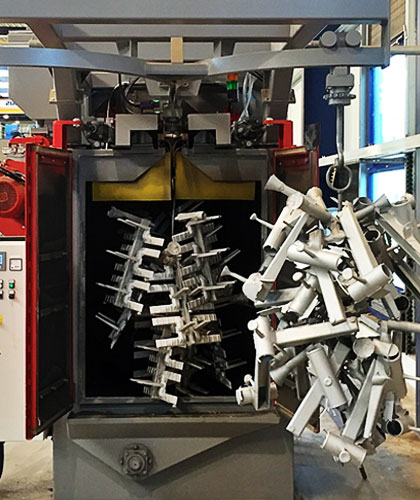
Трастинг is a high-energy, mechanical surface-preparation process that propels metallic media (most commonly steel shot or steel grit) onto a workpiece to clean, қырынан бейнелеу, and mechanically treat the surface.
It combines efficient removal of scale, құм, weld spatter and coatings with a peening action that can introduce beneficial compressive residual stresses—making it both a cleaning and a functional treatment widely used in fabrication, foundry and fatigue-critical applications.
Негізгі сипаттамалары
- Құралдар: typically steel shot (spherical) or steel grit (бұрыш); media sizes commonly range from A60 to A320 (shot) and G12–G40 (тор).
- Drive principle: центрифугал (wheel/turbine) acceleration — high throughput without compressed-air consumption.
- Primary effects: scale/remnant removal, surface decontamination, anchor-profile generation (байсалды), and surface peening (Сығымдау стресс).
- Экономика: media is reusable for thousands of cycles, giving low media cost per m² on large jobs.
Ол қалай жұмыс істейді
A high-speed rotating impeller (wheel) throws shot radially at the part.
Each particle carries kinetic energy; upon impact that energy is transferred to the substrate, plastically deforming asperities, dislodging loosely bonded material and producing a controlled surface texture.
Repeated impacts across the surface produce an overall “peening” effect analogous to the simultaneous action of many tiny hammers.
Typical equipment, media and operating ranges
| Параметр | Типтік ауқым / Мысалдар | ЕСталдар |
| Машинаның түрі | Single/multi-wheel centrifugal blast machines, tumble/rotary blast systems, conveyor blast, robotic wheel blast cells | Selection depends on part size, геометрия, өткізу қабілеті |
| Медиа түрі | Steel shot (A-series, E.Г., A60–A320), Steel grit (G-series, E.Г., G12–G40), Specialty stainless shot | Shot = spherical, grit = angular; stainless for non-ferrous parts |
| Media Diameter | 0.3-3 мм (typical A60–A320) | Affects surface profile and cleaning aggressiveness |
| Media Velocity | 20–70 m/s | Depends on wheel RPM and shot size; higher velocity = higher impact energy |
| Almen Intensity | 0.006–0.040 in-A | Used to quantify peening effect; measured with Almen strips |
| Surface Profile (Рж) | 10-50 мкм | Medium anchor profile for coatings; controlled by media type, standoff, and exposure |
| Өткізу қабілетті | Tens to thousands of kg/h | Multi-wheel systems allow very high throughput for mass production |
Surface results (what to expect)
- Cleaning efficacy: excellent for mill scale, тот, құм, weld spatter and slag — leaves a clean, reactive metal surface suitable for coating.
- Surface texture: medium anchor profile suitable for many industrial coatings; profile controllable by media size/type and exposure.
- Residual stress state: near-surface Сығымдай қалдық кернеулер are introduced (beneficial for fatigue life and crack-growth resistance).
- Surface hardness: modest work-hardening of the subsurface layer—typical increases of ~5–30% depending on steel grade and intensity.
- Material removal: primarily plastic deformation; net substrate loss per pass is low compared with cutting abrasives, but cumulative removal can occur with heavy grit.
Typical industrial applications
- Structural steel preparation before protective coatings (нөмірлер, арқалықтар, girders).
- Foundry cleaning — removing sand, scale and parting lines from castings.
- Fatigue-critical components — controlled shot peening of springs, қону редукторы, turbine components to improve fatigue life.
- Automotive and rail for mass production parts that require both cleaning and surface strengthening.
- Surface refurbishment where worn surfaces are peened and then finished/ground to dimension.
3. Моншақ жарысы дегеніміз не?
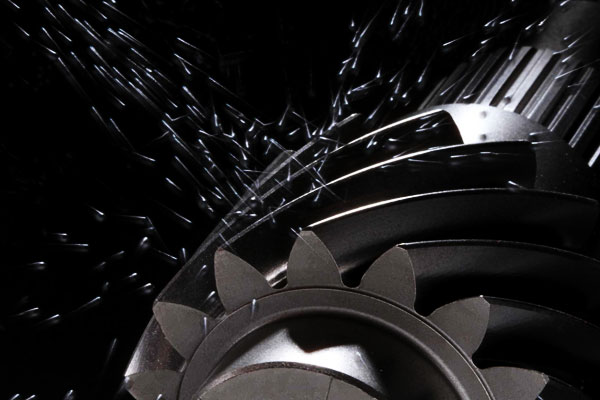
Моншақ жарысы is a controlled abrasive-blasting process that uses spherical бұқаралық ақпарат құралдары (Шыны моншақтар, ceramic beads, metal beads) to clean, тағы, satinize or lightly peen a surface.
Compared with wheel-type shot blasting and with angular abrasive (sand/grit) жару, bead blasting is less aggressive, produces a тегіс, uniform satin finish, and imparts only light compressive stresses.
It’s widely used where appearance, tight dimensional control and gentle surface treatment are required.
Key features
- Media geometry: spherical beads roll and rebound on impact, so the process tends to тегіс micro-asperities rather than aggressively cut material.
- Біту: typical outcome is a satin/matte appearance with low-to-moderate surface texture—preferred for cosmetic parts and for preparing surfaces for plating without heavy anchor profiles.
- Басқару: easily targeted (pressure pot or blast cabinet) and well suited for small/complex parts and selective-area treatment.
- Low substrate loss: minimal material removal compared with angular abrasives—good for thin-walled or precision parts.
- Optional light peening: with metallic beads (steel beads) or at higher pressures bead blasting can impart a beneficial light peening effect.
How bead blasting works
Compressed air or a centrifugal wheel accelerates spherical beads toward the workpiece.
On impact the bead’s kinetic energy is dissipated largely through илемдеу, bouncing and plastic smoothing of surface peaks.
Because beads do not present sharp cutting edges, the dominant mechanism is surface deformation and abrasion rather than cutting, нәтижесінде:
- removal of soft contaminants or burrs,
- smoothing of sharp edges, жіне
- a satinized, uniform finish without the deep anchor profile left by angular abrasives.
Typical equipment, media and practical parameter ranges
| Параметр | Типтік ауқым / мысалдар | ЕСталдар |
| Media types | Шыны моншақтар (soda-lime or borosilicate), ceramic beads, steel/stainless beads | Media choice controls finish, durability and any metallic residue |
| Media size | 50 µm – 1.0 мм (0.05–1000 µm) ортақ; typical cosmetic sizes 100–400 µm | Smaller beads → finer finish; larger beads → stronger satin/peen |
| Acceleration method | Pressure-pot (air blast), suction blaster, wheel-type for metal beads, blast cabinet, robotic cells | Pressure pot most common for controlled lab/bench work |
| Жұмыс қысымы | 2–6 bar (30–90 psi) typical for pressure blasting | Higher pressure increases intensity and can increase peening |
Media velocity (Шамамен.) |
30–80 m/s (машина & pressure dependent) | Lower than heavy wheel shot at equivalent mass in many cases |
| Typical profile (Рж / RA) | ≤5–15 µm Rz (Ra values typically low, E.Г., RA < 1.0–2.5 µm) | Very dependent on bead size, standoff and time |
| Almen intensity (if measured) | Өте төмен: әдетте <0.006 in-A; may reach ~0.01 in-A with large metal beads/high pressure | Use Almen only if peening is an objective |
| Өткізу қабілетті | Moderate — cabinet/bench work or small- to medium-batch production | Lower than wheel shot on large parts; ideal for smaller series |
Surface results: тазарту, қырынан бейнелеу, Қалдық кернеу, қаттылық
- Тазарту: removes light scale, surface oxides, buffing compounds, light rust, жату.
Effective for degreasing/cleaning prior to plating or painting when deep profile is not wanted. - Surface profile / текстура: produces smooth satin finish with small anchor profile—suitable for decorative finishes and plating where low profile is required. Typical Rz ≤ 5–15 µm depending on bead size.
- Қалдық кернеу: imparts light compressive stresses when metallic beads or higher pressures are used; the peening effect is modest compared with wheel shot peening.
For fatigue-critical components use Almen-strip verification if peening is required. - Қаттылық / жұмыс қатаю: minor near-surface work hardening—typically small hardness increases (~0–15%), highly dependent on base material and intensity.
- Material removal: аласа; good for precision components and thin sections where dimensional integrity is critical.
Typical industrial applications of bead blasting
- Cosmetic finishing for consumer hardware, Автомобильді кесу, jewelry and architectural fittings (uniform satin appearance).
- Pre-plating / pre-coating cleaning when a small profile is desired for adhesion but heavy cutting is undesirable.
- Deburring and edge radiusing of machined parts and castings where sharp edges must be smoothed without losing material.
- Медициналық және аэроғарыштық компоненттер where surface finish, cleanliness and dimensional control are critical (Медициналық құралдар, orthopaedic implants—note material compatibility and cleanliness process controls).
- Mold and tooling maintenance, to remove flash without changing critical dimensions.
- Restoration and conservation work, where a gentle finish is required on delicate parts.
4. What is Sand Blasting? (Абразалау / Грит жару)
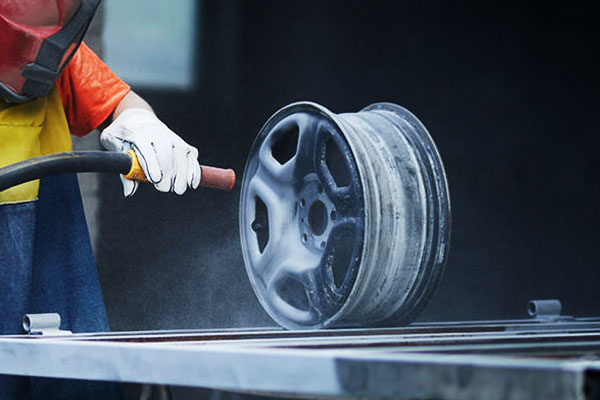
Sand blasting (more correctly called абразивті жарылыс немесе Грит жару) is a pneumatic surface-preparation process that uses бұрыш, cutting abrasives accelerated by compressed air to remove жабындар, rust and scale and to create a controlled anchor profile for subsequent coatings.
Although the lay term “sandblasting” persists, modern industrial practice avoids crystalline silica (кварц) and uses engineered abrasives (garnet, aluminium oxide, шо, т.б.) because of health and regulatory concerns.
Key features
- Primary action: cutting/erosion — angular abrasive particles fracture and strip material from the surface rather than deforming it.
- Designed outcome: rapid removal of paint, heavy corrosion, mill scale and creation of a repeatable anchor profile (specified in µm or mils) that ensures coating adhesion.
- Consumable media: abrasives are typically single-use or limited-recycle (cost driven by consumption).
- Қолайлы: nozzle-focused jets allow access to complex geometries, corners and welds; suitable for shop and field work with proper containment.
How Sand / Abrasive Blasting Works (механика)
Compressed air (or sometimes a venturi/pressure pot system) accelerates abrasive grains through a nozzle.
On impact the angular grain bites into the substrate, fracturing surface contaminants and micro-breaking the substrate surface to leave an anchor pattern.
The profile depth and shape depend on abrasive hardness/size/shape, air pressure, nozzle diameter, standoff distance and traverse speed.
Typical equipment, media and practical parameter ranges
| Параметр | Типтік мысалдар / Аустралар | ЕСталдар |
| Common media | Garnet (almandine) 80–120 mesh, Aluminium oxide (Альво₃) 80–240 grit, Steel grit, Copper slag, Шыны моншақтар (for low-profile work) | Garnet is widely used (good cutting, low dust); avoid silica/quartz sand |
| Abrasive size / тор | 80–240 mesh (garnet typical 80–120 mesh for coarse profile; 120–240 for finer) | Lower mesh = larger particle = coarser profile |
| Acceleration method | Pressure pot / pressure blasting, suction/blast pots, automated nozzle robots | Pressure pot is standard for industrial work |
| Air pressure | 0.4–7 bar (6–100 psi); typical industrial jobs use 4–7 bar (60–100 psi) | Higher pressure → higher velocity and cutting rate |
Particle velocity (Шамамен.) |
50–100 m/s in focused jets (depends on nozzle & қысым) | Velocity and particle mass determine erosion rate |
| Typical anchor profile (Рж) | 20–200 µm Rz (common protective coatings: 25–75 µm) | Specify profile range required by coating supplier |
| Өткізу қабілетті / removal rate | Moderate to high — depends on media size, pressure and operator skill | Consumable cost significant; garnet consumption often 1–5 kg/m² for moderate removal |
| Containment / extraction | Enclosed blast rooms, portable containment with dust collectors and HEPA filters | Essential to control respirable dust and waste |
Surface results: тазарту, қырынан бейнелеу, Қалдық кернеу, қаттылық
- Тазарту: highly effective at removing thick paint, тот, диірмен масштабы, marine growth and old coatings.
- Profile (anchor pattern): produces a defined anchor profile required by most industrial paint systems; typical specification ranges are 25–75 µm Rz for conventional high-performance coatings.
- Қалдық кернеу: predominantly cutting action — no beneficial compressive peening; in some aggressive or overheating conditions minor tensile micro-stresses or embedded abrasive particles can occur.
- Қаттылық: the substrate metallurgical hardness is largely unchanged (no work hardening as in shot peening) except for tiny local deformation; abrasive blasting does жоқ substitute for peening where fatigue improvement is required.
- Material removal: significant compared with bead/shot processes — allowances for dimensional loss must be included in tolerancing.
Typical industrial applications
- Surface preparation for protective coatings (оффор, bridge, құбыр жолы, tank interiors).
- Removal of thick or multiple paint layers, жабындар, желімдер.
- Preparation for thermal spray, rubber lining or heavy industrial paint systems.
- Cleaning and refurbishment of corroded structural members, кеме корпусы, және өндірістік жабдықтар.
- Pre-weld cleaning in repair shops and fabrication yards (with appropriate containment).
5. Кешенді салыстыру: Жарылыс vs батты жару vs Құмды жару
Below is an engineering-focused comparison you can use to choose a blasting method, write specifications, or brief suppliers.
| Төлсипат | Трастинг (wheel/turbine) | Моншақ жарысы (glass/ceramic/metal beads) | Құм / Абразивті жару (garnet, Альво₃, Сирікті, т.б.) |
| Primary media | Steel shot (spherical) / steel grit (бұрыш) | Шыны моншақтар, ceramic beads, stainless/steel beads (spherical) | Angular abrasives: garnet, алюминий оксиді, кремний карбиді, шо |
| Тетік | High-energy impact → plastic deformation & жас | Әсер + rolling → smoothing / light peening | Кестеу / erosion → material removal & profile generation |
| Typical acceleration | Centrifugal wheel (no external air) | Pressure pot (ауа) or wheel | Pressure pot (air blast) |
| Typical pressure / drive | - (wheel RPM) | 2–6 bar (30–90 psi) | 0.4–7 bar (6–100 psi) (индустриялық: 4–7 bar common) |
| Typical particle velocity | 20–70 m/s | 30–80 m/s | 50–100 m/s |
| Common media sizes | Shot Ø ≈ 0.3–3 mm (A60–A320); grit G12–G40 | 50 µm – 1.0 мм (typical 100–400 µm) | 80–240 mesh (garnet common 80–120 mesh) |
| Surface profile (typical Rz) | 10-50 мкм (амал) | ≤ 5–15 µm (айыппұл / атласты) | 20-200 мкм (controlled anchor profile) |
| Қалдық кернеу / жас | Strong compressive (beneficial for fatigue) — Almen 0.006–0.040 in-A ерекше | Light compressive; әдетте <0.006 in-A unless heavy beads/pressure used | Ештеме (cutting action) — no peening benefit |
Material removal |
Аласа (mainly plastic deformation) | Өте төмен (smoothing, Шығару) | Биік (erosive removal) |
| Media reuse & құны | Reusable thousands of cycles — low ongoing media cost | Reusable until fractured—moderate cost | Consumable — ongoing media consumption; higher operating cost |
| Өткізу қабілетті / өнімділік | Өте жоғары (continuous production lines) | Байсалды (cabinet/bench or medium batches) | Байсалды; manual nozzle work is labor-intensive |
| Типтік қосымшалар | Structural steel, құймалар, mass cleaning, жас | Cosmetic finishing, Шығару, medical/precision parts, satinizing | Heavy coating removal, anchor profile prep for protective coatings |
| Денсаулық & environmental risk | Dust/noise — contained systems mitigate | Dust/noise — lower cutting dust, still needs capture | High dust hazard (avoid silica); strict containment & filtration required |
| When NOT to use | When fine cosmetic finish or tight dimensional tolerances are required | When aggressive coating removal / deep anchor profile is required | When peening or fatigue improvement is required; avoid on thin/precision parts unless tightly controlled |
Typical procurement language
- Трастинг (production structural):
Perform wheel-type shot blasting to achieve near-white metal cleanliness (Исо 8501-1 Sa 2.5) and an anchor profile of 30–70 µm Rz. Use A120 steel shot; deliver media analysis and one witness coupon per shift.
For fatigue-sensitive surfaces, perform peening to Almen intensity 0.012–0.018 in-A with full coverage and provide Almen strip records. - Моншақ жарысы (cosmetic):
Bead blast all exposed faces using soda-lime glass beads (0.15–0.4 mm) -та 3–5 bar to achieve a uniform satin finish; maximum Ra ≤ 1.0 мкм, Rz ≤ 10 мкм.
No dimensional change >0.05 mm allowed. Provide photographic sample and media replacement log. - Абразивті жару (coating prep):
Dry abrasive blast to Исо 8501-1 Sa 2.5 (near-white metal) using garnet 80–120 mesh at 4–6 bar to obtain an anchor profile 40–75 µm Rz (replica tape verification).
Contain dust, use HEPA filtration, and collect spent abrasive for disposal per local regulations.
6. Қорытынды
Трастинг, bead blasting and sand (абразалау) blasting are complementary tools in surface engineering.
The right choice depends on the objective: peening and large-area cleaning (shot), cosmetic smoothing and light cleaning (bead), or aggressive removal and coating preparation (абразалау).
ЖҚС
Which process is best for coating adhesion?
Sand blasting (Ra 6.3–25 μm) creates the deepest profile, ideal for heavy-duty coatings (marine paint, industrial enamel).
For lighter coatings (powder coat), Трастинг (RA 3,2-12.5 мкм) жеткілікті.
Is bead blasting safe for aluminum components?
Yes—glass/ceramic beads are soft and spherical, avoiding deformation of thin aluminum parts.
Use 0.2–0.4 MPa pressure and 100–300 μm media for optimal results.
Can shot blasting replace sand blasting for marine applications?
Yes—steel shot blasting achieves SSPC-SP 10 тазарту (equivalent to sand blasting) with higher efficiency, but media costs are 2–3x higher.
Sand blasting remains cost-effective for large marine structures.
Does bead blasting affect the mechanical properties of metal?
No—bead blasting’s low impact leaves residual stress <±50 MPa and no measurable change to hardness or tensile strength, preserving original material properties.
How do I measure surface profile?
Қолданыңыз stylus profilometer, optical profilometer or replica tape (replica method) and report Ra/Rz or peak-to-valley values; many coating specs call out profile range in µm or mils.
What PPE and controls are required?
Use blast helmets with supplied air, hearing protection, protective clothing, and sealed enclosures with HEPA dust collectors or wet capture for outdoor work.
Follow local regulations for respirable dust and waste disposal.