1. Uvod
1.4841 nehrđajući čelik (X15CrNiSi25-21) represents a breakthrough in high-performance austenitic stainless steels.
Distinguished by its finely tuned alloying system—which incorporates chromium, nikla, and notably elevated levels of silicon.
This grade delivers exceptional oxidation resistance, robust corrosion performance, and outstanding thermal stability.
These properties enable 1.4841 to excel in environments characterized by aggressive media such as chlorides, kiseline, i visoke temperature.
Industries including chemical processing, morski inženjering, stvaranje energije,
and even high-end aerospace has embraced 1.4841 for critical components that require both mechanical strength and durability under extreme conditions.
This article provides a comprehensive analysis of 1.4841 stainless steel by examining its historical evolution, chemical composition and microstructure, fizička i mehanička svojstva,
Tehnike obrade, industrijska primjena, prednosti i ograničenja, i budući trendovi.
2. Povijesna evolucija i standardi
Povijesna pozadina
The development of advanced austenitic stainless steels evolved as industries demanded materials with enhanced resistance to corrosion and oxidation, especially under high-temperature conditions.
During the 1970s and 1980s, engineers improved upon conventional grades such as 316L and 316Ti by incorporating additional elements like silicon.
This innovation addressed limitations in high-temperature oxidation and improved castability, resulting in the creation of 1.4841 nehrđajući čelik.
Its tailored composition fulfills the need for enhanced performance in chemically aggressive and thermally dynamic environments.

Brand Comparison and International Benchmarks
DIN standard: 1.4841
EN standard: X15CrNiSi25-21 (U 10095-1999) 58
International benchmark:
SAD: ASTM S31000/UNS S31000
Kina: 20Cr25Ni20 (GB/T standard)
Japan: SUH310 (JIS standard)
Standardi i potvrde
1.4841 stainless steel complies with stringent international standards that guarantee its performance in critical applications. Key standards include:
- IZ 1.4841 / EN X15CrNiSi25-21: These specifications govern the alloy’s chemical composition and mechanical properties.
- ASTM A240 / A479: These standards define the requirements for plates, plahte, and castings for high-performance austenitics.
- NACE Certifications: Relevant for sour service applications, ensuring the alloy meets rigorous criteria for use in chloride and acid environments.
3. Kemijski sastav i mikrostruktura
Kemijski sastav
1.4841 nehrđajući čelik (X15CrNiSi25-21) derives its exceptional performance from its meticulously engineered chemical composition.
This alloy’s formulation is designed to provide a robust passive film, high-temperature oxidation resistance, i jaka mehanička svojstva.
Each element has been carefully selected and balanced to meet the rigorous demands of high-performance applications in corrosive and thermally challenging environments.
- Krom (CR): Present in the range of 15–18%, chromium is critical for forming a stable Cr₂O₃ oxide film on the surface.
This protective layer imparts outstanding corrosion and oxidation resistance, even under aggressive conditions. - Nikla (U): Constituting approximately 10–13% of the alloy, nickel stabilizes the austenitic phase, ensuring excellent toughness and ductility.
Its presence is essential for maintaining the alloy’s strength at both ambient and elevated temperatures. - Silicij (I): Typically around 2–3%, silicon plays a vital role in enhancing high-temperature oxidation resistance.
It improves castability and contributes to the refinement of the grain structure, which in turn boosts the alloy’s mechanical properties and overall durability. - Ugljik (C): Maintained at ultra-low levels (≤ 0.03%), low carbon content minimizes the formation of chromium carbides.
This control is crucial to prevent sensitization during welding and subsequent intergranular corrosion, thereby ensuring long-term corrosion resistance. - Mangan (MN) & Silicij (I): In addition to its primary role, silicij, along with manganese (typically kept below 2.0%), aids as a deoxidizer during melting and refining.
These elements contribute to a more uniform microstructure and improved overall processability. - Dušik (N): Although present only in trace amounts or up to 0.10–0.15%, nitrogen can enhance the strength of the austenitic matrix and further improve pitting resistance in chloride environments.
Sažetak
| Element | Približni raspon (%) | Funkcionalna uloga |
|---|---|---|
| Krom (CR) | 15–18 | Forms a robust Cr₂O₃ passive film; essential for corrosion and oxidation resistance. |
| Nikla (U) | 10–13 | Stabilizira austenitnu strukturu; enhances toughness and ductility. |
| Silicij (I) | 2–3 | Improves high-temperature oxidation resistance and castability; supports grain refinement. |
| Ugljik (C) | ≤ 0.03 | Maintained at ultra-low levels to prevent carbide precipitation and sensitization. |
| Mangan (MN) | ≤ 2.0 | Serves as a deoxidizer and promotes a uniform microstructure. |
| Dušik (N) | Trace – 0.10–0.15 | Enhances strength and pitting resistance in chloride environments. |
Mikrostrukturne karakteristike
1.4841 stainless steel predominantly exhibits a face-centered cubic (FCC) austenitic matrix.
This structure ensures high ductility and toughness, which are critical for applications involving complex forming and high-impact loads. The alloy’s performance further benefits from:
- Influence of Silicon: Silicon not only enhances high-temperature oxidation resistance but also supports a refined grain structure, resulting in improved mechanical properties.
- Učinci toplinske obrade:
Solution annealing between 1050°C and 1120°C, nakon čega slijedi brzo hlađenje (gašenje vode), refines the grain structure—typically achieving ASTM grain size 4–5—and effectively suppresses deleterious phases such as sigma (a). - Usporedba:
Compared to traditional grades like 316L and 316Ti, 1.4841’s optimized microstructure results in better oxidation resistance at high temperatures and improved overall stability in corrosive environments.
4. Fizička i mehanička svojstva 1.4841 Nehrđajući čelik (X15CrNiSi25-21)
1.4841 stainless steel stands out for its balanced combination of high mechanical strength, izvrsna duktilnost, and robust corrosion resistance, making it an optimal choice for high-performance applications.
Its physical properties and mechanical behavior play a critical role in ensuring reliable operation under aggressive environments, ranging from elevated temperatures and cyclic loads to corrosive chemical exposures.
Mehanički izvedba
1.4841 stainless steel is engineered to deliver superior strength and toughness while retaining high ductility.
These qualities are essential for applications that involve mechanical stress and dynamic loading.
Zatečna čvrstoća:
The alloy typically exhibits tensile strengths between 500 i 700 MPA.
This high load-bearing capacity enables the material to perform reliably in structural and pressure-bearing applications, such as reactor internals and heat exchangers.

Snaga popuštanja:
With a yield strength commonly ≥220 MPa, 1.4841 ensures minimal permanent deformation under stress.
This reliable yield behavior makes it suitable for components exposed to cyclic loading or mechanical shock.
Produženje:
The alloy offers an elongation exceeding 40%, indicating excellent ductility.
This high degree of plasticity facilitates complex forming operations, such as deep drawing and bending, while also enhancing impact resistance.
Tvrdoća:
Brinell hardness values typically range between 160 i 190 HB, which provide a good balance between wear resistance and machinability.
This hardness level ensures durability in applications where surface wear is a concern.
Žilavost utjecaja:
Charpy V-notch testing shows impact energies in excess of 100 J na sobnoj temperaturi, demonstrating robust performance under dynamic or shock-loading conditions.
Fizička svojstva
The physical properties of 1.4841 are critical in maintaining dimensional stability and thermal management across various service conditions:
Gustoća:
Približno 8.0 g/cm³, comparable to other high-alloy austenitic stainless steels.
Ova gustoća doprinosi povoljnom omjeru snage i težine, important in applications where weight is a critical factor.
Toplinska vodljivost:
Otprilike 15 W/m · k (measured at room temperature), 1.4841 efficiently dissipates heat.
This thermal conductivity is particularly valuable in applications such as heat exchangers, where rapid heat transfer is essential for performance.
Koeficijent toplinske ekspanzije:
The alloy exhibits a thermal expansion coefficient of roughly 16–17 × 10⁻⁶/k, ensuring that components retain dimensional stability during thermal cycling.
This consistency is essential for precision-engineered parts subjected to periodic temperature fluctuations.
Električni otpor:
With an electrical resistivity of approximately 0.85 µω · m, 1.4841 provides moderate insulation properties, which can be important in environments where electrical conductivity needs to be controlled.
Otpornost na koroziju i oksidaciju
1.4841 is designed to perform exceptionally well in corrosive environments, thanks to its optimized alloying:
- Otpornost na rupičastu i pukotinsku koroziju:
The Pitting Resistance Equivalent Number (Drvo) za 1.4841 usually ranges from 28 do 32.
This high PREN value enables the alloy to resist localized corrosion phenomena, such as pitting, even in chloride-rich or acidic environments. - Intergranular Corrosion and Oxidation:
The ultra-low carbon content, coupled with enhanced silicon and nitrogen levels, helps maintain the alloy’s passive Cr₂O₃ layer.
Kao rezultat, 1.4841 exhibits excellent intergranular corrosion resistance and can maintain its properties at temperatures up to ~ 450 ° C, making it highly suitable for high-temperature applications.
Sažetak: Ključna svojstva
| Imovina | Tipična vrijednost | Značaj |
|---|---|---|
| Zatečna čvrstoća (RM) | 500–700 MPa | High load-bearing capability |
| Snaga popuštanja (Rp 0.2%) | ≥220 MPa | Resistance to permanent deformation |
| Produženje | ≥40% | Excellent ductility for forming and shock absorption |
| Brinell tvrdoća | 160–190 HB | Optimal balance between wear resistance and machinability |
| Žilavost utjecaja (Charpy v-notch) | >100 J | Superior energy absorption under dynamic loading |
| Gustoća | ~ 8,0 g/cm³ | Favorable strength-to-weight ratio |
| Toplinska vodljivost | ~ 15 w/m · k | Učinkovito odvođenje topline, crucial for thermal management |
| Koeficijent toplinske ekspanzije | 16–17 × 10⁻⁶/k | Dimensional stability during thermal cycling |
| Električni otpor | ~ 0,85 µω · m | Podržava umjerene zahtjeve za izolaciju |
| Drvo (Otpor) | ~ 28–32 | Excellent resistance to localized corrosion (pukotina/pukotina) |
5. Tehnike obrade i izrade 1.4841 Nehrđajući čelik (X15CrNiSi25-21)
1.4841 stainless steel stands out not only for its exceptional physical and mechanical properties but also for its adaptability to various processing and fabrication methods.
The following section describes the key processing routes and best practices for casting, formiranje, obrada, zavarivanje, and surface finishing of 1.4841 nehrđajući čelik.
Forming and Casting Processes
Tehnike lijevanja:
1.4841 stainless steel can be cast using conventional methods such as casting i lijevanje pijeska.
Maintaining mold temperatures between 1000–1100°C and employing controlled cooling rates are critical.
These practices minimize segregation and prevent the formation of deleterious phases such as sigma (a) Tijekom očvršćivanja.

Following casting, a solution annealing treatment (typically at 1050–1120°C) with rapid quenching (water or air quenching) homogenizes the microstructure and dissolves any undesired carbides, thereby restoring full corrosion resistance.
Vruće formiranje:
Hot forming methods—such as forging, kotrljanje, and pressing—are typically performed within the temperature range of 950–1150°C.
Operating in this range softens the material, allowing for significant deformation while preserving its austenitic structure.
Rapid quenching immediately after hot forming helps “lock in” the refined grain structure and prevent precipitation of unwanted intermetallic phases.
Hladno oblikovanje:
Iako 1.4841 stainless steel can undergo cold working, its high work-hardening rate demands careful attention.
Intermediate annealing cycles are usually necessary to restore ductility and relieve residual stresses.
These cycles help to prevent cracking and maintain dimensional stability during processes like deep drawing, savijanje, ili žigosanje.
Quality Control in Forming:
Manufacturers use simulation tools, such as finite element analysis (Fea), to predict stress distribution and deformation behavior during forming operations.
Dodatno, non-destructive evaluation (NDE) methods—such as ultrasonic testing and dye penetrant inspection—ensure that castings and formed products meet stringent quality standards.
Obrada i zavarivanje
Obrada:
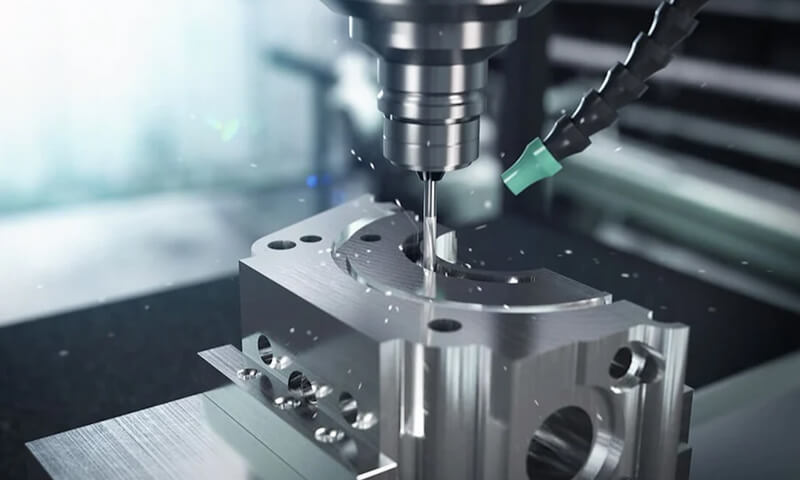
CNC obrada 1.4841 stainless steel presents challenges due to its high ductility and tendency to work harden. To achieve precision and extend tool life:

- Materijal alata: Use high-performance carbide or ceramic cutting tools with optimized geometries.
- Parametri rezanja: Employ lower cutting speeds and higher feed rates to reduce heat buildup and minimize work hardening.
- Sustavi rashladnog sredstva: Utilize high-pressure water-based coolant or emulsions to dissipate heat effectively, which helps maintain tight dimensional tolerances and superior surface finishes.
Zavarivanje:
1.4841 stainless steel exhibits excellent weldability due to its titanium stabilization, which prevents the deleterious precipitation of chromium carbides in the heat-affected zone (Haz).
Key welding considerations include:
- Metode zavarivanja: Sisav (GTAW) I ja (Odgajan) are generally preferred for achieving high-quality, defect-free welds.
- Materijali za punjenje: Use matching filler metals, such as ER321, to maintain the alloy’s stabilization and corrosion resistance.
- Kontrola unosa topline: Keep the heat input below 1.5 kJ/mm and maintain interpass temperatures under 150°C to prevent carbide precipitation.
- Tretmani nakon navale: U nekim slučajevima, post-weld solution annealing coupled with electropolishing may be used to restore the alloy’s full corrosion resistance, particularly for critical applications.
Završnica površine:
Achieving a high-quality surface finish is critical for the performance of 1.4841 u agresivnim sredinama. Standard završnica površine techniques include:
- Kiseljenje i pasiviranje: These chemical treatments remove surface oxides and contaminants, thereby restoring the protective chromium-rich passive layer.
- Elektropopoliranje: This process smooths the surface (postizanje Ra <0.8 µm) and enhances the alloy’s corrosion resistance by reducing micro-crevices where corrosion can initiate.
- Mehanička završna obrada: In applications requiring mirror-like finishes, additional polishing may be undertaken, especially for components used in hygienic or high-purity sectors.
Advanced and Hybrid Manufacturing Approaches
Digital Manufacturing Integration:
Modern production environments leverage IoT sensors and digital twin simulations (using platforms such as ProCAST) to monitor process variables in real time.
This integration optimizes parameters like cooling rates and heat input, increasing yield by up to 20–30% and reducing the incidence of defects.
Hybrid Manufacturing Techniques:
Combining additive manufacturing (Npr., selective laser melting or SLM) with traditional processes such as hot isostatic pressing (Bok) and subsequent solution annealing represents a cutting-edge approach.
This technique minimizes residual stresses (reducing them from approximately 450 MPa to as low as 80 MPA) and enables the fabrication of complex components with superior mechanical properties and integrity.
Summary Table – Processing Recommendations for 1.4841 Nehrđajući čelik
| Process Stage | Recommended Parameters/Techniques | Ključna razmatranja |
|---|---|---|
| Lijevanje | Mold temps: 1000–1100 ° C; kontrolirano hlađenje | Minimize segregation, avoid sigma phase |
| Vruće formiranje | Raspon temperature: 950–1150°C; rapid quenching post-deformation | Preserve austenitic structure, refine grain size |
| Hladno oblikovanje | Requires intermediate annealing | Prevent excessive work-hardening |
| Obrada | Low cutting speed, high feed; carbide/ceramic tooling; rashladno sredstvo visokog pritiska | Minimize tool wear, maintain surface integrity |
| Zavarivanje | TIG/MIG welding; filler: ER321; toplinski unos <1.5 KJ/MM, interpass <150° C | Prevent carbide precipitation, ensure weld quality |
| Završnica površine | Elektropopoliranje, kiseli, pasivacija | Achieve low Ra (<0.8 µm) and restore passive film |
| Advanced Manufacturing | Digital monitoring, hybrid additive + Bok + žalost | Improve yield, reduce residual stresses |
6. Industrijske primjene 1.4841 Nehrđajući čelik (X15CrNiSi25-21)
1.4841 stainless steel is a high-performance material specifically engineered for environments that demand superior oxidation, korozija, i toplinska stabilnost.
Its exceptional properties make it a prime candidate for a broad spectrum of critical applications. Ispod, we explore several key industrial sectors where 1.4841 stainless steel excels.
Kemijska i petrokemijska obrada
- Reactor Linings and Vessels: The alloy’s excellent resistance to pitting and intergranular corrosion makes it ideal for lining reactors that handle aggressive media such as hydrochloric, sumporni, i fosforne kiseline.
- Izmjenjivači topline: High thermal conductivity and stable mechanical properties allow efficient and durable performance in systems that transfer heat between aggressive chemical streams.
- Sustavi cjevovoda: Its resistance to both oxidizing and reducing environments makes 1.4841 suitable for piping systems involved in processing and transporting corrosive chemicals.
Morski i offshore inženjering
- Seawater Exposure: Its enhanced oxidation resistance and stable austenitic structure help combat the corrosive effects of saltwater, making it suitable for pump housings, ventili, and underwater fasteners.
- Strukturne komponente: For offshore platforms and coastal structures, its excellent resistance to pitting and crevice corrosion under cyclic loads ensures longevity.
- Ballast and Seawater Intake Systems: The alloy’s ability to maintain clean, passive surfaces minimizes biofouling and corrosion, ensuring operational reliability in maritime applications.
Stvaranje energije
- Heat Recovery Systems: Components such as heat exchanger tubes, economizers, and condensers benefit from their ability to sustain high thermal loads while maintaining corrosion resistance.
- Boiler Components: The alloy provides durable performance for parts exposed to high-pressure steam and aggressive combustion environments.
- Ispušni sustavi: Its oxidation resistance up to around 450°C ensures that exhaust systems and related components perform reliably over extended service periods.
Aerospace Applications
- Komponente zrakoplova: Selected for non-structural components such as ducts, izmjenjivači topline, and exhaust systems where high-temperature stability and corrosion resistance are essential.
High-Purity and Hygienic Applications
- Farmaceutska oprema: Its corrosion resistance and ease of surface finishing help in
manufacturing components for clean rooms, spremnici za skladištenje, and piping systems that come into contact with active pharmaceutical ingredients.

- Prerada hrane i pića: The alloy’s ability to maintain a clean, passive surface ensures that equipment remains hygienic and free from contamination,
making it suitable for direct food contact applications.

Ultra-smooth surfaces (Ram < 0.8 µm) reduce bacterial adhesion and support stringent hygiene standards, offering additional value in these critical sectors.
7. Prednosti 1.4841 Nehrđajući čelik (X15CrNiSi25-21)
1.4841 stainless steel distinguishes itself with a multitude of advantages, making it a high-performance material for demanding applications.
Poboljšana otpornost na koroziju
- Superior Oxidation Performance:
The significant silicon content helps form a stable, zaštitni oksidni sloj, which enhances the alloy’s resistance to oxidation even at elevated temperatures.
This characteristic is particularly beneficial in applications like heat exchangers and reactor internals. - Improved Pitting and Crevice Resistance:
A high Chromium level combined with contributions from nickel and a modest addition of nitrogen achieves a Pitting Resistance Equivalent Number (Drvo) in the range of 28–32.
This ensures effective protection against localized corrosion in chloride and acidic media.
Snažna mehanička svojstva
- High Tensile and Yield Strength:
With tensile strengths between 500 i 700 MPa and yield strengths of at least 220 MPA,
the material reliably withstands high loads and cyclic stresses, making it suitable for structural components in both chemical processing and power generation systems. - Izvrsna duktilnost:
An elongation exceeding 40% underscores its superb formability.
This high ductility allows for extensive deformation during forming processes while maintaining toughness, critical for components subject to impacts. - Balanced Hardness:
Brinell hardness values ranging from 160 do 190 HB ensure adequate wear resistance without compromising machinability.
Outstanding Weldability and Fabrication Versatility
- Reduced Sensitization Risk:
The alloy resists carbide precipitation during welding, which minimizes intergranular corrosion in the heat-affected zone.
This advantage streamlines fabrication and reduces the need for extensive post-weld heat treatments. - Processing Versatility:
Whether through casting, toplo oblikovanje, rad na hladnom, or precision machining, 1.4841 adapts well to a variety of manufacturing methods.
Its compatibility with advanced machining and welding techniques renders it ideal for producing complex components without compromising performance.
Stabilnost visoke temperature
- Stable in Elevated Temperatures:
1.4841 can maintain its mechanical integrity and corrosion resistance at service temperatures up to approximately 450°C.
This makes it particularly suitable for components in high-temperature systems, such as those used in power generation and high-temperature chemical reactors. - Predictable Thermal Expansion:
With a controlled coefficient of thermal expansion (16–17 × 10⁻⁶/k), the alloy ensures dimensional stability during thermal cycling, which is vital for high-precision applications.

Životni ciklus troškovna učinkovitost
- Prošireni život:
Enhanced corrosion and oxidation resistance reduce downtime and repair frequency, especially in harsh chemical and marine environments. - Smanjeno održavanje:
The reliability and durability of 1.4841 translate into lower lifecycle costs, making it a cost-effective solution in critical, long-term applications despite its premium price tag.
8. Izazovi i ograničenja
Dok 1.4841 stainless steel offers remarkable performance, several challenges require careful management:
- Pucanje od korozije pod naponom (SCC):
The alloy may still suffer from SCC in environments with high chloride levels above 60°C or under H₂S exposure, necessitating protective coatings or design modifications. - Osjetljivost zavarivanja:
Prekomjerni unos topline (iznad 1.5 KJ/MM) during welding can lead to carbide precipitation and reduced ductility, which may require controlled welding procedures and post-weld heat treatment. - Poteškoće u obradi:
High work hardening increases tool wear, potentially up to 50% more than standard grades such as 304. Special tooling and optimized machining conditions are required to maintain precision. - Ograničenja visoke temperature:
Dugotrajno izlaganje (nad 100 sate) at 550–850°C can trigger sigma phase formation, smanjujući žilavost utjecaja do 40% and limiting continuous service temperatures to around 450°C. - Troškovne implikacije:
The use of premium alloying elements such as nickel, molibden, silicij, and nitrogen drives the material cost roughly 35% higher than that of more conventional austenitic stainless steels. - Različit metal koji se spaja:
Pridruživanje 1.4841 with carbon steels can promote galvanic corrosion, potentially tripling localized corrosion rates and reducing low-cycle fatigue life by 30–45%. - Izazovi površinskog liječenja:
Standard passivation processes may not entirely remove sub-micron iron particles, often necessitating additional electropolishing for high-purity requirements.
9. Comparative Analysis with Other Grades
The table below consolidates key properties for 1.4841 nehrđajući čelik (X15CrNiSi25-21) compared with four other widely used grades:
316L (austenitski), 1.4571 (titanium-stabilized 316Ti), 1.4581 (another titanium-stabilized variant with higher alloying), i 2507 (super duplex).
| Property/Grade | 1.4841 (X15CrNiSi25-21) | 316L (Austenitski) | 1.4571 (316Od) | 1.4581 (Ti-Stabilized) | 2507 (Super dupleks) |
|---|---|---|---|---|---|
| Tip | Austenitski (High Alloy) | Austenitski (Niska emisija ugljika) | Austenitski (Titanium-Stabilized) | Austenitski (High Alloy) | Super dupleks |
| Krom (CR, %) | 15–18 | 16.5–18.5 | 16.5–18.5 | 24–26 | 25–28 |
| Nikla (U, %) | 10–13 | 10–13 | 10.5–13.5 | 13–15 | 6–8 |
| Silicij (I, %) | 2–3 | ≤1.0 | - | - | - |
| Molibden (Mokar, %) | Trag (~0.5) | 2–2.5 | 2–2.5 | 3–4 | 3–5 |
| Ugljik (maksimum, %) | ≤0,03 | ≤0,03 | ≤0,08 | ≤0,03 | ≤0,03 |
| Dušik (N, %) | Trace–0.10–0.15 | Trag | ≤0.11 | 0.10–0.20 | 0.20–0,30 |
Drvo (Otpor) |
~ 28–32 | ~25–28 | ~24–26 | ~ 28–32 | ~42–45 |
| Snaga popuštanja (MPA) | ≥220 | ~220 | ≥220 | ≥250 | ≥550 |
| Zatečna čvrstoća (MPA) | 500–700 | 485–680 | 490–690 | 600–750 | ≥800 |
| Produženje (%) | ≥40 | ≥40 | ≥40 | ≥40 | 25–30 |
| Zavarivost | Izvrstan | Izvrstan | Izvrstan | Dobro | Umjeren |
| Koštati (Relative) | Umjereno–Visoko | Nizak | Umjereno–Visoko | Visok | Vrlo visok |
10. Zaključak
1.4841 nehrđajući čelik (X15CrNiSi25-21) represents a significant advancement in high-performance austenitic alloys.
Its mechanical properties—reflected in high tensile and yield strengths, exceptional ductility, and adequate impact toughness—
make it ideal for demanding applications across chemical processing, morski inženjering, stvaranje energije, pa čak i zrakoplovstvo.
Emerging trends in digital manufacturing, održiva proizvodnja, and advanced surface engineering further promise to boost its performance and application range in the near future.
OVAJ je savršen izbor za vaše potrebe za proizvodnjom ako vam trebaju visokokvalitetni proizvodi od nehrđajućeg čelika.