

1. Panimula
Zinc die casting is a widely adopted manufacturing process that plays a critical role in the production of high-precision, high-volume metal components.
Leveraging the excellent castability, dimensional na katatagan, and strength of zinc alloys, this process supports a wide range of industries—from automotive and electronics to medical and consumer goods.
Zinc’s low melting point (typically around 420–450 °C) allows for rapid cycle times, minimal energy consumption, and extended tool life, making it particularly cost-effective for complex, thin-walled designs.
Unlike other die-casting materials such as aluminum or magnesium, zinc offers superior surface finish quality and exceptional plating compatibility, which are essential for both functional and aesthetic applications.
2. What Is Zinc Die Casting?
Sink mamatay sa paghahagis is a manufacturing process in which molten zinc or zinc alloys are forced under high pressure into reusable molds, known as dies, to create precise metal components.
The basic principle involves injecting the molten metal into the die cavity, allowing it to solidify, and then ejecting the finished part.
This process can produce parts with tight tolerances, makinis na ibabaw ay nagtatapos, and complex geometries in a relatively short time.

3. Common Zinc Alloys for Die Casting
Mga haluang metal ng sink used in die casting are formulated to maximize mechanical performance, tapos sa ibabaw, katumpakan ng sukat, at kadalian ng pagproseso.
Among the most widely used are the Zamak series (Zamak 2, 3, 5, 7) at ZA alloys (ZA-8, ZA-12, atbp.).
Zinc Die Casting Alloys Table
| haluang metal | Komposisyon (wt%) | Mga Pangunahing Tampok | Mga Karaniwang Gamit |
| Zamak 3 | Zn: ~96%, Al: 3.9%, Cu: 0.03%, Mg: 0.02% | Most widely used alloy; excellent dimensional stability, good strength, matipid; best for general-purpose casting | Electrical housings, mga enclosure, mga kalakal ng mamimili |
| Zamak 5 | Zn: ~95%, Al: 3.9%, Cu: 1.0%, Mg: 0.02% | Higher strength than Zamak 3 due to added copper; slightly reduced ductility; better creep resistance | Mga bahagi ng sasakyan, appliance hardware, mga bahagi ng istruktura |
| Zamak 2 | Zn: ~95%, Al: 3.9%, Cu: 2.7%, Mg: 0.02% | Strongest of the Zamak family; lowest ductility; best wear resistance; aging hardenable | Mga gears ng katumpakan, wear-resistant mechanical parts |
Zamak 7 |
Zn: ~99%, Al: 0.5–1.0%, Cu: <0.001%, Mg: 0.003% | Highest ductility in Zamak group; ultra-low impurities; excellent castability and surface finish | Thin-wall castings, miniature components, cosmetic parts |
| ZA-8 (Zinc–Aluminum) | Zn: 91%, Al: 8.4%, Cu: 0.8% | Stronger than Zamak 5; usable in hot-chamber machines; better for thin-walled structural parts | High-performance mechanical assemblies, mga pabahay, Mga pingga |
| ZA-12 | Zn: 88%, Al: 11%, Cu: 1.0% | Excellent strength and wear resistance; cold-chamber casting required; moderate castability | Heavy-duty gears, mga bushing, pulleys, mga panaklaw |
4. Die Casting Equipment and Tooling
Zinc die casting typically employs hot-chamber die casting machines, which immerse the injection mechanism directly into the molten metal.
This design enables high-speed operation with minimal energy loss.
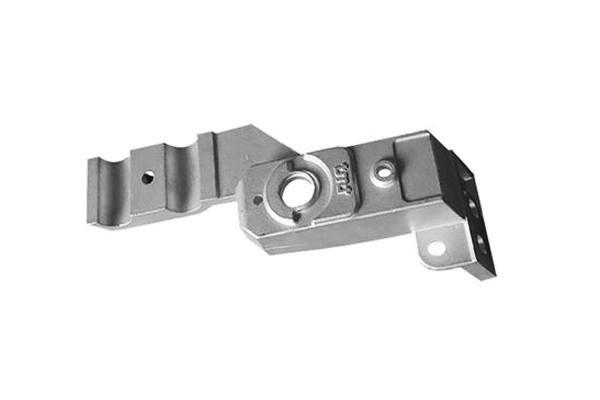
Tooling Components:
- Gooseneck system: Transfers molten zinc from the holding pot into the shot sleeve.
- Shot sleeve & plunger: Injects metal into the mold under pressures of 10,000–15,000 psi.
- Die materials: Usually made of H13 tool na bakal o P20, with surface treatments like nitriding or PVD coating to resist thermal fatigue and erosion.
Because zinc is less erosive than aluminum, dies can last over 1 milyong mga siklo, significantly lowering long-term tooling costs.
5. Zinc Die Casting Process Steps
The zinc die casting process is a precise and efficient method for producing high-volume, high-accuracy metal components.
Thanks to zinc’s exceptional castability, low melting point, at dimensional na katatagan, the process can achieve tight tolerances, makinis na ibabaw ay nagtatapos, and thin-wall geometries.
Melt Preparation and Temperature Control
- Zinc alloys are typically melted at 420–450 °C (788–842 °F) depending on alloy type and process variation.
- Melting occurs in a furnace integrated with a hot-chamber machine or a separate crucible for cold-chamber machines.
- Precise temperature control is essential to avoid overheating (which causes oxidation and porosity) or underheating (which reduces flowability).
- Pag-aalis ng gas at fluxing may be used to remove entrapped gases and oxides for improved casting quality.
Shot Charging and Injection
- Hot-Chamber Die Casting (most common for zinc):
-
- Ang gooseneck system draws molten zinc directly into the die under hydraulic pressure (7–35 MPa).
- Short cycle times (Karaniwan <1 second fill time) make the process ideal for high-volume production.
- Cold-Chamber Die Casting (used for ZA-12, ZA-27):
-
- Molten zinc is ladled into a shot sleeve, then a piston forces it into the die.
- Required for alloys with higher aluminum content that corrode gooseneck systems.
Cavity Filling and Solidification
- The molten zinc fills the steel die cavity at high speed (up to 1–3 m/s), ensuring it reaches all intricate shapes and thin walls.
- Rapid heat extraction occurs through the die walls, pagpapagana ng:
-
- Quick solidification (within milliseconds to a few seconds)
- High-dimensional accuracy
- Fine-grain structure may pinahusay na mga katangian ng makina
- Die venting and vacuum assist may be used to prevent air entrapment and reduce porosity.
Ejection and Die Cycling
- Once the part solidifies, Mga Pin ng Ejector push it out of the mold.
- Die surfaces are cooled or lubricated with die release agents to ensure smooth part release and prolong die life.
- Tipikal cycle time for zinc die casting: 20–60 seconds per shot, depending on part complexity and alloy type.
- Dies are then closed and prepared for the next injection—zinc’s fast cooling enables rapid die cycling.
Trimming and Flash Removal
- Pagkatapos ng pagpapaalis, excess material (flash, sprues, runners) is trimmed using:
-
- Hydraulic or mechanical trimming presses
- CNC deburring systems
- Manual deburring tools for complex geometries
- Proper gating and overflow design minimizes waste and ensures clean part separation.
Inspection and Dimensional Verification
- Initial inspection may include:
-
- Visual na inspeksyon for flash, mga depekto sa ibabaw, or cold shuts
- Dimensional gauging against CAD or technical drawing specs
- Opsyonal na X-ray or pressure testing for internal defects
6. Finishing and Post‑Processing of Zinc Die Casting
While zinc alloy die casting is renowned for producing components with excellent surface finish and tight tolerances right out of the mold,
most industrial and consumer applications still require post-processing to meet final specifications.

Pag deburring, Pag-trim, and Flash Removal
After ejection from the die, parts often have excess material at parting lines and gate areas.
This must be removed to meet design specifications and to ensure safety in handling and assembly.
Mga Karaniwang Pamamaraan:
- Mechanical trimming presses: Fast and precise, ideal for high-volume production.
- Hand deburring: Used for small batches or parts with intricate geometries.
- Vibratory finishing: Tumbling parts with abrasive media for smoothing edges and surface preparation.
Layunin: Achieve clean contours, remove sharp edges, and prepare parts for coatings.
Surface Cleaning and Pre-Treatment
Surface cleanliness is critical beefore plating, pagpipinta, o patong na. Zinc’s natural oxide layer and die lubricants must be removed to ensure proper adhesion.
Techniques Include:
- Alkaline cleaning: Removes oils, greases, and die lubricants.
- Acid pickling: Removes oxides and flash rust.
- Shot blasting or bead blasting: Uniforms the surface and prepares for coatings.
Kinalabasan: Improves bonding of paints and platings while enhancing cosmetic appearance.
Mga Pamamaraan sa Pagtatapos ng Ibabaw
Zinc alloys are highly compatible with decorative and functional coatings, making them ideal for parts requiring appearance or corrosion protection.
Email Address *
- Nickel Plating: Offers a bright, corrosion-resistant finish, often used in automotive and plumbing.
- Chrome Plating: A mirror-like finish for decorative or wear-resistant surfaces.
- Zinc or Zinc-Nickel Plating: Applied for additional corrosion protection in harsh environments.
Palabok na patong
- Electrostatic application of a powdered polymer, followed by curing at ~180–200 °C.
- Offers durability, color flexibility, and good resistance to impact and chemicals.
Lacquering or Clear Coating
- Transparent coatings protect plated or polished surfaces without altering appearance.
Paggamot ng Heat (Optional for Some Alloys)
Zinc alloys are not typically heat-treated for hardening, pero stress relief treatments may be applied:
- Saklaw ng Temperatura: 80–120 °C for several hours.
- Layunin: Reduce internal stresses from casting or machining, enhance dimensional stability.
Some ZA (Zinc-Aluminum) alloys may undergo pagtigas ng edad to improve strength over time.
Machining and Secondary Operations
Even though die casting delivers near-net shapes, secondary machining may be required for:
- Threading, pagbabarena, or tapping
- Mating surfaces for assemblies
- Tight-tolerance features not achievable via casting alone
Tala: Zinc’s excellent machinability makes it ideal for secondary operations, kasama ang low tool wear at smooth chip formation.
7. Material Properties of Zinc Die Castings
Zinc die castings are valued not only for their excellent castability but also for their robust mechanical and physical properties.
These properties make zinc alloys suitable for precision components requiring high strength, katumpakan ng sukat, and good surface finish.

Physical Properties of Zinc Alloys
| Pag-aari | Tipikal na Halaga (Zamak 3) | Kahalagahan |
| Densidad ng katawan | 6.6–6.8 g/cm³ | Provides strength and rigidity; mas mabigat pa sa aluminum |
| Melting Point Range | 380–390 °C (716–734 °F) | Enables low-energy melting and short cycle times |
| Thermal kondaktibiti | ~113 W/m·K | Excellent heat dissipation, useful in electronic housings |
| Electrical kondaktibiti | ~27% IACS | Suitable for some electrical grounding applications |
| Koepisyent ng Thermal Expansion | 27 × 10⁻⁶ /K | Dimensional changes predictable under thermal cycling |
Mechanical Properties of Zinc Alloys
| Pag-aari | Zamak 3 | Zamak 5 | ZA-8 |
| Lakas ng Paghatak | ~ 280 MPa | ~310 MPa | ~350 MPa |
| Yield Lakas | ~210 MPa | ~250 MPa | ~ 275 MPa |
| Pagpapahaba sa Break | ~7–10% | ~6–8% | ~3–6% |
| Ang katigasan ng ulo (Brinell) | 82–90 | 85–95 | 90–100 |
| Modulus ng Pagkalastiko | ~96 GPa | ~96 GPa | ~100 GPa |
| Epekto ng Lakas | Katamtaman | Slightly lower | Higher than Zamak 3 |
Katatagan ng Dimensyon & Paglaban sa Creep
- Katatagan ng Dimensyon: Zinc die castings can maintain precise tolerances over long periods, especially in moderate temperature environments.
-
- Typical tolerances: ±0.05 mm or better
- Paglaban sa Creep: Limited above 100 °C. Zinc alloys are not ideal for high-temperature structural loads, but perform well at room to moderately elevated temperatures.
8. Quality Control and Defect Mitigation
Maintaining high product quality in zinc die casting requires robust monitoring and inspection systems.
Typical Defects and Remedies:
| Defect | Dahilan | Pagbawas |
| Porosity | Air entrapment | Vacuum die casting, gating design |
| Cold shuts | Incomplete flow or fill | Raise temperature, improve fluidity |
| flash | High injection pressure | Tighten die fit, modify clamping |
| Die soldering | Metal fusing to die wall | Apply die lubricant, use coatings |
Non-destructive testing methods such as X-ray inspection, ultrasound, at dye penetrant testing are often used to detect internal or surface defects.
9. Mga kalamangan & Limitations of Zinc Die Castings
Mga kalamangan
Superior Fluidity:
Zinc alloys exhibit excellent fluidity, enabling the production of intricate components with thin walls, as thin as 0.8 mm.
This property allows molten zinc to fill complex mold cavities precisely, facilitating the manufacturing of highly detailed parts.
High-Precision Dimensional Accuracy:
Zinc die casting can achieve extremely tight dimensional tolerances, typically within ±0.05-0.1 mm for small-to-medium-sized parts.
This precision often eliminates the need for extensive post-machining, saving both time and cost.
Rapid Production Rates:
Die-casting machines for zinc can operate with short cycle times, usually ranging from 10-60 seconds per cycle, depending on part complexity.
This high-speed production capability makes it ideal for mass manufacturing, reducing overall production costs.
Good Surface Finish:
Parts produced through zinc die casting generally have a smooth and glossy surface right out of the mold.
This eliminates the need for many surface-finishing operations and provides an excellent base for further treatments like plating or painting.
Pagiging Epektibo sa Gastos:
Zinc is relatively inexpensive compared to many other die-casting metals.
Dagdag pa, the process generates minimal material waste as excess metal can be easily recycled, further reducing costs.
The lower cost of tooling and equipment also contributes to its economic viability.
Wide Range of Alloy Options:
There are various zinc alloys available, each tailored to specific performance requirements.
Halimbawa na lang, Zamak alloys offer a balance of strength, paglaban sa kaagnasan, and casting properties,
while ZA alloys are known for their high wear resistance, providing flexibility in material selection.
Mga Limitasyon
Limitadong Mataas na Temperatura ng Pagganap:
Zinc alloys have low melting points and poor heat resistance.
Their mechanical properties degrade significantly at elevated temperatures (usually above 120°C),
making them unsuitable for applications involving continuous exposure to high heat, such as engine internals in high-performance vehicles.
Mga Hadlang sa Sukat:
The size of zinc die-cast parts is limited by the capacity of die-casting machines and molds.
Producing large-scale components is challenging and costly, as it requires more powerful machines and larger, more expensive molds.
Thermal Sensitivity:
Zinc alloys are sensitive to rapid temperature changes during the die-casting process.
This thermal sensitivity can lead to issues like thermal stresses, pag-baluktot, and cracking in the cast parts if the process parameters, such as cooling rates, are not carefully controlled.
Susceptibility to Certain Corrosive Environments:
Although zinc has some inherent corrosion resistance, sa mga highly corrosive na kapaligiran, especially those with strong acids or alkalis, the material may corrode over time.
While surface treatments can enhance corrosion resistance, it adds to the overall cost.
Regional Alloy Availability:
The production and availability of specific zinc alloys may be limited in some regions.
This can lead to supply chain challenges, longer lead times, and increased costs for sourcing specialized alloys.
10. Applications of Zinc Die Castings

Automotive Industriya ng Industriya
- Mga Lugar ng Aplikasyon: Vehicle structural components, interior/exterior trim, and functional parts
- Mga Bahagi: Email Address *, mga panaklaw, mga hawakan ng pinto, mga knob, wheel hubs, mga grill, and decorative trims
Mga Elektronika Industriya ng Industriya
- Mga Lugar ng Aplikasyon: Electronic enclosures, mga konektor, at pamamahala ng init
- Mga Bahagi: Plug connectors, device housings, heat sinks for semiconductors, and circuit board fixtures
Consumer Goods Sector
- Mga Lugar ng Aplikasyon: Home appliances, mga laruan, and decorative products
- Mga Bahagi: Handles/knobs for kitchen appliances, toy models, decorative figurines, and hardware for furniture
Hardware & Plumbing Industry
- Mga Lugar ng Aplikasyon: Construction fixtures and plumbing systems
- Mga Bahagi: Mga gripo, Mga balbula, door locks, hinges, and architectural hardware
Medical Devices Field
- Mga Lugar ng Aplikasyon: Surgical equipment and biomedical components
- Mga Bahagi: Biocompatible instrument housings, implantable device casings (with surface treatment), and diagnostic tool parts
Sektor ng Renewable Energy
- Mga Lugar ng Aplikasyon: Wind and solar energy infrastructure
- Mga Bahagi: Wind turbine brackets, solar panel mounting systems, and energy storage system enclosures
11. Talahanayan ng Paghahambing: Zinc vs Aluminum vs Magnesium Die Casting
| Pag-aari / Tampok | sink mamatay paghahagis | aluminyo mamatay paghahagis | Magnesium Die Casting |
| Densidad ng katawan (g/cm³) | 6.6–6.8 | 2.6–2.8 | 1.74–1.84 |
| Punto ng Pagtunaw (°C) | 380–390 | 615–660 | 595–650 |
| Lakas ng Paghatak (MPa) | 250–400 | 170–310 | 180–280 |
| Yield Lakas (MPa) | 210–350 | 120–280 | 150–230 |
| Pagpapahaba (%) | 7–15 | 2–8 | 3–10 |
| Ang katigasan ng ulo (Brinell) | 82–120 | 50–110 | 60–90 |
| Katatagan | Napakahusay (manipis na pader, masikip na mga tolerance) | Mabuti na lang (less fluid than zinc) | Katamtaman (requires controlled conditions) |
| Tool Life | Napakataas na (hanggang sa 1 million shots) | Katamtaman (100k–150k shots typical) | Katamtaman hanggang sa Mataas |
| Paglaban sa kaagnasan | Mabuti na lang (can be improved via plating) | Katamtaman (needs coating in harsh environments) | Mabuti na lang (especially AZ91D alloy) |
Machinability |
Napakahusay | Mabuti na lang | Mabuti na lang |
| Tapos na sa ibabaw | Superior (ready for plating or painting) | Fair (post-processing often needed) | Fair to Good |
| Thermal kondaktibiti (W/m·K) | ~109 | ~150–170 | ~60–90 |
| Gastos ng Unit (materyal na bagay + proseso ng) | Mababa ang (low melting point = energy savings) | Katamtaman | Mataas na (materyal na bagay & tooling costs) |
| Recyclability | Napakahusay | Napakahusay | Napakahusay |
| Weight-Saving Potential | Mababa ang (high density) | Katamtaman | Mataas na (lightest of the three) |
| Mga Karaniwang Aplikasyon | Small gears, mga konektor, mga enclosure, Mga trim | Mga bloke ng engine, mga pabahay, Mga bracket ng istruktura | Laptop frames, automotive steering wheels, mga casings |
| Epekto sa Kapaligiran | Katamtaman (energy-efficient but heavy) | Katamtaman hanggang sa mataas (masinsinang enerhiya) | Mas mababa (magaan ang timbang, less material needed) |
Key Takeaways:
- Sink ay perpekto para sa mataas na katumpakan, maliit na maliit na, kumplikadong mga bahagi with superior surface quality and low tooling cost, lalo na sa mataas na dami ng produksyon.
- Aluminyo ay ginusto para sa lightweight structural components with moderate strength and higher thermal resistance.
- Magnesium offers the best strength-to-weight ratio, paggawa ng angkop para sa aerospace and portable electronics, but requires more specialized processing and safety controls.
12. Pangwakas na Salita
Zinc die casting is a maturidad, tumpak na tumpak, and cost-efficient manufacturing process ideally suited for producing complex metal components in high volumes.
Its mechanical robustness, superior castability, and excellent surface quality continue to make it the preferred choice for industries ranging from automotive to medical devices.
While it has some thermal limitations, its design flexibility, low production cost, and recyclability firmly secure zinc die casting as a leading metal forming technology for the future.
Custom Die Casting Services by DEZE
DEZE offers high-quality custom die casting services tailored to meet your exact specifications.
With years of experience and advanced equipment, we specialize in producing precision metal components using aluminyo, sink, at magnesiyo mga haluang metal.
Ano ang Inaalok namin:
- OEM & ODM Die Casting Solutions
- Support for small to high-volume production
- Custom mold design and engineering support
- Tight dimensional tolerances and excellent surface finishes
- Secondary operations, kasama na ang CNC machining, ibabaw ng paggamot, at assembly

