1. Panimula
Die casting combines high‑speed production with exceptional part accuracy.
By forcing molten metal into precision-machined steel dies under pressures of up to 200 MPa,
this process routinely yields complex components with thin walls (pababa sa 0.5 mm), masikip na mga tolerance (± 0.1 mm), and smooth finishes (Ra 0.8 M).
Since it evolved from low-pressure gravity methods in the 19th century to today’s high-pressure machines capable of cycling in under 10 mga segundo,
die casting has enabled lightweight, cost-effective solutions across various industries.
Mahalaga, substituting die‑cast aluminum or magnesium for steel can reduce part weight by 30–50%, directly contributing to fuel savings in automotive and aerospace applications.
This article offers an in‑depth examination of die casting, its fundamental principles, process types, mga materyales, design considerations, at mga aplikasyon, to equip engineers with the knowledge needed to harness its full potential.
2. What Is Die Casting?
Die casting is a high-precision metal casting process in which molten metal is injected under high pressure into a reusable steel mold, known as a die.
These dies are custom-machined to exact geometries, enabling the production of complex, detailed parts with tight tolerances, excellent dimensional stability, at makinis na ibabaw finishes.
Die casting combines molten metal metallurgy kasama ang katumpakan tooling to form parts in a rapid cycle.

The basic flow comprises:
Die Closing
Hydraulic or mechanical clamps press two die halves (“cope” and “drag”) together with forces ranging from 50 kN for small zinc machines up to 5,000 kN for large aluminum presses.
Proper clamping prevents flash and die separation under injection pressures of 100–200 MPa.
Pagtunaw ng Metal
Alloy melts in a furnace to a controlled temperature—typically 680–720 °C for aluminum A380 and A383, o 380 °C for zinc Zamak.
Temperature consistency within ± 5 °C ensures fluidity and minimizes porosity.
Iniksyon
A plunger or piston drives the melt through a shot sleeve into the die cavity via gates and runners. Shot velocities exceed 2 m/s to fill complex geometries before solidification begins.
Aluminum machines use a cold‑chamber system (metal ladled into a separate shot sleeve), while zinc and magnesium often employ hot‑chamber mechanisms (injection chamber immersed in melt).
Pagpapatibay
Within seconds, the metal cools against the die’s chilled surfaces (cooled by water‑circulated channels), achieving full solidification.
Cycle times vary by alloy and part size—10–30 seconds for small zinc parts, hanggang sa 60 seconds for large aluminum housings.
Pagpapatalsik at Paggupit
After the die opens, ejector pins push the casting out.
Flash and excess material are removed by trim presses or robotic saws, producing a near‑net‑shape component ready for any required secondary operations.
Dies—constructed from hardened tool steels such as H13—define every feature of the part, from thin walls to integrated bosses.
Precision machining and surface treatments (nitriding, Mga patong ng PVD) extend die life, which can range from 100,000 shots for aluminum to over 1 million shots for zinc.
By tightly controlling each step—clamping force, melt temperature, injection profile, die temperature—die casting delivers exceptionally consistent, high‑quality parts at scale.
3. Types of Die Casting Processes
Die casting machines employ two principal methods—hot‑chamber at cold‑chamber—each optimized for different alloys and part geometries.
Understanding their distinctions helps engineers select the right process for cost‑efficiency, part quality, and cycle time.
Hot‑Chamber Die Casting
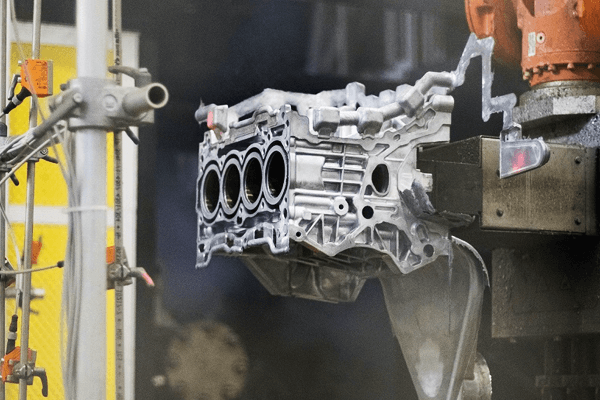
Hot-chamber die casting, also known as gooseneck die casting, is a unique die casting process that is primarily used for low – melting – point metals such as zinc, tin, and lead alloys.
Sa prosesong ito, the melting furnace is integrated with the die-casting machine, creating a continuous and efficient production cycle.
The key component of the hot-chamber die casting machine is the gooseneck-shaped injection mechanism, which is submerged in the molten metal bath.
When the machine is activated, a piston inside the gooseneck draws the molten metal into the injection cylinder.
Pagkatapos ay, high pressure is applied to force the molten metal through the gooseneck and into the die cavity.
Once the cavity is filled, the metal solidifies, and the die opens to eject the finished part. This process is repeated rapidly, allowing for high-volume production.
Mga Pangunahing Katangian:
- Mga haluang metal: Zinc and magnesium are ideal, thanks to their low melting points (≈ 380 °C for zinc, ≈ 650 °C for magnesium).
- Oras ng Pag-ikot: Exceptionally quick—often 8–15 seconds—because the metal remains in contact with the heat source.
- Shot Weight: Generally limited to small parts (< 100 g) to ensure rapid fill and fast recovery.
Mga kalamangan:
- Very high productivity for small, masalimuot na mga bahagi (hal., battery terminals, small gears).
- Low operational costs due to minimal transfer steps.
Mga Limitasyon:
- Not suitable for aluminum or high‑temperature alloys (corrosion and erosion of pump components).
- Shot weight and pressure are limited by the mechanical linkage design.
Cold‑Chamber Die Casting
Cold-chamber die casting is a more versatile die casting process that is suitable for a wide range of metals, including higher – melting – point alloys such as aluminum, magnesiyo, and some copper alloys.
Sa prosesong ito, the melting furnace is separate from the die-casting machine.
Molten metal is first ladled from the furnace into a separate shot sleeve, which is the cold chamber.
A piston then forces the metal from the shot sleeve into the die cavity at high pressure.
Unlike hot-chamber die casting, where the injection mechanism is submerged in the molten metal,
the shot sleeve in cold-chamber die casting is only filled with molten metal immediately before injection, reducing the risk of metal oxidation and contamination.
After the metal solidifies in the die cavity, the die opens, at ang bahagi ay pinatalsik.
Mga Pangunahing Katangian:
- Mga haluang metal: Suited to aluminum, tanso, and brass alloys with melting points above 650 °C. Kabilang sa mga karaniwang grado ang Aluminyo A380, A383, at Copper Alloy C86300.
- Oras ng Pag-ikot: Longer than hot‑chamber—typically 20–60 seconds—due to the ladling step and required cool‑down between shots.
- Shot Weight: Can accommodate large castings up to 10 kg or more, such as automotive transmission housings.
Mga kalamangan:
- Handles a broader range of alloys, especially aluminum and copper.
- Enables heavier shot weights and higher injection pressures for intricate, thicker sections.
Mga Limitasyon:
- Increased cycle time and energy use per shot due to metal transfer and temperature recovery.
- More complex shot sleeve maintenance owing to metal adhesion and oxidation.
4. Materials Used in Die Casting
Choosing the right alloy is paramount in die casting, as it directly influences part performance, buhay ng kasangkapan, and production cost.

The most common die‑casting materials include aluminyo, sink, magnesiyo, at tanso mga haluang metal.
| Alloy Family | Common Die‑Casting Grades | Mga Pangunahing Katangian | Mga Karaniwang Aplikasyon |
| Aluminyo | A380, A383, A413, ADC12 | • Density ~ 2.70 g/cm³• Thermal conductivity ~ 120 W/m·K• Shrinkage 1.2–1.5 %• Good corrosion resistance | Transmission housings, mga bloke ng engine, heat‑sink housings |
| Sink | ZA‑27, Zamak 3 (ZL101), Zamak 5 | • Density ~ 6.6–7.1 g/cm³• Melting point ~ 380 °C• Excellent fluidity (↓0.3 mm walls)• Superior surface finish | Precision connectors, small gears, pandekorasyon hardware |
Magnesium |
AM60B, AZ91D, WE43 | • Density ~ 1.8 g/cm³ (lightest)• Thermal conductivity ~ 75 W/m·K• Shrinkage 1.0–1.2 %• Good damping | Mga pabahay sa electronics, automotive interior trim, and UAV components |
| Mga Alloy ng Copper | C86200, C86300, C95500 | • Density ~ 8.5 g/cm³• Thermal conductivity 200–400 W/m·K• High wear & paglaban sa kaagnasan | Heat‑sink components, mga bushing, at mga fitting ng marine |
5. Die Casting Equipment
Successful die casting hinges on the synergy between robust machinery and precision tooling.
The principal pieces of equipment include the die‑casting machine, ang mamatay ka na (mold) assembly,
ang shot sleeve and injection system, at ang mga ancillary support systems that maintain optimal process conditions.

Die‑Casting Machine
- Clamping Unit: Provides the force to keep the two die halves (cope and drag) closed against injection pressure.
Clamping forces range from 50 kN for small zinc presses up to 5,000 kN for large aluminum machines. - Injection Unit: Contains the shot sleeve and plunger (malamig na silid) or gooseneck and reciprocating piston (mainit na kamara).
Modern injection units achieve shot velocities of 2–5 m/s, enabling complete cavity fill in 20–100 ms for thin‑wall sections. - Sistema ng Kontrol: CNC‑based controls regulate injection speed and pressure profiles, die temperature, and cycle timing.
Closed‑loop feedback ensures repeatability within ± 2% of target parameters.
Mamatay (Mold) Assembly
- Materyal: High‑grade tool steels such as H13 (hot‑work) o P20 (pre‑hardened) withstand alloy temperatures of 400-700 ° C and tens of thousands of thermal cycles.
- Core and Cavity Inserts: Machined to tolerances of ± 0.02 mm, with conformal or straight‑drilled cooling channels to maintain die temperatures between 200-350 ° C.
- Mga patong & Paggamot sa ibabaw: Nitriding, PVD, or hard chrome plating extend die life by 20–50% and reduce soldering of aluminum or zinc.
Shot Sleeve & Injection System
- Cold‑Chamber Sleeve: Removable shot sleeve in cold‑chamber machines must resist thermal shock and metal adhesion. Typical bore diameters range from 30–200 mm to accommodate shot weights of 50 g to 10 kg.
- Hot‑Chamber Gooseneck: Integrated into the furnace, the gooseneck requires corrosion‑resistant alloys or ceramic linings to handle molten zinc or magnesium at 380-650 ° C.
- Plunger & Mga Tatak: Wear‑resistant graphite or ceramic seals maintain pressure while moving at up to 300 cycles per minute in high‑speed zinc casting.
Ancillary Support Systems
- Natutunaw na & Holding Furnaces: For cold‑chamber, crucible or rotary furnaces maintain melt at ± 5 °C of target temperature.
Hot‑chamber machines use pot furnaces with built‑in skimmers and temperature probes. - Chillers & Kontrol sa Temperatura: Water or oil chillers regulate die temperature. Flow rates of 20–60 L/min per cooling circuit remove 5–15 kW of heat per die half.
- Shot Blast & Trimming Stations: Automated trimming presses (100–500 kN force) and shot‑blast cabinets clean flash and runners, preparing castings for inspection and finishing.
- Vacuum & Pressure‑Assisted Systems: Vacuum vents in the die remove trapped air and gases, reducing porosity by up to 80%.
Gas‑assist or counter‑pressure systems further improve fill quality in challenging geometries.
6. Design Considerations for Die Casting
Designing parts for die casting requires a balance between manufacturability, pagganap, at gastos.
Wall Thickness and Uniformity
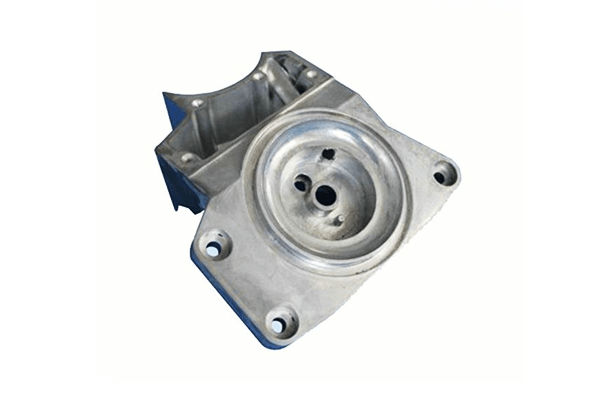
- Optimal Range: Most die cast parts feature wall thicknesses between 1.0 mm sa 4.0 mm, depende sa alloy.
- Pagkakapareho: Avoid abrupt changes in wall thickness to prevent hot spots, porosity, and distortion during solidification.
- Tapering (Draft): Add a draft angle of 1°–3° per side to facilitate easy ejection from the die.
Part Geometry and Complexity
- Mga Komplikadong Hugis: Die casting supports intricate geometries, but sharp internal corners should be avoided to reduce stress concentrations.
- Fillets and Radii: Incorporate mga fillet (minimum 0.5 mm radius) at internal junctions to improve metal flow and die life.
- Mga Undercut: Minimize undercuts; kung kinakailangan, gamitin ang slides or lifters, which increase tooling complexity and cost.
Gating and Runners
- Gate Design: Proper gate size and location help direct metal flow to avoid turbulence and air entrapment.
- Runner System: Balanced runners promote even filling across the cavity. Fan gates o tab gates may be used for thin sections.
- Overflow Wells & Vents: Used to collect impurities and air. Vacuum vents can reduce porosity and improve density.
Tolerances and Surface Finish
- Dimensional Tolerances: Typical linear tolerances range from ±0.05 mm to ±0.25 mm, depending on size and tooling precision.
- Kalidad ng Ibabaw: As-cast surface roughness is generally Ra 1.6–6.3 µm. Smoother finishes may require polishing or coating.
- Shrinkage Compensation: Design must account for alloy-specific shrinkage rates (hal., Al ~1.2%, Zn ~0.7%).
7. Post‑Casting Operations
Post-casting operations in die casting are essential for enhancing the dimensional accuracy, tapos sa ibabaw, mekanikal na mga katangian, and overall functionality of the final part.
Trimming and Flash Removal
- Flash Formation: During die casting, excess material (flash) may form along parting lines, ejector pin holes, or vents due to high-pressure metal flow.
- Mga Paraan:
-
- Mechanical trimming using hydraulic presses or mechanical punches for precision and speed.
- Manual deburring for small-volume or complex parts.
- Robotic or CNC trimming for automated, consistent edge finishing.
Paggamot ng Heat
- Layunin: Some die-cast alloys benefit from thermal processing to improve strength, ductility, or dimensional stability.
- Common Treatments:
-
- Aging/Precipitation hardening (especially for aluminum alloys like A356).
- Annealing to relieve residual stress and improve machinability.
- Paggamot ng solusyon followed by aging (T6 temper) for specific mechanical performance goals.
Tala: Heat treatment options are limited for many die-cast alloys due to their porosity or the presence of low-melting-point phases.
Pagtatapos ng Ibabaw
- Shot pagsabog / Grit Blasting:
-
- Removes oxidation, flash remnants, and prepares the surface for coatings.
- Polishing:
-
- Mechanical polishing for cosmetic parts like appliance or consumer electronics casings.
- Pag-plating at Pagpatong:
-
- Electroplating (hal., chrome or nickel) for corrosion resistance and aesthetics.
- Palabok na patong / Pagpipinta for color, Paglaban ng UV, and wear protection.
- Pagpapahid ng langis (mainly for aluminum) to improve corrosion and abrasion resistance.
- Passivation:
-
- Improves corrosion resistance by removing free iron from the surface.
Machining and Precision Finishing

- Why Needed: Die casting may not meet tight tolerance or smoothness requirements for some critical dimensions.
- Operations:
-
- paggiling, pagbabarena, pag tap sa: For precision features like threads, mating faces, or sealing surfaces.
- CNC machining: Ensures repeatability and complex contouring.
- Allowance: Design should incorporate additional material (usually 0.2–0.5 mm) for machining.
8. Kalidad, Mga depekto, and Inspection
Common Defects
- Porosity: Gas trapped during injection or solidification creates voids, pagpapahina ng bahagi.
- Cold Shuts: Incomplete joints occur when molten metal fails to merge fully.
- Jetting: High-velocity metal streams cause turbulence and surface defects.
- Die Soldering: Molten metal adheres to the die, making ejection difficult.
- Pag urong: Metal contraction during cooling leads to sink marks or internal voids.
Mga Diskarte sa Pagpapagaan
- Porosity: Improve vent design or use vacuum-assisted die casting to remove air from the cavity.
- Cold Shuts: Adjust metal temperature, injection speed, or gating system.
- Die Soldering: Use proper die lubricants and maintain the die surface.
Mga Paraan ng Inspeksyon
- X-Ray Inspection: Detects internal defects like porosity by imaging the part’s interior.
- Dye Penetrant Inspection: Identifies surface-opening defects such as cracks.
- Dimension Checks: Coordinate measuring machines (Mga CMM) ensure parts meet dimensional requirements.
Quality Control Methodologies
- Kontrol sa Proseso ng Estadistika (SPC): Monitors process parameters to detect trends and variations that could lead to defects.
- Six Sigma: Aims to reduce process variability, targeting a defect rate of 3.4 defects per million opportunities.
9. Applications of Die Casting
Die casting plays a crucial role in modern manufacturing, providing complex, high-volume metal components with tight tolerances, mahusay na ibabaw ay nagtatapos, and superior strength-to-weight ratios.

Industriya ng Automotive
Die casting is a cornerstone of automotive manufacturing, where lightweight and durability are essential. Kabilang sa mga karaniwang application ang:
- Transmission housings
- Engine blocks and cylinder heads
- Steering and suspension components
- Electronic enclosures and connectors
- EV battery housings and motor components (for electric vehicles)
Mga Elektronika ng Consumer
Miniaturization, mga estetika, and thermal management make die casting an ideal process for electronics components. Typical applications:
- Smartphone and laptop casings (magnesium or zinc alloys)
- Heat sinks and EMI shielding enclosures
- Camera housings, internal frames, and ports
Aerospace at Pagtatanggol
Die casting is utilized for non-critical structural and high-performance secondary parts in aerospace, helping reduce weight without sacrificing durability.
- Avionics enclosures
- Instrument brackets
- Fuel system components
- Radar housings and mounts
Mga Kagamitan sa Industriya
In heavy machinery and industrial systems, die-cast components support structural, hydraulic, and thermal applications:
- Pump housings and valve bodies
- Bearing housings
- Motor end covers and gearboxes
- Instrumentation enclosures
Telecommunications and Electrical
Die casting supports the production of reliable, high-volume electrical infrastructure and communication components:
- Cable connectors and junction boxes
- RF and antenna housings
- Heat-dissipating enclosures for power supplies
Mga Medikal na Kagamitan
Die casting contributes to lightweight, compact medical components with high cleanliness and precision:
- Instrument handles and surgical tool parts
- Imaging equipment casings
- Portable device enclosures
Magnesium die casting is expanding in medical applications due to its biocompatibility and low density.
Renewable Energy and EV Systems
Emerging green technologies increasingly rely on high-volume metal parts, and die casting provides scalability and material efficiency:
- Inverter housings
- Battery packs and structural frames
- Wind turbine control housings
Home Appliances and Hardware
Matibay na matibay, aesthetic, and mass-produced parts make die casting ideal for consumer hardware:
- Door handles and locks
- Microwave brackets, refrigerator components
- Lighting fixtures and fan housings
10. Advantages and Limitations of Die Casting
Die casting offers a powerful manufacturing solution for producing complex, high-precision metal components at scale.
Mga kalamangan ng Die Casting
High Dimensional Accuracy and Precision
Die casting can achieve tight tolerances (as low as ±0.05 mm), pagbabawas ng pangangailangan para sa malawak na machining. This makes it ideal for parts with complex geometries and mating surfaces.
Napakahusay na Tapos sa ibabaw
Parts typically emerge with a smooth surface finish of 1–2.5 μm Ra, often suitable for direct use or minimal post-processing.
Decorative finishes like chrome plating, pagpipinta, or powder coating can also be easily applied.
Mataas na Rate ng Produksyon
Cycle times are fast—often between 30 seconds and 2 minutes per shot—making die casting ideal for mass production.
One die set can produce tens of thousands to millions of parts before needing replacement.
Kahusayan sa Materyal
Minimal material waste due to near-net-shape production. Recycled alloys can be reused with proper control, enhancing sustainability.
Thin-Walled, Lightweight Components
Die casting allows for thinner wall sections (kasing baba ng 1 mm for zinc and 2 mm para sa aluminyo),
making it a preferred method for weight-sensitive industries such as automotive, aerospace, at consumer electronics.
Integration of Multiple Functions
Multiple design features—threads, mga tadyang, bosses, or hinges—can be cast into a single component, reducing assembly requirements and costs.
Limitations of Die Casting
High Initial Tooling and Equipment Costs
Tooling (namamatay na) and die casting machines are expensive, making the process economically viable only for high production volumes. Typical die costs range from $10,000 sa higit pa $100,000.
Limitado sa mga Di Ferrous Metal
Die casting is mainly used for aluminum, magnesiyo, sink, at mga haluang metal na tanso. Ferrous metals like steel and iron have melting points too high for conventional die casting dies.
Porosity and Gas Entrapment
Due to high-pressure injection, internal porosity is common. This can limit the part’s structural integrity and make heat treatment or welding problematic.
Size and Thickness Constraints
While small to medium-sized parts are ideal, very large castings are difficult due to machine clamping limitations and thermal management.
Pati na rin, very thick sections can lead to defects like shrinkage or hot spots.
Limited Alloy Selection
Not all alloys are suitable for die casting. Alloys must have good castability and low melting points, restricting material flexibility.
Post-Processing May Be Required
Despite high surface quality, machining, pag-trim, or finishing is often needed—especially for critical features or tight tolerances.
11. Comparison of Die Casting with Other Casting Processes
Die casting is one of several metal casting processes used in modern manufacturing.
While it excels in specific areas such as dimensional accuracy, tapos sa ibabaw, at mataas na dami ng produksyon,
it may not always be the best choice depending on the application, badyet, and material requirements.
This section compares die casting with three major alternatives: buhangin paghahagis, pamumuhunan paghahagis, and permanent mold casting.
| Mga Criteria | mamatay paghahagis | buhangin paghahagis | Pamumuhunan sa Paghahagis | Permanenteng amag paghahagis |
Dami ng Produksyon |
Mataas na | Low to Medium | Low to Medium | Katamtaman |
| Gastos sa Tooling | Mataas na (metal dies, complex machines) | Mababa ang (reusable patterns, sand molds) | Katamtaman (wax dies, Mga Shell ng Keramika) | Katamtaman (reusable metal molds) |
| Saklaw ng Materyal | Non-ferrous alloys (Al, Zn, Mg) | Very wide (includes cast iron, bakal na bakal, mga haluang metal) | Very wide (includes steel, nikel, titan, kobalt) | Mostly non-ferrous (Al, Mg, Cu) |
| Katumpakan ng Dimensyon | Napakataas (±0.05 mm) | Mababa hanggang katamtaman (±0.5–2 mm) | Napakataas (±0.1 mm) | Katamtaman (±0.25-0.5 mm) |
Tapos na sa ibabaw |
Napakahusay (1–2.5 μm Ra) | Poor to fair (6–12 μm Ra) | Napakahusay (1–1.5 μm Ra) | Mabuti na lang (2–6 μm Ra) |
| kapal ng pader | Manipis na manipis (as low as 1–2 mm) | Makapal (>4 mm) | Katamtaman (Karaniwan >2.5 mm) | Katamtaman |
| Pagiging kumplikado ng Bahagi | Mataas na (limited internal features, no undercuts) | Napakataas (flexible with cores) | Extremely high (Mga Detalye ng Fine, kumplikadong mga geometries) | Katamtaman (simpler geometries preferred) |
| Oras ng Pag-ikot | Very fast (seconds per part) | Mabagal (minutes to hours) | Mabagal (paggawa ng shell + burnout required) | Katamtaman |
| Mga Katangian ng Mekanikal | Mabuti na lang (due to rapid cooling, but with porosity concerns) | Variable na (depends on material and cooling) | Napakahusay (siksik, fine-grained) | Mabuti na lang (finer grain than sand casting) |
Pagkatapos ng pagpoproseso |
Usually minimal (due to near-net shape) | Makabuluhang (pag-trim, machining, paglilinis) | Minimal to moderate (for tight tolerance finishing) | Minimal to moderate |
| Mga Halimbawa ng Application | Automotive, mga electronics, hardware na hardware | Large industrial castings, mga prototype | Aerospace, medikal na implants, mga alahas | Mga bahagi ng istruktura, mga gulong, gear housings |
| Typical Limitations | Mataas na gastos sa tooling, limited to low-melting alloys, porosity | Low precision, coarse surface, labor-intensive | Mabagal, costly for high-volume, limited size | Lower complexity, slower cycle than die casting |
Buod:
- mamatay paghahagis ay perpekto para sa mataas na dami ng, mataas na katumpakan, at mahusay na ibabaw tapusin requirements in non-ferrous alloys.
- buhangin paghahagis is cost-effective for large, low-quantity, o ferrous components with less stringent tolerances.
- Pamumuhunan sa Paghahagis offers the highest detail and material versatility, especially for complex parts in aerospace or medical fields.
- Permanenteng amag paghahagis strikes a balance between die casting and sand casting, suitable for medium runs kasama ang good finish.
12. Pangwakas na Salita
Die casting stands as a cornerstone of modern manufacturing, enabling the mass production of lightweight, high‑precision components across automotive, mga electronics, aerospace, at sa kabila ng.
By understanding process fundamentals, materyal na mga katangian, die design, at mga kontrol sa kalidad,
engineers can leverage die casting to achieve optimal performance, cost‑efficiency, and sustainability in their products.
As Industry 4.0, additive tooling, and new alloys advance, die casting’s role will only grow, powering next‑generation applications in electric mobility, nababagong enerhiya, and medical technologies.
Custom Die Casting Services by DEZE
DEZE offers high-quality kaugalian na die casting services tailored to meet your exact specifications.
With years of experience and advanced equipment, we specialize in producing precision metal components using aluminyo, sink, at magnesiyo mga haluang metal.
Ano ang Inaalok namin:
- OEM & ODM Die Casting Solutions
- Support for small to high-volume production
- Custom mold design and engineering support
- Tight dimensional tolerances and excellent surface finishes
- Secondary operations including CNC machining, ibabaw ng paggamot, at assembly
Mga FAQ
What are the typical tolerances achievable with die casting?
Die casting offers tight tolerances, Karaniwan:
- ±0.10 mm for dimensions under 25 mm
- ±0.20 mm for larger features
Tolerances depend on part geometry, haluang metal, and tooling precision.
Is die casting suitable for prototyping or low-volume production?
Traditional die casting is optimized for medium to high volumes due to tooling costs. Gayunpaman, DEZE mga alok low-volume die casting at rapid tooling solutions for prototyping and pilot runs.
How long do die casting molds last?
Die life depends on material and part complexity:
- Aluminum molds: 50,000–100,000 cycles
- Zinc molds: Hanggang sa 1,000,000 cycles due to lower melting point
Regular maintenance extends mold lifespan significantly.
Can I get custom die cast parts with DEZE?
Oo nga. DEZE specializes in custom die casting, offering complete services from design support and tooling fabrication to production and finishing. We accept drawings, 3D models, or even reverse engineering requests.