1. Panimula
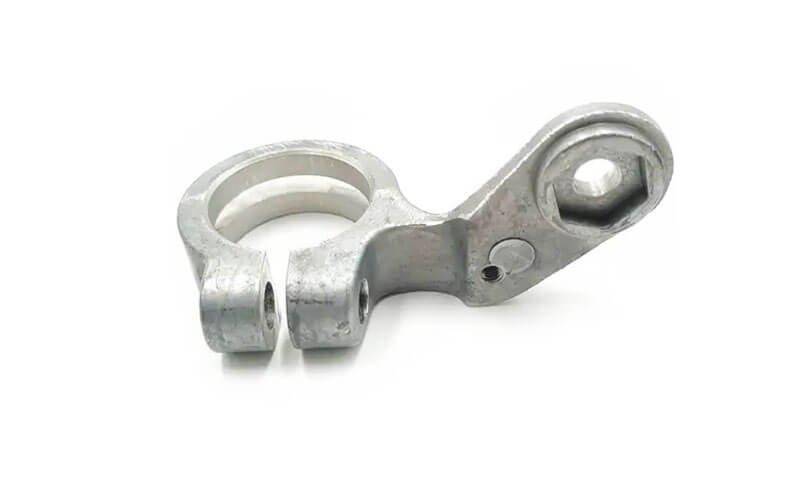
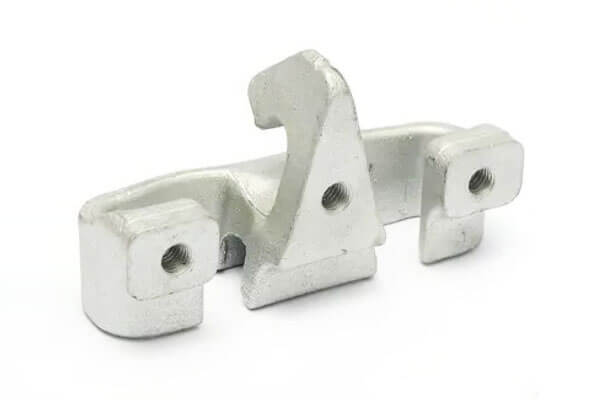
A water glass casting bracket usually refers to a bracket produced by the water glass investment casting process, kilala rin bilang ang sodium silicate lost-wax process.
In industry practice, water glass and silica sol are the two main investment-casting methods, but they do not deliver the same balance of cost, kalidad ng ibabaw, at dimensional katumpakan.
Water glass casting is commonly chosen when a part needs a practical mix of shape freedom and cost efficiency, rather than the highest-end surface finish.
Brackets are a natural fit for this route because they are often compact support, locating, or connection components used in machinery, arkitektura, equipment assemblies, and hardware systems.
They typically need a shape that is more complex than a simple plate, but not always the very tight surface finish required by premium precision castings.
2. What is a Water Glass Casting Bracket?
In foundry terms, a water glass casting bracket is a bracket made by investment casting with a sodium silicate binder in the shell system.
Water glass shell processes are described as having stable performance, low price, and a short shell-making cycle,
and they are widely used for carbon bakal, mababang-haluang metal na bakal, aluminyo haluang metal, at tanso haluang metal castings when surface requirements are not as strict as in silica-sol systems.
That makes the process especially useful for brackets that must be structurally reliable and reasonably accurate, but do not need the premium shell finish and tolerance level of higher-cost precision investment casting.
Sa maraming mga kaso, water glass brackets are used where machining from bar stock would waste material or where sand casting would leave too much cleanup work.
3. Core Technical Principle of Water Glass Casting for Brackets
Chemical curing mechanism
The shell used in water glass casting depends on industrial sodium silicate solution as the core binder.
Unlike binder systems that rely mainly on drying, sodium silicate shell systems harden through chemical cross-linking.
Sa produksyon, this is commonly achieved through CO₂ hardening or salt-based curing methods.
When CO₂ is introduced into the coated shell, it reacts with sodium silicate and converts the binder into insoluble silica gel while also generating sodium carbonate.
The silica gel forms rigid bridges between refractory particles, rapidly converting the loose slurry layer into a hardened mold.
This fast hardening behavior is one of the main reasons water glass casting supports efficient batch production.
High-temperature shell-bearing mechanism
After chemical curing, the shell is fired at high temperature, typically in the range of about 850–950°C.
This step removes residual water and volatile matter and further strengthens the shell.
The sintered shell becomes capable of withstanding the thermal shock and metal impact of molten steel, haluang metal na bakal, ductile na bakal, or other bracket materials.
This is especially important for bracket structures, which often contain:
- thick walls,
- rib reinforcement,
- cantilevered load paths,
- and asymmetric hot spots.
A weak shell would deform, basag na basag, or erode under such conditions. A properly roasted shell, sa pamamagitan ng kaibahan, maintains shape and resists molten-metal scouring.
Solidification logic for bracket geometries
Most brackets are not uniform blocks. They are typically rib-reinforced, locally thickened, and geometrically asymmetric. That means solidification must be directed carefully.
Water glass casting supports sequential solidification when gating and risering are designed correctly.
Thin-to-thick transitions, rib roots, and load-bearing hot spots must be fed in an orderly way so shrinkage is compensated and internal compactness is preserved.
When this logic is managed well, the bracket can achieve sound internal structure and stable long-term performance.
4. Standardized Full-Process Manufacturing Workflow for Water Glass Casting Brackets
A water glass casting bracket should be manufactured through a sarado-loop, process-controlled workflow rather than a simple sequence of molding steps.
Because brackets are load-bearing structural parts, the process must integrate geometric design, shell quality, melt cleanliness, solidification control, thermal treatment, and final inspection into one coordinated system.
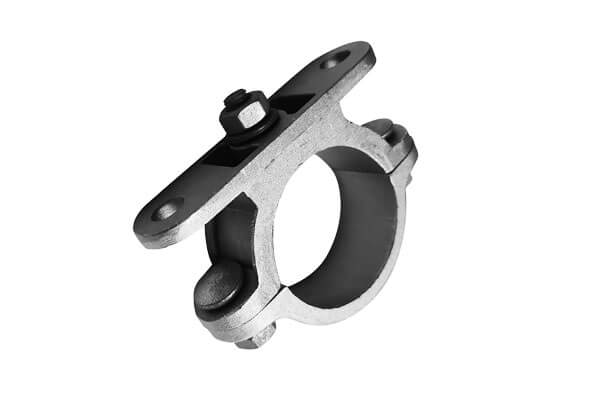
4.1 DFM Structural Optimization for Bracket Components
The workflow begins with design for manufacturability (DFM) analysis.
Unlike ordinary castings, brackets usually function as structural supports, mga konektor, or mounting interfaces, so the geometry must be evaluated from both casting and service perspectives.
Key design actions include:
- removing sharp right-angle transitions at rib roots to reduce stress concentration;
- adding smooth fillets at thick-to-thin wall junctions;
- balancing rib thickness with the surrounding wall structure;
- placing risers near thick hot spots to improve feeding;
- reinforcing cantilevered sections to reduce shrinkage cavity and hot tearing risk;
- reserving machining allowance only on key assembly and locating surfaces.
This stage is critical because bracket failures are often not caused by one dramatic flaw, but by cumulative weaknesses at stress-sensitive locations.
A good bracket design should therefore support both sound casting at stable service behavior.
4.2 Wax Pattern Fabrication and Tree Assembly
Once the geometry is optimized, the bracket is translated into a wax pattern.
For standard production, medium-temperature wax with low shrinkage and strong dimensional stability is preferred.
This helps preserve the intended bracket geometry during handling, assembly, and shell building.
For small-batch or custom-shaped brackets, 3D-printed resin patterns may be used to reduce tooling cost and shorten lead time.
This is especially useful when the bracket is complex, mababa ang volume, or still under design validation.
The patterns are then assembled into a tree structure. Tree layout should be planned carefully so that the gating system:
- avoids direct impingement on critical load-bearing surfaces;
- reduces turbulence during pouring;
- lowers oxide entrapment risk;
- and minimizes the chance of sand sticking or shell damage in sensitive zones.
4.3 Multi-Layer Water Glass Shell Fabrication
The shell is built using a layered water glass coating system. This step determines the surface quality, shell strength, and thermal resistance of the final mold.
A standard shell structure usually includes:
- face layer: high-purity molochite powder and fine quartz sand to improve surface smoothness and reproduction accuracy;
- backup layers: coarser refractory aggregates to increase rigidity, thermal resistance, and impact tolerance.
Each layer is hardened through CO₂ curing, and both curing time and shell thickness must be controlled closely.
If curing is uneven, the shell may crack, peel, or distort during pouring. Habang, If shell thickness is too low, the mold may not withstand metal impact.
If it is too high, permeability may suffer. The shell must therefore be designed as a functional structural medium, not as a generic container.
4.4 Dewaxing, High-Temperature Sintering, and Preheating
After shell formation, the wax must be removed completely by steam autoclave dewaxing or an equivalent process.
Complete dewaxing is essential because residual wax can carbonize and create internal defects or surface contamination during pouring.
The shell is then sintered at approximately 880–930°C to remove moisture, volatilize impurities, and relieve binder-related stress.
This step also significantly improves high-temperature shell strength.
Before pouring, the shell should be preheated to around 280–350°C. Proper preheating helps:
- reduce thermal shock from molten metal,
- preserve flowability in thin transition zones,
- prevent cold shuts,
- and improve filling of ribbed or moderately thin bracket sections.
This stage is especially important because brackets often contain local transitions between thick load-bearing areas and thinner connecting features.
Without shell preheating, these areas are likely to freeze prematurely.
4.5 Purified Melting and Controlled Pouring
The melt must be prepared according to the bracket material system, whether carbon steel, mababang-haluang metal na bakal, or ductile iron. Before pouring, the melt should undergo:
- slag removal,
- dehydrogenation,
- and refining purification.
These steps reduce the risk of internal defects and improve structural soundness.
A bracket is not only a shape; it is a load-bearing component, so internal cleanliness matters as much as visible surface quality.
Pouring should be done in a stable gravity mode with controlled speed.
Excessive turbulence can trap gas, fold oxides into the melt, and create discontinuities inside rib structures or at the base of the bracket.
A controlled pour promotes compact feeding, proper mold filling, and better integrity in thick-wall zones.
4.6 Heat Treatment and Stress Relief
After solidification and shakeout, the bracket typically requires standardized heat treatment.
For steel-based brackets, normalizing is commonly used to refine grain structure and improve tensile strength and impact toughness.
In many applications, stress-relief annealing is also necessary. This removes residual casting stress that may otherwise lead to:
- long-term dimensional drift,
- deformation in service,
- or structural failure in fixed support brackets.
Heat treatment is especially important for brackets that will experience static loading, panginginig ng boses, or repeated assembly stress.
Without thermal stabilization, even a well-cast bracket may perform unpredictably over time.
4.7 Finishing and Hierarchical Quality Inspection
The final stage includes gating removal, surface cleanup, machining of key interfaces, and full inspection.
Typical finishing and inspection steps include:
- removing sprues, risers, and shell residue;
- polishing assembly and contact surfaces;
- checking dimensional tolerance;
- visually inspecting surface condition;
- performing X-ray or other nondestructive internal defect detection;
- at, where needed, verifying mechanical properties.
For a bracket, inspection should be hierarchical. Critical load-bearing and assembly surfaces require tighter scrutiny than non-functional cosmetic areas.
That approach balances performance assurance with manufacturing efficiency.
5. Common Defects and Practical Countermeasures
| Defect type | Effect on bracket | Main cause | Practical control |
| Sand sticking | Rough surface, higher machining load | Weak shell sintering, poor refractory quality, high pouring superheat | Improve shell firing, upgrade face coat, control temperature |
| Shrinkage cavity / porosity | Lower structural compactness | Poor riser placement, weak feeding | Redesign gating and feeding, simulate solidification |
| Hot tearing at rib roots | Microcracks, fatigue risk | Sharp fillets, restrained contraction | Increase fillet radius, balance rib thickness |
Oxide slag inclusion |
Crack initiation, lower toughness | Turbulent pouring, poor refining | Improve melt cleanliness and slag trapping |
| Shell cracking / pagbaluktot | Dimensional error | Uneven curing or firing stress | Use controlled curing and firing profile |
| Cold shut / misrun | Incomplete thin-wall formation | Low shell preheat, slow pouring | Raise shell temperature, stabilize pour rate |
6. Core Competitive Advantages of Water Glass Casting Brackets
Strong thick-wall forming capability
Water glass casting is particularly well suited to thick-wall, rib-reinforced, and asymmetrical bracket structures.
The sodium-silicate shell develops sufficient high-temperature strength after curing and sintering to resist molten-metal erosion during pouring.
Bilang isang resulta, the process can reliably form load-bearing brackets with substantial wall sections, local hot spots, and complex support geometry without the shell collapse or severe washout that often challenges lower-strength mold systems.
For bracket products, this is a major technical advantage.
Many structural brackets are not simple flat parts; they contain thick mounting bosses, reinforced rib roots, and cantilevered load zones.
Water glass casting handles these features with a relatively stable solidification behavior, which helps maintain the integrity of the finished structure.
High batch-production efficiency
Another important strength is production speed.
Water glass shell systems harden through rapid chemical curing, so shell turnover is much faster than in silica sol processes that depend on longer natural drying cycles.
This shorter shell-making cycle allows foundries to support high-volume output and faster project delivery.
In industrial bracket manufacturing, this matters more than it may seem.
Brackets are frequently repeat-order components in machinery, transportasyon, konstruksiyon, and equipment assemblies.
A process that supports faster turnover and stable batch repetition can significantly improve supply responsiveness and production planning.
Excellent cost-performance balance
Water glass casting provides a particularly attractive cost-to-performance ratio.
The binder and refractory materials are generally lower in cost, the equipment investment is less demanding, and the process is well suited to conventional bracket geometries that do not require premium surface refinement.
For many industrial bracket programs, the process delivers a meaningful cost advantage without sacrificing the core structural function.
Sa praktikal na mga termino, it is often the right solution when the bracket must be strong, paulit ulit na, and economical, but does not require the premium finish of a high-end precision route.
Stable mechanical load-bearing performance
When combined with proper heat treatment, water glass casting brackets can develop a dense internal structure, stable grain distribution, and dependable mechanical performance.
This allows the finished bracket to withstand long-term static loading as well as intermittent alternating loads.
That stability is especially important for support brackets used in equipment bases, fixing frames, vehicle structures, haydroliko sistema,
and other parts where a small loss of stiffness or internal integrity can affect the whole assembly.
The process is therefore not only economical, but structurally credible when correctly executed.
Broad material adaptability
Water glass casting is compatible with a wide range of common bracket materials, kasama na ang carbon bakal, mababang-haluang metal na bakal, and ductile iron.
This flexibility gives engineers freedom to match the material to the service condition rather than forcing the design into a single alloy family.
That adaptability is one of the process’s most practical strengths. A bracket can be optimized for:
- higher rigidity,
- mas maganda ang tigas,
- lower cost,
- or improved machinability,
depending on the alloy selected and the service environment.
7. Mga Karaniwang Aplikasyon
Water glass casting brackets are common in mga bahagi ng makinarya, hardware na hardware, construction fittings, vehicle-related parts, and mounting/support components.
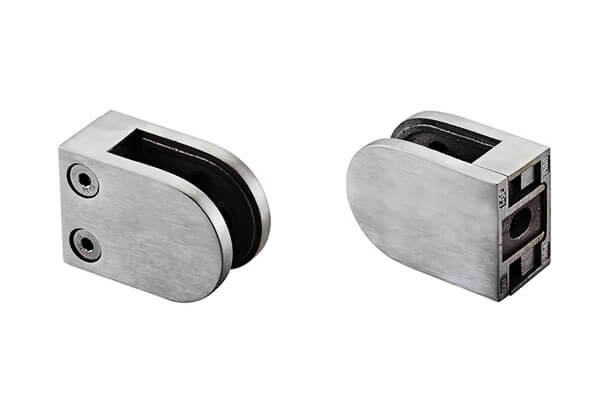
Public product examples show bracket-type castings used for machine parts, glass brackets, corner brackets, holders, and structural support hardware, which reflects the process’s fit for compact functional components.
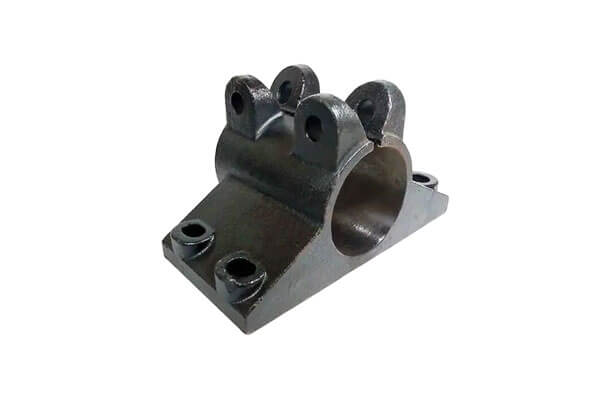
Typical bracket scenarios
- machine mounting brackets
- support brackets for hardware systems
- corner brackets and holders
- glass clamp and façade hardware
- equipment connectors and locating parts
- automotive or industrial support fittings
8. Inherent Process Limitations and Scientific Avoidance Strategies
Water glass casting is highly useful, but it is not without trade-offs. Its limitations are mostly related to katumpakan, kalidad ng ibabaw, and binder chemistry.
The key to successful use is not to ignore these limitations, but to design around them intelligently.
Limited dimensional precision and surface finish
Water glass casting cannot generally match the high precision and fine surface finish of silica sol investment casting.
The process is more economical, but the shell system is less refined, so the final casting usually requires more allowance for machining and cleanup.
This makes the process less suitable for:
- ultra-precision assembly surfaces,
- mirror-finish requirements,
- or parts where the casting itself must be the final cosmetic surface.
Avoidance strategy:
Use water glass casting for the near-net geometry, but reserve post-machining for critical mounting faces, locating holes, and other functional interfaces.
If the bracket requires ultra-high precision across most of its surfaces, silica sol casting is the better route.
Compared with silica sol shells, water glass shells generally have slightly lower density and can be more prone to sand sticking, micro-pitting, and minor surface roughness.
These are usually not catastrophic defects, but they can increase machining load and reduce visual quality if not controlled.
Avoidance strategy:
Improve the face-coat formulation, strengthen the sintering process, and apply appropriate post-cast surface finishing.
The goal is to reduce the number of defects at the shell level rather than relying entirely on cleanup afterward. A well-controlled shell process can significantly narrow the quality gap.
Residual sodium-ion influence
Water glass systems leave sodium-related residues that may slightly reduce performance in ultra-high-temperature or highly demanding alloy applications.
For ordinary structural brackets this is usually not a serious issue, but in very severe thermal service it can become a design constraint.
Avoidance strategy:
Avoid water glass casting for brackets intended for extreme high-temperature service or highly specialized alloy environments.
For those applications, silica sol precision casting is usually the safer and more stable choice.
9. Horizontal Process Comparison: Water Glass Casting vs Silica Sol Casting for Brackets
For bracket applications, the main difference between water glass casting at silica sol casting is the trade-off between cost and production efficiency laban sa precision and surface quality.
| Comparison dimension | Water Glass Casting for Brackets | Silica Sol Casting for Brackets |
| Typical dimensional tolerance grade (ISO 8062) | Karaniwan CT7–CT9. | Karaniwan CT4–CT6. |
| Tapos na ang ibabaw | Katamtaman; generally rougher than silica sol. | Better; smoother shell surface and finer reproduction. |
| Production cycle | Shorter shell-making cycle because the shell hardens by rapid chemical curing. | Longer shell-making cycle due to slower shell formation and drying. |
| Manufacturing cost | Lower-cost shell system and generally better cost efficiency for conventional brackets. | Higher cost because of more refined shell materials and longer cycle time. |
| Thick-wall forming performance | Malakas na; well suited to thick-wall, ribbed, and asymmetric bracket structures. | Also capable, but generally chosen when precision is more important than shell economy. |
Internal defect tendency |
Acceptable for most industrial brackets, but more sensitive to shell quality and surface-layer control. | Generally lower defect risk when process control is strong, especially for precision parts. |
| Machining allowance needed | Usually higher, because the as-cast surface and tolerance band are less refined. | Usually lower, because the casting blank is closer to the final geometry. |
| Best-fit bracket type | Industrial support brackets, machine brackets, vehicle support brackets, thick-wall load-bearing brackets. | Precision mounting brackets, high-fit assemblies, brackets with tighter dimensional and surface demands. |
10. Pangwakas na Salita
Water glass casting bracket is a cost-effective, high-stability and mass-producible industrial structural component formed by sodium silicate chemical curing casting technology.
Its core advantages lie in fast chemical molding speed, excellent thick-wall structural forming capability, stable mechanical load-bearing performance and superior comprehensive cost performance,
making up for the low precision of sand casting and high cost waste of silica sol casting in conventional bracket production.
Although restricted by moderate precision grade, ordinary surface finish and minor residual ion defects, targeted process optimization and post-processing can completely meet the application demands of most medium-precision industrial brackets.
With the continuous iteration of modified binder technology and intelligent production equipment, water glass casting brackets will further improve forming accuracy and surface quality,
and remain the mainstream preferred solution for mass production of medium-load industrial structural brackets in the global manufacturing industry.
Mga FAQ
What is the core advantage of water glass casting brackets compared with sand casting brackets?
Water glass casting shells have higher strength and better dimensional stability, with fewer internal defects,
higher structural compactness and lower machining allowance, delivering far better comprehensive quality than sand casting brackets.
Why not use silica sol casting for all brackets?
Silica sol casting has high precision but high cost and low efficiency.
For most conventional load-bearing brackets without ultra-high precision requirements, water glass casting can meet performance demands and greatly reduce manufacturing costs.
What is the common defect of water glass casting brackets?
Sand sticking, minor surface pits and local shrinkage porosity are the most common defects, which can be effectively controlled by optimizing shell formula and pouring process.
Is water glass casting bracket suitable for long-term vibration working conditions?
Oo nga. After stress relief heat treatment, the bracket has low residual stress and excellent fatigue resistance, adapting to long-term alternating vibration and static load service environments.