1. Panimula
UNS C83600 (commonly called leaded red brass, “85-5-5-5”) and UNS C85800 (leaded yellow brass) are two standard copper casting alloys used extensively for valves, mga bomba, fittings and general engineering castings.
They present contrasting trade-offs that drive alloy selection:
- C83600: high copper and tin content, significant lead (~4–6%) for exceptional machinability and good general corrosion resistance; historically favored for valve bodies and heavily machined castings.
- C85800: higher zinc (yellow-brass chemistry), lower lead (≤1.5%), higher casting yield and better dimensional control for thin or precision castings (permanent mold / die cast uses).
It offers good as-cast strength but requires attention for dezincification risk in aggressive waters.
This article explains both alloys in depth (komposisyon, metallurgy, casting and machining behavior, corrosion profile, mga aplikasyon), provides comparative data, and gives practical selection guidance.
2. What is UNS C83600?
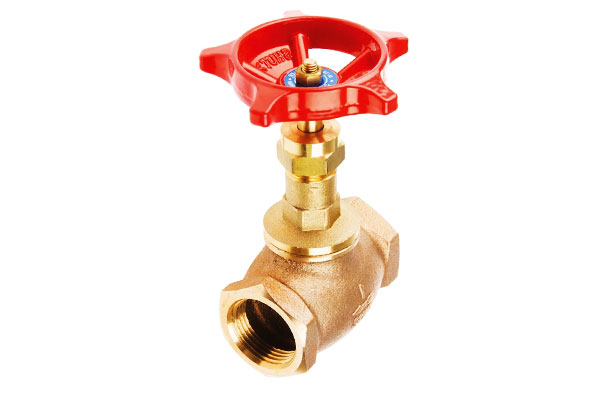
UNS C83600, historically recognized as Leaded Red tanso and colloquially termed 85-5-5-5, serves as the foundational alloy for the copper casting industry.
Its designation is derived from its nominal composition: 85% tanso, 5% tin, 5% humantong sa, at 5% sink.
Positioned within the red brass family, C83600 is distinguished by its deep reddish-bronze hue and its remarkable versatility.
It is the primary choice for engineers requiring a balanced profile of moderate strength, mataas na ductility, and exceptional pressure tightness, making it a “gold standard” for fluid-handling components.
Mga Tampok
The hallmark of UNS C83600 is its superior castability and reliability. Unlike many other copper alloys, it exhibits a narrow freezing range, which minimizes the risk of shrinkage defects.
Ang pagkakaroon ng 5% lead is not merely for machinability; it acts as a micro-structural “sealant,” filling microscopic voids during solidification to ensure the material remains pressure-tight under high-stress conditions.
Dagdag pa rito, it possesses excellent thermal conductivity and maintains its mechanical integrity at temperatures up to 450°F (232°C), allowing it to perform reliably in steam and hot-water environments.
Komposisyon ng Kemikal
To maintain its authoritative performance standards, UNS C83600 must adhere to strict elemental limits as defined by ASTM B505 and B62 specifications.
| Elemento | Weight Percentage (%) | Role in Metallurgy |
| Tanso (Cu) | 84.0 – 86.0 | Base metal; provides corrosion resistance and color. |
| Tin (Sn) | 4.0 – 6.0 | Nagpapataas ng katigasan, lakas ng loob, and seawater resistance. |
| Humantong sa (Pb) | 4.0 – 6.0 | Enhances machinability and ensures pressure tightness. |
Sink (Zn) |
4.0 – 6.0 | Acts as a deoxidizer and improves fluid flow during casting. |
| Nikel (Ni) | 1.0 max na max | Refines grain structure and improves corrosion resistance. |
| Bakal na Bakal (Fe) | 0.30 max na max | Controlled to prevent brittleness and magnetic properties. |
| Antimony (Sb) | 0.25 max na max | Limited to maintain high ductility. |
Pisikal & Mga Katangian ng Mekanikal
Values below are representative Bilang Cast ranges. Actual values depend on casting process, section thickness and heat treatment (if any). Validate with foundry samples for design.
Physical properties (typical)
| Pag-aari | Typical value |
| Densidad ng katawan | ≈ 8.83 g/cm³ (0.318 lb/in³). |
| Solidus / Liquidus | ≈ 854 °C (solidus) / 1010 °C (likido) (guide for pouring). |
| Thermal kondaktibiti | ~72 W/m·K (≈ 41.6 Btu/ft·h·°F at 20 °C). |
| Electrical conductivity | ~15 % IACS (moderate). |
| Coefficient of thermal expansion | ~17.3 ×10⁻⁶ /°C (20-200 ° C). |
Mechanical properties (typical, Bilang Cast)
| Pag-aari | Typical value / saklaw |
| Ultimate tensile strength (Mga UTS) | ~205–255 MPa (≈ 30–37 ksi) depending on process and temper |
| Magbunga ng lakas (0.5% Offset) | ~97–117 MPa (≈ 14–17 ksi) |
| Pagpapahaba (50 mm) | ~20–30% (good ductility for cast alloy) |
| Brinell hardness (HB) | ~60 HB (typical) |
| Modulus of elasticity | ~83–110 GPa (reported ~83 GPa in some sources) |
Paghahagis & Machining Performance
- Casting Excellence: C83600 is the most “forgiving” alloy for foundries. Ito ay katugma sa buhangin, sentripugal, and continuous casting mga proseso.
Its high fluidity allows for the production of intricate, thin-walled geometries that would be prone to failure in other alloys. - katumpakan machining: With a machinability rating of 84, it is optimized for high-speed CNC operations.
The lead content promotes the formation of small, easily evacuated chips, reducing tool friction and heat generation, which extends tool life and ensures a superior surface finish.
Paglaban sa kaagnasan
- Good aqueous and atmospheric corrosion resistance. C83600 performs well in potable-water, tubig dagat (in many cases) and general industrial environments.
The copper/tin matrix affords resistance to uniform corrosion; gayunpaman, leaded brasses can be susceptible to dezincification in some aggressive chemistries—C83600’s tin helps mitigate certain localized corrosion modes. - Galvanic considerations: As with all copper alloys, avoid dissimilar-metal couples that can produce galvanic corrosion in service; consider insulation/isolation where contact with steel or aluminum is unavoidable.
Typical applications
C83600 is specified where castability, machinability and corrosion resistance are required in the same package. Representative uses include:
- Mga katawan ng balbula, fittings and flanges (pagtutubero, steam, fluid handling).
- Pump components (mga impeller, mga pabahay, Magsuot ng Singsing) — especially in water service.
- Mga Gear, worm wheels and small mechanical hardware where cast shapes are economical.
- Marine fittings and general hardware exposed to wet environments.
- Ornamental castings where finish and corrosion resistance are desired but high strength is not critical.
3. What is UNS C85800?
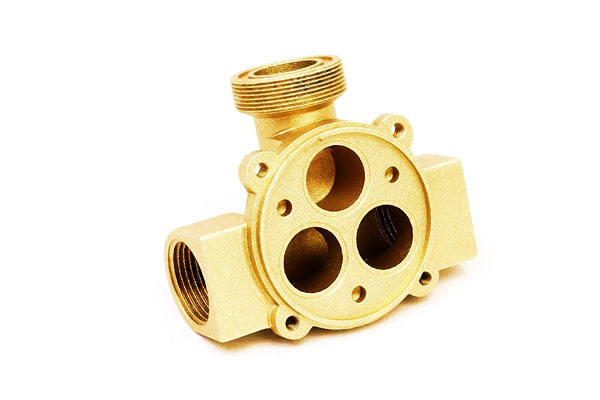
UNS C85800, categorized as a Leaded Yellow Brass, is a high-zinc copper alloy specifically engineered for the rigorous demands of mamatay sa paghahagis.
Unlike the red brasses, C85800 is characterized by its bright, golden-yellow appearance and a higher zinc content, na karaniwang saklaw mula sa 31% sa 41%.
This alloy is the primary choice for manufacturers seeking a combination of high mechanical strength, dimensional katumpakan, and cost-efficiency in high-volume production environments.
It bridges the gap between traditional sand-cast alloys and high-performance engineering materials.
Mga Tampok
The defining feature of UNS C85800 is its exceptional suitability for high-pressure die casting.
Its chemical composition is optimized to provide high fluidity and a low melting point, allowing it to be injected into complex, thin-walled molds with extreme accuracy.
This capability significantly reduces the need for extensive secondary machining, as parts can be cast to “near-net shape”.
Dagdag pa rito, the high zinc content provides a superior strength-to-weight ratio compared to red brasses, while the inclusion of lead ensures that any necessary post-cast machining is efficient and precise.
Komposisyon ng Kemikal
The performance of UNS C85800 is governed by a precise balance of copper and zinc, supplemented by alloying elements that enhance its casting and mechanical characteristics, as per ASTM B176 standards.
| Elemento | Weight Percentage (%) | Role in Metallurgy |
| Tanso (Cu) | 57.0 min | Base metal; provides ductility and foundational corrosion resistance. |
| Sink (Zn) | 31.0 – 41.0 | Primary alloying element; increases strength and reduces raw material cost. |
| Humantong sa (Pb) | 0.8 – 2.0 | Enhances machinability and aids in pressure tightness for die-cast parts. |
| Tin (Sn) | 1.5 max na max | Added to improve hardness and resistance to atmospheric corrosion. |
Aluminyo (Al) |
0.8 max na max | Acts as a grain refiner and improves the surface finish of the casting. |
| Bakal na Bakal (Fe) | 0.50 max na max | Controlled to prevent excessive hardness and tool wear during machining. |
| Mga mangganeso (Mn) | 0.25 max na max | Enhances the alloy’s response to heat and mechanical stress. |
Pisikal & Mga Katangian ng Mekanikal
Below are two clear, professional tables showing Pisikal at Mekanikal properties for UNS C85800 (leaded yellow brass).
Values are given as representative as-cast ranges together with brief notes and typical specification minima where appropriate.
Always confirm final numbers with your foundry’s material certificates and production coupons before design or acceptance.
Physical properties — UNS C85800
| Pag-aari | Tipikal / representative (Bilang Cast) | Mga Tala / typical spec |
| Densidad ng katawan | 8.40 – 8.83 g·cm⁻³ | Depends on exact chemistry and porosity. |
| Natutunaw na / Pouring range | ~900 – 1020 °C (liquidus approx. upper end) | Follow foundry recommendations for process (die vs sand). |
| Thermal kondaktibiti | ~90 – 120 W·m⁻¹·K⁻¹ | Brass-class conductivity; decreases modestly with alloy additions. |
Electrical conductivity |
~12 – 18 % IACS | Moderate electrical conduction typical of leaded brasses. |
| Coefficient of thermal expansion (20-200 ° C) | ~17 – 20 × 10⁻⁶ /°C | Useful for thermal fit and interference calculations. |
| Modulus of elasticity | ~90 – 110 GPa | Typical elastic modulus range for commercial brasses. |
| Specific heat (approx.) | ~0.38 – 0.39 kJ·kg⁻¹·K⁻¹ | Design guidance for thermal calculations. |
Mechanical properties — UNS C85800 (Bilang Cast / representative)
| Pag-aari | Typical foundry range (Bilang Cast) | Typical specification minima / notes |
| Ultimate tensile strength (Mga UTS) | ≈ 300 – 420 MPa (common range; process dependent) | Some ASTM/producer tables list ~379 MPa as a representative minimum for certain cast conditions — verify per spec. |
| Magbunga ng lakas (0.2% o 0.5% Offset) | ≈ 180 – 260 MPa | Many datasheets report yield ~200 MPa+ for die-cast variants. |
Pagpapahaba (A, %; 50 mm gauge) |
≈ 10 – 25% | Typical minimums for cast parts often ≥15% (thin vs thick sections vary). |
| Brinell / Ang tigas ng Rockwell | ≈ HB 60 – 100 (o HRB ~50–80) | Hardness rises with alloy content and faster cooling. |
| Pagkapagod & epekto nito | Variable — moderate | Fatigue performance influenced strongly by porosity and surface finish; specify testing for cyclic load parts. |
Paghahagis & Machining Performance
- Die Casting Optimization: C85800 is uniquely formulated for mataas na presyon ng mamatay paghahagis.
Its rapid solidification rate and high fluidity enable the production of intricate details and smooth surfaces that are difficult to achieve with sand-casting alloys.
Gayunpaman, it is generally avoided in sand casting due to its susceptibility to “hot tearing” and dross formation. - High-Speed Machining: With a machinability rating of 80, C85800 is highly efficient for secondary operations.
The lead content acts as an internal lubricant, facilitating the creation of small, manageable chips during drilling, pag tap sa, o paggiling, which is essential for maintaining high throughput in automated production lines.
Paglaban sa kaagnasan
While UNS C85800 offers good resistance to atmospheric corrosion and mild industrial environments, its high zinc content makes it more susceptible to dezincification than red brasses.
It performs excellently in “dry” applications or where exposure to aggressive fluids is limited.
For components in contact with soft water or acidic solutions, specialized coatings or the selection of a red brass like C83600 may be required to ensure long-term durability.
Mga Karaniwang Aplikasyon
- Automotive Systems: Mga panaklong, mga pabahay, mga bahagi ng transmisyon, and decorative interior trim.
- Industrial Hardware: Low-pressure valve bodies, mga bahagi ng pump, and general engineering parts.
- Consumer Goods: High-end locksets, hinges, mga hawakan ng pinto, and ornamental hardware requiring a polished yellow finish.
- Electrical Engineering: Connectors, switchgear components, and terminals where high strength and conductivity are required.
- Pagtutubero (Non-Critical): Decorative faucet handles and external plumbing fixtures.
4. Comprehensive Comparison: UNS C83600 vs UNS C85800
Below is a concise, professional comparison table.
Numbers are representative as-cast ranges; actual values depend on casting method, section size and heat/melt practice — always confirm with the foundry’s mill certificate and production coupons for design/acceptance.
| Comparison factor | UNS C83600 (Leaded Red-Brass / Gunmetal) | UNS C85800 (Leaded Yellow Brass) |
| Alloy family / trade name | Leaded red-brass / Gunmetal; good general-purpose cast alloy | Leaded yellow brass; free-cutting, general-purpose casting alloy |
| Typical composition (wt%) | Cu ≈ 84–86%; Sn ≈ 4–6%; Pb ≈ 4–6%; Zn ≈ 4–6%; minor Ni/Fe/Sb | Cu ≈ 57–58%; Zn ≈ 31–41%; Pb ≤ 1.5%; Sn ≤ 1.5%; minor Fe/Ni/Al |
| Densidad ng katawan | ≈ 8.80–8.90 g/cm³ | ≈ 8.40–8.83 g/cm³ |
| Natutunaw na / pouring guidance | Solidus/liquidus ~~854–1010 °C (foundry dependent) | Typical brass pour range ~~900–1020 °C (per foundry guidance) |
Typical as-cast UTS (representative) |
~205–255 MPa | ~300–420 MPa (process dependent; some specs cite ~379 MPa) |
| Typical yield strength (representative) | ~97–117 MPa | ~180–260 MPa |
| Pagpapahaba (typical) | ~20–30% (magandang ductility) | ~10–25% (varies with section & proseso ng) |
| Ang katigasan ng ulo (typical) | ~~60 HB (Bilang Cast) | ~HB 60–100 (process dependent) |
| Machinability | Mabuti na lang — lead aids chip control; reasonable production speeds | Napakahusay / free-cutting — leaded yellow brass is optimized for high machining productivity |
| Katatagan (foundry behavior) | Napakaganda in sand, shell, centrifugal and investment; tin improves corrosion/wear performance | Napakaganda especially in die-casting and sand casting; formulated for fluidity and fast cycle |
Wear / bearing behavior |
Mabuti na lang — tin improves embedability; used for bushings and bearing parts | Katamtaman — usable for many mechanical parts, but not specialized bearing bronze |
| Paglaban sa kaagnasan (wet/marine) | Good to very good — tin enhances seawater performance; preferred for marine pump/valve parts | Mabuti na lang for general aqueous environments; dezincification risk exists in aggressive chemistries |
| Dezincification susceptibility | Mababa ang (tin and higher Cu mitigate DZ risk) | Higher potential (brass family) — consider environment and possible anti-DZ alloying or inhibitors |
| Pagsali sa / pag aayos ng | Brazing preferred; welding difficult and needs specialist technique | Brazing preferred; welding generally not recommended for production |
Regulatory / health note |
Lead content (~4–6%) — hindi naman suitable for many potable-water applications; check local regulations | Lead content (≤1.5%) — may still be restricted for potable-water; verify regional limits |
| Typical applications | Mga Bushing, mga manggas, pump & Mga Bahagi ng Balbula, mga fitting ng marine, small gears, pandekorasyon na mga castings | Mga Valve, mga angkop na bagay, pump parts, die-cast housings, mga gears, high-volume machined parts |
| Relative cost & Availability | Katamtaman (tin adds cost) | Generally economical and widely available for die and sand casting |
Selection guidance (when to choose) |
Choose when corrosion resistance in wet/marine service and bearing/tribological performance are priorities. | Choose when high machining productivity and cost efficiency are priorities for general-purpose components. |
| Specification advice | Specify UNS C83600 plus casting process, mechanical minima, NDT and traceability. | Specify UNS C85800 plus casting process, mechanical minima, NDT and regulatory (humantong sa) constraints. |
5. Konklusyon
UNS C83600 and C85800 address different engineering priorities:
C83600 is a copper-rich red brass optimized for excellent post-cast machinability, strong general corrosion resistance and low dezincification risk, making it the pragmatic choice for heavily machined valve bodies and pump housings where lead content is permitted;
C85800 is a high-zinc yellow brass optimized for permanent-mold/pressure die casting, thin-walled near-net shapes and higher as-cast strength with lower lead but greater susceptibility to dezincification.
The final selection between the two alloys should be based on three core factors: service environment (corrosive vs. dry indoor), mechanical performance requirements (ductility/impact resistance vs. basic static strength), and production volume and budget constraints.
Mga FAQ
Are UNS C83600 and C85800 interchangeable?
Hindi. They differ materially in composition, pag-uugali ng kaagnasan, casting characteristics and regulatory profile.
Substitution requires re-qualification (mechanical tests, corrosion tests, machining trials and regulatory verification).
Which alloy machines better?
C83600 machines superiorly due to its 4–6% lead content, producing better chip control, less tool wear and higher machining productivity.
C85800 machines reasonably well but usually requires optimized tooling and feeds.
What about dezincification risk?
C85800 (high Zn) is more susceptible to dezincification in aggressive water chemistries (low pH, high chloride, high oxygen). C83600 (low Zn, higher Cu/Sn) is intrinsically more resistant.
If dezincification risk exists, choose a dezincification-resistant alloy or protective/coating measures and test per relevant standards.
How much does casting method affect the choice?
Significantly. C85800 shines in permanent-mold and die-casting for thin walls and near-net shapes, delivering higher yields and better dimensional control.
C83600 performs best for sand, investment or centrifugal castings combined with heavy machining.