
Executive summary
Hindi kinakalawang na asero are iron-based alloys defined by their ability to form and maintain a thin, self-healing chromium oxide (Cr₂O₃) passive film.
This passive film — established when chromium content reaches roughly ≥10.5 wt% — is the foundation of their corrosion resistance and makes stainless steel distinct from plain carbon steels.
By adjusting alloying (Cr, Ni, Mo, N, Ti, Nb, atbp.) at microstructure (austenitic, ferritic, martensitic, duplex, precipitation-hardening), engineers obtain a broad palette of combinations of corrosion performance, lakas ng loob, tigas na tigas, fabricability and appearance.
1. What is stainless steel?
Kahulugan. Stainless steel is an iron-based alloy containing sufficient chromium (nominally ≥10.5 wt%) to form a continuous, protective chromium-oxide (Cr₂O₃) passive layer in oxygenated environments.
That passive film is thin (nm scale), self-repairing when oxygen is present, and is the fundamental basis for the material’s corrosion resistance.

Core Alloying Elements and Their Functions
- Chromium (Cr, 10.5%–30%): The most critical element. At sufficient concentrations, Cr reacts with oxygen to form a dense, adherent Cr₂O₃ passive film (2–5 nm thick) that blocks corrosive media from attacking the iron matrix.
Higher Cr content enhances general corrosion resistance but may increase brittleness if not balanced with other elements. - Nikel (Ni, 2%–22%): Stabilizes the austenitic phase (kubiko na nakasentro sa mukha, FCC) sa temperatura ng kuwarto, improving ductility, tigas na tigas, at weldability.
Ni also enhances resistance to stress corrosion cracking (SCC) in chloride environments and low-temperature toughness (prevents brittle fracture below 0℃). - Molibdenum (Mo, 0.5%–6%): Significantly improves resistance to pitting and crevice corrosion (lalo na sa mga kapaligiran na mayaman sa klorido) by increasing the passive film’s stability.
Mo forms molybdenum oxide (MoO₃) to repair local film damage, making it essential for marine and chemical applications. - Titanium (Ti) and Niobium (Nb, 0.1%–0.8%): Carbide stabilizers. They preferentially combine with carbon (C) to form TiC or NbC,
preventing the formation of Cr₂₃C₆ at grain boundaries during welding or high-temperature service—this avoids “chromium depletion” and subsequent intergranular corrosion (IGC). - Mga mangganeso (Mn, 1%–15%): A cost-effective alternative to Ni for austenite stabilization (hal., 200-series stainless steel).
Mn improves strength but may reduce corrosion resistance and toughness compared to Ni-bearing grades. - Carbon (C, 0.01%–1.2%): Influences hardness and strength. Low C content (≤0.03%, L-grade) minimizes carbide formation and IGC risk; high C content (≥0.1%, martensitic grades) enhances hardenability via heat treatment.
Microstructural Classification and Key Characteristics
Austenitic hindi kinakalawang na asero (300-serye ng mga, 200-serye ng mga)
- Komposisyon: High Cr (16%–26%), Ni (2%–22%) or Mn, mababang C (≤0.12%). Typical grades: 304 (18Cr-8Ni), 316 (18Cr-10Ni-2Mo), 201 (17Cr-5Ni-6Mn).
- Microstructure: Fully austenitic (FCC) sa temperatura ng kuwarto, di magnetic (except after cold working).
- Core Trait: Napakahusay na ductility, tigas na tigas (even at cryogenic temperatures down to -270℃), at weldability; balanced corrosion resistance.
Ferritic hindi kinakalawang na asero (400-serye ng mga)
- Komposisyon: High Cr (10.5%–27%), mababang C (≤0.12%), no or minimal Ni. Typical grades: 430 (17Cr), 446 (26Cr).
- Microstructure: Ferritic (cubic na nakasentro sa katawan, BCC) at all temperatures, magnetic.
- Core Trait: Epektibo ang gastos, good general corrosion resistance, and oxidation resistance at high temperatures (up to 800℃); limited ductility and weldability.
Martensitic hindi kinakalawang na asero (400-serye ng mga, 500-serye ng mga)
- Komposisyon: Medium Cr (11%–17%), high C (0.1%–1.2%), low Ni. Typical grades: 410 (12Cr-0.15C), 420 (13Cr-0.2C), 440C (17Cr-1.0C).
- Microstructure: Martensitiko (body-centered tetragonal, BCT) after quenching and tempering; magnetic.
- Core Trait: Mataas na katigasan at paglaban sa pagsusuot (HRC 50–60 after heat treatment); moderate corrosion resistance.
Duplex hindi kinakalawang na asero (2205, 2507)
- Komposisyon: Balanced austenitic-ferritic phases (50%±10% each), high Cr (21%–27%), Ni (4%–7%), Mo (2%–4%), N (0.1%–0.3%). Typical grades: 2205 (22Cr-5Ni-3Mo), 2507 (25Cr-7Ni-4Mo).
- Microstructure: Dual-phase (FCC + BCC), magnetic.
- Core Trait: Superior strength (twice that of austenitic grades) and resistance to SCC, pitting, and crevice corrosion; suitable for harsh marine and chemical environments.
Pagpapatigas ng ulan (PH) Hindi kinakalawang na asero (17-4PH, 17-7PH)
- Komposisyon: Cr (15%–17%), Ni (4%–7%), Cu (2%–5%), Nb (0.2%–0.4%). Typical grade: 17-4PH (17Cr-4Ni-4Cu-Nb).
- Microstructure: Martensitic or austenitic base with precipitates (Cu-rich phases, NbC) after aging treatment.
- Core Trait: Ultra-high strength (lakas ng paghatak >1000 MPa) at magandang paglaban sa kaagnasan; used in high-load aerospace and medical applications.
2. Core Performance: Paglaban sa kaagnasan
Corrosion resistance is the defining property of stainless steel, rooted in the passive film’s stability and alloying element synergies. Different grades exhibit distinct resistance to specific corrosion mechanisms.
Passive Film Mechanism and General Corrosion Resistance
The Cr₂O₃ passive film forms spontaneously in oxygen-containing environments (hangin, tubig) and is self-healing—if damaged (hal., mga gasgas na), Cr in the matrix rapidly reoxidizes to repair the film.
General corrosion (uniform oxidation) occurs only when the film is destroyed, such as in strong reducing acids (hydrochloric acid) or high-temperature reducing atmospheres.
- Mga marka ng Austenitic (304, 316): Resist general corrosion in atmospheric, fresh-water, and mild chemical environments. 316 nalampasan ang mga 304 in chloride-rich media due to Mo addition.
- Ferritic grades (430): Good general corrosion resistance in air and neutral solutions but susceptible to pitting in high-chloride environments.
- Duplex grades (2205): Exceptional general corrosion resistance, combining Cr’s film-forming ability with Mo’s pitting resistance.
Specific Corrosion Types and Grade Adaptability
Pitting at Crevice Corrosion
Pitting corrosion occurs when chloride ions (Cl⁻) penetrate local defects in the passive film, forming small, deep corrosion pits.
Crevice corrosion is similar but localized in narrow gaps (hal., weld seams, fastener interfaces) where oxygen depletion accelerates corrosion.
- Key Influencing Elements: Mo and N significantly improve resistance—each 1% Mo addition reduces the critical pitting temperature (CPT) by ~10℃.
316 (CPT ≈ 40℃) nalampasan ang mga 304 (CPT ≈ 10℃); 2507 duplex steel (CPT ≈ 60℃) is ideal for seawater applications. - Preventive Measures: Use Mo-bearing grades, avoid crevice designs, and perform passivation treatments (nitric acid immersion) to enhance film integrity.
Intergranular na kaagnasan (IGC)
IGC arises from chromium depletion at grain boundaries: during welding or high-temperature service (450–850℃), carbon combines with Cr to form Cr₂₃C₆, leaving a Cr-depleted zone (Cr < 10.5%) that loses passivity.
- Resistant Grades: L-grades (304L, 316L, C ≤ 0.03%), stabilized grades (321 with Ti, 347 with Nb), and duplex grades (mababang C + N stabilization).
- Pagbawas: Pagkatapos ng hinang init paggamot (solution annealing at 1050–1150℃) to dissolve Cr₂₃C₆ and redistribute Cr.
Stress kaagnasan pagbasag (SCC)
SCC occurs under the combined action of tensile stress and corrosive media (hal., klorido, caustic solutions), leading to sudden brittle fracture.
Mga marka ng Austenitic (304, 316) are susceptible to SCC in hot chloride environments (>60℃), while ferritic and duplex grades exhibit higher resistance.
- Resistant Grades: 2205 duplex steel, 430 ferritic steel, and PH grades (17-4PH).
- Pagbawas: Reduce tensile stress (pag annealing ng stress), use low-Cl⁻ environments, or select duplex grades.
High-temperature and oxidation resistance
Oxidation resistance improves with Cr and Si; high-Cr ferritics (hal., 446 with ≈25–26% Cr) resist oxidation to ~800 °C. Austenitics like 310S (≈25% Cr, 20% Ni) are used for oxidation resistance up to ~1 000 °C.
For continuous high-temperature strength or carburizing atmospheres, select purpose-designed heat-resistant alloys or Ni-base superalloys.
3. Mga Katangian ng Mekanikal
Stainless steel’s mechanical properties vary widely by microstructure and heat treatment, enabling customization for load-bearing, hindi lumalaban sa pagsusuot, or cryogenic applications.
Mechanical snapshot (typical, ranges):
| Family / typical grade | 0.2% proof (MPa) | Mga UTS (MPa) | Pagpapahaba (%) | Typical hardness |
| 304 (annealed na nga ba) | 190–240 | 500–700 | 40–60 | HB ~120–200 |
| 316 (annealed na nga ba) | 200–260 | 500–700 | 40–55 | HB ~120–200 |
| 430 (ferritic) | 200–260 | 400–600 | 20–30 | HB ~130–220 |
| 410 (pinawi ang & tempered) | 400–900 | 600–1000 | 8–20 | HRC variable (can reach >40) |
| 2205 duplex (solusyon) | 450–520 | 620–850 | 20–35 | HB ~220–300 |
| 17-4PH (may edad na) | 700–1100 | 800–1350 | 5–15 | HB/HRC depends on age (very high strength) |
Ductility at Toughness
- Mga marka ng Austenitic: Napakahusay na ductility (elongation at break 40%–60%) at tigas na tigas (notch impact toughness Akv > 100 J sa temperatura ng kuwarto).
They retain toughness at cryogenic temperatures (hal., 304L Akv > 50 J at -200℃), suitable for LNG storage and cryogenic vessels. - Ferritic grades: Moderate ductility (elongation 20%–30%) but poor low-temperature toughness (brittle transition temperature ~0℃), limiting use in cold environments.
- Martensitic grades: Low ductility (elongation 10%–15%) and toughness in the quenched state; tempering improves toughness (Akv 30–50 J) but reduces hardness.
- Duplex grades: Balanced ductility (elongation 25%–35%) at tigas na tigas (Akv > 80 J sa temperatura ng kuwarto), with good low-temperature performance (brittle transition temperature < -40℃).
Paglaban sa Pagkapagod
Fatigue resistance is critical for components under cyclic loads (hal., mga shaft, mga bukal).
Mga marka ng Austenitic (304, 316) have moderate fatigue strength (200–250 MPa, 40% of tensile strength) in the annealed state; cold working increases fatigue strength to 300–350 MPa but raises sensitivity to surface defects.
Duplex grades (2205) exhibit higher fatigue strength (300–380 MPa) due to their dual-phase structure, while PH grades (17-4PH) reach 400–500 MPa after aging.
Mga paggamot sa ibabaw (pag peening ng shot, passivation na lang) further enhance fatigue life by reducing stress concentrations and improving film stability.
4. Mga Katangian ng Thermal at Electrical
Thermal properties
- Thermal kondaktibiti (20 °C): 304 ≈ 16 W·m⁻¹·K⁻¹; 316 ≈ 15 W·m⁻¹·K⁻¹; 430 ≈ 25–28 W·m⁻¹·K⁻¹. Stainless steels conduct heat much less effectively than carbon steel or aluminium.
- Coefficient of thermal expansion (20-100 ° C): Austenitics ≈ 16–17 ×10⁻⁶ K⁻¹; ferritics ≈ 10–12 ×10⁻⁶ K⁻¹; duplex ≈ 13–14 ×10⁻⁶ K⁻¹.
Austenitics’ higher CTE leads to larger thermal movements and greater welding distortion risks. - Lakas ng mataas na temperatura: Austenitics retain strength at moderate temperatures; specialized grades (310S, heat-resistant ferritics) extend maximum use temperature. For continuous creep applications, choose creep-resistant steels or Ni-based alloys.
Mga Katangian ng Elektriko
Stainless steel is a moderate electrical conductor, with resistivity higher than copper and aluminum but lower than non-metallic materials.
Mga marka ng Austenitic (304: 72 × 10⁻⁸ Ω·m) have higher resistivity than ferritic grades (430: 60 × 10⁻⁸ Ω·m) due to alloying element additions.
Its electrical conductivity is not suitable for high-efficiency conductors (dominated by copper/aluminum) but suffices for grounding rods, electrical enclosures, and low-current components where mechanical strength and corrosion resistance are prioritized.
5. Processing Performance
Stainless steel’s processability (hinang, pagbuo ng, machining) is critical for industrial manufacturing, with significant differences across grades.

Welding Performance
Weldability depends on microstructure, nilalaman ng carbon, and alloying elements:
- Mga marka ng Austenitic (304, 316): Excellent weldability via arc welding, gas welding, at laser hinang.
Low C grades (304L, 316L) and stabilized grades (321, 347) avoid IGC; post-weld passivation enhances corrosion resistance. - Ferritic grades (430): Poor weldability due to grain coarsening and brittleness in the heat-affected zone (HAZ). Welding requires low heat input and preheating (100–200℃) to reduce HAZ cracking.
- Martensitic grades (410): Moderate weldability. High C content causes HAZ hardening and cracking; preheating (200–300℃) and post-weld tempering (600–700℃) are mandatory.
- Duplex grades (2205): Good weldability but requires strict heat control (interpass temperature < 250℃) to maintain phase balance (50% austenite/ferrite). Post-weld solution annealing (1050–1100℃) restores corrosion resistance.
Forming Performance
Formability is linked to ductility and work hardening rate:
- Mga marka ng Austenitic: Excellent formability due to high ductility and low work hardening rate.
They can be deep-drawn, tinatakan na ng selyo, nakabaluktot, and rolled into complex shapes (hal., 304 for food cans, architectural panels). - Ferritic grades: Moderate formability but prone to cracking during cold forming due to low ductility; warm forming (200–300℃) improves workability.
- Martensitic grades: Poor cold formability (mababang ductility); forming is typically performed in the annealed state, na sinusundan ng pagpapawi at pagtitimpi.
- Duplex grades: Good formability (katulad ng 304) but requires higher forming force due to higher strength.
Machining Performance
Machinability is influenced by hardness, tigas na tigas, and chip formation:
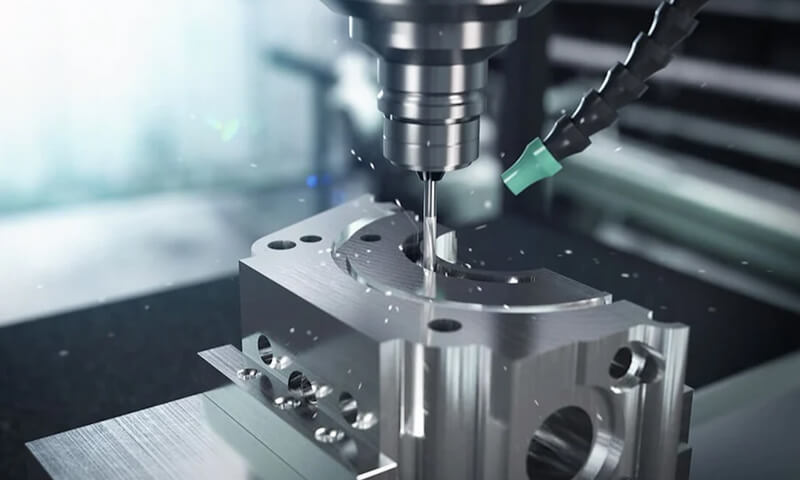
- Mga marka ng Austenitic: Poor machinability due to high toughness, pagpapatigas ng trabaho, and chip adhesion to cutting tools. Machining requires sharp tools, low feed rates, and cutting fluids to reduce wear.
- Ferritic grades: Moderate machinability, better than austenitic grades but worse than carbon steel.
- Martensitic grades: Good machinability in the annealed state (HB 180–220); hardening increases difficulty, requiring cemented carbide tools.
- PH grades: Moderate machinability in the solution-annealed state; aging hardens the material, making post-aging machining impractical.
6. Functional Properties and Special Applications
Beyond core performance, stainless steel’s functional properties (biocompatibility, tapos sa ibabaw, magnetic mga katangian) expand its application scope.
Biocompatibility
Mga marka ng Austenitic (316L, 316LVM) and PH grades (17-4PH) are biocompatible—they are non-toxic, non-irritating, and resistant to bodily fluids (blood, tissue).
316LVM (mababa ang carbon, vacuum melted) is used for surgical implants (bone plates, Mga tornilyo, Mga stent) due to its high purity and corrosion resistance in physiological environments.
Surface modifications (buli na, electrochemical etching) further enhance biocompatibility by reducing bacterial adhesion.
Surface Properties and Aesthetics
Stainless steel’s surface can be tailored for aesthetics and functionality:
- Mechanical finishes: 2B, No.4 (nagsipilyo), BA (bright annealed), mirror. Choose finish for intended aesthetic and cleanability.
- Electropolishing: improves surface smoothness and corrosion resistance; commonly used in medical/food equipment.
- Chemical passivation: nitric or citric acid treatments remove free iron and augment the passive layer, improving corrosion resistance for food and medical applications.
- Coloration & mga patong na patong: PVD or organic coatings can add color or additional protection; adhesion requires proper surface prep.
Mga Katangian ng Magnetic
Magnetism is determined by microstructure:
- Mga marka ng Austenitic: Non-magnetic in the annealed state; cold working induces weak magnetism (due to martensitic transformation) but does not affect corrosion resistance.
- Ferritic, martensitic, and duplex grades: Magnetic, suitable for applications requiring magnetic responsiveness (hal., magnetic separators, sensor components).
7. Typical applications by family
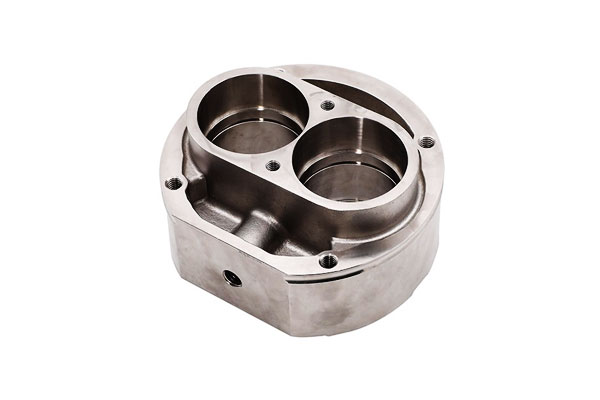
- Austenitic (304/316): pagproseso ng pagkain, architectural cladding, chemical plant, cryogenics.
- Ferritic (430/446): pandekorasyon trim, automotive exhausts (446 high-temp), Mga Kagamitan.
- Martensitiko (410/420/440C): cutlery, Mga balbula, mga shaft, wear parts.
- Duplex (2205/2507): langis & gas (maasim na serbisyo), seawater systems, chemical process equipment.
- PH (17-4PH): aerospace actuators, high-strength fasteners, applications demanding high strength with moderate corrosion resistance.
8. Comparison with Competing Materials
Material selection requires balancing mekanikal na pagganap, paglaban sa kaagnasan, bigat ng katawan, thermal pag uugali, mga katangian ng katha, at life-cycle cost.
The comparison below focuses on stainless steel versus the most commonly considered metallic alternatives in engineering practice.
| Pag-aari / characteristic | Hindi kinakalawang na asero (304 / 316, annealed na nga ba) | Carbon bakal (banayad na / istruktura) | Aluminyo haluang metal (6061-T6) | Titanium alloy (Ti-6Al-4V) |
| Densidad ng katawan (g·cm⁻³) | ≈ 7.7–8.0 | ≈ 7.85 | ≈ 2.70 | ≈ 4.43 |
| Ang modulus ni Young (GPa) | ~190–210 | ~200 | ~69 | ~110 |
| Thermal kondaktibiti (W·m⁻¹·K⁻¹) | ~15–25 | ~45–60 | ~150–170 | ~6–8 |
| Typical tensile strength, Mga UTS (MPa) | ~500–700 | ~350–600 | ~310–350 | ~880–950 |
| Typical yield strength, Rp0.2 (MPa) | ~200–250 | ~200–450 | ~270–300 | ~800–880 |
| Pagpapahaba (%) | ~40–60 | ~10–30 | ~ 10–12 | ~10–15 |
| Pangkalahatang paglaban sa kaagnasan | Napakahusay; Mo-alloyed grades resist chlorides well | Poor without protection | Good in many atmospheres; sensitive to galvanic effects | Napakahusay (especially marine and biomedical) |
| Max. practical continuous service temperature | ~300–400 °C (higher for special grades) | ~400–500 °C | ~150–200 °C | ~400–600 °C |
Weldability / pagiging formable |
Mabuti na lang (austenitics excellent; duplex requires control) | Napakahusay | Mabuti na lang; heat control required | Katamtaman; specialized procedures |
| Machinability | Katamtaman (work-hardening tendency) | Mabuti na lang | Mabuti na lang | Fair (tool wear, low conductivity) |
| Relative material cost (stainless = 1.0) | 1.0 | ~0.2–0.4 | ~1.0–1.5 | ~4–8 |
| Recyclability | Mataas na | Mataas na | Mataas na | Mataas na |
| Typical use drivers | Paglaban sa kaagnasan, hygiene, tibay ng katawan, mga estetika | Mababang gastos, high stiffness | Magaan ang timbang, thermal kondaktibiti | Strength-to-weight, paglaban sa kaagnasan |
9. Pangwakas na Salita
Stainless steels are a versatile materials family that combines corrosion resistance, mechanical performance and aesthetic flexibility.
Successful use depends on aligning grade, microstructure and finish with the service environment and manufacturing process.
Use PREN and validated corrosion tests as screening tools for chloride environments; control fabrication heat history and surface condition; require MTRs and first-article corrosion/ mechanical qualification for critical systems.
When properly specified and processed, stainless steels deliver long service life and competitive life-cycle economics.
Mga FAQ
Ay 316 always better than 304?
Not always. 316’s Mo content provides materially better pitting resistance in chloride environments; but for non-chloride indoor applications 304 is usually adequate and more economical.
What PREN value should I target for seawater service?
Target PREN ≥ 35 for moderate seawater exposure; for splash or warm seawater consider PREN ≥ 40+ (duplex or superaustenitics). Always validate with site-specific testing.
How do I avoid intergranular corrosion after welding?
Use low-carbon (L) or stabilized grades, minimize time in the sensitization range, or perform solution annealing and pickling when practical.
When to choose duplex instead of austenitic stainless?
Choose duplex when you need greater strength and improved chloride/pitting and SCC resistance at a lower life-cycle cost than superaustenitics—common in oil & gas, desalination and heat-exchanger applications.