1. Panimula
Nawawalang waks (pamumuhunan) paghahagis ng mga is prized for its ability to reproduce fine detail, thin sections and complex geometry with excellent surface finish and relatively tight tolerances.
Achieving consistent results is not just about geometry or machine settings — it is fundamentally a materials problem.
The wax blend, investment chemistry, refractory aggregates, core composition, crucible and alloy chemistry all interact thermally, chemically and mechanically during dewax, burnout and metal injection.
Choosing the right materials for each step is the difference between a high-yield production run and repeated rework.
2. Overview of the lost-wax casting workflow
Key stages and the primary material elements involved:
- Patterning (waks) — pattern wax or injection-moulded thermoplastic; gating/wax sprue systems.
- Assembly & gating — wax rods (sprues), base plates.
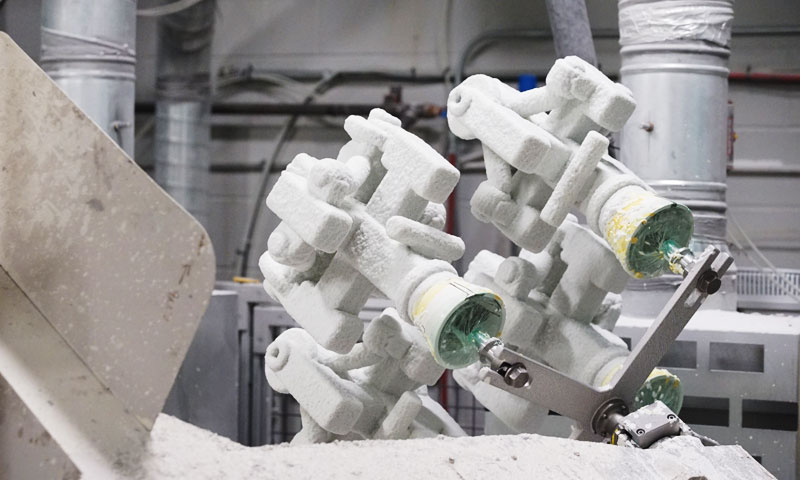
- Shell build (pamumuhunan) — slurry (binder + fine refractory), stucco/aggregate coats.
- Pagpapatayo ng mga / Pag-aalis ng Wax — steam/autoclave or oven removal of organic pattern.
- Pagkasunog / shell sinter — controlled ramp to oxidize/burn residual organics and sinter the shell to required strength.
- Natutunaw na & pagbubuhos ng — crucible material plus atmosphere (air/inert/vacuum) and pouring system (gravity / sentripugal / vacuum).
- Paglamig & shell removal — mechanical or chemical shell removal; pagtatapos ng.
Each stage uses different families of materials optimized for the temperatures, Kimika, and mechanical loads at that stage.
3. Wax & pattern materials
Mga function: carry geometry, define surface finish, and provide predictable expansion during shell building.

Common wax / pattern material families
| Materyal / Family | Typical composition | Typical melting / softening range (°C) | Typical linear shrinkage (as-produced) | Typical residual ash after burnout | Best use / notes |
| Paraffin-rich injection wax | Paraffin + small modifier | 45-70 ° C | ~0.2–0.5% | 0.05–0.2 wt% | Mababang gastos, good finish; brittle if pure — usually blended. |
| Microcrystalline wax blends | Microcrystalline wax + paraffin + tackifiers | 60–95 °C | ~0.1–0.3% | ≤0.1 wt% (if formulated low-ash) | Improved toughness and cohesion; preferred for complex assemblies. |
| Pattern wax (engineered blends) | Paraffin + microcrystalline + mga polimer (PE, EVA) + mga stabilizer | 55–95 °C | ~0.10–0.35% | ≤0.05–0.1 wt% | Standard foundry pattern wax: tuned flow, shrink and ash. |
Beeswax / natural wax blends |
Beeswax + Mga Modifier | 60–65 °C (beeswax) | ~0.2–0.6% | ≤0.1–0.3% | Good surface gloss; used in small/handcrafted parts; variable ash. |
| Hot-melt thermoplastic patterns | Thermoplastic elastomers / polyolefins | 120-200 ° C (depending on polymer) | variable | very low ash if polymer burns clean | Used for special patterns; lower handling creep but require higher dewax energy. |
| 3D-printed castable resins (SLA/DLP) | Photopolymer resins formulated for burnout | glass transition ~50–120 °C; decomposition 200–600 °C | depends on resin; often ~0.2–0.5% | 0.1–0.5% (resin dependent) | Excellent geometry freedom; require strict dewax/burn protocols to avoid residue. |
Key properties and why they matter
- Flow-ability for injection: affects fill and gate quality.
- Pag urong & pagpapalawak ng thermal: must match investment expansion characteristics to avoid shell cracking or dimensional error.
- Ash content: low retained carbon/ash on burnout reduces shell-metal reactions.
- Lakas ng loob & pagkapagod: patterns must survive handling and shell rotation without distortion.
Practical numbers & notes
- Typical wax injection shrinkage: ~0.1–0.4% linear depending on wax and temperature control.
- Gamitin ang low-ash formulations for high-precision jewelry and reactive alloys.
4. Pamumuhunan (refractory) systems — types and selection criteria
Investment = binder + refractory powder. Choice is driven by maximum metal pouring temperature, required surface finish, thermal expansion control, and resistance to reaction with molten metal.

Major investment families
- Gypsum-bonded investments (plaster-based)
-
- Gamitin ang: jewelry and low-melting alloys (ginto na, pilak na pilak, pewter) where pouring temps < ~1,000 °C.
- Mga kalamangan: mahusay na ibabaw tapusin, low permeability (good for fine details).
- Limits: poor strength above ≈1,000 °C; decomposes and softens — not suitable for steels or high-temp alloys.
- Phosphate-bonded investments (hal., sodium or magnesium phosphate)
-
- Gamitin ang: mataas na temperatura alloys (hindi kinakalawang na asero, mga haluang metal na nikelado) and applications requiring greater refractory strength up to ~1,500 °C.
- Mga kalamangan: higher hot strength, better resistance to metal-reaction and cracking.
- Limits: poorer surface polish versus gypsum in some formulations; more complex mixing.
- Silica sol / colloidal silica bonded (alumina/silica mixtures)
-
- Gamitin ang: precision parts over a wide temperature range; adaptable with zircon or alumina additions.
- Mga kalamangan: good high-temperature stability, fine surface finish.
- Limits: control of thermal expansion and setting time is critical.
- Zircon / alumina (oxide) reinforced investments
-
- Gamitin ang: reactive alloys (titan, high-temperature nickel alloys) — reduces metal-investment reaction.
- Mga kalamangan: very high refractoriness, low reactivity with active metals.
- Limits: significantly higher cost; reduced polish in some cases.
Investment selection checklist
- Max pouring temperature (choose investment rated above melt temp + margin ng kaligtasan).
- Desired surface finish (Ra target).
- Thermal expansion matching — offset to compensate wax expansion and metal shrinkage.
- Permeability & lakas ng loob — to resist casting pressure and centrifugal/vacuum loads.
- Chemical reactivity — especially for reactive metals (Ti, Mg, Al).
5. Stucco, coatings and shell-building materials
Shells are built by alternating slurry dips at stucco (coarser refractory grains). Materials and particle sizes control shell thickness, permeability and mechanical strength.
- Slurry: investment binder + fine refractory (typically 1–10 µm) for the rub-out and fine surface reproduction.
- Stucco: coarser silica/zicron/alumina particles (20-200 μm) that build body thickness.
- Mga patong / washes: specialized top coats (hal., alumina or zircon rich) to act as barrier layers for reactive alloys and to improve pattern fineness or reduce metal-investment reaction.
Selection tips
- Use a zircon/alumina barrier wash for titanium and reactive alloys to minimize alpha-case and chemical reaction.
- Limit stucco particle size in the final coats to achieve required surface polish.
6. Cores and core materials (permanente na & soluble)
Cores create internal voids. lost-wax casting uses:
- Keramika (refractory) cores — silica, zircon, alumina based; chemically bonded (resin or sodium silicate) or sintered.
- Soluble (asin, waks) cores — salt cores leached after casting for complex internal channels where ceramic cores are impractical.
- Hybrid cores — ceramic core encased in investment shell to survive dewaxing and burnout.
Key properties
- Strength at shell temperatures to survive handling and burnout.
- Compatibility with investment expansion (matching green strength and sintering behavior).
- Permeability to allow gases to escape during pouring.
7. Crucibles, pouring systems & tooling materials
Choice of crucible and pouring materials depends on haluang metal kimika, melting temperature, at reactivity.
Common crucible materials
- Graphite / carbon crucibles: widely used for copper, tanso, tanso, and many non-ferrous alloys. Mga kalamangan: Mahusay na thermal kondaktibiti, cheap.
Mga Limitasyon: react with some melts (hal., titan) and cannot be used in oxidizing atmospheres for some alloys. - Alumina (Al O) crucibles: chemically inert for many alloys and usable to higher temperatures.
- Zirconia crucibles: very refractory and chemically resistant — used for reactive alloys (but costlier).
- Silikon karbid (SiC)-lined crucibles: high thermal shock resistance; good for some aluminum melts.
- Ceramic-graphite composites at crucible coatings (oxidation barriers) are used to extend life and minimize contamination.
Pouring systems
- Gravity pour — simplest, used for jewelry and low-volume.
- Sentripugal paghahagis — common for jewelry to force metal into fine detail; note increased mold and metal stresses.
- Vacuum-assisted / vacuum pour — reduces gas entrapment and enables reactive metal casting under reduced pressure.
- Pagtunaw ng vacuum induction (VIM) and vacuum consumable electrode melting (VAR) — for high-purity superalloys and reactive metals like titanium.
Important: for reactive or high-temperature alloys (titan, nickel superalloys), use vacuum or inert gas melting and crucibles/coatings that prevent contamination, and ensure the pouring system is compatible with the metal (hal., centrifugal under vacuum).
8. Metals and alloys commonly cast by investment process
Lost-wax Casting can handle a broad alloy spectrum. Typical categories, representative melting points (°C) and engineering notes:
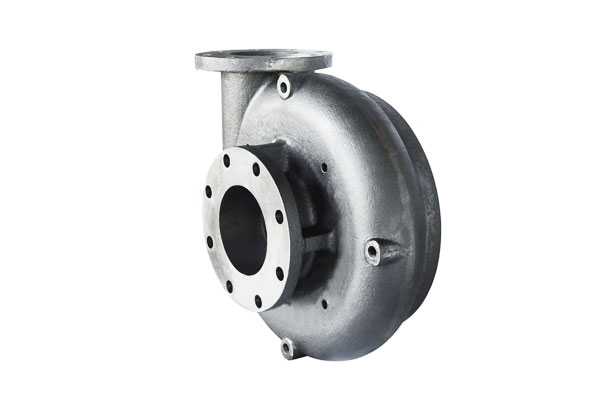
Tala: melting points listed are for pure elements or indicative alloy ranges. Always use manufacturer-provided melting/solidification data for precise process control.
| Alloy category | Representative alloys | Humigit-kumulang. melt / pour range (°C) | Practical notes |
| Mga mahalagang metal | Ginto (Au), Pilak (Ag), Platinum (Pt) | Au: 1,064°C, Ag: 962°C, Pt: 1,768°C | Mga Alahas & high-value parts; precious metals require low-ash wax and gypsum investments for fine finish; Pt needs very high temp investment or crucible. |
| tanso / Tanso mga haluang metal | Cu-Sn (tanso), Cu-Zn (tanso), Cu alloys | 900–1,080°C (depends on alloy) | Good fluidity; can be cast in standard phosphate or silica investments; watch for oxide formation and dross. |
| Aluminyo mga haluang metal | A356, AlSi7, AlSi10 | ~610–720°C | Mabilis na pagpapatibay; special investments required; reactive to carbon/graphite at high temps — use appropriate crucibles/coatings. |
Mga bakal na bakal & stainless |
400/300 series stainless, mga tool na bakal | ~1,420–1,500°C (solidus/liquidus vary) | Requires phosphate or high-alumina investments; higher pour temps → need strong shell and inert/controlled atmosphere to avoid oxidation and reactions. |
| Mga haluang metal ng nikel / mga superalloys | Inconel, Hastelloy families | ~1,350–1,500°C+ | High pour temps and rigorous control — commonly vacuum or controlled atmosphere melting; invest with zirconia/alumina mixes. |
| Titanium & Ti-alloys | Ti-6Al-4V | ~1,650–1,700°C (melting point ≈1,668°C) | Extremely reactive; investment must be zirconia/alumina and casting in vacuum or inert atmosphere (argon). Special crucibles/equipment required; alpha-case formation is a risk. |
| Zamac / Zinc die-cast alloys (rare in investment) | Zamak | ~380–420°C | Low temp; usually die cast instead, but possible for specialty investment casts. |
Practical casting temperature rule: Pouring temperature is often 20–250°C above the liquidus depending on alloy and process to ensure fill and compensate heat loss (check alloy datasheet).
9. Casting atmospheres, reactions & protective measures
Reactive alloys (Al, Ti, Mg) and high-temperature melts require careful atmosphere and shell chemistry control:
- oksihenasyon: happens in air → oxide films form on melt surface and are trapped as inclusions. Gamitin ang inert atmosphere (argon) o vacuum melts for critical alloys.
- Metal-investment chemical reaction: silica and other oxides in investments can react with molten metal to form brittle reaction layers (example: alpha-case on titanium).
Barrier washes at zircon/alumina rich top coats reduce interaction. - Carbon pickup/degassing: carbon from wax/investment decomposition can transfer into melts; adequate burnout and skimming/filtration reduce contamination.
- Hydrogen pickup (non-ferrous melts): causes gas porosity. Mitigate by degassing melts (argon purge, rotary degassers) and keeping investment dry.
Protective steps
- Gamitin ang barrier coatings for reactive metals.
- Gamitin ang vacuum o inert gas melting and pour systems when specified.
- Filtration (ceramic filters) to remove inclusions and oxides during pouring.
- Control moisture and avoid wet investments — water vapor expands rapidly during pour and causes shell failure.
10. Dewaxing, burnout and shell preheat — materials & mga temperatura
These three process stages remove organic pattern material, complete binder burnout and sinter the shell so it has the mechanical strength and thermal state required to survive pouring.

Material compatibility (investment type, barrier coats, core chemistry) and tight temperature control are critical — mistakes here cause shell cracking, gas porosity, metal-shell reactions and incorrect dimensions.
Dewaxing — methods, typical parameters and selection guidance
| Paraan | Typical temp (°C) | Typical time | Typical wax removal efficiency | Pinakamahusay para sa / Compatibility | Mga Pro / Mga Cons |
| Steam / Autoclave | 100–130 | 20–90 min (depends on mass & gating) | 95–99% | Water-glass / silica-sol shells; large assemblies | Mabilis na, gentle to shell; must control condensate & venting to avoid steam pressure damage |
| Solvent (kemikal na) Dewax | solvent bath 40–80 (solvent dependent) | 1-4 na oras (plus drying) | 97–99% | Maliit na, intricate jewelry shells or SLA castables | Very clean removal; requires solvent handling, drying step and environmental controls |
| Thermal (oven) Dewax / flash | 180–350 (pre-burn) | 0.5–3 h | 90–98% | High-temperature investments (phosphate, alumina) and parts where steam not recommended | Simple equipment; must control ramp and venting to avoid cracking |
| Flash/combination (steam + short thermal finish) | steam then 200–300 | steam 20–60 + thermal 0.5–2 h | 98–99% | Most production shells | Good compromise — removes bulk wax then burns residues cleanly |
Pagkasunog (binder burnout, organic removal and sintering)
Layunin: oxidize and remove residual organics/ashes, complete binder reactions, densify/sinter the shell to the required hot strength, and stabilize shell dimensions.
General burnout strategy (foundry practice):
- Controlled ramp from ambient → 200–300 °C ha 0.5–3 °C/min to remove volatiles slowly — holding here avoids violent vaporization that damages shells.
- Continue ramp to intermediate dwell (300-600 ° C) ha 1–5 °C/min, hold 0.5–3 h depending on shell thickness to burn binders and carbonaceous residues.
- Final ramp to sinter/hold temperature appropriate for the investment and alloy (see table below) at magbabad para sa 1-4 na oras to achieve shell strength and low residual carbon.
Recommended burnout / sintering temperature bands (typical):
| Investment family | Typical burnout / sinter temp (°C) | Mga Tala / target |
| Gypsum-bonded (plaster) | ~450–750 °C | Use for low-melting alloys (Mahahalagang Metal). Iwasan >~800 °C — plaster dehydrates/weakens. |
| Silica-sol / colloidal silica (non-reactive sols) | 800-1000 ° C | Good for general non-ferrous and some steels; adjust hold for shell thickness. |
| Phosphate-bonded | 900-1200 ° C | For steels, stainless and Ni-base superalloys — yields high hot strength and permeability. |
| Zircon / alumina reinforced investments | 1000–1250+ °C | For reactive alloys (Ti) and high pour temps — minimize metal-investment reactions. |
Shell preheat — target temperatures, soak times and monitoring
Layunin: bring shell to a stable temperature distribution close to the pouring temperature so that (a) thermal shock on contact with melt is minimized, (b) shell is fully sintered and strong, at (c) gas evolution at pour is negligible.
General guidance
- Preheat to a temperature below but near pouring temp — typically between (pour temp − 50 °C) at (pour temp − 200 °C) Depende sa Alloy, shell mass and investment.
- Soak time: 30 min → 3 h depending on shell mass and the required thermal uniformity. Thicker shells require longer soak.
- Pagkakapareho: target ±10–25 °C across the shell surface; verify with embedded thermocouples or IR thermography.
Recommended shell preheat table (praktikal):
| haluang metal / Pamilya | Typical molten metal temp (°C) | Recommended shell preheat (°C) | Soak / Oras ng Paghawak | Atmospera & notes |
| Aluminyo (A356, AlSi alloys) | 610–720 °C | 300-400 ° C | 30–90 min | Air or dry N₂; ensure shell fully dry — aluminum reacts with free carbon at high temps; keep shell below melt by comfortable margin. |
| Tanso / tanso / tanso | 900–1,090 °C | 500-700 ° C | 30–120 min | Air or N₂ depending on investment; barrier coats reduce reaction and improve finish. |
| Hindi kinakalawang na asero (hal., 316L) | 1450-1550 ° C | 600–800 °C | 1–3 h | Use phosphate/alumina investments; consider N₂/N₂-H₂ or controlled atmosphere to limit excessive oxidation. |
Nickel superalloys (Inconel 718, atbp.) |
1350–1500 °C | 750-1000 ° C | 1-4 na oras | Use high-temp zircon/alumina investments and vacuum/inert melting; shell preheat may approach pour temp for best feeding. |
| Titanium (Ti-6Al-4V) | 1650–1750 °C | 800-1000 ° C (some practices preheat closer) | 1-4 na oras | Vacuum or inert atmosphere required; use zirconia barrier washes; shell preheat and pour under vacuum/inert to prevent alpha-case. |
Below is a compact, actionable troubleshooting table linking common investment-casting defects sa materials-related root causes, diagnostic checks, at practical remedies / prevention.
Use it as a shop-floor reference when investigating runs — each row is written so the foundry technician or engineer can follow diagnostic steps and apply fixes quickly.
Quick legend:INV = investment (shell) material/binder; waks = pattern material (or 3D-printed resin); crucible = melt container/lining.
| Defect | Typical symptoms | Materials-related root causes | Diagnostic checks | Remedies / prevention (mga materyales & proseso ng) |
| Shell cracking / shell blowout | Visible radial/linear cracks in shell, shell fracture during pour or dewax | High wax expansion vs INV expansion; wet investment; trapped condensate; incompatible binder; too-fast ramp rates | Inspect shell dryness (mass loss), check dewax log, visual crack mapping; CT/UT after pour if suspected | Slow dewax and burnout ramp through 100–400 °C; ensure vents/weep holes; switch to compatible low-expansion wax; dry shells fully; adjust slurry/stucco ratio; increase shell thickness or change binder for mechanical strength |
| Gas porosity (blowholes, pinholes) | Spherical/irregular voids often near surface or subsurface | Hydrogen from wet investment; oil/solvent residues in wax; poor degassing of melt; moisture in stucco | Cross-section, radiography/X-ray to locate pores; measure moisture (oven dry); ash test; melt gas analysis or oxygen/hydrogen monitor | Thoroughly dry shells; improve dewax & longer drying; degas melt (argon rotary); vacuum-assist pour; use low-ash wax; eliminate wet stucco and control humidity |
Surface pinholes / pitting |
Small surface pits, often over entire surface | Fine residual carbon / binder reaction; poor final slurry/stucco grade; investment contamination | Visual/SEM of pit morphology; ash content test (target ≤0.1 wt% for sensitive alloys); check final stucco particle size | Use finer final stucco coat; improve slurry mix control; extend burnout hold to reduce residual carbon; use barrier wash (zircon/alumina) for reactive alloys |
| Oxide inclusions / dross entrapment | Scattered dark inclusions, slag lines, surface scabs | Oxide skin on melt due to slow pour/oxidizing atmosphere; contaminated crucible or fluxing absent | Metalograpiya; filter/ladle inspection; melt surface visual; filter clogging | Use ceramic filtration and skimming; pour under inert or controlled atmosphere if required; change crucible lining or coating; stricter charge control and fluxing |
Chemical reaction layer (alpha-case, interfacial reaction) |
Brittle oxidized / reaction layer on metal surface, poor mechanical surface | INV chemistry reacts with melt (Ti/Al vs silica); carbon uptake from binder; oxygen ingress | Cross-section metallography; depth measurement of reaction layer; XRF for oxygen/carbon | Use zircon/alumina barrier wash layers; vacuum/inert melting & pour; change investment to zirconia-rich system; reduce residual carbon (longer burnout) |
| Incomplete fill / malamig na mga shut / Mga Pagkakamali | Missing geometry, seams, fused lines, incomplete thin sections | Poor alloy fluidity for chosen investment/thermal mass; low pour temp or excessive heat loss to cold shell; wax shrinkage mismatch | Visual na inspeksyon, gating analysis, thermal imaging of shell preheat uniformity | Increase pour temp within alloy spec; preheat shell closer to pour temp; optimize gating/venting; choose higher-fluidity alloy or heat sink/chill design; reduce thin wall features or use different process (sentripugal) |
Hot tearing / mainit na pag-crack |
Irregular cracks in high-stress sections occurring on solidification | Investment restricts contraction (too rigid); alloy has wide freezing range; incompatible chill/riser design | Examine crack location relative to solidification path; review thermal simulation | Redesign geometry (add fillets, change section thickness); adjust gating and riser to promote directional solidification; consider alternative alloy with narrower freezing range |
| Poor surface finish / grainy texture | Rough or grainy cast surface, poor polishability | Coarse final stucco or aggressive slurry; contamination in investment; insufficient final slurry coats | Measure Ra, inspect final stucco particle size, check slurry solids/sieve analysis | Use finer final coat/grit, increase number of fine slurry/stucco layers, improve slurry cleanliness and mixing, control ambient dust and handling |
Dimensional error / pahina ng digmaan (shrinkage distortion) |
Features out of tolerance, warpage after pour/cool | Wax pattern shrinkage not compensated; differential shell expansion; wrong burnout/sinter schedule | Compare pattern dims vs shell; thermal expansion records; TCs in shell during burnout | Calibrate wax/shrink allowances; adjust burnout thermal expansion compensation; alter shell build (stiffer backing layers) and preheat strategy; include fixture/clamping during cool |
| Core shift / internal misalignment | Internal passages off-axis, thin walls where core moved | Weak ceramic core material or poor core support in wax assembly; core/investment adhesion mismatch | Section parts or use CT/X-ray; inspect core green strength and adhesion | Increase core rigidity (change resin binder or add chaplet supports); improve core seating features; adjust shell stucco layering to lock core; cure cores properly |
Contamination / carbon pickup in metal |
Dark streaks, reduced ductility; hydrogen porosity | Carbon from wax or investment decomposition, contaminated crucible lining | Carbon/oxygen analysis (LECO), visual microstructure, ash test | Use low-ash wax; extend burnout; use coated or alternative crucible; vacuum/inert melt & pour; improve filtration and degassing |
| Residual moisture induced spalling / steam explosions | Localized shell burst / severe blowouts on initial metal contact | Wet investment or trapped dewax condensate | Measure weight loss after drying; oven-dry and moisture sensor checks | Dry shells to target moisture (specify in work instruction), slow controlled dewax, allow adequate drying time, preheat to drive off water before pour |
12. Environmental, Health & Safety considerations; pag recycle & waste handling
Key hazards
- Respirable crystalline silica (RCS) from stucco and investment dust — strictly controlled (respirators, local exhaust, wet methods).
- Fumes from burnout — combustible organics; control with ventilation and thermal oxidizers.
- Molten metal hazards — splashes, mga paso; PPE and ladle handling protocols.
- Reactive metal hazards (Ti, Mg) — fire risk in presence of oxygen; need oxygen-free environments for melt/pour.
- Hot shell disposal — thermal and chemical hazards.
Basura & pag recycle
- Metal scrap is typically reclaimed and recycled — major sustainability benefit.
- Used investment can be reclaimed (slurry separation, centrifuge) and reusable refractory recovered (but watch for contamination and fines).
- Spent investment and filter dust may be classified depending on binder chemistry — manage disposal per local regulations.
13. Practical selection matrix & procurement checklist
Quick selection matrix (high level)
- Mga Alahas / low-temp alloys: paraffin/microcrystalline wax + gypsum investment + steam dewax.
- General bronze / tanso / mga haluang metal ng tanso: wax blends + silica/phosphate investments + vacuum or inert pouring recommended.
- Mga haluang metal ng aluminyo: waks + silica sol/colloidal investments formulated for Al + dry shells + inert or controlled atmosphere + suitable crucible (SiC/graphite with coatings).
- Hindi kinakalawang na, mga haluang metal na nikelado: waks + phosphate or alumina/zircon investments + high shell sinter temp + vacuum/inert melting & filtration.
- Titanium: wax or printed pattern + zirconia/alumina barrier investment + vacuum melting and pour + zircon barrier coats + special crucibles.
Procurement & drawing checklist (must-have items)
- Alloy specification and required mechanical/corrosion properties.
- Surface finish target (Ra) and cosmetic requirements.
- Dimensional tolerances & critical datums (identify machined faces).
- Shell type (investment family) and minimal shell thickness.
- Burnout schedule constraints (if applicable) and preheat/pour temp window.
- NDT & acceptance (radiography %, pressure/leak testing, mechanical sampling).
- Casting method (gravity / sentripugal / vacuum / presyon) and melting atmosphere (hangin / Argon / vacuum).
- Crucible & filtration requirements (ceramic filter, crucible material constraints).
- Basura & recycling expectations (investment reclaim %).
- Kaligtasan & risk profile (reactive metals clause, permit needs).
14. Pangwakas na Salita
Materials selection in lost-wax casting is wide-ranging and cross-disciplinary: every material — wax, pamumuhunan, stucco, core, crucible and alloy — plays a functional role in thermal, chemical and mechanical interactions.
Choose materials with an eye to the alloy’s melt chemistry and temperature, required tapos sa ibabaw, acceptable porosity, at pagkatapos ng pagpoproseso.
For reactive or high-temperature alloys (titan, Ni-superalloys), invest in specialized investments (zirconia/alumina), vacuum melting and barrier coatings.
For jewelry and low-temp alloys, gypsum investments and fine stucco give exceptional finish and accuracy.
Early collaboration between design, patterning and foundry teams is essential to lock in the right material set for reliable, high-yield production.
Mga FAQ
How do I pick an investment for stainless casting?
Choose a phosphate-bonded o alumina/zircon reinforced investment rated above your alloy’s liquidus and with sufficient hot strength; require a shell sinter schedule that reaches shell temperatures of 1,000–1,200 °C before pour.
Can I use regular gypsum investment for aluminum?
Hindi. Gypsum investments soften and break down at relatively low temperatures; aluminum needs investments formulated for non-ferrous metals and designed to handle the particular thermal and chemical conditions of Al melts.
Why do titanium castings develop an alpha-case?
Alpha-case is an oxygen-enriched brittle surface layer caused by reaction of titanium with oxygen at high temperature.
Reduce it by using zirconia/alumina barrier coatings, vacuum or argon atmospheres and clean, dry investments.
Is it economical to reclaim investment?
Yes — many foundries reclaim and recycle investment fines and coarse material via slurry separation, centrifuges and thermal reclamation.
The economics depend on throughput and contamination.
What crucible should I use for bronze vs titanium?
tanso: graphite or SiC crucibles with coatings often work.
Titanium: use inert, non-carbon crucibles and vacuum or cold-crucible induction melting systems — regular graphite crucibles will react and contaminate Ti.
What is the most cost-effective refractory system for aluminum castings?
Silica sand (aggregate) + water glass (binder) costs 50–60% less than silica sol-zircon systems, and aluminum’s low melting point (615°C) avoids reaction with silica—ideal for high-volume, low-cost aluminum parts.
How to recycle dewaxed wax?
Dewaxed wax is filtered through a 5–10 μm mesh to remove impurities, heated to 80–100°C to homogenize, and reused 5–8 times.
Recycled wax maintains 95% of the original’s performance and reduces material costs by 30%.