
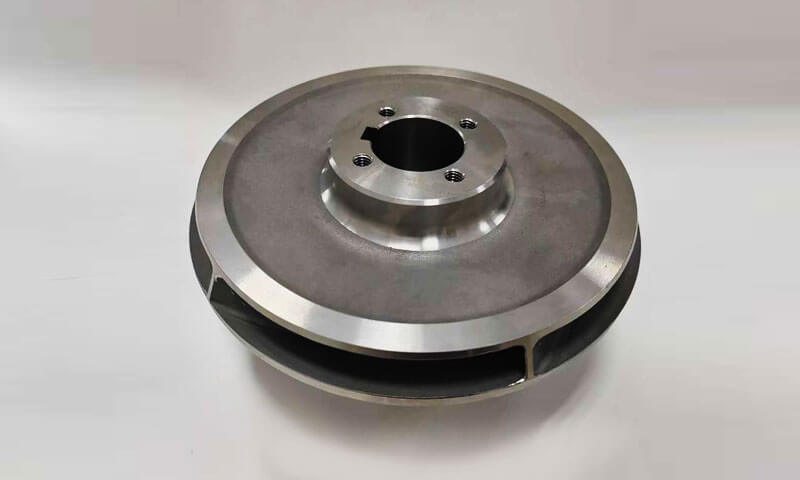
Investment casting occupies a unique position in industrial manufacturing.
It is not merely a legacy process preserved for difficult shapes or premium parts; it is a highly capable manufacturing route that solves a specific and increasingly important problem:
how to produce complex metal components with high dimensional fidelity, excellent surface quality, and broad alloy compatibility, while maintaining repeatable performance at scale.
In many industries, the question is no longer whether a part can be manufactured, but whether it can be manufactured with the right balance of precision, material integrity, unit cost, and downstream efficiency.
Investment casting often answers that question better than competing processes.
1. What Are Industrial Castings?
Industrial castings are metal parts produced by pouring molten metal into a designed mold cavity and allowing it to solidify into the required shape.
Pagkatapos ng paglamig, the mold is removed, and the casting may undergo trimming, machining, paggamot ng init, ibabaw ng pagtatapos, and inspection before entering service.
Sa kabuuan, casting is a manufacturing method that transforms liquid metal into functional engineering components with relatively little dependence on extensive cutting or joining operations.
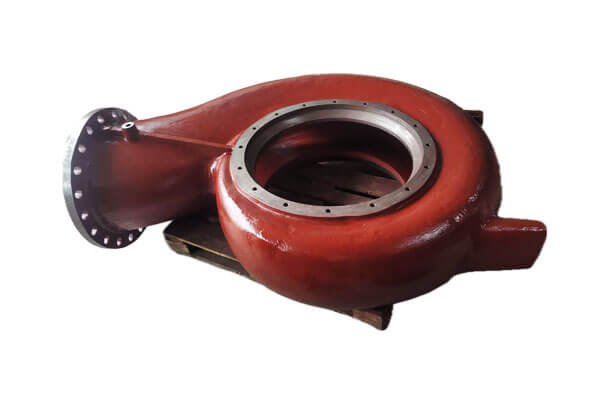
What makes a casting “industrial” is not the process itself, but the application and performance requirement.
Industrial castings are used in machinery, mga kagamitan, imprastraktura, energy systems, transportation platforms, and process industries, where the parts must withstand mechanical load, panginginig ng boses, presyon, magsuot ng, kaagnasan, init, or long-term cyclic service.
They are not decorative objects or low-duty shapes; they are working components that directly influence the reliability and efficiency of larger systems.
2. Core Technical Advantages of Investment Casting for Industrial Components
Pamumuhunan sa paghahagis is valued in industrial manufacturing not because it is a traditional process, but because it solves several difficult engineering problems at the same time.
When a component must be geometrically complex, dimensionally stable, material-specific, and cost-efficient across its lifecycle, investment casting often becomes one of the strongest manufacturing options.
Exceptional geometric freedom
The most fundamental technical advantage of investment casting is its ability to reproduce complex geometry with high fidelity.
Because the process begins with a wax pattern and a ceramic shell rather than a split mold that must open and close around the part, it can produce shapes that are difficult or impossible for many other casting methods.
This is especially important for industrial components that require:
- manipis na pader,
- intricate contours,
- internal or external ribs,
- mga undercuts,
- curved load paths,
- bosses, mga flanges, and mounting features integrated into one body,
- flow-optimized passages,
- and geometries that would otherwise require multiple fabricated pieces.
From a design perspective, this freedom allows engineers to optimize the component for function rather than for manufacturing convenience.
That distinction is critical in high-performance industrial systems, where geometry affects strength, flow behavior, thermal response, and fatigue life.
Near-net-shape capability and reduced machining allowance
Investment casting produces parts very close to final dimensions, which significantly reduces the amount of machining required afterward.
In industrial production, this is a major advantage because machining is not merely a finishing step; it is often one of the most expensive operations in the entire process chain.
Reduced machining allowance delivers several concrete benefits:
- mas mababang basura ng materyal,
- shorter machining time,
- nabawasan ang tool wear,
- less fixturing and setup complexity,
- lower risk of distortion caused by heavy stock removal,
- and better economics for hard-to-machine alloys.
For expensive alloys such as stainless steels, Mga superalloy na nakabatay sa nickel, Mga haluang metal na nakabatay sa Cobalt, and titanium-related materials, near-net-shape production can create substantial value.
The less material that must be removed, the more efficiently the alloy is used.
Superior surface quality
Compared with many other casting routes, investment casting generally provides a much smoother as-cast surface.
This matters in industrial components because surface quality is not only a cosmetic concern. It affects:
- Pagganap ng pagbubuklod,
- fluid flow resistance,
- wear behavior,
- paglaban sa kaagnasan,
- fatigue performance,
- and the extent of post-processing required.
A better surface finish reduces the need for aggressive machining or grinding and can improve service performance in applications such as valves, mga bomba, mga impeller, mga pabahay, and precision mechanical parts.
Sa ilang mga kaso, the as-cast surface may be sufficiently good to allow direct use after minimal finishing, which improves both cost and lead time.
High dimensional accuracy and repeatability
Investment casting is well suited to parts that require consistent dimensional control.
The accuracy comes from the ability to reproduce the wax pattern precisely and transfer that precision through the shell-making process into the final metal part.
For industrial components, repeatability is often as important as nominal accuracy.
A process that produces one accurate part and fifty inconsistent ones is not suitable for production.
Pamumuhunan sa paghahagis, when properly controlled, can deliver stable batch-to-batch consistency, which is crucial for:
- assembly compatibility,
- interchangeability,
- reduced inspection burden,
- and predictable manufacturing yield.
This repeatability supports industrial supply chains where consistent performance matters more than occasional perfection.
Malawak na pagiging tugma ng haluang metal
Another major advantage of investment casting is its ability to work with a wide range of alloys.
This makes it especially useful in industrial applications where material properties must be tailored to the service environment.
Common alloy families include:
- Mga Bakal ng Carbon,
- mga bakal na mababa ang haluang metal,
- hindi kinakalawang na asero,
- mga tool na bakal,
- duplex and special stainless steels,
- Mga superalloy na nakabatay sa nickel,
- Mga haluang metal na nakabatay sa Cobalt,
- aluminyo alloys,
- mga haluang metal ng tanso,
- and in specialized cases, mga haluang metal na titan.
This flexibility is strategically important because many industrial parts are not defined only by shape.
They are defined by the operating environment: temperatura, presyon, kaagnasan, magsuot ng, pagguho ng lupa, and mechanical load.
Investment casting allows the designer to choose the alloy that best matches the application rather than limiting the design to materials that are easy to machine or forge.
Strong support for part consolidation
One of the most powerful but sometimes underappreciated advantages of investment casting is part consolidation.
Components that would otherwise need to be made from several machined or welded pieces can often be redesigned as a single casting.
This brings multiple technical and commercial gains:
- fewer weld seams,
- fewer assembly steps,
- fewer fasteners,
- fewer tolerance stack-up problems,
- fewer leakage paths,
- lower risk of joint failure,
- and simplified logistics.
Sa mga makinaryang pang industriya, interfaces are often the weakest points in the system.
By reducing the number of interfaces, investment casting improves both reliability and manufacturability.
This is particularly valuable for pump bodies, mga bahagi ng balbula, aerospace brackets, turbine hardware, and complex structural parts.
Good suitability for complex, high-value industrial components
Investment casting is especially attractive when the part is high value, high complexity, or performance critical.
Sa gayong mga kaso, the economics favor a process that reduces secondary operations and improves final part integrity.
This is why investment casting is widely used for:
- turbine components,
- pump and valve parts,
- precision housings,
- industrial impellers,
- aerospace hardware,
- energy-system parts,
- medical instrumentation,
- and other geometrically demanding components.
The higher process discipline required by investment casting is justified when the final part must meet stringent functional requirements.
Design scalability for production programs
Investment casting is adaptable across a wide range of production scales. Once the process is validated, it can support stable repeat production with controlled quality.
That makes it suitable not only for prototypes and small runs, but also for medium-volume industrial programs where consistency and cost control are both important.
The process can be scaled through:
- pattern tool optimization,
- automated wax injection,
- shell building control,
- pouring discipline,
- and standardized post-processing.
This scalability gives manufacturers a useful bridge between engineering flexibility and repeatable industrial output.
3. Industrial Application Sectors
Investment casting is not simply a way to make metal parts with complex shapes.
In industrial markets, it is a targeted engineering solution for components that must combine geometric complexity, materyal na pagganap, dimensional katumpakan, at mahabang buhay ng serbisyo.
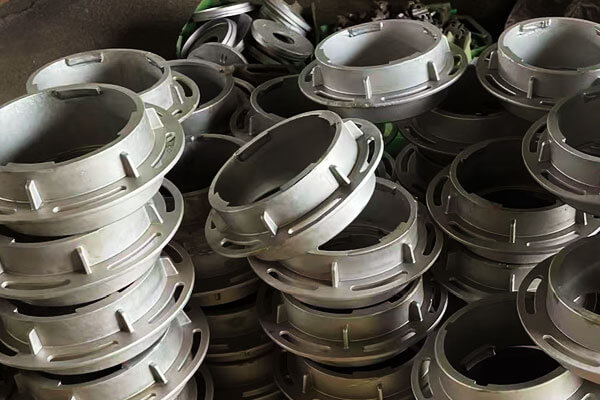
Pumps and Fluid-Handling Systems
Mga Pump are among the most important application areas for investment castings.
Components such as impellers, mga casings, diffusers, Magsuot ng Singsing, and seal housings depend on smooth flow paths, accurate blade geometry, and tight dimensional control.
In this environment, small geometric deviations can have a measurable effect on hydraulic efficiency, vibration behavior, ingay na ingay, and overall service life.
Investment casting is particularly well suited to these parts because it can reproduce complex curved surfaces and thin-section features with a high level of fidelity.
This reduces the need for extensive machining and helps preserve the designed hydraulic profile of the component.
For impellers in particular, the process supports near-net-shape manufacturing of blade passages that would be difficult and costly to machine conventionally.
Material choice is driven by the operating medium:
- Austenitic hindi kinakalawang na asero such as 316L and 347 are widely used for corrosive process fluids and mixed chemical service.
They offer broad corrosion resistance and dependable fabrication performance. - Cobalt-base alloys such as Stellite grades are preferred in severely abrasive or erosive service, where wear resistance is more important than cost.
These alloys are often selected for slurry pumps, Magsuot ng Singsing, and high-erosion flow paths. - Precipitation-hardening stainless steels tulad ng 17-4 PH at 15-5 PH are used where higher mechanical strength must be combined with corrosion resistance, especially in pressurized pump components and shafts.
Sa madaling salita, investment casting allows pump designers to optimize both hydraulic performance and material durability in a single manufacturing route.
Valves and Flow-Control Components
Ang balbula industry is one of the largest and most technically demanding users of investment castings.
Mga katawan ng balbula, bonnets, mga upuan, Mga tangkay, and trim parts must meet strict requirements for pressure integrity, Pagganap ng pagbubuklod, paglaban sa kaagnasan, and long-term repeatability.
This is exactly the type of application where investment casting excels.
Valve geometries often contain complex internal flow passages, thick-to-thin transitions, sealing seats, and localized stress regions.
Producing these features as a single casting reduces assembly complexity and eliminates many weak points that would otherwise appear in welded or fabricated structures.
Typical alloy choices include:
- Austenitic hindi kinakalawang na asero tulad ng 304 and 316L for general corrosion-resistant service.
- Martensitic hindi kinakalawang na asero tulad ng 410 and 420C for stems and structural parts that require higher hardness and strength.
- Cobalt-base alloys for seats and trim in severe service, where high-velocity erosion, thermal cycling, and repeated actuation create extreme wear conditions.
For valve applications, cobalt-base alloys are often the preferred solution in the harshest environments because they combine wear resistance, paglaban sa kaagnasan, and high-temperature stability better than standard stainless steels.
This is especially important in throttling, erosion-prone, and high-differential-pressure service.
Food and Dairy Processing Equipment
Food and dairy processing imposes a very different set of requirements.
The key priorities are hygiene, cleanability, paglaban sa kaagnasan, and resistance to aggressive cleaning agents.
Components must not contaminate the product, trap residue, or create hard-to-clean crevices.
Investment casting is a strong fit for this sector because it can produce smooth, crevice-minimized geometries that support hygienic design.
It also allows designers to integrate drainage features, Bilugan na mga transisyon, and continuous surfaces directly into the part, reducing the reliance on welds and joints that may become contamination risks.
Sa pagsasanay, 316L hindi kinakalawang na asero is the dominant choice for food-contact investment castings.
Its low carbon content helps reduce sensitization risk, while its corrosion resistance performs well in environments exposed to sanitizing chemicals, kahalumigmigan, and chloride-containing cleaning systems.
The process also produces a surface finish that is often good enough for many food-processing standards with only limited additional polishing.
Kabilang sa mga karaniwang aplikasyon ang:
- Mga Katawan ng Bomba,
- Mga pabahay ng balbula,
- mixer components,
- filler parts,
- conveyor hardware,
- and processing vessel fittings.
Dito na, the real value of investment casting lies not only in shape accuracy but in hygienic engineering.
It helps eliminate design features that complicate cleaning and supports safer, more maintainable food-processing systems.
Pagproseso ng Kemikal at Petrochemical
Chemical and petrochemical facilities operate under some of the most severe service conditions in industry.
Components are exposed to corrosive chemicals, Mataas na temperatura, pagbabago ng presyon, and continuous operating cycles. Sa mga kapaligiran na ito, failure is rarely acceptable and often very costly.
Investment castings are widely used in reactors, mga heat exchanger, process piping hardware, pump and valve systems, and flow-control assemblies.
The process is attractive because it allows the use of high-performance alloys that can be formed into complex, durable geometries with good dimensional consistency.
Common material families include:
- Austenitic hindi kinakalawang na asero tulad ng 316L, 310, at 347 for general corrosion and elevated-temperature service.
- Nickel-base alloys such as Hastelloy and Monel families for highly aggressive media, including strong acids and chemically severe environments.
- Cobalt-base alloys in selected wear- and temperature-critical components.
The choice of alloy depends on the exact process chemistry.
Halimbawa na lang, some grades are chosen for oxidation resistance at elevated temperature, while others are selected for resistance to specific acids, mga klorido, or halogenated environments.
In chemical service, there is no universal alloy solution. Investment casting is valuable because it can support the right alloy for the right duty, without forcing the designer to compromise on geometry.
Agricultural and Heavy Equipment
Agricultural machinery and heavy equipment expose components to a demanding combination of mechanical loading, epekto nito, gasgas na gasgas, dirt ingress, and outdoor corrosion.
Parts such as brackets, links, hinges, magsuot ng mga bahagi, and structural fittings must be strong, matigas ang ulo, and economical to produce.
Investment casting is particularly useful in this sector when the part geometry is too complex for simple machining, but the production volume is not high enough to justify high-pressure die casting or other specialized methods.
It allows manufacturers to produce near-net-shape steel components with consistent dimensions and acceptable cost.
Typical material systems include:
- medium-carbon steels tulad ng 1040 at 1045,
- haluang metal steels tulad ng 4130 at 4140.
These steels are often selected for their balance of strength, tigas na tigas, at machinability.
For agricultural and construction equipment, the ability to make durable replacement parts with good interchangeability is especially valuable.
Investment casting supports that requirement well, particularly where field serviceability and repeat production are important.
Pagbuo ng Kapangyarihan
Power-generation equipment places some of the most severe demands on cast components.
Steam turbines, mga turbine ng gas, Mga Generator, and balance-of-plant systems often require parts that must maintain dimensional stability, pressure integrity, and material performance over long service periods.
Investment castings are used in turbine nozzles, Mga dayapragma, mga katawan ng balbula, combustion hardware, transition pieces, and other critical energy-sector components.
These parts may be exposed to high temperature, cyclic thermal loading, oksihenasyon, and high-velocity flow.
For steam and general thermal-power service, stainless steel castings are frequently used where corrosion resistance and dimensional accuracy are required.
In gas turbine applications, the requirements are even more severe.
Components such as nozzle vanes, combustion hardware, and transition sections often rely on nickel-base o cobalt-base superalloys capable of withstanding extreme temperatures while retaining structural integrity.
The reason investment casting is so effective here is that it can produce aerodynamic and heat-management features that would be very difficult to manufacture by other routes.
In high-performance turbine hardware, internal cooling passages, thin-wall sections, and complex flow surfaces are not optional details; they are essential to function. Investment casting makes those designs practical.
4. Alloy Selection Guide for Industrial Investment Castings
Selecting the right alloy is one of the most important decisions in industrial casting.
The best choice depends on corrosion exposure, wear severity, temperatura, mechanical loading, gastos, at pagmamanupaktura. The table below provides a concise reference.
| Alloy Family | Representative Grades | Mga Pangunahing Katangian | Primary Industrial Applications |
| Carbon & Mga bakal na may mababang haluang metal | 1040, 4130, 4140 | Mataas na lakas, maganda ang tigas, matipid sa gastos | Kagamitan sa agrikultura, mabigat na makinarya, mga bahagi ng istruktura |
| Austenitic hindi kinakalawang na asero | 304, 316L, 310, 347 | Napakahusay na paglaban sa kaagnasan, magandang weldability | Mga Valve, mga bomba, food-processing equipment, chemical service |
| Martensitic hindi kinakalawang na asero | 410, 420C, 440C | Mataas na katigasan, strong wear resistance | Valve stems, trim components, wear-sensitive hardware |
| Pagpapatigas ng ulan hindi kinakalawang na asero | 17-4 PH, 15-5 PH | Mataas na lakas, magandang paglaban sa kaagnasan | High-pressure pump parts, mga shaft, mga bahagi ng istruktura |
Cobalt-Base Alloys |
Stellite 6, Stellite 21, FSX-414 | Excellent wear and high-temperature resistance | Valve seats, pump wear rings, turbine hardware |
| Nickel-Base Alloys | Hastelloy C276, Monel M35-1, Inconel 625 | Superior corrosion and high-temperature resistance | Kagamitan sa pagproseso ng kemikal, gas turbine components |
| Copper-Base Alloys | Aluminyo Bronze, Tin tanso | Magandang paglaban sa kaagnasan, magandang machinability | Marine parts, mga bearing, mga gears |
5. The Hidden Complexity: Why Industrial Castings Are Not Simple
Castings may look straightforward, but industrial casting is a highly controlled engineering discipline.
Defects can emerge from the interaction of thermal behavior, mold properties, haluang metal kimika, and process timing.
Common concerns include:
- pag-urong porosity,
- gas porosity,
- mga inclusions,
- hot tearing,
- cold cracking,
- Mga Pagkakamali,
- malamig na mga shut,
- pag-baluktot,
- dimensional drift,
- and surface defects.
Each defect tells a story. Porosity may indicate feeding problems or gas entrapment. Cracks may indicate restrained contraction or residual stress.
Misruns can point to inadequate filling or poor pouring temperature control. Dimensional problems can reflect mold instability or uneven cooling.
This is why casting quality depends on system control. It is not enough to pour metal into a mold.
The mold design, gating and risering system, solidification pattern, melt cleanliness, Temperatura ng pagbuhos, and post-cast handling all matter.
6. Quality Control and Reliability in Industrial Castings
Industrial castings often serve in critical applications, so quality assurance is essential.
The goal is not just to produce a part that appears correct, but to produce a part that will survive service conditions.
Key quality-control methods include:
- visual inspection,
- dimensional measurement,
- Pagsusuri sa Radiographic,
- pagsusuri sa ultrasonic,
- magnetic particle inspection,
- dye penetrant inspection,
- pagsusuri ng kemikal,
- mekanikal na pagsubok,
- and metallographic examination.
For pressure-bearing or safety-critical components, nondestructive testing is especially important.
The acceptable defect level depends on service conditions, Mga Pamantayan, and risk tolerance. A casting that is acceptable in one application may be unusable in another.
Heat treatment and machining also form part of quality control. They can improve microstructure, reduce residual stress, and bring the casting into final specification.
In industrial casting, quality is not a single inspection step. It is a chain of controls.
7. Pangwakas na Salita
Investment casting has established itself as an indispensable manufacturing process for industrial applications by delivering a unique combination of design freedom, katumpakan, materyal na maraming nalalaman, at pagiging epektibo sa gastos.
Unlike alternative manufacturing methods that force compromises between performance and manufacturability, investment casting allows engineers to design components optimized for their intended function, then produce them reliably and efficiently.
From pumps and valves that keep industrial processes flowing to power generation components that deliver electricity to millions, investment castings play a critical role in the global industrial infrastructure.
As digital technology continues to transform the industry, investment casting will become even more flexible, mahusay na, and sustainable, further expanding its applications and solidifying its position as the preferred manufacturing process for high-performance industrial components.
For industrial equipment manufacturers looking to improve product performance, bawasan ang mga gastos, and accelerate time-to-market, investment casting offers a proven, reliable solution that delivers exceptional value across the entire product lifecycle.

