1. Panimula
The Idle Air Control Valve (IACV) is a critical component in internal combustion engines, responsible for maintaining a stable engine idle speed under varying operating conditions.
While modern vehicles with electronic throttle control (ETC or “drive-by-wire”) often no longer rely on this device,
millions of gasoline-powered vehicles worldwide—particularly those built before the widespread adoption of ETC—depend on the idle air control valve to regulate airflow when the throttle plate is closed.
Sa core nito, ang Idle Air Control Valve manages the precise amount of air bypassing the throttle plate during idle.
This ensures that the engine receives the correct air–fuel mixture to maintain smooth operation at low RPMs (typically 600–1,000 RPM for passenger cars).
Without this control, fluctuations in engine load—such as engaging the air conditioning compressor, alternator, or power steering—could cause stalling, rough idle, or excessive fuel consumption.
2. What is an Idle Air Control Valve?
Isang Idle Air Control (IAC) balbula is an electromechanical device that regulates the amount of air bypassing the throttle plate in an internal combustion engine.
Its primary purpose is to maintain a stable and smooth idle speed under varying operating conditions such as cold starts, air conditioning load, or electrical load from alternators.
When the throttle is nearly closed at idle, the engine still requires a precise amount of air to sustain combustion.
The idle air control valve provides a controlled airflow path, working in coordination with the Engine Control Unit (ECU), which adjusts the valve position based on sensor data (coolant temperature, intake air temperature, load signals, atbp.).
This ensures that the engine runs neither too lean nor too rich while idling.

Types of Idle Air Control Valves
- Stepper Motor IAC Valve: Uses a stepper motor to move a pintle or cone incrementally, providing very fine control over airflow. Common in modern vehicles.
- Solenoid or PWM IAC Valve: Opens and closes rapidly under a pulse-width modulated (PWM) signal, adjusting effective airflow by varying the duty cycle.
- Rotary / DC Motor IAC Valve: Employs a small motor and gear mechanism to rotate a shutter or flap, often used in larger displacement engines.
- Integrated Electronic Throttle Body (ETB): In newer drive-by-wire systems, the idle air control function is replaced by directly modulating the throttle plate, eliminating the need for a separate valve.
3. Mga Materyal & Metallurgy Choices
Ang Idle Air Control (IAC) balbula is subject to one of the harshest operating environments in automotive systems:
fluctuating intake manifold pressures, continuous exposure to hydrocarbon vapors, rapid thermal cycling (–40 °C cold starts to 150 °C under-hood), and constant vibration.

Housing Materials
The valve body forms the structural backbone, enclosing the pintle, stepper motor, and seat.
- Mga Alloys ng Aluminyo (A380, ADC12, 6061-T6)
-
- Mga kalamangan: Magaan ang timbang, mahusay na machinability, magandang thermal kondaktibiti (167 W/m·K).
- Paggawa: Pressure die-casting, CNC machining for precision bores.
- Paggamot sa ibabaw: Hard anodizing or powder coating prevents corrosion from salt spray (per ASTM B117, 500 hr resistance).
- Gamitin ang Kaso: Passenger vehicles where weight and cost are critical.
- Hindi kinakalawang na asero (AISI 304, 316L)
-
- Mga kalamangan: High corrosion resistance in acidic EGR environments, superior durability.
- Kahinaan: Mas mabigat (density ~8 g/cm³ vs. 2.7 g/cm³ for aluminum) and more costly.
- Gamitin ang Kaso: Heavy-duty diesel trucks, off-highway engines, and markets with aggressive fuel blends (E10–E85).
- Mga plastik sa Engineering (GF Nylon 6/6, PBT, PPS)
-
- Mga kalamangan: Injection-molded, magaan ang timbang, high design freedom (integrated channels).
- Mga Katangian: Withstand 140–160 °C; PPS retains 85% tensile strength at 150 °C.
- Mga Limitasyon: Lower structural stiffness vs. metal; creep over time under mechanical load.
- Gamitin ang Kaso: High-volume OEM passenger cars (cost-sensitive, weight-reduction programs).
Internal Components
- Pintle (Needle / Cone Tip)
-
- Hindi kinakalawang na asero 410/420: Hardened (HRC 55–60) for wear resistance against the seat.
- Ceramic Inserts (Alumina, Si₃N₄): Excellent erosion resistance; tested lifetimes 2× longer in dusty conditions (ISO 5011 dust test).
- Tapos na sa ibabaw: Ra < 0.4 μm to minimize leakage paths.
- Valve Seat
-
- Brass or Hardened Steel: Precision-machined, typical concentricity tolerance ±0.01 mm.
- Elastomeric Seals (FKM, HNBR): Added where zero-leakage is mandated; FKM resists fuels up to 200 °C.
- Return Spring
-
- High-Carbon Spring Steel (SAE 1075): Epektibo ang gastos, mahusay na paglaban sa pagkapagod.
- 17-7 PH Hindi kinakalawang na Asero: Higher resistance to relaxation at >120 °C, preferred for long-life applications.
Actuation System
- Stepper Motor Coils
-
- Materyal: Copper windings with Class H insulation (180 °C).
- Tibay ng buhay: Survives 1,000 hr thermal shock cycling (–40 to 150 °C).
- Armature & Rotor
-
- Laminated silicon steel sheets (0.3–0.5 mm thick) improve magnetic flux while minimizing eddy current losses.
- Mga bearing / Mga Bushing
-
- Sintered Bronze Bushings: Oil-impregnated, self-lubricating, life expectancy 100M+ cycles.
- Miniature Ball Bearings: Lower friction, higher precision, but add cost (10–15% higher unit cost).
4. Manufacturing Processes of Idle Air Control Valve
Ang Idle Air Control (IAC) balbula is a precision electro-mechanical component.
Its manufacturing requires a balance of high-volume throughput (hundreds of thousands per year) kasama ang masikip na mga tolerance (±0.01 mm on pintle and seat) to ensure reliable idle regulation.
The process typically integrates paghahagis ng metal, polymer molding, machining, winding, assembly, and end-of-line testing.

Housing Manufacturing
- Metallic Housings (Aluminyo, Hindi kinakalawang na asero)
-
- mamatay paghahagis (Aluminum A380/ADC12): Produces near-net shapes with dimensional accuracy ±0.1 mm. Post-cast heat treatment (T6) Nagpapabuti ng lakas.
- Pamumuhunan sa Paghahagis (Stainless Steel 304/316L): Used in heavy-duty variants for superior corrosion resistance.
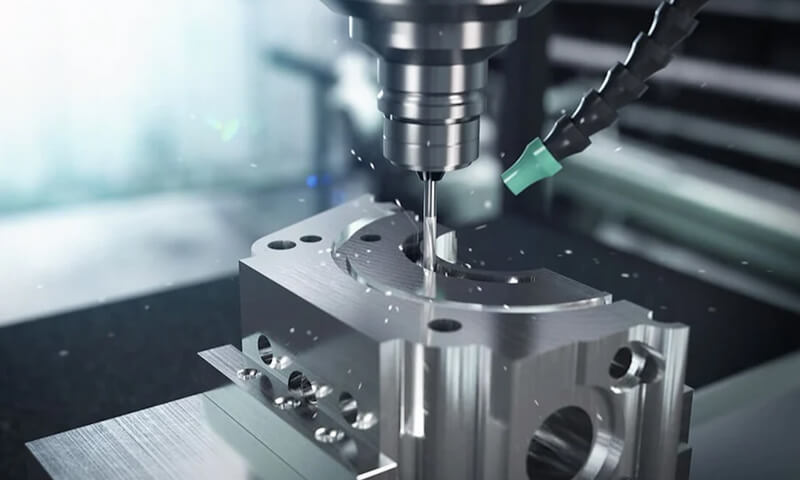
- Pangalawang Machining: CNC paggiling, pagbabarena, and reaming to achieve precision bore geometry for pintle and seat.
- Plastic Housings (PBT, PPS, Naylon 6/6 GF)
-
- iniksyon paghubog: Produces complex geometries (integrated connectors, channels) in a single shot.
- Insert Molding: Overmolds metal inserts (hal., threaded brass bushings) into the polymer body.
Internal Components
- Pintle & Upuan
-
- Bar Stock Machining (Hindi kinakalawang na asero 410/420): Lathe turning, walang sentro ng paggiling, and honing to achieve Ra < 0.4 μm surface finish.
- Paggamot ng Heat: Induction hardening or nitriding to >55 HRC.
- Seat Machining: Precision reaming and lapping for concentricity ±0.01 mm.
- Return Spring
-
- Cold Coiling of high-carbon spring wire, followed by stress-relief heat treatment at ~250 °C.
- Surface finishing with phosphate or Zn-plating for corrosion protection.
- Stepper Motor & Coils
-
- Copper Wire Winding: Automated winding machines coil enameled copper wire with Class H insulation (180 °C rating).
- Rotor & Armature: Stamped silicon-steel laminations stacked and laser-welded.
- Mga bearing / Mga Bushing
-
- Powder Metallurgy (Sintered Bronze): Porous structure impregnated with oil for self-lubrication.
- Miniature Bearings: Precision ground stainless steel, assembled with robotic pick-and-place systems.
Mga Paggamot sa Ibabaw & Mga patong

- Electroless Nickel Plating (pintle, seat) → uniform 10–20 μm coating, excellent anti-corrosion properties.
- DLC (Carbon na Parang Diamond) Patong na patong → reduces friction coefficient from 0.6 → 0.2, doubling service life.
- Pagpapahid ng langis (Aluminum Housing) → improves wear and corrosion resistance, tested to >500 hours ASTM B117 salt spray.
- PTFE Coatings (sliding surfaces) → minimize sticking issues at cold temperatures (–40 °C).
Assembly, electronics potting and calibration
- Sub-assembly: actuator, gearing, sensors and pintle are assembled in clean stations with torque-controlled fasteners.
- Potting/encapsulation: electronics are often potted with silicone or epoxy to reach IP67 or IP6K9K environmental ratings.
- Pag calibrate: factory calibration (end-stops, idle maps, step count at closed position) is performed and written to EEPROM/ECU calibration file; final functional tests validate flow characteristics.
Calibration fixtures must simulate throttle plate conditions and vacuum/pressure environments.
Kontrol sa Kalidad & Pagsubok
- Dimensional na Inspeksyon: CMM (Coordinate Pagsukat Machine) ensures tolerances ±0.01 mm on pintle-seat concentricity.
- Leak Test: Air-leak detection under 1 bar; maximum leakage <0.1 L/min.
- Functional Test: Stepper motor cycles through 0–255 steps; pintle position accuracy ±1 step.
- Endurance Testing: 5 million open/close cycles, thermal cycling (–40 to 150 °C), vibration tests (10–500 Hz, 10 g).
- 100% End-of-Line Testing: Flow calibration at multiple pintle positions (hal., 25%, 50%, 75% open) to ensure compliance with ECU control logic.
5. Tibay ng buhay, Common failure modes, and Mitigation strategies

| Mode ng Pagkabigo | Dahilan | Pagbawas (Foundry/OEM Strategy) |
| Carbon build-up & sticking (throttle body contamination) | Oil vapors, EGR deposits | Low-adhesion coatings (PTFE), smoother flow paths, define service intervals, recommend cleaner fuels & PCV system maintenance |
| Stepper motor / solenoid failure (mga de koryenteng) | Coil burn, thermal overstress, moisture ingress | Robust potting & encapsulation, Pamamahala ng Thermal, EMC filtering, high-temp wire insulation |
| Seal degradation (chemical/thermal) | Incompatible elastomer selection | Use FKM/EPDM matched to fluid & temperature profile; include O-ring material certifications in MTR |
| Wear of pintle/seat (abrasive particulates) | Dust/particulate ingestion, poor air filtration | Hardened alloys, ceramic tips, inlet screens, recommend upstream filters |
| Calibration drift & hysteresis | Gear wear, Backlash, pagpapalawak ng thermal | Pre-loaded anti-backlash gears, life-cycle calibration routines, closed-loop position feedback |
6. Gastos, lead time and supply-chain considerations for OEM buyers

- Unit cost drivers: pagpili ng materyal (Al die-cast vs plastic), actuator type (stepper vs solenoid), potting/EMC measures, and testing scope.
- Tooling & NRE: die-cast tooling costs (USD tens to hundreds of thousands) amortized over production volume; expect prototype tooling + setup lead times.
- Lead times: prototype 2–8 weeks (3D print / small-run machining), tool-based production 8–16 weeks for initial molds/dies; mass production lead times vary with capacity.
- Inventory & spares: recommend safety stock for valve cores and actuators; field spares for common failure parts (mga tatak, pintles, stepper modules).
- Regulatory & compliance: ensure RoHS, REACH compliance for materials and automotive homologation where required.
A good foundry partner helps optimize BOM, reduce post-machining and suggest standard parts to lower unit cost.
7. Comparison of Idle Air Control Valve vs. Other Engine Valves

| Tampok / Pag-aari | Idle Air Control (IAC) Valve | Throttle Body Valve | EGR (Exhaust Gas Recirculation) Valve | PCV (Positive Crankcase Ventilation) Valve | Boost Control Valve |
| Pangunahing Tungkulin | Regulates engine idle airflow | Controls total engine air intake | Recirculates exhaust to reduce NOx | Vents crankcase gases to intake | Regulates turbocharger pressure |
| Control Method | Electronic stepper motor or solenoid | Mechanical cable or electronic throttle | Electric or vacuum actuation | Spring-loaded or orifice | Solenoid or pneumatic |
| Mga Tipikal na Materyales | Aluminyo, hindi kinakalawang na asero, FKM/EPDM seals | Aluminyo, plastik na plastik, bakal na bakal | Hindi kinakalawang na asero, cast iron, aluminyo | Aluminyo, plastik na plastik | Aluminyo, hindi kinakalawang na asero |
| Operating Environment | Intake manifold, exposure to fuel vapors, langis, init | Intake manifold, high air velocity | Exhaust stream, high temperature | Crankcase, oil-laden environment | Intake/exhaust, mataas na presyon |
| Mga Pangunahing Bentahe | Precise idle control, emission compliance, smooth cold starts | Direct engine power response, wide airflow range | Reduces emissions, improves combustion stability | Simple lang, low-cost, prevents oil leaks | Protects engine from overboost, improves turbo response |
| Mga Limitasyon | Sensitive to carbon buildup, particulate contamination | Less precise at low airflow, no fine idle adjustment | Prone to carbon clogging, slower response | Limited control precision, can clog with sludge | Requires ECU integration, sensitive to contaminants |
8. DEZE Pandayan: Customized Idle Air Control Valve Solutions
DEZE Pandayan offers end-to-end OEM customization services for Idle Air Control (IAC) Mga balbula,
combining advanced metallurgy, katumpakan paghahagis, CNC machining, and surface treatments such as DLC, PTFE, and anodizing to optimize durability, paglaban sa kaagnasan, and low-friction performance.

By collaborating closely with OEMs, DEZE tailors valve geometry, actuator interfaces, and seal materials to specific engine platforms,
while providing rigorous testing, environmental validation, and scalable production from prototypes to high-volume manufacturing, ensuring reliable, high-performance idle air control valves that meet modern emission and operational standards.
9. Pangwakas na Salita
From a foundry and OEM perspective the Idle Air Control valve is not a simple valve—it is a precision electromechanical product where metallurgy, casting/tooling quality, machining tolerances, ibabaw ng paggamot, electronics robustness and rigorous testing combine to determine in-field reliability.
Selecting the right material, manufacturing route and testing regimen—and partnering with a supplier who provides DFM, prototyping and thorough QC—minimizes warranty costs and achieves the required engine idle control performance.
Mga FAQ
What housing material is most common for Idle Air Control valves?
Die-cast aluminium is the most common for balance of cost, weight and machinability. Plastics are used for lower-cost variants, and stainless/forged steel for specialized high-corrosion applications.
How long should a quality Idle Air Control valve last?
Design life is commonly >100,000 cycles or multi-year service (5–10 years) depending on vehicle use and environment. OEMs set specific MTBF targets.
What tests should I demand from a supplier?
Dimensional CMM, MTC, leak test, Q vs position flow mapping, thermal cycling, EMC tests, endurance cycling (>100k cycles) and final functional calibration.
Can foundries support custom Idle Air Control specifications?
Yes—most foundries provide full OEM services: DFM, mga tooling, prototype runs, coating options, actuator tuning and batch testing.
How to avoid carbon build-up causing sticking?
Design for smoother airflow, use low-adhesion coatings, specify inlet filtration, and recommend regular throttle body cleaning as part of maintenance.