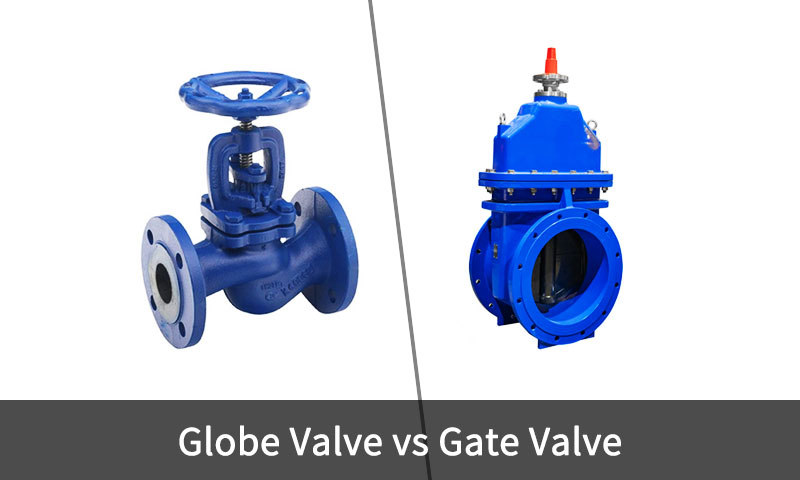
1. Panimula
Globe Valve vs Gate Valve is one of the most common comparisons in industrial fluid control, as both valve types are widely applied in pipelines for isolation and regulation.
While they share the same broad purpose—controlling the flow of liquids, mga gas, or steam—their internal geometries, sealing methods, and operational characteristics differ significantly.
Selecting between the two requires careful evaluation of factors such as flow efficiency, Pagganap ng pagbubuklod, actuation speed, lifecycle cost, and industry-specific requirements.
A poor choice can increase operating costs, reduce reliability, and compromise safety.
2. What Is a Globe Valve?
A globe valve is a type of linear-motion valve designed primarily for regulating and throttling flow.
Its name comes from the spherical body shape in early designs, though modern globe valves may also use straight, angle, or Y-pattern configurations.
Unlike gate valves, which are intended for full shut-off, globe valves excel at providing controlled, variable flow with relatively short stroke movement.
Globe valves are commonly used in steam systems, pagproseso ng kemikal, pagbuo ng kapangyarihan, and water treatment—anywhere precise control of pressure or flow is needed.

Prinsipyo sa Paggawa
The operation of a globe valve is based on the vertical movement of a disc (plug) against a stationary seat.
- The valve disc is connected to a stem that moves linearly when the handwheel or actuator is turned.
- When the disc is lowered, it presses against the seat, blocking flow.
- As the disc is raised, flow passes through the space between the disc and the seat, which creates a tortuous S-shaped path.
- The degree of opening directly correlates with the amount of flow, giving globe valves good throttling accuracy.
This geometry introduces higher flow resistance (pressure drop) compared to gate valves but provides superior control precision.
Mga Pangunahing Tampok
- Flow Control Accuracy: Globe valves provide precise regulation, with flow coefficients (CV) that allow incremental adjustments.
Halimbawa na lang, a 6-inch globe valve can achieve control accuracy within ±5%. - Sealing Options: Available with metal-to-metal seats for high-temperature service (hanggang sa 650 °C) o soft-seated designs (PTFE, Mga Elastomer) for bubble-tight shutoff in low-pressure systems.
- Versatile Configurations: Straight pattern (pamantayan), angle pattern (90° flow turn, reduces fittings), and Y-pattern (lower pressure drop).
- Size Range & Ratings: Typically manufactured from ½ inch to 24 pulgada, with pressure classes from Klase ng ANSI 150 up to Class 2500.
- Pagpapanatili: Disc and seat are relatively easy to access for replacement, which makes globe valves popular in power plants where seat erosion is common.
3. What Is a Gate Valve?
A gate valve is a linear-motion isolation valve designed to provide on/off control of fluid flow.
Unlike globe valves, which are optimized for throttling, gate valves are intended to be fully open or fully closed.
Their defining feature is a flat or wedge-shaped gate (disc) that moves perpendicularly into the flow path to stop fluid.
Gate valves are widely used in langis & gas pipelines, municipal water distribution, mga planta ng kuryente, and general process industries where full bore flow and minimal pressure drop are required.

Prinsipyo sa Paggawa
The gate valve operates by raising or lowering a wedge or parallel disc between two seat rings:
- When the handwheel or actuator is turned, the stem moves the gate upwards, withdrawing it completely from the flow path.
In the fully open position, the bore is unobstructed, allowing flow with negligible resistance. - When closed, the gate is pressed into the seat, blocking the passage and ensuring isolation.
- Gate valves are not recommended for throttling, as partial opening exposes the gate and seat to high-velocity fluid, causing vibration, pagguho ng lupa, and sealing damage.
There are two main disc designs:
- Parallel disc mga balbula ng gate (flat gate between parallel seats).
- Wedge gate valves (solid or flexible wedge providing better seat tightness and misalignment tolerance).
Mga Pangunahing Tampok
- Minimal Flow Resistance: In the fully open position, the straight-through bore yields a pressure drop close to zero (flow coefficient Cv is significantly higher than in globe valves of the same size).
- Bi-directional Service: Gate valves can generally seal against pressure from either direction, making them suitable for isolation in complex piping layouts.
- Size Range & Ratings: Commonly available from 2 inches up to 60 pulgada o higit pa, with pressure ratings from Klase ng ANSI 150 Sa Klase 2500, making them a preferred choice for large-diameter pipelines.
- Slow Operation: Gate valves require multiple turns of the stem to fully open or close, making them less suitable where quick operation is required.
- Sealing Performance: Typically designed to meet API 598 leakage criteria, but not usually available in tight shutoff classes (Class VI bubble-tight like globe or ball valves with soft seats).
- Maintenance Considerations: Seat and wedge replacement can be complex due to large body size, and erosion or galling may occur if used improperly for throttling.
4. Disenyo & Internal Geometry of Globe Valve vs Gate Valve
The most fundamental distinction between Mga balbula ng globo at mga balbula ng gate lies in their internal flow path and disc design, which directly influences pressure drop, pagbubuklod, and operating suitability.

Globe Valve Design & Geometry
- Flow Path: In a globe valve, the fluid must change direction—first downward through the seat and then back upward—resulting in a more tortuous flow path.
- Disc/Plug Shape: The closure element is typically a plug, disc, or cone that presses against a seat ring perpendicular to the flow.
- Seat Orientation: Seats are arranged horizontally, making globe valves well-suited for throttling and frequent operation.
- Stem Motion: The stem moves linearly, with relatively short travel compared to gate valves (about 25–30% of bore size).
- Structural Implications: The compact flow chamber creates higher pressure loss but enables finer control of flow.
Gate Valve Design & Geometry
- Flow Path: The flow passage in a gate valve is straight-through. Kapag ganap na bukas, the gate is entirely out of the flow, offering a near-zero pressure drop.
- Disc/Wedge Shape: The closure element is a wedge or slab gate that lowers between two vertical seats.
- Seat Orientation: The seats are vertical and parallel to the flow path.
- Stem Motion: The stem travel is large—equal to the full bore of the valve (100% of bore size)—making operation slower but ensuring full unobstructed flow.
- Structural Implications: Requires a tall yoke and bonnet due to long stem travel; compactness is sacrificed for low flow resistance.
5. Flow Characteristics & Hydraulic Performance
Ang dinamika ng daloy of a valve determine how effectively it can regulate, throttle, or isolate process fluids.
The internal geometry of globe and gate valves creates distinct hydraulic behaviors.

Globe Valve Flow Characteristics
- Linear / Equal Percentage Flow Control: Globe valves provide a nearly linear or equal-percentage relationship between stem travel and flow rate, making them well-suited for modulating and throttling service.
- Pressure Drop: Due to the abrupt change in flow direction across the seat, globe valves generate relatively high pressure losses.
-
- A 6-inch Class 300 globe valve may exhibit a pressure drop of 2.5–3.5 psi at 100 gpm, compared to less than 1 psi for a gate valve of the same size.
- CV (Flow Coefficient): Lower Cv per valve size (≈30–60% of a gate valve) — limiting maximum flow but enhancing precision in partial open conditions.
Gate Valve Flow Characteristics
- On–Off Behavior: Gate valves are designed for isolation rather than throttling. The wedge gate provides nearly unobstructed flow when fully open.
- Minimal Pressure Drop: With a straight-through bore, the hydraulic resistance is almost equivalent to a piece of pipe of the same size.
-
- Halimbawa na lang, a fully open 6-inch gate valve typically has a pressure drop <0.5 psi sa 100 gpm.
- Poor Throttling Suitability: Operating a gate valve partially open leads to turbulence, cavitation, and seat/gate erosion.
- Cv Values: Very high Cv values (≈90–100% of nominal pipe size) make gate valves ideal for systems requiring minimal flow restriction.
6. Sealing Performance & Leakage Classes
The ability of a valve to maintain a tight seal is critical for process safety, product quality, at kahusayan.
Globe valve vs gate valve achieve sealing in different ways, which impacts leakage performance and suitability for specific services.

Globe Valve Sealing
- Seat-to-Disc Contact:
Globe valves use a disc pressing against a seat ring. Because the contact area is small and the sealing force is concentrated, globe valves can achieve high-quality shutoff. - Leakage Classes:
-
- Capable of meeting ANSI/FCI 70-2 Class IV or V (industrial tight shutoff).
- With soft-seated or elastomer inserts, some globe valves can achieve Class VI (bubble-tight shutoff).
- Bidirectional Sealing:
Most designs are unidirectional (optimized for pressure on the downstream side), but certain designs with double-seat arrangements support bidirectional sealing. - Throttling & Wear:
Since globe valves are often used in throttling service, seat wear over time can lead to increased leakage.
Hard-facing materials such as Stellite or tungsten carbide coatings are often applied to improve longevity.
Gate Valve Sealing
- Wedge Gate Contact:
Sealing occurs between the Gate (wedge/disc) and the seat rings. Tight shutoff relies on proper wedge alignment and seating force. - Leakage Classes:
-
- Typically achieve Class III or IV shutoff in metal-seated versions.
- Soft-seated or resilient wedge gate valves can reach Class V or VI, but these are less common in high-pressure services.
- Bidirectional Capability:
Most gate valves are naturally bidirectional, capable of sealing against flow in either direction. - Mga Limitasyon:
In partially open positions, flow impinges directly on the sealing surfaces, leading to erosion and seat leakage sa paglipas ng panahon. Dahil dito, gate valves are unsuitable for throttling service.
Application Implications
- Mga Valve ng Globe are preferred where leak-tight performance and flow modulation ay mahalaga, such as steam isolation, condensate control, and chemical feed systems.
- Mga Valve ng Gate are favored in on–off isolation service, particularly in pipelines, water distribution, at langis & gas transmission, saan banda bidirectional shutoff with minimal leakage is sufficient.
7. Bilis ng Pagpapatakbo, Actuation & Automation
| Parameter | Globe Valve | Balbula ng Gate |
| Stroke Length | Maikli (≈25–30% of bore) | Mahaba (≈100% of bore) |
| Manual Effort | Moderate – ~5–10 handwheel turns (6″) | High – ~15–25 handwheel turns (6″) |
| Actuation Time (Elektrikal, 6″) | 5–15 seconds | 30–90 seconds |
| Actuation Time (Pneumatic, 6″) | 1–5 seconds | 10–30 seconds |
| Actuator Size/Cost | Smaller, lower cost | Mas malaki, ~2× higher cost |
| Pagiging Tugma sa Automation | Excellent – modulating & isolation; integrates with positioners, HART, Fieldbus | Limited – isolation only, rarely used for modulation |
| Actuator Compatibility | Compatible with pneumatic, mga elektriko, hydraulic, spring-return actuators; easy to mount | Requires high-thrust linear actuators; limited options for precise modulation |
| Control Accuracy | Mataas na (±2–5% with positioner; turndown up to 50:1) | Mga Maralita (not designed for control, unstable throttling) |
| Tipikal na Kaso ng Paggamit | Precise flow control, frequent cycling, fast emergency shutoff (steam, chemical dosing) | On–off isolation, infrequent operation (mga tubo, water mains) |
8. Pressure–Temperature Capability & Mga Materyal na Pag-iisip
Valve selection must account for operating pressure, temperatura, at materyal na pagkakatugma, as these factors directly affect safety, tibay ng katawan, at buhay ng serbisyo.
Globe and gate valves differ in design tolerances and material behavior under P–T extremes.
Presyon & Temperature Ratings
| Materyal | Klase ng ANSI | Max Pressure (psi) | Max na temperatura (°C) | Min Temperature (°C) | PN Equivalent | Typical Valve Type |
| Carbon Steel (A105) | 150 | 285 | 650 | -29 | PN 10 | Globe / Gate |
| Carbon Steel (A105) | 300 | 740 | 650 | -29 | PN 25 | Globe / Gate |
| Carbon Steel (A105) | 600 | 1,480 | 650 | -29 | PN 40 | Globe / Gate |
| 316L Hindi kinakalawang na Asero | 150 | 285 | 870 | -196 | PN 10 | Globe / Gate |
| 316L Hindi kinakalawang na Asero | 300 | 740 | 870 | -196 | PN 25 | Globe / Gate |
| Duplex 2205 | 150 | 285 | 315 | -40 | PN 10 | Globe / Gate |
| Duplex 2205 | 300 | 740 | 315 | -40 | PN 25 | Globe / Gate |
| Hastelloy C276 | 150 | 285 | 1,000 | -270 | PN 10 | Globe / Gate |
| Hastelloy C276 | 300 | 740 | 1,000 | -270 | PN 25 | Globe / Gate |
Mga Materyal na Pag-iisip
- Globe Valve:
-
- Material selection depends on kaagnasan, pagguho ng lupa, at magsuot ng resistensya, particularly for throttling or high-velocity flow.
- Common alloys: Carbon bakal, hindi kinakalawang na asero (304/316/316L), duplex, mga haluang metal na nikelado (Bilisan mo na, Monel) for aggressive chemicals.
- Mga Tatak & Seats: Metal-to-metal or soft seats (PTFE, grapayt, Mga Elastomer) to handle wide P–T ranges.
- Balbula ng Gate:
-
- Designed primarily for full-bore, low-resistance flow.
- Mga Materyal: Carbon bakal, hindi kinakalawang na asero, tanso, haluang metal steels.
- Seats: Metal seats dominate high-pressure, high-temperature services; soft seats used for low-pressure, tight shutoff.
9. Tibay ng buhay & Pagpapanatili
- Globe valves: Wear occurs at seat/disc interface due to throttling, and packing wear at stem. Easier to maintain trim without removing valve body.
- Gate valves: Vulnerable to jamming from solids, seat erosion when throttled, and stem corrosion. Maintenance can require disassembly of bonnet and sometimes body removal.
Service Life
- Globe Valve: 10–20 years in moderate service, shorter in erosive/throttling applications without maintenance.
- Balbula ng Gate: 15–25 years for isolation service, but service life reduces drastically under partial opening or high-velocity fluid conditions.
10. Typical Industry Applications of Globe Valve vs Gate Valve
The selection between globe and gate valves depends on flow control requirements, presyon, temperatura, and operational frequency.

Globe Valve Applications
Globe valves excel in flow regulation, throttling, and frequent operation.
Their design allows precise control of fluid flow and pressure drop, making them suitable for systems where modulation is required.
Mga Pangunahing Aplikasyon:
- Steam Control Systems: Precise flow and pressure regulation in boiler feedwater and heating systems.
- Chemical and Petrochemical Plants: Accurate dosing, throttling corrosive or high-temperature fluids.
- HVAC and District Heating: Modulating valves for temperature and pressure control in large piping networks.
- Water Treatment Plants: Flow control for filtration, chemical injection, and dosing applications.
- Energy and Power Plants: Feedwater regulation, cooling water flow, and turbine bypass systems.
Gate Valve Applications
Gate valves are primarily used for on/off isolation with minimal pressure drop when fully open.
They are suitable for large-diameter pipelines and applications where flow modulation is not needed.
Mga Pangunahing Aplikasyon:
- Langis & Gas Pipelines: Mainline isolation, pumping stations, and crude transport.
- Water Distribution & Wastewater: Large-diameter mains and treatment plant isolation valves.
- Pagbuo ng Kapangyarihan: Isolation of cooling water, steam headers, and fuel lines.
- Industrial Process Lines: Non-throttling isolation of chemicals, compressed air, or gas pipelines.
- Marine & Paggawa ng barko: Ballast water and fuel isolation systems.
11. Comparative Summary Table – Globe Valve vs Gate Valve
| Tampok / Parameter | Globe Valve | Balbula ng Gate |
| Pangunahing Tungkulin | Flow regulation, throttling, tumpak na kontrol | On/off isolation, full-bore flow |
| Disenyo / Panloob na Heometriya | Spherical body with perpendicular flow path; disc moves linearly onto seat | Straight-through body; wedge or parallel gate moves linearly between seats |
| Flow Characteristics | Moderate to high pressure drop; suitable for throttling; Cv lower than gate valve | Very low pressure drop when fully open; unsuitable for throttling; full-port Cv high |
| Sealing Performance | Metal-to-metal or soft seats; bidirectional sealing; ANSI Class IV–VI | Metal-to-metal or soft seats; bidirectional; tight shutoff best in full closure |
| Bilis ng Pagpapatakbo | Short stroke; moderate manual turns; fast actuation with pneumatic/electric actuator | Long stroke; many handwheel turns; slower actuation; larger actuator required |
| Automation / Actuator Compatibility | Excellent – modulating, integrates with HART/Fieldbus; smaller actuator size | Limited – isolation only; larger linear actuators needed |
| Pressure–Temperature Capability | Medium to high P–T; suitable for throttling under 650–870°C (depending on material) | High P–T; full-bore isolation under similar material limits; minimal pressure drop |
| Tibay ng buhay | Moderate – wear at seats/disc in throttling; packing maintenance required | High for isolation; susceptible to gate jamming if partially opened |
| Pagpapanatili | Moderate – bonnet access for seat and packing replacement | Lower frequency – full disassembly required for seat repair; easier if rarely operated |
| Typical Industry Applications | Steam systems, chemical dosing, HVAC, paggamot ng tubig, mga planta ng kuryente | Langis & gas pipelines, water mains, large-diameter industrial pipelines, marine |
| Mga kalamangan | Precise flow control, suitable for frequent cycling, fast response | Minimal pressure drop when open, reliable isolation, cost-effective for large pipelines |
| Mga Limitasyon | Higher pressure drop, more maintenance in throttling, larger body for same pipe size | Poor throttling capability, slow actuation, potential for jamming |
12. Pangwakas na Salita
Parehong Mga balbula ng globo mga bes mga balbula ng gate are indispensable in industrial piping systems, but their roles differ significantly.
Globe valves are the go-to solution for accurate flow regulation and reliable shutoff in high-pressure, mataas na temperatura, and process-critical environments.
Gate valves, sa pamamagitan ng kaibahan, are more economical and energy-efficient for large-diameter isolation duties where minimal pressure drop is essential.
The correct choice depends on whether the application prioritizes control precision o flow efficiency.
Engineers and plant designers must weigh lifecycle costs, process needs, and operating conditions to ensure optimal performance and reliability.
Mga FAQ
Can a gate valve be used for throttling?
No—partially open gate valves create turbulence and cavitation, reducing service life by 70% and causing flow instability (±20–30% deviation).
A refinery using gate valves for throttling experienced 3x more seat failures than plants using globe valves.
What is the maximum temperature for a soft-seated globe valve?
Soft-seated (PTFE) globe valves are limited to ≤260°C. For higher temperatures (260–650°C), use metal-seated globe valves with Stellite 6 trim.
Above 650°C, metal-seated gate valves are preferred (PTFE degrades, and globe valves’ pressure drop becomes inefficient).
Which valve is more cost-effective for an oil pipeline?
Gate valves—their 10-year TCO ($29,000 for 12-inch) ay 28% lower than globe valves ($40,000).
Gate valves’ low pressure drop saves $120,000 annually in pump energy costs, offsetting higher upfront downtime costs.
Are gate valves suitable for corrosive fluids like seawater?
Yes—use duplex 2205 or 316L gate valves with metal-to-metal seals.
A marine platform using duplex 2205 gate valves achieved 10-year service life in seawater, with no corrosion (corrosion rate <0.001 mm / taon). Avoid soft-seated gate valves (seals degrade in saltwater).