

1. Panimula
Ductile iron investment casting merges the high-strength, ductile nature of nodular cast iron with the fine precision of investment (Nawala ang wax) paghahagis ng mga.
It’s an advanced manufacturing method ideal for producing dimensionally accurate and structurally demanding parts.
This technique is especially useful when intricate geometries, masikip na mga tolerance, and mechanical reliability are essential—such as in automotive, pagtatanggol, aerospace, and energy applications.
2. What is Ductile Iron Investment Casting?
Ductile Iron Investment Casting is a precision metal casting process that combines the superior mechanical properties of ductile iron with the high-accuracy and fine detail capability of the investment casting method (kilala rin bilang lost-wax casting).
It is ideal for producing small to medium-sized, intricate parts that require both strength and dimensional precision.
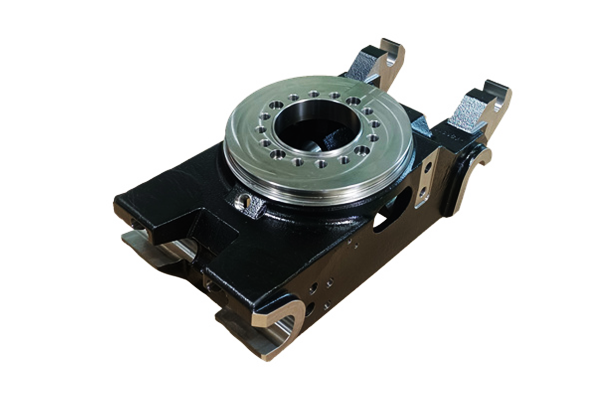
Key Definitions:
- Ductile Iron (tinatawag din na nodular iron o SG iron) is a type of cast iron known for its mataas na lakas, ductility, at paglaban sa epekto dahil sa nito spheroidal (nodular) grapayt istraktura.
- Pamumuhunan sa Paghahagis is a molding process where a wax pattern is coated with refractory ceramic material to form a mold.
After the wax is melted out, molten metal is poured into the cavity to form the part.
3. Why Use Investment Casting for Ductile Iron?
Ductile iron investment casting addresses a key gap in metal casting applications: traditional sand casting of ductile iron, while economical and scalable, struggles with fine geometric details, masikip na mga tolerance, and thin-wall sections.
These limitations make it unsuitable for precision components or parts with intricate internal structures.
Sa kabilang banda naman, steel investment castings, though capable of achieving high dimensional accuracy, lack ductile iron’s cost-efficiency, superior machinability, and inherent vibration damping properties, which are critical in many dynamic or noise-sensitive environments.
Ductile iron investment casting thus emerges as an optimal solution for applications that demand both precision and mechanical robustness, filling a performance and economics gap between sand casting and steel precision casting.
It enables the production of complex, net-shape components that maintain the desirable traits of ductile iron—mataas na ratio ng lakas sa timbang, ductility, epekto ng paglaban, and damping capacity—while achieving near-net shape accuracy.
4. The Ductile Iron Investment Casting Process
Ang ductile na bakal pamumuhunan paghahagis process follows the fundamental stages of traditional lost-wax casting.
But incorporates precise metallurgical controls and specialized techniques to accommodate the unique solidification behavior and graphite structure formation of ductile iron.

4.1 Paglikha ng Pattern
- Wax Patterns: High-precision wax patterns are produced by injection molding or 3D printing, with shrinkage allowances of 0.5–2% to compensate for metal contraction during cooling.
For components with ultra-fine features—such as thin walls down to 0.5 mm or complex internal channels—stereolithography (SLA) 3D-printed patterns are often preferred, offering accuracy up to ±0.02 mm. - Pattern Assembly: Individual wax patterns are mounted on a central wax sprue to form a tree-like structure.
A single shell (mga approx. 10 kg capacity) may contain 5–10 parts, optimizing throughput and ceramic material usage.
4.2 Shell Building
- Slurry Coating: The assembled wax tree is repeatedly dipped into a refractory ceramic slurry composed of alumina, silica, or zirconia.
For ductile iron, zirconia-based slurries are ideal due to their superior refractoriness (>2700°C), required for handling molten iron at 1300–1350°C. - Stuccoing and Drying: After each slurry dip, the wet coating is sprinkled with refractory grains (stucco) such as fused silica or alumina to build shell thickness and strength.
The pattern is then dried in a humidity-controlled chamber.
Karaniwan, 6–8 layers are applied, resulting in a robust 5–10 mm shell capable of withstanding the mechanical and thermal loads of iron pouring. - Pag-aalis at pagpapaputok: Wax is removed from the shell via autoclaving or flash heating (100–160°C).
Residual wax is eliminated during high-temperature firing at 800–1000°C, which also sinters the shell, increasing its flexural strength to 5–10 MPa and ensuring dimensional stability during casting.
4.3 Melting and Nodulization
Ductile iron’s unique metallurgy requires precise control during melting:
- Alloy Preparation: Bakal na Bakal (94–96%), carbon (3.2–3.8%), Silicon (2.0–2.8%) are melted in an induction furnace at 1400–1500°C.
- Nodulization: Magnesium (0.03–0.08%) or cerium (0.02–0.06%) is added to transform flake graphite into spherical nodules.
This step is critical—even 0.04% asupre (a nodulizer poison) can ruin the microstructure. - Inoculation: Ferrosilicon (0.2–0.5%) is added post-nodulization to refine nodules (5–20 nodules/mm²) and prevent chill (martensite formation).
4.4 Pagbubuhos at Pagpapatibay
- Pagbubuhos ng: Molten ductile iron (1300–1350°C) is poured into the hot shell (800–1000°C) to minimize thermal shock.
The shell’s high thermal conductivity (1–2 W/m·K) accelerates cooling to 20–30°C/min—faster than sand casting (5–20°C/min)—refining grain structure. - Pagpapatibay: Graphite nodules form during cooling, with the ceramic shell restricting shrinkage (3–5% volumetric) para mabawasan ang porosity.
Risers are minimal due to investment casting’s near-net-shape design.
4.5 Pagtatapos
- Pagtanggal ng Shell: The hardened ceramic shell is removed using vibration methods, mechanical impact, or high-pressure water jetting.
- Cutting and Cleaning: Individual castings are separated from the gating system and ground to remove any residual metal at gate connections or parting lines.
- Paggamot ng Heat (Opsyonal na):
-
- Annealing: Performed at 850–900°C for up to 2 hours to soften the material for easier machining.
- Paghina ng loob (T6-like Treatment): Conducted at 500–550°C to enhance strength, tigas na tigas, and fatigue resistance in load-bearing parts.
5. Metallurgical Advantages of Investment Cast Ductile Iron
Investment casting’s controlled cooling and shell rigidity enhance ductile iron’s microstructure:
- Refined Graphite Nodules: Faster cooling (20–30°C/min) produces smaller, more uniform nodules (10–20 nodules/mm² vs. 5–10 in sand casting),
increasing tensile strength by 10–15% (hal., 450 MPa vs. 400 MPa for EN-GJS-400-15). - Reduced Porosity: Ceramic shells limit gas entrapment, with porosity <0.5% (mga bes. 1–2% in sand casting), improving fatigue resistance (120–140 MPa at 10⁷ cycles vs. 100–120 MPa).
- Uniform Matrix: The shell’s even cooling minimizes segregation, resulting in a consistent ferrite/pearlite matrix—critical for parts with thin walls (1-3 mm) where sand casting might form brittle chill zones.
6. Common Grades of Ductile Iron Investment Casting
Ductile iron investment casting supports a variety of grades, each tailored for specific mechanical, thermal, or corrosion-resistant performance.
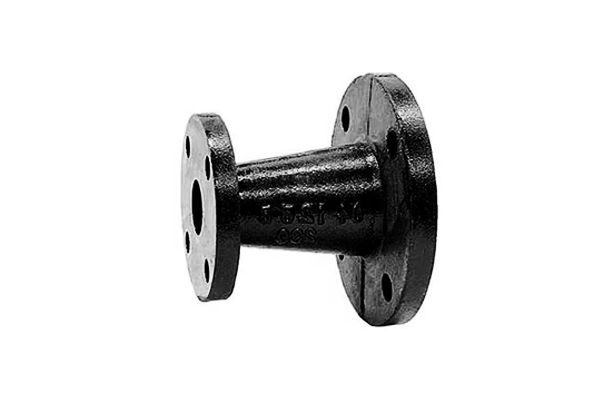
These grades are defined by international standards such as ASTM A536, ISO 1083, and EN-GJS (Europa), and vary primarily in lakas ng paghatak, pagpapahaba, tigas na tigas, at nodularity.
| Grade | Pamantayan | Lakas ng Paghatak (MPa) | Yield Lakas (MPa) | Pagpapahaba (%) | Mga Karaniwang Aplikasyon | Mga Pangunahing Katangian |
| GJS-400-15 | EN-GJS-400-15 | ≥ 400 | ≥ 250 | ≥ 15 | Mga pabahay ng bomba, mga katawan ng balbula, mga panaklaw | Excellent ductility and castability |
| GJS-500-7 | EN-GJS-500-7 | ≥ 500 | ≥ 320 | ≥ 7 | Automotive knuckles, suspensyon ng mga armas, mga fitting ng pipe | Good strength-to-ductility balance |
| GJS-600-3 | EN-GJS-600-3 | ≥ 600 | ≥ 370 | ≥ 3 | Mga bahagi ng istruktura, mga gears, mga flanges | Mas mataas na lakas, moderate elongation |
| ASTM A536 65-45-12 | ASTM A536 | ≥ 450 | ≥ 310 | ≥ 12 | Compressor housings, pang industriya na makinarya | Common US-grade with balanced properties |
| ASTM A536 80-55-06 | ASTM A536 | ≥ 550 | ≥ 380 | ≥ 6 | Axle carriers, Mga Hub, pulleys | Higher load-bearing capacity |
| ASTM A536 100-70-03 | ASTM A536 | ≥ 700 | ≥ 480 | ≥ 3 | High-load gears, heavy-duty structural parts | Mataas na lakas, limited ductility |
| Austempered Ductile Iron (ADI) | ASTM A897 / EN-GJS-800-8 | 800–1600 (Depende sa grado) | 500–1200+ | 1–10 | Mga Gear, rail components, shock-load parts | Exceptional strength and wear resistance |
| Ni-Resist Ductile Iron | ASTM A439 Type D2 | ~400–600 | ~200–300 | ~10–15 | Corrosion-resistant parts in marine and chemical environments | Enhanced corrosion/thermal stability |
7. Advantages of Ductile Iron Investment Casting
Ductile iron investment casting combines the mechanical benefits of nodular iron with the precision of investment casting, offering a powerful solution for advanced engineering applications.

Katumpakan & Pagiging kumplikado
- Fine Features: Accurately reproduces small features such as 0.5 mm threads, 1 mm wall thickness, at complex internal channels that are virtually impossible with sand casting.
- Reduced Machining: Delivers near-net-shape components that cut post-processing by 70–90%, saving time and labor costs—especially for tight-tolerance or intricate geometries.
Kahusayan sa Materyal
- High Yield: Material utilization rates of 85–95% significantly outperform sand casting (60–70%), minimizing waste.
- Cost Optimization: Although upfront costs are higher, the material and machining savings make it economically viable for medium-to-high-value components.
Pinahusay na Mga Katangian ng Mekanikal
- Superior Microstructure: Rapid cooling rates (20–30°C/min) in ceramic shells refine the graphite nodule distribution and grain size.
- Improved Fatigue Life: Reduced porosity and refined nodules boost fatigue resistance and mechanical integrity, extending part lifespan by 20–30% in dynamic loading environments.
Kalayaan sa Disenyo
- Topology Optimization: Compatible with 3D-printed patterns that enable lattice structures, internal cooling channels, and hollow sections.
- Pagbabawas ng Timbang: Structural optimization can reduce component weight by 30–40% while maintaining strength and stiffness—crucial for aerospace, automotive, at mga industriya ng medisina.
8. Limitations and Challenges of Ductile Iron Investment Casting
Sa kabila ng mga kalamangan nito, ductile iron investment casting comes with several constraints that must be carefully managed.
Mas Mataas na Paunang Gastos
- Tooling and Materials: Wax injection dies and high-grade ceramic shells (hal., zirconia-based) make the process 3–5× more expensive than sand casting.
- Cost Justification: Best suited for high-performance or high-precision applications (hal., aerospace, pagtatanggol, medikal na) where long-term benefits outweigh initial expenses.
Mga Limitasyon sa Laki
- Lakas ng Shell: Ceramic shells are fragile beyond a certain mass. Most investment castings are limited to <10 kg.
- Scale Constraints: Large or thick-sectioned parts (hal., >100 mm wall thickness) ay better suited to sand or shell mold casting.
Nodulization Sensitivity
- Sulfur Entrapment: The enclosed ceramic shell retains more sulfur than sand molds, requiring melt sulfur levels to be <0.02% (stricter than <0.03% in sand casting).
- Microstructure Risk: Poor sulfur control degrades nodularity, leading to brittle or flake-like graphite—compromising ductility and fatigue life.
Mas mahabang oras ng lead
- Pagiging kumplikado ng proseso: The investment casting cycle—including wax pattern production, multi-layer shell building, at de-waxing—can take 2–4 na linggo.
- Slower Iteration: Not ideal for mabilis na prototyping or short lead-time projects, unless combined with additive manufacturing (hal., 3D-printed molds or patterns).
9. Common Applications of Ductile Iron Investment Casting

Pang industriya & Mga Bahagi ng Mekanikal
- Katumpakan gear housings at Mga blangko ng gear
- High-load mga panaklaw at mounting flanges
- Mga bahagi ng haydroliko na bomba at mga katawan ng balbula
- Compressor impellers at Mga rotor
Aerospace
- Mga bracket ng istruktura with weight-reducing lattices
- Landing gear linkages at actuator arms
- Missile fin mounts at turret housings
- High fatigue-resistance sensor enclosures
Automotive & Transportasyon
- Magaan ang timbang suspensyon ng mga armas at kontrolin ang mga armas
- Differential carriers at mga buko
- Mataas na katumpakan mga manifold at turbocharger components
- Pasadyang electric vehicle brackets and mounts
Mga Kagamitan sa Medikal
- Biocompatible orthopedic supports at prosthetic frames
- MRI-compatible non-ferrous housings
- Matibay na matibay wheelchair joints at Mga link
Tooling & Mga makinarya
- Katumpakan mga jigs, mga fixtures, at machine tool frames
- Wear-resistant die holders at clamping arms
- High-durability robotic fingers at grippers
Konstruksyon & Arkitektura
- Mataas na lakas load anchors, hinge arms, at mga konektor
- Aesthetic decorative structural elements with complex detail
- Facade support frames with reduced weight
10. Comparison with Sand Casting and Other Methods
| Aspekto | Pamumuhunan sa Paghahagis (Ductile Iron) | buhangin paghahagis | Nawala ang Foam Casting | Centrifugal Casting |
| Katumpakan ng Dimensyon | Napakahusay (±0.2–0.5 mm); Malapit sa net na hugis | Katamtaman (±1.0–2.0 mm); requires more machining | Mabuti na lang (±0.5-1.0 mm); better than sand casting | High in cylindrical parts (±0.3–0.7 mm) |
| Tapos na sa ibabaw | Superior (Ra 1.6–3.2 μm) | Mas magaspang (Ra 6.3–25 μm); post-processing needed | Fair (Ra 3.2–12.5 μm) | Napakaganda (Ra 1.6–6.3 μm) |
| Kumplikadong Geometry | Napakahusay; supports undercuts, manipis na pader (0.5–1 mm), panloob na mga tampok | Limitado; not suitable for intricate details | Mabuti na lang; allows moderate complexity | Mga Maralita; best for simple, symmetric geometries |
| Paggamit ng Materyal | Mataas na (85–95%) | Mas mababa (60–75%) | Katamtaman (70–85%) | Moderate–high; depends on riser design |
| Mga Katangian ng Mekanikal | Enhanced due to finer grain and low porosity | Mabuti na lang, but lower than investment casting | Maihahambing sa paghahagis ng buhangin | Excellent directional strength |
| Gastos (per unit) | High for low volume; economical for precision high-value parts | Mababa ang; ideal for large, low-cost production | Katamtaman; tooling is less expensive than investment | Katamtaman hanggang mataas; setup cost depends on mold |
| Gastos sa Tooling | Mataas na (wax die + shell material) | Mababa ang (wood/metal pattern) | Mababa hanggang katamtaman | Katamtaman (rotating mold system required) |
| Lead Time | Mahaba (2–4 weeks for tooling & shell building) | Maikli (1–2 weeks) | Short to medium | Katamtaman |
| Part Size Capability | Small to medium (Karaniwan <50 kg) | Small to very large (up to several tons) | Medium to large | Limited to cylindrical parts (<500 mm Ø typically) |
| Mga Angkop na Aplikasyon | Aerospace, medikal na, automotive precision parts | Mga bloke ng engine, Mga base ng makina, mga takip ng manhole | Complex castings like engine heads, Mga pabahay ng bomba | Mga Tubo, mga bushing, mga manggas, mga singsing |
11. Quality Assurance and Inspection Standards
To meet demanding performance and regulatory needs, typical inspections include:
- NDT: X-ray, ultrasonic na, dye penetrant testing
- Mechanical testing: Makunat, tigas na tigas, pagpapahaba
- Microstructure analysis: Graphite nodularity and matrix phase
- Dimensional inspection: CMM (Coordinate Pagsukat Machine)
- Standards followed: ASTM A536, ISO 1083, EN 1563
12. Pangwakas na Salita
Ductile iron investment casting is a precise, high-integrity manufacturing method for demanding applications requiring strength, pagiging kumplikado, at dimensional control.
While it comes with higher upfront costs, it significantly reduces machining, assembly, and quality control overhead—especially for parts requiring tight tolerances and excellent performance.
As industries demand lighter, mas malakas, and more complex components, ductile iron investment casting continues to gain traction in critical sectors worldwide.
DEZE Offers Ductile Iron Casting Services
Sa DEZE, we specialize in delivering high-performance ductile iron castings using a full spectrum of advanced casting technologies.
Whether your project demands the flexibility of green sand casting, the precision of shell mold o pamumuhunan paghahagis,
the strength and consistency of metal mold (permanent mold) paghahagis ng mga, or the density and purity provided by sentripugal at lost foam casting,
DEZE has the engineering expertise and production capacity to meet your exact specifications.
Our facility is equipped to handle everything from prototype development to high-volume manufacturing, supported by rigorous kontrol sa kalidad, material traceability, at metallurgical analysis.
Mula sa automotive and energy sectors sa infrastructure and heavy machinery, DEZE delivers custom casting solutions that combine metallurgical excellence, katumpakan ng sukat, at pangmatagalang pagganap.
Makipag ugnay sa Amin, Kumuha ng Instant Quote>>
Mga FAQ
Is ductile iron investment casting suitable for large components?
Typically no. Investment casting excels at producing small to medium-sized parts with intricate shapes. For large components, sand casting is more economical.
How does ductile iron compare to steel in investment casting?
Ductile iron offers better vibration damping and castability, while steel provides superior tensile strength and wear resistance. The choice depends on the application’s load and durability needs.
What tolerances can be achieved with investment casting ductile iron?
Dimensional tolerances of ±0.1–0.3 mm are typical, depending on part complexity and size.
Can ductile iron investment castings be welded?
Welding is possible but may require preheating and post-weld heat treatment to avoid cracking and maintain microstructure integrity.
Is investment casting cost-effective for low-volume production?
It depends. For low-volume precision parts with complex geometry, investment casting can eliminate expensive machining and multi-part assemblies, offsetting the higher tooling cost.

