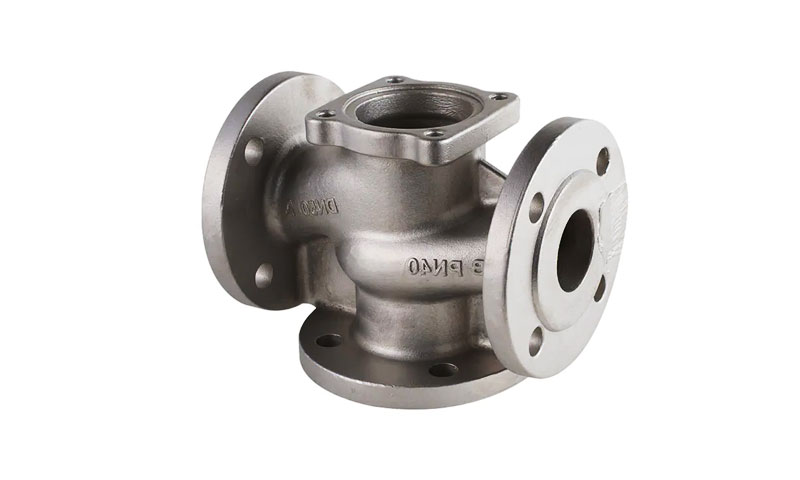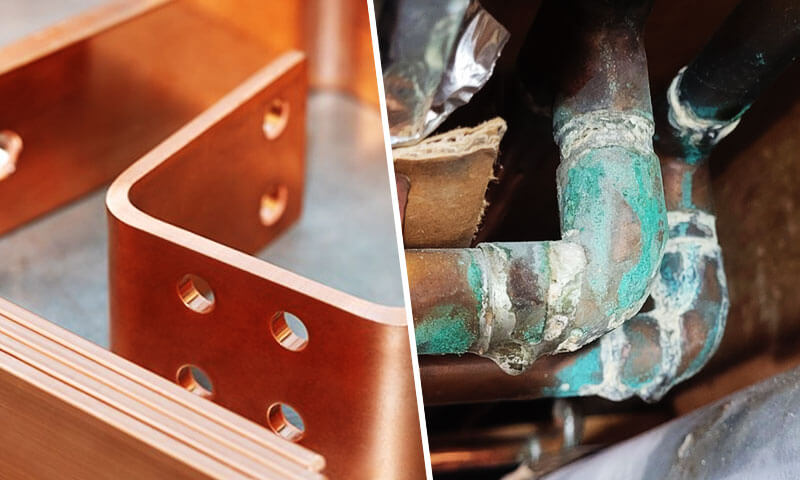
Walk through any old city, and you will see it—the distinctive green patina on copper roofs, mga rebulto, at mga detalye ng arkitektura.
This iconic verdigris is often mistaken for rust, but is it? Does copper rust like iron? The short answer is no, but the complete story is far more nuanced and scientifically rich.
Copper is one of humanity’s oldest and most versatile metals, used for thousands of years in everything from electrical wiring and plumbing to artwork and coinage.
Its durability and corrosion resistance have made it indispensable across countless applications. Yet confusion persists about how copper behaves when exposed to the elements.
This article provides a rigorous, comprehensive examination of copper’s corrosion behavior.
We will explore the chemical definition of rust, the actual corrosion mechanisms of copper, the different types of copper corrosion, the environmental factors that affect its durability, and the practical implications for engineering and design.
1. Does Copper Rust?
The answer is wala na.
Tanso does hindi naman rust because rust is a corrosion product that forms only on iron and iron-based alloys, such as carbon steel and cast iron.
Rust is chemically composed of hydrated iron oxides, primarily Fe₂O₃·nH₂O at Fe₃O₄, which develop when iron reacts with oxygen and moisture.
Unlike many protective oxide films found on non-ferrous metals, rust is porous, malutong na, and loosely attached to the underlying metal.
As it flakes away, fresh iron is continuously exposed, allowing corrosion to progress deeper into the material.

Copper behaves fundamentally differently.
Instead of producing rust, copper undergoes oksihenasyon, gradually forming thin surface layers of copper oxides.
Over extended periods of atmospheric exposure, these oxide layers react with moisture, carbon dioxide, sulfur compounds, and other environmental elements to produce a dense, stable surface film commonly known as patina.
This distinction is one of the most important differences between ferrous and non-ferrous metals.
Unlike rust, copper patina is strongly bonded to the substrate and acts as a natural protective coating.
Rather than accelerating corrosion, it significantly reduces the rate at which oxygen, kahalumigmigan, and pollutants can reach the underlying metal.
Bilang isang resulta, corrosion slows dramatically after the protective layer becomes fully established.
2. The Complete Copper Corrosion Process
Copper corrosion is not a sudden event but a gradual electrochemical transformation that occurs over many years.
As the metal interacts with oxygen, kahalumigmigan, carbon dioxide, and atmospheric pollutants, its surface undergoes a series of predictable changes.
Entablado 1: Fresh Metallic Copper
Newly manufactured copper exhibits a bright reddish-orange metallic appearance with a smooth, reflective na ibabaw.
Sa yugtong ito, the metal is highly reactive because no protective oxide film has yet developed.
Immediately after exposure to air, oxygen molecules begin reacting with the copper surface.
Although this reaction starts within minutes, the resulting oxide layer is initially only a few nanometers thick and is almost invisible to the naked eye.
This ultrathin oxide film represents the first line of defense against environmental exposure.
Entablado 2: Initial Oxidation
As exposure continues, the surface gradually forms cuprous oxide (Cu₂O).
This oxide appears as a reddish-brown film and remains compact and tightly bonded to the underlying metal. Unlike iron rust, it does not crack or peel away.
Sa halip, it serves as a protective barrier that slows oxygen diffusion into the copper substrate.
The oxidation rate during this stage depends on several environmental factors, kasama na ang temperatura, kahalumigmigan, and oxygen availability.
Under normal atmospheric conditions, the process is relatively slow and uniform.
Entablado 3: Development of a Dark Oxide Layer
With prolonged exposure, part of the cuprous oxide further oxidizes into cupric oxide (CuO).
The surface color gradually changes from reddish-brown to dark brown or nearly black, a transformation commonly observed on exposed copper roofing panels, mga kagamitang pang industriya, and outdoor sculptures after several years of service.
Although the appearance changes significantly, the oxide layer remains adherent and protective.
Sa yugtong ito, corrosion penetration into the base metal remains extremely limited because the oxide film continues to restrict the transport of oxygen and moisture.
Entablado 4: Formation of the Protective Green Patina
In outdoor environments, particularly where moisture and atmospheric carbon dioxide are present, the oxide layer undergoes additional chemical reactions.
Copper compounds gradually convert into stable corrosion products such as basic copper carbonate (Cu₂(OH)₂CO₃), while sulfur-containing environments may also produce basic copper sulfate compounds.
Coastal regions with elevated chloride concentrations can generate additional copper chloride-based corrosion products.
These reactions create the distinctive green or blue-green patina associated with historic copper structures.
Contrary to popular belief, this green surface is not a sign of material failure. Sa halip, it represents the mature protective layer that significantly reduces future corrosion rates.
Once fully developed, the patina acts as an effective environmental barrier, limiting the diffusion of oxygen, kahalumigmigan, and pollutants toward the underlying metal.
The time required for natural patina formation varies widely.
In clean rural environments, complete development may require several decades, whereas industrial or marine atmospheres often accelerate the process because of higher humidity and greater concentrations of reactive compounds.
Entablado 5: Long-Term Surface Stability
After the patina has fully matured, copper enters a remarkably stable stage of service.
The corrosion rate decreases substantially because the dense surface film functions as a self-healing protective barrier.
Minor scratches or localized damage are typically repaired naturally through continued oxidation and patina growth, allowing the protective layer to regenerate over time.
This self-protective behavior is one of the principal reasons copper is widely specified for long-life infrastructure and demanding engineering applications.
Architectural cladding, Mga Sistema ng Bubong, mga bahagi ng dagat, mga heat exchanger, plumbing systems, and precision industrial castings can maintain excellent structural integrity for many decades with minimal maintenance.
3. Types of Copper Corrosion
Although copper is renowned for its excellent corrosion resistance, it is not completely immune to degradation.

Uniform Atmospheric Corrosion
Uniform atmospheric corrosion is the most common and least harmful form of copper corrosion.
It occurs when the entire exposed surface reacts gradually with oxygen, kahalumigmigan, carbon dioxide, and trace atmospheric contaminants.
Rather than penetrating deeply into the metal, the reaction forms a thin oxide film that slowly develops into a stable green patina.
Because the corrosion products remain tightly bonded to the substrate, they effectively shield the underlying copper from further environmental attack.
This predictable corrosion behavior explains why copper roofing, architectural façades, monuments, and outdoor sculptures can remain structurally sound for well over a century with minimal maintenance.
Galvanic kaagnasan
Galvanic corrosion occurs when copper is electrically connected to a more active metal while both are exposed to an electrolyte such as rainwater, tubig dagat, or industrial condensate.
Since copper is relatively noble in the galvanic series, the less noble metal becomes the anode and corrodes preferentially.
Materials such as carbon steel, sink, aluminyo, and magnesium are particularly susceptible when directly coupled with copper.
Improper combinations may accelerate corrosion of adjacent components even though the copper itself remains largely unaffected.
Electrical insulation, dielectric fittings, and careful material selection are therefore essential when joining dissimilar metals.
Pitting kaagnasan
Pitting corrosion is a localized form of attack characterized by the formation of small but deep cavities on the metal surface.
Although copper is generally resistant to pitting, unfavorable water chemistry—including low pH, high chloride concentration, elevated dissolved oxygen, or stagnant water—can initiate localized breakdown of the protective oxide film.
Because pits may penetrate deeply while leaving most of the surface intact, they are difficult to detect during routine inspection.
In plumbing systems, mga heat exchanger, and cooling equipment, untreated pitting corrosion can eventually cause leakage or pressure loss.
Erosion-Corrosion
Copper performs exceptionally well in flowing liquids under normal operating conditions.
Gayunpaman, excessively high flow velocities, suspended abrasive particles, or turbulent flow can gradually remove the protective oxide film from the surface.
Repeated stripping of this protective layer exposes fresh metal to continuous corrosion, resulting in accelerated wall thinning.
This combined mechanical and electrochemical degradation is known as erosion-corrosion.
The phenomenon is particularly important in pump impellers, mga tubo ng kondensasyon, Marine Piping, Mga balbula, and hydraulic systems where fluid velocity is high.
Proper hydraulic design, smoother flow paths, and appropriate alloy selection significantly reduce erosion-corrosion risk.
Stress kaagnasan pagbasag (SCC)
Stress corrosion cracking develops when tensile stress and a corrosive environment act simultaneously on susceptible materials.
Pure copper exhibits excellent resistance to SCC, but certain copper alloys—particularly some brasses exposed to ammonia-containing environments—can experience cracking through a mechanism historically known as season cracking.
Residual manufacturing stresses, malamig na nagtatrabaho, or external loading can accelerate crack initiation. Proper stress-relief heat treatment and appropriate alloy selection are effective preventive measures.
Microbiologically Influenced Corrosion (MIC)
In certain industrial water systems, microorganisms can influence corrosion by altering local chemical conditions or producing corrosive metabolic by-products.
Although copper possesses natural antimicrobial properties that inhibit bacterial growth, biofilms may still develop under stagnant conditions.
These localized biological environments can increase the likelihood of pitting or under-deposit corrosion.
MIC is most commonly encountered in cooling water systems, marine facilities, and industrial process equipment where water quality management is insufficient.
4. Factors That Affect Copper Corrosion
Copper corrosion is governed not only by the material itself but also by the surrounding environment and service conditions.
The rate at which copper oxidizes—and whether the resulting corrosion remains protective or becomes localized—depends on multiple interacting factors.

Atmospheric Environment
Environmental exposure is one of the primary determinants of copper corrosion behavior.
In clean rural atmospheres, oxidation proceeds slowly, allowing a dense protective patina to develop over several decades.
Sa kabilang banda, coastal regions expose copper to chloride-rich salt spray, while industrial cities introduce sulfur dioxide and nitrogen oxides that accelerate chemical reactions on the metal surface.
Humidity also plays a critical role because moisture provides the electrolyte required for electrochemical corrosion.
Frequent wet-dry cycling generally accelerates patina formation more rapidly than continuously dry environments.
Water Chemistry
When copper operates in plumbing systems, mga heat exchanger, mga condensers, or cooling circuits, water quality becomes the dominant factor affecting corrosion.
Aggressive water with low pH, excessive dissolved oxygen, high chloride concentrations, or elevated ammonia content can destabilize the protective oxide layer.
Sa kabilang banda, water with balanced chemistry promotes the formation of a stable passive film that significantly extends service life.
Water velocity is equally important. Moderate flow helps maintain clean surfaces, whereas stagnant water encourages localized corrosion and biological growth.
Excessively high flow rates may produce erosion-corrosion by mechanically removing protective films.
Temperatura
Temperature influences nearly every electrochemical reaction involved in corrosion.
Higher temperatures generally increase reaction kinetics, accelerate oxide formation, and may alter the composition of corrosion products.
In heat exchangers, mga boiler, and industrial processing equipment, elevated operating temperatures require careful consideration of alloy selection and water chemistry.
Thermal cycling can also create differential expansion stresses that influence long-term corrosion performance.
Atmospheric Pollutants
Industrial emissions significantly affect the appearance and corrosion behavior of exposed copper.
Sulfur-containing gases promote the formation of copper sulfate compounds, while carbon dioxide contributes to the development of basic copper carbonate.
Coastal chloride deposits may produce copper chlorides that modify the patina’s composition and color.
As environmental regulations have reduced sulfur emissions worldwide, the natural patina formed on modern copper structures often differs from that observed on historical buildings.
Contact with Dissimilar Metals
Copper’s relatively noble electrochemical potential makes galvanic compatibility an important design consideration.
Direct contact with aluminum, galvanized na bakal, carbon bakal, or magnesium in wet environments can create galvanic cells that accelerate corrosion of the less noble material.
Tamang disenyo ng magkasanib na, insulating washers, dielectric unions, and compatible fastening materials are widely used to minimize galvanic corrosion in engineering systems.
Surface Condition and Manufacturing Method
The initial surface condition influences how quickly protective films develop.
Highly polished copper generally oxidizes more uniformly than rough or heavily machined surfaces.
Surface contaminants, machining residues, or embedded foreign particles may disrupt oxide formation and create localized corrosion sites.
Manufacturing processes such as casting, pagkukubli, pagulong gulong, machining, and welding can also influence grain structure and residual stresses, indirectly affecting long-term corrosion performance.
5. Does Green Patina Mean Copper Is Damaged?
Hindi, green patina does not mean copper is damaged. Sa katunayan, the green patina on copper is a sign of protection, not degradation. Here’s why:
The Protective Nature of Patina
| Katangian | Patina (Berde) | Kalawang na (Red-Brown) |
| Adherence | Adherent, tightly bonded to the metal | Non-adherent, flakes off |
| Porosity | Siksik na siksik, relatively non-porous | Porous, allows moisture penetration |
| Protective effect | Slows further corrosion significantly | Accelerates corrosion (catalytic) |
| Volume change | Minimal (no spalling) | Malaki ang (spalling, pag crack na) |
| Mechanical integrity | Maintains structural integrity | Causes structural weakening |
The Patina Layer Structure
The green patina on copper is a multi-layered structure:
| Layer | Ang kapal (M) | Komposisyon | Function |
| Outer layer | 10-50 | Cu₂CO₃(OH)₂ (basic copper carbonate) + CuSO₄·3Cu(OH)₂ (basic copper sulfate) | Weather protection; aesthetic layer |
| Middle layer | 5-20 | Cu₂O (cuprous oxide) | Adhesion and protection |
| Inner layer | 5-10 | Cu (tanso) | Base metal |
Patina as an Architectural Feature
The green patina is not just protective—it is also highly prized for its aesthetic qualities. Iconic examples include:
- Rebulto ng Kalayaan (New York): The copper statue developed its green patina over 20-30 mga taon.
The patina is approximately 0.1 mm thick and has protected the statue for over 130 mga taon. - Copper roofs of European cathedrals: Many historic buildings have copper roofs that have developed beautiful green patinas over centuries.
- Roofs of public buildings: Copper roofing on public buildings often develops a patina that is both protective and aesthetically pleasing.
6. Corrosion Resistance of Different Copper Alloys
Although all copper alloys inherit a degree of corrosion resistance from copper itself, alloying elements significantly influence performance in different environments.
| haluang metal | Main Alloying Elements | Atmospheric Corrosion Resistance | Marine Corrosion Resistance | Paglaban sa Kemikal | Mga Karaniwang Aplikasyon |
| Puro Tanso (C11000) | Cu ≥99.9% | Napakahusay | Mabuti na lang | Mabuti na lang | Mga konduktor ng kuryente, pag bubungan ng bubong, pagtutubero, mga heat exchanger |
| Tanso na Walang Oxygen (C10100) | Cu ≥99.99% | Napakahusay | Mabuti na lang | Excellent in high-purity environments | Vacuum equipment, mga electronics, industriya ng semiconductor |
| tanso (Cu-Zn) | Tanso + Sink | Napakahusay | Katamtaman | Katamtaman | Mga Valve, mga angkop na bagay, plumbing components, pandekorasyon hardware |
| tanso (Cu-Sn) | Tanso + Tin | Napakahusay | Napakahusay | Mabuti na lang | Mga bearing, mga bushing, hardware ng dagat, mga gears |
Silicon tanso (Cu-Si) |
Tanso + Silicon | Napakahusay | Napakahusay | Napakahusay | Architectural fasteners, mga bahagi ng dagat, Mga Casting ng Pamumuhunan |
| Aluminyo Bronze (Cu-Al) | Tanso + Aluminyo | Napakahusay | Natitirang mga | Napakahusay | Mga impeller ng bomba, Mga balbula, offshore equipment, mga propeller ng barko |
| Cupronickel (90/10, 70/30) | Tanso + Nikel | Napakahusay | Natitirang mga | Napakahusay | Seawater piping, mga condensers, mga halaman ng desalination, offshore systems |
| Beryllium tanso (Cu-Be) | Tanso + Beryllium | Napakahusay | Mabuti na lang | Mabuti na lang | Mga bahagi ng aerospace, mga bukal, precision molds, mga konektor ng kuryente |
7. Tanso vs. Bakal na Bakal: A Comparative Analysis of Corrosion Behavior
Copper and iron represent two fundamentally different approaches to corrosion behavior.
While both metals undergo electrochemical reactions when exposed to oxygen and moisture, the nature of their corrosion products determines whether corrosion becomes destructive or protective.
| Aspekto | Tanso | Bakal na Bakal (Steel/Cast Iron) |
| Corrosion product | Copper oxides, carbonates, sulfates, mga klorido | Hydrated iron oxide (kalawang na) |
| Corrosion product colour | Red-brown, itim na itim, berde, blue-green | Red-brown, orange-brown |
| Volume expansion | Minimal (1-1.5×) | Malaki ang (3-7×) |
| Protective effect | Oo nga (patina is protective) | Hindi (rust accelerates corrosion) |
| Spalling/Flaking | Minimal | Malawak na |
| Mechanical weakening | Mabagal (decades to centuries) | Rapid (months to years) |
Corrosion rate (atmospheric) |
0.1-2.0 µm/year | 10-100 µm/year |
| Underwater corrosion | Katamtaman (with protective films) | Rapid (severe in seawater) |
| Life expectancy (istruktura) | 100+ mga taon (many buildings centuries) | 10-50 mga taon (if uncoated) |
| Pagpapanatili | Minimal (passive protection) | Mataas na (patong na patong, pagpipinta, pagsubaybay) |
| Cost of corrosion | Mababa ang | Napakataas |
8. How to Prevent Copper Corrosion
Although copper is naturally corrosion-resistant, proper engineering practices are still required to maximize service life, particularly in aggressive environments such as marine systems, chemical processing facilities, and industrial water circuits.
Select the Appropriate Copper Alloy
Material selection is the first and most important corrosion-control strategy.
Different copper alloys provide different levels of environmental resistance:
- Puro tanso is ideal for electrical applications and general atmospheric exposure.
- Cupronickel alloys provide outstanding seawater resistance.
- Tanso ng aluminyo offers excellent resistance to marine erosion, cavitation, at magsuot ng.
- Silicon bronze provides excellent corrosion resistance for architectural and industrial components.
Choosing an alloy based on the actual service environment prevents premature failure and reduces maintenance requirements.
Control Environmental Conditions
Corrosion rates can often be reduced by controlling exposure conditions.
Important control measures include:
- Maintaining proper water chemistry.
- Controlling chloride concentration.
- Preventing stagnant water zones.
- Reducing excessive flow velocity.
- Limiting exposure to industrial pollutants.
- Avoiding unnecessary moisture accumulation.
In cooling systems and process equipment, water treatment programs are especially important because chemical imbalance can damage otherwise corrosion-resistant copper alloys.
Prevent Galvanic Corrosion
Many copper failures are not caused by copper itself but by improper contact with dissimilar metals.
When copper contacts aluminum, sink, magnesiyo, or carbon steel in a wet environment, an electrochemical cell can form. The less noble metal becomes the anode and corrodes faster.
Common prevention methods include:
- Using dielectric isolation components.
- Selecting compatible fasteners.
- Applying protective coatings at connection points.
- Avoiding direct metal-to-metal contact in humid environments.
Proper system design is often more effective than surface treatment alone.
Apply Protective Surface Treatments
Although copper naturally forms a protective patina, additional surface treatments may be required for specific applications.
| Paggamot | Proseso | Protection | Mga Aplikasyon |
| Lacquering | Clear acrylic or polyurethane coating | Prevents tarnishing; protects decorative surfaces | Arkitektura, pandekorasyon, mga de koryenteng |
| Passivation | Nitric acid dip (10-25%, 40-60°C) | Forms protective oxide film; removes surface contaminants | Electrical contacts, precision components |
| Chromate conversion | Chromic acid treatment | Pinahusay na paglaban sa kaagnasan | Mga de koryenteng, marine, aerospace |
| Electroplating | Tin, nikel, or silver plating | Corrosion protection; kondaktibiti | Electrical contacts, pagtutubero |
| Benzotriazole (BTA) | Chemical inhibitor | Forms protective film | Mga de koryenteng, mga sistema ng paglamig |
Proper Design and Maintenance
Good engineering design significantly influences copper corrosion performance.
Recommended practices include:
- Avoiding sharp corners where deposits accumulate.
- Designing drainage systems to prevent stagnant water.
- Maintaining smooth internal flow passages.
- Inspecting areas exposed to chemicals or seawater.
- Monitoring corrosion rates in critical equipment.
Copper’s natural corrosion resistance provides an advantage, but correct design ensures that advantage is fully realized.
9. Does Copper Corrosion Affect Electrical Conductivity?
Copper is widely regarded as the preferred electrical conductor because of its excellent electrical conductivity, mataas na ductility, and long-term reliability.
Gayunpaman, the assumption that copper corrosion has no impact on electrical performance is incorrect.
Copper corrosion can affect electrical conductivity, especially at contact interfaces, connection points, and high-current applications.
The degree of impact depends on the type of corrosion products formed, the thickness of the corrosion layer, mga kondisyon ng kapaligiran, and whether the affected surface is part of the main current-carrying path.
How Copper Corrosion Products Influence Electrical Conductivity
Copper corrosion is not a single chemical reaction. Different environments produce different corrosion compounds, and each compound has a different effect on electrical performance.
| Corrosion Product | Effect on Electrical Conductivity | Corrosion Characteristics and Mechanism |
| Cu₂O (Cuprous Oxide) | Slight reduction | A semiconductor with relatively low resistance compared with other copper corrosion products. Thin Cu₂O films usually have limited impact on conductivity. |
| CuO (Cupric Oxide) | Moderate reduction | More electrically resistive than Cu₂O. As the oxide layer becomes thicker, contact resistance increases significantly. |
Cu₂S (Copper Sulfide) |
Significant reduction | Forms in sulfur-containing environments. It has poor electrical conductivity and can severely degrade electrical contacts. |
| Cu₂CO₃(OH)₂ (Basic Copper Carbonate / Patina) | Low conductivity; potentially insulating when thick | The green patina found on outdoor copper structures is highly stable but electrically non-conductive, making it unsuitable on contact surfaces. |
| CuCl₂ (Copper Chloride) | Significant reduction | Common in marine or chloride-rich environments. It promotes localized corrosion and creates unstable, high-resistance regions. |
The key point is that a thin oxide film on exposed copper usually has little influence on current flow, but corrosion layers at electrical interfaces can have a major impact.
Effect of Copper Corrosion on Electrical Contacts
Electrical contacts require extremely low resistance to ensure efficient current transfer.
Even a very thin corrosion film can interfere with metal-to-metal contact because current must pass through a higher-resistance barrier instead of directly through copper.
The impact varies depending on the contact material and protection method.
| Contact Type | Effect of Corrosion | Typical Prevention Methods |
| Gold-Plated Contacts | Minimal impact because gold is highly corrosion-resistant and chemically stable. | Usually requires little protection; widely used in precision electronics. |
| Tin-Plated Contacts | Moderate impact; tin oxide forms slowly but may increase resistance under certain conditions. | Periodic inspection and proper contact pressure control. |
| Silver-Plated Contacts | Moderate impact; silver may tarnish in sulfur-containing environments, forming silver sulfide. | Protective coatings and controlled operating environments. |
Bare Copper Contacts |
Significant impact; oxide and sulfide layers increase contact resistance. | Tin plating, nickel plating, Plating ng ginto, antioxidant compounds, or contact lubricants. |
| Brass Contacts | Moderate impact; dezincification can weaken the alloy and affect electrical reliability. | Corrosion-resistant brass grades, pag plating, and environmental control. |
For demanding electrical systems, bare copper is rarely used directly as a contact surface. Sa halip, copper components are commonly plated with tin, nikel, pilak na pilak, or gold to maintain stable electrical performance.
10. Common Myths About Copper Rust and Corrosion
| Myth | Fact |
| “Copper rusts just like iron.” | Copper does not rust. It corrodes by forming oxides, carbonates, and sulfates—not iron oxide. The green patina is not rust. |
| “Green patina means the copper is rotting away.” | The green patina is a protective layer that actually slows further corrosion. It does not indicate damage. |
| “Copper is completely corrosion-proof.” | No metal is completely corrosion-proof. Copper is corrosion-resistant but not immune. It can be corroded by certain chemicals, acidic water, and galvanic coupling. |
| “All copper alloys have the same corrosion resistance.” | Corrosion resistance varies significantly between pure copper and different copper alloys. High-zinc brasses are susceptible to dezincification; nickel-aluminium bronze is highly corrosion-resistant. |
“Copper cannot be used in seawater.” |
Mga haluang metal ng tanso (especially nickel-aluminium bronze, silikon tanso, and copper-nickel alloys) are widely used in seawater applications. Gayunpaman, some brasses are vulnerable to dezincification. |
| “Copper corrosion is always visible.” | Corrosion can occur beneath the surface (hal., pitting, dezincification) and may not be visible until failure occurs. |
| “Tarnishing is the same as corrosion damage.” | Tarnishing is a surface discolouration that may be protective (patina) or purely aesthetic. It is not necessarily damaging. |
11. Pangwakas na Salita
Copper does not rust like iron, but it does undergo a controlled corrosion process that creates protective oxide layers and a stable patina.
This unique corrosion behavior is one of the primary reasons copper and copper alloys have remained essential engineering materials for thousands of years.
Gayunpaman, copper corrosion behavior depends strongly on environmental conditions, haluang metal komposisyon, manufacturing quality, and application requirements.
While pure copper provides excellent corrosion resistance and electrical conductivity, specialized copper alloys such as bronze, tanso ng aluminyo, silikon tanso, and cupronickel provide enhanced performance for more demanding applications.
For engineers selecting materials, the key consideration is not whether copper corrodes, but whether its corrosion mechanism is compatible with the intended service environment.
Mga FAQ
Does copper rust in saltwater?
Hindi, copper does not rust in saltwater—it corrodes. Some copper alloys (such as nickel-aluminium bronze and silicon bronze) are highly resistant to saltwater corrosion.
Gayunpaman, high-zinc brasses can be susceptible to dezincification.
Why does copper turn green?
The green colour is a patina—a protective layer of basic copper carbonate and sulfate.
This layer forms over years of exposure to atmospheric CO₂, kahalumigmigan, and sulfur compounds. It is natural and protective.
Is green copper safe to touch?
Oo nga, the green patina is safe to touch. It is a stable, non-toxic copper compound. Gayunpaman, wash hands after handling as a general hygiene practice.
Can copper be used in drinking water systems?
Oo nga. Copper is widely used in drinking water systems. It is approved for contact with potable water and is naturally antimicrobial.
Dezincification-resistant (DR) brasses are preferred for fittings.
What is the difference between tarnish and corrosion?
Tarnishing is a surface discolouration from a thin reaction layer—it may be protective or aesthetic. Corrosion is the chemical degradation of the metal; it may be uniform or localised.
Does copper react with acid?
Oo nga. Copper reacts with acids to form copper salts and hydrogen gas (or other products). This is why acidic water can cause copper plumbing corrosion.
How do you clean green patina from copper?
You can clean it with a mixture of salt and vinegar, or lemon juice and salt.
Gayunpaman, removing patina is not recommended as it protects the underlying metal. For decorative purposes, you can use a commercial copper cleaner.
Is copper corrosion dangerous?
Generally not. Copper corrosion products are non-toxic in solid form.
Gayunpaman, copper salts can be toxic in high concentrations, especially in drinking water (though copper is a required micronutrient).
Does copper corrode in the atmosphere?
Oo nga, it forms a protective patina. In rural areas, the patina is predominantly copper carbonate (berde); in industrial areas, it may be copper sulfate (berde) or copper sulfides (grey-black).
The patina protects the underlying metal.
How long does copper take to turn green?
Karaniwan 5-20 mga taon, depending on the environment. In aggressive environments (coastal, pang industriya), patina forms faster; in dry, clean environments, it can take decades.