Walk into any hardware store, and you will find brass fittings, Mga balbula, at pandekorasyon hardware.
Ask the salesperson: Does brass rust? The answer you will likely hear is No, brass doesn’t rust. But is that strictly true?
The answer, as with most material science questions, is both yes and no—depending on how you define rust and what you mean by brass.
This article provides a comprehensive, multi‑dimensional examination of brass corrosion.
We will explore the metallurgy of brass, the chemistry of its corrosion, the distinction between rust and tarnish, the environmental factors that accelerate degradation, and practical strategies for prevention and maintenance.
1. What Is Rust? A Chemical Definition
Before answering whether brass rusts, we must define kalawang na.
The Chemistry of Rust
Rust is the common name for hydrated iron(III) oxide (Fe₂O₃·nH₂O). It forms when iron (Fe) reacts with oxygen (O Reduxine) and water (H₂O) through an electrochemical process:
| Reaction | Equation | Paglalarawan |
| Anodic | Fe → Fe²⁺ + 2E⁻ | Iron dissolves at the anode. |
| Cathodic | O Reduxine + 2H₂O + 4e⁻ → 4OH⁻ | Oxygen and water consume electrons. |
| Pangkalahatang | 4Fe + 3O Reduxine + 6H₂O → 4Fe(OH)₃ → 4Fe(OH)₃ → 2Fe₂O₃·3H₂O | Hydrated iron oxide (kalawang na). |
Characteristics of Rust
| Katangian | Paglalarawan |
| Colour | Red‑brown to orange‑brown (hydrated); black or yellow in other oxides. |
| Istraktura | Flaky, porous, non‑adherent; does not protect underlying metal. |
| Dami ng | Expands to 3‑7× the original iron volume, causing spalling and structural damage. |
| Required elements | Bakal na Bakal (Fe), oxygen (O Reduxine), tubig (H₂O) (or moisture). |
Critical point: Because brass contains no significant metallic iron, ito cannot form rust.
The reddish‑brown or greenish‑brown discolouration that appears on brass surfaces is tarnish or patina, not rust.
2. Ano ang tanso? Metallurgy and Composition
Kahulugan at Komposisyon
tanso is a copper‑zinc (Cu‑Zn) haluang metal. The zinc content ranges from 5% sa higit pa 40%, with additional elements such as lead, tin, aluminyo, Silicon, or arsenic added for specific properties.
| Uri ng | Tanso (%) | Sink (%) | Other elements | Key properties |
| Alpha brass | >65 | <35 | – | Ductile, cold‑workable; hal., cartridge brass (70/30). |
| Alpha‑beta brass | 55‑65 | 35‑45 | – | Mas malakas, hot‑workable; hal., Muntz metal (60/40). |
| Beta brass | <55 | >45 | – | Mas mahirap, mas malutong pa; limited use. |
| Leaded brass | 57‑62 | 33‑40 | 1‑3% Pb | Napakahusay na machinability; hal., C36000 (free‑cutting). |
| Tin brass | 70‑80 | 15‑25 | 1‑5% Sn | Improved corrosion resistance; hal., admiralty brass. |
| Arsenical brass | 70‑80 | 15‑25 | 0.02‑0.05% As | Resists dezincification. |
The Copper‑Zinc Phase Diagram
Brass is a solid solution of zinc in copper. The addition of zinc strengthens the alloy through solid‑solution hardening but also alters its corrosion behaviour significantly.
Key metallurgical points:
- Alpha phase (FCC structure) – ductile, magandang paglaban sa kaagnasan.
- Beta phase (BCC structure) – harder, more prone to dezincification.
- The phase balance depends on zinc content and temperature.
3. How Brass Actually Corrodes
Although brass cannot rust, it remains chemically active and continuously interacts with its surrounding environment.
These interactions lead to several distinct corrosion mechanisms, each governed by different electrochemical principles and environmental conditions.
Unlike rusting in steel, brass corrosion generally progresses through a sequence of surface transformations, beginning with mild oxidation and, under more aggressive conditions, developing into localized electrochemical attack.
Initial Surface Tarnishing: The First Stage of Brass Oxidation
The earliest and most common change observed on brass is tarnishing.
When freshly manufactured brass is exposed to air, copper and zinc atoms at the surface react slowly with atmospheric oxygen.
Sa simula, this reaction forms an extremely thin layer consisting primarily of:
- Copper oxide (Cu₂O and CuO)
- oksido de sink (ZnO)
This oxide film gradually changes the appearance of brass from its original bright golden color to:
- Light yellow
- Brown
- Dark brown
- Kulay-abo
The rate of tarnishing depends on factors such as:
- Relative humidity
- Temperatura
- Air pollution
- Sulfur-containing gases
- Fingerprints and skin oils
Unlike steel rust, this thin oxide layer is compact, adherent, and generally protective.
Rather than accelerating degradation, it acts as a barrier that reduces further oxygen diffusion into the underlying alloy.
From an engineering perspective, tarnishing is primarily an aesthetic change and has little impact on the structural performance of brass components.
Pagbuo ng Patina: Nature’s Protective Coating
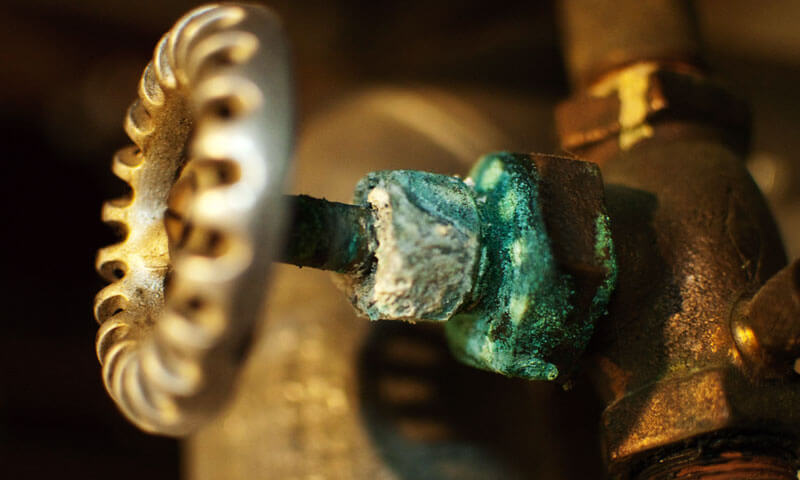
With prolonged exposure to outdoor environments, particularly those containing moisture and carbon dioxide, brass undergoes further chemical reactions that lead to the development of a patina.
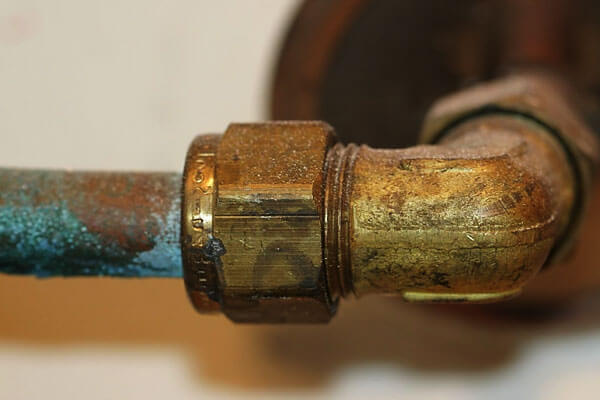
The patina consists mainly of stable corrosion products such as:
- Copper carbonate
- Basic copper carbonate
- Copper hydroxide
- Copper sulfate (in polluted atmospheres)
Depending on environmental conditions, the surface may develop colors ranging from dark brown to the characteristic green or blue-green seen on historic monuments and architectural features.
Unlike rust, which is porous and continuously propagates corrosion, a mature patina is dense, chemically stable, and highly protective.
It isolates the underlying alloy from the atmosphere, significantly slowing subsequent corrosion.
This natural passivation explains why centuries-old brass sculptures, decorative fittings, and heritage architectural elements often retain excellent structural integrity despite prolonged outdoor exposure.
Dezincification: The Most Significant Form of Brass Corrosion
While tarnishing and patina formation are generally benign, dezincification is a destructive corrosion mechanism that can seriously impair the mechanical performance of brass.
Dezincification is a selective leaching process in which zinc, being more electrochemically active than copper, preferentially dissolves from the alloy when exposed to certain electrolytes, particularly chloride-containing water.
As zinc is removed, the remaining material becomes a porous, copper-rich skeleton with greatly reduced strength and pressure-bearing capability.
Typical conditions that promote dezincification include:
- Hot potable water
- tubig dagat
- High-chloride solutions
- Stagnant water systems
- Slightly acidic environments
Visible indicators include:
- Reddish or pink discoloration
- White deposits composed of zinc corrosion products
- Surface pitting
- Increased porosity
- Leakage in pressure-containing components
For critical plumbing and marine applications, dezincification-resistant (DZR) tanso is specifically engineered with controlled alloying additions to suppress this selective corrosion mechanism and extend service life.
Stress kaagnasan pagbasag: A Hidden Failure Mechanism
Another important, though less common, degradation process is stress kaagnasan pag crack (SCC).
SCC occurs when three conditions exist simultaneously:
- A susceptible brass alloy
- Sustained tensile stress (either applied or residual)
- A specific corrosive environment, most notably one containing ammonia or ammonium compounds
Rather than causing uniform material loss, SCC leads to the initiation and propagation of fine cracks, often along grain boundaries.
These cracks can grow with little visible surface corrosion and may ultimately result in sudden, brittle fracture.
Components at particular risk include:
- Valve stems
- Compression fittings
- Mga fastener
- Mga Bukal
- Precision machined parts subjected to residual machining stresses
Stress-relief heat treatment, proper alloy selection, and avoiding ammonia-rich service environments are effective strategies for minimizing SCC susceptibility.
Uniform and Localized Corrosion
In aggressive chemical environments, brass may also experience uniform corrosion, where the material is gradually dissolved across the entire exposed surface, o localized corrosion, where attack is concentrated in discrete areas.
Strong acids, strong alkalis, and certain industrial chemicals can dissolve the protective oxide films, leading to measurable metal loss over time.
Unlike rust, gayunpaman, these processes do not produce expansive iron oxide scales. Sa halip, the alloy slowly becomes thinner or develops localized pits, while the overall mode of degradation remains fundamentally different from the rusting behavior of iron and steel.
Dahil dito, evaluating brass durability requires understanding its specific corrosion mechanisms rather than applying concepts associated with ferrous materials.
Galvanic kaagnasan
When brass is coupled with a more noble metal (hal., hindi kinakalawang na asero, tanso) in a conductive environment, the brass becomes the anode and corrodes preferentially.
| Couple | Risk level | Preventive measure |
| Brass – stainless steel | Mataas na (brass corrodes) | Use insulating washers; avoid direct contact in wet environments. |
| Brass – copper | Mababa ang (similar potential) | Usually acceptable. |
| Brass – aluminum | Napakataas (aluminum corrodes) | Insulation required. |
| Brass – carbon steel | Katamtaman (steel corrodes) | Protect steel with coating. |
4. tanso vs. tanso: Corrosion Comparison
Brass and bronze are often confused. Their corrosion behaviour differs due to the primary alloying element (zinc in brass; tin in bronze).
| Pag-aari | tanso (Cu‑Zn) | tanso (Cu‑Sn) |
| Primary alloying element | Sink | Tin |
| Corrosion mechanism | Dezincification, general tarnish | Selective tin leaching (rare), bronze disease |
| Seawater resistance | Mga Maralita (dezincification risk) | Napakahusay (Mga tanso ng lata, aluminium bronzes) |
| Pagdungis | Rapid; green/brown patina | Mas mabagal; green/brown patina |
| Stress corrosion | Susceptible (amonya, mercuric salts) | Generally resistant |
| Bimetallic corrosion | Katamtaman (couples with noble metals) | Mabuti na lang (less prone to galvanic attack) |
5. Environmental Factors Affecting Brass Corrosion
Although brass does not rust, its corrosion behavior is highly dependent on the environment in which it operates.
The stability of the protective oxide film that naturally forms on brass can be significantly influenced by kahalumigmigan, mga pollutants, temperatura, water chemistry, pH, at mekanikal na stress.
Humidity and Moisture
Moisture is one of the most influential factors affecting brass corrosion.
Water acts as an electrolyte, enabling electrochemical reactions between the alloy surface and its surrounding environment.
As relative humidity increases, a thin moisture film gradually develops on the brass surface, facilitating oxygen diffusion and ionic transport.
In dry air, oxidation occurs slowly and typically produces only a thin, compact oxide film.
As humidity rises, oxidation accelerates, resulting in more pronounced tarnishing and eventual patina formation.
Under continuously wet or submerged conditions, the protective oxide layer may become unstable, increasing the likelihood of localized corrosion.
The influence of humidity on brass corrosion can be summarized as follows:
| Relative Humidity / Exposure | Typical Corrosion Behavior | Corrosion Severity |
| Sa ibaba 30% RH | Minimal atmospheric oxidation; surface remains bright for extended periods | Napakababa |
| 30–60% RH | Gradual tarnishing; stable oxide film develops | Mababa hanggang sa Katamtaman |
| Sa itaas 60% RH | Faster oxidation and discoloration; pollutants may accelerate corrosion | Katamtaman hanggang sa Mataas |
| Continuous wetting or immersion | Active electrochemical corrosion; risk of dezincification in stagnant water | Napakataas na |
Atmospheric Pollutants
Airborne pollutants can dramatically alter the corrosion behavior of brass by interacting with its naturally protective oxide layer.
Industrial emissions, marine aerosols, and chemical vapors often accelerate surface degradation through specific electrochemical mechanisms.
The most significant atmospheric pollutants affecting brass include sulfur compounds, mga klorido, amonya, and oxidizing gases.
| Pollutant | Primary Effect on Brass | Corrosion Mechanism |
| Sulfur dioxide (SO₂) | Accelerated tarnishing and dark discoloration | Formation of copper sulfides (Cu₂S) |
| Chloride ions (Salt spray) | Pitting and dezincification | Breakdown of passive oxide films |
| Ammonia (NH ₃) | Stress corrosion cracking | Grain boundary attack under tensile stress |
| Ozone (O₃) | Accelerated oxidation | Increased oxide formation rate |
Sulfur Dioxide (SO₂)
Sulfur dioxide, commonly found in industrial and urban atmospheres, reacts readily with copper on the brass surface to form copper sulfides.
These compounds produce the characteristic dark brown or black tarnish often observed on brass exposed to polluted air.
Although this tarnish is generally superficial, prolonged exposure can accelerate overall oxidation rates and reduce the aesthetic appearance of decorative components.
Chloride-Containing Environments
Chloride ions are among the most aggressive species affecting brass.
Coastal regions, mga platform sa malayo sa pampang, mga halaman ng desalination, and marine equipment are continuously exposed to salt-laden air.
Chlorides destabilize the passive oxide layer and promote:
- Localized pitting
- Crevice corrosion
- Dezincification
- Galvanic corrosion when dissimilar metals are present
For these applications, naval brass, silicon brass, or dezincification-resistant (DZR) brass is typically recommended.
Ammonia Exposure
Although ammonia has little effect on unstressed brass, it becomes highly destructive when combined with residual or applied tensile stress.
Under these conditions, ammonia can penetrate grain boundaries and initiate stress kaagnasan pag crack (SCC).
This phenomenon is particularly dangerous because:
- Cracks may develop without significant material loss.
- Failure can occur suddenly with little external warning.
- Mechanical strength deteriorates long before visible corrosion appears.
Components such as valve stems, compression fittings, mga bukal, and fasteners require careful alloy selection and stress-relief treatment when ammonia exposure is anticipated.
Ozone and Strong Oxidizing Atmospheres
Ozone is a highly reactive oxidizing agent that increases the rate of oxide film formation on brass surfaces.
While the resulting oxide layer may remain protective under mild conditions, prolonged exposure to high ozone concentrations can accelerate discoloration and surface aging.
Temperatura
Temperature directly affects corrosion kinetics by increasing atomic diffusion, chemical reaction rates, and electrochemical activity.
Sa pangkalahatan, every increase in temperature accelerates oxidation and corrosion, although the specific mechanism depends on the alloy and service environment.
| Saklaw ng Temperatura | Typical Corrosion Behavior |
| –10°C to 40°C | Slow oxidation; protective patina develops gradually |
| 40°C to 80°C | Corrosion reactions accelerate; oxidation may occur two to five times faster than at ambient temperature |
| Above 80°C | Increased risk of dezincification, oxide thickening, and hot-water corrosion |
| Below –100°C | Extremely low corrosion rates; brass retains excellent toughness and ductility |
pH of Aqueous Solutions
The acidity or alkalinity of an aqueous environment has a major influence on brass corrosion because pH affects both the stability of protective oxide films and the electrochemical dissolution of copper and zinc.
| pH Range | Corrosion Severity | Dominant Mechanism |
| Sa ibaba 4 (Strongly Acidic) | Mataas na | Rapid dissolution of copper and zinc |
| pH 4–8 (Neutral to Slightly Acidic) | Katamtaman | Tarnishing with protective oxide formation |
| pH 8–12 (Mildly Alkaline) | Mababa ang | Stable oxide and hydroxide films provide protection |
| Sa itaas 12 (Strongly Alkaline) | Katamtaman | Copper dissolution in alkaline complexing environments |
6. Corrosion Products on Brass: What Appears on the Surface?
The discolouration that appears on brass surfaces is not rust; it is a mixture of copper and zinc compounds.
| Colour | Primary compound | Formation condition |
| Bright yellow‑gold | Clean Cu‑Zn alloy surface | Freshly machined or polished. |
| Reddish‑brown | Cuprous oxide (Cu₂O) | Initial oxidation in air. |
| Brown / dark brown | Cupric oxide (CuO) + oksido de sink (ZnO) | Prolonged exposure to air and moisture. |
| Grey / itim na itim | Copper sulfide (Cu₂S) + zinc sulfide | Industrial atmospheres (SO₂, H₂S). |
| Berde / blue‑green | Basic copper carbonate (Cu₂CO₃(OH)₂) | Long‑term atmospheric exposure (patina). |
| Blue‑green | Copper chloride (CuCl₂) | Marine / chloride environments. |
| Puti / powdery | oksido de sink (ZnO) or zinc carbonate | Preferential zinc corrosion (dezincification). |
| Pink / pula | Copper‑rich residue | Dezincification (zinc leached out, copper remains). |
7. Preventing Corrosion in Brass
Alloy Selection
| haluang metal | Paglaban sa kaagnasan | Suitable environments |
| C87610 / C87850 (silicon brass) | Napakahusay (dezincification‑resistant) | Potable water, marine, kemikal na. |
| C87400 / C87500 (silicon brass) | Napakaganda | General industrial. |
| C68700 (arsenical admiralty brass) | Mabuti na lang (water‑resistant) | Mga Condenser, mga heat exchanger. |
| C46400 (naval brass) | Katamtaman (dezincification risk) | Freshwater, marine (with protection). |
| C36000 (leaded brass) | Mga Maralita (low corrosion resistance) | Dry indoor, machined parts only. |
Mga Paggamot sa Ibabaw
| Paggamot | Layunin | Paraan |
| Lacquering | Prevents tarnishing | Clear acrylic or polyurethane coating. |
| Passivation | Bumubuo ng proteksiyon oksido layer | Nitric acid dip (10‑25%, 40‑60°C). |
| Chromate conversion | Pinahuhusay ang kaagnasan paglaban | Chromic acid treatment (dilaw o malinaw). |
| Anodising | Thick oxide layer for wear/corrosion | Anodic oxidation (limited use on brass). |
| Electroplating | Decorative/protective layer | Nikel, kromo, or gold plating. |
Coatings and Inhibitors
| Patong na patong / inhibitor | Paglalapat | Pagiging epektibo |
| Clear lacquer | Pandekorasyon na hardware | Mabuti na lang (2‑5 years). |
| Benzotriazole (BTA) | Corrosion inhibitor for copper alloys | Napakahusay; forms protective film. |
| Water‑based sealers | Architectural brass | Katamtaman; requires reapplication. |
| Langis / waks | Tool surfaces | Temporary; needs re‑application. |
8. Cleaning and Maintaining Brass
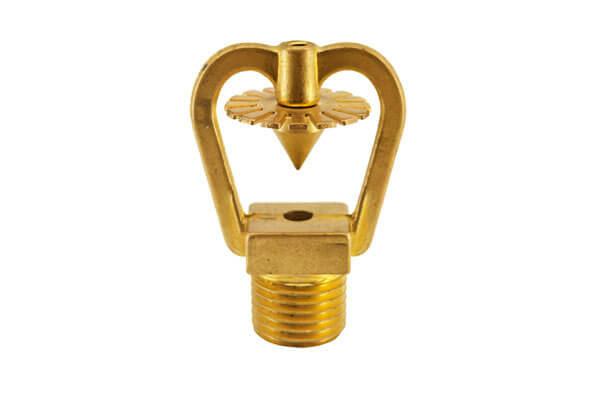
Although brass is highly resistant to rust and offers excellent long-term durability, its appearance and corrosion resistance can be significantly influenced by proper maintenance.
Routine Cleaning for Everyday Maintenance
Regular cleaning of brass components is the simplest and most effective way to extend the service life.
Removing dust, mantika, mga fingerprint, mga asin, and industrial pollutants helps prevent contaminants from accelerating oxidation or initiating localized corrosion.
For most household and industrial applications, a soft cloth combined with warm water and a mild soap solution is sufficient to remove surface dirt without damaging the protective oxide film.
Pagkatapos ng paglilinis, the surface should always be rinsed thoroughly with clean water and dried completely to prevent residual moisture from promoting corrosion.
Routine cleaning is particularly beneficial for:
- Pandekorasyon na hardware
- Mga hawakan ng pinto
- Plumbing fixtures
- Mga instrumentong pangmusika
- Precision mechanical components
- Electrical hardware
Unlike aggressive polishing, gentle cleaning preserves the integrity of the natural oxide layer while maintaining an attractive appearance.
Removing Tarnish
As brass ages, oxidation gradually changes its bright golden color to shades of brown, dark bronze, or black.
This tarnish is typically confined to the surface and does not indicate structural deterioration.
Several cleaning methods can effectively remove tarnish.
Mild Organic Cleaning Solutions
Natural acidic cleaners, such as vinegar combined with salt or lemon juice mixed with baking soda, are widely used for removing moderate tarnish.
The mild acid dissolves surface oxidation while the gentle abrasive action helps restore the original metallic finish.
Gayunpaman, because these solutions are acidic, they should not remain on the brass surface for extended periods.
After treatment, the component should be rinsed thoroughly with clean water and dried immediately to eliminate any remaining acidic residue.
These methods are generally suitable for:
- Decorative brass ornaments
- Household fixtures
- Kitchen hardware
- Lightly tarnished accessories
Commercial Brass Polishes
For heavily tarnished brass, commercial polishing compounds provide faster and more consistent results.
These products typically contain fine abrasive particles and chemical cleaning agents that remove oxidation and restore the characteristic golden shine.
While polishing greatly improves appearance, it also removes part of the naturally developed oxide layer and, sa ilang mga kaso, the protective patina.
Excessive or frequent polishing may gradually reduce surface protection and alter the appearance of antique or historical brass objects.
Kaya nga, commercial polishing should be used selectively rather than as routine maintenance.
Cleaning Agents to Avoid
Not all cleaning chemicals are suitable for brass.
One of the most important precautions is to avoid ammonia-based cleaners, particularly for stressed or load-bearing brass components.
Ammonia is well known for promoting stress kaagnasan pag crack (SCC) in susceptible brass alloys.
Even relatively low concentrations may penetrate grain boundaries and initiate microscopic cracks when combined with residual or applied tensile stresses.
Dahil dito, ammonia-containing cleaning products should never be used on:
- Valve components
- Compression fittings
- Mga Bukal
- Mga fastener
- Cartridge cases
- Precision mechanical parts
Katulad din nito, highly concentrated acids, strong alkalis, abrasive steel wool, and aggressive grinding tools should be avoided unless specifically recommended for industrial restoration.
Protective Surface Treatments
Cleaning alone does not prevent future oxidation.
After the surface has been cleaned, many brass components benefit from additional protective treatments that isolate the metal from moisture and atmospheric pollutants.
Common protective methods include:
Wax Coatings
Microcrystalline wax or high-quality paste wax forms a thin hydrophobic barrier over the brass surface.
Wax coatings provide several advantages:
- Reduce oxygen exposure
- Repel moisture
- Slow tarnishing
- Preserve surface appearance
- Maintain natural metallic luster
Wax protection is widely used for decorative architectural brass and museum artifacts.
Protective Oils
Light mineral oils are frequently applied to industrial brass components during storage or transportation.
Oil films protect against:
- Humidity
- Fingerprints
- Temporary atmospheric oxidation
Although oil coatings require periodic renewal, they provide an inexpensive solution for short-term corrosion protection.
Lacquer Coatings
Clear lacquer forms a transparent protective barrier that prevents direct contact between the brass surface and the surrounding environment.
Lacquer coatings are commonly applied to:
- Hardware ng pinto
- Email Address *
- Decorative trim
- Mga instrumentong pangmusika
When properly maintained, lacquer significantly reduces the need for polishing by preventing oxidation from occurring in the first place.
Electroplated Coatings
For demanding industrial applications, brass may be electroplated with metals such as nickel or chromium.
Electroplating provides:
- Improved corrosion resistance
- Higher wear resistance
- Enhanced decorative appearance
- Increased chemical stability
Electrical connectors are often plated with tin, pilak na pilak, or gold to maintain low contact resistance while protecting the underlying brass substrate.
Preserving Natural Patina
Not all brass should be polished to a bright finish.
For many architectural, historical, at mga artistikong aplikasyon, the naturally developed patina is considered both aesthetically valuable and functionally beneficial.
The green or dark bronze surface seen on historical buildings and monuments is not a sign of deterioration but a stable protective layer that slows further corrosion.
Dahil dito, conservation specialists generally preserve rather than remove mature patina.
For architectural brass exposed to outdoor environments, maintenance often consists of periodic cleaning followed by the application of protective wax, allowing the patina to continue developing naturally.
9. Applications Where Brass Corrosion Matters
| Industriya ng Industriya | Typical brass components | Corrosion concerns | Pagbawas |
| Pagtutubero | Mga Valve, mga angkop na bagay, mga gripo | Dezincification; lead leaching | Use DR brass (C87610, C87850). |
| Marine | Propeller shafts, seawater pumps | Dezincification, pitting | Use naval brass (C46400) or silicon brass. |
| Mga de koryenteng | Terminals, mga konektor, switchgear | Pagdungis (increases contact resistance) | Silver or tin plating. |
| Automotive | Mga Radiator, heater cores, mga konektor | Corrosion from coolants, mga asin | Use arsenical brass; proper coolant maintenance. |
| Arkitektura | Handrails, door hardware, pag bubungan ng bubong | Atmospheric tarnishing, patina | Lacquer or allow natural patina. |
| Mga instrumentong pangmusika | Trumpets, mga trombones, mga saxophone | Pagdungis (aesthetic) | Regular cleaning; lacquer coating. |
| Ammunition | Cartridge cases (C26000) | Season cracking (amonya) | Pagbawas ng stress; controlled storage. |
| Consumer hardware | Mga kandado, hinges, mga susi | Pagdungis (cosmetic) | Lacquer; regular polishing. |
10. A Summary Comparison: Brass vs Rust
| Pamantayan | Rust on iron/steel | Corrosion on brass |
| Chemical definition | Hydrated iron oxide (Fe₂O₃·nH₂O) | Copper and zinc oxides, carbonates, mga klorido, sulfides. |
| Required element | Bakal na Bakal (Fe) | Tanso (Cu) at sink (Zn). |
| Colour | Red‑brown, orange‑brown | Brown, itim na itim, berde, blue‑green, red‑pink (dezincification). |
| Istraktura | Flaky, porous, non‑adherent | Often adherent (patina); may be powdery (dezincification). |
| Volume expansion | 3‑7× (causes spalling) | Minimal to moderate (patina is protective). |
| Protective effect | Wala (rust accelerates corrosion) | Oo nga (patina slows further corrosion). |
| Pag iwas sa | Paint, galvanise, langis, haluang metal | Select DR alloy; lacquer; isolate. |
| Repair | Scrape/remove; repaint | Polish; remove active corrosion; reseal. |
11. Pangwakas na Salita
Kaya nga, does brass rust? The scientific answer is unequivocal: Hindi. Brass does not rust because rust is a corrosion product unique to iron and steel, while brass is a copper-zinc alloy that contains virtually no iron.
Gayunpaman, brass is not immune to environmental degradation.
Throughout its service life, it undergoes a variety of corrosion processes—including oxidation, tarnishing, patina formation, dezincification, at, under specific conditions, stress kaagnasan pag crack.
These mechanisms differ fundamentally from the rusting of ferrous materials in both chemistry and engineering significance.
Sa huli, understanding the distinction between kalawang na at brass corrosion is essential for engineers, mga designer, mga tagagawa, and end users alike.
By selecting the appropriate alloy, considering the operating environment, and applying sound maintenance practices,
brass components can deliver outstanding reliability, mahusay na paglaban sa kaagnasan, and an exceptionally long service life in a wide range of industrial and commercial applications.
Mga Madalas Itanong
Does brass rust in water?
Hindi, brass does not kalawang na (form iron oxide). Gayunpaman, brass does corrode in water, particularly stagnant or acidic water, where dezincification can occur.
Use dezincification‑resistant brasses for water applications.
Why does my brass turn green?
The green colour is a protective patina of basic copper carbonate (Cu₂CO₃(OH)₂) .
It forms when brass is exposed to moisture and carbon dioxide over a long period. It is not harmful—it actually protects the metal.
Does brass rust in saltwater?
Brass does not rust, but it does corrode in saltwater.
High‑zinc brasses are susceptible to dezincification and pitting in chloride environments. Silicon brasses and bronzes are preferred for marine applications.
Can brass rust like iron?
Hindi. Rust is specific to iron and its alloys (bakal na bakal, cast iron). Brass contains no iron (except as a trace impurity), so it cannot form rust.
How do I remove green corrosion from brass?
For mild green patina, use a commercial brass polish or a mixture of lemon juice and salt.
For heavy or pitted corrosion, professional cleaning and stabilisation (with BTA) may be required.
Does brass turn black?
Oo nga. In industrial atmospheres containing sulfur compounds, brass forms a grey‑black copper sulfide film. This is a form of tarnish, not rust.