
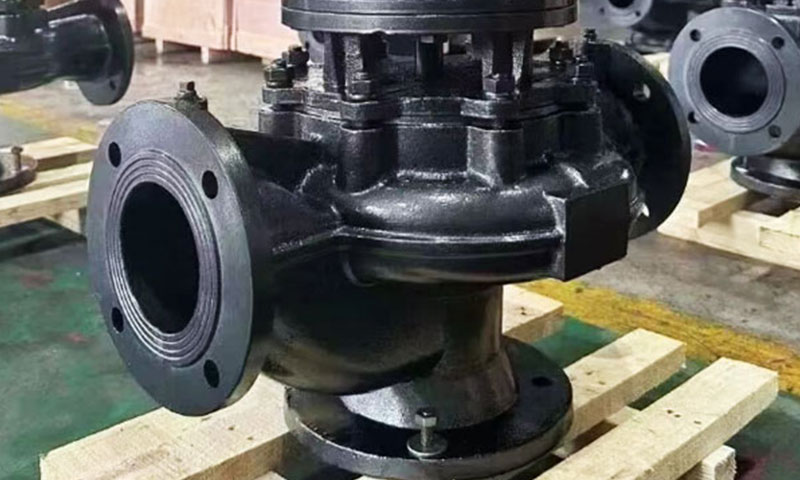
Pump housings are the structural backbone of any pumping system, enclosing the impeller and directing fluid flow while withstanding internal pressure, corrosive media, at mekanikal na stress.
When these housings are required to handle aggressive fluids, mataas na temperatura, or sanitary conditions, hindi kinakalawang na asero becomes the material of choice, at pamumuhunan paghahagis emerges as the preferred manufacturing method for achieving complex geometries with exceptional precision and surface quality.
Stainless steel pump housings produced through investment casting offer a unique combination of corrosion resistance, mekanikal na lakas, katumpakan ng sukat, and design freedom that is unmatched by other manufacturing routes.
From chemical processing and marine applications to food and pharmaceutical industries, investment‑cast stainless steel pump housings provide reliable, long‑service‑life solutions for the most demanding fluid handling applications.
1. What Is a Stainless Steel Pump Housing?
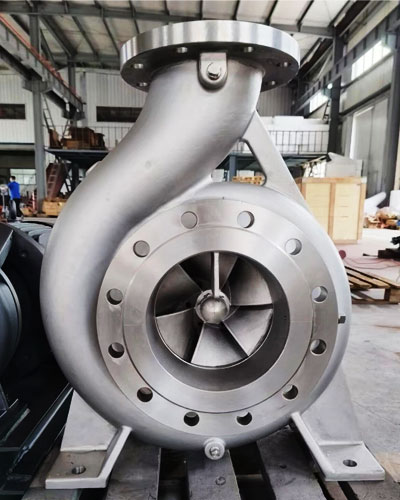
A hindi kinakalawang na asero pump housing is the primary external structural component of a pump assembly that encloses and protects internal rotating components while controlling the movement of the pumped fluid.
It is also commonly referred to as a pump casing, pump body, o, in centrifugal pump designs, a volute casing.
As one of the most critical pressure-containing components in a pump system, the housing is responsible for maintaining structural stability under continuous operating conditions.
It must withstand internal fluid pressure, hydraulic impact, panginginig ng boses, mekanikal na naglo-load, temperature variations, and long-term exposure to potentially aggressive media.

Unlike simple protective covers, a pump housing directly influences pump efficiency, pagiging maaasahan, at buhay ng serbisyo.
Its internal geometry determines how effectively kinetic energy generated by the impeller is converted into pressure energy, while its material characteristics determine resistance against corrosion, pagguho ng lupa, and mechanical failure.
Stainless steel pump housings are widely used in demanding industrial environments because stainless steel combines excellent corrosion resistance with high mechanical strength,
making it suitable for applications involving chemicals, tubig dagat, food products, mga parmasyutiko, and high-purity fluids.
Main Functions of a Stainless Steel Pump Housing
| Function | Paglalarawan |
| Flow direction | Guides fluid from the impeller to the discharge outlet with minimal turbulence. |
| Pressure containment | Withstands internal pressure generated by the pump. |
| Impeller support | Provides a mounting interface for the impeller shaft and bearings. |
| Sealing surface | Provides mounting surfaces for seals, mga gasket, and connections. |
| Structural integrity | Resists external loads, panginginig ng boses, at thermal expansion. |
| Corrosion protection | Protects internal components from corrosive media. |
Key Design Features of a Pump Housing
| Tampok | Paglalarawan | Kahalagahan |
| Volute chamber | The spiral‑shaped passage that converts velocity to pressure. | Determines pump efficiency and performance. |
| Suction inlet | Fluid entry point. | Must be smooth to minimise turbulence. |
| Discharge outlet | Fluid exit point. | Pressure‑containing; must withstand maximum operating pressure. |
| Mounting feet | Structural supports for the pump. | Must be rigid to maintain alignment. |
| Flange connections | Interfaces with piping. | Must be leak‑tight and dimensionally accurate. |
| Bearing housing | Support for the pump shaft. | Requires precise alignment. |
| Drain plugs | For maintenance and cleaning. | Essential for hygiene and maintenance. |
2. Why Is Investment Casting Ideal for Stainless Steel Pump Housings?
Stainless steel pump housings are critical components that directly influence pump efficiency, pagiging maaasahan, at buhay ng serbisyo.
Their designs often involve complex internal flow channels, curved volute structures, precision sealing areas, and irregular external geometries that are difficult to manufacture economically using traditional fabrication methods.
Among various manufacturing technologies, pamumuhunan paghahagis (lost wax casting) is one of the most suitable processes for producing custom stainless steel pump housings.
It provides an excellent balance between design flexibility, katumpakan ng sukat, materyal na pagganap, and production efficiency, making it widely adopted for high-performance industrial pump applications.

Complex Geometry Capability for Hydraulic Optimization
The internal geometry of a pump housing has a direct impact on hydraulic performance.
Components such as volute chambers, curved passages, inlet channels, and discharge outlets require smooth and accurate shapes to minimize turbulence and improve energy efficiency.
Investment casting allows manufacturers to reproduce highly complex geometries that would be difficult or costly to achieve through conventional machining or welded fabrication.
Because the wax pattern is formed directly from the designed geometry, engineers can optimize:
- Internal flow passages
- Wall thickness distribution
- Reinforcement structures
- Connection configurations
- Compact housing designs
This design freedom enables pump manufacturers to develop housings with improved hydraulic performance while maintaining structural reliability.
Near-Net-Shape Manufacturing Reduces Material Waste
Stainless steel is a valuable engineering material, and efficient material utilization is an important consideration in component manufacturing.
Traditional machining methods often require removing large amounts of stainless steel from solid blocks, resulting in significant material waste and increased processing costs.
Welded fabrication may require multiple plates, forming operations, and additional finishing procedures.
Investment casting produces components much closer to their final geometry. The near-net-shape characteristics reduce:
- Raw material consumption
- Machining oras
- Production steps
- Manufacturing costs
For complex pump housings, this advantage becomes particularly significant because much of the final shape is generated directly during casting.
Excellent Dimensional Accuracy and Surface Quality
Pump housings require precise dimensional control because they must integrate with multiple components, including impellers, mga shaft, mechanical seals, at mga sistema ng piping.
Investment casting provides excellent dimensional accuracy due to the high precision of wax patterns and ceramic molds. This allows manufacturers to achieve:
- Accurate flange dimensions
- Consistent wall thickness
- Precise sealing surfaces
- Stable assembly compatibility
Bukod pa rito, investment casting produces smoother surfaces compared with conventional sand casting.
The improved surface finish reduces machining requirements and is especially beneficial for fluid-contact surfaces where roughness can influence flow efficiency and contamination resistance.
Superior Structural Integrity Compared with Fabricated Housings
A pump housing produced by welding multiple sections together may contain weld seams that become potential weak points under cyclic loading, panginginig ng boses, or corrosive conditions.
Investment casting creates a continuous metal structure without welded joints, providing advantages such as:
- Improved pressure resistance
- Reduced stress concentration
- Better fatigue performance
- More uniform mechanical properties
For pumps operating continuously under demanding conditions, such as chemical processing equipment, marine systems, and industrial fluid transport, this structural reliability is extremely valuable.
Ideal Compatibility with Stainless Steel Alloys
Stainless steel casting alloys have excellent compatibility with the investment casting process.
A wide range of stainless steel grades can be produced through this method, allowing engineers to select materials according to specific service conditions.
Common casting alloys include:
- CF8 (cast equivalent of 304 hindi kinakalawang na asero)
- CF8M (cast equivalent of 316 hindi kinakalawang na asero)
- CF3 and CF3M for improved weld corrosion resistance
- Duplex stainless steels for high strength and corrosion resistance
- Super duplex stainless steels for severe environments
This material flexibility enables pump housings to be customized for different fluids, mga temperatura, mga pressure, and corrosion conditions.
Suitable for Prototypes and Medium-to-High Volume Production
Investment casting is highly flexible in production scale. It is suitable not only for mass production but also for customized and low-volume engineering components.
For prototype development, investment casting allows manufacturers to validate complex pump housing designs before large-scale production.
For commercial production, it provides:
- Stable repeatability
- Consistent quality
- Reduced assembly complexity
- Efficient production of complex components
This makes investment casting particularly suitable for OEM pump manufacturers and industrial equipment suppliers requiring customized solutions.
3. Investment Casting Manufacturing Process for Stainless Steel Pump Housing
The investment casting process for stainless steel pump housings is a precision manufacturing method involving multiple carefully controlled stages.
Each step, from pattern production to final inspection, directly affects the dimensional accuracy, kalidad ng ibabaw, and mechanical performance of the finished component.
A typical stainless steel pump housing investment casting process includes wax pattern production, pagbuo ng ceramic shell, Pag-aalis ng Wax, metal pouring, paggamot ng init, pagtatapos ng, machining, and quality inspection.
Process Flow Overview
| Entablado | Hakbang | Key Detail |
| 1 | Pattern production | Wax injection into precision die replicating pump housing geometry (including volute chamber). |
| 2 | Core assembly | Ceramic or soluble wax cores for internal flow passages and undercuts. |
| 3 | Tree assembly | Multiple wax patterns attached to central sprue. |
| 4 | Shell building | 6‑10 layers of ceramic slurry (silica sol) + stucco (zircon/alumina). |
| 5 | Dewaxing | Steam autoclave melts wax; shell remains hollow. |
| 6 | Shell firing | Fired at 900‑1100°C to strengthen ceramic and remove volatiles. |
7 |
Stainless steel melting | Induction melting at 1550‑1650°C. |
| 8 | Pagbubuhos ng | Molten steel poured into pre‑heated shell. |
| 9 | Paglamig & knockout | Controlled cooling; shell removed by vibration or water jet. |
| 10 | Cut‑off & pagtatapos ng | Gates and risers cut; paggiling ng mga, pagputok ng baril, tumbling. |
| 11 | Lunas sa init | Solusyon pagsusubo (1040‑1100°C) + water quench. |
| 12 | Inspeksyon & Pagsubok | Biswal, dimensional, NDT (X‑ray, dye penetrant), hydrostatic pressure test. |
Pagtiyak ng Kalidad
| QA Element | Paraan | Acceptance Criteria |
| Chemical analysis | Spectrometry | Meets ASTM A351/A743 specification. |
| Mechanical testing | Makunat, tigas na tigas | Meets grade requirements. |
| NDT | Dye penetrant (PT), radiography (RT) | No cracks, porosity exceeding specification. |
| Dimensional inspection | CMM, mga gauge | Meets drawing tolerances. |
| Pressure testing | Hydrostatic (1.5× rated pressure) | No leakage; no deformation. |
| Tapos na ang ibabaw | Biswal, profilometer | Ra ≤6.3 µm (or as specified). |
4. Surface Treatment and Finishing Options
Surface finishing plays an important role in improving the performance, tibay ng katawan, and appearance of custom stainless steel pump housings.
Although investment casting can produce components with excellent dimensional accuracy and relatively smooth surfaces, additional finishing processes are often required to meet specific application requirements, especially for pumps operating in corrosive, hygienic, or high-performance environments.
Machining and Precision Surface Finishing
Investment cast pump housings typically undergo secondary machining operations on critical functional areas, including flange faces, sealing surfaces, bearing seats, shaft openings, and mounting interfaces.
CNC machining ensures precise dimensional control and improves the sealing reliability between the pump housing and other components.
For applications involving high-pressure operation or rotating equipment, machining accuracy is particularly important because even minor surface irregularities can affect gasket compression, shaft alignment, and overall pump efficiency.
Common machining processes include:
- CNC milling for flat mounting surfaces and flange connections
- CNC turning for circular openings and precision bores
- Drilling and tapping for bolt holes and threaded connections
- Grinding or lapping for high-precision sealing areas
The combination of investment casting and precision machining allows manufacturers to achieve complex geometries while maintaining tight tolerances on critical features.
Electropolishing for Corrosion Resistance and Hygienic Applications
Electropolishing is widely used for stainless steel pump housings in industries requiring excellent surface cleanliness, such as food processing, mga parmasyutiko, biotechnology, at semiconductor manufacturing.
During electropolishing, a controlled electrochemical process removes microscopic surface irregularities and contaminants from the stainless steel surface.
The result is a smoother, more passive surface with reduced roughness.
Kabilang sa mga pangunahing benepisyo ang:
- Improved corrosion resistance through enhanced chromium oxide passive layer formation
- Reduced bacterial adhesion and easier cleaning
- Lower risk of product contamination
- Improved resistance to chemical attack
For sanitary pump applications, electropolishing can significantly extend service life and help meet strict hygiene standards.
Passivation Treatment
Passivation is a chemical treatment commonly applied to stainless steel pump housings after casting and machining.
The process removes free iron particles and surface contaminants generated during manufacturing, allowing the natural chromium-rich oxide layer to regenerate.
A properly passivated stainless steel surface provides:
- Better resistance against localized corrosion
- Improved protection in chloride-containing environments
- Enhanced long-term reliability
Passivation is especially valuable for grades such as 304, 316, and duplex stainless steels used in marine, kemikal na, and industrial fluid-handling applications.
Surface Coatings and Specialized Treatments
For extremely aggressive operating environments, additional surface coatings may be applied to further improve wear resistance, paglaban sa kemikal, or friction performance.
Common options include:
| Paggamot sa ibabaw | Main Function | Mga Karaniwang Aplikasyon |
| Ceramic coating | High-temperature and wear resistance | Chemical pumps, abrasive media |
| PTFE patong | Low friction and chemical resistance | Corrosive fluid applications |
| PVD patong na patong | Enhanced hardness and surface durability | Mga bahagi ng pang-industriya ng katumpakan |
| Shot blasting | Surface cleaning and uniform appearance | General industrial pump housings |
| Polishing | Improved appearance and reduced roughness | Pagkain, mga kagamitan sa parmasyutiko |
The optimal surface treatment depends on the pumped medium, operating temperature, Mga kondisyon ng presyon, and cleanliness requirements.
5. Stainless Steel Grades for Custom Pump Housing
The selection of stainless steel grade is one of the most important engineering decisions when designing a custom stainless steel pump housing.
Different pumping environments impose different requirements on corrosion resistance, mekanikal na lakas, Kakayahan sa temperatura, weldability, at buhay ng serbisyo.
A pump housing used for freshwater circulation has completely different material requirements from one operating in seawater, chemical processing fluids, or high-pressure industrial systems.
For investment cast pump housings, stainless steel casting grades are typically specified according to ASTM A743, ASTM A744, ASTM A351, and other relevant casting standards.
| ASTM Casting Grade | Equivalent Wrought Grade | Microstructure | Typical Tensile Strength (MPa) | Mga Pangunahing Katangian | Typical Pump Housing Applications |
| CF8 | 304 Hindi kinakalawang na asero | Austenitic hindi kinakalawang na asero | ≥485 | General-purpose corrosion resistance, maganda ang tigas, mahusay na castability, economical solution for moderate environments | Water pumps, general industrial fluid handling, air systems, mild chemical applications |
| CF3 | 304L Hindi kinakalawang na Asero | Low-carbon austenitic stainless steel | ≥485 | Reduced carbon content minimizes carbide precipitation and improves resistance to intergranular corrosion after welding | Kagamitan sa pagpoproseso ng pagkain, sanitary pumps, welded pump assemblies |
| CF8M | 316 Hindi kinakalawang na asero | Austenitic stainless steel with molybdenum | ≥485 | Improved resistance to chloride corrosion, pitting, and many chemical media compared with CF8 | Marine pumps, chemical processing pumps, mga kagamitan sa parmasyutiko |
| CF3M | 316L Hindi kinakalawang na Asero | Low-carbon austenitic stainless steel with molybdenum | ≥485 | Excellent weld corrosion resistance, superior chloride resistance, suitable for aggressive environments | Offshore systems, mga halaman ng desalination, chemical pumps, hygienic applications |
CN7M |
haluang metal 20 | Ni-Cr-Mo-Cu austenitic alloy | ≥485 | Outstanding resistance to sulfuric acid, posporiko acid, and other highly corrosive chemicals | Acid processing equipment, petrochemical pumps, chemical circulation systems |
| CD3MN | Duplex 2205 Hindi kinakalawang na asero | Austenitic-ferritic duplex stainless steel | ≥655 | Mataas na lakas, excellent chloride stress corrosion cracking resistance, better wear resistance than austenitic grades | Seawater pumps, desalination equipment, offshore applications |
| CE8MN | Super Duplex 2507 Hindi kinakalawang na asero | Super duplex stainless steel | ≥760 | Napakataas na lakas, excellent resistance to pitting, bitak na kaagnasan, and chloride SCC | Deep-sea equipment, mga platform sa malayo sa pampang, severe marine environments |
| CB7Cu-1 | 17-4PH Hindi kinakalawang na Asero | Precipitation-hardening stainless steel | ≥670 | Very high mechanical strength, magandang paglaban sa kaagnasan, excellent dimensional stability after heat treatment | High-pressure pumps, industrial hydraulic systems, aerospace and energy equipment |
6. Performance Advantages of Investment Cast Stainless Steel Pump Housing
Investment cast stainless steel pump housings combine the superior properties of stainless steel alloys with the manufacturing advantages of investment casting technology.

Outstanding Corrosion Resistance for Aggressive Fluid Environments
One of the most important advantages of stainless steel pump housings is their excellent resistance to corrosion.
The chromium content in stainless steel forms a stable passive oxide layer on the metal surface, protecting the housing from oxidation and chemical attack.
Depending on alloy composition, investment cast stainless steel housings can withstand a wide range of corrosive media, kasama na ang:
- Fresh water and seawater
- Chloride-containing solutions
- Acids and alkaline fluids
- Chemical processing liquids
- Organic and pharmaceutical fluids
Mga grado tulad ng CF8M (316 hindi kinakalawang na asero) provide enhanced resistance to pitting and chloride corrosion due to molybdenum addition,
while duplex and super duplex stainless steels offer superior protection in severe marine and offshore environments.
High Mechanical Strength and Structural Reliability
Investment cast stainless steel pump housings provide excellent mechanical strength, allowing them to withstand internal pressure, panginginig ng boses, mekanikal na naglo-load, and repeated operating cycles.
The inherent strength of stainless steel allows engineers to optimize housing wall thickness while maintaining structural safety, reducing weight and improving equipment efficiency.
Excellent Pressure Integrity and Leak Resistance
As a pressure-containing component, a pump housing must maintain structural integrity throughout its operating life.
Investment casting provides advantages over fabricated designs because the housing is produced as a continuous metal structure without welded seams or joints.
This improves:
- Pressure resistance
- Fatigue performance
- Leak prevention
- Structural consistency
High-quality investment cast stainless steel pump housings can be designed for demanding pressure applications, including systems requiring pressure classes up to Klase 1500, depending on material grade, design configuration, and applicable standards.
The absence of weld joints eliminates potential weak points caused by welding defects, natitirang stress, or heat-affected zone corrosion.
Excellent Temperature Resistance and Thermal Stability
Many industrial pumps operate under extreme temperature conditions, requiring materials that maintain mechanical properties during thermal cycling.
Austenitic stainless steel pump housings offer excellent low-temperature toughness and high-temperature stability.
Common grades such as CF8 and CF8M can typically operate across a wide temperature range, from cryogenic conditions around −196°C to elevated temperatures approaching 800°C, depending on service conditions.
Duplex stainless steels provide excellent performance under moderately elevated temperatures while maintaining high mechanical strength.
The thermal stability of stainless steel helps prevent:
- Cracking caused by thermal stress
- Dimensional instability
- Premature material degradation
This makes stainless steel pump housings suitable for applications involving hot fluids, steam systems, at mga pagbabago sa temperatura.
Superior Hygienic Performance and Easy Cleaning
For industries requiring strict cleanliness standards, stainless steel provides significant advantages due to its smooth, di-butas na butas na ibabaw.
Investment cast stainless steel pump housings can be further enhanced through finishing processes such as:
- Mechanical polishing
- Electropolishing
- Passivation
These treatments reduce surface roughness, improve cleanability, and minimize the accumulation of contaminants.
With electropolished surfaces achieving roughness values below Ra 0.8 M, stainless steel pump housings are widely used in:
- Food and beverage processing
- Pharmaceutical production
- Biotechnology systems
- Mga kagamitang medikal
The combination of corrosion resistance and hygienic surface properties makes stainless steel one of the preferred materials for sanitary pumping applications.
Complex Design Flexibility Through Investment Casting
A major advantage of investment casting is its ability to produce highly complex pump housing geometries that would be difficult or expensive to manufacture through machining or fabrication.
The process allows engineers to integrate complex features directly into the casting, kasama na ang:
- Curved volute passages
- Optimized hydraulic channels
- Integral mounting structures
- Complex flange arrangements
- Reinforcement ribs
This design flexibility improves hydraulic performance while reducing the number of manufacturing operations.
For custom pump housings, investment casting provides greater freedom to optimize the housing design according to specific flow requirements, installation limitations, and operating conditions.
High Dimensional Accuracy and Assembly Compatibility
Pump performance depends heavily on the precise relationship between the housing, impeller, shaft, and sealing components.
Investment casting provides excellent dimensional accuracy, typically achieving casting tolerances in the range of approximately ±0.1–0.3 mm depending on component size and design complexity.
This accuracy helps maintain:
- Correct impeller clearance
- Proper shaft alignment
- Reliable sealing performance
- Reduced vibration
- Improved hydraulic efficiency
Compared with conventional sand casting, investment casting requires less corrective machining and provides better repeatability for precision pump components.
Excellent Surface Finish and Reduced Machining Requirements
Investment cast stainless steel pump housings naturally achieve smoother surfaces than traditional sand cast components.
Typical surface roughness values include:
- As-cast surface finish: humigit-kumulang Ra 1.6–6.3 μm
- Electropolished surface finish: sa ibaba Ra 0.8 M
A smoother internal surface provides several performance benefits:
- Reduced fluid friction losses
- Improved flow efficiency
- Lower turbulence
- Reduced contamination buildup
The improved surface quality also decreases the amount of post-processing required, pagbabawas ng oras at gastos sa pagmamanupaktura.
Low Maintenance Requirements and Extended Service Life
The corrosion resistance and structural durability of stainless steel significantly reduce maintenance requirements during operation.
Compared with carbon steel or cast iron alternatives, stainless steel pump housings require fewer interventions because they are less susceptible to:
- Rust formation
- Chemical degradation
- Surface deterioration
- Coating failure
In demanding corrosive environments, properly selected stainless steel pump housings can provide service lives exceeding 30–60 years, depending on operating conditions and maintenance practices.
This long service life improves overall equipment reliability and reduces lifecycle costs.
7. Applications of Stainless Steel Pump Housings
| Industriya ng Industriya | Mga Aplikasyon | Alloy Grade | Key Requirements |
| Pagproseso ng kemikal | Acid transfer pumps, reactor feed pumps, chemical injection pumps, waste neutralisation. | CF‑8M, CN‑7M | Corrosion resistance to aggressive chemicals; pressure integrity. |
| Marine / sa malayo sa pampang | Seawater cooling pumps, ballast pumps, bilge pumps, fire pumps. | CF‑8M, CD‑3MN | Seawater corrosion resistance; pitting and SCC resistance. |
| Pagkain & inumin | Sanitary pumps, CIP pumps, dairy pumps, brewery pumps. | CF‑3 (304L) | FDA‑compliant; hygienic; madaling linisin. |
| Parmasyutiko | WFI pumps, sterile fluid transfer, clean‑room pumps. | CF‑3M (316L) | Ultra‑clean; sterilisable; non‑porous; electropolished. |
| Tubig & wastewater | Water supply pumps, wastewater pumps, sludge pumps, irrigation pumps. | CF‑8, CF‑8M | Corrosion resistance to water and wastewater; Mahabang buhay ng serbisyo. |
Langis & gas |
Pipeline pumps, wellhead pumps, injection pumps, refinery pumps. | CF‑8M, CD‑3MN | High pressure; sour gas resistance; tibay ng katawan. |
| Power generation | Cooling water pumps, boiler feed pumps, condensate pumps. | CF‑8, CF‑8M | High‑temperature; pressure integrity; paglaban sa kaagnasan. |
| Pulp & papel na papel | Bleach pumps, chemical recovery pumps, stock pumps. | CN‑7M, duplex | Chlorine dioxide resistance; mataas na lakas. |
| Desalination | High‑pressure pumps, brine pumps, seawater intake pumps. | CD‑3MN, CE‑8MN | Extreme chloride resistance; mataas na lakas. |
| Pagmimina | Mga bomba ng slurry, dewatering pumps, chemical injection pumps. | CF‑8M, duplex | Abrasion resistance; paglaban sa kaagnasan. |
8. Stainless Steel Pump Housing vs Other Manufacturing Methods
The manufacturing method selected for a stainless steel pump housing directly affects its mechanical performance, katumpakan ng sukat, paglaban sa kaagnasan, production cost, and suitability for complex pump designs.
| Comparison Factor | Pamumuhunan sa Paghahagis | CNC Machining | Fabricated Welding | buhangin paghahagis |
| Manufacturing Principle | Produces components by pouring molten stainless steel into ceramic molds created from wax patterns | Removes material from stainless steel blocks or forgings through cutting tools | Forms housing from stainless steel plates or sections and joins them by welding | Casts molten metal into sand molds to create large components |
| Pagiging kumplikado ng Disenyo | Excellent capability for complex geometries, panloob na mga talata, curved volutes, manipis na pader, and integrated features | Limited by tool accessibility, machining angles, and material removal requirements | Katamtaman; complex shapes require multiple fabricated parts and welding operations | Good for large and simple geometries but limited for fine details |
| Volute and Hydraulic Passage Quality | Napakahusay; smooth hydraulic channels can be directly cast, reducing turbulence and improving pump efficiency | Very high accuracy but requires extensive machining of internal flow passages | Depends heavily on welding accuracy and post-processing | Katamtaman; rougher internal surfaces may require additional finishing |
Pagkakatugma ng Materyal |
Supports a wide range of stainless steels including CF8, CF8M, CF3M, duplex, and super duplex | Compatible with most stainless steels, but machining difficulty increases for hard alloys | Compatible with stainless steels, but welding can affect corrosion resistance and microstructure | Suitable for stainless steel but requires more machining allowance |
| Katumpakan ng Dimensyon | Mataas na katumpakan, typically ±0.1–0.3 mm depending on size and process control | Very high accuracy, often ±0.01–0.05 mm | Lower accuracy due to welding deformation and thermal distortion | Moderate accuracy with larger machining allowances |
| Tapos na sa ibabaw | Excellent as-cast finish; typically Ra 1.6–6.3 μm, with polishing options available | Excellent machined finish, depending on tooling and parameters | Requires grinding, buli na, or machining after welding | Relatively rough surface requiring additional machining |
| Paggamit ng Materyal | Mataas na; near-net-shape process minimizes material waste | Mababa hanggang katamtaman; large amounts of material are removed during machining | Katamtaman; depends on cutting and forming processes | Katamtaman; requires larger casting allowances |
Mechanical Integrity |
Napakahusay; homogeneous structure with fewer joints and stress concentration areas | Excellent when machined from high-quality forgings or billets | Reduced in welded zones due to heat-affected areas and residual stresses | Good but may contain casting defects if process control is insufficient |
| Paglaban sa kaagnasan | Napakahusay; stainless steel properties are maintained without welded areas | Excellent when using corrosion-resistant stainless steel stock | Can be reduced near weld zones if welding parameters and post-treatment are improper | Good when alloy composition and casting quality are controlled |
| Pressure Resistance | Napakahusay; suitable for high-pressure pumps and demanding applications | Excellent for machined housings from forged materials | Depends on weld quality and inspection procedures | Good for medium-pressure applications |
| Production Volume Suitability | Low to medium and medium-volume production; economical for customized components | Mababa hanggang katamtamang dami; ideal for prototypes and precision parts | Low volume and repair applications | Medium to large components; suitable for larger production runs |
Gastos sa Tooling |
Katamtaman; wax tooling and ceramic molds required | Low initial tooling cost but high machining cost for complex parts | Low tooling cost but higher labor requirements | Relatively low tooling cost |
| Manufacturing Lead Time | Katamtaman; shorter than many multi-step fabrication processes for complex parts | Short for simple parts but long for complex geometries | Short initial setup but longer for assembly and finishing | Katamtaman; depends on mold preparation |
| Potensyal na Pagbabawas ng Timbang | Napakahusay; allows optimized wall thickness and integrated structures | Good but limited by machining feasibility | Limited because additional reinforcement is often required | Katamtaman |
| Typical Pump Applications | Chemical pumps, marine pumps, pharmaceutical pumps, food-processing pumps, high-performance centrifugal pumps | Precision pump components, mga prototype, repair parts, small-volume housings | Large industrial pumps, low-volume custom equipment | Large water pumps, mga kagamitang pang industriya, mabigat na mga aplikasyon |
9. Choose DEZE for Custom Investment Cast Stainless Steel Pump Housings
DEZE Foundry specialises in high‑quality precision investment castings for stainless steel pump housings and components.
Makipag ugnay sa Amin for Custom Stainless Steel Pump Casing!
| Capability | Mga Detalye |
| Mga Materyal | CF‑8 (304), CF‑8M (316), CF‑3 (304L), CF‑3M (316L), CN‑7M (haluang metal 20), CD‑3MN (2205 duplex), CE‑8MN (2507 superduplex), CB7Cu‑1 (17-4PH). |
| Part weight | 0.1 kg sa 200 kg. |
| Mga Dimensyon | Hanggang sa 800 mm diameter. |
| Mga Pagpaparaya | ±0.1‑0.3 mm (CT4‑CT6 per ISO 8062). |
| Tapos na ang ibabaw | Ra 1.6‑6.3 µm as‑cast; electropolishing available. |
| Lunas sa init | Solusyon pagsusubo, pampawala ng stress. |
| Kalidad | ISO 9001:2015 sertipikado na; 100% NDT and pressure testing. |
| Lead time | 8‑12 weeks for tooling and first articles; 2‑4 weeks for repeat orders. |
Why partner with DEZE Foundry?
- In‑house tooling: Wax dies designed and manufactured in‑house.
- Process simulation: Solidification simulation for defect‑free castings.
- Automated shell building: Consistent shell quality and permeability.
- Vacuum melting: Available for high‑alloy grades.
- Full traceability: Material and process documentation for every batch.
- Engineering support: Material selection and design optimisation assistance.
- Competitive pricing: Direct from manufacturer; no middleman markups.
10. Pangwakas na Salita
Stainless steel pump housings are critical pressure-containing components for industrial fluid handling systems, and investment casting has emerged as the most capable and cost-effective manufacturing solution for high-performance custom pump designs.
By overcoming the inherent limitations of sand casting, welding and solid machining, investment casting delivers integrated near-net-shape forming, dense metallurgical structure, precise hydraulic geometry and excellent corrosion resistance.
Through standardized process control, targeted defect prevention and professional heat treatment optimization, investment-cast stainless steel pump housings achieve predictable hydraulic performance,
leak-tight pressure boundaries and long service life, fully meeting the demanding requirements of chemical processing, marine, pagkain & beverage and oil & gas applications.
As intelligent casting technology and advanced alloy materials continue to advance, investment casting will further push the boundaries of pump housing complexity and performance, enabling more efficient, reliable and durable pumping equipment across all industrial sectors.
Mga FAQ
What is the most common stainless steel grade for pump housings?
CF‑8M (316) is the most common grade for pump housings, offering excellent corrosion resistance, good strength, and moderate cost.
For food and pharmaceutical applications, CF‑3M (316L) is preferred due to its low carbon content for weldability.
Can investment‑cast pump housings be repaired?
Minor casting defects can be repaired by welding with appropriate filler and procedures.
Gayunpaman, castings with major defects are typically scrapped and recast. Mainit na Isostatic Pagpindot (HIP) can eliminate internal porosity but cannot repair surface defects.
What is the difference between volute and diffuser pump housings?
Volute housings have a spiral‑shaped passage that converts velocity to pressure gradually.
Diffuser housings use stationary guide vanes for more efficient pressure conversion. Investment casting can produce both types.
Are investment‑cast pump housings suitable for high‑temperature applications?
Oo nga. Mga marka ng Austenitic (304, 316) can be used up to 800‑850°C. For higher temperatures, nickel‑based superalloys or 310 stainless steel may be required.

