1. Panimula
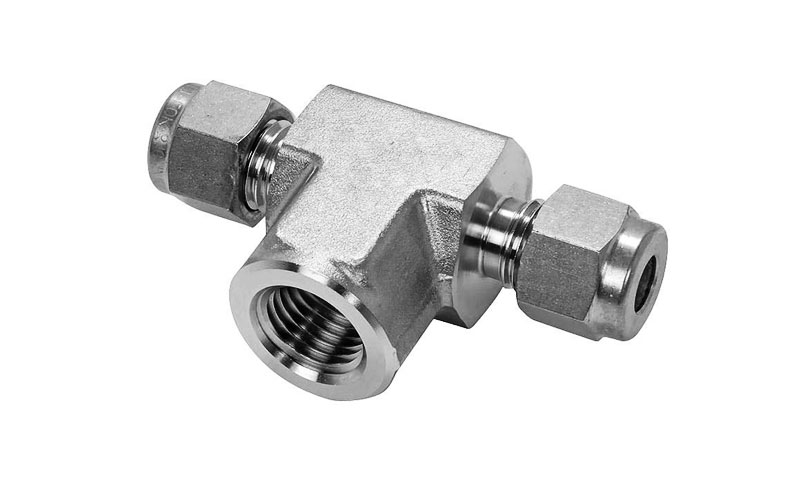
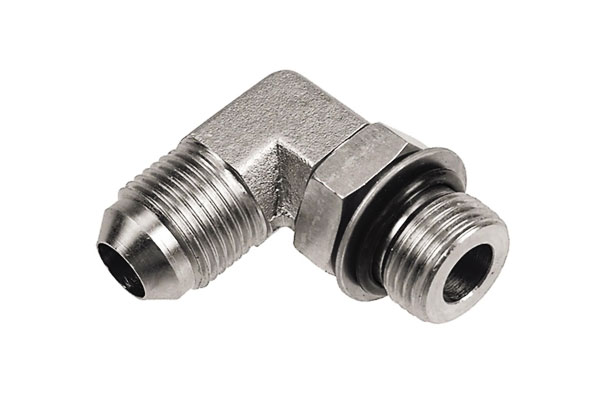
Pamumuhunan (Nawawalang waks) casting is a precision route for producing stainless-steel hydraulic fittings that combine complex geometry (integral ports, panloob na mga talata, manipis na pader), good surface finish and near-net shape economy.
Success requires matching alloy, casting practice and post-processing to the hydraulic duty (presyon, media, temperatura), and applying rigorous testing (NDT, pressure proof/burst, corrosion/passivation) to ensure lifetime integrity.
2. Why use investment casting for stainless hydraulic fittings?
- Complex internal geometry: cores and wax patterns enable internal passages, multi-port manifolds and integrated bosses in one piece.
- Excellent surface detail: finer Ra as-cast than sand casting reduces finish work for sealing faces.
- Dimensional accuracy: lost-wax tolerances often reduce machining volumes.
- Material flexibility: cast austenitic, duplex and some corrosion-resistant nickel alloys can be cast.
- Reduced welds: fewer welded joints reduces potential weld-related weaknesses and leak paths.
3. Mga Materyal & alloy choices — which stainless for which service
Material selection begins with the hydraulic service envelope: media (tubig, langis, saline, acidic fluids), operating temperature, Maximum na presyon ng pagtatrabaho, at pagkakalantad sa kapaligiran (marine, maasim na serbisyo).

Common alloy choices for investment-cast hydraulic fittings
| Cast grade | Katumbas (Ginawa) | Typical composition highlights | Why choose it |
| CF8 | ~304 / S30400 equivalent (cast) | Cr ≈17–20%, Ni ≈8–12%, C ≤0.08% | General corrosion resistance in oxidizing environments; good castability; matipid. |
| CF3 | ~304L cast (mababang C) | Cr/Ni similar to CF8 but C ≤0.03% | For welded or heat-sensitive assemblies — reduced sensitization; better post-weld corrosion stability. |
| CF8M | ~316 (cast) | Cr ≈16–18%, Ni ≈9–12%, Mo ≈2–3% | Superior pitting/crevice resistance in chloride environments (marine, mga brines). |
| CF3M | ~316L cast | Same chemistry as CF8M but C ≤0.03% | Best for welded fittings in chloride service; minimizes sensitization. |
| Cast duplex (hal., CD3MN / 2205-tulad ng) | duplex 2205 katumbas | Higher Cr (≈22–25%), Mo present, balanced ferrite/austenite phases | Mataas na lakas, excellent chloride/SCC resistance — when pressure + chloride exposure combine. |
| Nickel-base alloys (Inconel, Bilisan mo na) | — | High Ni, Mo, Cr as required | For aggressive chemical services or very high temperature; costly. |
4. Design for investment casting — hydraulic-specific geometry rules
Design must balance hydraulic function, pressure integrity and castability.

Key rules
- Continuous wall thickness: avoid abrupt thickness changes; use tapered steps and generous fillets (min fillet radius ≈ 1–1.5× nominal wall).
- Minimum wall thickness: for cast stainless hydraulic fittings aim ≥ 3–4 mm for pressure regions; thin non-pressure ribs can be thinner but avoid <2 mm in load paths.
(Discuss with foundry — investment casting and section size strongly affect shrinkage and porosity.) - Sealing faces: always makina sealing faces and O-ring grooves; leave machining windows and allowances (typical 0.5–1.5 mm).
Target Ra ≤ 0.8 M (32 μin) for metal-to-metal or ORFS faces; Ra ≤ 1.6 M acceptable for elastomer gaskets. - Mga Thread: avoid fully cast threads on critical pressure fittings — use machined threads or install robust metal inserts (helicoils, pressed inserts) for repeated assemblies.
- Panloob na mga talata: plan gate and core placement to promote directional solidification; avoid trapped islands and thin long passages that cause cold-shuts.
- Bosses & bosses reinforcement: machine bosses with boss webbing and add ribs to distribute clamp loads; core holes should be supported with chaplets appropriately.
- Weld avoidance: minimize welds in high-stress, pressure-bearing zones; where welding is necessary specify low-C cast grade or post-weld solution anneal if feasible.
5. Foundry practice and process parameters (natutunaw ang mga, shells, pour)
Lost-wax casting stainless requires attention to melt cleanliness, shell strength and controlled pour.
Key process elements
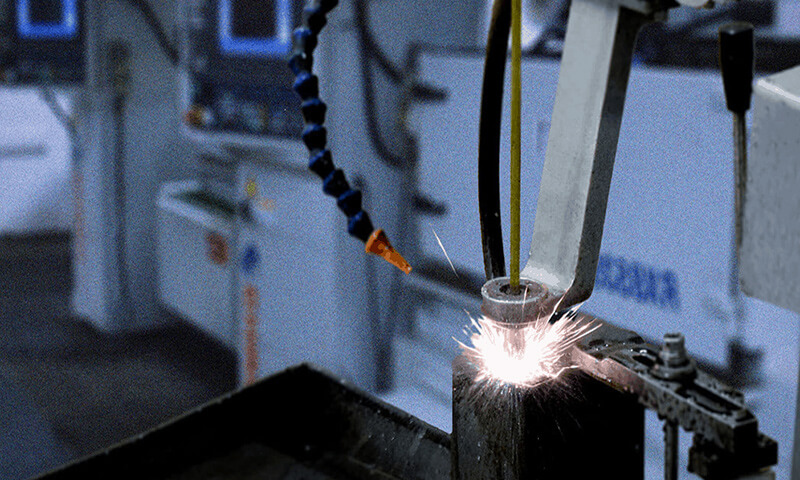
- Natutunaw na & kapaligiran: induction or vacuum induction melting (VIM) is preferred for cleanliness; vacuum or inert (argon) pour reduces oxidation and inclusion formation. For duplex and high-alloy steels, vacuum practice may be required.
- Pour temperature: typical pour bands for cast austenitic stainless: 1450-1550 ° C (check exact alloy liquidus/solidus).
Duplex and superalloys may require higher melt temps. Avoid excessive superheat that increases reaction with shell. - Pamumuhunan (shell) uri ng: phosphate-bonded or alumina/zircon reinforced investments are typical for stainless and higher pour temps — they provide the hot strength needed and reduce reactions.
- Core materials: ceramic cores (bonded silica, zircon, alumina) are used for internal fluid channels; chaplets support cores. Core permeability and green strength are critical.
- Filtration & Pag-aalis ng gas: ceramic in-line filters and melt skimming reduce inclusions. Degassing for stainless is less about hydrogen and more about cleanliness; oxygen control important.
- Shell preheat & pour: shells preheated to ~600–950 °C depending on alloy to reduce thermal shock and improve filling.
For stainless pours often preheat shell to 600–800 °C. Refer to foundry validated schedules.
6. Pagkatapos ng pagpoproseso: machining, paggamot ng init, surface finish and passivation

Machining & mga tolerance
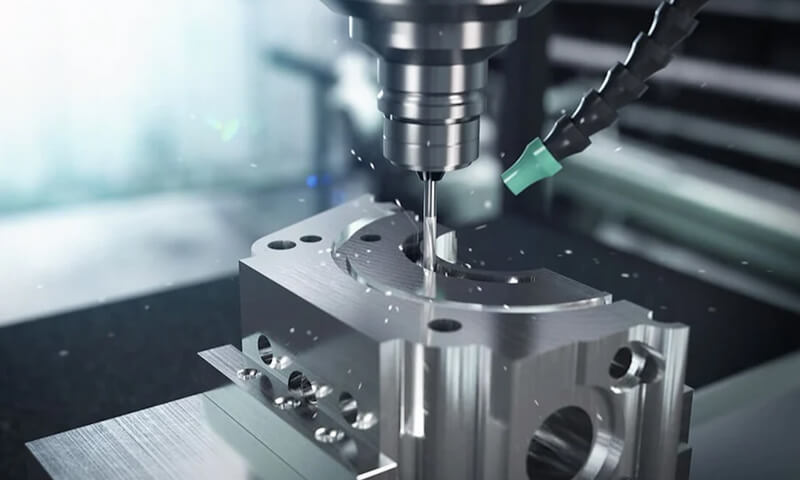
- Machine sealing faces, thread ends, sensor ports and critical datums.
Specify machining windows/additions on drawings. Typical machined tolerances: ±0.05–0.2 mm depending on criticality.
Lunas sa init
- Solution anneal (if required): for some castings solution anneal at >1,040 °C followed by rapid quench restores corrosion resistance by dissolving carbides.
Large castings may distort; choose low-C grade (CF3/CF3M) to reduce need for heat treatment. - Pagbawas ng stress: for reduced distortion and residual stress—temperatures ~600–750 °C depending on alloy and acceptance criteria.
Surface finishing & pagbubuklod
- Passivation: chemical passivation (nitric or citric per ASTM A967) to enhance passive film and remove embedded iron.
Require passivation certificate and test (ferroxyl or electrochemical) where necessary. - Email Address * / mga patong na patong: electroless nickel, sink, or protective paint as required — but plating may hide casting defects and must meet hydraulic fluid compatibility.
- Electropolish: improves surface finish and corrosion resistance for sanitary or high-cleanliness fittings.
7. Quality control, testing and acceptance for hydraulic fittings
The QA program must be proportional to risk: pressure fittings need 100% or statistically representative testing.
Typical QC elements
- Material test report (CMTR): komposisyon, mechanical tests, heat number traceability.
- Dimensional inspection: CMM for critical datums; go/no-go gauges for threads and ports.
- NDT: radiography (X-ray) or CT for internal porosity; dye-penetrant for surface cracks; ultrasonic for large castings. The sampling rate depends on criticality.
- Hydrostatic / Pagsubok sa Presyon: proof test and burst test. Guidance: perform a proof (leak) test at 1.5× MAWP at isang burst test ≥4× MAWP for qualification samples — adapt per standard and customer requirement.
Document test procedure (pressurisation rate, Oras ng Paghawak, acceptable leakage). - Torque and assembly testing: validate insert/thread performance and gasket seating.
- Corrosion and passivation verification: salt spray or immersion testing as appropriate; passivation certificate per lot.
8. Typical defects, root causes and materials-based mitigation
Pressure fittings are unforgiving — detect and control these:
| Defect | Root cause (mga materyales / proseso ng) | Pagbawas |
| Porosity (pag urong, gas) | poor feeding, trapped gases, wet shell, hydrogen from binders | vacuum casting, ceramic filters, Pag-aalis ng gas, controlled dewax & dry shells, directional feeders |
| Mga Pagsasama / slag | oxide films, dross, contaminated charge or crucible | clean charge, VIM/filtration, skimming, crucible lining control |
| Hot tearing / pag crack na | restrained solidification, wide freezing range alloys | design change (mga fillet), chills/riser changes, reduce restraint |
| Metal-investment reaction (surface discoloration / alpha-case) | reactive alloys vs silica in investment, high pour temps | zircon/alumina barrier wash, inert melt/pour, choose compatible investment |
| Cold shut / misrun | low pour temp or premature solidification | increase pour temp (within spec), better gating, preheat shell |
| Core shift | weak core support or chaplet failure | stronger core binders, better seating, design chaplets |
9. Mekanikal, corrosion and pressure performance — design numbers to use
Use conservative material properties and safety factors in preliminary design; verify experimentally for specific castings.

Design anchors (typical ranges)
- Working pressures: hydraulic systems commonly range from 100 bar (1,450 psi) sa 700 bar (10,150 psi) depending on industry.
High-pressure hydraulic fittings can be rated hanggang sa 700 bar or more — select alloy/design accordingly. - Proof testing: specify ≥1.5× Maximum na presyon ng pagtatrabaho (MWP) as a minimum; many aerospace/critical fittings use higher proof factors.
- Burst factor: nangangailangan ng ≥3–4× MWP in qualification testing.
- Fatigue design: cyclic stresses and pressure cycles dominate life; use fatigue data from representative cast coupon tests — cast stainless fatigue endurance is lower than wrought forms; include safety factors (design factor 2–4 depending on application).
- Torque & thread allowance: use machined threads and validate mating hardware torque specs to prevent galling (use lubrication, anti-seize).
For stainless, galling is a risk — consider hard coatings or 316L/CF3 grades and controlled surface finish.
10. Economics, Lead oras & when to choose alternative manufacturing routes
Economics
- Tooling & pattern cost: investment patterns and coremaking cost more than simple sand cast tooling; payback occurs with complexity and volumes.
- Per part cost: higher than simple sand casting but lower than extensive forging + machining for complex parts.
- Secondary operations: machining of sealing faces, threads and post-treatments (passivation na lang) add unit cost.
Lead times
- Pattern & shell tooling: 4–12 weeks typical depending on complexity.
- Trial and process validation (first article): additional 2–6 weeks.
- Production cycle time: depends on shell build and pour schedule — multiparts baked onto shells reduce per part handling.
11. Custom Investment Casting vs. Alternative Processes
| Proseso / Paraan | Mga kalamangan | Typical part size / dami ng produksyon | Typical achievable tolerances (as-produced) | Best suited for (hydraulic fitting context) |
| Pamumuhunan sa Paghahagis (Nawawalang Waks / Pasadyang) | High detail & tapos sa ibabaw; excellent repeatability; complex internal passages; integral multi-port geometry; reduced machining. | Small → medium parts; volumes: prototype → medium/high (100s–10,000s). | ±0.1–0.5 mm; Ra 0.8–3.2 μm. | Multi-port connectors, Mga siko, manifolds with internal features and precision sealing areas. |
| buhangin paghahagis (Berde / Resin Sand) | Low-cost tooling; flexible for large shapes; good for simple geometries. | Medium → very large parts; volumes: low/medium. | ±0.5-2.0 mm; Ra 6-25 μm. | Large housings or simple hydraulic blocks where machining is acceptable. |
| Paghahagis ng Shell Mold | Better accuracy and surface quality than sand; consistent for moderately complex parts. | Small → medium parts; volumes: katamtaman. | ±0.2–0.8 mm; Ra 2.5-6.3 μm. | Medium-complexity hydraulic components needing better finish at moderate cost. |
Pagbubuo ng mga + Machining |
Excellent strength, Pagkapagod Buhay, at density; zero internal porosity; robust for pressure-critical parts. | Small → large parts; medium → high volumes. | Machining after forging: ±0.01–0.2 mm. | High-pressure fittings (straight connectors, tees) where strength and reliability dominate. |
| CNC Machining from Billet / Bar | Highest precision and finish; no casting porosity; ideal for prototypes and low volumes. | Prototype/low volumes; part size limited to machining envelope. | ±0.01–0.1 mm; Ra 0.2 M achievable. | Mga prototype, maliliit na batch, or critical sealing components. |
| Metal Additive Manufacturing (SLM / DMLS) | Ultimate geometric freedom; ideal for internal channels and rapid prototyping; no tooling. | Small → medium parts; volumes: prototype → low. | ±0.05–0.3 mm (post-processed). | Complex manifolds or low-volume specialty hydraulic fittings. |
| Centrifugal Casting | High density and low porosity for axisymmetric parts; strong radial structure. | Cylindrical components; low → medium volumes. | ±0.3-1.0 mm. | Mga Tubo, mga manggas, and rotary hydraulic components with cylindrical geometry. |
12. Pangwakas na Salita
Pamumuhunan sa paghahagis stainless steel hydraulic fittings offers a powerful combination of katumpakan, complex geometry capability, paglaban sa kaagnasan, and mechanical reliability—attributes that are difficult to match with other manufacturing processes.
When engineered correctly, investment-cast fittings can integrate multiple ports, reduce assembly points, minimize machining, and achieve excellent surface quality, all while maintaining strong metallurgical integrity suitable for medium- to high-pressure hydraulic systems.
Compared to alternatives like forging, CNC machining, or sand casting, custom investment casting achieves the best balance when component complexity and performance requirements intersect.
For hydraulic fittings with intricate geometries, weight-sensitive designs, or integrated features, investment casting provides a cost-effective, scalable na ba, and high-quality manufacturing route.
Mga FAQ
Can I use cast 304 (CF8) fittings in seawater service?
No — 304/CF8 has limited pitting resistance in chlorides. Gamitin ang CF8M/CF3M (cast 316) o duplex for seawater, depending on chloride concentration and temperature.
How do foundries minimise porosity for pressure fittings?
By using vacuum casting, VIM melts, ceramic filtration, directional feeding and controlled shell burnout/preheat; post-process NDT verifies results.
What proof and burst pressures should I require?
Common practice: proof test ≥1.5× MWP and qualification burst test ≥3–4× MWP. Reference applicable industry standards for exact requirements.
Do I need passivation for cast stainless fittings?
Yes — passivation (nitric or citric per ASTM A967) removes free iron and enhances the passive film; require certificates and, if critical, verification testing.
Are investment-cast fittings as strong as forged ones?
Cast fittings can reach required strengths, but cast microstructure and potential porosity mean fatigue and burst margins differ from forged parts.
For extreme fatigue or highest safety factors, forged/machined parts may be preferred.