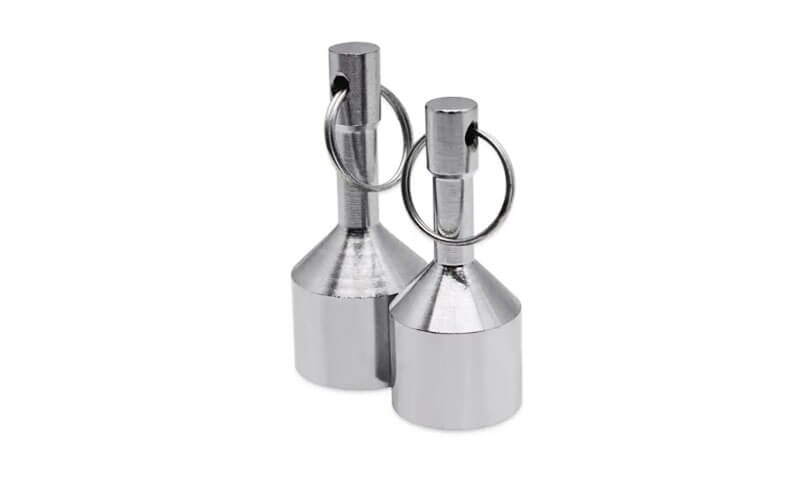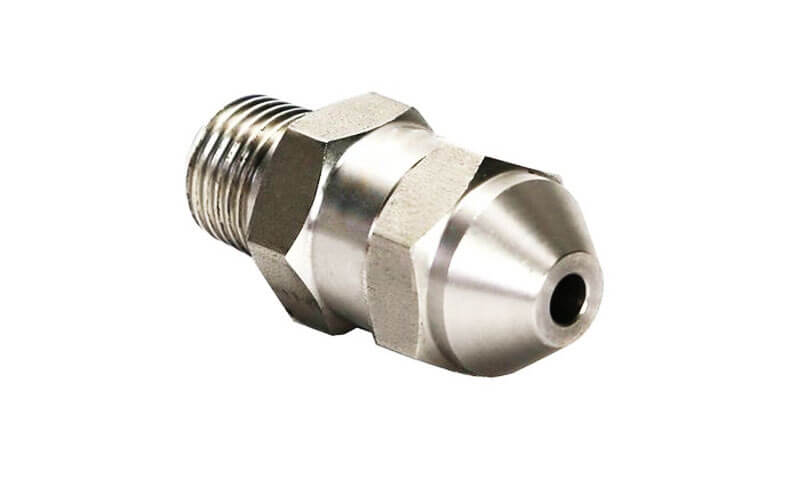
Spray nozzles are critical fluid-control components widely used in industrial systems to regulate liquid distribution, atomization, paglamig, paglilinis, pagpapadulas, patong na patong, at pagproseso ng kemikal.
Although a nozzle may appear to be a simple component, its internal geometry, orifice accuracy, tapos sa ibabaw, and material selection directly influence spray efficiency, pagkonsumo ng enerhiya, process stability, and equipment reliability.
CNC machining offers unparalleled precision, Kakayahang umangkop sa materyal, and design freedom for custom spray nozzles.
Unlike casting or molding, which require expensive tooling and are limited to certain geometries, CNC machining can produce complex internal flow channels, tight‑tolerance orifices, and intricate spray patterns with exceptional accuracy and repeatability.
This article provides a comprehensive guide to custom spray nozzles manufactured through CNC machining.
We will explore the types of spray nozzles, the advantages of CNC machining over alternative manufacturing methods, the step‑by‑step manufacturing process, materials selection, performance factors, Mga Pamantayan sa Kalidad, pang industriya na mga aplikasyon, and a comparative analysis with investment casting.
1. What Are Spray Nozzles?
Definition and Working Principle of Spray Nozzles
A spray nozzle is a precision fluid-control device designed to convert liquid pressure into a controlled spray pattern.
By forcing liquid through a specially designed opening or internal flow passage, the nozzle controls how the fluid exits, determining critical characteristics such as:
- Flow rate
- Spray angle
- Droplet size
- Spray distribution
- Atomization efficiency
- Fluid velocity
The fundamental operating principle is based on the conversion of pressure energy into kinetic energy.
When liquid enters the nozzle under pressure, the internal geometry accelerates and redirects the fluid flow.
Depending on the nozzle design, the output can range from a concentrated jet stream to a fine mist containing extremely small droplets.
Halimbawa na lang:
- A high-pressure cleaning nozzle focuses fluid energy into a narrow, high-velocity stream.
- A cooling nozzle produces a controlled spray pattern to maximize heat transfer.
- Isang atomizing nozzle breaks liquid into fine droplets for combustion, patong na patong, or humidification processes.
The performance of a spray nozzle depends not only on the external shape but also on the precision of internal features such as flow channels, swirl chambers, and orifice dimensions.

Main Performance Parameters of Spray Nozzles
Different industrial processes require different spray characteristics. Kaya nga, spray nozzle design is usually evaluated according to several key parameters.
| Performance Parameter | Paglalarawan | Engineering Importance |
| Flow Rate | The volume of liquid discharged per unit time, usually measured in L/min or m³/h. | Determines material consumption, cooling capacity, and process efficiency. |
| Spray Pattern | The shape and distribution of the discharged fluid, such as cone, fan, or stream patterns. | Ensures uniform coverage and optimized process results. |
| Droplet Size | The average size distribution of liquid droplets generated by the nozzle. | Affects evaporation rate, coating quality, and heat-transfer efficiency. |
| Spray Angle | The angle formed by the spray cone or fan pattern. | Determines coverage area and installation arrangement. |
Rating ng Presyon |
The maximum operating pressure the nozzle can withstand. | Ensures safe operation under demanding conditions. |
| Paglaban sa temperatura | Ability to maintain performance under elevated temperatures. | Essential for metallurgy, pagproseso ng kemikal, and thermal systems. |
| Pagkakatugma ng Materyal | Resistance to corrosion, pagguho ng lupa, and chemical attack. | Determines service life in harsh environments. |
2. Why Choose CNC Machining Spray Nozzles?
Unlike traditional manufacturing processes that rely on molds, namamatay na, or mass-production tooling, CNC machining directly removes material from a metal or plastic workpiece through computer-controlled cutting operations.
This allows manufacturers to produce highly accurate nozzle components with customized internal channels, micro-orifices, and specialized flow structures.
For industries such as aerospace, pagproseso ng kemikal, Paggawa ng semiconductor, automotive coating, mga kagamitang medikal, and precision cleaning systems, nozzle performance is highly dependent on dimensional accuracy and surface quality.
Even small deviations in orifice diameter, internal passage geometry, or surface roughness can significantly affect spray angle, droplet size distribution, flow rate, and atomization efficiency.
Key Advantages of CNC Machining for Spray Nozzles
| Advantage | Paliwanag |
| Pambihirang katumpakan | Achieves tolerances of ±0.005 mm, critical for spray pattern and flow rate control. |
| Napakahusay na pagtatapos sa ibabaw | Ra 0.4–1.6 µm ensures laminar flow, reduced turbulence, and consistent atomization. |
| Material versatility | Machines all metals (hindi kinakalawang na asero, tanso, aluminyo, titan, mga superalloys) at engineering plastics. |
| Design flexibility | Rapid design iterations; no tooling constraints; complex internal geometries possible. |
Small orifice capability |
Produces orifices as small as 0.1 mm with high accuracy. |
| Low‑volume cost‑effectiveness | No tooling investment; economical for small to medium batches. |
| Fast prototyping | Design‑to‑part in days, enabling rapid product development. |
| Traceability | Full material and process documentation for critical applications. |
3. CNC Machining Process for Custom Spray Nozzles
The manufacturing of custom spray nozzles requires a highly controlled machining process because nozzle performance is directly influenced by dimensional accuracy, internal geometry, tapos sa ibabaw, at materyal na mga katangian.
Unlike general mechanical components, spray nozzles contain critical features such as precision orifices, internal flow channels, mga thread, and sealing surfaces, where even small deviations can affect spray angle, flow consistency, atomization quality, and operating efficiency.
A professional CNC machining process integrates engineering design, katumpakan machining, ibabaw ng paggamot, performance testing, and quality inspection to ensure that each nozzle meets the required application specifications.

Complete Manufacturing Workflow of CNC Machined Spray Nozzles
Ang CNC machining process typically begins with customer requirement analysis and continues through design optimization, katumpakan machining, pagtatapos ng, and functional testing.
| Entablado | Process Step | Layunin | Key Control Factors |
| Engineering Design | Customer specification analysis | Define nozzle requirements, including flow rate, pressure rating, spray pattern, operating temperature, chemical environment, pagpili ng materyal, and connection type. | Accurate requirement collection and technical communication. |
| CAD modeling | Develop a 3D nozzle model based on application requirements and optimize the structure for manufacturing. | Disenyo para sa pagmamanupaktura (DFM), flow path optimization, machining accessibility. | |
| CAM programming | Generate CNC machining programs and optimize cutting paths. | Toolpath accuracy, machining efficiency, kalidad ng ibabaw. | |
Materyal na Paghahanda |
Raw material selection and preparation | Select suitable materials in the form of bars, mga baras, mga plato, or billets according to performance requirements. | Material grade verification, katumpakan ng sukat, material certificates. |
| katumpakan machining | CNC pagliko | Manufacture cylindrical features such as nozzle bodies, external diameters, mga thread, and concentric openings. | Diameter accuracy, concentricity, pagkamagaspang ng ibabaw. |
| CNC paggiling | Produce non-cylindrical features, mounting surfaces, mga grooves, mga puwang, and complex external geometries. | Position accuracy, dimensional tolerance, tapos sa ibabaw. | |
| Precision drilling and micro-machining | Create small spray holes and specialized internal passages. | Hole diameter, pag ikot, alignment, and flow consistency. | |
| Reaming and finishing machining | Improve the accuracy and surface quality of critical holes and flow passages. | Orifice geometry, ang kinis, dimensional na katatagan. | |
Pagkatapos ng Pagproseso |
Deburring and cleaning | Remove machining burrs and contaminants that may affect fluid flow. | Edge quality, cleanliness, prevention of blockage. |
| Paggamot sa ibabaw | Apply polishing, passivation na lang, electropolishing, pag plating, or coating according to application requirements. | Paglaban sa kaagnasan, pagkamagaspang ng ibabaw, hitsura. | |
| Testing and Inspection | Dimensional inspection | Verify critical dimensions using precision measuring equipment. | Inspeksyon ng CMM, optical measurement, gauge inspection. |
| Flow and spray testing | Confirm actual nozzle performance under operating conditions. | Flow rate, spray pattern, pressure drop, atomization performance. | |
| Final Processing | Packaging and delivery | Protect precision-machined nozzles during transportation. | Damage prevention and traceability. |
Main CNC Machining Operations for Spray Nozzles
Custom spray nozzles usually require multiple machining operations because their structures combine rotational features, precision holes, and complex flow channels.
| Machining Operation | Mga Kagamitan | Typical Capability | Mga Karaniwang Aplikasyon |
| CNC Pagliko | CNC lathe, multi-axis turning center | Diameter range approximately 0.5–200 mm; dimensional tolerance down to ±0.005 mm depending on design requirements. | Nozzle body machining, cylindrical surfaces, mga thread, mga flanges, sealing areas, and concentric openings. |
| CNC paggiling | 3-axis, 4-axis, or 5-axis machining centers | High positional accuracy with complex contour machining capability. | Side ports, mounting features, mga puwang, irregular shapes, and multi-directional flow channels. |
Micro-Drilling |
Precision drilling machines, laser drilling, or EDM equipment | Micro holes approximately 0.05–1.0 mm depending on material and process; high aspect ratio machining possible. | Fine spray holes, paglamig ng mga channel, atomizing orifices, and precision fluid outlets. |
| Pagre-reaming | Precision reaming tools | Improves hole roundness and dimensional accuracy. | Final sizing of critical spray orifices requiring stable flow performance. |
| Thread Machining | CNC threading tools, mga taps, mga thread mill | Suitable for metric, NPT, BSP, and customized thread standards. | Pipe connections, mounting interfaces, and replaceable nozzle assemblies. |
Critical Factors Affecting CNC Machining Quality
Although CNC machining provides excellent accuracy, spray nozzle manufacturing presents several technical challenges due to small dimensions, strict flow requirements, and difficult-to-machine materials.
| Technical Challenge | Potential Impact on Nozzle Performance | Mga Hakbang sa Pagkontrol |
| Tool deflection | Causes deviation in orifice diameter, poor concentricity, and unstable spray patterns. | Use rigid tooling systems, minimize tool overhang, and optimize cutting parameters. |
| Work hardening of stainless steel | Increases cutting difficulty, accelerates tool wear, and reduces surface quality. | Use sharp carbide tools, appropriate cutting speeds, and effective coolant systems. |
| Chip control | Chips may enter small holes or internal channels, affecting fluid flow and causing blockage. | Apply chip breakers, optimized tool paths, and high-pressure coolant systems. |
Thermal deformation |
Heat generated during machining may influence dimensional accuracy, especially for thin-wall components. | Control machining temperature, stabilize machine conditions, and optimize coolant flow. |
| Burr formation | Burrs inside or around spray openings can disturb fluid flow and change spray characteristics. | Apply precision deburring, ultrasonic cleaning, or electropolishing processes. |
| Surface contamination | Residual particles or machining fluids may affect cleanliness in precision applications. | Implement cleaning procedures and controlled packaging. |
Precision Control in Internal Flow Channel Machining
The internal structure of a spray nozzle plays a decisive role in fluid behavior.
Halimbawa na lang, swirl nozzles rely on precisely machined internal chambers to generate rotational flow, while atomizing nozzles require carefully controlled orifice geometry to produce consistent droplet sizes.
During CNC machining, manufacturers must control several critical parameters:
- Orifice diameter and geometry: Determines flow rate and spray distribution.
- Concentricity between inlet and outlet: Ensures uniform fluid discharge.
- Internal surface roughness: Reduces turbulence and pressure loss.
- Channel dimensions: Controls velocity, mixing efficiency, and atomization performance.
For high-performance applications, additional processes such as precision grinding, electropolishing, or flow calibration may be applied to further improve nozzle reliability.
4. Materials Used for CNC Machined Spray Nozzles
Material selection is one of the most critical decisions in custom spray nozzle manufacturing because nozzles often operate under demanding conditions, including high pressure, high temperature, abrasive media, and corrosive chemicals.
The selected material must provide an appropriate balance of corrosion resistance, mekanikal na lakas, Paglaban sa Pagsusuot, thermal katatagan, at machinability.
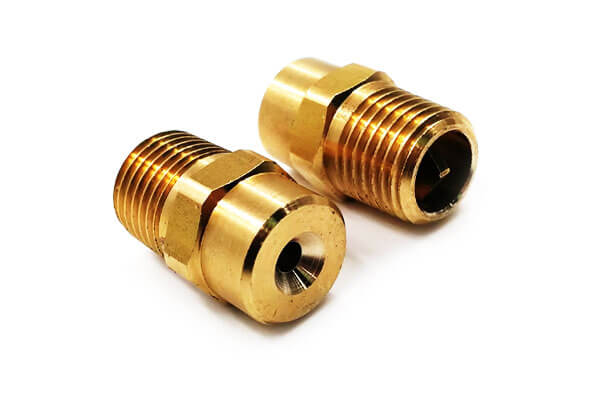
CNC machining provides excellent material flexibility, allowing manufacturers to produce spray nozzles from a wide range of metals and engineering plastics.
The final material choice depends primarily on the working environment, fluid characteristics, operating temperature, pressure requirements, and expected service life.
Common Metal Materials for CNC Machined Spray Nozzles
| Materyal | Mga Pangunahing Katangian | Mga Karaniwang Aplikasyon |
| Hindi kinakalawang na asero (304/316/316L) | Napakahusay na paglaban sa kaagnasan, good mechanical strength, hygienic surface properties, and compatibility with many chemicals. 316L provides enhanced resistance to chloride and acidic environments. | Chemical spraying, pagproseso ng pagkain, mga kagamitan sa parmasyutiko, paggamot ng tubig, cleaning systems. |
| tanso | Napakahusay na machinability, magandang wear resistance, stable dimensional accuracy, at medyo mababang gastos. | General industrial spraying, mga sistema ng paglamig, lubrication nozzles, agricultural applications. |
| Mga Alloys ng Aluminyo (6061, 7075, atbp.) | Magaan ang timbang, magandang machinability, mataas na ratio ng lakas sa timbang, and suitable for anodizing surface protection. | Mga bahagi ng aerospace, lightweight spraying equipment, portable systems. |
| Mga Alloy ng Copper / tanso | Excellent thermal conductivity, paglaban sa kaagnasan, and resistance to certain chemical environments. | Cooling nozzles, heat transfer systems, specialized industrial equipment. |
Mga haluang metal ng Titanium (Ti-6Al-4V) |
Outstanding strength-to-weight ratio, mahusay na paglaban sa kaagnasan, and high-temperature capability. | Aerospace spraying systems, mga kapaligiran sa dagat, kagamitan sa pagpoproseso ng kemikal. |
| Mga Alloys na Nakabase sa Nikel (Inconel, Bilisan mo na) | Exceptional resistance to oxidation, mataas na temperatura, and aggressive chemicals. | Furnace spraying, mga reaktor ng kemikal, extreme-temperature applications. |
| Tool Steels / Hardened Steels | Mataas na katigasan, napakahusay na paglaban sa pagsusuot, and suitable for abrasive fluid environments. | Abrasive blasting nozzles, high-wear industrial spraying systems. |
Engineering Plastics for Special Applications
Although metal materials dominate industrial nozzle manufacturing, CNC machining also allows the production of plastic spray nozzles for applications requiring chemical resistance, pagkakabukod ng kuryente, or lightweight structures.
| Materyal | Mga Katangian | Mga Aplikasyon |
| PTFE (Teflon) | Excellent chemical resistance, mababang alitan, and wide temperature range. | Highly corrosive chemical spraying systems. |
| PEEK | Mataas na lakas, excellent temperature resistance, at katatagan ng kemikal. | Semiconductor equipment, aerospace systems, precision chemical applications. |
| POM (Acetal) | Magandang dimensional na katatagan, mababang alitan, and easy machining. | Low-pressure fluid systems and general industrial applications. |
| Naylon | Magaan ang timbang, impact resistant, and economical. | Agricultural spraying equipment and consumer applications. |
5. Types of Spray Nozzles Manufactured by CNC Machining
CNC machining enables manufacturers to produce a wide variety of customized spray nozzle mga disenyo.
Unlike standard molded or mass-produced nozzles, CNC machined nozzles can be optimized for specific flow characteristics, spray patterns, Mga kondisyon ng presyon, and installation requirements.
The major nozzle types include:
| Nozzle Type | Prinsipyo ng Pagpapatakbo | Main Characteristics | Mga Karaniwang Aplikasyon |
| Flat Fan Spray Nozzles | Liquid exits through an elongated orifice to create a fan-shaped spray pattern. | Uniform coverage, controlled spray width, efficient surface coverage. | Coating systems, cleaning equipment, agricultural spraying. |
| Full Cone Spray Nozzles | Internal swirl chamber produces a circular spray pattern with droplets distributed across the entire cone area. | High flow capacity and excellent coverage. | Cooling systems, dust suppression, chemical spraying. |
| Hollow Cone Spray Nozzles | Generates a ring-shaped spray pattern with droplets concentrated near the outer region. | Excellent atomization and fine droplets. | Air humidification, gas cooling, pollution control. |
Atomizing Nozzles |
Uses pressure, hangin, or ultrasonic energy to break liquid into fine droplets. | Produces very small droplet sizes and precise spray control. | Fuel systems, industrial coating, combustion equipment. |
| Airless Spray Nozzles | High-pressure liquid flow creates atomization without external air. | High efficiency and reduced overspray. | Pagpipinta, protective coatings, ibabaw ng paggamot. |
| Misting Nozzles | Produces extremely fine water droplets through small precision orifices. | Low water consumption and effective cooling. | Greenhouses, humidification, mga sistema ng paglamig. |
Mga Nozzle ng Jet |
Produces a concentrated high-speed liquid stream. | High impact force and directional spraying. | Paglilinis, cutting assistance, industrial washing. |
| Swirl Nozzles | Internal channels generate rotational fluid movement before discharge. | Improved atomization and uniform spray distribution. | Combustion systems, paglamig, chemical processes. |
| Multi-Hole Nozzles | Multiple precision openings provide several spray streams. | Customized flow distribution and coverage. | Semiconductor cleaning, precision manufacturing. |
6. Key Factors Affecting Spray Nozzle Performance
| Kadahilanan | Impact on Performance | Design Consideration |
| Orifice size | Determines flow rate and droplet size. | Precision machining to ±0.005 mm. |
| Orifice shape | Influences spray pattern and atomization. | Sharp‑edged or radiused; custom design. |
| Internal flow path | Affects turbulence and pressure drop. | Smooth surfaces; optimized geometry. |
| Tapos na ang ibabaw | Influences flow resistance and atomization. | Ra ≤0.8 µm for critical surfaces. |
| Presyon | Determines flow rate and droplet size. | Designed for specific pressure range. |
Fluid viscosity |
Affects flow rate and atomization. | Consider fluid properties in design. |
| Fluid temperature | Affects viscosity and material compatibility. | Select appropriate material and design. |
| Material compatibility | Affects corrosion resistance and service life. | Select appropriate alloy or coating. |
| Connection type | Affects installation and sealing. | NPT, BSP, flanged, or custom. |
7. CNC Machining Tolerances and Quality Standards for Spray Nozzles
Because spray nozzles directly control fluid behavior, manufacturing precision is more demanding than many conventional mechanical components.
Tight dimensional control ensures stable spray patterns, accurate flow rates, and consistent performance.
Typical CNC Machining Tolerances
| Tampok | Typical Precision Requirement |
| External dimensions | ±0.01 mm to ±0.05 mm depending on component size |
| Precision orifice diameter | ±0.005 mm or higher precision for critical applications |
| Hole position accuracy | ±0.01 mm |
| Thread accuracy | According to ISO, NPT, BSP, or customized standards |
| Pagkamagaspang sa ibabaw | Ra 0.4–1.6 μm for precision flow surfaces |
| Konsentriksidad | Typically within 0.005–0.01 mm |
Actual tolerances depend on nozzle size, materyal na bagay, machining process, and application requirements.
Quality Inspection Methods
Professional CNC nozzle manufacturers apply multiple inspection methods to ensure product reliability.
| Inspection Method | Layunin |
| Coordinate Pagsukat Machine (CMM) | Measures dimensional accuracy, position tolerance, and geometric features. |
| Optical Measurement | Inspects micro-holes, mga gilid, and complex small features. |
| Surface Roughness Testing | Verifies internal and external surface finish. |
| Thread Inspection | Ensures accurate connection and sealing performance. |
| Pressure Testing | Confirms structural integrity and leakage resistance. |
| Flow Testing | Validates actual flow rate, spray angle, and pressure performance. |
8. Applications of Custom CNC Machining Spray Nozzles
Custom CNC machined spray nozzles are widely used across industries where precise fluid control, consistent spray distribution, and long-term reliability are essential.
Compared with standard commercial nozzles, customized CNC nozzles can be engineered according to specific operating conditions, including pressure, temperatura, fluid characteristics, installation requirements, and spray performance targets.

Industrial Cleaning and Surface Treatment
Industrial cleaning systems require nozzles capable of delivering stable spray coverage and sufficient impact force.
CNC machined nozzles are commonly used in high-pressure cleaning equipment, component washing systems, and surface preparation processes.
Kabilang sa mga karaniwang aplikasyon ang:
- Automotive parts cleaning;
- Precision component washing;
- Metal surface preparation;
- Industrial equipment cleaning;
- Semiconductor wafer cleaning.
Chemical Processing and Industrial Manufacturing
CNC machined nozzles manufactured from materials such as 316 hindi kinakalawang na asero, mga haluang metal na titan, or Hastelloy provide excellent resistance against corrosion and chemical attack.
Kabilang sa mga karaniwang application ang:
- Chemical spraying systems;
- Reactor cooling;
- Gas scrubbing equipment;
- Neutralization systems;
- Process liquid distribution.
Automotive and Transportation Industry
In automotive manufacturing, spray nozzles are essential components in coating, paglamig, pagpapadulas, and cleaning processes.
High-precision CNC nozzles are used in:
- Automotive painting systems;
- Engine cooling systems;
- Lubrication equipment;
- Windshield washer systems;
- Battery cooling systems for electric vehicles.
Mga Aplikasyon ng Aerospace at Pagtatanggol
Aerospace systems require extremely reliable components capable of operating under strict performance requirements.
CNC machined spray nozzles are used in:
- Fuel injection systems;
- Engine cooling systems;
- Hydraulic spraying systems;
- Thermal management equipment.
Pagkain, Parmasyutiko, and Medical Industries
Industries involving food and medical products require strict hygiene standards and contamination control.
CNC machined stainless steel nozzles have a wide range of applications, isama mo na:
- Food washing systems;
- Spray sterilization equipment;
- Pharmaceutical coating systems;
- Cleaning-in-place (CIP) mga sistema.
Semiconductor and Electronics Manufacturing
Semiconductor manufacturing requires extremely precise fluid control because contamination and dimensional variation can affect product quality.
CNC machined micro-nozzles are used for:
- Wafer cleaning;
- Chemical dispensing;
- Precision cooling;
- Ultra-clean spraying systems.
Agriculture and Environmental Applications
Custom spray nozzles also play an important role in agricultural and environmental systems.
Kasama sa mga aplikasyon ang:
- Agricultural pesticide spraying;
- Irrigation systems;
- Dust suppression;
- Air humidification;
- Cooling towers.
9. Paghahambing ng Pagganap: CNC Machined vs. Lost-Wax Casting Nozzles
Spray nozzles can be manufactured through various metalworking processes, among which CNC machining at lost-wax casting (pamumuhunan paghahagis) are two widely used solutions for industrial applications.
Both processes are capable of producing high-quality nozzle components, but they have different advantages depending on design complexity, dami ng produksyon, Mga Kinakailangan sa Materyal, and performance expectations.
| Performance Factor | CNC Machined Spray Nozzles | Lost-Wax Casting Spray Nozzles |
| Manufacturing principle | Material is precisely removed from metal stock through turning, paggiling, pagbabarena, and finishing operations | Molten metal is poured into a ceramic mold produced from a wax pattern |
| Dimensional accuracy | Extremely high accuracy, typically ±0.005 mm for critical features | Generally CT4–CT7 casting tolerance range depending on size and alloy |
| Tapos na ang ibabaw | Napakahusay na kalidad ng ibabaw; Ra 0.4–1.6 μm achievable after precision machining and polishing | Good as-cast finish; typically requires secondary machining for sealing surfaces and precision holes |
| Orifice precision | Superior capability for small and complex spray openings, including micro-orifices below 0.5 mm | Suitable for larger passages; micro-holes usually require post-machining |
| Internal flow channel accuracy | Excellent control of internal geometry through drilling, reaming, EDM, at maramihang axis machining | Complex internal passages possible, but dimensional control is more challenging |
Design flexibility |
High flexibility; rapid modification without tooling changes | Requires wax pattern and mold modifications for design changes |
| Complex geometry capability | Best for precision features, manipis na pader, and machined internal structures | Excellent for near-net-shape complex external geometries |
| Material options | Suitable for stainless steel, tanso, aluminyo, titan, mga haluang metal na nikelado, at engineering plastics | Wide alloy compatibility, especially stainless steels, heat-resistant alloys, and corrosion-resistant materials |
| Production volume suitability | Ideal for prototypes, customized parts, and low-to-medium batch production | More economical for medium-to-high volume production |
| Lead time | Short development cycle; parts can often be produced quickly after drawing approval | Longer initial preparation due to tooling and mold production |
Tooling investment |
No dedicated tooling required | Requires wax tooling and ceramic mold preparation |
| Cost efficiency | More economical for small quantities and highly customized designs | Lower unit cost for large-volume production |
| Dimensional consistency between batches | Excellent due to CNC program repeatability | Good after process stabilization, but affected by casting variables |
| Post-processing requirements | Usually minimal except surface treatment or finishing | Often requires machining of critical dimensions, mga thread, and sealing areas |
Paggawa ng Hybrid: Combining Casting and CNC Machining
In many demanding applications, the optimal solution is not choosing between casting and machining but combining both technologies.
A common hybrid process includes:
- Pamumuhunan sa paghahagis to produce the near-net-shape nozzle body.
- CNC machining to finish critical functional areas.
- Precision drilling or EDM to produce accurate spray orifices.
- Paggamot sa ibabaw to improve corrosion resistance or wear performance.
This approach combines the geometric flexibility and material efficiency of casting with the precision of CNC machining.
Halimbawa na lang, a stainless steel industrial spray nozzle may be investment cast to create a complex outer housing, while CNC machining is applied to the inlet threads, sealing faces, and spray openings where dimensional accuracy directly affects performance.
10. Custom Spray Nozzle Solutions from DEZE CNC Machining
DEZE CNC Machining specialises in precision‑machined custom spray nozzles for demanding industrial applications.
Makipag ugnay sa amin to custom spray nozzles!
| Capability | Mga Detalye |
| Mga Materyal | Hindi kinakalawang na asero (304, 316, 316L, 17-4PH), tanso, tanso, aluminyo, titan, Bilisan mo na, Inconel, PEEK, PTFE. |
| Machining | CNC pagliko (single‑ and multi‑spindle); 3‑, 4‑, and 5‑axis CNC milling; micro‑drilling (0.05 mm+). |
| Mga Pagpaparaya | ±0.005 mm (critical features); ±0.01 mm (general). |
| Tapos na ang ibabaw | As‑machined (Ra 0.4–1.6 μm); pinakintab na; electropolished; anodized; nilagyan ng plato; coated. |
| Kalidad | ISO 9001:2015 sertipikado na; 100% inspeksyon. |
| Lead time | Mga prototype: 3–7 days; Produksyon: 1–3 linggo. |
| Customisation | Custom orifice size, spray pattern, connection type, materyal na bagay, tapos sa ibabaw. |
11. Pangwakas na Salita
Custom spray nozzles are an inevitable trend as industrial processes grow more specialized and performance requirements become more stringent.
CNC machining, with its combination of micron-level precision, broad material adaptability and tooling-free flexible production, has established itself as the optimal manufacturing solution for low-to-medium volume custom nozzles.
Professional CNC machining nozzle manufacturers do more than simply cut metal — they integrate fluid dynamics engineering, material science expertise and rigorous performance validation to deliver complete application-specific solutions.
As industrial upgrading continues to raise expectations for spray system efficiency and reliability, CNC custom nozzles will displace standard catalog products in an expanding range of niche applications, becoming an enabling technology for advanced precision fluid systems.
Mga FAQ
Can CNC machining produce micro spray nozzles?
Oo nga. CNC precision machining, micro-drilling, EDM, and specialized finishing technologies can produce very small spray openings for applications requiring fine atomization or precise fluid control.
What is the typical tolerance for a CNC‑machined spray nozzle?
±0.005 mm for critical features such as orifice diameter and roundness. General tolerances are ±0.01–0.02 mm.
Which material is best for high‑corrosion applications?
Stainless steel 316L, Bilisan mo na, or titanium are recommended for high‑corrosion environments. For extreme acid resistance, haluang metal 20 or Hastelloy C‑276 may be required.
How do I specify a custom spray nozzle?
Provide the required flow rate, presyon, spray pattern (full cone, hollow cone, flat fan, atbp.), droplet size, fluid properties, materyal na bagay, connection type, and any special requirements. A CAD drawing or sketch is helpful.
What is the typical lead time for custom CNC‑machined spray nozzles?
Mga prototype: 3–7 days; Produksyon: 1–3 linggo, depending on complexity and quantity.
What surface finishes are available for CNC‑machined spray nozzles?
As‑machined (Ra 0.4–1.6 μm), pinakintab na, electropolished, anodized, nilagyan ng plato (nikel, Chrome, pilak na pilak), and coated (PTFE, PVD).