
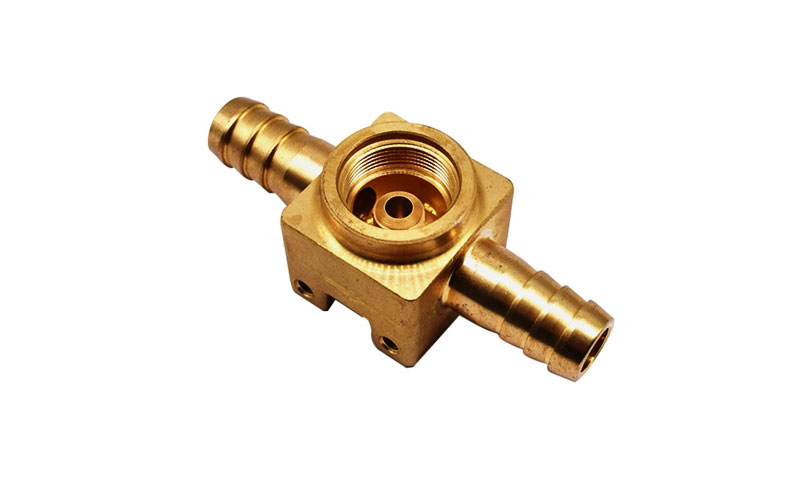
1. Panimula
Lost-wax casting (pamumuhunan paghahagis) is a precision method that produces near-net, high-detail brass components with excellent surface finish and dimensional control.
When paired with the appropriate brass alloy and robust process controls, investment casting yields parts used in valves, pandekorasyon hardware, mga instrumentong pangmusika, fittings and precision mechanical components.
Success depends on matching alloy chemistry and process parameters, designing for castability, controlling the ceramic shell and melt, and implementing targeted quality assurance.
2. What is Brass Investment Casting?
Lost-wax casting (pamumuhunan paghahagis) converts a sacrificial wax pattern into a ceramic mold and then into a metal part.
The wax pattern is produced by injection molding (for repeatable shapes) or hand tooling (for prototypes).
Patterns are assembled on a gating system, coated with refractory slurry and stucco, dewaxed, and the resulting ceramic shell is fired and filled with molten metal.
After solidification and cooling the ceramic is removed and the castings are finished.
Investment casting is chosen for brass when geometry (manipis na pader, panloob na lukab, fine detail), surface finish or dimensional repeatability are more important than the lower tooling cost of sand casting.

Features of brass lost-wax casting
- High geometric accuracy and repeatability. Typical achievable tolerances are in the range of ±0.1–0.5 mm for small features, varying with size and foundry practice.
- Napakahusay na pagtatapos sa ibabaw. As-cast finishes commonly reach Ra 0.8–3.2 μm depending on shell and pattern quality; minimal machining is required for many applications.
- Ability to cast thin walls and internal details. Investment casting reliably produces thin sections (practical minimum ~1.0–1.5 mm for very small features, commonly ≥1.5–3.0 mm for load-bearing parts).
- Material flexibility. Investment casting accepts a wide range of brasses including lead-free variants, enabling compliance with potable-water and regulatory requirements.
- Lower downstream machining volume. Near-net shapes reduce waste and machining time compared with forgings or billet machining.
3. Common brass grades used in lost-wax casting
When specifying tanso for investment (Nawawalang waks) casting it helps to think first by Pamilya (alpha, alpha-beta, free-cutting, lead-reduced/lead-free, and specialty brasses) and then pick a specific grade that the foundry regularly handles.
Cartridge / low-zinc (α) brasses — good ductility & paglaban sa kaagnasan
Typical example:UNS C26000 (70/30 tanso, cartridge brass)
- Why used: Single-phase α microstructure gives excellent ductility, good corrosion resistance and good formability; commonly used for thin-walled, decorative or drawn parts.
- Applications in investment casting: decorative fittings, thin-walled valve bodies, architectural hardware where formability and corrosion resistance matter.
Alpha-beta brasses — higher strength / tigas na tigas (good for mechanical components)
Typical example:UNS C38500 / C37700 family (common engineering casting brasses)
- Why used: Higher zinc content produces an α + β two-phase structure that increases strength and hardness versus α brasses — useful where greater mechanical performance is needed.
- Mga Aplikasyon: Mga blangko ng gear, mga bushing, bearing housings and small mechanical parts requiring improved strength while retaining reasonable castability.
Free-cutting (lead-containing and lead-reduced) brasses — machinability focus
Typical examples:UNS C36000 (malayang pagputol ng tanso); lead-reduced/lead-free alternatives (bismuth or silicon substituted alloys) increasingly specified for regulated applications.
- Why used: Napakahusay na machinability (lead or substitute inclusions act as chip breakers and lubricants), enabling minimal finish-machining time after casting.
- Mga Aplikasyon: connector bodies, threaded fittings and precision parts where post-cast machining is required.
Dezincification-resistant brasses (DZR / low-dezincification) — for potable water & aggressive environments
Typical examples: alloys marketed as DZR or UNS grades tailored for low dezincification (some cast grade families specified to meet dezincification resistance tests).
- Why used: In potable-water applications and some marine exposures, conventional brasses can suffer dezincification (selective leaching of Zn).
DZR-type brasses reduce this risk and are commonly required by plumbing standards. - Mga Aplikasyon: drinking-water fittings, valves and plumbing fixtures produced by investment casting where long-term dezincification resistance is required.
Silicon and nickel-bearing brasses — specialty corrosion and strength balance
Typical examples: silicon-modified brasses and small-Ni additions available as cast grades (consult foundry for exact UNS choices).
- Why used: Improved corrosion resistance, better castability, or improved high-temperature stability depending on the alloy.
Silicon can be used to enhance strength and machinability in lead-free formulations. - Mga Aplikasyon: seawater fittings, wear-resistant small components and specialized marine hardware.
4. The Brass Lost-Wax Casting Process — a step-by-step technical breakdown
Brass investment (Nawawalang waks) casting is a sequence of tightly controlled operations.
Each stage influences final geometry, surface quality and internal soundness, so modern practice applies explicit parameters, inspection gates and corrective actions at every step.

Wax pattern production
Layunin: generate an accurate sacrificial form that defines the as-cast geometry and surface finish.
Mga Paraan:
- Injection-molded wax patterns (produksyon ng): molten pattern wax (typically a blend of paraffin/microcrystalline waxes plus plasticizers and dewax agents) is injected into hardened steel molds.
Typical injection pressures range from 0.7–3.5 MPa (100–500 psi) and mold temperatures are commonly 60-80 ° C to ensure fill and reproducible shrinkage. Cycle times depend on cavity size (seconds to a few minutes). - Hand-carved or CNC wax/resin patterns (prototyping, short runs): allow one-off or complex shapes not suited to tooling.
Controls & QC: dimensional inspection of patterns (mga calipers, optical comparator or 3D scanner); visual check for seams, voids and flash.
Reject or rework defective patterns. Record wax lot and tooling identification for traceability.
Pattern assembly (treeing) and gating design
Layunin: combine multiple patterns onto a sprue system to form a single casting tree for efficient shelling and pouring.
Practice: design runner/sprue cross-sections to provide adequate metal feed and directional solidification.
Consider part mass, wall-thickness variation and fill time when sizing gates; typical cross-sectional areas scale with part volume. Use chills and thermal feeders if needed for large sections.
Controls & QC: calculate fill time and riser capacity; simulate flow or run physical trials for critical geometries.
Inspect assemblies for secure welds between patterns and sprue, correct orientation and venting paths.
Ceramic shell (mold) pagbuo ng
Layunin: build a refractory shell that reproduces pattern detail and resists thermal and chemical attack during pouring.
Pamamaraan:
- Prime coat (face coat): dip tree into a fine refractory slurry (colloidal silica or ethyl silicate binder with fine zircon/alumina/silica powder).
Immediately apply a fine stucco to capture detail. The face coat dictates surface finish. - Backup coats: apply successive coarser slurry + stucco layers to develop structural thickness.
Layer count depends on part mass — small parts may need 6–8 coats, larger assemblies 10–15. Typical shell build thickness ranges 5–15 mm (0.2–0.6 in) depending on size. - Pagpapatayo ng mga: controlled drying (ambient or forced air) between coats prevents steam expansion and shell cracking.
Total drying between coats often 1–24 hours depending on humidity and system.
Materials note: for brass, use zircon or high-alumina stuccos for the face coat to minimise metal-shell chemical reaction and alpha-case defects.
Controls & QC: measure wet and dry coat weights, monitor shell thickness, and sample test shells for strength (ring test) before dewaxing.
Dewaxing (pattern removal)
Layunin: evacuate wax without damaging the shell.
Mga Paraan: autoclave steam or oven dewaxing.
Typical autoclave cycles use steam at 100–150 °C with pressure cycles to crack and drain wax; oven dewaxing uses a programmed ramp to melt out wax. Collect and recycle recovered wax.
Controls & QC: verify complete wax removal (visual/weight check); inspect for residual wax or shell damage. Effective dewax prevents gas defects during pouring.
Shell firing / Burnout
Layunin: remove organic residues, volatilized binders and to sinter the ceramic for mechanical strength and thermal stability.
Also preheats shell to reduce thermal shock on pouring.
Typical schedules: controlled ramp to 600-900 ° C with holds sufficient to oxidise organics and cure binders (commonly 2–4 hours total depending on shell mass).
Final preheat just prior to pour is often 600–800 °C.
Controls & QC: monitor kiln temperature profile, hold times and atmosphere. Test fired shells for binder burn-out (carbon residue), permeability and mechanical integrity.
Metal preparation — melting, treatment and melt control
Layunin: produce a clean, compositionally correct, low-gas molten brass charge ready for pouring.
Mga Kagamitan: induction or resistance crucible furnaces are common; graphite or ceramic crucible linings.
Process steps:
- Charge control: use certified scrap/ingot mixes to meet target composition (specify allowable tramp elements).
- Melt temperature: take alloy into a controlled superheat window; for typical brasses liquidus ≈ 900-940 ° C, practical pour range 950-1,050 ° C depending on alloy and shell.
Avoid excessive superheat to reduce zinc vaporisation. - Pag-urong / skimming: use appropriate fluxes to remove oxides and dross.
- Pag-aalis ng gas: bubble inert gas (argon, nitrogen) or use rotary degassers to reduce dissolved hydrogen and oxygen.
- Filtration: pour through ceramic foam filters to intercept inclusions.
Controls & QC: record melt chemistry (OES), pour temperature, flux and degas cycles. Sample and document MTR for lot traceability.
Pouring and filling the shell
Layunin: fill the preheated shell cavity with clean molten brass under controlled conditions to avoid defects.
Mga Paraan: gravity pouring or low-pressure/riser-assisted pours for complex/thin parts. Pouring rate and trajectory are designed to minimise turbulence and entrainment.
Controls & QC: maintain pour temperature within target band; monitor fill times and visual pour behaviour; use filtration and controlled gating.
For critical castings, record pour video and temperature logs.
Pagpapatibay, cooling and shakeout
Pagpapatibay: brass shrinks on solidification (typical linear shrinkage ≈ 1–2%); gating and risers must compensate.
Promote directional solidification from thin to heavy sections.
Paglamig: allow controlled cool-down to reduce thermal stresses — small parts may be ready for shakeout in 24 mga oras; larger sections require longer (hanggang sa 72 mga oras).
Rapid quench can induce cracking or distortion.
Shakeout / shell removal: remove ceramic by mechanical vibration, pneumatic impact, water blasting or chemical dissolution when appropriate.
Capture and recycle shell fragments and control airborne dust (respiratory protection and filtration).
Controls & QC: inspect for adherence of shell residue, surface reactions (alpha case), gross porosity or misruns.
Fettling and finishing operations
Primary operations: cut off sprues and runners (bandsaw, abrasive cutoff), grind gates, and blend surfaces.
Abrasive and mechanical treatments: shot-blasting, tumbling or vibratory finishing remove remaining ceramic and smooth surfaces.
Mga paggamot sa init: stress-relief anneal commonly ~250–450 °C to reduce casting stresses; selected brasses may require homogenisation anneals — follow alloy-specific schedules. Avoid over-heating that promotes zinc loss.
Machining: perform final machining where tighter tolerances are required (pagliko, paggiling, pagbabarena); choose tooling and feeds appropriate to the brass grade (lead-free brasses may require adjusted parameters).
Mga paggamot sa ibabaw: buli na, pag plating (nikel, Chrome), clear lacquers or passivation as specified. Ensure pre-treatment cleaning to guarantee coating adhesion.
Controls & QC: dimensional inspection (CMM, mga gauge), surface finish measurement (Ra), hardness tests and visual acceptance.

Final inspection and testing
Dimensional & visual: CMM, optical comparators, 3D scanning, and visual for surface defects.
NDT: liquid penetrant for surface cracks, radiography or ultrasonic for internal porosity on critical parts; eddy current for thin sections.
Mga pagsubok sa makina: Paghatak ng balat, ani, elongation and hardness tests on representative coupons or sample castings.
Chemical analysis: OES/spark spectroscopy to confirm alloy composition against UNS/ASTM spec.
Dokumentasyon: MTRs, process logs (melt, pour, shell firing), inspection records and traceability retained per quality system (hal., ISO 9001).
Reject and document any nonconforming items; apply root-cause corrective actions.
5. Common casting defects, root causes and remedies
Porosity (gas and shrinkage)
- Mga sanhi: dissolved gases (H₂, Mga oxide), inadequate risering, turbulent pouring, trapped air.
- Remedies: Pag-aalis ng gas, fluxing, filter, correct gating/riser design, optimal pour temperature, vacuum casting if needed.
Mga Pagsasama / slag entrainment
- Mga sanhi: poor charge cleanliness or inadequate skimming.
- Remedies: use clean charge, proper fluxing, ceramic filters and controlled pouring trajectory.
Mga Pagkakamali / malamig na mga shut
- Mga sanhi: insufficient pouring temperature, poor flow into thin sections.
- Remedies: increase pour temperature (within limits), revise gating, ensure adequate shell permeability.
Hot tears / mainit na pag-crack
- Mga sanhi: constrained shrinkage, sharp section changes, brittle interdendritic phases in alpha-beta alloys.
- Remedies: redesign thick–thin transitions, add fillets, adjust solidification path with chills or alternate gating.
Metal-shell reaction (chemical attack)
- Mga sanhi: reactive shell materials (free silica), excessive superheat, shell contamination.
- Remedies: use zircon/alumina stucco for brass, control shell firing, minimize superheat, ensure shell cleanliness.
Distortion and residual stress
- Mga sanhi: uneven cooling or mechanical handling while hot.
- Remedies: kinokontrol na paglamig, stress-relief anneal, proper handling fixtures.
6. Advantages of Brass Lost-Wax Casting
- High detail and surface quality: reduces finishing cost and enables rich decorative detail.
- Dimensional accuracy and repeatability: beneficial for assemblies, mating features and press-fits.
- Capability for complex internal geometries: manipis na pader, undercuts and internal passages without cores in some cases.
- Material efficiency: near-net shapes reduce scrap and machining volume.
- Flexibility in production quantity: economically viable for prototypes through medium production runs; tooling for wax molds is less costly than dies for high-volume forging.
7. Industrial Applications of Brass Lost-Wax Casting
Brass investment casting is used where aesthetics, precision and corrosion behavior matter:

- Pagtutubero & sanitary fittings: Mga balbula, faucet bodies, pandekorasyon trim (lead-free variants required in potable applications).
- Pandekorasyon na hardware & mga bahagi ng arkitektura: ornate fittings, mga fixture sa pag iilaw, escutcheons.
- Mga instrumentong pangmusika & acoustic components: complex bell shapes and precision fittings.
- Electrical and electronic connectors: precise geometric tolerances and good conductivity.
- Precision mechanical parts: Mga blangko ng gear, bearing housings, small pump components.
- Specialist components: hardware ng dagat, instrumentation fittings where complex shapes and moderate strength are needed.
8. Comparison of Brass Casting Processes
| Pamantayan | Nawawalang Waks (Pamumuhunan) Paghahagis | buhangin paghahagis |
| Process overview | Wax pattern(s) → ceramic shell build (multiple coats) → dewax → shell firing → pour → shakeout → finishing. Highly controlled, multi-step process. | Pattern (wood/metal/plastic) in sand mold → single pour → shakeout → cleaning/finish. Mas mabilis, simpler mold preparation. |
| Typical applications | Small–medium, masalimuot na mga bahagi: Mga balbula, pandekorasyon hardware, mga konektor ng kuryente, musical components, precision fittings. | Large or simple geometry parts: Mga pabahay ng bomba, large fittings, rough castings, prototypes and one-offs. |
Detail & geometric complexity |
Napakataas — fine detail, manipis na pader, mga undercuts, panloob na mga tampok (with cores). | Katamtaman — good for simple to moderately complex shapes; undercuts and fine detail require cores or pattern complexity. |
| Tapos na ang ibabaw (typical as-cast, Ra) | Napakahusay: ~0.8–3.2 µm (can be better with fine face coats). | Coarser: ~6–25 µm (depends on sand grain and binders). |
| Dimensional accuracy (typical) | Mataas na: ±0.1–0.5 mm (part size dependent). | Mas mababa: ±0.5–3.0 mm (feature & size dependent). |
| Minimum practical wall thickness | Manipis na manipis: ~1.0–1.5 mm achievable; 1.5–3.0 mm recommended for load-bearing features. | Thicker: typically ≥3–5 mm recommended for reliable fill and strength. |
Maximum practical part size / bigat ng katawan |
Small–medium: commonly up to ~20–50 kg per casting in routine practice (larger possible with special handling). | Malaki ang: parts from a few kilograms to multiple tonnes are routine. |
| Pagpaparaya & paulit ulit na pag uulit | High repeatability across runs due to controlled tooling and shell process. | Good for larger features; repeatability depends on pattern and sand control. |
| Porosity / panloob na kahusayan | Lower risk when melt control, filtration and shell firing are properly implemented; better for pressure-tight parts. | Higher risk of gas and shrinkage porosity if gating/feeding and melt practices are not strict. |
Mechanical properties (typical as-cast) |
Comparable alloy-dependent strengths (hal., 200–450 MPa for brasses) pero often slightly better due to finer microstructure from controlled solidification. | Comparable alloy strengths but microstructure may be coarser in thick sections; mechanical properties vary with section and cooling rate. |
| Tooling / pattern cost | Katamtaman: steel tooling for wax molds (higher than single wood/plastic patterns but lower than die tooling). Economical for medium runs. | Mababa ang: pattern cost (wood/plastic/metal); sand molds have low tooling cost per mold — economical for large/one-off parts. |
Unit cost sensitivity |
Cost per piece is moderate for small–medium volumes; tooling amortization favorable at medium volumes. | Very cost-effective for large parts or very low volumes; per-part finishing may increase total cost for precision requirements. |
| Lead time | Longer due to shell building, dewaxing and firing (days to weeks depending on batch and shell schedule). | Shorter for simple parts — same day to a few days typical. |
| Post-processing required | Less machining/finishing required; often near-net, lowers total finishing cost. | More machining/finish work typically required to reach similar tolerances/surface finish. |
Basura & kahusayan sa materyal |
High material efficiency — near-net shapes reduce scrap and machining waste. Wax and shell recycle streams exist but require handling. | Material waste can be higher (machining allowances, risers); sand is reusable but needs maintenance and reclamation. |
| Environmental & safety considerations | Manage wax handling, shell dust, kiln emissions, and spent binders. Requires dust/exhaust controls and wax recycling. | Manage silica/sand dust (respirable silica hazard), binder emissions; sand reclamation and dust control critical. |
| Mga kalamangan (where it excels) | Best for high detail, manipis na mga seksyon, excellent surface finish and tight tolerances; minimal post-machining; good for medium production runs. | Pinakamahusay para sa malalaking, simpleng mga bahagi, very low tooling cost, fast turnaround for prototypes and single pieces; scalable to very large components. |
Mga Limitasyon |
Higher per-part process complexity and longer cycle time; less economical for very large parts or extremely high volumes where die casting might be better. | Surface finish and accuracy limited; not ideal for very thin sections or intricate detail; higher finishing workload. |
| When to choose | Choose when geometry/detail, surface finish and dimensional accuracy are primary drivers, or when material efficiency is important for medium production volumes. | Choose when part size is large, tolerances are loose, or when lowest initial tooling cost and rapid turnaround are required. |
| Representative lead-time example | 7–21 days typical for production batches (varies by foundry capacity). | 1–7 days typical for simple patterns/short runs. |
9. Konklusyon
Brass lost-wax casting (pamumuhunan paghahagis) is a mature, precision casting method that delivers excellent surface quality, dimensional accuracy and the ability to produce complex geometries.
It is widely used in plumbing, hardware ng arkitektura, musical instruments and precision components.
Success requires allied decisions: selecting the appropriate brass family (alpha vs alpha-beta vs lead-free), matching shell chemistry to brass to prevent metal-shell reactions, controlling melt and pour parameters to avoid porosity or Zn loss, and planning post-cast heat treatment and finishing.
For regulated applications (potable water) specify lead limits and request MTRs.
When part geometry, finish and accuracy outweigh simple material cost, investment casting provides a cost-effective production route.
Mga FAQ
What minimum wall thickness can be reliably cast in brass by investment casting?
Very small features down to ~1.0–1.5 mm are possible for non-loadbearing detail; for reliable mechanical performance designers commonly specify ≥1.5–3.0 mm depending on size and stress.
What pouring temperature is typical for brass investment casting?
Brass alloys solidify around ~900–940 °C. Typical pouring temperatures used by foundries are ~950–1,050 °C, optimized for the specific alloy and shell system.
Excess superheat should be avoided to limit zinc vaporization.
How do I minimize porosity in brass investment castings?
Degas the melt, use proper fluxing and skimming, apply ceramic filtration, design correct gating/riser systems, control pour temperature and speed, and consider vacuum or inert atmosphere casting for high-integrity parts.
Are leaded brasses a concern?
Lead improved machinability historically, but for potable water and many regulated applications lead is restricted. Use lead-free or low-lead alternatives and obtain certified material test reports.
When should I prefer investment casting over sand casting for brass?
Select investment casting when you need fine detail, manipis na pader, excellent surface finish and tighter tolerances; choose sand casting for large, simple shapes where tooling cost must be minimized.

