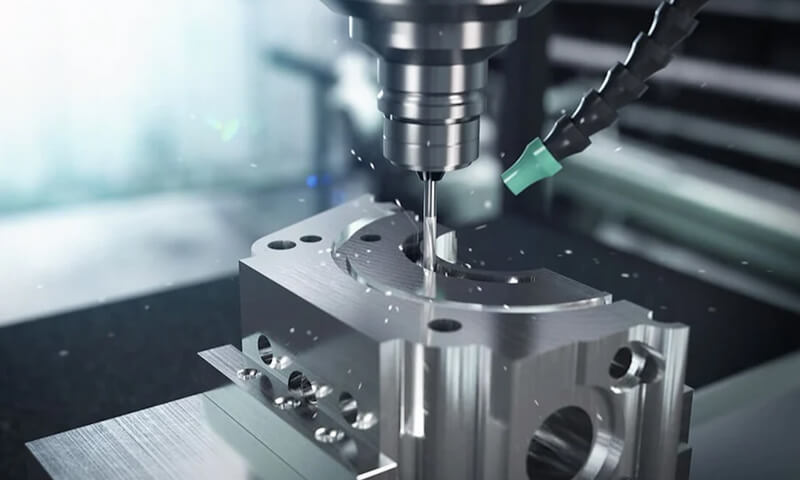
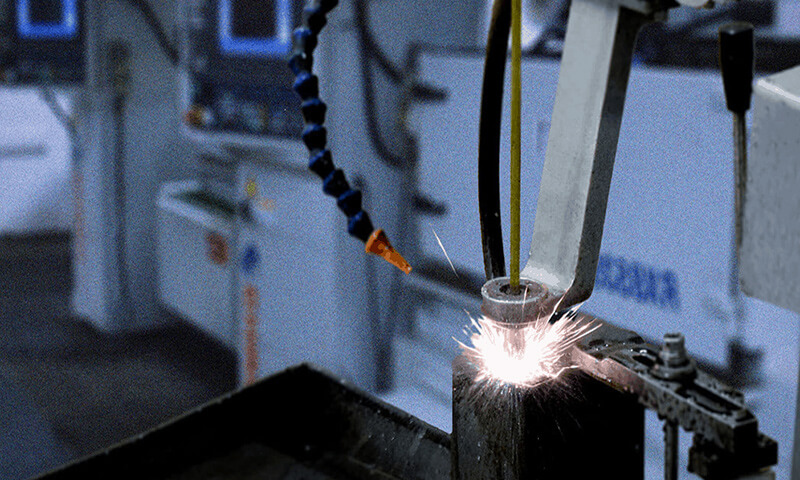
1. Panimula
Among cold-work steels, A2 vs O1 tool steel occupies prominent positions in the AISI/SAE and ASTM A681 standards.
While they share a classification as cold work tool steels, their differing hardening mechanisms—air-hardening versus oil-hardening—lead to distinct behaviors in processing, pagganap, at angkop na aplikasyon.
Mga tool steels are engineered for wear resistance, tigas na tigas, and dimensional stability—characteristics essential to cutting, pagbuo ng, and shaping materials in harsh industrial conditions.
This article presents a detailed comparison between A2 and O1 tool steels,
examining their composition, paggamot ng init, mekanikal na mga katangian, machinability, paglaban sa kaagnasan, and industrial use cases to guide professionals in making informed material selections.
2. What Is A2 Air-Hardening Tool Steel?
A2 Tool Steel belongs to the A-Group of ASTM A681, earns its “A” designation by hardening in still air rather than oil or water.
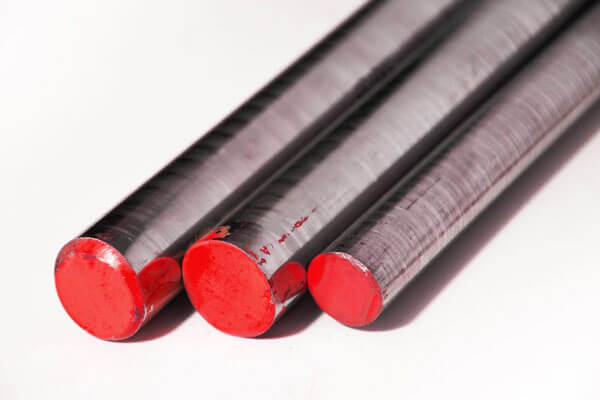
As a cold-worked steel, it undergoes all forming and machining below its recrystallization temperature, delivering exceptional dimensional control and surface finish compared to hot-worked alloys.
Komposisyon ng Kemikal
| Elemento | Nilalaman (%) | Function |
|---|---|---|
| Carbon (C) | 0.95 – 1.05 | Enables high hardness and wear resistance |
| Chromium (Cr) | 4.75 – 5.50 | Promotes hardenability and abrasion resistance |
| Molibdenum (Mo) | 0.90 – 1.20 | Increases temper resistance and toughness |
| Vanadium (V) | 0.25 – 0.40 | Refines grain size and boosts secondary hardening |
| Mga mangganeso (Mn) | 0.20 – 0.80 | Pinahuhusay ang lakas at hardenability |
| Silicon (Si Si) | 0.20 – 0.50 | Aids deoxidation and enhances strength |
Key Characteristics and Benefits
- Air-Hardening Mechanism: After austenitizing at approximately 1 020 °C, A2 transforms to martensite in air, avoiding the severe thermal gradients—and distortion—that accompany oil or water quenching.
- Ang katigasan ng ulo: Properly heat-treated A2 achieves 57–62 HRC, thanks to its chromium, molibdenum, and vanadium alloying.
- Wear and Toughness: Although it lacks enough chromium to qualify as stainless (≥ 11 %),
A2’s 5 % Cr content still produces a robust passive film for good abrasion resistance at epekto tigas ng ulo. - Machinability and Edge Retention: Sa annealed state, A2 machines easily. Pagkatapos ng pagtigas, it holds a sharp, durable edge, making it ideal for blanking dies, mga suntok, at katumpakan tooling.
3. What Is O1 Oil-Hardening Tool Steel?
O1 tool steel belongs to the O-Group of the ASTM A681 standard, distinguished by its requirement for oil quenching to develop full hardness.
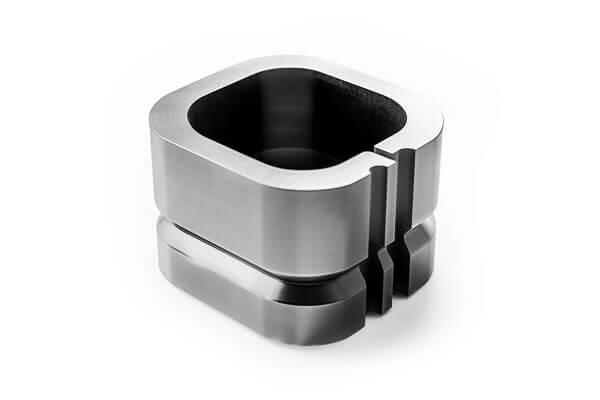
As a cold-worked steel, O1 undergoes shaping and machining below its recrystallization temperature,
But it relies on rapid cooling in oil to transform its microstructure into a wear-resistant, high-hardness state.
Komposisyon ng Kemikal
| Elemento | Nilalaman (%) | Function |
|---|---|---|
| Carbon (C) | 0.85 – 1.00 | Provides core hardness and wear resistance |
| Mga mangganeso (Mn) | 1.00 – 1.40 | Enhances hardenability and tensile strength |
| Chromium (Cr) | 0.40 – 0.60 | Improves hardenability and abrasion resistance |
| Tungsten (W) | 0.40 – 0.60 | Boosts hot hardness and wear resistance |
| Vanadium (V) | 0.10 – 0.30 | Refines grain structure and supports carbide formation |
| Silicon (Si Si) | 0.10 – 0.30 | Assists deoxidation and strengthens the steel matrix |
Key Properties and Advantages
- Mataas na Katigasan: O1 reaches 60–63 HRC pagkatapos ng pag-quench, making it ideal for tools requiring sharp, long-lasting edges—such as gauges, mga suntok, and woodworking knives.
- Napakahusay na kakayahang machinin: In its annealed state, O1 scores around 65% on machinability charts (with AISI 1112 bilang 100%), allowing faster roughing and reduced tooling costs.
- Tight Dimensional Control (Small Sections): Oil quenching provides a moderate cooling rate that suits thinner components (hanggang sa 15 mm),
though larger sections risk soft spots or distortion if not uniformly agitated. - Pagiging Epektibo sa Gastos: Lower alloy content translates to a material cost of approximately $2–$3 per kilogram, plus efficient machining and straightforward heat treatment.
4. Paggamot ng Heat & Hardening Response
Heat treatment defines the final properties of both A2 and O1 tool steels.
Sa bahaging ito, we compare their recommended thermal cycles, quenching media, Hardenability, and tempering regimes to achieve target hardness and toughness.
A2 Air-Hardening Cycle
- Awteritisismo
-
- Temperatura: 1 015–1 035 °C
- Oras ng Hold: 30–45 minutes
- At this range, A2 dissolves alloy carbides and forms a uniform austenitic matrix.
- Pagpapawi
-
- Katamtaman: Still air at ambient temperature
- Rate ng paglamig: Mabagal, reducing thermal gradients by up to 70 % compared to oil quench
- Bilang isang resulta, A2 transforms to martensite with minimal stress and distortion.
- Paghina ng loob
-
- First Temp: 150–200 °C for stress relief
- Second Temp: 500–540 °C to tailor hardness
- Resulting Hardness: 57–62 HRC (depending on temper temperature and time)
- Secondary Hardening: Molybdenum and vanadium carbides precipitate, boosting high-temperature strength.
O1 Oil-Hardening Cycle
- Awteritisismo
-
- Temperatura: 780-820 ° C
- Oras ng Hold: 20–30 minuto
- This lower temperature retains a higher fraction of fine carbides, favoring wear resistance.
- Pagpapawi
-
- Katamtaman: Agitated oil at 50–70 °C
- Rate ng paglamig: Tinatayang 150 °C/s in the martensite range
- Using oil prevents the cracking and distortion common with water quenching but introduces more stress than air cooling.
- Paghina ng loob
-
- Typical Temp: 150-220 ° C, single or double cycle
- Resulting Hardness: 60–63 HRC
- Lower temper temperatures preserve O1’s maximum hardness but limit toughness improvements.
Hardenability and Depth of Hardening
| bakal na bakal | Depth to 50 % Martensite | Core Hardness at 40 mm Depth |
|---|---|---|
| A2 | ~40 mm | 55–58 HRC |
| O1 | ~12 mm | 45–48 HRC |
- Dahil dito, A2 maintains high hardness deep into the section, whereas O1 requires thinner cross-sections or special quench fixtures to avoid soft cores.
- Bukod pa rito, A2’s air-quench mechanism reduces quench cracking risk, making it suitable for larger dies and punches.
Recommended Tempering Regimes
- For Maximum Toughness (A2): Temper at 520–540 °C for 2 × 2 mga oras, achieving ~57 HRC with K_IC > 28 MPa·√m.
- For Maximum Hardness (O1): Temper at 150–180 °C for 1 × 2 mga oras, maintaining ~62 HRC but with toughness limited to ~18 MPa·√m.
- Bilang kahalili, a double temper at 200 °C can slightly boost O1’s toughness at the expense of 1–2 HRC hardness.
5. Mechanical Properties of A2 vs. O1 Tool Steel
A2’s higher alloy content enhances tigas na tigas at Paglaban sa Pagsusuot, making it less prone to chipping and cracking in high-load or impact environments.
O1, though slightly harder, trades toughness for edge stability, ideal for fine-cutting applications.
6. Machinability & Paggawa ng gawa
- As-Annealed Machinability Ratings:
-
- O1: ~65% (relative to SAE 1112)
- A2: ~ 50%
O1 is easier to machine and finish prior to hardening, making it suitable for applications where quick turnaround is critical.
A2 requires more robust tooling due to its higher hardness and alloy content.
EDM and Drilling: Both materials respond well to electrical discharge machining, but A2 benefits from more consistent EDM finishes due to its finer carbide structure.
Weldability: O1 is weldable with care, but preheat and post-weld heat treatment are essential. A2, being more alloyed, presents a higher cracking risk unless stress-relieved.
7. Katatagan ng Dimensyon & Pagbaluktot
Air hardening gives A2 a distinct advantage in dimensional accuracy.
Unlike O1, which may distort or warp during rapid oil cooling, A2’s slow transformation ensures minimal shape change post-quenching.
For close-tolerance tooling, A2 reduces the need for secondary grinding and corrections.
8. Paglaban sa kaagnasan
While neither A2 nor O1 is stainless steel, A2’s 5% kromo content provides mild corrosion resistance, especially in dry or lightly humid environments.
O1, with less than 1% kromo, ay prone to surface oxidation and rust without protective coatings.
9. Typical Applications of A2 vs. O1 Tool Steel
Choosing between A2 and O1 hinges on matching each steel’s strengths to specific tooling tasks.
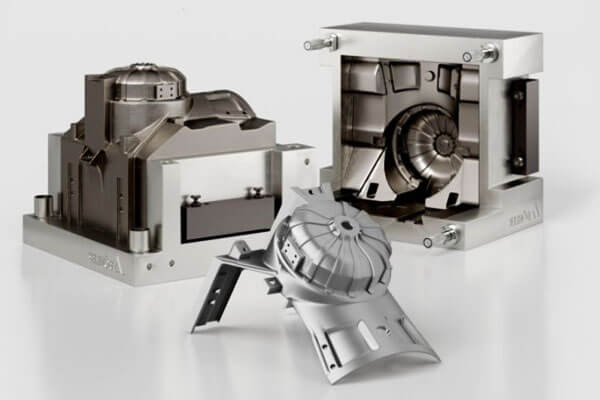
A2 Air-Hardening Tool Steel
Thanks to its high hardenability, napakahusay na paglaban sa pagsusuot, and minimal distortion, A2 excels in:
- Blanking and Piercing Dies: A2 maintains tight tolerances over long production runs (50 000+ strokes) without frequent regrinding.
- Forming and Stamping Tools: Its toughness withstands impact loads up to 1 200 MPa, ideal for deep-draw and bending operations.
- Progressive Die Components: A2’s uniform hardness to depths of 40 mm ensures consistent hole punching, pag-trim, and forming in multi-station dies.
- Cold-Shear Blades: With hardness up to 62 HRC and fine carbide dispersion, A2 delivers clean cuts in sheet metal up to 3 mm makapal na makapal.
O1 Oil-Hardening Tool Steel
O1 combines good hardness with superior machinability, making it the go-to choice for lower-volume or prototype tooling:
- Cutting and Slitting Knives: O1 holds a razor-sharp edge (62–63 HRC) for tasks such as slitting vinyl, papel na papel, and rubber.
- Gauges and Measurement Tools: Its fine-finished surface and hardness guarantee accuracy in go/no-go plugs and pins.
- Low-Volume Dies: Small stamping or forming dies (run lengths < 10 000 strokes) benefit from O1’s rapid turnaround and lower material cost.
- Woodworking and Leatherworking Blades: Craftsmen rely on O1 for chisels, plane blades, and leather skiving knives that demand easy resharpening.
Application Comparison Table
| Paglalapat | A2 Tool Steel | O1 Tool Steel |
|---|---|---|
| Blangko & Piercing Dies | Mataas na dami ng (50 000+ strokes), deep-draw, minimal na pagbaluktot | Not recommended—higher wear, soft core risk |
| Pagbuo ng & Bending Tools | Deep-draw punches, high-load forming | Light forming, prototype dies |
| Progressive Die Components | Multi-station dies, large sections | Maliit na, simple dies |
| Pagputol & Slitting Blades | Heavy-gauge sheet cutting | Slitting vinyl, papel na papel, goma na |
| Mga gauge & Mga Pin | Durable under repeated use | Precision gauges, low-wear applications |
| Craft Blades (Wood/Leather) | Occasional use—requires regrinding | Frequent resharpening, fine edge retention |
| Prototype vs. Production Runs | Best for production runs > 20 000 mga piraso | Best for prototyping and runs < 10 000 mga piraso |
10. Pangwakas na Salita
A2 vs O1 tool steel represents two proven solutions for cold work applications, each tailored to specific performance and economic needs.
A2’s superior toughness, Paglaban sa Pagsusuot, and dimensional stability justify its use in demanding, mataas na dami ng operasyon.
Samantala, O1 provides exceptional edge retention and machinability at a lower cost, making it a reliable choice for simpler or low-production tooling.
Although there are some differences in the physical properties of these two steels, both A2 and O1 tool steels are affordable materials that are suitable for many of the same applications.
Mga FAQ
Which steel achieves higher wear resistance?
A2 provides superior wear resistance due to its higher chromium (4.75–5.50 %) and vanadium content, which form fine, uniformly dispersed carbides.
O1, with lower alloying levels, delivers moderate wear performance but compensates with excellent edge sharpness.
Which tool steel offers better dimensional stability?
A2 air-hardening creates gentler thermal gradients, reducing distortion by up to 70 % compared to O1’s oil quench.
Designers prefer A2 for large or complex dies that demand tight tolerances with minimal post-grind corrections.
How do they resist corrosion?
A2’s ~5 % chromium content confers mild corrosion resistance, suitable for dry or lightly humid environments.
O1, with under 1 % kromo, requires protective oils or coatings to prevent surface rust in most operating conditions.
Which tool steel offers better fatigue performance?
A2 typically demonstrates a fatigue limit of about 45 % of its ultimate tensile strength, whereas O1’s fatigue limit sits around 40 %.
In cyclic-loading applications—such as stamping or cold forming—A2 reduces the risk of fatigue failure over long run lengths.