
1. Indledning
Smedning er en af de ældste og mest vitale metalbearbejdningsteknikker, integreret i at skabe høj styrke,
holdbare komponenter, der bruges på tværs af industrier som bilindustrien, rumfart, tungt maskiner, og vedvarende energi.
Denne fremstillingsproces forvandler råmetal til præcist formede dele ved at påføre trykkræfter, ofte ved høje temperaturer.
Smedning producerer overlegne mekaniske egenskaber i materialet, hvilket gør det afgørende for applikationer, der kræver styrke, sejhed, og pålidelighed.
I denne blog, vi vil udforske de forskellige typer smedningsmetoder, deres fordele, applikationer,
og hvordan de bidrager til den fortsatte udvikling af industrier med fokus på ydeevne og bæredygtighed.
2. Hvad er smedning?
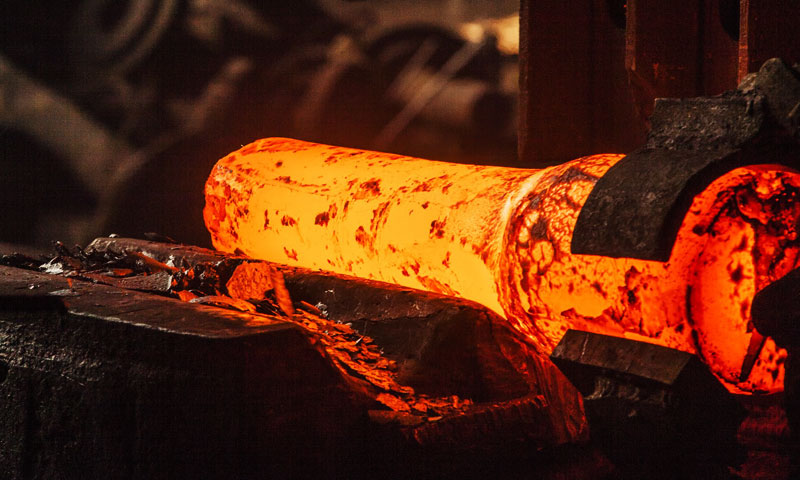
Smedning er processen med at forme metal ved hjælp af trykkræfter, typisk ved at hamre, trykke, eller rullende.
Det adskiller sig fra andre metalbearbejdningsprocesser som støbning, svejsning, eller bearbejdning ved, at det forbedrer materialets indre struktur, gør den mere modstandsdygtig over for stress, slid, og træthed.
Smedede dele har typisk højere styrke og holdbarhed end deres modstykker skabt ved hjælp af casting eller bearbejdning methods due to the alignment of the metal’s grain structure during the forging process.

Procesoversigt:
The forging process begins with the heating of the metal to a specific temperature, where it becomes malleable.
This allows for easier shaping through mechanical forces, often through the use of a hammer, press, or rollers.
Once the metal has been shaped to the desired form, it undergoes cooling, which solidifies the material and locks in the improved mechanical properties.
The process may involve further finishing techniques, såsom trimning, slibning, eller varmebehandling, to achieve the final product.
3. Typer af smedning
There are various types of forging methods, hver egnet til forskellige applikationer, materielle egenskaber, and part requirements. Below are the primary forging techniques:
Åbn smedning
Definition: Open die forging, også kendt som gratis smedning, is one of the simplest and oldest types of forging.
It involves shaping metal between two flat dies that do not completely enclose the material. The metal is repeatedly hammered or pressed to form the desired shape.

Procesoversigt:
- The workpiece is placed between two dies, one stationary and the other movable.
- The metal is heated to the desired temperature and then subjected to compressive force.
- The material is hammered or pressed, forcing it to flow into the shape dictated by the die.
- Open die forging is often used for large and heavy components where high precision is not as critical.
Applikationer:
- Large shafts, barer, and billets are used in industries such as aerospace, konstruktion, og tunge maskiner.
- Components such as rings, cylindre, and structural parts for manufacturing equipment.
Fordele:
- Highly versatile and adaptable to a wide range of materials.
- Suitable for producing large components that require toughness and strength.
Ulemper:
- Lower precision and finish compared to closed die forging.
- Not ideal for high-volume, fremstilling af små dele.
Lukket formsmedning (Impression Die Forging)
Definition: Lukket formsmedning, også kendt som indtrykssmedning, involverer at placere et opvarmet emne i en matrice, der helt omslutter materialet.
Matricen presses eller hamres derefter for at forme delen med høj præcision. Denne metode bruges typisk til fremstilling af komplekse og store komponenter.

Procesoversigt:
- Metallet opvarmes og placeres inde i et hulrum (dø) der er formet til de endelige dimensioner.
- Den øverste matrice presses på emnet, får det til at fylde matricehulrummet og antage den ønskede form.
- Efter smedningsprocessen, det overskydende materiale (blitz) er fjernet.
Applikationer:
- Bilkomponenter som gear, krumtapaksler, og plejlstænger.
- Luftfartsdele som turbinevinger, parenteser, og boliger.
- Industrielle komponenter såsom pumper, ventiler, og fastgørelsesmidler.
Fordele:
- Høj præcision og fremragende overfladefinish.
- Evne til at producere komplekse former med snævre tolerancer.
- Velegnet til højvolumen produktion af dele.
Ulemper:
- Højere initial værktøjsomkostninger på grund af behovet for indviklede matricer.
- Begrænset til dele, der passer inden for matricens begrænsninger, gør den uegnet til større komponenter.
Ring rullende
Definition: Ringvalsning er en specialiseret smedemetode, der bruges til at fremstille cirkulære dele, såsom ringe, hjul, og hule komponenter.
Processen bruger en rulleteknik til at forme metallet til en ringform ved at påføre trykkræfter på emnet, når det passerer gennem et par ruller.

Procesoversigt:
- En metalpræform opvarmes og placeres mellem to ruller.
- Rullerne påfører præformen radiale og aksiale kræfter, får det til at udvide sig og danne en ringform.
- Processen kan styres til at producere komponenter med bestemte tykkelser, diametre, og materialeegenskaber.
Applikationer:
- Luftfartskomponenter som turbineringe, flanger, og sæler.
- Autodele som fælge og bremsekomponenter.
- Industrielt udstyr og maskiner kræver ringformede komponenter.
Fordele:
- Effektiv til fremstilling af hul, ringformede dele med høj styrke.
- Velegnet til applikationer med høj stress som rumfart og tungt maskineri.
Ulemper:
- Begrænset til fremstilling af cirkulære dele, gør den uegnet til mere komplekse geometrier.
- Kræver specialudstyr og værktøj.
Oprørt smedning
Definition: Forrykket smedning involverer komprimering af et metalemne for at øge dets tværsnitsareal.
Processen involverer normalt at påføre kraft på begge ender af emnet for at "forstyrre" eller forstørre midten, danner en tykkere sektion.
Denne type smedning bruges ofte til at skabe komponenter med en fortykket midtersektion, som bolte og møtrikker.

Procesoversigt:
- Emnet opvarmes og placeres mellem to matricer.
- Trykkraft påføres enderne af emnet, får midten til at udvide sig.
- Upset forging is typically used for cylindrical parts with thickened portions.
Applikationer:
- Befæstelser som bolte, nødder, og skruer.
- Hydraulic fittings and other connectors require a thickened section for strength.
Fordele:
- Cost-effective for producing parts with thick sections in the middle.
- Suitable for high-volume production with relatively simple shapes.
Ulemper:
- Limited to certain shapes, typically cylindrical or parts with thickened sections.
- Not suitable for intricate or highly detailed parts.
Præcisionssmedning (Near-Net-Shape Smedning)
Definition: Precision forging, also called near-net-shape forging, aims to create parts with near-final dimensions and minimal material waste.
This method uses advanced techniques such as high-pressure presses and precise dies to achieve parts with excellent tolerances, reducing the need for extensive post-processing.
Procesoversigt:
- The material is heated and placed in a precision die that shapes it to the near-final form.
- The process uses higher pressures and tighter controls to achieve accurate dimensions and surface finish.
- Precision forging minimizes flash and excess material, making it more efficient and eco-friendly.
Applikationer:
- Aerospace and automotive parts that require high precision, like aircraft turbine components.
- High-performance components in electronics and medical devices.
Fordele:
- Minimizes material waste and reduces the need for additional machining.
- Offers high dimensional accuracy and a better surface finish.
Ulemper:
- Higher tooling and equipment costs due to precision requirements.
- Limited to parts that can be formed with precision dies.
4. Vigtigste fordele ved smedning
The forging process offers numerous advantages, making it the go-to choice for creating high-performance, holdbar, and reliable parts.
Styrke og holdbarhed
Forbedrede mekaniske egenskaber: One of the primary benefits of forging is its ability to enhance the mechanical properties of metals.
By applying compressive forces during the forging process, the grain structure of the material is aligned in a way that enhances the strength of the final component.
Unlike cast parts, which often have irregular grain structures and weak points, forged parts have a uniform grain flow, providing superior tensile strength, Konsekvensmodstand, og holdbarhed.
This results in parts that can withstand high stress, slid, and extreme conditions, hvilket gør dem ideelle til tunge opgaver.
Applikationer:
- Automotive components like crankshafts and connecting rods that need to endure high-stress conditions.
- Aerospace parts like turbine blades and gears must handle extreme loads and temperatures.
Ensartet kornstruktur
Enhanced Material Integrity: During the forging process, metal undergoes deformation, which results in a refined and uniform grain structure.
This is especially important for components that require high strength and toughness.
The aligned grain flow gives forged parts better resistance to fatigue, fractures, and crack propagation.
In contrast to other methods like casting, which can introduce air pockets or weak points,
forging enhances the integrity of the material, making it much stronger and more reliable in critical applications.
Applikationer:
- Gear, aksler, og aksler, benefit from improved toughness and the ability to withstand repeated loading.
Alsidighed i design og komplekse former
Adaptable to Different Geometries: Forging offers a high level of flexibility, making it suitable for both simple and complex shapes.
It allows for the production of parts with intricate geometries and specific design features,
such as holes, riller, and thin sections, that would be difficult or expensive to achieve with other manufacturing methods.
This versatility makes forging a popular choice across a wide range of industries, fra bilindustrien til rumfart.
Applikationer:
- Automotive parts like suspension components, wheel rims, and chassis require both strength and precise geometry.
- Aerospace parts like turbine blades and compressor disks need complex shapes and high strength.
Omkostningseffektivitet i højvolumenproduktion
Reduceret materialeaffald: Although forging requires specialized dies and equipment, it can be cost-effective in high-volume production runs.
The material used in forging is typically more efficient than casting or machining, as it requires less waste and scrap.
Derudover, forging minimizes the need for extensive post-processing, such as machining, as the parts come out with near-net shapes.
Dette gør det til en attraktiv mulighed for producenter, der ønsker at reducere omkostningerne og samtidig opretholde høje kvalitetsstandarder.
Applikationer:
- Fastgørelsesmidler, nødder, og bolte, der er masseproducerede til industrier som bilindustrien, konstruktion, og elektronik.
- Strukturelle komponenter i industrier som byggeri og tunge maskiner, hvor dele produceres i store mængder.
Forbedret træthedsmodstand
Længere levetid for komponenter: Smedede dele udviser overlegen modstandsdygtighed over for træthed på grund af deres kornstruktur, hvilket giver dem mulighed for at klare sig godt under cyklisk belastning.
Træthedsmodstand er afgørende for komponenter, der vil opleve gentagen stress i løbet af deres driftslevetid, såsom gear, aksler, og fjedre.
Ved at justere kornstrømmen i spændingsretningen, smedede dele kan holde meget længere uden fejl,
reducerer sandsynligheden for katastrofale fejl og forlænger driftslevetiden for maskiner og udstyr.
Applikationer:
- Automotive affjedringssystemer, der oplever gentagne stress under kørsel.
- Flykomponenter som landingsstel og turbineblade udsættes for kontinuerlige dynamiske belastninger.
Reduceret behov for efterbehandling
Effektiv produktion med færre trin: Smedeprocesser kræver generelt mindre efterbehandling sammenlignet med andre fremstillingsmetoder.
Da smedningsprocessen allerede giver en høj grad af præcision og en glat overfladefinish, behovet for yderligere bearbejdning reduceres væsentligt.
Dette fører til lavere samlede produktionsomkostninger og kortere gennemløbstider.
Reduktionen i efterbehandling reducerer også risikoen for at introducere defekter eller uoverensstemmelser, sikre, at delene bevarer deres ønskede mekaniske egenskaber.
Applikationer:
- Strukturelle komponenter såsom bjælker, Søjler, og beslag, hvor der kun er brug for mindre efterbehandlingstrin.
- Luftfarts- og militærdele, der kræver minimal bearbejdning og høj præcision.
Minimal forvrængning og højere præcision
Bedre kontrol over dimensioner: Smedeprocessen giver strammere kontrol over den sidste dels dimensioner,
sikre, at dele opfylder de krævede specifikationer med minimal variation.
Sammenlignet med andre teknikker, såsom støbning, smedning reducerer risikoen for vridning, dimensionel forvrængning, eller hulrum i materialet.
Dette høje præcisionsniveau er afgørende for dele, der bruges i industrier, hvor tolerancer er kritiske, såsom rumfart og medicinsk udstyr.
Applikationer:
- Præcisionsdele som turbinekomponenter og kuglelejer bruges i højtydende maskiner.
- Medicinsk udstyr såsom kirurgiske instrumenter kræver ensartede dimensioner og høj pålidelighed.
5. Almindelige materialer, der bruges i smedning
Smedning er en alsidig proces, der kan anvendes på forskellige materialer, hver valgt ud fra de specifikke krav til det endelige produkt.

Nedenfor er nogle af de mest almindeligt smedede materialer og de unikke fordele, de tilbyder:
Stål
Stål er det mest almindeligt anvendte materiale i smedning på grund af dets styrke, sejhed, og alsidighed.
Det kan legeres med forskellige elementer som kulstof, Krom, nikkel, og molybdæn for at forbedre dets egenskaber, Afhængig af applikationen.
Stållegeringer bruges til at skabe komponenter til bilindustrien, rumfart, og byggebrancher. Nogle almindelige typer stål, der bruges i smedning, omfatter:
- Kulstofstål: Kendt for sit fremragende styrke-til-vægt-forhold, kulstofstål bruges i højspændingsapplikationer som gear, krumtapaksler, og plejlstænger.
- Legeringsstål: Dette stål har yderligere legeringselementer for at forbedre egenskaber såsom korrosionsbestandighed, Varmebestandighed, og trækstyrke, almindeligt anvendt i tunge maskiner.
- Rustfrit stål: Med høj korrosionsbestandighed, rustfrit stål bruges ofte til komponenter, der vil blive udsat for barske miljøer, such as in marine, Madbehandling, og medicinalindustrien.
Titanium
Titanium and its alloys are highly valued in applications that demand exceptional strength-to-weight ratios, Især i rumfart, medicinsk, og højtydende bilapplikationer.
They also offer excellent resistance to corrosion, making them suitable for harsh environments like chemical processing or marine industries.
Forged titanium parts include turbine blades, aircraft frames, and biomedical implants.
Aluminium
Aluminium er letvægts, Korrosionsbestandig, and relatively easy to forge, making it ideal for applications where weight reduction is essential.
Common applications for forged aluminum include parts for the automotive, rumfart, and transportation industries.
Forged aluminum komponenter, såsom hjul, rammer, og strukturelle understøttelser, are prized for their combination of strength and low mass.
Kobber og kobberlegeringer
Kobber is an excellent conductor of electricity and heat, making it ideal for applications in electrical components and heat exchangers.
Such as bronze and brass, are used in applications requiring good corrosion resistance, such as marine hardware, ventiler, og lejer.
Forged copper parts are commonly used in electrical connectors, Fittings, og radiatorer.
Nikkellegeringer
Nikkellegeringer, såsom Inconel og Monel, are known for their high strength and resistance to high temperatures, oxidation, og korrosion.
These alloys are often used in extreme environments, such as gas turbines, Kemisk behandling, og olie- og gasindustrien.
Forged nickel alloy components include turbine blades, Forbrændingskamre, and high-pressure valves.
Messing
Messing, en legering af kobber og zink, is forged for use in a variety of components requiring corrosion resistance, bearbejdningsevne, og æstetisk appel.
It’s commonly used for electrical connectors, VVS-armaturer, låse, og dekorative genstande. Brass forging also finds applications in the automotive and marine industries.
Magnesiumlegeringer
Magnesium er det letteste strukturelle metal, and its alloys are forged for applications where weight reduction is crucial.
De bruges i rumfart, Automotive, and military applications to create lightweight components such as transmission cases, hjul, and aircraft frames.
Despite being lighter than aluminum, magnesium alloys maintain high strength and good thermal conductivity.
6. Smedeapplikationer
Bilindustri:
Forging plays a vital role in the Automotive industri, where high-strength components
like crankshafts, Gear, plejlstænger, and suspension components are crucial for vehicle performance.
Forged parts are essential in ensuring that vehicles perform optimally under extreme conditions, offering durability and reliability in demanding applications.

Rumfart:
I rumfart, the reliability of parts is paramount, and forging is crucial for producing high-performance components such as turbine blades, Landingsudstyr, og strukturelle elementer.
Forging enhances the material’s resistance to extreme temperatures, stress, og træthed, making it ideal for critical applications where failure is not an option.
Olie og gas:
Forged parts in the oil and gas industry, såsom ventiler, pumpeaksler, og flanger, must withstand extreme pressures and corrosive environments.
Forging ensures that these components are durable and resistant to wear, providing critical performance in harsh conditions.
Tungt maskineri og konstruktion:
Komponenter, der anvendes i tunge maskiner og entreprenørudstyr, såsom gear, aksler, og lejer, kræver den styrke og holdbarhed, som kun smedning kan give.
Disse komponenter skal kunne klare høje niveauer af stress og slid, gør smedede materialer afgørende for pålideligt og langtidsholdbart udstyr.
Vedvarende energi:
Smedning har en betydelig indflydelse i sektoren for vedvarende energi,
hvor komponenter som turbineaksler, Lejer, og fastgørelseselementer skal modstå konstant bevægelse og ekstreme miljøforhold.
Smedede dele sikrer holdbarheden og pålideligheden af vind- og solenergiinfrastruktur, med til at forbedre ydeevne og bæredygtighed.
7. Avancerede smedeteknikker
Præcisionssmedning:
Præcisionssmedning bruger højteknologisk udstyr til at skabe dele med snævre tolerancer og indviklede geometrier.
Denne teknik bruges til at fremstille komplekse dele, der kræver høj nøjagtighed, such as those used in aerospace and medical devices.
Precision forging minimizes waste and reduces the need for further machining.
Isotermisk smedning:
Isothermal forging is an advanced method that allows for the production of high-performance alloys.
This technique involves maintaining a constant temperature during the forging process,
which helps preserve the material’s integrity and properties, making it ideal for applications in the aerospace and automotive industries.
Superplastisk formning:
Superplastic forming is used to shape materials with superior plasticity.
By heating the material to specific temperatures, it becomes extremely malleable, allowing for the creation of complex shapes with minimal tooling.
This technique is widely used in industries requiring intricate designs and lightweight materials, såsom rumfart.
8. Miljøhensyn ved smedning
Energieffektivitet:
Moderne smedningsmetoder fokuserer på at reducere energiforbruget ved at optimere ovndriften,
forbedring af varmegenvindingssystemer, og vedtage mere energieffektive smedeteknikker.
Efterhånden som energieffektivitet bliver stadig vigtigere i industrielle processer, smedning udvikler sig for at minimere dets miljømæssige fodaftryk.
Genbrug af metal:
Evnen til at genbruge skrot er en af de væsentlige miljømæssige fordele ved smedning.
I modsætning til mange andre fremstillingsmetoder, smedning kan genbruge skrot fra tidligere processer, reducere behovet for nye råvarer og bidrage til bæredygtighedsindsatsen.
Reduktion af spild:
Smedning er en yderst effektiv proces, med minimalt genereret affald sammenlignet med processer som støbning eller bearbejdning.
Evnen til at skabe komplekse dele med færre trin og mindre materialetab gør smedning til en miljøvenlig mulighed.
9. Udfordringer og begrænsninger ved smedning
Materielle begrænsninger:
Ikke alle materialer er velegnede til smedning. Høj kulstofstål, for eksempel, kan være svære at smede, og nogle legeringer kan kræve specialiserede teknikker.
At forstå materialernes egenskaber før smedning er afgørende for at opnå de ønskede resultater.
Værktøjsomkostninger:
Omkostningerne til værktøj og matricer til smedning kan være høje, især til indviklede eller komplekse dele.
Imidlertid, disse omkostninger opvejes ofte af holdbarheden og reduceret vedligeholdelse af det endelige produkt.
Størrelses- og vægtbegrænsninger:
Mens smedning kan rumme dele af forskellige størrelser, ekstremt store eller tunge komponenter er muligvis ikke egnede til processen på grund af udstyrsbegrænsninger.
10. Smedning vs. Casting
To af de mest anvendte processer ved fremstilling af metalkomponenter er smedning og casting.
Mens begge teknikker involverer at forme metaller for at skabe komponenter, deres metoder, Fordele, og applikationer er forskellige.
Under, vi sammenligner disse to processer med hensyn til deres egenskaber, Fordele, og ulemper.
| Faktor | Smedning | Casting |
|---|---|---|
| Behandle | Trykkræfter former metal ved høje temperaturer. | Smeltet metal hældes i forme for at størkne. |
| Materielle egenskaber | Forstærker styrke, sejhed, og ensartet kornstruktur. | Kan have porøsitet, svagere materiale, og inkonsekvent korn. |
| Styrke & Holdbarhed | Høj trækstyrke, og bedre træthedsmodstand. | Svagere, især til dele under høj belastning eller gentagen belastning. |
| Designkompleksitet | Bedre til enklere former; komplekse dele kan kræve efterbehandling. | Fremragende til indviklede designs og komplekse former. |
| Koste & Produktionstid | Højere indledende opsætningsomkostninger, men omkostningseffektiv til højvolumenproduktion. | Lavere opsætningsomkostninger, men højere efterbehandlingsomkostninger. |
| Applikationer | Automotive, rumfart, tungt maskiner, og højtydende dele. | Automotive, industrielt udstyr, dekorative genstande. |
| Miljøpåvirkning | Mindre materialespild, mere holdbare dele, længere levetid. | Højere materialespild, energiforbrug, og kortere levetid. |
11. Konklusion
Smedning er en kritisk proces til fremstilling af højtydende komponenter på tværs af en lang række industrier.
Its ability to enhance material properties, create durable parts, and contribute to sustainability makes it an essential technique for modern manufacturing.
With technological advancements and a growing focus on sustainability, the forging industry is poised for continued growth and innovation.
If you’re looking for high-quality custom forging products, At vælge Deze er den perfekte beslutning til dine produktionsbehov.
12. FAQS
Hvordan påvirker smedning produktionsomkostningerne?
Forging may involve higher initial tooling costs but provides long-term savings due to the durability of forged parts, reducing the frequency of replacements and repairs.
Kan smedning bruges til små eller indviklede dele?
Ja, precision forging allows for the production of small, intricate parts with tight tolerances, commonly used in aerospace, Automotive, og medicinske applikationer.

